
Why is the Forest Service treating us like this?
The Transportation Safety Administration treats people differently when conducting security screenings.
Thousands of lives are on the line. Not just on planes. In buildings all across the country. Not throughout any given day, but in any given moment.
This is deadly serious business. This is truly an issue of public health.
Nevertheless, some security measures are waived for travelers with TSA PreCheck passes. All other passengers must submit to the full rigmarole deemed necessary to protect national security.
The TSA follows risk-based protocols, because not all people represent the same degree of risk and so should not be treated the same.
Treating everybody the same with a blanket policy is not smart nor efficient and sometimes can be counterproductive.
Why shouldn’t the Forest Service when serving recreationists operate with at least as much consciousness and intelligence as the TSA?
What is sufficient in protecting national security is surely more than sufficient in satisfying our public health needs in the National Forests.
For those hikers eager and willing there should be a system through which they can apply for and obtain a precheck entrance pass to the public lands when otherwise closed by diktat.
 Contraband imagery secreted out of the condemned forest.
“Are you from the trails council,” she asked.
That was the first thing she said when she caught us entering the condemned forest. We had climbed over the top of the closed sign a minute earlier. We hadn’t bothered caring to be sly.
I could tell you her name and link to the County of Santa Barbara page with her details. She would remember our rather long conversation.
“No,” I said.
She then informed us that the forest was closed.
“Why?” I asked.
And she tried to sell us the company line, saying something about how there were rockslides and wash outs and trail damage. The forest was dangerous.
“Oh. You mean it’s a mountain?” I said sprightly.
She feigned a faint chuckle and gave us a fake smile, friendly like. What else could she do?
The reasons for the closure were ludicrous and I was hanging it around her neck rhetorically like a lead anchor.
Her job was to try and sell the garbage to conscious, intelligent people who could see through the flam from a hundred miles away, with one eye closed, looking backwards over their shoulder through a mirror.
If I had said I was with the trails council she would have let me pass.
Why? The forest is a threat to public health, says Stubbs.
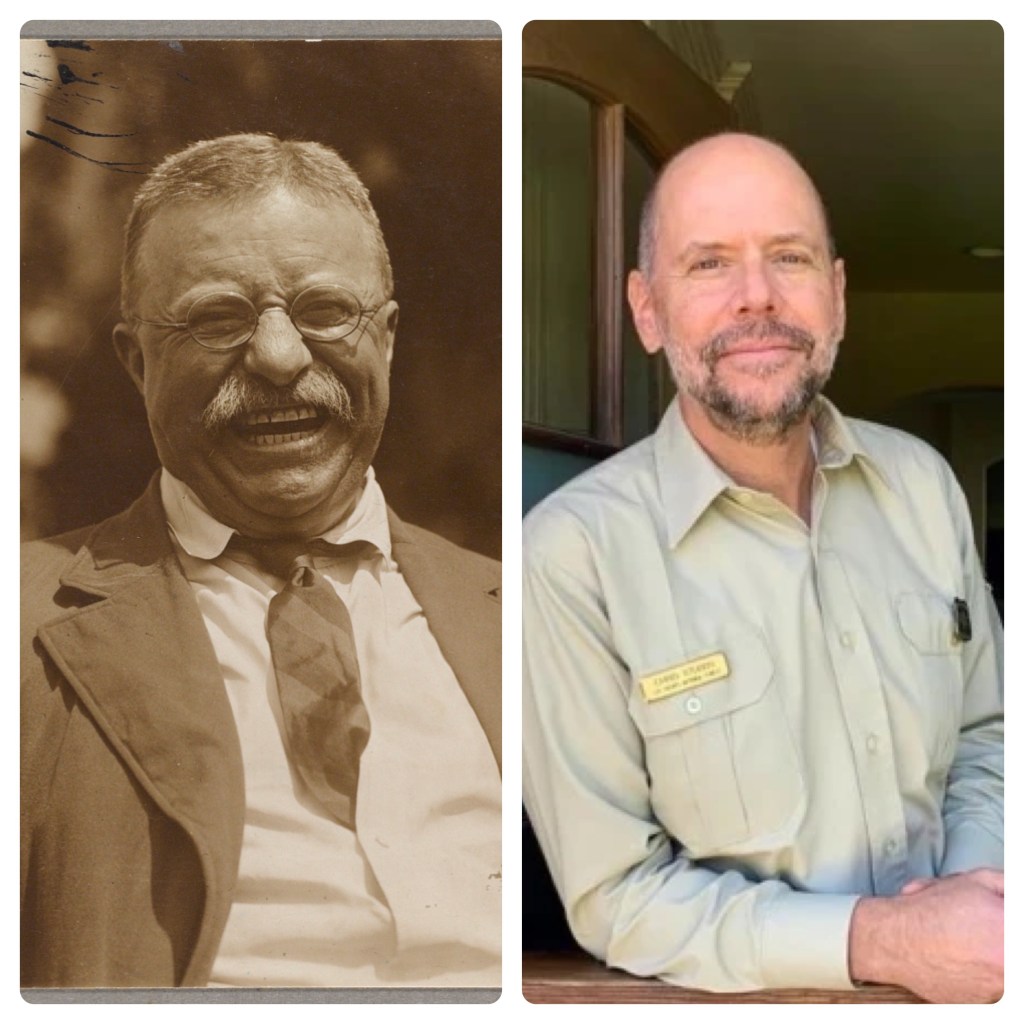
 Cell phone snapshot, face to face, Santa Ynez Mountains, January 2023
Do the men whose names we see credited on outdoors photos published in local media outlets possess some special skill set or degree of competency that permits them to enter and move about the closed forest, while the common man is barred from entry for sake of his health?
We know they do not.
Wearing a fedora with a white strip of paper in the hatband that says “press” does not make them safer operators in the forest than everybody else.
Let the good people do their good work.
But don’t then tell everybody else no based on some fuzzy undefined theoretical generality, a nonsensical excuse.
It reeks of hypocrisy.
 Allow me to translate this sign along Arroyo Burro Trail: Welcome to your public lands. Enjoy!
There are all sorts of exemptions to the forest closure.
If you associate with the right outdoors social organizations you can go into the forest legally. Somehow the threat to public health, poof, vanishes instantaneously upon signing up.
The clique is the key to the locked door. Join and you’re in.
Why?
Do any of these volunteers possess something special that protects them from the alleged threat to public health? No.
Do they undergo some physical fitness test? Classroom examination? Nope.
What do they possess that sets them apart from the rest of us common folk?
If there is truly and honestly a problem facing public health should Condor National Forest remain open, then a precheck hikers forest entrance pass is the solution.
The Forest Service cannot honestly tell us such a pass is somehow unworthy and insufficient when the federal government secures the entire nation following such thinking.
The pass would provide forest access to people for whom there is no reasonable basis for exclusion.
Those people of lesser interest outdoors would be fine waiting out the closure period. Most Americans at large are not conscious to any of this and so don’t care one way or the other.
Such a system, I would posit, would tend to self-select for the most able-bodied people who are of lower risk; the most enthusiastic people wanting a pass to get into the forest during a closure would tend to be the most experienced and of the least concern.
Surely such folks would be at least as safe in the forest as those people that sign up with a trail maintenance group or a group that monitors sensitive cultural sites.
And of importance as well, the pass would provide an opportunity for the Forest Service to save face, and to stop the hemorrhaging of social capital and trust that’s been pouring from their self-inflicted wound caused by the nonsensical blanket closure.


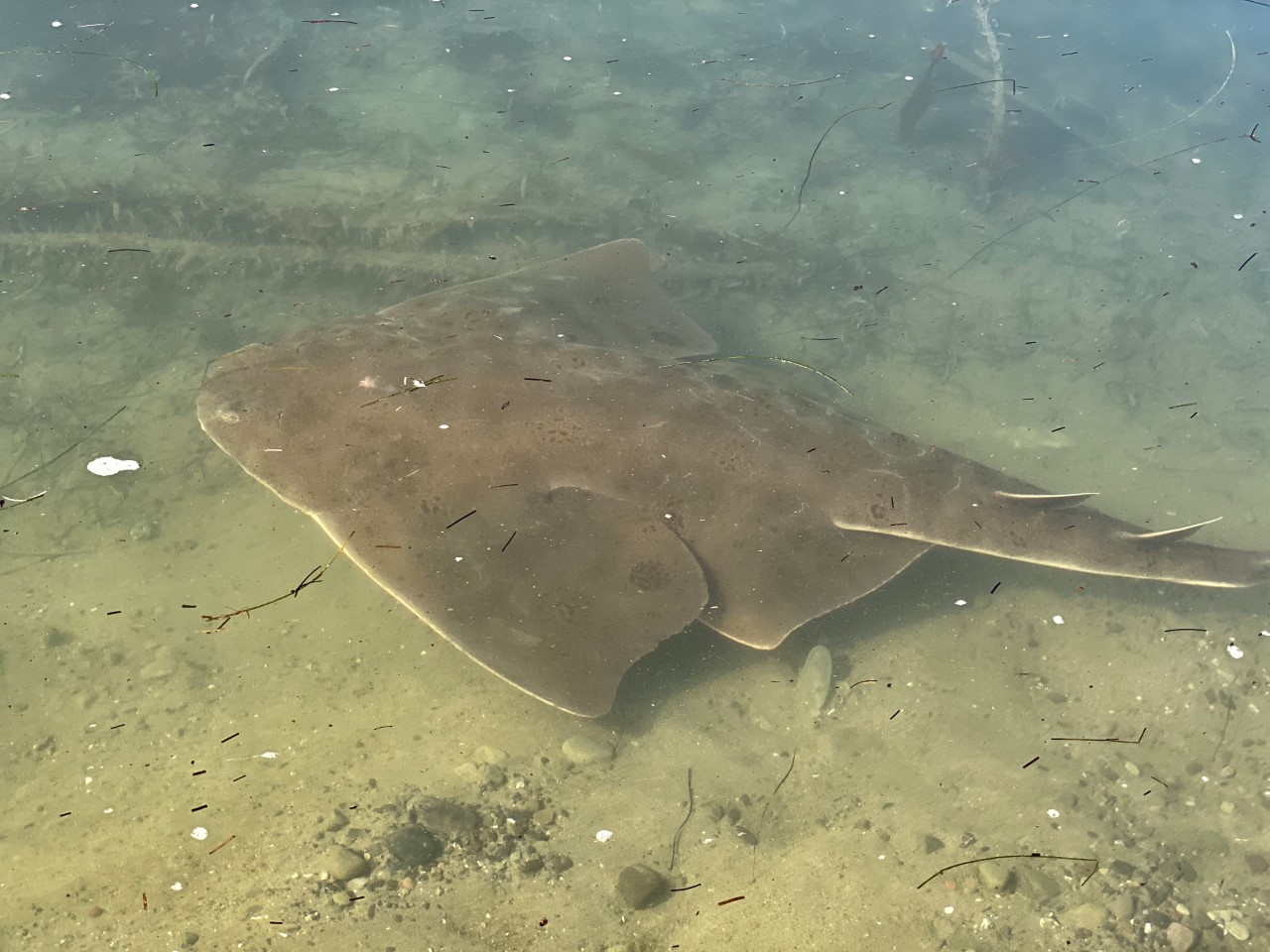
 An angelshark swimming up Goleta Beach Slough, a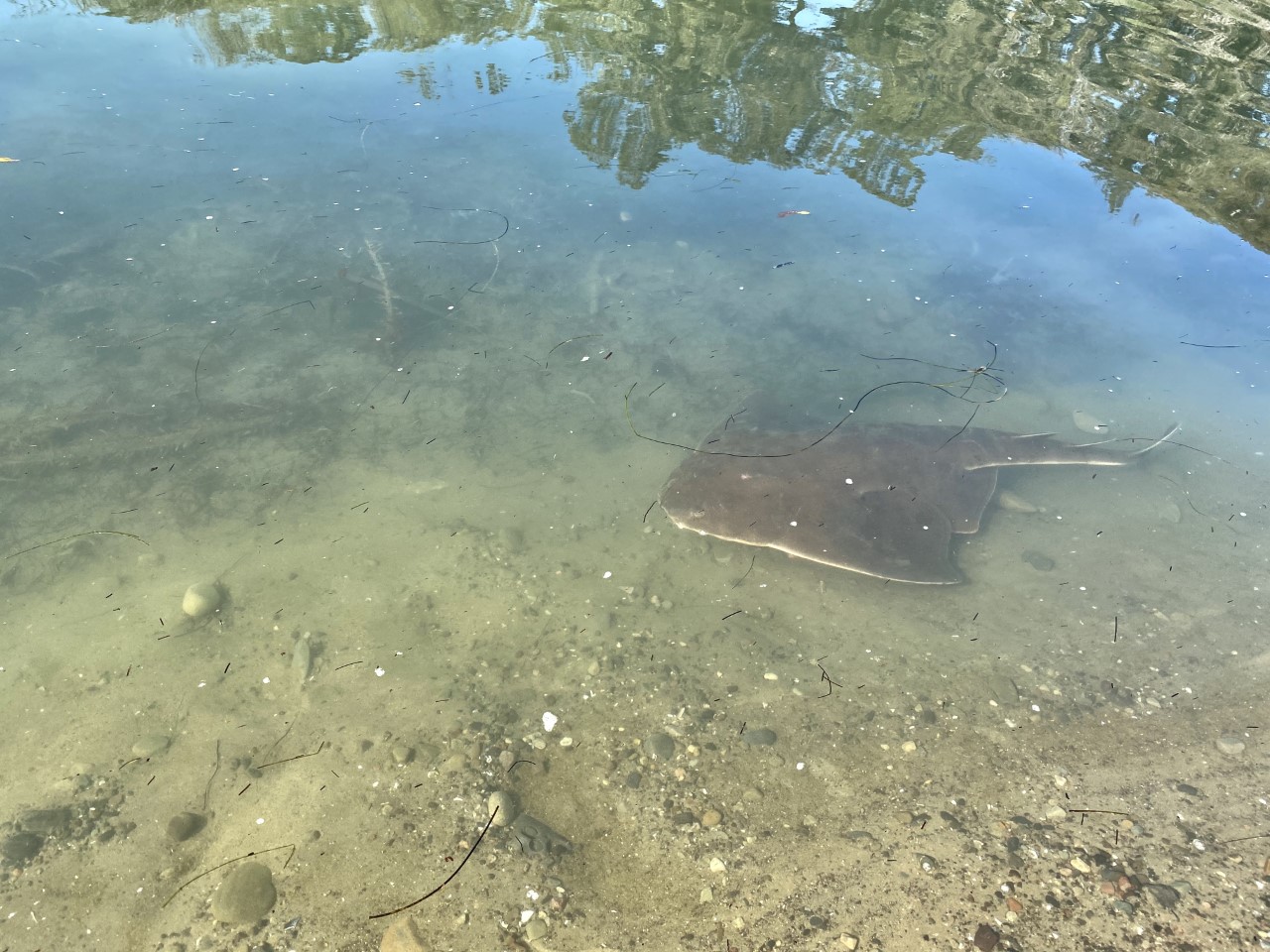










 Jack Elliott's Santa Barbara Adventure