
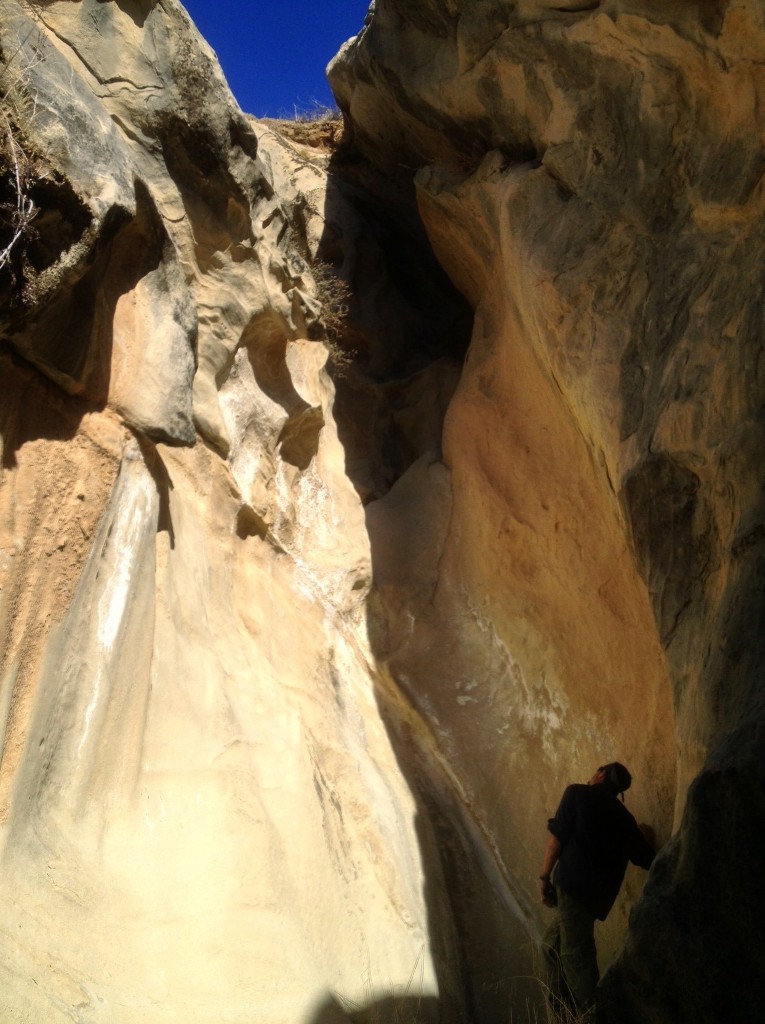
 David Stillman standing at the base of the second fall in a series of waterfalls which flow when it rains.
So we go and so it is, around this bend and that, up over and down under and around we go again. This branch breaks, that one doesn’t, a slice and a scratch, trip, stumble, slide and on up the dry creek and over the hills we go.
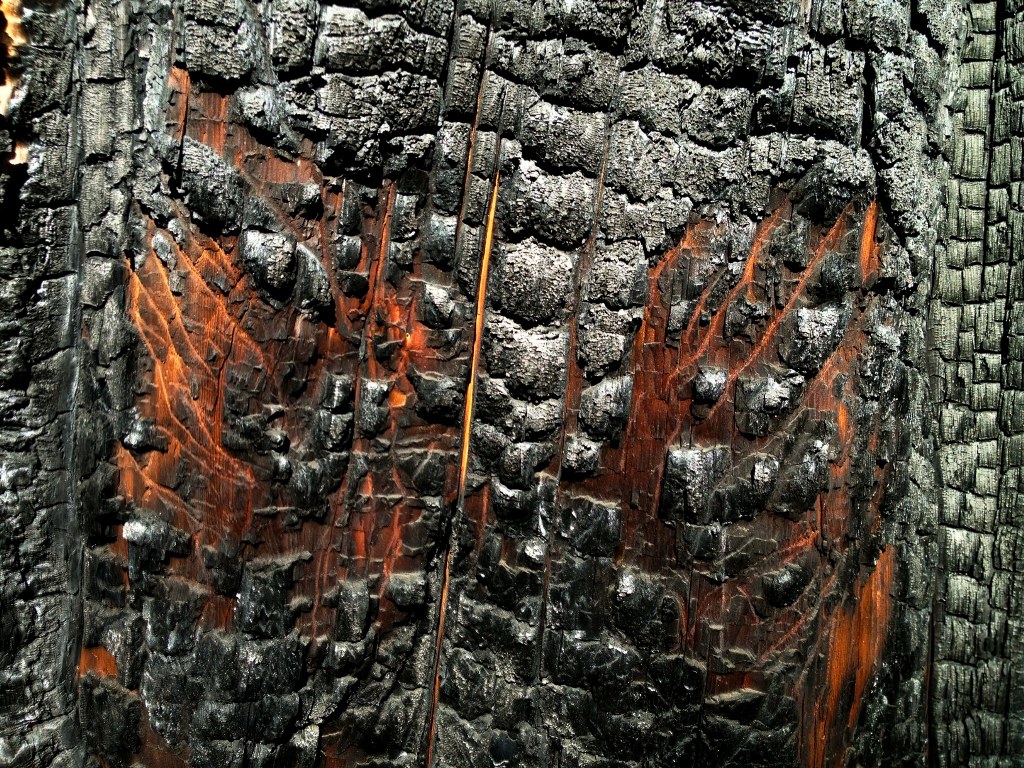
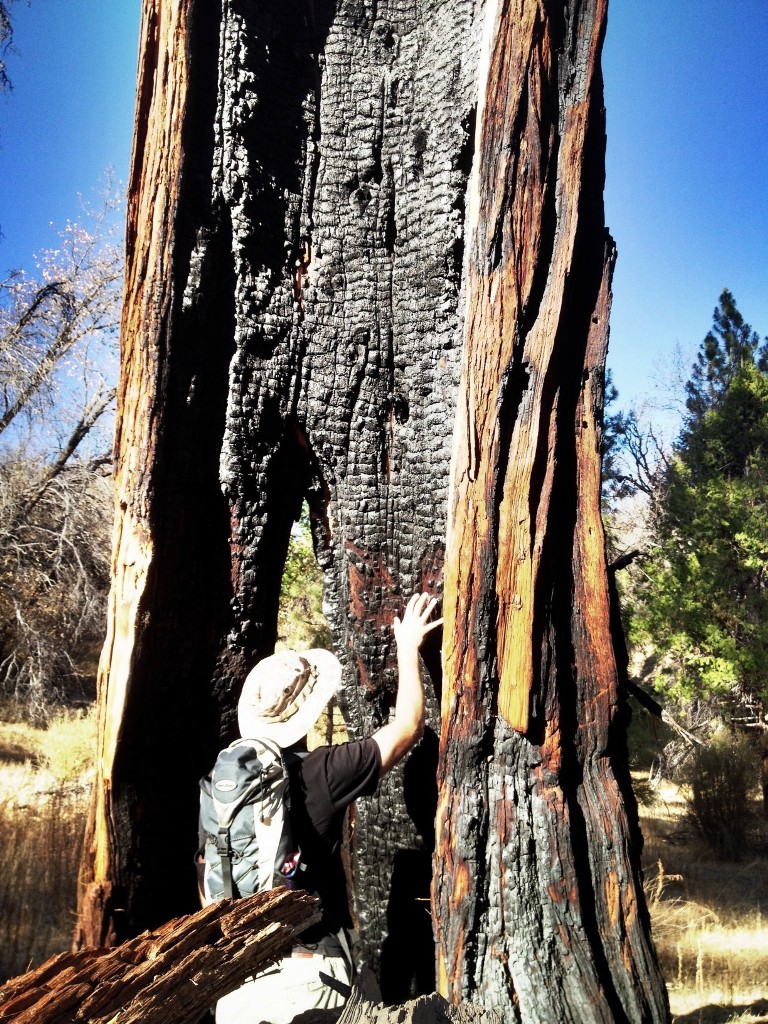
By early afternoon, having been barging and breaking our way through a wildfire charred landscape for hours, I’m streaked in black slash marks and covered in a fine powder of black dust with several red gleaming stinging cuts across both arms .
It’s hot hiking in the sun, for winter. And dry, pretty dry, for winter. But there are a number of pockets of water around replenished if only slightly by the last minuscule rain to fall seemingly so long ago. There’s plenty to keep you alive in a pinch, but not much more than that. And it’s around these few seasonal seeps and channels that drain occasional runoff that we search for tell-tale traces of times long past.
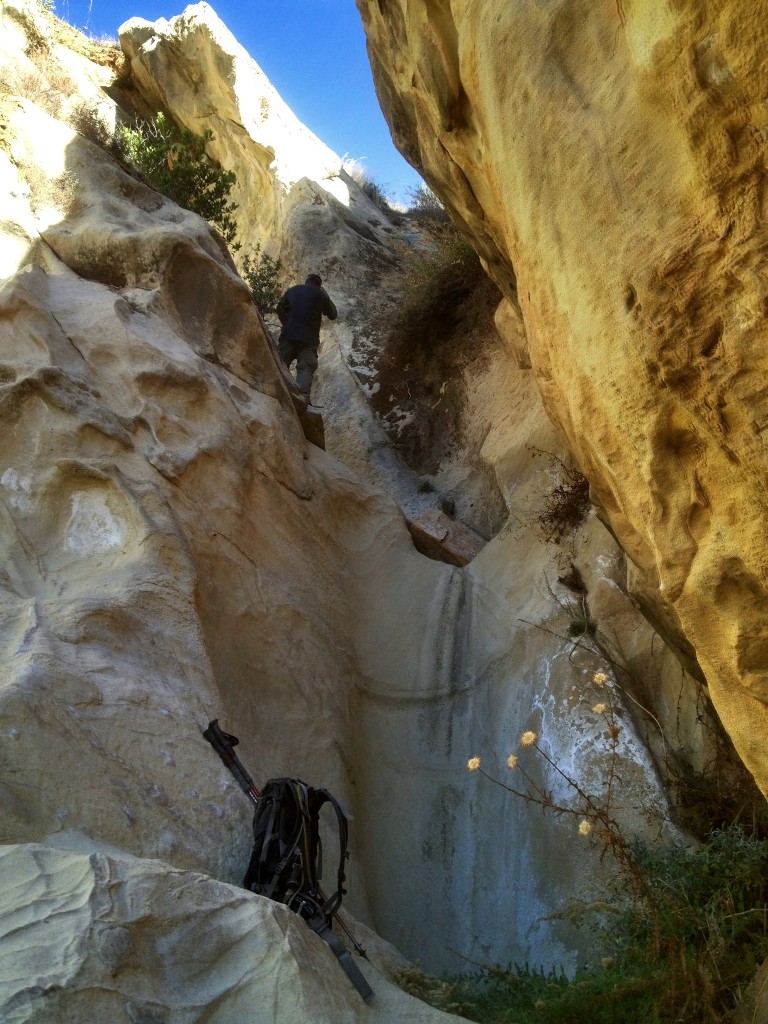 The dry waterfall just below the one shown in the previous photo. Seasonal runoff has carved a deep winding slot through the sandstone bedrock with multiple waterfalls.
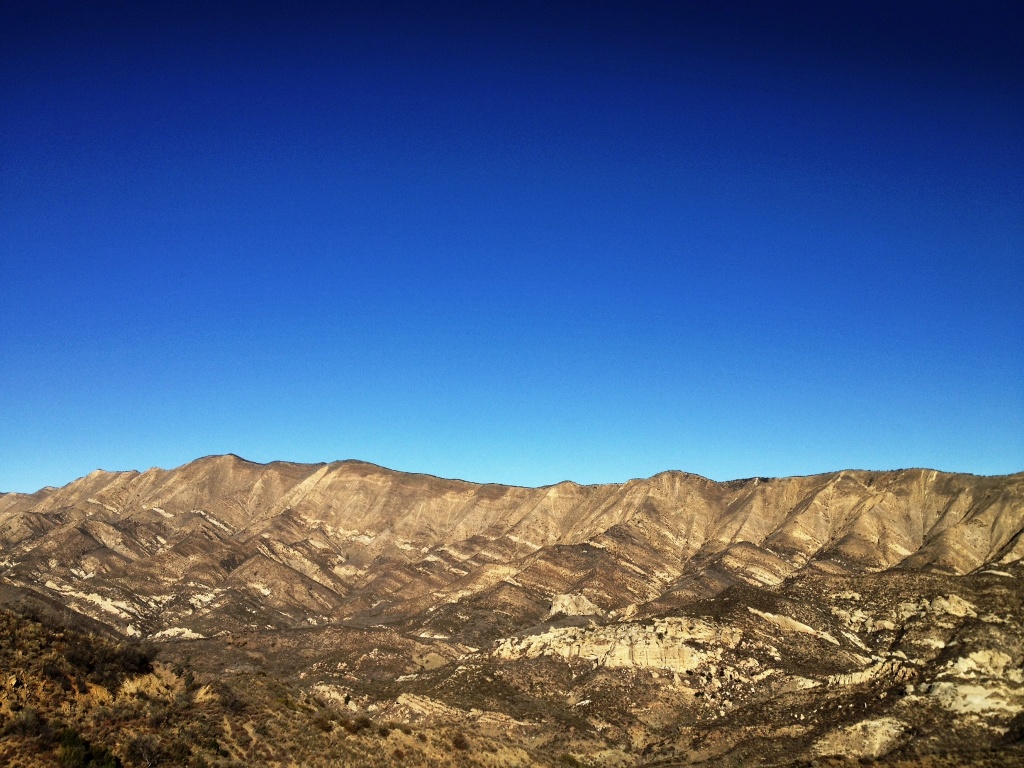
The rugged terrane bristles with chaparral and does not lend itself to easy travel or encourage and invite exploration. It quickly reveals weaknesses. To hike even but a few miles off-trail into its midst requires not just physical, but mental fortitude and the discipline to tolerate a fair amount of various discomforts.
The sun’s blistering glare and heat, even in winter, insidiously saps energy while drawing a constant stream of water from the body, initiating a relentless battle to maintain sufficient hydration, which necessitates constant drinking, usually of less than appetizing warm water drawn from one’s backpack.
Clouds of dirt and charcoal dust explode into the air when breaking through the brush and tramping over the silty dry soil. The superfine particulate coats eyeballs in a gritty film and irritates the nose triggering sneezing fits and sniffling.
And there is the general physical strain of lumbering over a wild landscape of loose soil, shifting rocks and big boulders, across and up and down steep slopes, and through bushes that poke, stab and lacerate soft human flesh like needles and blades. These are the dues that must be paid, nature’s abstract gatekeepers that allow only the most determined and fit adventurers access to the treasures of the backcountry.
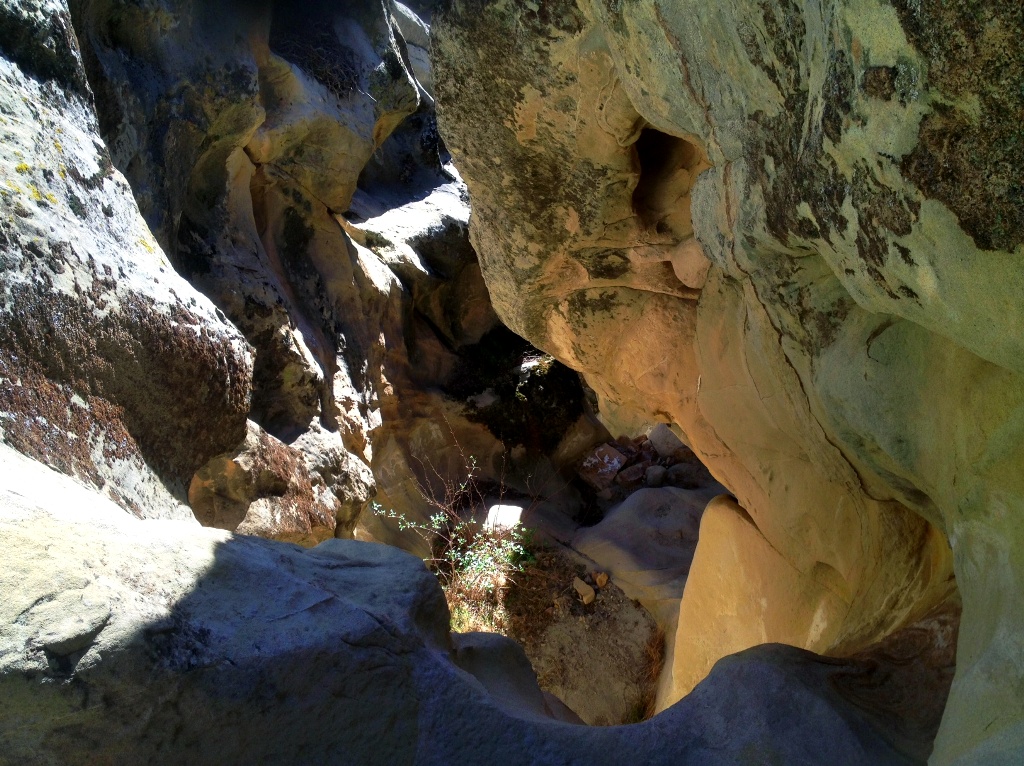 Looking down a miniature gorge. Seasonal runoff flows over the lip of the ledge at the bottom of the photo and falls about ten feet, and then on down the slot over several additional waterfalls.
 Another miniature gorge or tiny slot canyon of a sort. The water flows over the yellowish stone at the bottom of the frame and falls about eight to ten feet before washing down the slot and over additional waterfalls.
Discovering or locating Indian rock art in such a landscape requires indefatigable persistence to press on to the next inconspicuous small cave, alcove or sheltered nook where there may lie hidden a faded, highly eroded pictograph measuring only several inches in size. Finding a pictograph in the chaparral is comparable to locating that needle in haystack everyone talks about.
Looking in every little pocket in the sandstone which may conceal rock art throughout even a small area of rugged terrane is laborious, time consuming hard work. Even if you know the general area where a painted cave is located, you may beat yourself to a bloody, tired mess and not find it or not even cover the entirety of the area in question due to insufficient daylight or depleted energy and waning interest.
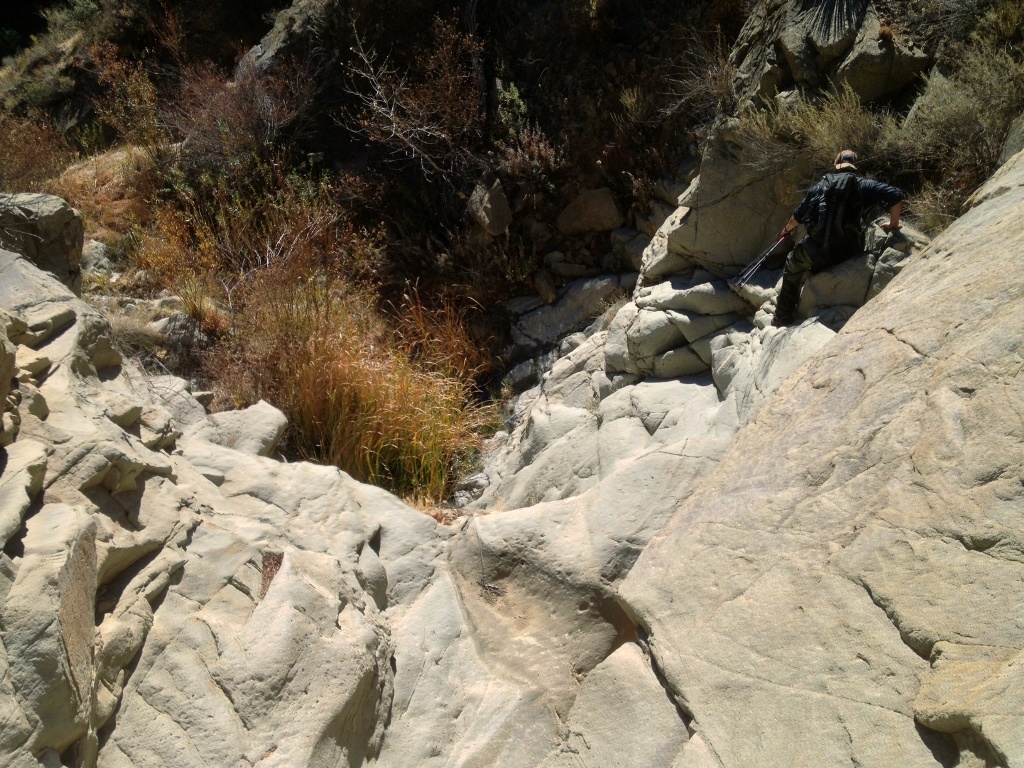 Looking over the edge at Stillman scrambling down a dry creek.
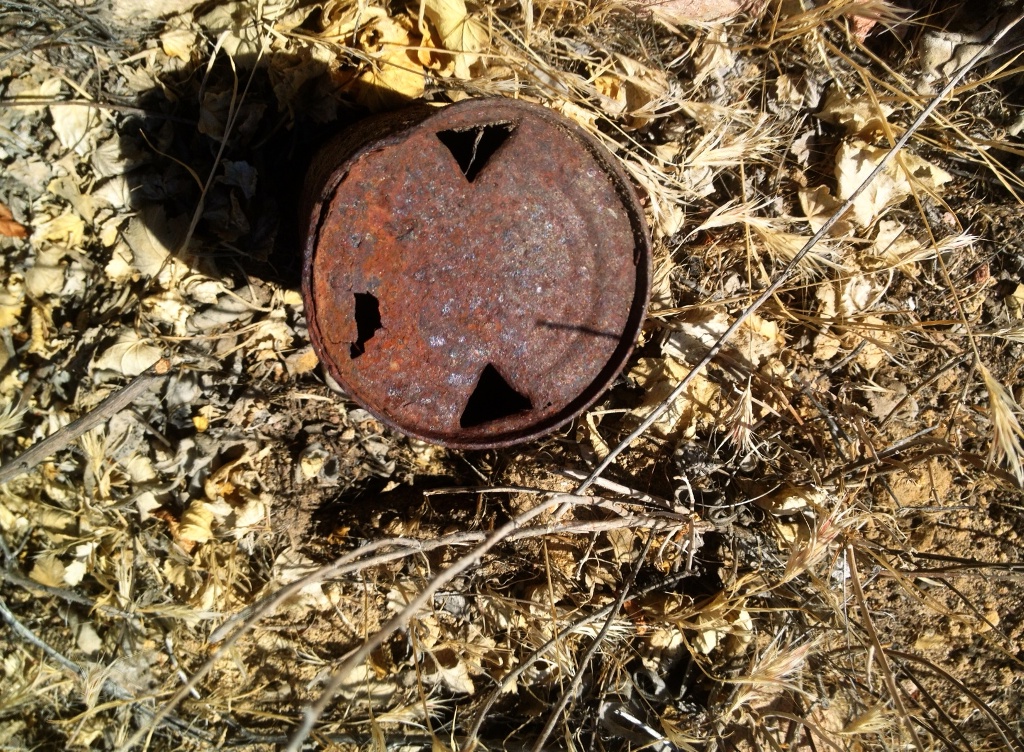 Vintage beer can.
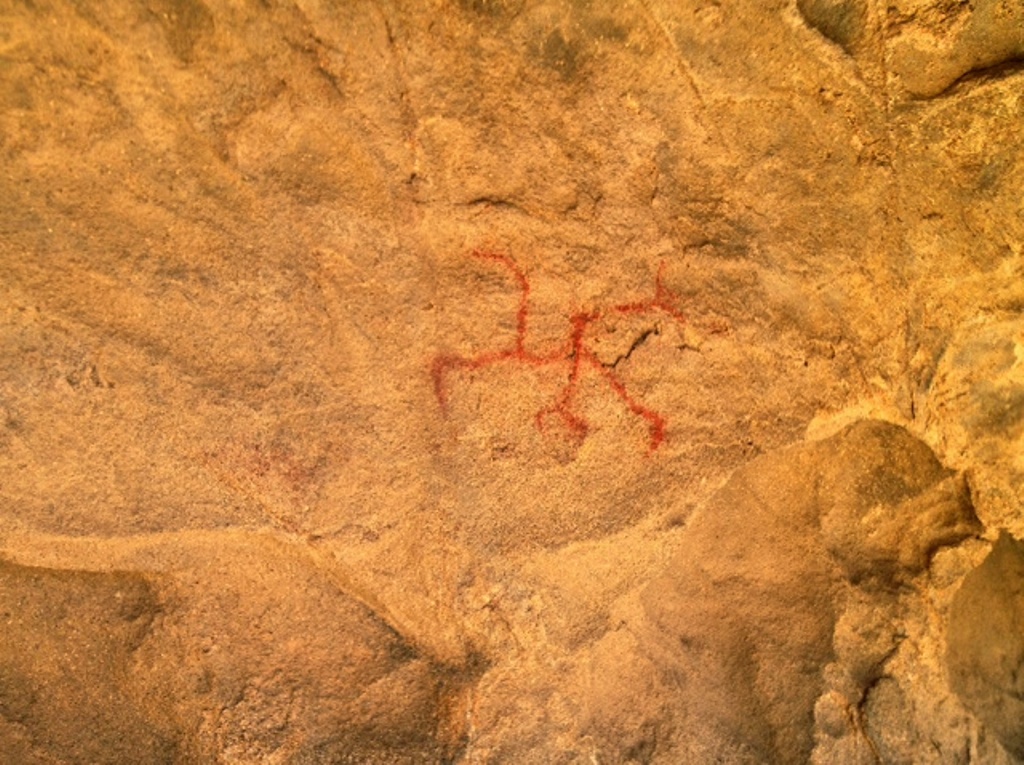
We finally found a single pictograph in an outcrop holding several bedrock mortars. Etiquette dictates that I not provide so much as a single clue to its location and any photos shared be limited in their scope so as not to reveal distinguishing features of the surrounding landscape, which may disclose where the archaeological site might be located.
There exists a contingent of rock art enthusiasts out there who believe it’s their personal duty to enforce such unwritten rules and to protect the exclusivity of such sites for none but the select, chosen few. And if these rules are infringed upon or violated they will not hesitate to inform you of your transgression. No doubt some even grit their teeth over the mere mention of the existence of such archaeological sites in a post entitled such as this one.
Meanwhile, the fragile ever-eroding pictographs and petroglyphs continue fading into oblivion from exposure to the elements. If not intentionally destroyed by vandals or unintentionally by increasing numbers of respectful visitors unknowingly panting moisture laden breath into the caves and kicking up dust, nature will erase these delicate traces of a mystical time long past once and for all. It’s now or later, but it is indeed inevitable.
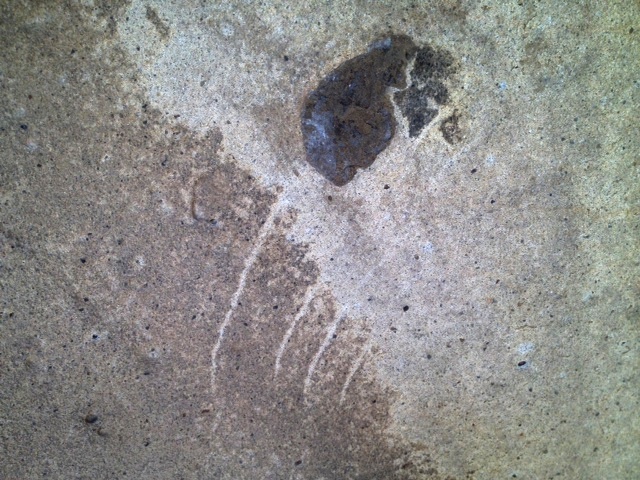 A bear scratch inside a cave. Presumably the bear found the inclusion in the sandstone strangely out of place and pawed at it out of curiosity.
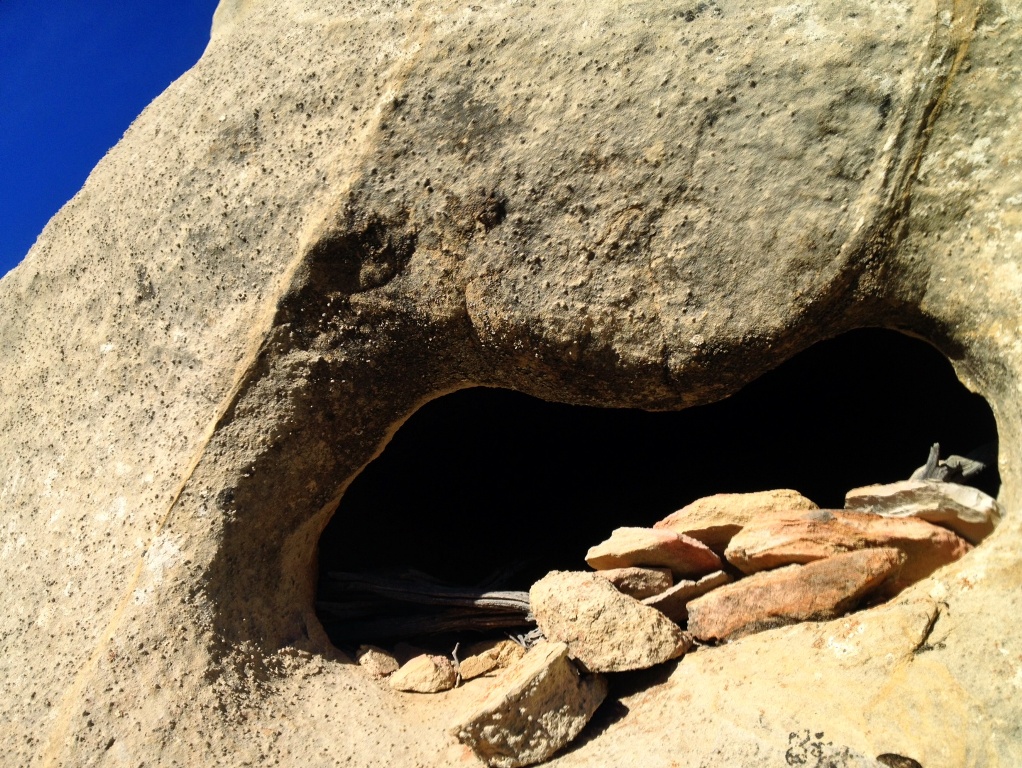 This here’s a deep, completely dry cave. Nice one. There is plenty of space to sleep inside with a lot of extra room, was my first thought. It’s maybe like ten feet long, two to four feet high and three to four feet wide. It has another slightly larger entrance at one end. It very well may have been used as a dry cache by the Chumash. Who stacked those rocks?
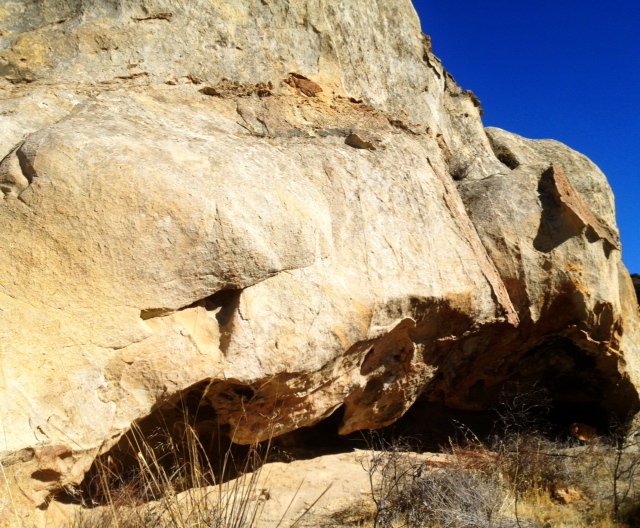 The outcrop holding the mortars and pictograph.
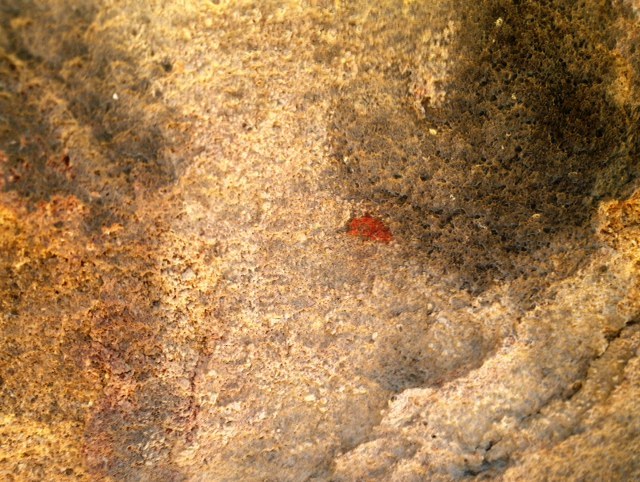 Sometimes all that remains is a tiny spot of paint such as this centimeter wide dot. The Los Padres National Forest spans some 1,752,400 acres.

















 Jack Elliott's Santa Barbara Adventure