8@20 WNW 286°

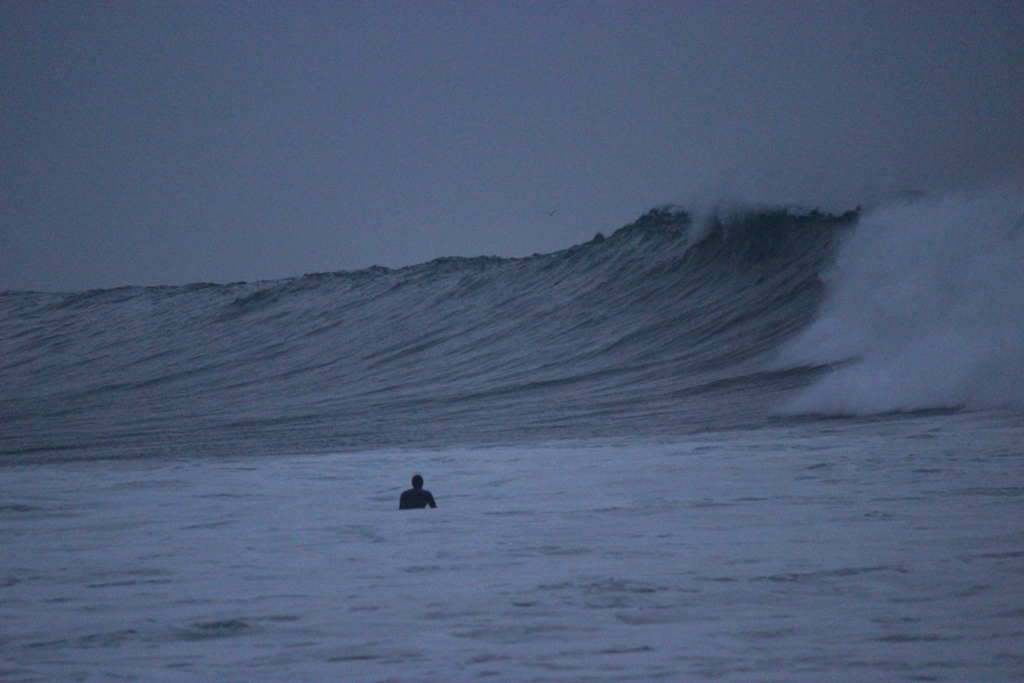
California surf 1-24-14A lesser set wave on Friday, January 24, 2014.

As an observer it’s interesting to me, the big(ger) wave event along this stretch of coastline. I surf and I surf, and I surf, through the months or even years, and everything else around me in the surrounding knot of civilization carries on as usual, indifferent and apart from my experience at the beach. Nobody but surfers and saltwater junkies, the usual suspects, cares or shows any interest in the ocean.

Then comes a large swell event and suddenly the beach is abuzz in activity. Spectators crowd the shoreline just to watch the raw power of the Pacific slam against the edge of the continent. They stand ashore gazing upon the breakers mesmerized as when watching a glassy wavecampfire. Harbor Patrol boats and Coastguard Cutters cruise the roiling nearshore waters, helicopters fly up and down the beaches, and emergency first responders tool around in their various rigs, some towing wave runners.

As the swell grows the crowd in the lineup thins. On the day an exceptionally large swell peaks, typically a much small group of guys are out than I’d expect. The next day, as the swell fades, though still big, the crowd grows proportionate to how much the waves shrink until the surf reaches a more normal size, maybe overhead or whatever, and the lineup is once more thick with scores of bobbing heads. At that point the crowds of spectators and the rest have long disappeared, the coastline again quiet for the most part.

Some days later the waves turn puny and only a few people remain. Completing the cycle, the Pacific eventually flattens out like a lake taking on its namesake calm character. Then, there’s nobody around. They’ve all gone just as fast as they came, a mania of fleeting interest.

Yet I remain.

surf sunset

Posted in Santa Barbara County | Tagged , , , , , , , , , | 7 Comments

Salmon Choking the Santa Ynez (1896)

California southern steelhead Santa BarbaraRainbow Trout (Oncorhynchus mykiss) (c) Timothy Knepp – U.S. Fish and Wildlife Service

The following newspaper brief was published in the San Francisco Call on March 11, 1896 and testifies to the way things once were not all that long ago in the wilds of Santa Barbara County. Whereas historic steelhead runs on the Santa Ynez River are estimated to have numbered up to 30,000 fish, today the number is thought to be somewhere around 100. And, of course, fishing for them is strictly forbidden.

While the story is from the late nineteenth century, large steelhead runs like it describes, aside from the exaggerated number, routinely happened at least as late as the 1940s. Many of the fish identified as salmon in the news clip would likely have been upwards of two feet long, based on historic photos and the stories told by those who were there. And then the monster-sized fish vanished from the forest.

“Anecdotal accounts suggest that run sizes declined precipitously during the late 1940s and 1950s, due possibly to both drought and to anthropogenic changes to the river system such as dam construction,” the National Oceanic and Atmospheric Administration reports in a technical memorandum from 2005.

Ponder the thought of seeing a 30-inch steelhead in a tiny tributary of the Santa Ynez River, deep in the Los Padres National Forest. Not just once, a rare freak happening long thought to no longer be possible, but seeing them routinely through the years. It’s something that sounds preposterous, a laughable fantasy, as based on common experience in the forest these days.

A person just does not expect to see very many or very large fish in the creeks and rivers around here anymore. Tell younger generations or even some middle-aged men who’ve never heard these sorts of true fish stories from the past and you’ll blow their minds.

salmon santa ynez riverThe news clip from 1896, aside from noting the steelhead run, relates the common practice back then of spearing the fish as they passed through the shallows. One might imagine the historic population of Chumash Indians taking the large sea-run trout in a similar fashion through the centuries to supplement their diets with fresh and dried or smoked fish.

santa ynez river trout steelheadA report from a Santa Barbara newspaper reprinted in the Los Angeles Herald on March 15, 1909, which tells of yet another method in which steelhead were once taken by means other than a rod and reel.

On occasion I daydream of the small riverside town of Lompoc, near the mouth of the Santa Ynez River, as a renowned fishing destination. A place where anglers and fishermen flock during steelhead season, the motels and inns fill up, and the breakfast joints and cafes hum with fish stories bantered back and forth among old men in flannel and denim, suspenders pulled tight over shoulders, sipping black coffee. The walls of the eateries decorated with old fishing rods and reels, handcrafted lures and flies, taxidermy, and scores of photos documenting the memorable fishing experiences of its out-of-town patrons and locals alike, men, women and children, and the town’s main street dotted with small tackle shops and pickup trucks and SUVs, their rear windows and bumpers polka dotted with various outdoorsy-type stickers.

The town is nothing like that today, and I don’t necessarily wish it was, but I entertain the thought amusingly, because it very well might have been.

Related Post:

santa-ynez-river-steelhead-1942Native Steelhead of Yore on the Santa Ynez River

Posted in Santa Barbara | Tagged , , , , , , , , , , , | Leave a comment

Mussel Harvest At Low Tide: Modern Man, Ancient Practice

Santa Barbara winterIt’s been 80 degrees the last few days; winter in Santa Barbara.

The negative low tides of winter offer a great chance to get the kids out on the beach exploring tide pools and instill in them a curiosity and appreciation for the natural world that might last a lifetime, as was the case for me. The marine environment, after all, is yet another wilderness. When they grow old enough I’ll have the three of them out in the water free diving the submarine forests of giant kelp, which I think are far more spectacular than those forests on land.

As a boy I spent many, many hours and long days at the beach, which typically occurred at Summerland, a tiny town just south of Santa Barbara, because my mom was somewhat of a hippie and back in those days it was a nude beach. Sometimes we went to More Mesa beach. We would arrive in the a.m. hours like nomads hauling our supplies and leave in the late afternoon. Later, as an older boy without supervision, I would get dropped off at “The Pit” or Arroyo Burro beach as well as Campus Point.

My cousin and I would ramble up and down the Summerland seashore playing about when we weren’t out in the water boogieboarding. There was a natural freshwater seep below the railroad tracks down there which filled a small mucky but clear and deep puddle, which was always a favorite attraction. A few goldfish lived in it for a time which somebody had tossed in the tiny pool.
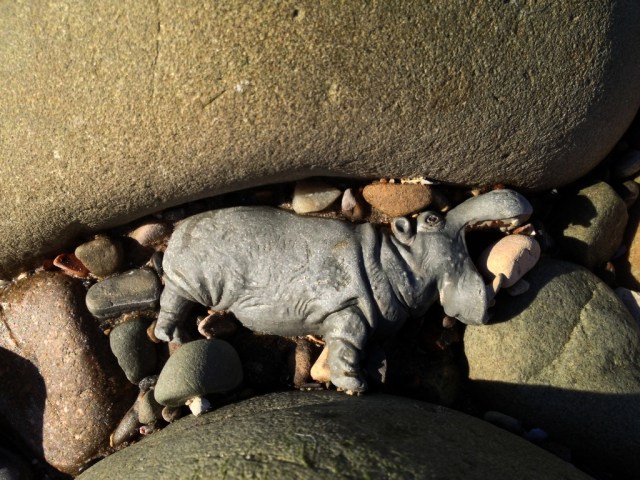
santa barbara beachcombingHungry, hungry hippo found while beachcombing.

Exploring the base of the prominent landmark cliff around Loon Point in Summerland, we discovered a large deposit of old abalone shells scattered about. I have for years wanted to check back to see if I could relocate it, but haven’t gotten around to it. I’m not sure who dumped them or why. They looked aged at the time, but I don’t think ancient, though who knows, I was young.

I’ve wondered recently if the shells were an Indian midden. Whatever period they came from it was a time, obviously, when abalone in California were still plentiful and harvested as a delicacy of the sea. Those times have long since passed, for the most part. The only experience I have with red abalones are seeing the numerous shells decorating the wall of an older friend’s house in Carpinteria, the mustachioed waterman, Mr. S.C.

So I’m left to scrounge California mussels, which, though being abundant and easily taken, have never been as coveted as abalones but are still pretty darn tasty.
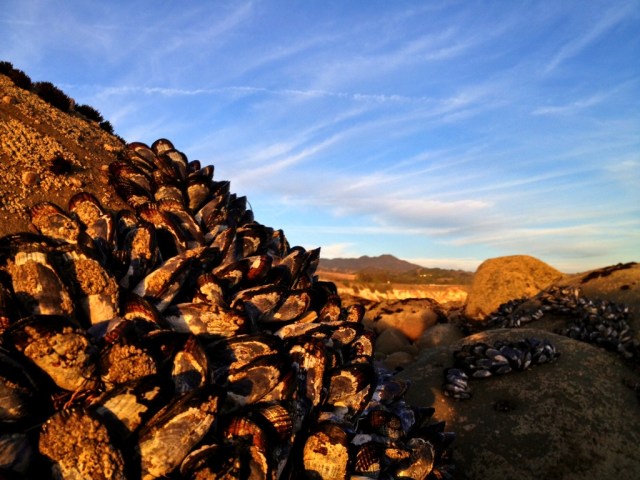
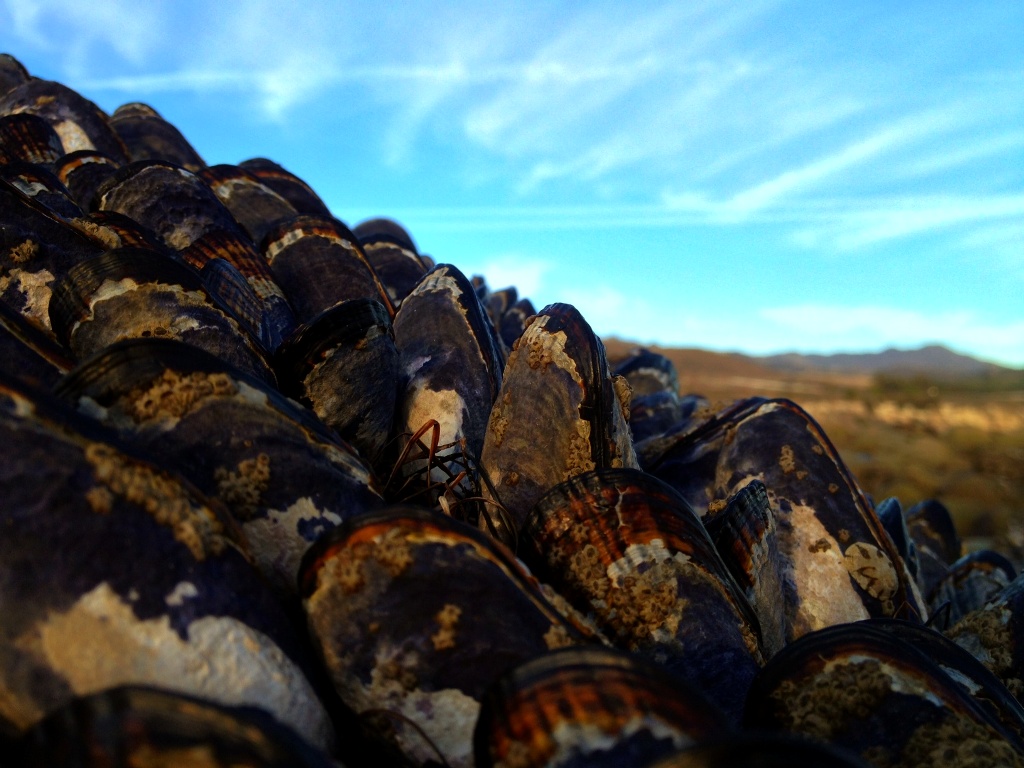
California mussels Santa Barbara CountyA mussel encrusted boulder, the Santa Ynez Mountains and Los Padres National Forest in the distant background.

The archaeological record as pieced together from middens found on San Miguel, the westernmost of the Santa Barbara Channel Islands, suggests mussels have been a valuable item in the human diet for at least 10,000 years. (Journal of Archaeological Science PDF)

The same midden evidence shows an apparently significant decrease in the size of mussels harvested as the shellfish are thought to have faced increased pressure from a burgeoning Native American population. Mussels were a highly valued food source. These days, by contrast, mussels commonly reach their full-sized potential because almost nobody eats them.

As I squat barefoot in a t-shirt and shorts in mid-winter among large boulders three to four feet high, plucking mussels from the seashore at low tide, I think of the Chumash village that was once located a few yards behind me. No doubt humanity has been harvesting the bivalve mollusks from this beach for a long time and I take pleasure in practicing an ancient, simple and slow activity amid the timelessness of the sea during a hurried era of otherwise supreme sophistication.

California mussels Santa BarbaraThe rhythmic crash and roar of breaking surf serves as soundtrack along with the occasional cry from nearby gulls. The thick organic scent of exposed beach at low tide fills the air, as a glassy-eyed seal pokes its sleek head above the waterline peering at me in wonderment.

I have found numerous sandstone bowls, both remnant pieces and fully intact, at this location through the years, though never actually purposely looking for them. One cold winter dawn while donning my wetsuit to paddle out to surf here, on a high tide with exceptionally large swell pounding the shoreline, I noticed a significant amount of soil and rock had been stripped from the back-shore.

The tumbling of cobblestones was not just audible with each powerful sweep of foaming whitewater across the shoreline. I could also feel the rumble, the physical expression of energy carried through thousands of miles of open ocean from a far distant storm, which had transferred its power from the atmosphere to the sea, and that now exploded against the edge of the continent.

Understanding the possibility, I had cast my gaze around the immediate area in front of me and instantly spotted two different bowl halves lying wet and tumbled among the rocks, the edge of one still crusted with natural seep oil once used to attach a basket. After surfing for three hours or so I returned to shore and spotted yet another artifact as I unsuited, a fully intact bowl lying upright on the cobblestones.

Santa Barbara beach sunsetGathering mussels is fast and easy, but cleaning them is laborious. As I pull them from the rocks I toss them in a tide pool hoping to encourage them to crack their shells and disgorge any sand they hold inside. Gulls have begun perching atop nearby rocks jockeying for position and hoping for an easy meal.

Once I’ve collected enough for a meal I scrape each shell vigorously against a rock to remove the small barnacles, sea anemones and limpets (also edible) that cling to their shells, after which I toss them back into the tide pool.

Finishing the task in the fading glow of twilight I walk back up the canyon with my sack of fresh seafood, walking under the gnarled and leafless sycamore trees and the canopy of coast live oak, the silence of a waterless dry creek bed a notable testament to the current severe drought conditions in California. From the beach to the kitchen within an hour, it’s fresh dinner for the night.

(Author’s note: Mussels are quarantined each season due to the potential for poisoning from the consumption of marine biotoxins. Check with the California Department of Public Health for further information: Shellfish Information Line (800) 553-4133.)
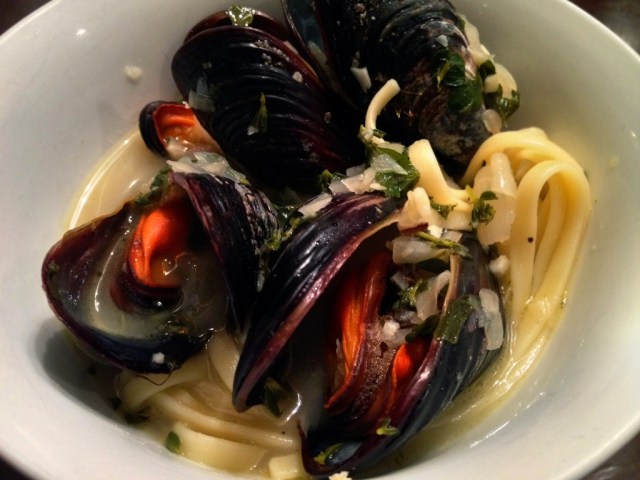
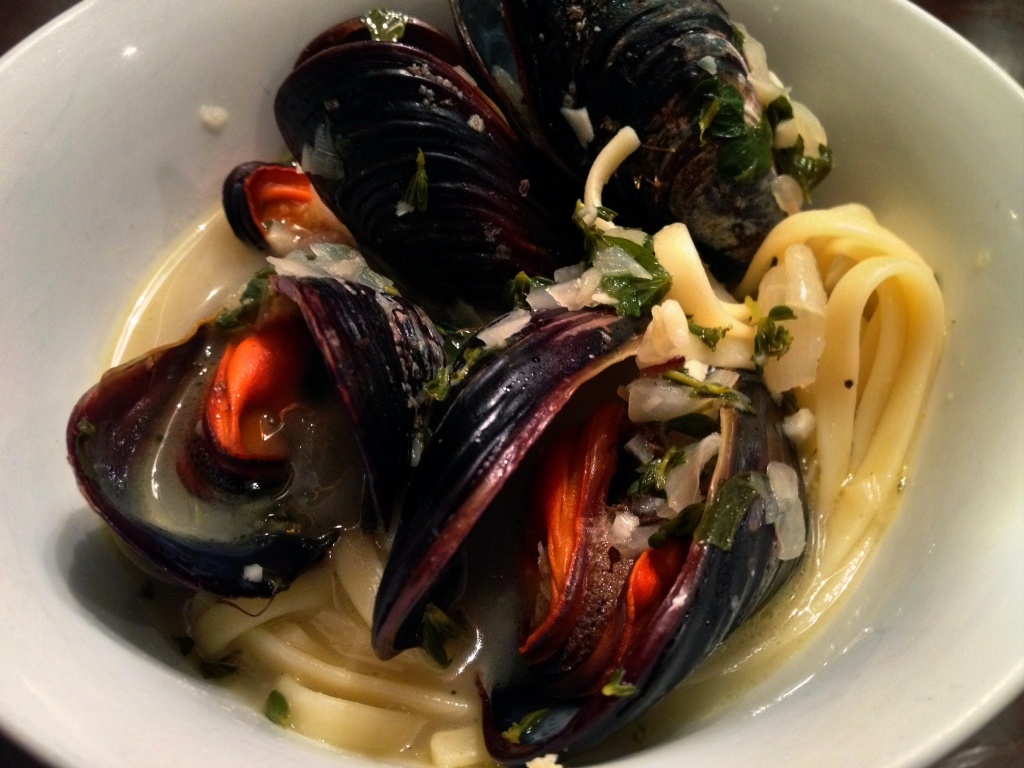
Pacific mussels white wine brothFresh mussels and linguine in a white wine broth. It’s good stuff, Maynard, I’m tellin’ ya.

Posted in Santa Barbara County | Tagged , , , , , , , , , , , | 4 Comments

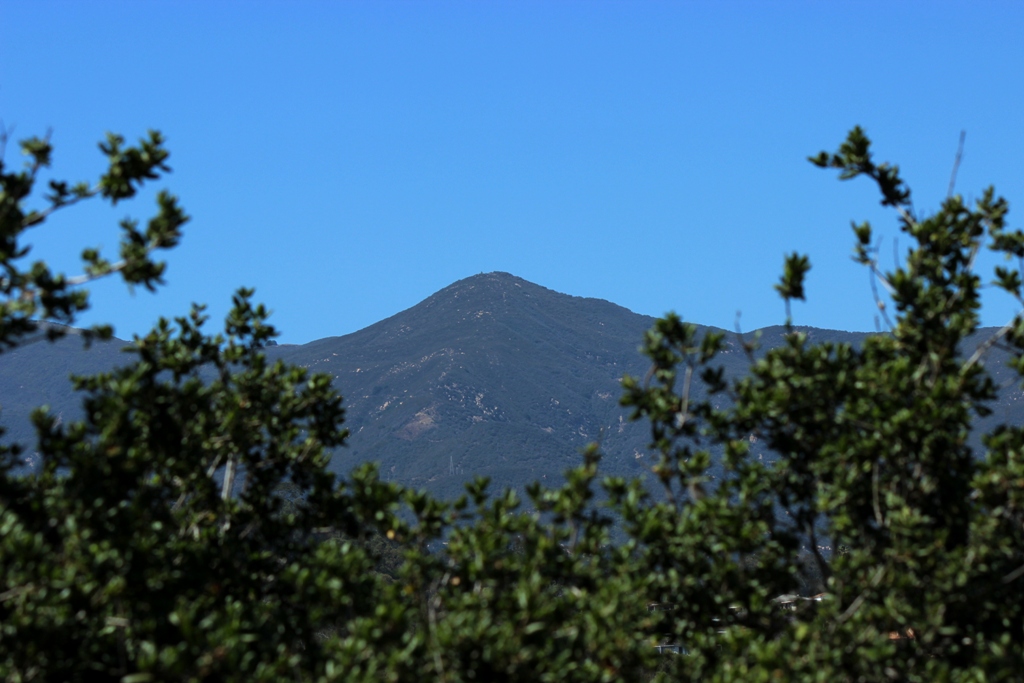
Montecito Peak, Santa Ynez Mountains

San Ysidro Peak 1Montecito Peak, Santa Ynez Mountains

Numerous parked cars line the road at the trailhead when I arrive one September morning. Several people in different small groups linger about getting ready for a walk or returning therefrom. A few voices resonate in the canyon. I don’t like it. It’s not even a busy day, but I don’t like it.

I haven’t spent much time on Santa Barbara’s frontcountry trails in many years. Too many people, and the sight and sound of the city, which can be hard to escape on the frontside of the Santa Ynez Mountains though there are indeed quieter nooks to be found, tend to ruin the ambiance and mindset I’m typically after when I go out for a hike.

I’ve flown down the trails at white-knuckled dangerous speed on my mountain bike far more than I’ve ever hiked them and likely ever will hike them. My arrival at Cold Springs Trailhead this warm and sunny fall day reaffirms my existing aversion to the frontcountry trails.

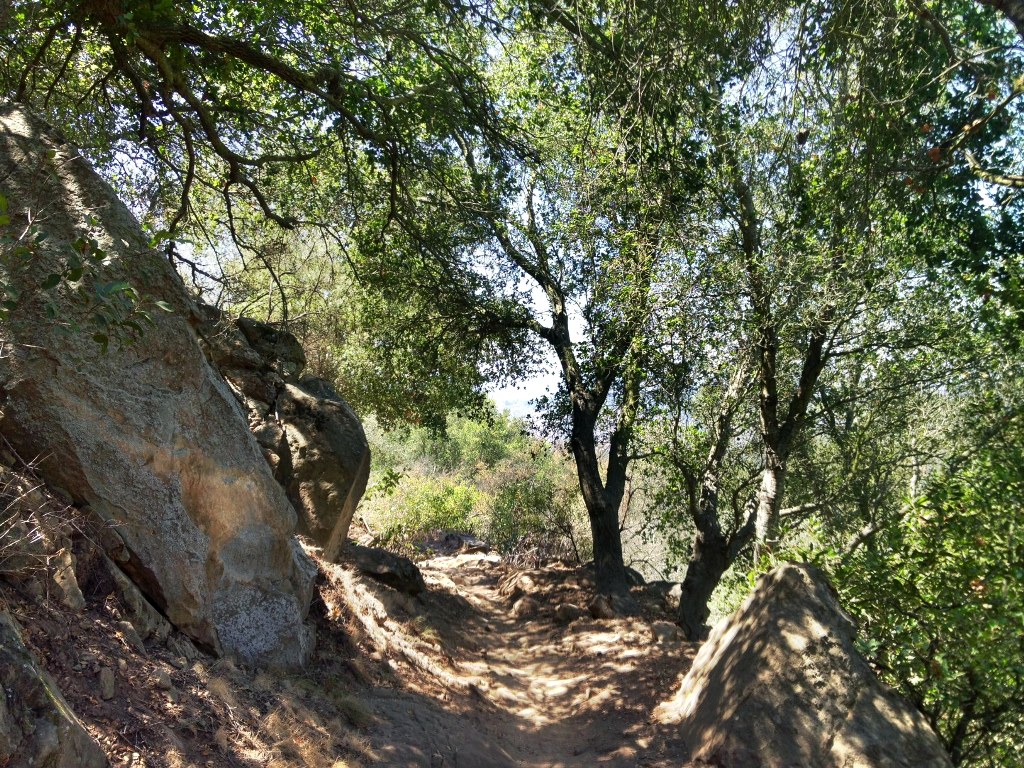
San Ysidro Trail Los Padres National ForestEast Fork Cold Springs Trail through the oaks and sandstone.

San Ysidro Trail eucalyptusThe East Fork Cold Springs Trail eucalyptus. Maybe this tree was a volunteer, I don’t know, but it sure would have been nice if an oak tree was planted instead!

bag of dog shitI step from the pavement to the dirt eagerly looking forward to getting up the mountain. Having seldom walked the trail, having spent more time hopping cobblestones up the creek if’n I do visit Cold Springs Canyon on foot, I’m shocked at the numerous highly worn and wide use trails crisscrossing the mountainside. It seems every corner on a trail is routinely cut leading to new unstable paths and subsequent erosion. My antipathy grows, my irascible nature being stoked. It’s all too trampled and crowded for my likes.

A few minutes up the superhighway of a footpath and I come to a little bag sitting beside the trail. It’s somewhat common. I see it at the beach, too, and I’ve actually done it before myself, picked up after the dog and set the bag aside to grab on the return walk. Because who wants to tote a warm sack of it around?

Yet I have carried it before, too, which is no small item to note when you have a 170 pound Great Dane. Sometimes I’ve tied the bag to the end of a piece of driftwood to gain some distance and avoid the stream of stench wafting from it. Thirty or forty minutes or however long of kicking around a long beach at low tide walking the dog with my bindle of excrement. I can’t imagine it’s any more enjoyable carrying it up a mountain trail on a warm day.

Santa Ynez Mountains San Ysidro Trail A view of the Santa Ynez Mountains from the trail showing slopes carpeted in chaparral and the canyon bottom shaded by much lusher riparian canopy.

Holly-leaved cherries Prunus ilicifoliaHolly-leaved cherries are edible and have a thin layer of yellowish pulp that can be sweet and juicy. (Related Post: Holly-leaved cherries, called ‘akhtayukhash in Barbareno Chumash).

I understand why people bag it and set it aside. Though it may be temporary, to every person who then passes by it’s no different than any other piece of litter that spoils a scene. Reminds me of a time I came across dirty diapers at Red Rock on the Santa Ynez River. Not much different, both bags of crap lying around, just from different animals.

And so the majority of people are expected to tolerate the unsightly dropping of trash on trail so that one person can avoid the inconvenience of being a responsible and considerate pet owner. In economics this is referred to as a “negative externality,” or a cost affecting a person who did not choose to incur it.

For whatever reason on this day the bag of poop irked me more than usual and made me strike a deal with myself to not again be “that guy.” I have no moral authority here or interest in preaching, but think about it folks.

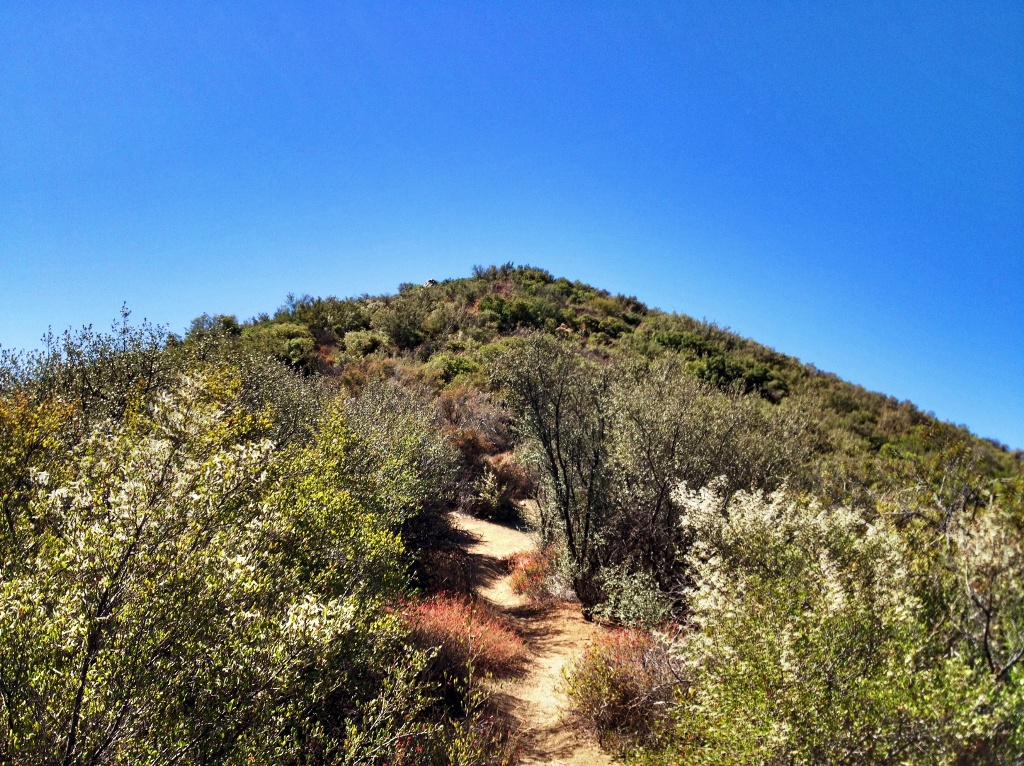
San Ysidro Peak TrailThe final length of trail to the top of Montecito Peak.

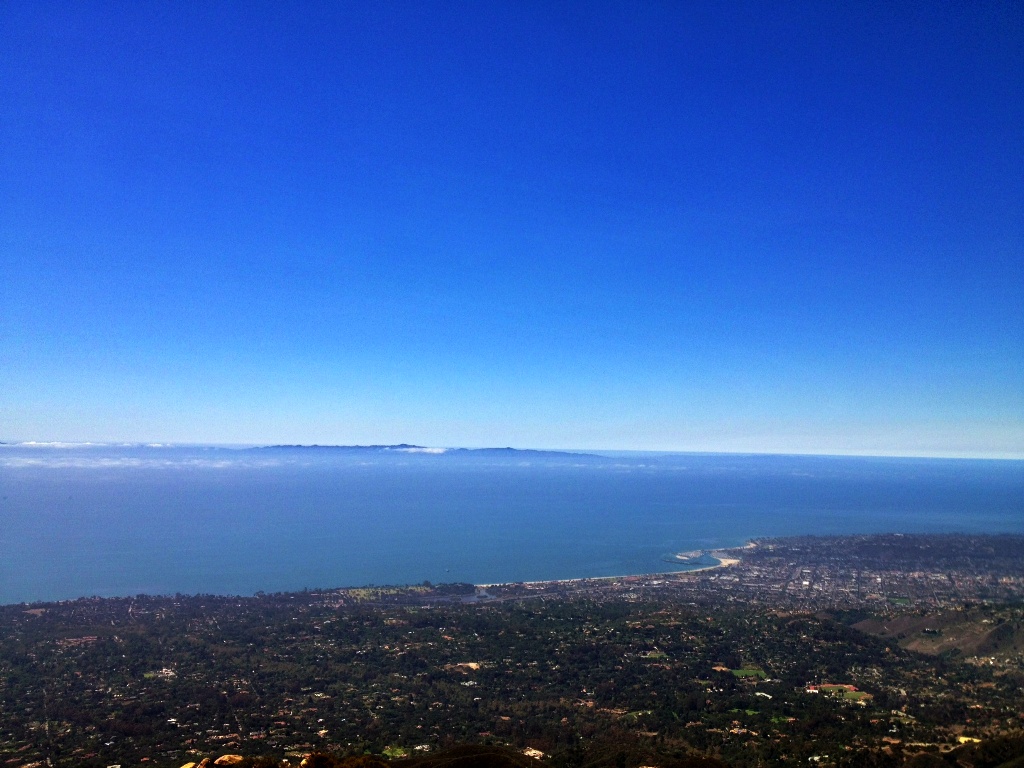
San Ysidro Peak view Santa BarbaraView of Santa Barbara and Pacific Ocean from Montecito Peak, the crest of Santa Cruz Island just visible above the marine layer in the channel.

Posted in Santa Barbara County | Tagged , , , , , , , , , | 7 Comments

Oyster Mushrooms

sandstone caveWind carved tunnel through soft sandstone.

We spent yesterday morning wambling our way through the brush, up a shady wet canyon and back down the canyon, up an adjacent exposed sunny ridge over and down again the same canyon. Over to the next canyon, the sight of which, dry, narrow, tight and clogged with brush, quickly withered our enthusiasm. So we called it quits by half-day and headed back out not without a few scratches and a bit of frustration.

Oyster MushroomTiny oyster mushrooms waiting for rain that won’t come in time.

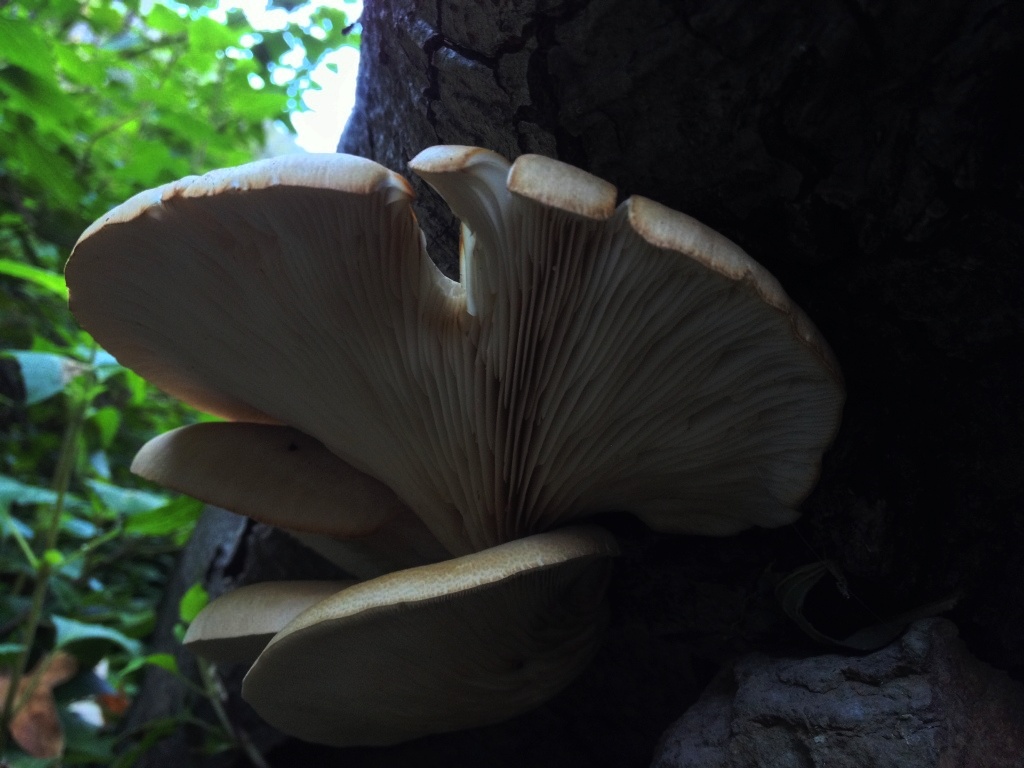
I did manage to spot a few still fresh oyster mushrooms, which during this spectacularly dry winter, in the midst of an increasingly severe drought, might be unexpected. I saw a number of tiny oysters that had sprouted after the last rain only to be thwarted and turned woody, their growth cycle stopped dead, by no subsequent rain showers. These fresh ones below had sprouted from the underside of a log about a foot above the trickling creek and so managed to suck up enough moisture to grow to decent size.
Oyster MushroomsWild oyster mushrooms are a tasty treat when lightly battered and fried in butter and olive oil or a bit of bacon grease.

Related Posts:
Hericium Mushrooms of Santa Barbara County
oyster mushrooms growing on logOyster Mushrooms
Giant Puffballs
Gem Studded Puffballs
Chanterelle Mushrooms

Posted in Santa Barbara County | Tagged , , , , , | 1 Comment