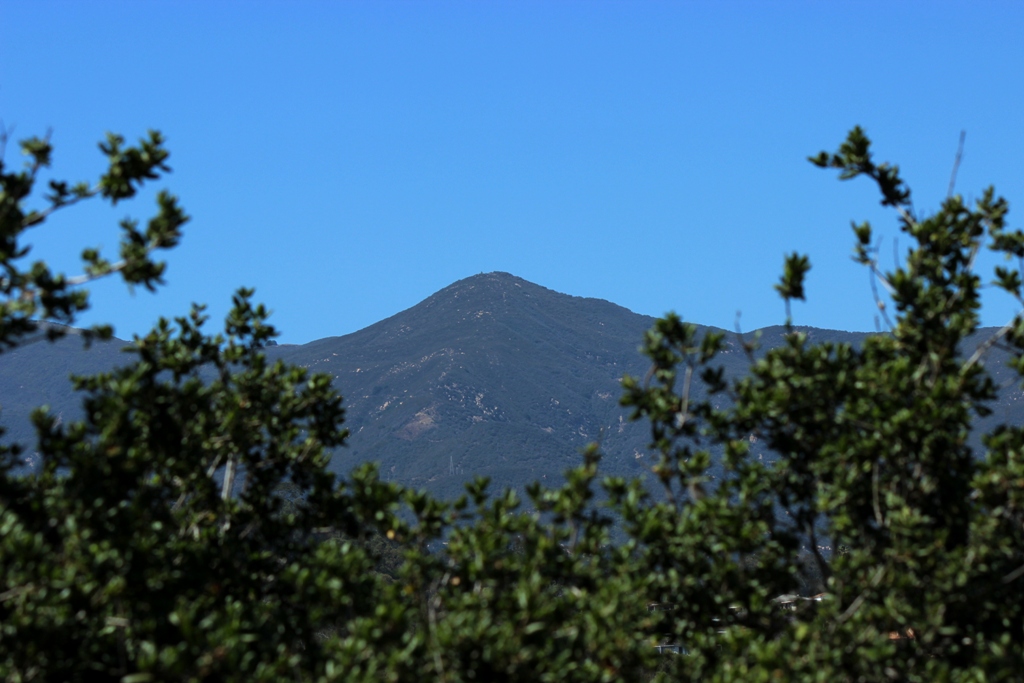
Montecito Peak, Santa Ynez Mountains

San Ysidro Peak 1Montecito Peak, Santa Ynez Mountains

Numerous parked cars line the road at the trailhead when I arrive one September morning. Several people in different small groups linger about getting ready for a walk or returning therefrom. A few voices resonate in the canyon. I don’t like it. It’s not even a busy day, but I don’t like it.

I haven’t spent much time on Santa Barbara’s frontcountry trails in many years. Too many people, and the sight and sound of the city, which can be hard to escape on the frontside of the Santa Ynez Mountains though there are indeed quieter nooks to be found, tend to ruin the ambiance and mindset I’m typically after when I go out for a hike.

I’ve flown down the trails at white-knuckled dangerous speed on my mountain bike far more than I’ve ever hiked them and likely ever will hike them. My arrival at Cold Springs Trailhead this warm and sunny fall day reaffirms my existing aversion to the frontcountry trails.
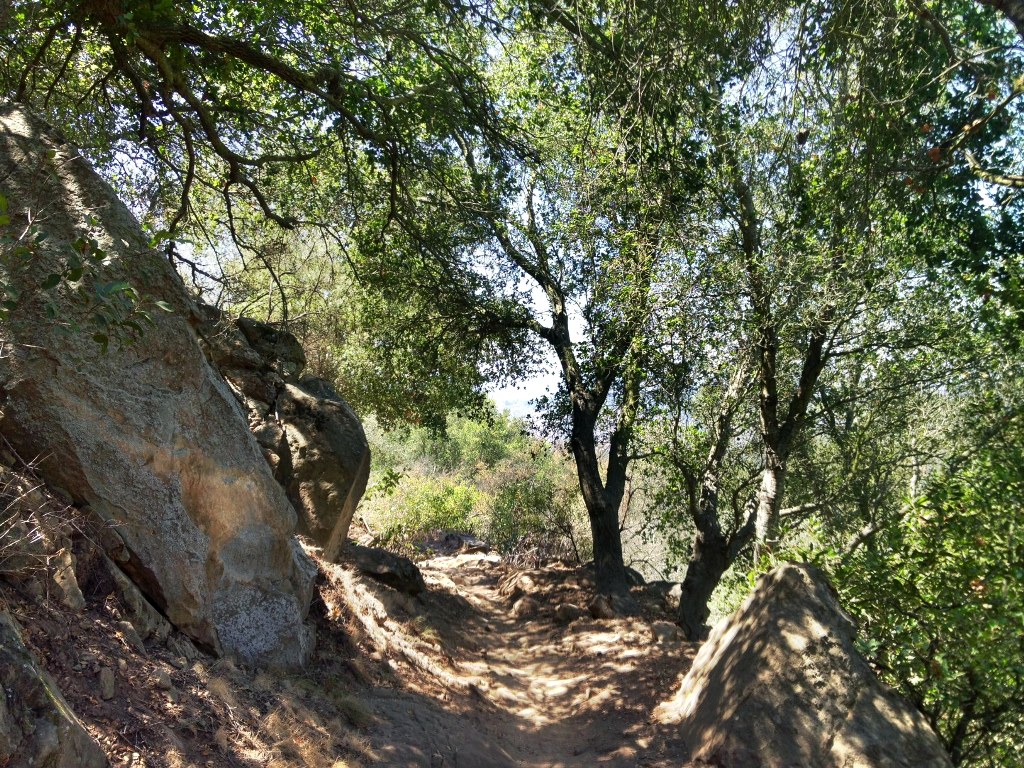
San Ysidro Trail Los Padres National ForestEast Fork Cold Springs Trail through the oaks and sandstone.

San Ysidro Trail eucalyptusThe East Fork Cold Springs Trail eucalyptus. Maybe this tree was a volunteer, I don’t know, but it sure would have been nice if an oak tree was planted instead!

bag of dog shitI step from the pavement to the dirt eagerly looking forward to getting up the mountain. Having seldom walked the trail, having spent more time hopping cobblestones up the creek if’n I do visit Cold Springs Canyon on foot, I’m shocked at the numerous highly worn and wide use trails crisscrossing the mountainside. It seems every corner on a trail is routinely cut leading to new unstable paths and subsequent erosion. My antipathy grows, my irascible nature being stoked. It’s all too trampled and crowded for my likes.

A few minutes up the superhighway of a footpath and I come to a little bag sitting beside the trail. It’s somewhat common. I see it at the beach, too, and I’ve actually done it before myself, picked up after the dog and set the bag aside to grab on the return walk. Because who wants to tote a warm sack of it around?

Yet I have carried it before, too, which is no small item to note when you have a 170 pound Great Dane. Sometimes I’ve tied the bag to the end of a piece of driftwood to gain some distance and avoid the stream of stench wafting from it. Thirty or forty minutes or however long of kicking around a long beach at low tide walking the dog with my bindle of excrement. I can’t imagine it’s any more enjoyable carrying it up a mountain trail on a warm day.

Santa Ynez Mountains San Ysidro Trail A view of the Santa Ynez Mountains from the trail showing slopes carpeted in chaparral and the canyon bottom shaded by much lusher riparian canopy.

Holly-leaved cherries Prunus ilicifoliaHolly-leaved cherries are edible and have a thin layer of yellowish pulp that can be sweet and juicy. (Related Post: Holly-leaved cherries, called ‘akhtayukhash in Barbareno Chumash).

I understand why people bag it and set it aside. Though it may be temporary, to every person who then passes by it’s no different than any other piece of litter that spoils a scene. Reminds me of a time I came across dirty diapers at Red Rock on the Santa Ynez River. Not much different, both bags of crap lying around, just from different animals.

And so the majority of people are expected to tolerate the unsightly dropping of trash on trail so that one person can avoid the inconvenience of being a responsible and considerate pet owner. In economics this is referred to as a “negative externality,” or a cost affecting a person who did not choose to incur it.

For whatever reason on this day the bag of poop irked me more than usual and made me strike a deal with myself to not again be “that guy.” I have no moral authority here or interest in preaching, but think about it folks.
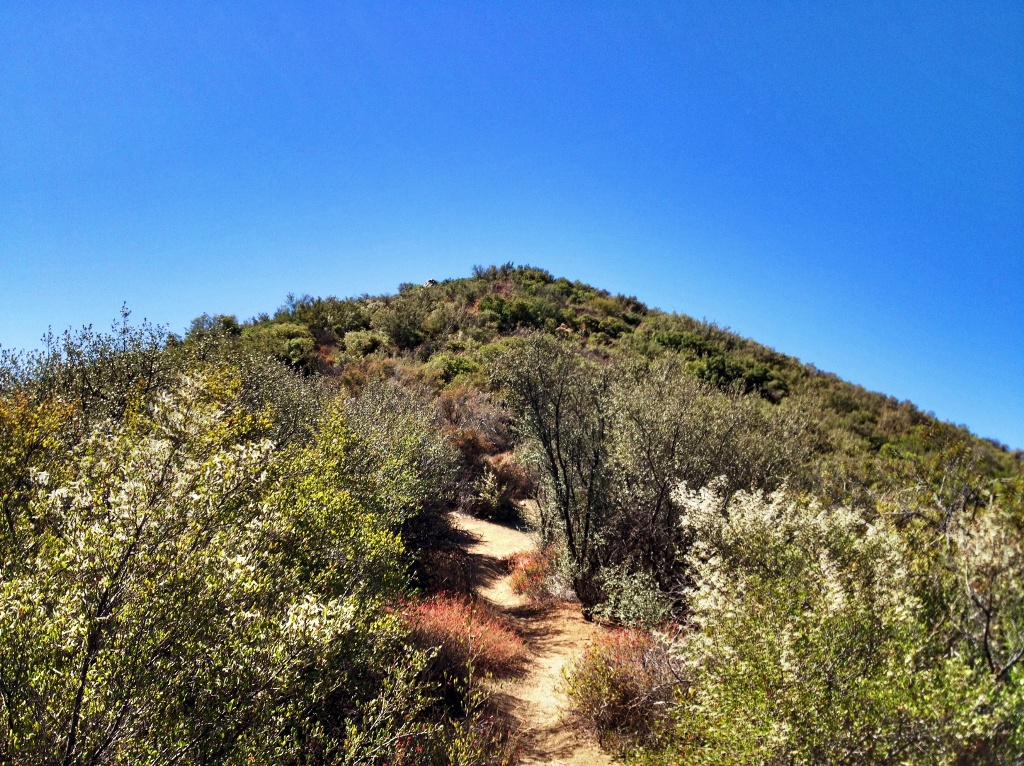
San Ysidro Peak TrailThe final length of trail to the top of Montecito Peak.
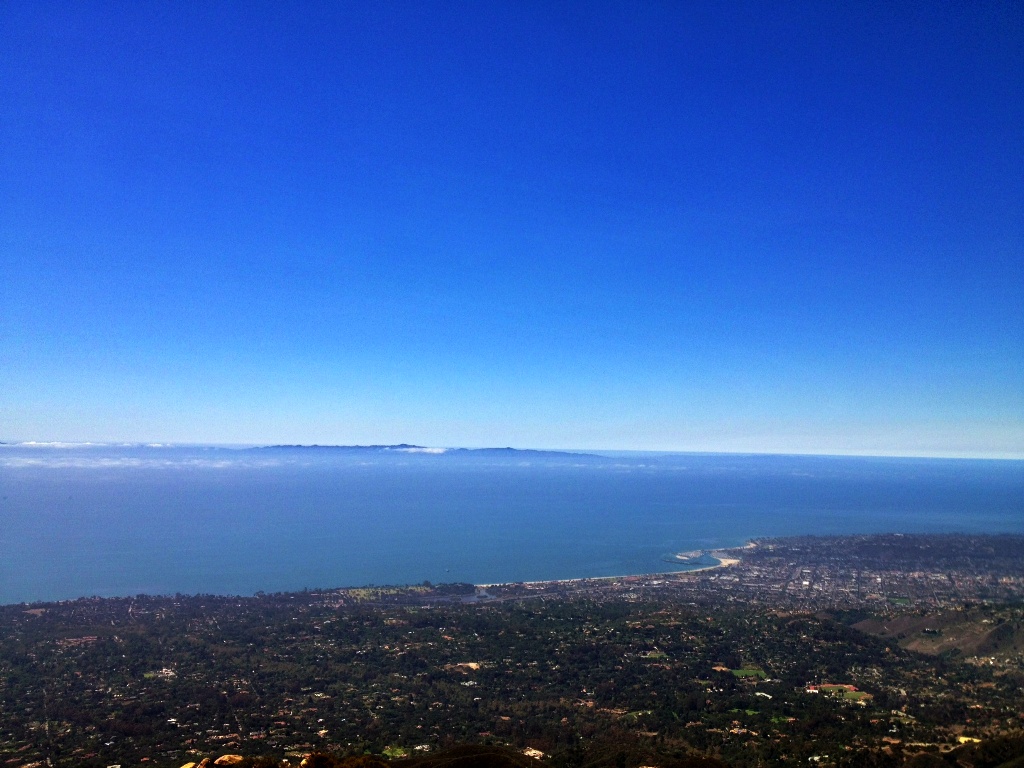
San Ysidro Peak view Santa BarbaraView of Santa Barbara and Pacific Ocean from Montecito Peak, the crest of Santa Cruz Island just visible above the marine layer in the channel.

Posted in Santa Barbara County | Tagged , , , , , , , , , | 7 Comments

Oyster Mushrooms

sandstone caveWind carved tunnel through soft sandstone.

We spent yesterday morning wambling our way through the brush, up a shady wet canyon and back down the canyon, up an adjacent exposed sunny ridge over and down again the same canyon. Over to the next canyon, the sight of which, dry, narrow, tight and clogged with brush, quickly withered our enthusiasm. So we called it quits by half-day and headed back out not without a few scratches and a bit of frustration.

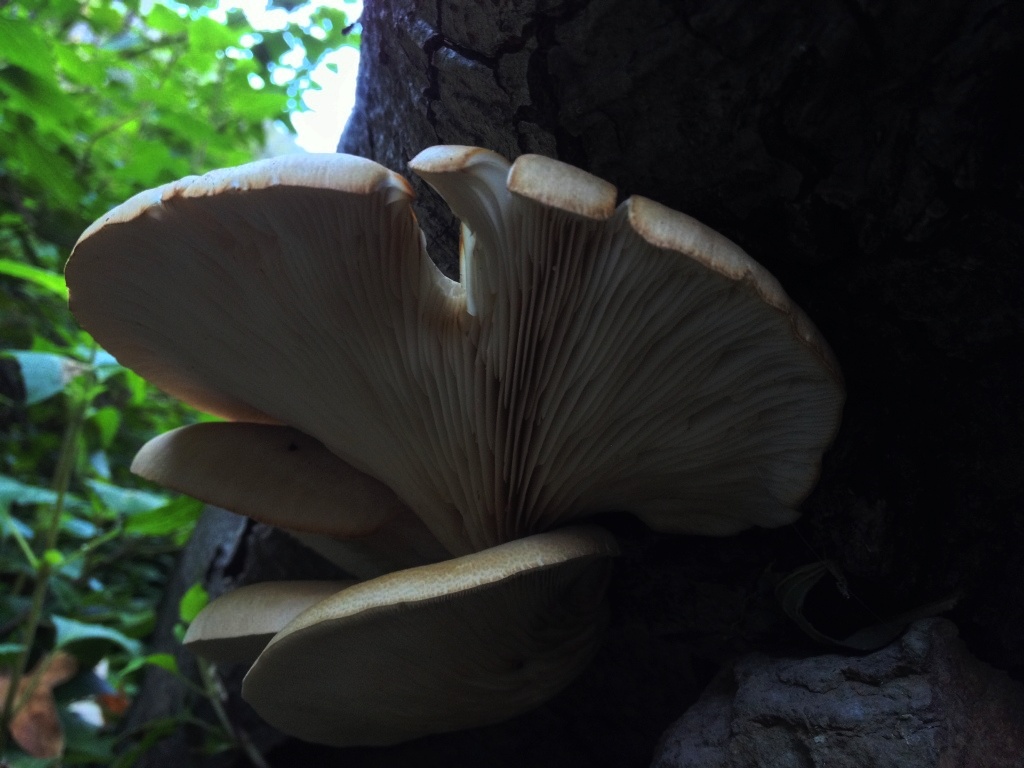
Oyster MushroomTiny oyster mushrooms waiting for rain that won’t come in time.

I did manage to spot a few still fresh oyster mushrooms, which during this spectacularly dry winter, in the midst of an increasingly severe drought, might be unexpected. I saw a number of tiny oysters that had sprouted after the last rain only to be thwarted and turned woody, their growth cycle stopped dead, by no subsequent rain showers. These fresh ones below had sprouted from the underside of a log about a foot above the trickling creek and so managed to suck up enough moisture to grow to decent size.

Oyster MushroomsWild oyster mushrooms are a tasty treat when lightly battered and fried in butter and olive oil or a bit of bacon grease.

Related Posts:
Hericium Mushrooms of Santa Barbara County
oyster mushrooms growing on logOyster Mushrooms
Giant Puffballs
Gem Studded Puffballs
Chanterelle Mushrooms

Posted in Santa Barbara County | Tagged , , , , , | 1 Comment

Rock Art Ramblin’, Searching For Chumash Pictographs

Los Padres National Forest hikingDavid Stillman standing at the base of the second fall in a series of waterfalls which flow when it rains.

So we go and so it is, around this bend and that, up over and down under and around we go again. This branch breaks, that one doesn’t, a slice and a scratch, trip, stumble, slide and on up the dry creek and over the hills we go.

By early afternoon, having been barging and breaking our way through a wildfire charred landscape for hours, I’m streaked in black slash marks and covered in a fine powder of black dust with several red gleaming stinging cuts across both arms .

It’s hot hiking in the sun, for winter. And dry, pretty dry, for winter. But there are a number of pockets of water around replenished if only slightly by the last minuscule rain to fall seemingly so long ago. There’s plenty to keep you alive in a pinch, but not much more than that. And it’s around these few seasonal seeps and channels that drain occasional runoff that we search for tell-tale traces of times long past.

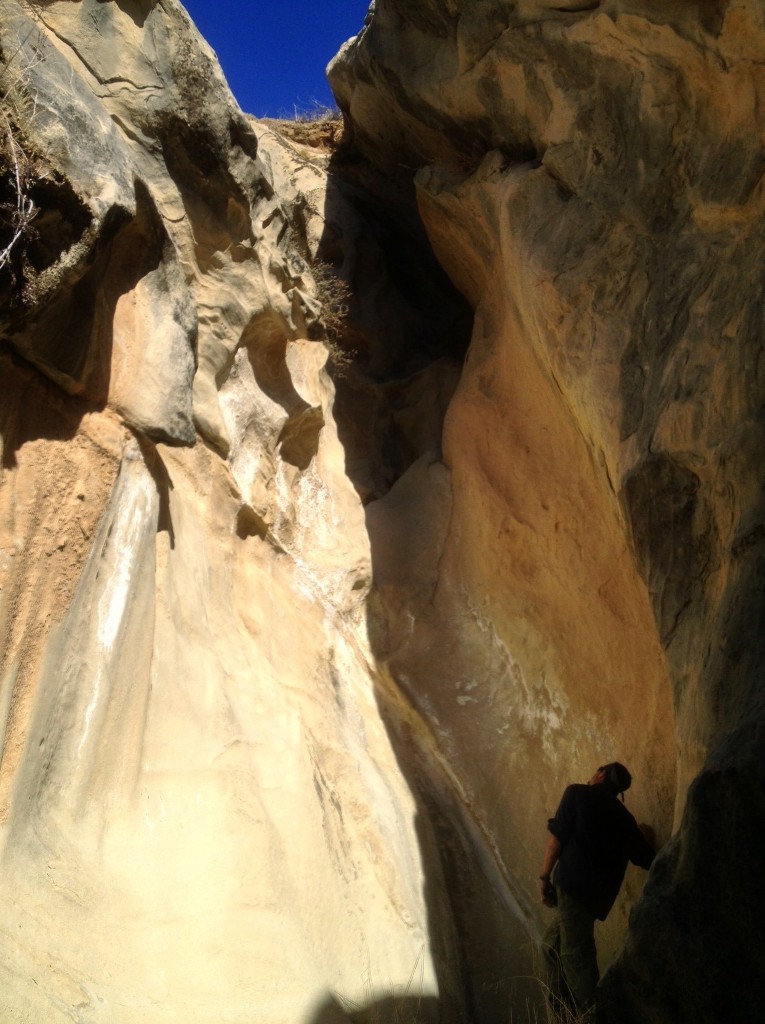
Los Padres National Forest waterfallsThe dry waterfall just below the one shown in the previous photo. Seasonal runoff has carved a deep winding slot through the sandstone bedrock with multiple waterfalls.

The rugged terrane bristles with chaparral and does not lend itself to easy travel or encourage and invite exploration. It quickly reveals weaknesses. To hike even but a few miles off-trail into its midst requires not just physical, but mental fortitude and the discipline to tolerate a fair amount of various discomforts.

The sun’s blistering glare and heat, even in winter, insidiously saps energy while drawing a constant stream of water from the body, initiating a relentless battle to maintain sufficient hydration, which necessitates constant drinking, usually of less than appetizing warm water drawn from one’s backpack.

Clouds of dirt and charcoal dust explode into the air when breaking through the brush and tramping over the silty dry soil. The superfine particulate coats eyeballs in a gritty film and irritates the nose triggering sneezing fits and sniffling.

And there is the general physical strain of lumbering over a wild landscape of loose soil, shifting rocks and big boulders, across and up and down steep slopes, and through bushes that poke, stab and lacerate soft human flesh like needles and blades. These are the dues that must be paid, nature’s abstract gatekeepers that allow only the most determined and fit adventurers access to the treasures of the backcountry.

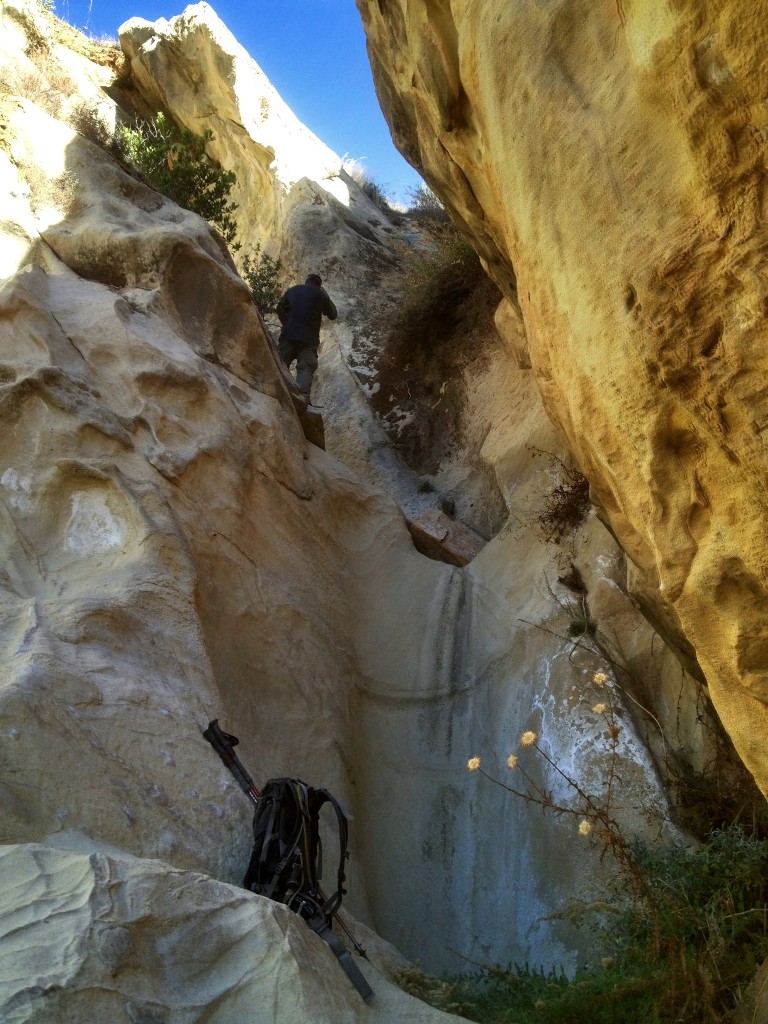
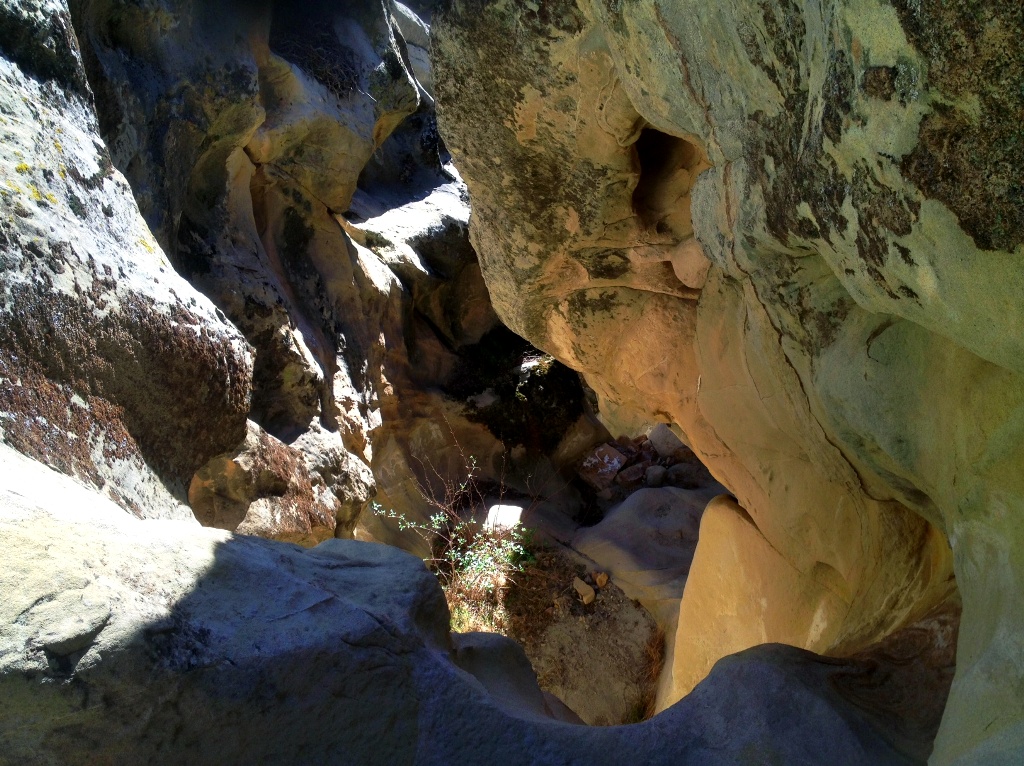
Los Padres hikingLooking down a miniature gorge. Seasonal runoff flows over the lip of the ledge at the bottom of the photo and falls about ten feet, and then on down the slot over several additional waterfalls.

gorge Los Padres National ForestAnother miniature gorge or tiny slot canyon of a sort. The water flows over the yellowish stone at the bottom of the frame and falls about eight to ten feet before washing down the slot and over additional waterfalls.

Discovering or locating Indian rock art in such a landscape requires indefatigable persistence to press on to the next inconspicuous small cave, alcove or sheltered nook where there may lie hidden a faded, highly eroded pictograph measuring only several inches in size. Finding a pictograph in the chaparral is comparable to locating that needle in haystack everyone talks about.

Looking in every little pocket in the sandstone which may conceal rock art throughout even a small area of rugged terrane is laborious, time consuming hard work. Even if you know the general area where a painted cave is located, you may beat yourself to a bloody, tired mess and not find it or not even cover the entirety of the area in question due to insufficient daylight or depleted energy and waning interest.

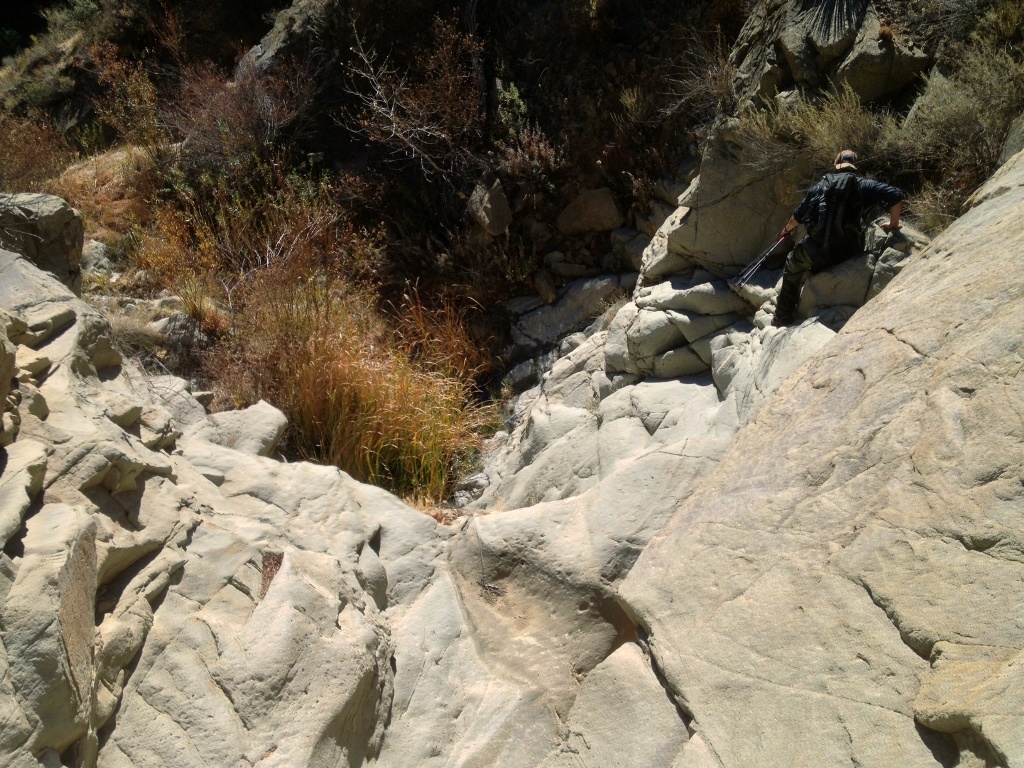
Los Padres hikesLooking over the edge at Stillman scrambling down a dry creek.

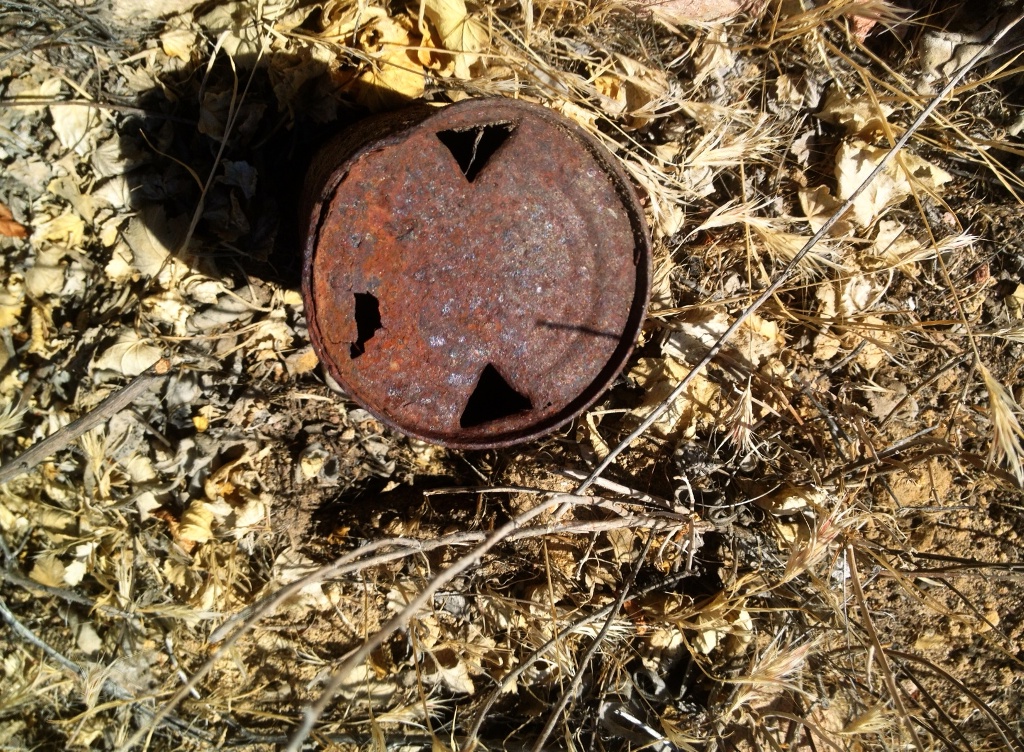
Los Padres National Forest litterVintage beer can.

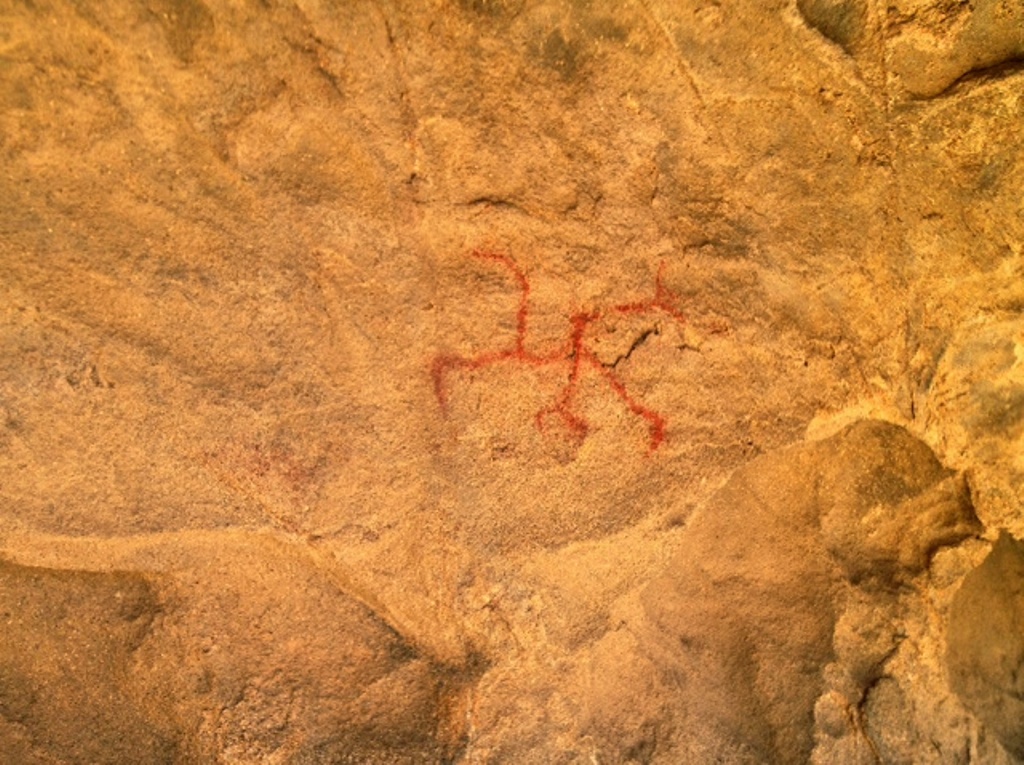
We finally found a single pictograph in an outcrop holding several bedrock mortars. Etiquette dictates that I not provide so much as a single clue to its location and any photos shared be limited in their scope so as not to reveal distinguishing features of the surrounding landscape, which may disclose where the archaeological site might be located.

There exists a contingent of rock art enthusiasts out there who believe it’s their personal duty to enforce such unwritten rules and to protect the exclusivity of such sites for none but the select, chosen few. And if these rules are infringed upon or violated they will not hesitate to inform you of your transgression. No doubt some even grit their teeth over the mere mention of the existence of such archaeological sites in a post entitled such as this one.

Meanwhile, the fragile ever-eroding pictographs and petroglyphs continue fading into oblivion from exposure to the elements. If not intentionally destroyed by vandals or unintentionally by increasing numbers of respectful visitors unknowingly panting moisture laden breath into the caves and kicking up dust, nature will erase these delicate traces of a mystical time long past once and for all. It’s now or later, but it is indeed inevitable.

bear scratchA bear scratch inside a cave. Presumably the bear found the inclusion in the sandstone strangely out of place and pawed at it out of curiosity.

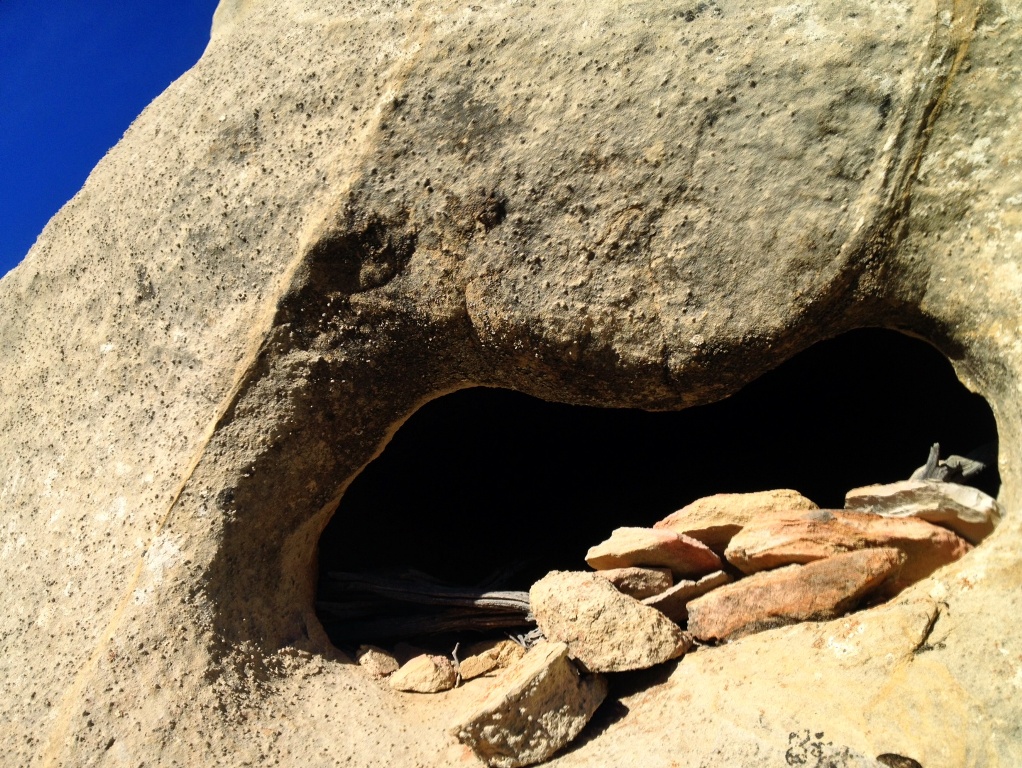
Los Padres National Forest cavesThis here’s a deep, completely dry cave. Nice one. There is plenty of space to sleep inside with a lot of extra room, was my first thought. It’s maybe like ten feet long, two to four feet high and three to four feet wide. It has another slightly larger entrance at one end. It very well may have been used as a dry cache by the Chumash. Who stacked those rocks?

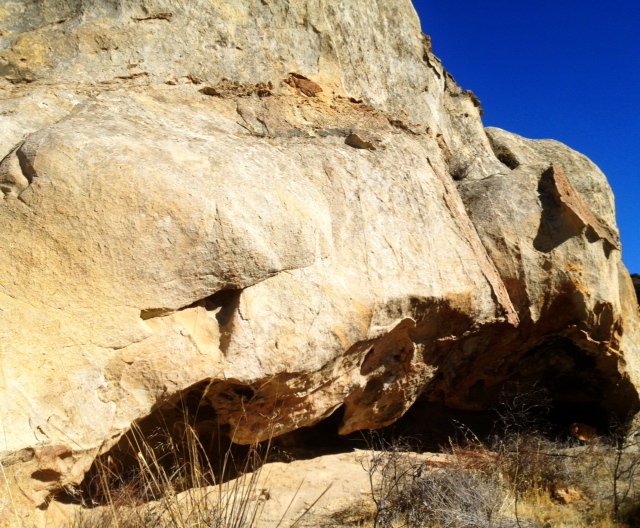
Los Padres National Forest hikesThe outcrop holding the mortars and pictograph.

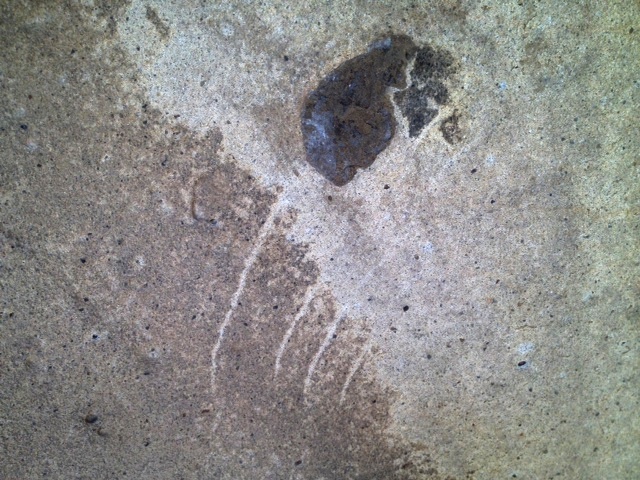
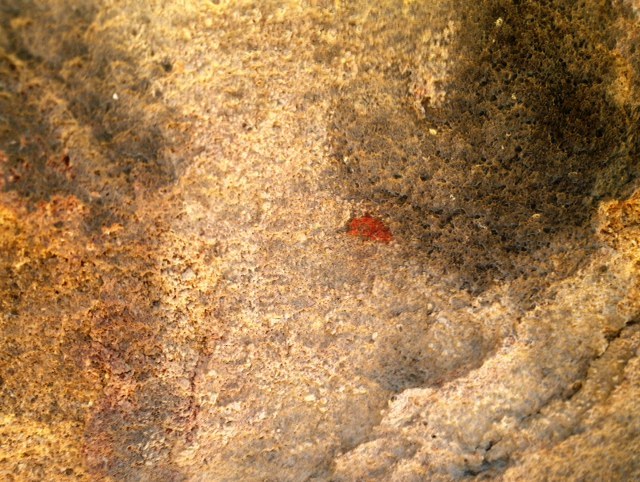
Chumash rock art pictograph paintSometimes all that remains is a tiny spot of paint such as this centimeter wide dot. The Los Padres National Forest spans some 1,752,400 acres.

Chumash rock art pictograph Los Padres National Forest

Posted in Santa Barbara County | Tagged , , , , , , , , , , | 10 Comments

Lion’s Mane Mushroom

20131229-162215.jpgAfternoon reflections on a deep pool, which would be a lot deeper, as the mineral stain on the rock shows, were it not for the current droughty conditions.

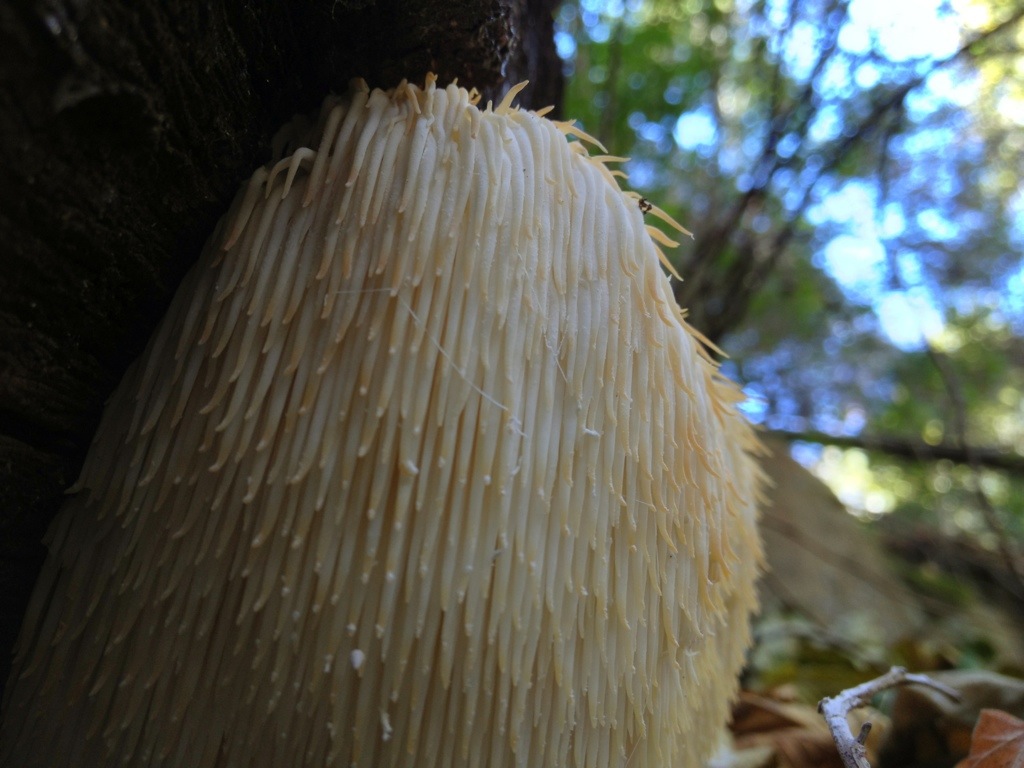
Hericium mushrooms are one of the subtle signs of annual change in the Los Padres National Forest. When they sprout from their woody hosts it signifies the return of the rainy season.

For 51 weeks the hericium hunter patiently awaits the first rain showers of the season, which trigger the short-lived growth of the “Lion’s Mane” mushroom. If the first rain comes early, however, so too will the mushrooms, but sometimes the wait is longer than a year.

There is but a fleeting window of opportunity, about a week or so depending on weather, to harvest hericiums in their prime before they begin to turn woody and then rot. Then, typically, they do not grow again until the next season. It is a rare treat.

20131229-201752.jpgA hericium growing in the Santa Ynez Mountains. They have a pleasant, fruity mushroom fragrance and can taste like lobster or shrimp when picked fresh and sautéed in butter and olive oil.

20131229-202233.jpgMeat.

Related Posts
Hericium Mushrooms of Santa Barbara County
Oyster Mushrooms
Giant Puffballs
Gem Studded Puffballs
Chanterelle Mushrooms

Posted in Flora, Santa Barbara | Tagged , , , , , , , , , , | 4 Comments

Ballard Camp, Figueroa Mountain

La Jolla Trail Figueroa MountainLa Jolla Trail 

La Jolla Trail Los Padres National ForestTrail through the oak trees.

Ballard Camp Alamo Pintado Creek headwaters Figueroa MountainDropping into Birabent Canyon on La Jolla Trail.

Ballard Camp upper Figueroa MountainA U.S. Forest Service stove at Ballard Camp, which was presumably named after the nearby town of Ballard or its namesake, W. N. Ballard, who built and managed a stagecoach station there from 1862-70. (Slippery Rock Stagecoach Road [19th Century])

Ballard was the hometown of Edgar B. Davison, previously mentioned on this blog in the post, Edgar B. Davison’s Cabin (circa 1900). Davison was one of the first forest rangers in Santa Barbara County and served on Figueroa Mountain from 1898 through 1912.

Ballard Camp Figueroa MountainBallard Camp beside the creek in Birabent Canyon.

Alamo Pintado Creek Birabent Canyon

Posted in Santa Barbara County | Tagged , , , , , , , , , , , | Leave a comment