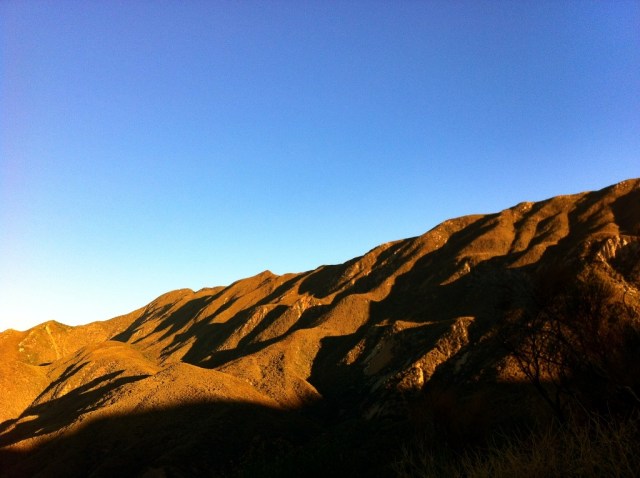
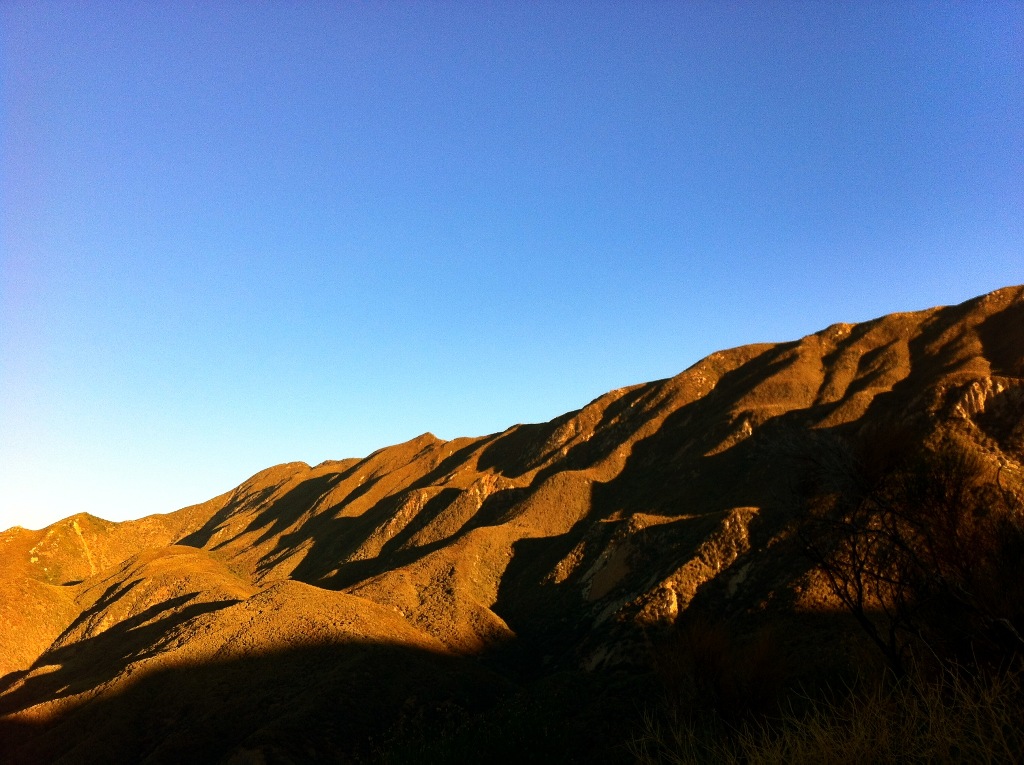
 Dry Lakes Ridge in morning light.
Stillman and I worked down the second helping of our Sespe Creek project on Monday. It was a quick half-day, in-and-out through middle Sespe from Tule Creek to Piedra Blanca Trailhead.
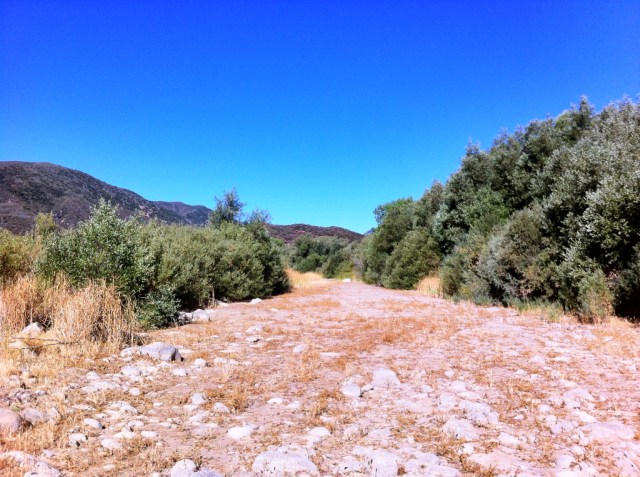
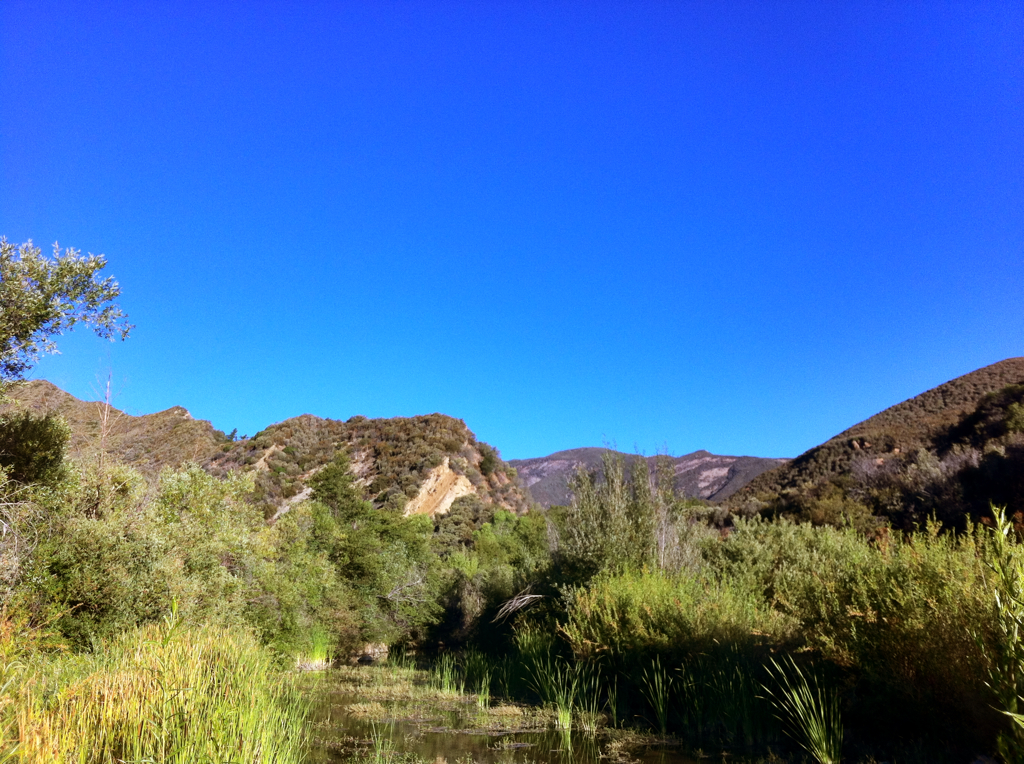
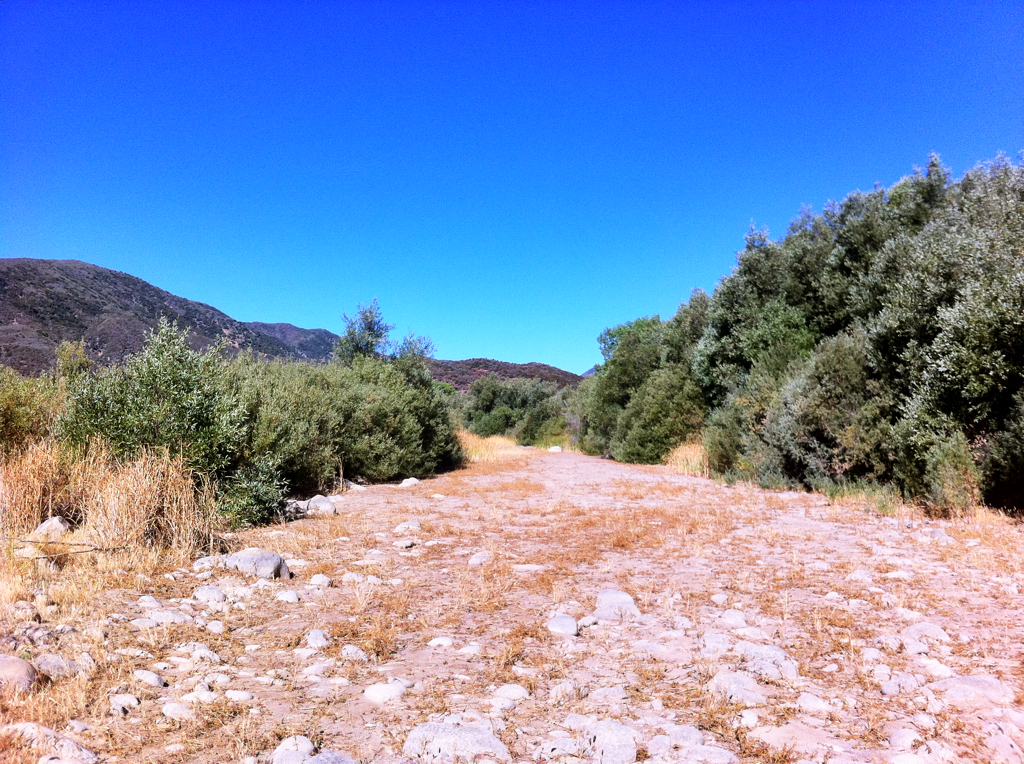
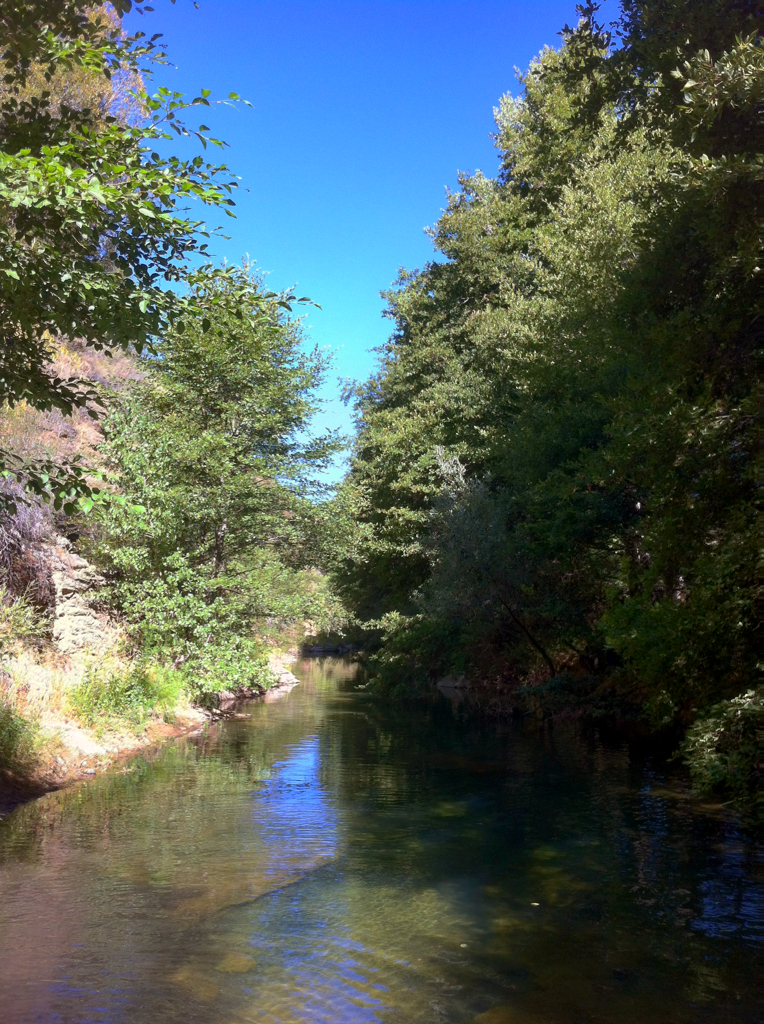
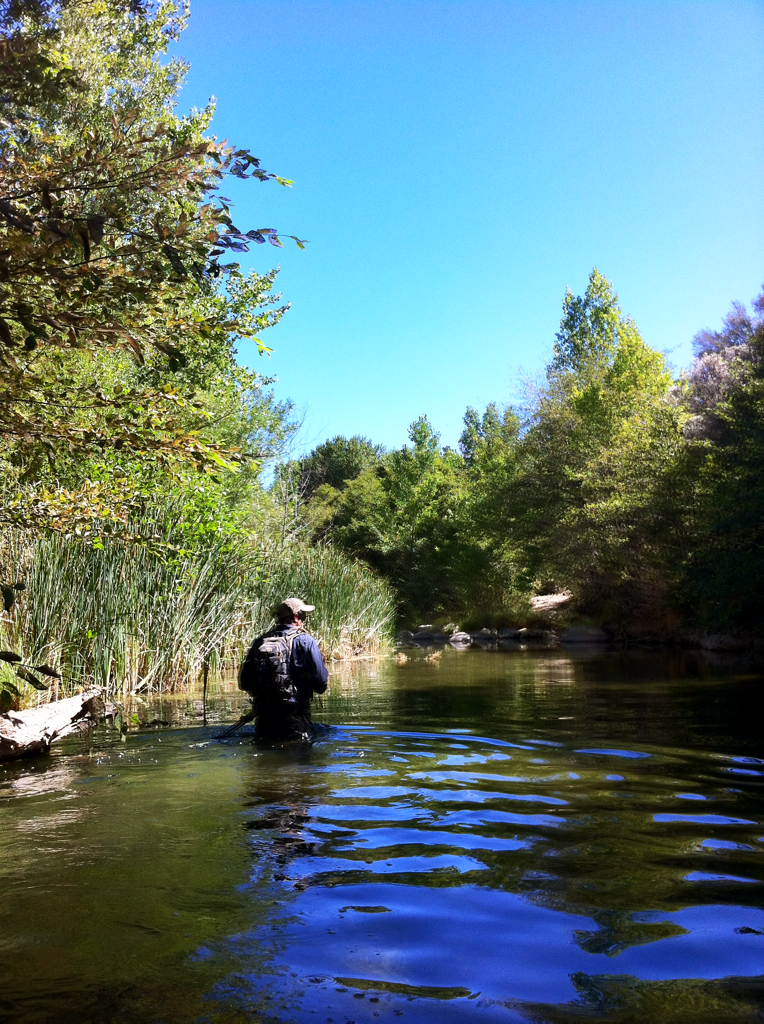
Once passed the Middle Sespe Trailhead, and relative the upper Sespe which Highway 33 follows closely, this middle section of the creek feels decidedly more wild and remote. It flows intermittently, as was expected this time of year. Some sections of the creek bed are devoid of any trace of moisture and filled with weeds, others are stagnant and mossy, some mere inches deep and faintly flowing, while still other lengthy portions are six feet or more in depth and notably aquatic and riverine in nature.
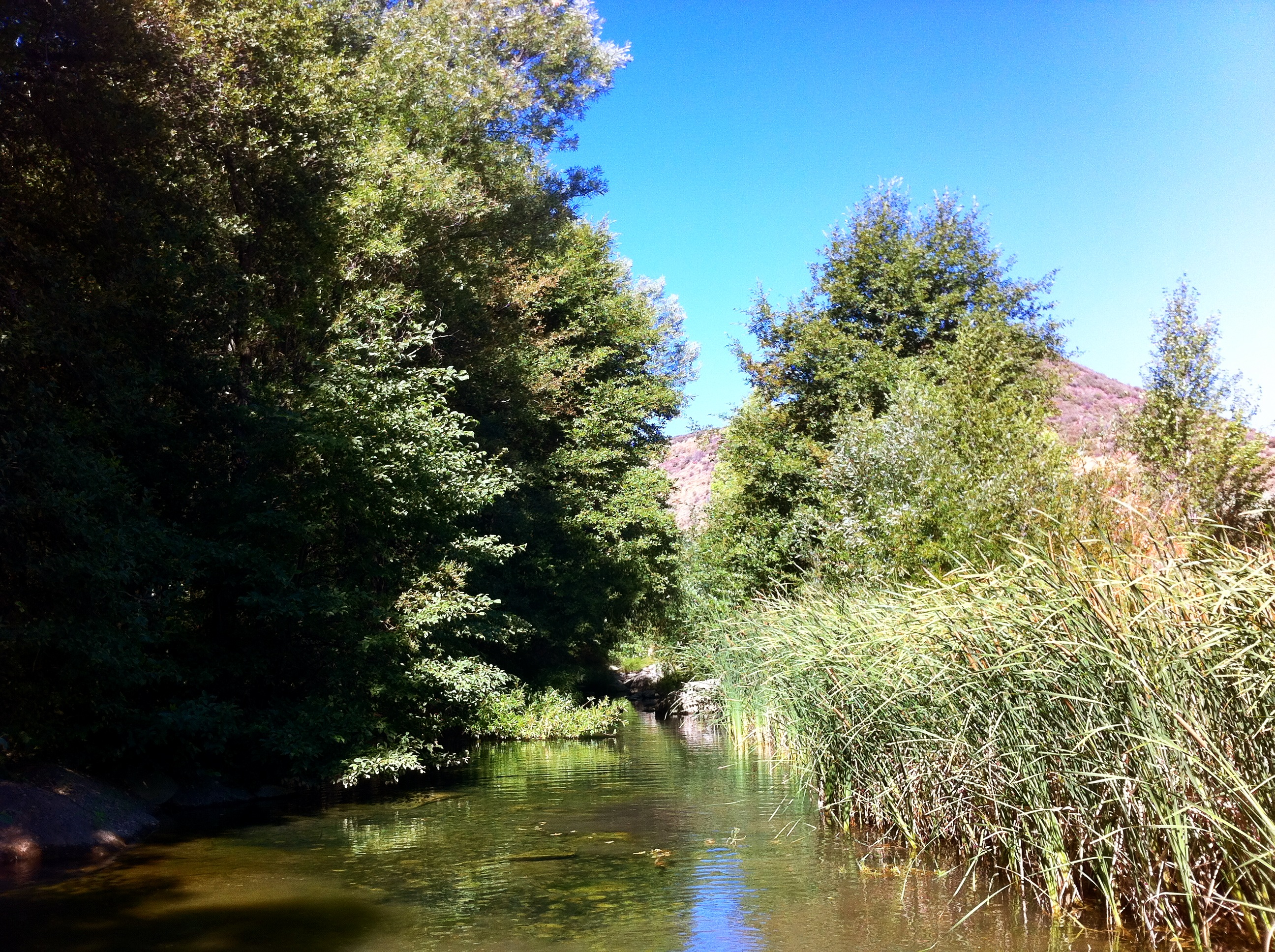
Outside the lush shelter of the narrow riparian zone surrounding perennial pools, the summer swelter is unforgiving and the landscape bakes beneath the relentless blinding sun. The arid chaparral covered hills framing deeply shaded, cold crystalline pools makes for a striking desert-oasis juxtaposition of habitat. Lounging in the damp shadows beneath the lush tree cover aside the creek, water defined and tempered the landscape in defiance of the summertime sun and heat. While only a stone’s throw away amidst the dessicated, crispy plant cover the blistering solar radiance dominated.
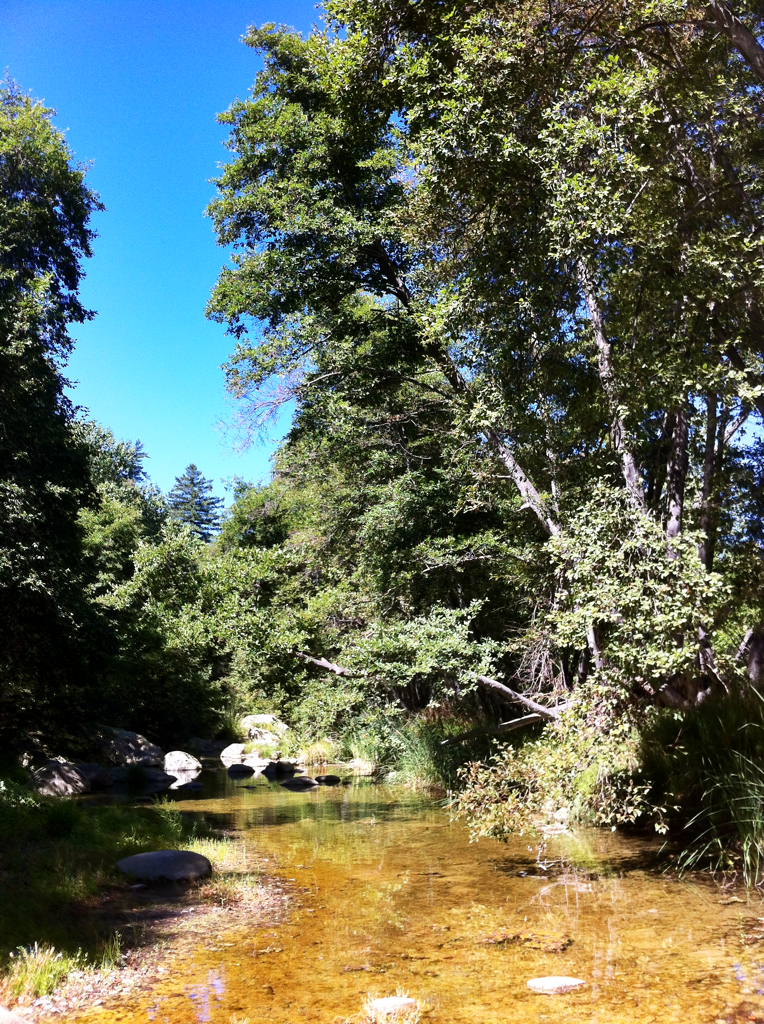
We marched across sun-scorched dry washes of burdensome, deep sand. Hopped down cattail- and willow-fringed pathways of waterworn and mineral stained dry boulders. And waded through deep emerald-tinged pools faintly illuminated in the penumbrae cast by the shade bearing verdant umbrella of cottonwood trees overhead.
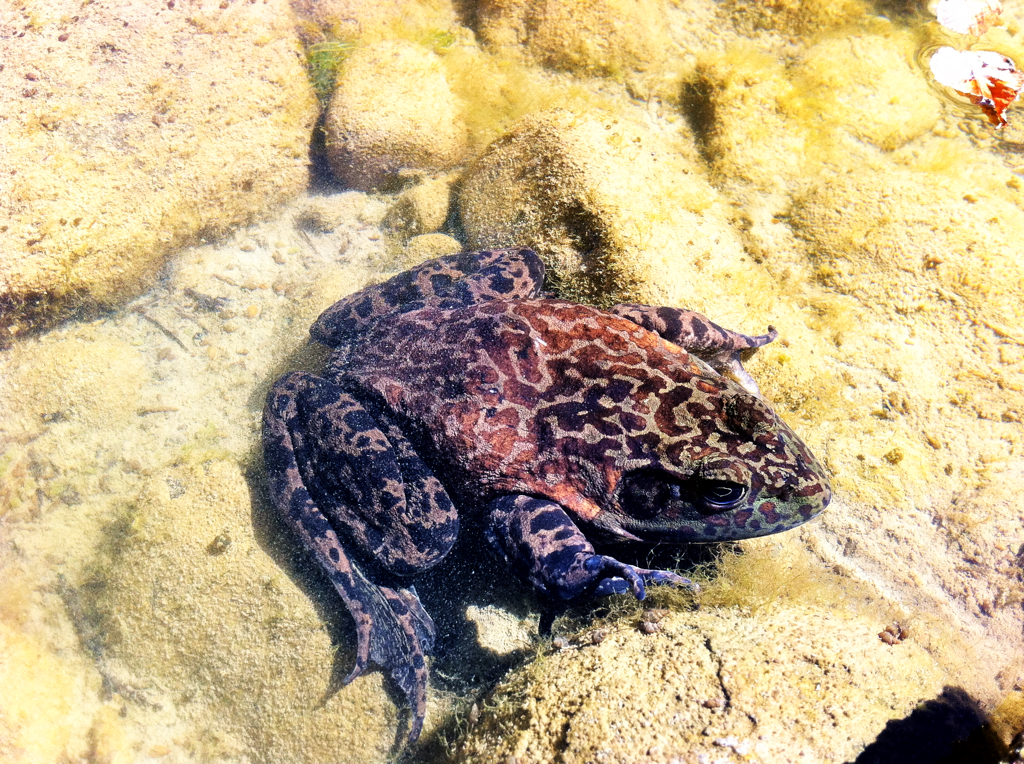
Waterfowl and other large birds attracted to the fresh water oasis and the pray it sustains took flight frightened from the crash and splash of our plodding. A deer and doe trotted up a gravely slope while keeping eyes on our movement, another deer hopped through the brush just in front of our path. Small fish darted about our feet in the shallows, larger ones occasionally streaking through the shadowy depths of deeper pools. We walked by two large bullfrogs of some sort with beautiful mackerel designs on their backs.
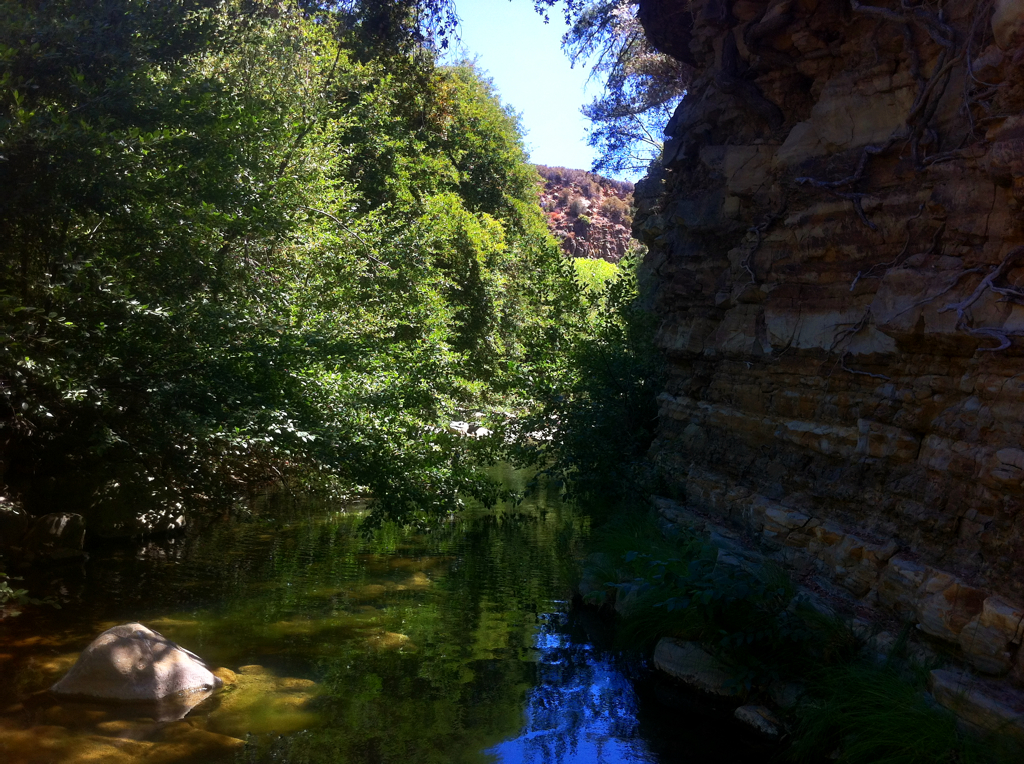
In one deep stagnant pond at the foot of an outcrop of layered stone, I stared bewildered for a few seconds at a bizarre sprawling black form rippling beneath the water’s surface. Stillman appeared for a moment equally perplexed by whatever this strange moving thing was. To me it didn’t resemble anything living at first glance, but looked to be something like a wad of moss being slowly spread apart in the flow of a subtle underwater current. Yet, a second later its movement went from seemingly ordinary to mind warping and peculiar as my brain struggled in vain to interpret and define what my eyes were seeing. It then became clear that whatever it was, it seemed to be alive, because no inanimate object moves like that. Only after another few long confused seconds did it register in my mind that it was a tightly grouped, dense school of tiny fish. Few other times has something so ordinary so baffled my mind.
Walking through the creek at one point in about shin deep water, while foolishly messing around with my iPhone rather than watching where I was going, I lost my balance and fell into the water. And tossed my phone into the creek. I was on my hands and knees like a blind man feeling around the murky black water trying to find it. Fortunately I finally grabbed it, but this is an iPhone with a badly cracked glass screen that actually has shards of glass missing. So I wrote it off as done for right away. Yet, when I pulled it out I was surprised that it was still working and that I was able to snap several more photos. Then just as we came across some of the most photogenic stretches of the creek it finally stopped working. It actually remained powered and illuminated, but wouldn’t process any commands when touching its screen. So I stuck it in my pocket and finished the hike with a few less photos. Remarkably, on the drive home it started working and still works!
Overall, Stage Two of the Sespe Creek Project proved wetter, more serene, secluded and picturesque than Stage One.
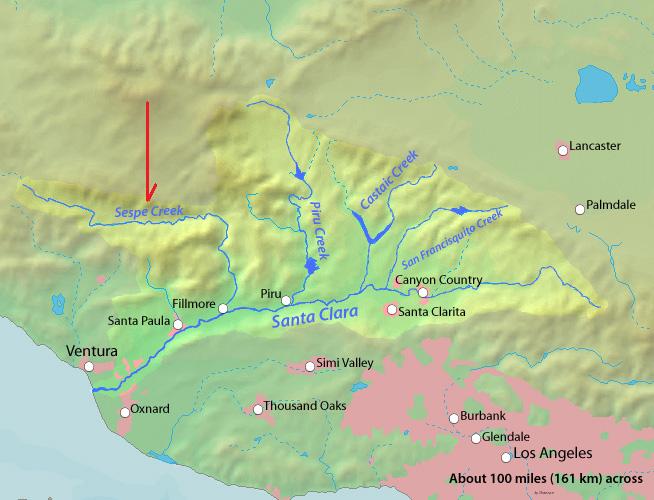
Map of Southern California showing Sespe Creek.
 Map showing Stage II Route
 Looking up Sespe Creek at its confluence with Tule Creek, where we ended Stage I on our last outting.
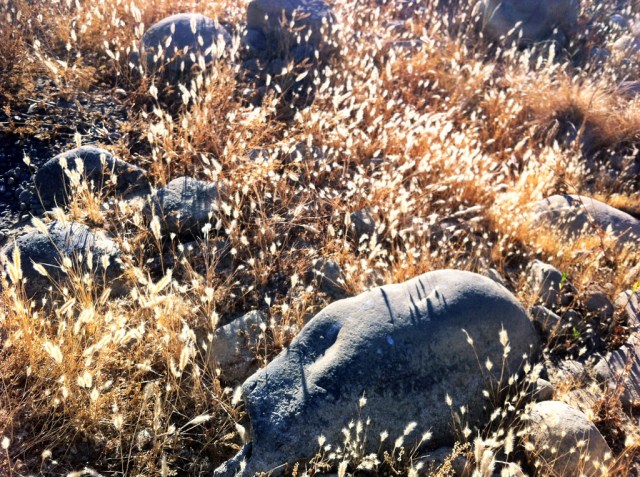 Sespe Creek bed
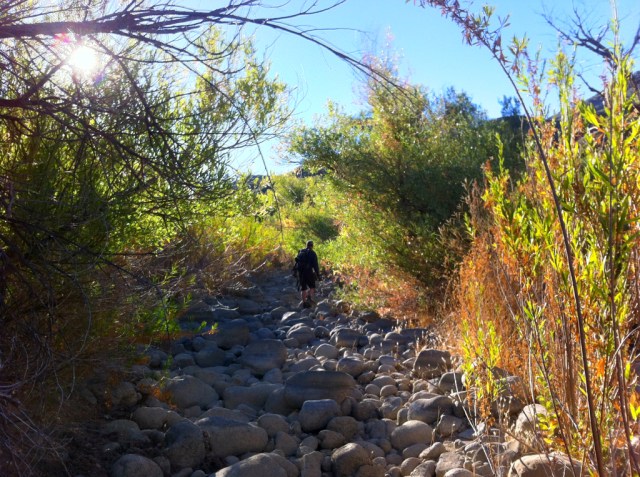

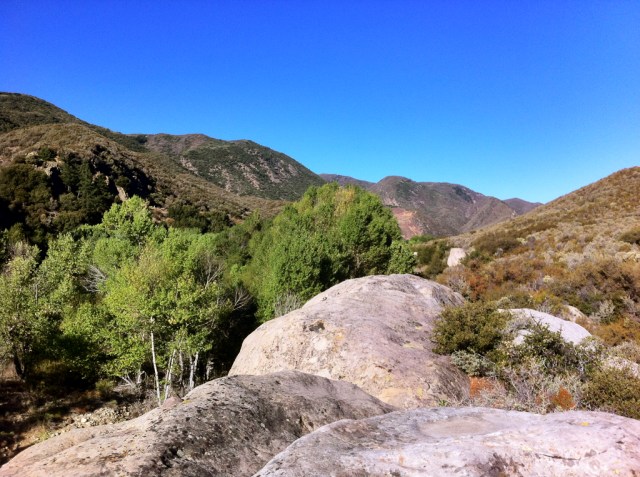
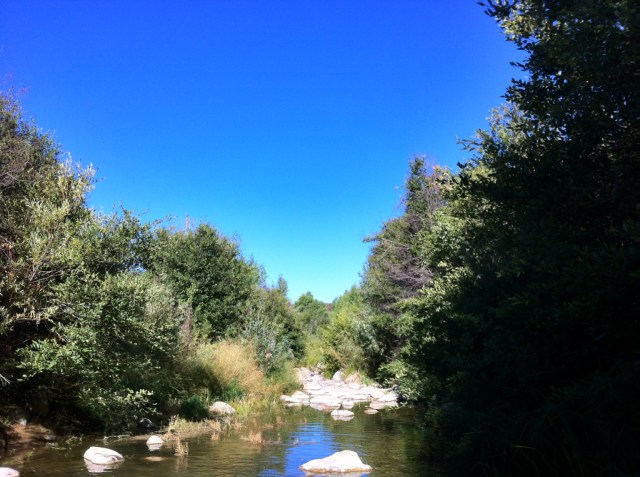
 Looking up Sespe Creek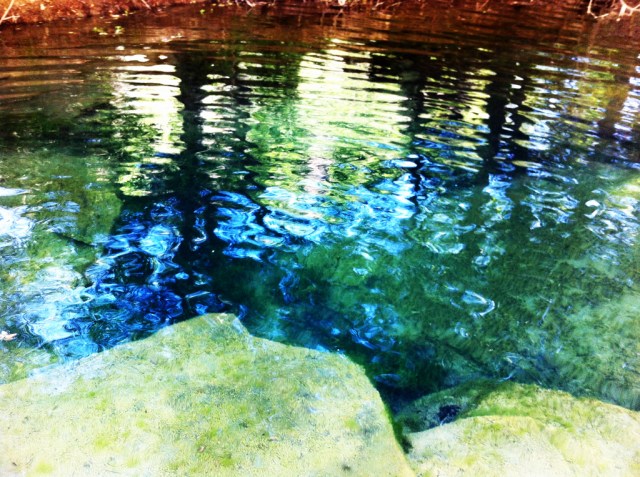

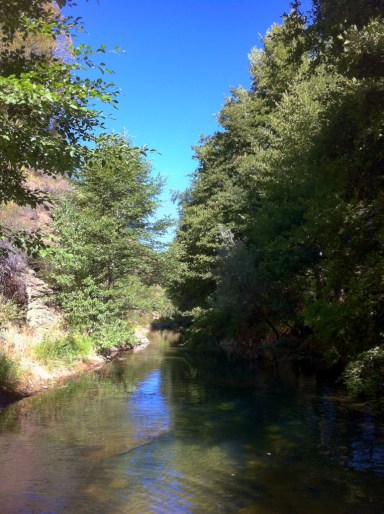
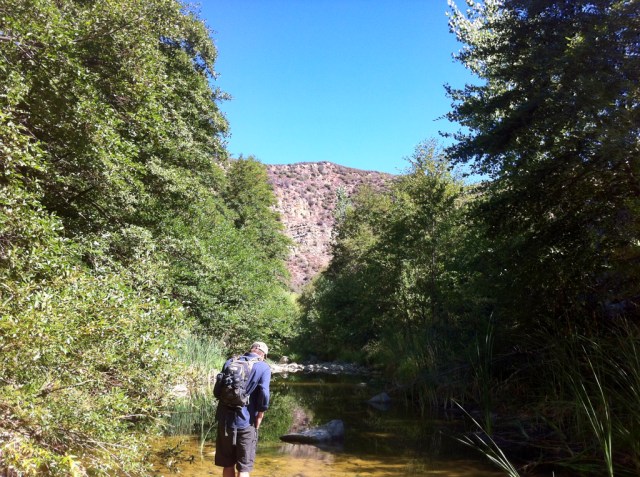

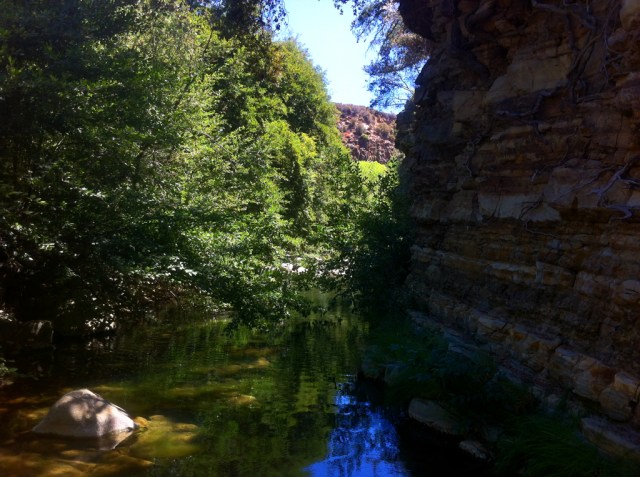 One of the more interesting shaded, deep pools.


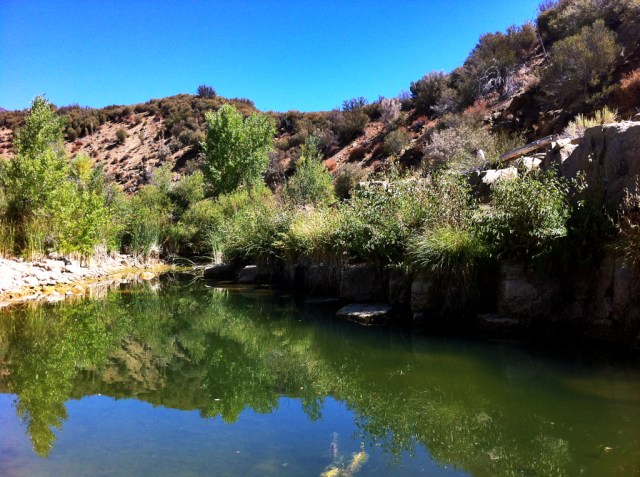


 Related Post:
Project Sespe Creek Connect: Stage I, Upper Sespe

 Holly-leaved cherries (Prunus ilicifolia), seen here in the process of ripening, are a wild grown food that can be foraged in the local mountains.
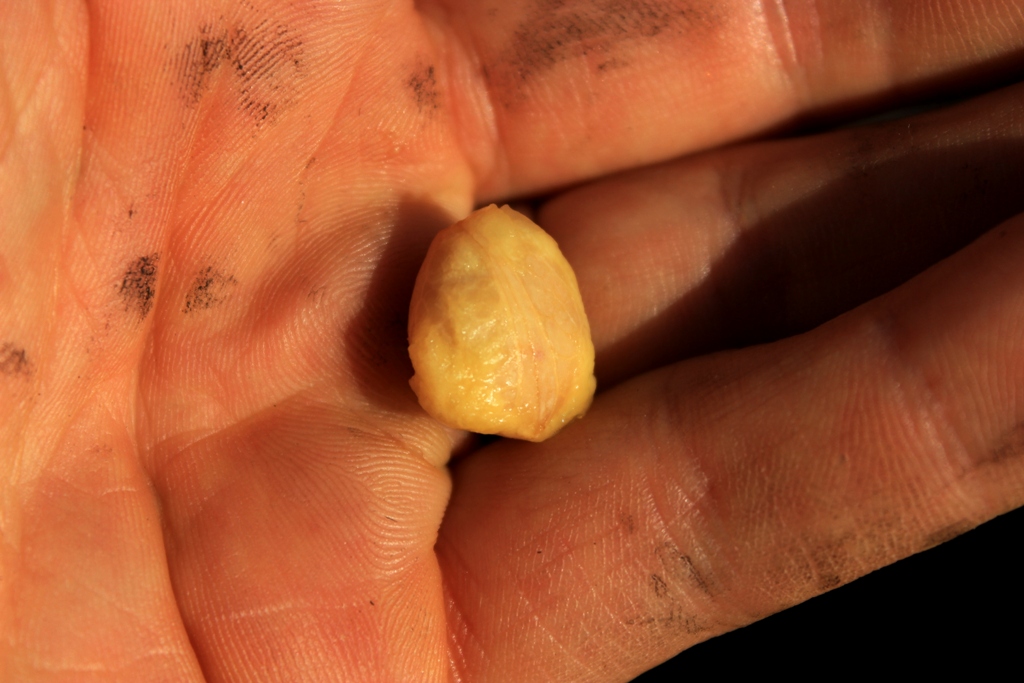 A cherry pit without the skin showing some of the yellow fruit pulp still clinging to the seed pod.
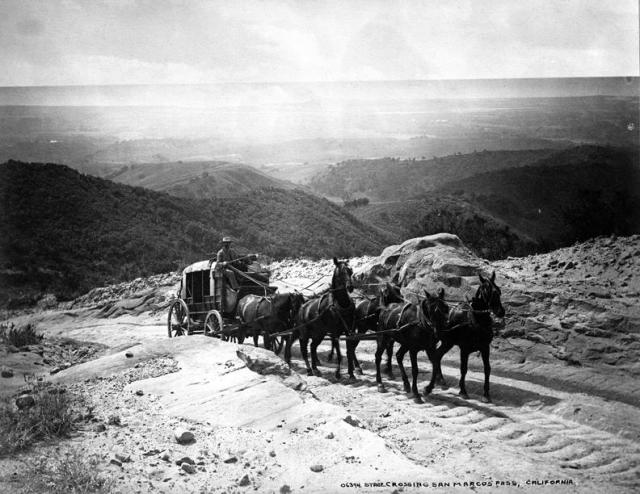 Crossing Slippery Rock in the mountains above the Goleta Valley, along the original San Marcos Pass route over the Santa Ynez Mountains. The Pacific Ocean defines the horizon in the background. © Denver Public Library, Western History Collection
 Looking up Slippery Rock showing the two wheel tracks and the traction ruts carved horizontally across the wheel grooves.
 Looking down Slippery Rock. Two different sets of wheel ruts are visible here, along with the horizontal traction grooves for horses. Once the first set of wheel ruts became worn too deeply a new set was carved.
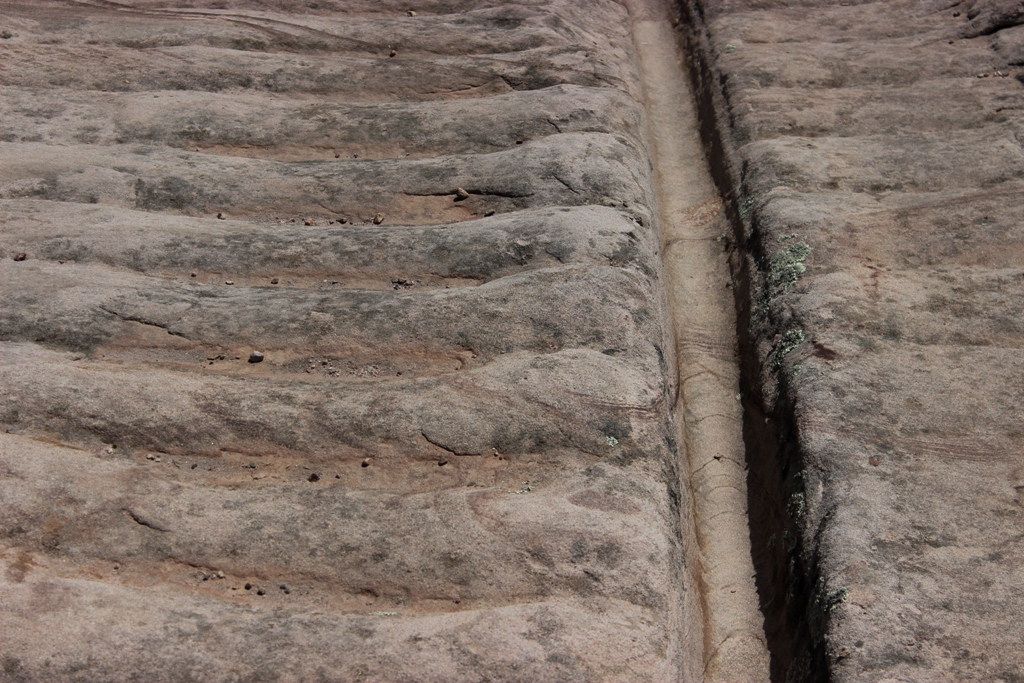 A closeup view of the ruts and grooves.
 The narrow section of Slippery Rock, which is shown below in a photo from 2012 with live oak trees having grown in the middle of the old road. © Denver Public Library, Western History Collection
 Looking up the old road above Slippery Rock.
 A narrow section of the road barely wide enough for a stagecoach to slip by pinched between a cliff on the left and and wall of stone on the right.


























 Jack Elliott's Santa Barbara Adventure