
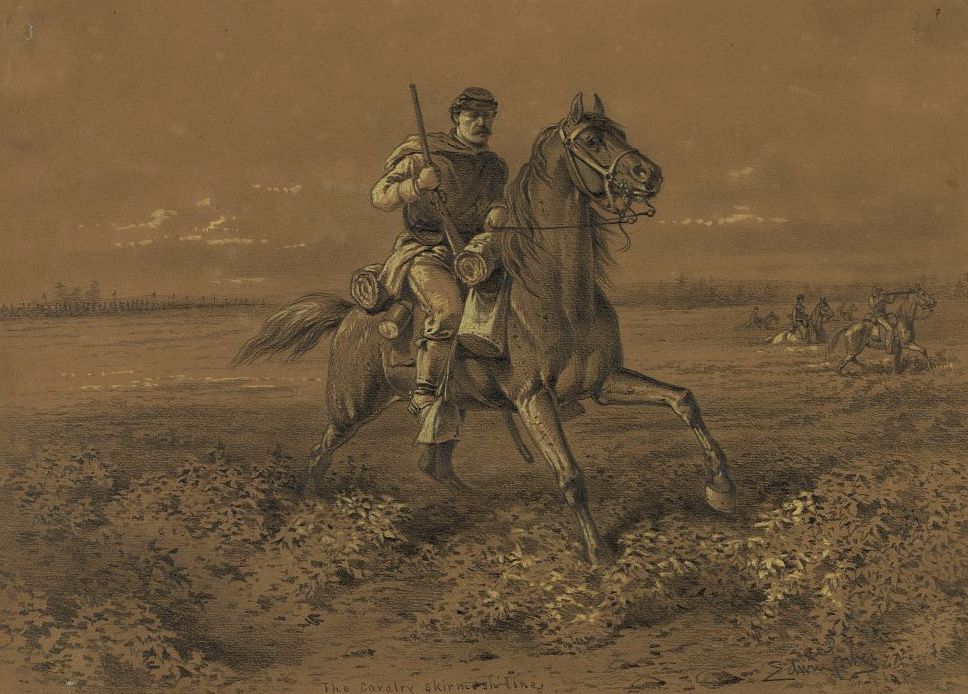
 Nineteenth century U.S. cavalry.
“Indians stay pretty much to the reservations anymore, where they belong. There’s no way of mixing the white race with the red. Too many differences.”
Andy knew the differences all too well, for he had lived in both camps. He said, “The Indians were just fightin’ for their land.”
“But before it was theirs, they took it away from somebody else. This land has been fought over by first one and then another since God finished it and took the seventh day to rest.”
Andy knew the futility of arguing the Indians’ point of view. He understood the white view as well. The dilemma was too much for a man in his late twenties to reconcile. Old men had difficulty with it, too.
Elmer Kelton, Other Men’s Horses
He gasped for breath in the afternoon swelter, his bare chest heaving like a bellows. He clenched a knife in one hand. Glistening streams of blood oozed down his other arm and dripped from his finger tips into the parched dirt. Wounded arm dangling limp, he stood slightly hunched, one foot in front of the other. With the bodies of fallen Indians at his feet he stood alone facing the company of men, his chin held high.
Holt held a hot-barreled Spencer rifle across his lap with twin six shooters on his hips. Sweat trickled from his forehead and he took his hat off and mopped his face with a sweat-stained, sun-faded sleeve.
Parker rode up pistol in hand, vengeance burning in his eyes. “Blast him, Captain. He’ll be scalpin’ fellers if you let him free.”
A buzzard circled in the thermals overheard, while flies began their gruesome work amidst the bodies. Whiffs of gun smoke lingered. With the deafening hum of silence resonating in his ears, Holt peered through the eye-withering heat at the young warrior defiantly standing his ground.
“Find your way back home. We’ll call it settled,” Holt said, as first sergeant McClanahan translated.
Parker holstered his pistol. He looped his wiry leg around the saddle horn and began to roll a cigarette, his tongue sliding back and forth across his bottom lip in anticipation. “Shoot him,” he said pinning the cigarette between his lips as he looked back up at the Indian. “He’s a horse thief, filthy murderer like the rest of ‘em.” A haggard man hardened by lonely nights beneath the cold starry skies of desolate lands, Parker’s face pinched tight as he drew deeply on his smoke.
“No different than you before you took on as a hired gun for the U.S. government,” Holt said flatly. “There’ll be no executions today.”
“Day’s not over,” Parker said punctuating the remark with a puff of smoke.
“If you want to end yours now draw and it will be,” Holt said. “This man rides free.”
The stub of cigarette pinched between Parker’s cracked lips snapped skyward and the end flared red. He glared at Holt through two slits in his weathered, sun-splotched skin beneath his single dark, brambly eyebrow.
“You have shown great skill and courage in battle,” Holt said raising his voice. “You are a man of honor and great pride. You have served your people well. We will fight you no more.” He gestured toward the great expanse of land beyond. “Go in peace.”
 Nez Pierce warrior.
The warrior stood streaked with blood and dirt unflinching as though nothing was said. The horizon wavered in the rising heat behind him. Sweat beaded his forehead and bits of dried grass speckled his thick black hair.
“I don’t think he understands,” Parker said. “Dumb Injun.” He broke into a raspy wet laugh, which exploded into a hacking cough, his body convulsing. He flicked his smoldering cigarette butt at the Indian.
The young Native American spoke, the first sergeant relating what he said. “You speak as if you have a choice and as though you offer a gift,” the warrior said. “Neither is true. You have killed my brothers before me and now I stand alone. They fought bravely and to the end. They are the men alongside whom I grew from boy to man. The men I learned to hunt and fight beside. The men whose children I have held, and whose women I have known since childhood. You expect me to ride home. To tell my people they died fighting while I alone still live. I will not! Finish this yourself. Today is a good day to die.”
“Well,” Parker said dragging out the vowel. “Looky here. He’s calling you out.” He wiped his bristly mouth with the back of his hand. “What’re you waiting for, Captain?”
Holt felt a single bead of sweat run down his chest as his pulse quickened. He felt like the king fool of all fools. What he thought was a compliment and a show of respect was a patronizing insult. “Pointless,” he muttered shaking his head. “Such futility; thousands of years on this big ball of dirt and nothing’s changed since the beginning.” His words trailed off into an unintelligible mumble.
“What’s a matter, yeller?” Parker said reaching for his gun. “I’ll oblige.”
Holt drew a pistol in a flash of instinct just before the knife slammed into Parker’s neck. Parker grabbed the knife, as his backed arched, veiny eyes bulging with disbelief. He slowly slid the blade from his neck and blood squirted into the air to the rhythmic pulse of his heart. His head spun in a whirl of delirium.
The battlefield wavered in a blurry haze of confusion as Parker fought for control of his body. The frantic scene of survival unfolding before him slowed and the awful sounds of war faded. His hand slipped from the reigns and he hit the sun-baked hardpan in a cloud of dust. The afternoon erupted once more into a melee of screaming men and gunfire as Company C unloaded a fusillade of flying lead.
Upon a lonely expanse of windswept land a timeless struggle played out. The hard-bitten cavalry men, hewn by nature’s elements and seasoned by years of combat and privation, faced a warrior chiseled from the sinewy stock of native America, bred and tested amidst the vast wilderness of an untamed continent. Only one side would remain. Honor demanded victory or death. There was no other way.





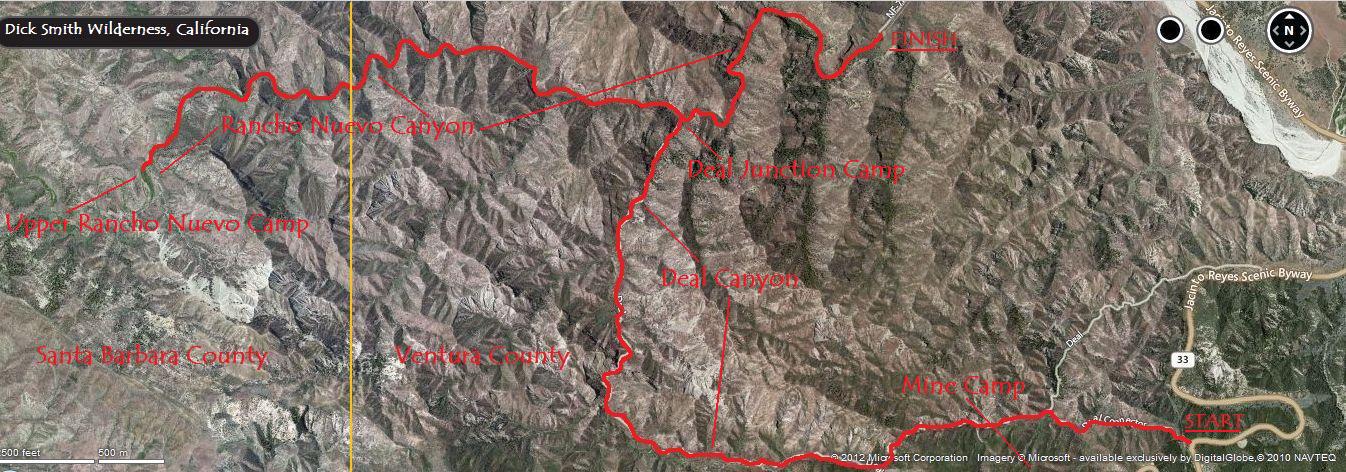

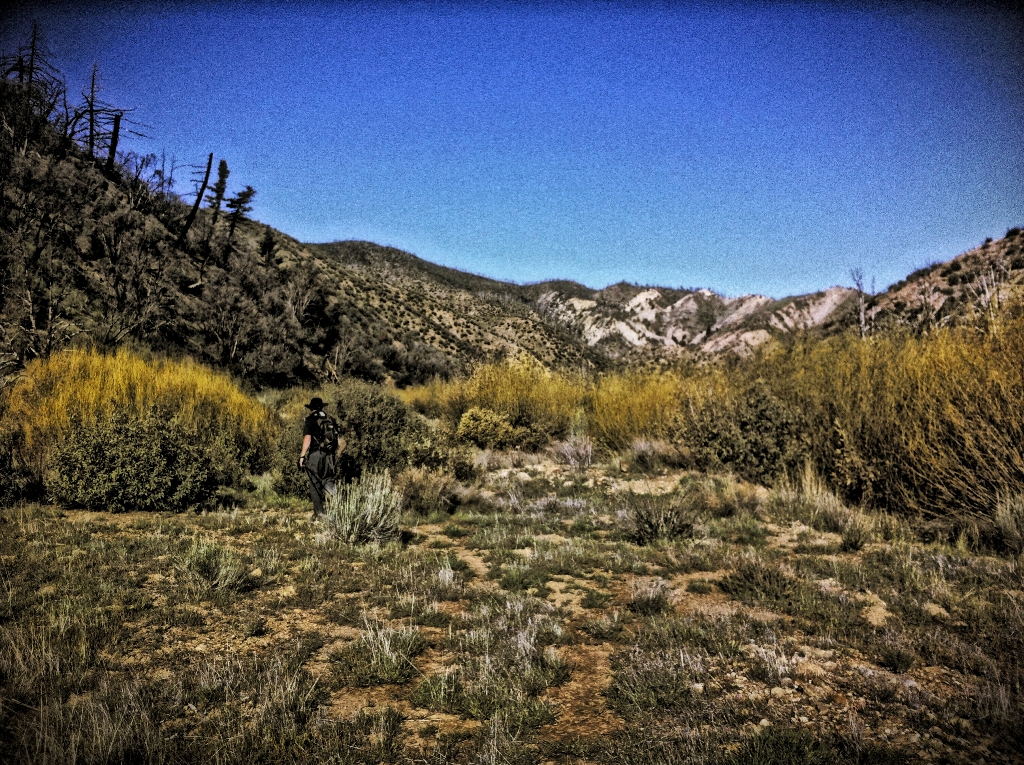
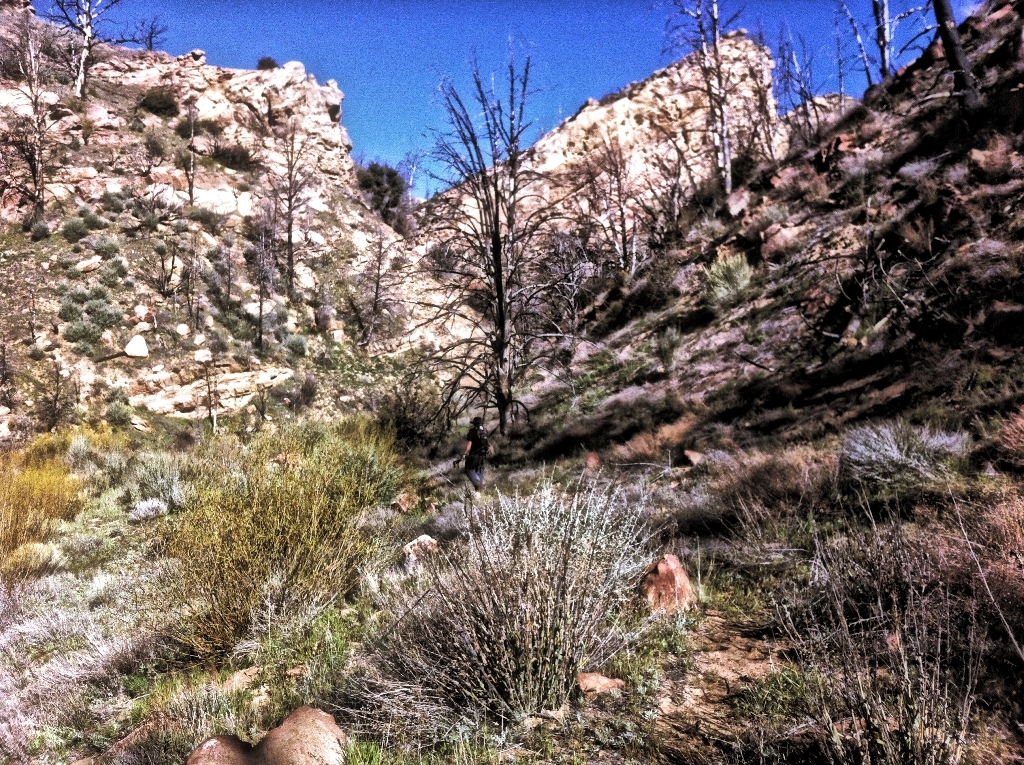
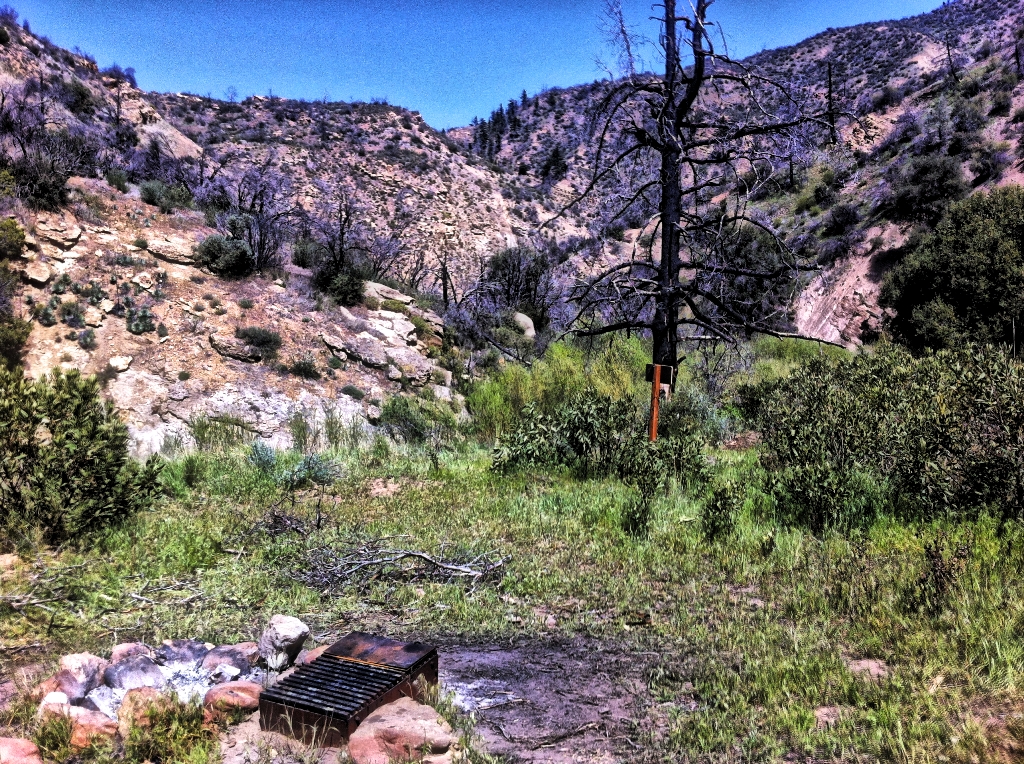
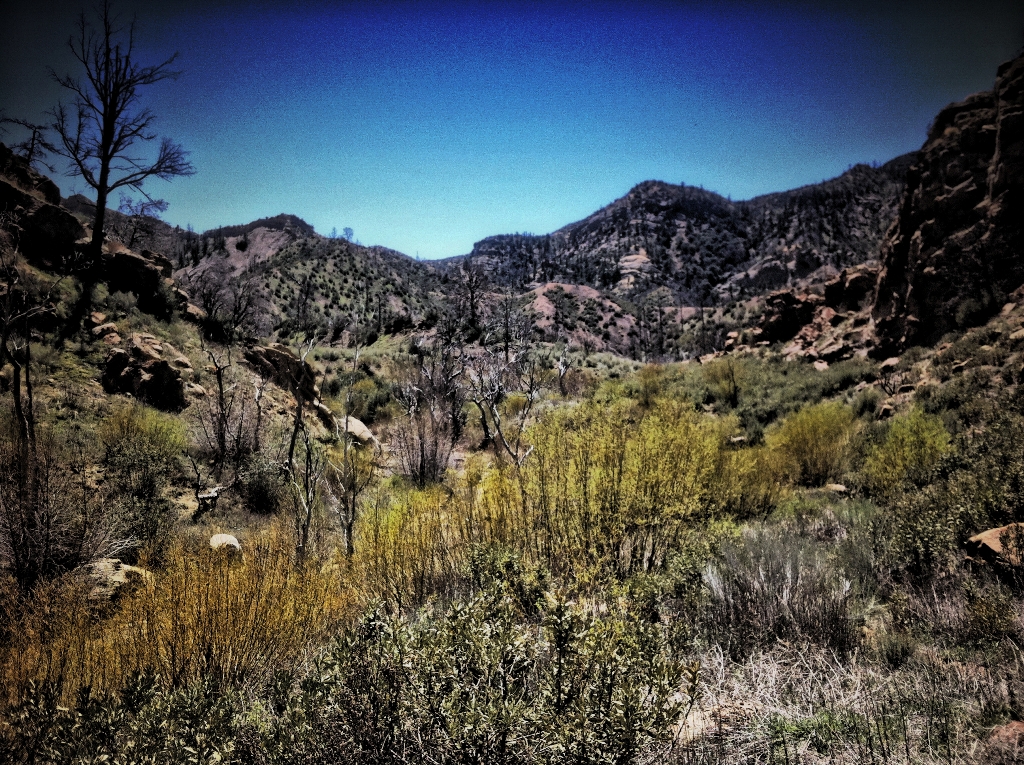
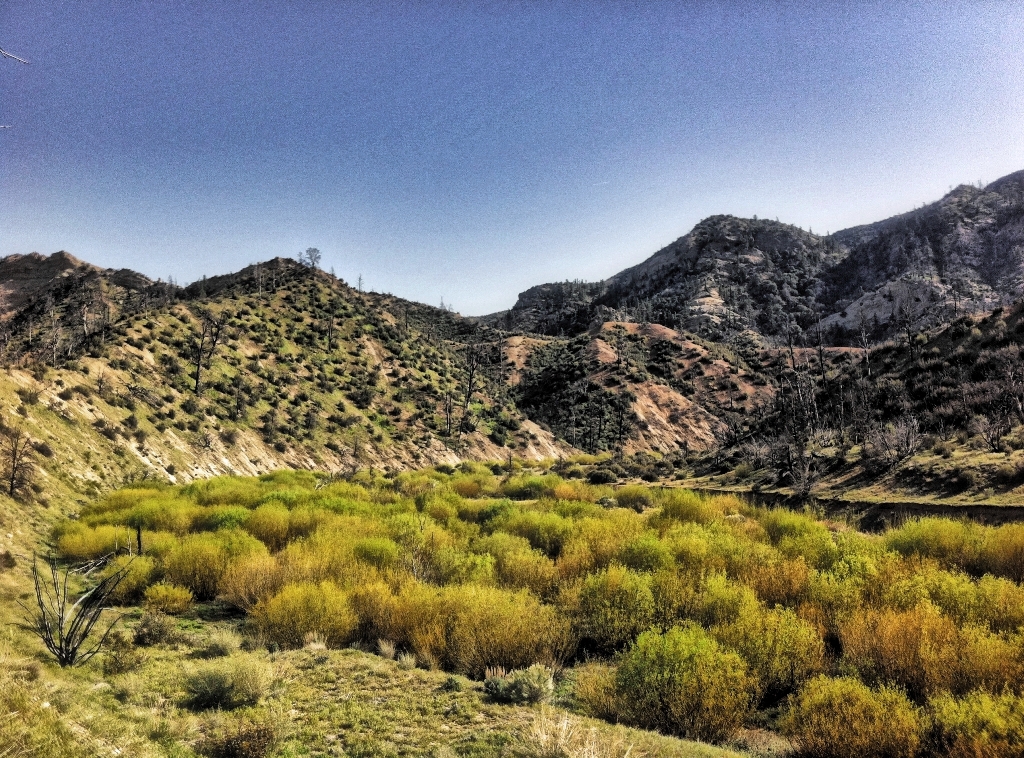
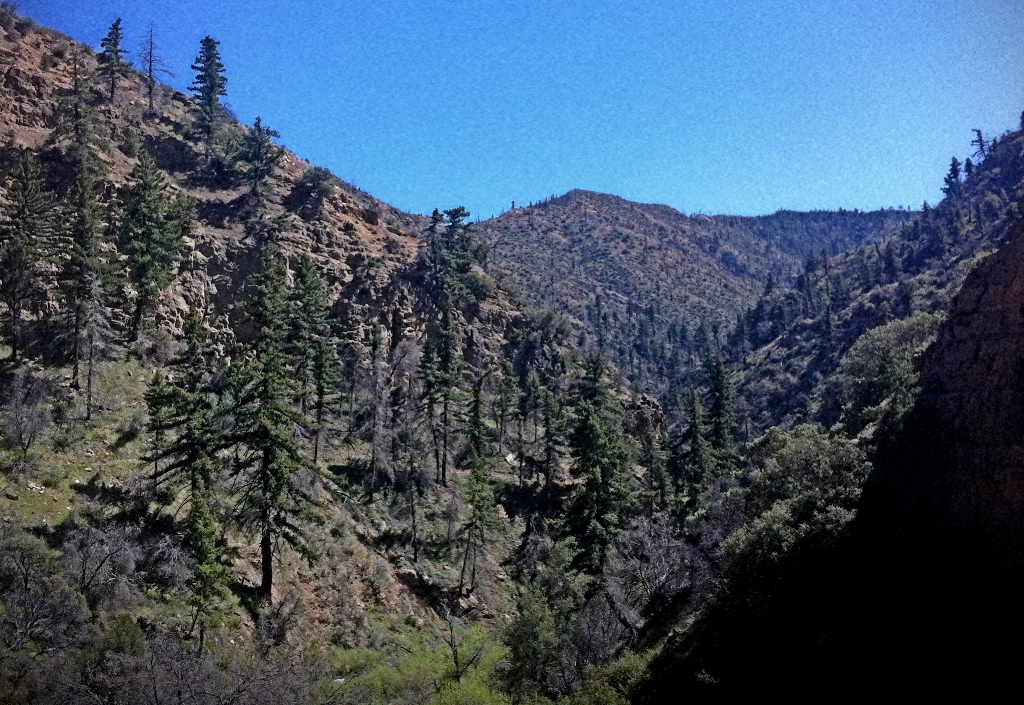
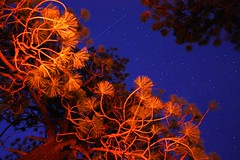
 Black trees and blue skies in the Dick Smith Wilderness.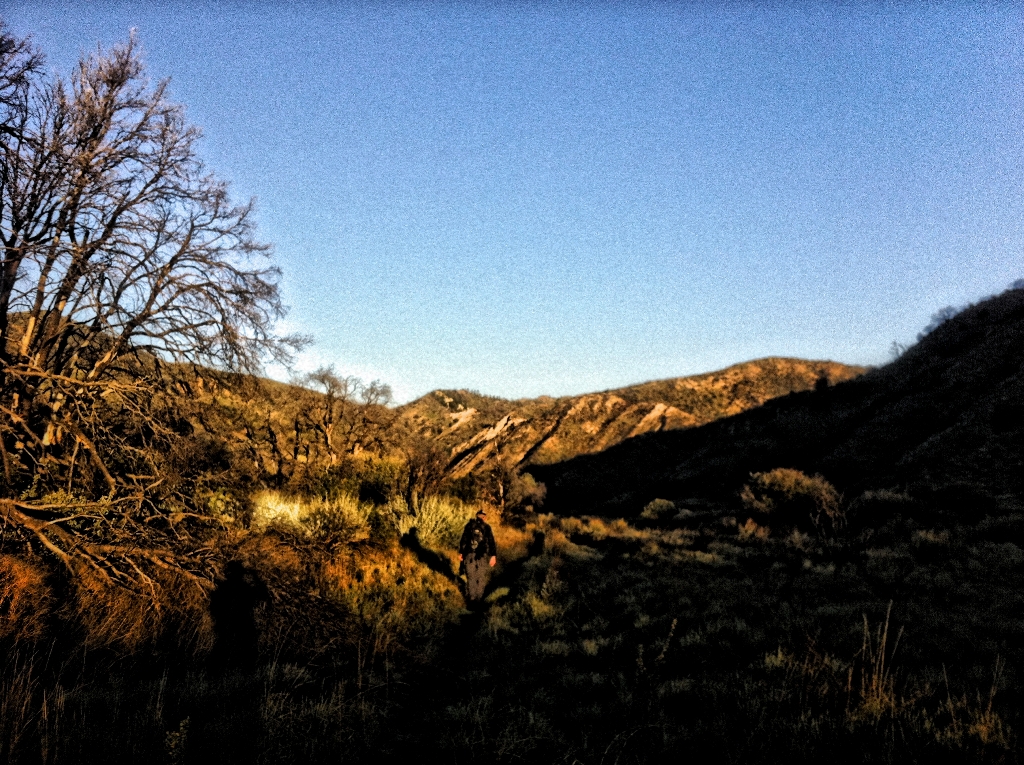










 Chumash Indian rock art.









 Jack Elliott's Santa Barbara Adventure