

Clouds over the Santa Ynez Mountains, December 14, 2024. Akin to the asperitas clouds of November, 2023.
“Rumours circulate about entry points which might give access to unseen spaces. Secrets are jealously guarded, closely shared. The subculture has its subcultures. Just as certain climbers prefer granite to gritstone, and certain cavers prefer wet systems to dry ones, so explorers have their specialisms.”
—Robert Macfarlane, Underland: A Deep Time Journey
Play it close to the vest. You know the rules.
An underground economy serves as a primary path by which the location of sought after places in Condor National Forest are disclosed; the seldom visited sites and the sensitive and exceptional places unlisted in guidebooks and on webpages.
This unmentioned economy of direction bound by etiquette serves effectively as a community governor to screen for proper individual character and to regulate the flow of people.
 A petroglyph in the wilderness of Condor National Forest. It’s well-worn and barely visible, but a dandy!
Consider an analogy with surfing.
Surfers wait years, sometimes decades, for a particular break to come to life working properly, to its fullest potential manifestation in power and form.
The best surfers catch the best waves at the best breaks.
Thus, the most efficient use is made of a highly valuable, fiercely demanded, scarce and fleeting resource.
The worst surfer probably should not get the best wave. Their lack of experience and lesser skills typically ensure that they don’t get that wave.
The best surf typically is the hardest to catch and ride.
And so a beginner does not even bother to expect, and generally will not for good reason attempt, to paddle out to the main peak at an aggressively surfed break and compete in the lineup against salty and seasoned muscled veterans and cranky diehard watermen.
Of course, this may be obvious, like a beginning driver not venturing onto a racetrack; we’re drawing on an extreme example here in order to clarify the general point.
There exists a natural pecking order.
The behavior of beginners is tempered by a realistic understanding of their own limitations, as Inspector Harry Callahan once suggested was wise.
And brought to heel by a healthy respect for those more advanced and skilled surfers who’ve already paid dues and put in hours of work or who are fortunate enough to be natural talents.
In their most primal form of dispensation, waves are allocated by the aggressive use of force; sheer physicality, accented with the occasional stink-eyed glare and pride-wilting vicious ridicule. What’s called localism. It’s the Serengeti at sea.
More or less, that’s how the economy of swell functions.
Once recognized by other surfers as sufficiently skilled, a person might be allowed into a more advanced sphere of operation within the water or boldly take their own place if good enough, and participate in a more meaningful way and at a higher level at a particular break.
Yet, even surfers of lesser skill may at times be allowed into a coveted lineup unharried, after first having proven their understanding and serious respect for etiquette.
Players in this maritime game are well aware that everybody is most certainly not equally entitled to an equal share of the best waves.
Nobody is assured of getting anything, but wet. And all the players know it.
The distribution of this fiercely demanded, fickle commodity to its insatiable consumers is self-regulated in this manner. There are no particular laws, no officials and no formal enforcement.
No authority or arbiter exists to determine or mete out fairness or equality in the lineup and guarantee access. It’s self-governed by the people that visit the places most.
This code of conduct, these unwritten rules, have grown up through the decades organically, from one generation to another, veteran to grommet, father to son, from within, bottom up; a rich cultural shroud bound together through ages with threads of many different hues and from many different individual fibers.
You cannot buy an inexpensive book delivered to your doorstep or read a website while at home in your pajamas to get shoehorned in on the cheap and easy.
Access is earned.
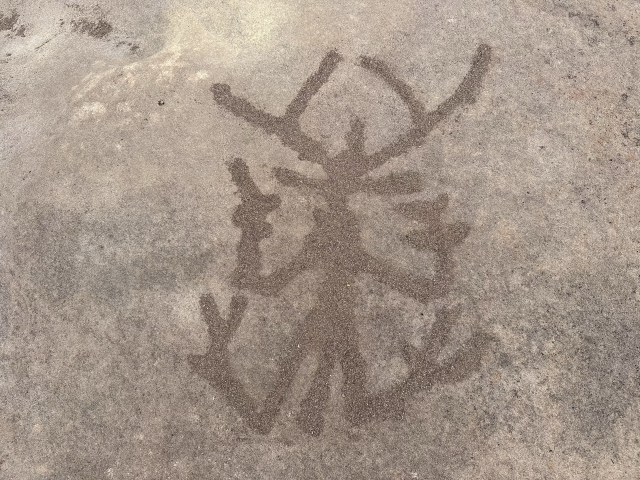 sand filled
Discreet word-of-mouth selects for character.
Directions are not freely handed out to anybody upon request. Word-of-mouth reserved for a select few leaves no cairns in print to later be followed by anybody and everybody.
People sharing details to sensitive places generally do so to other likeminded folks, whom they have reason to trust are respectful partners in preservation.
Yet, at least as importantly, word-of-mouth tempers flow, too.
Private, fleeting conversations distribute people across the land at any one point in time farther and wider, in ways more intermittent and less concentrated, than otherwise happens with guidebooks and websites, where published pages and internet links are readily spread like contagions shared virally and it’s all permanent, for anybody to see, forevermore.
National parks grappling with high volume as Instagram tourism booms — ABC News
For they have sown the wind, and they shall reap the whirlwind: it hath no stalk: the bud shall yield no meal: if so be it yield, the strangers shall swallow it up.
— Hosea 8:7, King James Version
Published information in books and on webpages serves as crowd force multipliers that can overrun small, singular places with a constant flow of many people.
The wind sown, the whirlwind reaped.
And so it is that this unmentioned underground economy characteristic of backcountry subculture serves its constituents well and admirably, while also helping to preserve the treasures of our national heritage.











 Jack Elliott's Santa Barbara Adventure
Normally I find myself with the same mindset with you on many of your posts but this one I have to really disagree with. The post is selfish in nature, in essence it makes you a hoarder of knowledge, you keep it to yourself because you fear your own private experience might be diluted if more people we come to appreciate these amazing ancient sites. That’s not how true rock art enthusiasts operate, I have visited hundreds of sites throughout California and have reached out to many people in places from their blogs who have helped me figure out how to get to little known spots in California from which I obviously don’t come from since I live in a part of this state which has urbanized and demolished most if it sites and those that haven’t been, I’ve visited. But I do not hoard knowledge as you, because knowledge is to be shared not as a whisper as you say from one privileged person to another but as a normal conversation between people. Let’s be honest most people will not take the time to go out of their way to a very remote spot just to damage a petroglyph or village site, that’s just an excuse privileged people use to keeps others out. So for a person who helps people better understand this area I expected better from you and this post is a little disappointing. No one is saying you need to post the site coordinates on your blog but to purposely deny people who would reach out for help is selfish.
Thank you for taking the time to comment, lengthy and thoughtful.
I love people that call ’em like they see ’em and speak their mind without reservation.
We’ve seen places we’ve picked mushrooms for decades that looked the same every year through the years, virtually untouched, then exposed in local print media online with specific reference, only then to see the places harmed if not ruined, crisscrossed with trails and with swaths of forest literally raked clear to expose the soil to see the mushrooms, to mention but a little. Our experience guides our opinions.
“Hoarder of knowledge” seems like a lot of hate. I’d have to disagree. I mean, the guy showed you a picture of an incredible site. Highly sensitive in nature. I think a true hoarder would share nothing at all. Would it have been better if he included surrounding shots of the area so some asshole could upload the picture and have AI software spit out an approximate location ? Agreed most people would not trek all the way out there to destroy something like that, but what if the site wasn’t far from a well used trail and what if that asshole then posted the picture on the Internet and it went viral. And then before you know it, we’d have some other assholes initials chipped in the stone right next to it.
You’re making the assumption once again that someone who has no interest in rock art is going to take all the time necessary to gather all those photos and find an ai program to upload it to. That is 100% ridiculous and you know it. Let’s not make fanciful stories of what could vex the beer guzzling off-roading special people you’re mentioning would never in a million lifetimes take the time to do that. The only sites across all the hundreds I’ve seen that have been vandalized were done decades ago and all those sites were obvious from riding trails. No one is going out of their way to find and deface rock art these days, I’m a part of several local and national rock art groups and this argument is a debunked fallacy. Share knowledge, that’s what has gotten human kind this far, and as I stated in my first sentence I usually always agree with his posts as we are usually like minded but I don’t like the propagation of this fallacy.
Also just to be clear no hate here Jack, you keep doing what you do sir, although I may not agree with the post I still appreciate you doing the blog and sharing what lies behind the stars. It was one of your earlier blogs combined with a few others that helped me to find the secret petroglyph cave in now the condor national forest. It was the wide angle shots of the cave mouth in the creek that helped me find it even through the neck high poison oak every where. It was worth it and if it wasn’t for the help of those photos, I would not have to come to appreciate the condor or Los padres however you prefer to call it in your backyard sir. That cave from top to bottom and the flat platform on the top with the ceiling right above it painted was worth the crazy hike out there. If it wasn’t for those kinds of pictures and your kind of blogs people like me wouldn’t be able to drag their friends out of their bubbles to appreciate the history of mankind all around us just a few hours drive away. Thanks Jack.
“It was the wide angle shots of the cave mouth in the creek that helped me find”
I rest my case.
Wow, good thing you’re not a lawyer whoever you are, because clearly you would lose eve try court case you handle. I found it using the wide angle shots, I rest my case. Yes I clearly included that to show that you are wrong because I clearly found it using his post and the site remains undisturbed and I’ve shared the location with several people since. You are truly uneducated and not worthy of an educated man’s time. Go read a book and try not run into all those gangs out there waiting in the bushes to follow you to the site so they can carve their name in it you uneducated fool lol. I rest my case.
So I will keep sending people to these sites so they too can appreciate them and show theirs friends and their family and the greater community as a whole. Nothing will give me as much pleasure as watching someone like this anonymous poster have to share his space given his selfish attempt to keep these places private and for themselves. Enjoy, and I hope you run into some of the people I send out there 🙂 You might learn a thing about socializing with other humans.
“I’m a part of several local and national rock art groups”
I’m calling bullshit on this. You are not part of any significant group. If you were, you would understand that the proper etiquette is not to blast site locations online, especially little known significant ones. In fact, the most well esteemed groups teach you this before going out with them and not to mention for some of us it would be a blatant violation of our volunteer agreements with the United States forest service in regards to monitoring these sites. Furthermore, I cannot speak for everyone in the Chumash community however, many of them (and I speak with plenty) find the behavior, you speak of to be complete disrespect. They do not want their sacred locations to be publicized on the Internet. I would not normally engage this deep with someone, but I must say you are a whiny, crybaby, Sniveling, shit bag. Go out there and find some stuff for yourself, and stop harassing people you don’t know on the Internet to give you information.
“You might learn a thing about socializing with other humans.”
Thanks , but I have no interest in socializing with most human beings. Especially one’s such like yourself.
You stated above that you have been to hundreds of sites, I’ve never taken the time to count how many I’ve been to however it’s an enormous amount, maybe not hundreds but guaranteed I’ve been too many that you will never, ever see. Because the most sacredly guarded ones that very few people ever access, would never in a million years be shared with someone like you who is itching to tell the world how to get there. And that’s a fact you don’t have to like it and you don’t have to agree with it, but that’s what it is.