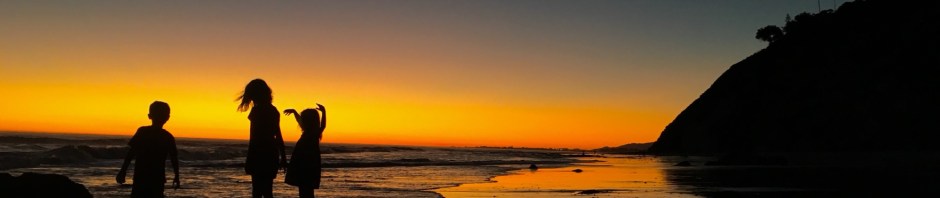
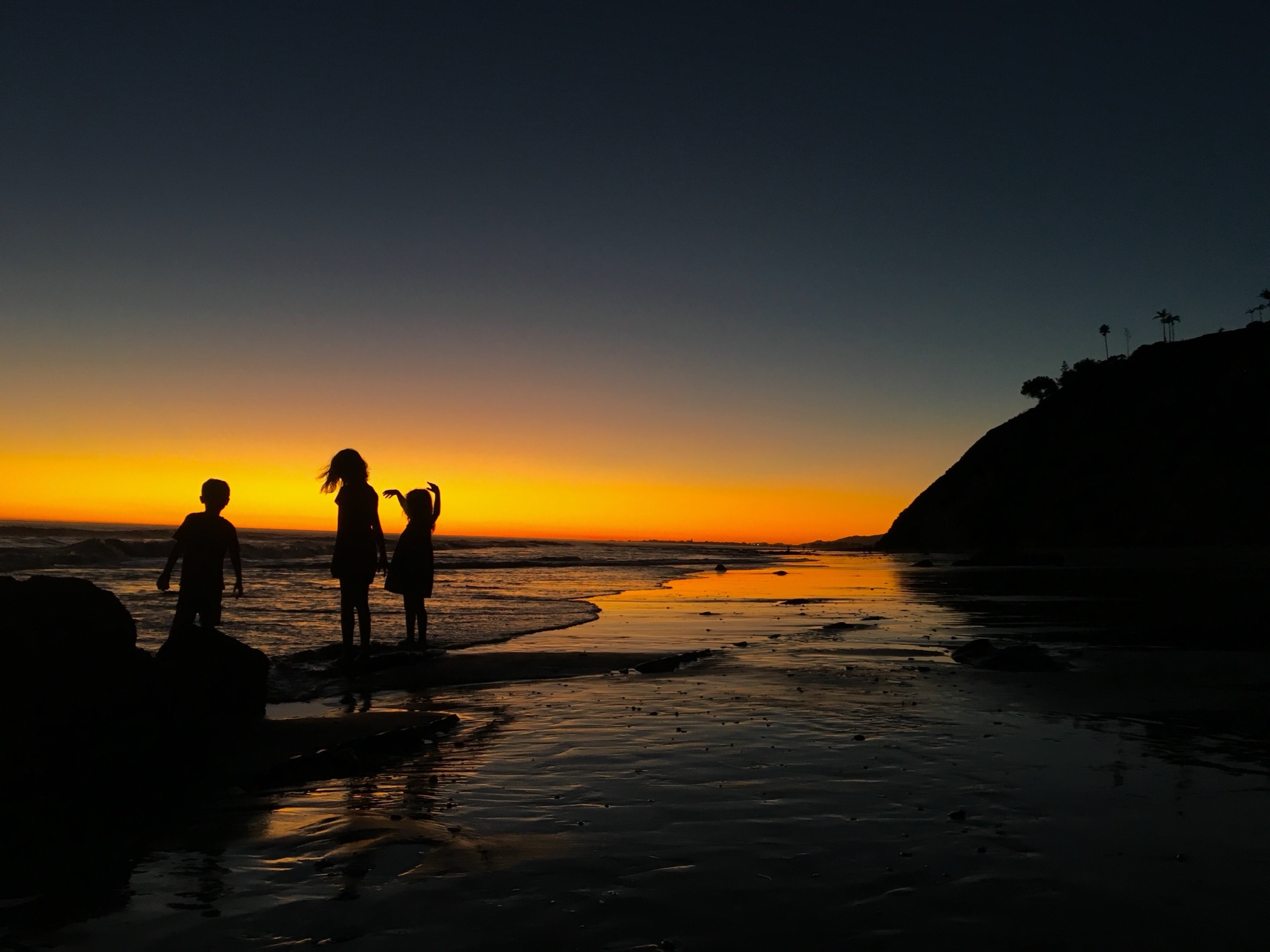
 Ninety degrees on the beach at sunset, 6:19, October 24, 2017.
Autumn’s sweet
We call it fall—Red Hot Chili Peppers
It’s 2:30 and 93 degrees right now as I write this.
Fall’s sweet, we call it summer.
Perhaps the most dramatic examples of coastal downslope wind events within the contiguous United States are those that periodically occur along a short segment of the southern California coast in the vicinity of Santa Barbara.
Called sundowner winds because they often begin in the late afternoon or early evening, their onset is typically associated with a rapid rise in temperature and decrease in relative humidity.
In the most extreme sundowner wind events, wind speeds can be of gale force or higher, and temperatures over the coastal plain, and even at the coast itself, can rise significantly above 37.8°C (100°F).
In addition to causing a dramatic change from the more typical marine-influenced local weather conditions, Sundowner wind episodes have resulted in significant property and agricultural damage, as well as extreme fire danger.
They have, in fact, been associated with many of the most destructive conflagrations that have occurred in the Santa Barbara region.
— The Sundowner Winds of Santa Barbara, California, Warren Blier, American Meteorological Society (1998)
Hot winds in Santa Barbara may be like nowhere else in the country.
One of the first posts on the journal here back in 2010 was a recap interpretation of an old Santa Barbara tale of extreme heat written about by Walker A. Tompkins:
The Day Hell Hit Santa Barbara
Maybe it wasn’t 133 degrees in town back on June 17, 1859.
What if really it was only 110?
Because that really has happened.
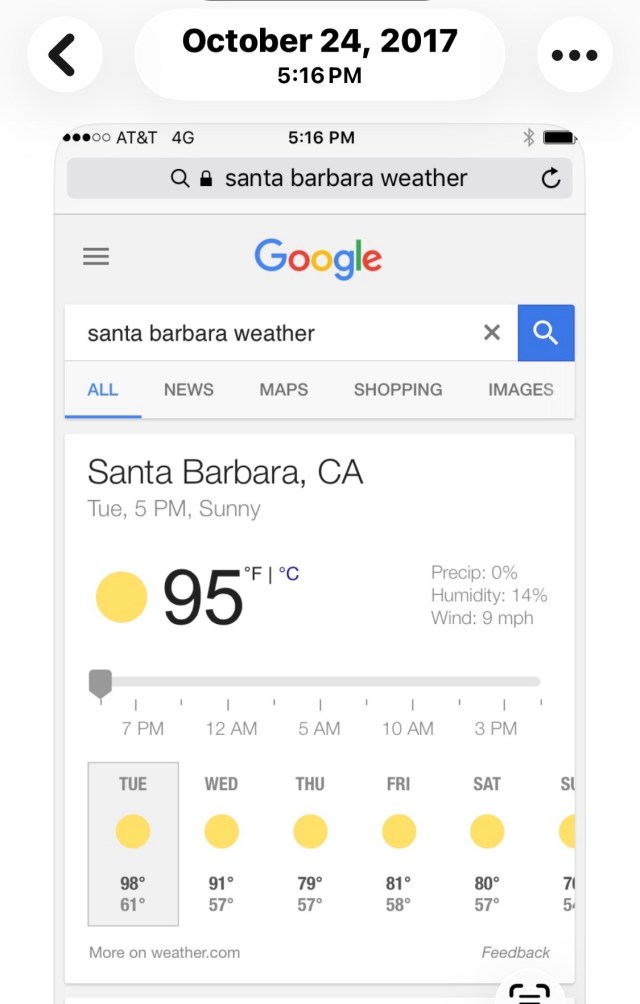
Screenshot
We lived near the bottom of San Marcos Pass in 1990, when on June 27 the Painted Cave Fire was ignited.
The fire burned down the mountain slope, through neighborhoods, across the freeway and into town razing a number of commercial buildings and businesses like Ye Olde Butcher Shop and Ocean Rhythms surf shop.
Wind gusts of 40 to 60 miles per hour ripped through the passes and canyons of the Santa Ynez Mountains above town, stoking the wildfire like a bellows.
The smoke was thick and the city chaotic, right in town, around Five Points, I recall, though never faced any danger.
The fire burned within about a mile and a half of our home.
Two people died.
The high temperature that day reached 109 degrees at Santa Barbara Airport, right near the beach, where the ocean temperature was a cool 65 degrees.
That tied and remained the undisputed record high until broken on June 17, 2017 by a 115 degree heat spell.
Related Post: