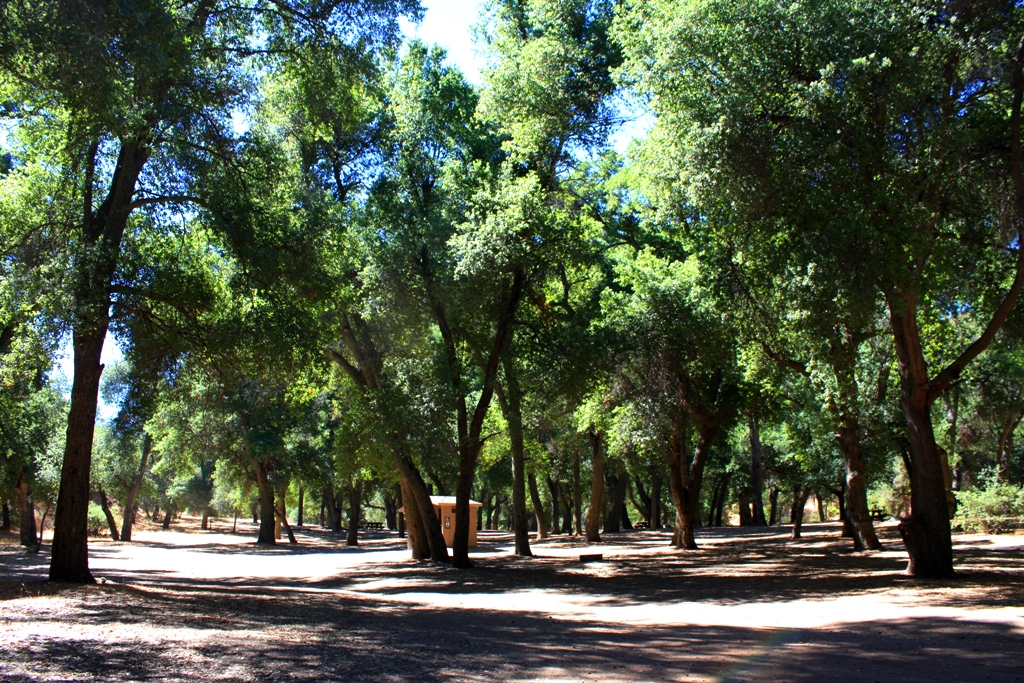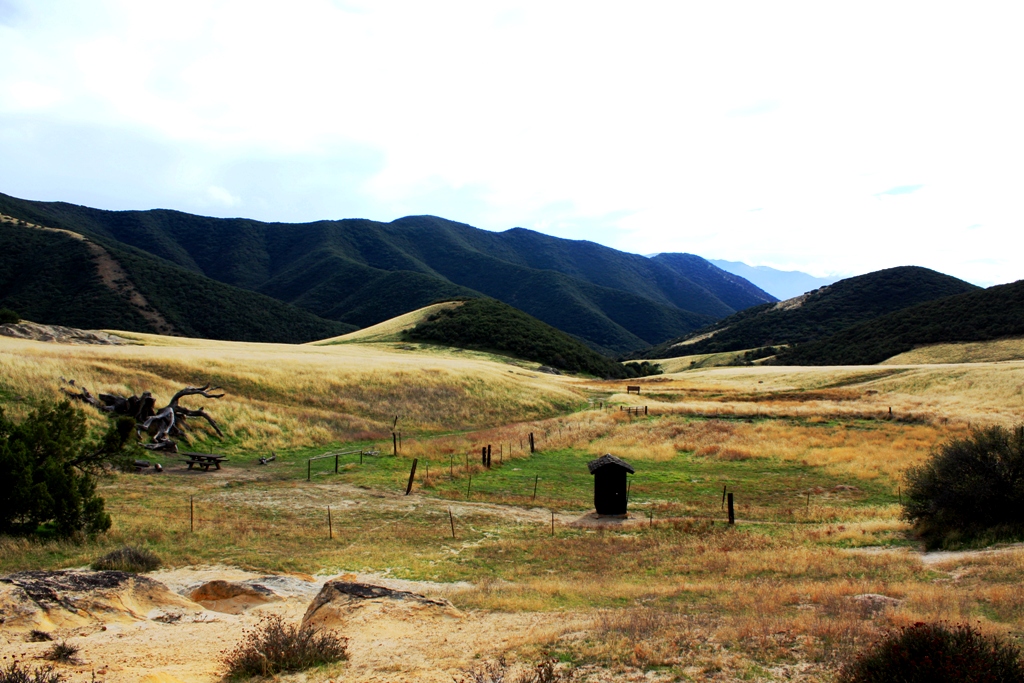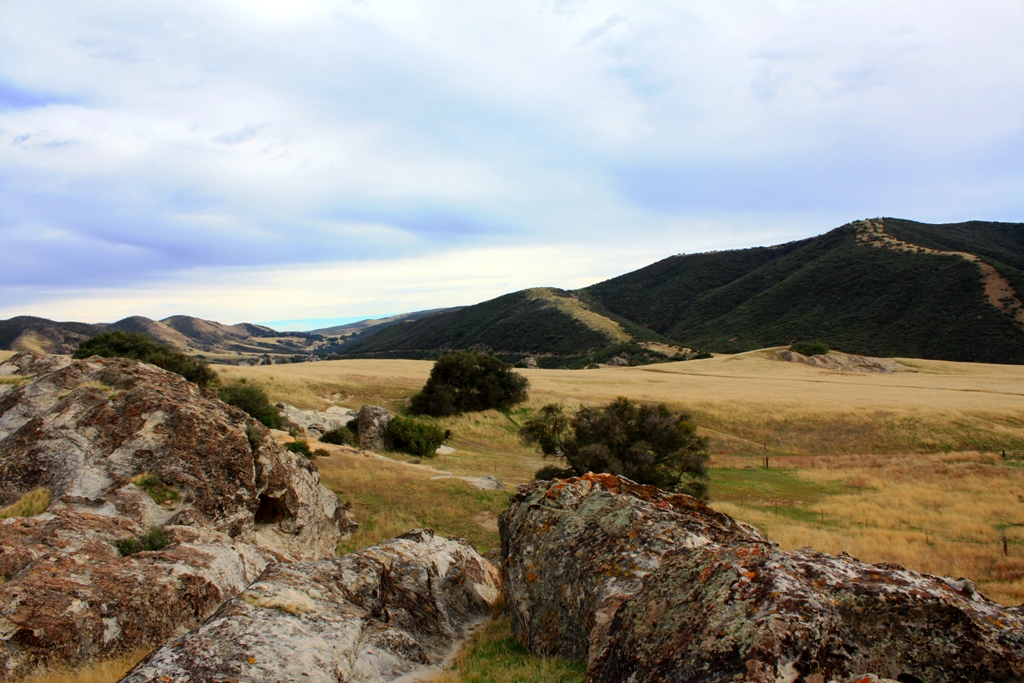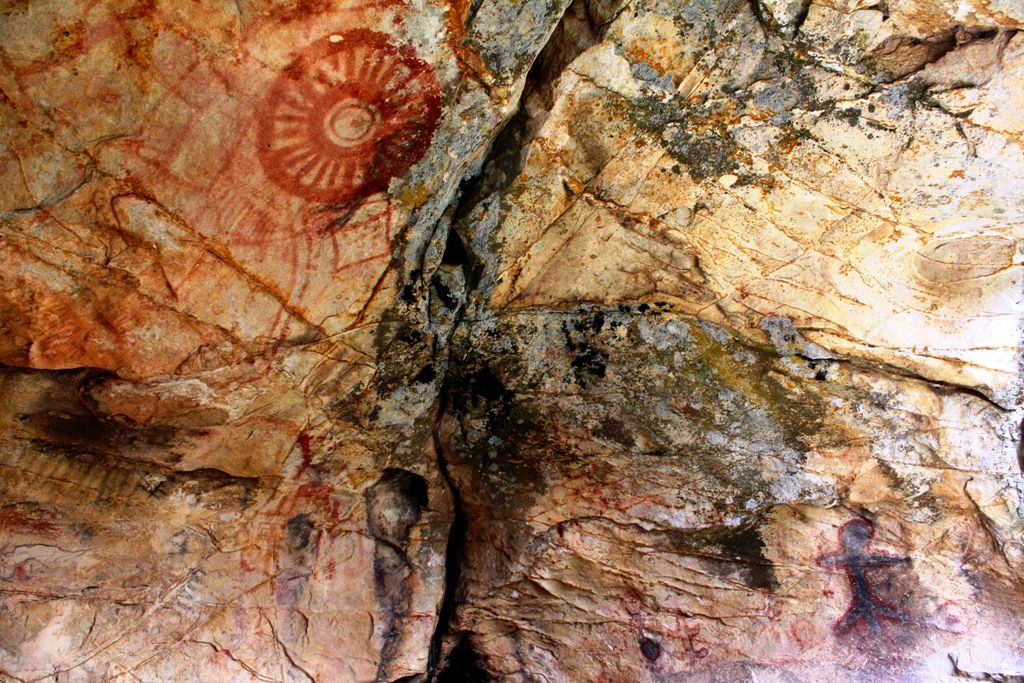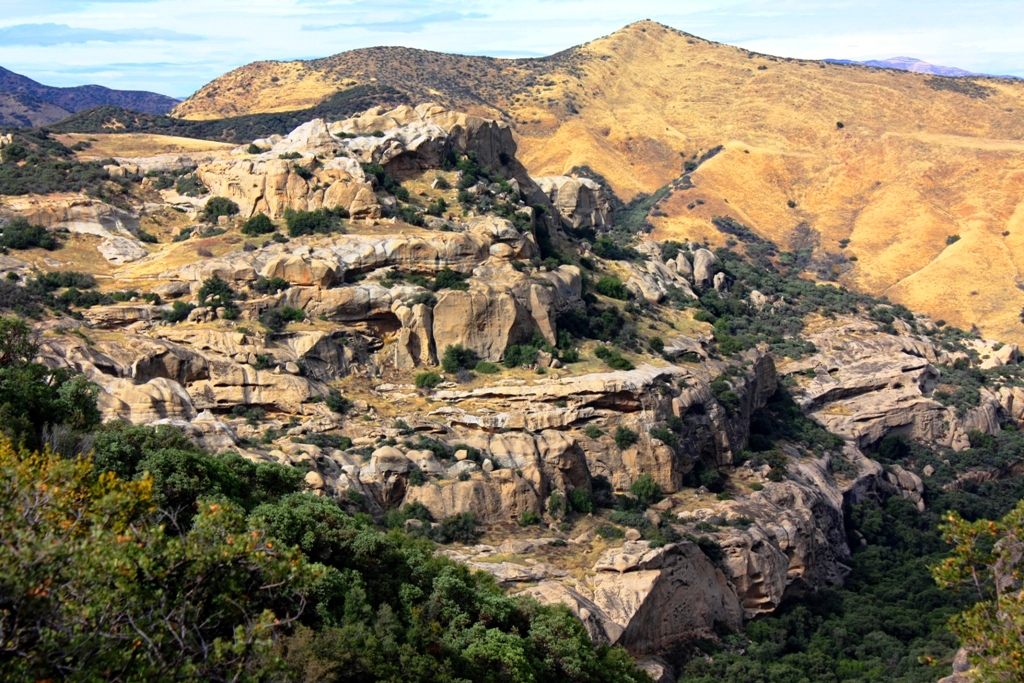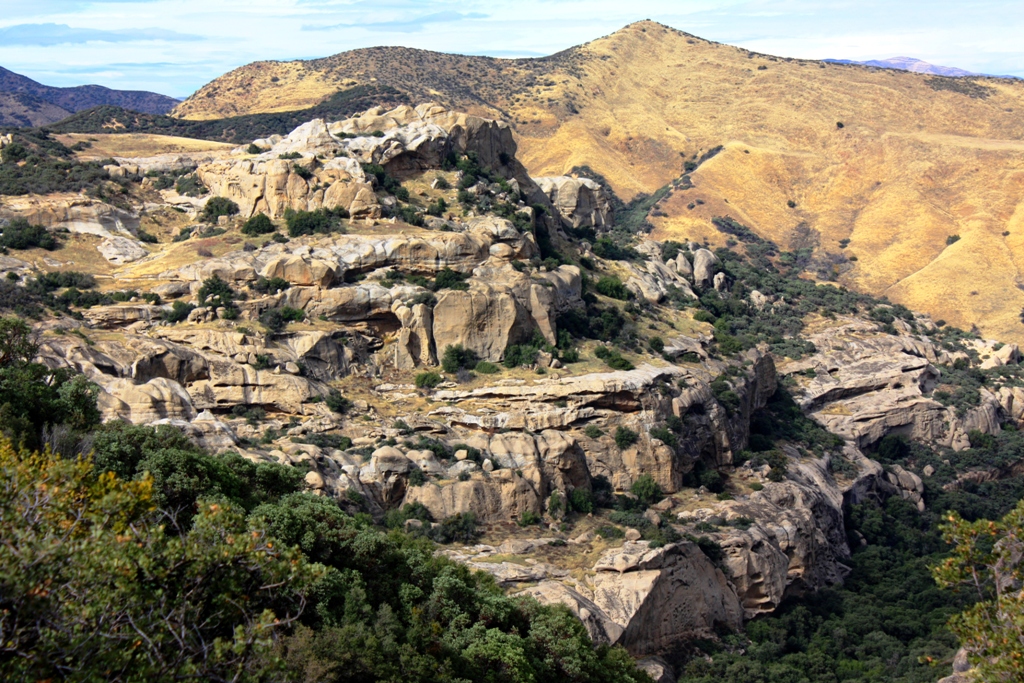
Dragon’s Back Ridge on the San Andreas Fault, Carrizo Plain National Monument

Dragon’s Back Ridge is the result of the tremendous pressure along the San Andreas Fault that runs through the Carrizo Plain National Monument. The ridge is located southeast of the Wallace Creek offset and contains its own offset drainage channels. It can be accessed from Elkhorn Road.

Click for full screen view of Dragon's Back.

Click for full screen.

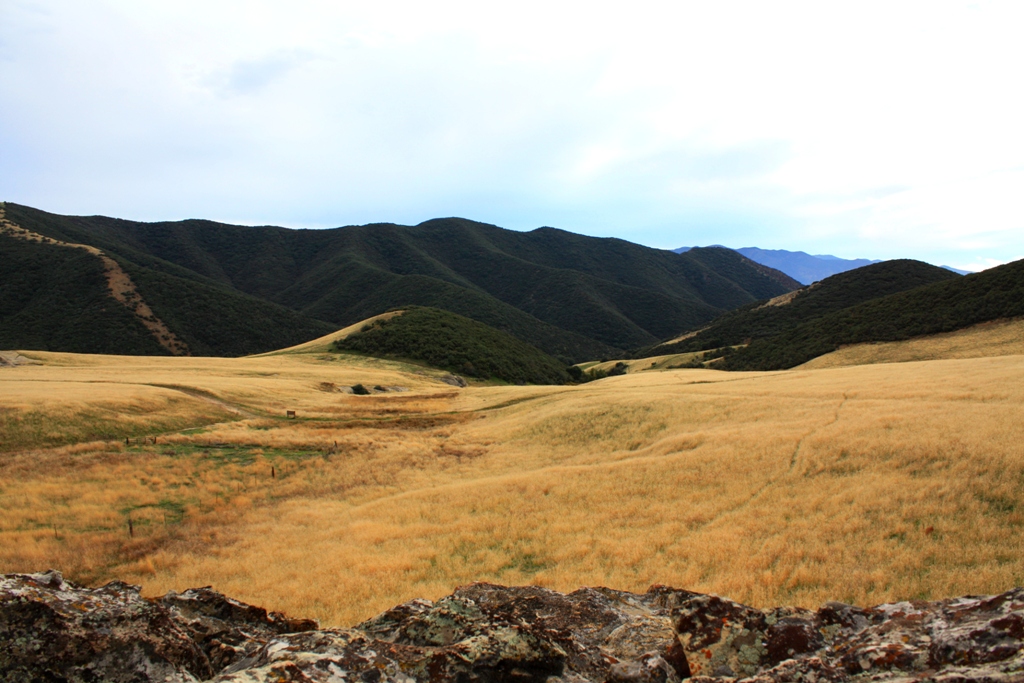
On the Carrizo Plain, in the shadow of the Caliente Range, overlooking spring flowers with Dragon's Back Ridge in the background.

A more detailed write up about Dragon’s Back Ridge and the San Andreas Fault, along with aerial photos, can be found at the following link: Ramon’s Image Gallery

Posted in San Luis Obispo | Tagged , , , , , , | Leave a comment

Pine Mountain Fossil Foray

Prime fossil hunting grounds at the foot of Pine Mountain, Ventura County.

With the tail end of a thunder storm swirling its way down the coast and through the area, I checked the online weather radar and saw that only a few scattered showers remained. The mountains looked surprisingly clear of rain. So I gathered my gear, loaded it up and hit the road for Pine Mountain.

The showers started on the drive up HWY-33 behind Ojai. Sitting in my truck roadside a few minutes later as I pulled on my waterproof gear, the showers continued intermittently, but as I started up a creek, the rain stopped. Thirty minutes later I was sitting in a dry shelter beneath a massive wall of sandstone hiding from the sheets of rain pouring down from a grey-black sky. Figuring I had five hours of daylight left and hoping that the clouds would soon clear, I kindled a small fire, took out my thermos and Louis L’Amour novel and sat back to read and sip coffee.

The rain ceased, the clouds parted to blue sky and the sun came out. I headed up a fork in the creek with the fragrance of rain soaked forest heavy in the air and the hills echoing with singing birds. It was not long, however, before I noticed the clouds gathering once more on the summit of Pine Mountain, which soon disappeared in a grey shroud of falling rain. A flash of lightning, a few heavy rain drops and then it cut loose so fast that I still had my slicker in my backpack. The thunder boomed, cracking through the sky overhead. Hastily fumbling in the downpour trying to don my jacket, I ripped the hood from the buttons by accident and had to reattach it wasting precious seconds and getting soaked.

Fossilized sand dollar.

I started back down the creek slipping in the mud as torrents of chocolate milk-colored rivulets came streaming down the hillsides rapidly filling all the gullies that had been dry minutes earlier. Lightning bolts flashed down followed by thunder claps that I could feel resonating inside me. Then it started to hail.

That is when I spotted a fairly nicely preserved fossilized sand dollar and knelt down to pick it up as little balls of ice slammed down all around me in the mud. The weather added an enjoyable element to the experience. The mountains were alive. There I was hunched over in a hail storm scanning the ground for fossils with thunder and lightning flashing and crashing all about.

I quickly looked around the immediate area and seeing nothing of interest headed down canyon through the downpour growing a bit concerned about flash flooding. Oddly, though, I reached the end of the rush of water as it made its way down canyon and before long was hiking once more in a dry creek bed.

At the confluence of two creeks that I passed earlier I found the best sand dollar specimens of the day. And as I was combing the area, I heard the sound of gurgling water begin to grow louder and before long the chocolate milk runoff was soon filling the creek bed in front of me. It was interesting to watch the process of rain and erosion unearth fossils from their subterranean tombs leaving them scattered across the mountain. The scattered showers sent a deluge flushing down the creases of the mountain, but the lower reaches of the creek were still dry as I hiked back to my truck.

A wad of stone typical of the area with numerous fossilized conical-shaped snail shells embedded in it. Bits and pieces like this are everywhere. Finding whole specimens is not as easy.

A tiny inch-long intact fossilized snail shell.

A detailed geological map and notes mentioning the most fossiliferous areas on Pine Mountain including the best areas to look for megafauna: Bulletin of the American Association of Petroleum Geologists (PDF)

Related Post:

Beachcombing for Fossilized Whale Bones in Santa Barbara County

Posted in Ventura | Tagged , , , , , | Leave a comment

An Arrowhead, Fossils and Bear Tracks on Pine Mountain Or Return to Chorro Grande

The view on the way home. Highway-33 snaking its way up Dry Lakes Ridge during a foggy sunset. (click to enlarge)

I woke to the sound of slow dripping water from a heavy marine layer and decided to sleep in. I had no desire to get drenched while hiking through dripping wet brush.

Later, on my drive up HWY-33 out of Ojai, the fog thinned and finally cleared as I climbed out of Wheeler Gorge below Dry Lakes Ridge on the freshly paved ink-black asphalt. Should’ve been on the road at first light! I thought. I knew it was only a thick marine layer, that the mountain top would be dry and sunny while the lower elevations were socked in.

By 12:40, I was moseying up Chorro Grande trail with Pine Mountain looming over me, returning after my previous blistering. On this day I was richly rewarded.

The air was remarkably warm, too warm. Only a few bleached white clouds clung to the blue canvas overhead. I was getting my gear together roadside when I heard a strange noise and turned as a paraglider came swooping down onto the highway.

After huffing up the initial hillside from the highway to the creek, I carefully picked my way up one of the dry arroyos searching the well weathered sandstone outcroppings for caves and trace evidence of the historic Chumash Indian populations that once roamed these untamed lands in the Sespe Creek watershed.

A fork in the creek bed.

As I strolled past a fork in the creek bed, taking the west fork leading through a prominent sandstone ridge, I came into a small potrero. It was studded with a wide-spaced, coarse type of bunch grass, and bordered on the north edge by a stand of densely clustered oaks trees rooted against a sandstone bench. I recognized its potential immediately and stood analyzing the landscape, thinking what a terrific area for a campsite.

In the wet season, water seeped from the mountain running before the potrero in a shallow flow and into the actual creek forming the east edge of the relatively flat nook. I started to my left walking over to take a gander around one of the clumps of oak trees to see what I might see when, for some reason, I decided to walk to the right instead. As I stepped into an open patch of dirt my eyes locked onto a arrowhead. As soon as I saw it I knew it was a point. I could not believe it and stood there grinning.

The point as found. The last person that touched this was a Chumash Indian many years ago.

What are the odds of stumbling across a one inch bit of stone on the side of a mountain? To think of all the individual choices I made that day that added up to having stepped directly over the top of that arrowhead. Incredible.

A funny thing about the find is that it was actually laying in the middle of an old foot print from somebody that had passed a few weeks prior. I could clearly see a footprint, and the arrowhead was right in the middle, where the arch of the foot would be.

I continued up the dry creek bed to the foot of a waterfall and, finding nothing of interest, plopped down beneath the brush beside the wall of water stained sandstone. After snacking on some provisions I dozed in the shade for the next hour waiting for the sun to drop a mite and the temperature to cool.

The next (dry) waterfall, which I broke my way through the brush to reach, was much larger at about a fifteen foot drop or so. A gravel bottomed depression in the otherwise circular dirt flat beneath the fall showed just how far the water shot off the ledge in a rainstorm, which was a considerable distance. Thinking that the collection of detritus where the water hits the ground was a great place to search for treasure, whatever that may be, I squatted down and took a look. I did not find any more arrowheads, but I did spot a fossil within a few seconds. A near fully intact fossilized snail shell was just laying there, which is not surprising for the area. They are embedded in the rocks and washed out in the creeks all over the Pine Mountain, but whole specimens completely free from the surrounding stone are harder to find.

A tiny fossilized snail shell.

I poked around the surrounding area a bit more and then began making my way back down the mountain as the sun was falling low on the horizon. Following my own tracks down the sandy creek bed toward the trail, I came onto a set of, what I believe to be, bear tracks. Last I time I was in the area, about a mile away, I saw tracks that were about half a day old. This time the bear had crossed my trail sometime after I hiked in. Down the creek I went following the fresh tracks as they appeared intermittently in the sandy patches, but never saw anything. Until later on the drive home when I rounded the corner of the road on top of Dry Lakes Ridge and saw the spectacular sunset view of the fog rolling in shown in the photo.

Posted in Ventura | Tagged , , , , , , , , , | Leave a comment

Wallace Creek Offset at the San Andreas Fault, Carrizo Plain National Monument

“A great earthquake shook the mountains, ripping a deep gash through the rock formations. . .”

-A Spanish traveler’s account of the great Fort Tejon earthquake of 1857

On January 9, 1857, the 7.9 magnitude Fort Tejon temblor rocked California altering the landscape, ripping trees from the ground, forcing rivers and streams to overflow their banks and in some cases to briefly flow backwards. People fled their homes in terror.

In Santa Barbara ground fissures opened up in the earth. Sandblows, the result of soil deep within the earth being turned to slop by the shaking and then forced to the surface, erupted out of the ground like volcanoes spewing muddy debris into the air.

Credit: USGS

A U.S. Geological Survey report published in 1969 notes that, as a result of the great quake, “several new springs formed near Santa Barbara.” (Geology, petroleum development, and seismicity of the Santa Barbara Channel region, California.  [U.S. Geological Survey professional paper])

The following excerpt describing the earthquake is from the Santa Barbara Gazette published on January 15, 1857.

On Friday last, January 9th, this city [Santa Barbara] was visited by a succession of earthquake shocks, one of which was the most severe which has been experienced on this coast for a long series of years. …

In this city, the morning of the eventful day was ushered in by the same genial sun; the air was tranquil, and no unusual atmospheric phenomena indicated that any sudden danger was at hand. … At about half past 8, or at 22 minutes past 8 o’clock, according to those who assert that they had the “correct time,” the severest shock commenced, and which continued from 40 to 60 seconds. It was universally noticed throughout the city, and was so violent in its vibrations that all of the inhabitants fled from their dwellings, the majority of whom, on bended knees, and hearts throbbing with terror, made fervent supplications that the imminent and impending danger might be providentially averted.

This “shock” commenced with a gentle vibration of the earth, which gradually increased, accompanied with an undulating motion, until it attained its culminating intensity, and then as gradually decreased, until it ceased its action altogether. … The peculiar motion experienced during is continuance very much resembled that on board a vessel in moderate sea. Happily, it passed without causing material damage to the city.

Harper’s Weekly published an account of the temblor on February 21, 1857 that mentioned Santa Barbara.

“In the southern part of the State the earthquake was more alarming. The shocks at Santa Barbara—some six in number—occurred about 9 o’clock A.M. and are stated to be the severest ever experienced in that district. Scarcely a house in the town escaped damage. People were thrown down; and, in some places, the earth opened and water gushed out. The water in all the wells rose from ten to twenty feet. No lives were lost, but the in­habitants were compelled to rush from their houses for safety.”

Evidence of the Fort Tejon Earthquake can still be seen today on the Carrizo Plain in San Luis Obispo County, California, which is about a two hour drive from Santa Barbara. Along the northeastern edge of the Carrizo Plain National Monument, the Pacific Plate and the North American Plate meet in dramatic fashion creating the San Andreas Fault.

The fault line cuts across numerous arroyos and seasonal drainage channels that flow out of the Temblor Range and onto the Carrizo Plain. When the Fort Tejon earthquake struck, the earth literally ripped apart along 200 miles of fault line including the nearly forty mile segment running through the Carrizo Plain. The surface rupture sheered Wallace Creek in half offsetting the creek bed 30 feet resulting in the dramatic z-shaped meander in the creek channel seen today.

Aerial of Carrizo Plain with the San Andreas Fault running through the frame to the right of the red line drawn for reference.

(Photo credit for aerial: John Wiley)

View from hill overlooking Wallace Creek. The curved red line traces the creek bed showing the dramatic shift in the arroyo's channel resulting from slippage of the San Andreas Fault. Arrows show the direction each tectonic plate moved.

View to the southeast from Wallace Creek overlook. My truck is just visible as a dot on the right. The Caliente Range is in the background.

Read or make a copy of the same Wallace Creek educational pamphlet that is available at the site complete with a detailed graphic showing the creek channel offsets: Wallace Creek Interpretive Trail (PDF).

A detailed self-guided tour of geologic attractions in the Carrizo Plain National Monument including Wallace Creek: Self-Guided San Andreas Fault Tour on Carrizo Plain, San Luis Obispo County, California (PDF).

To reach the Carrizo Plain National Monument take the US-101 north out of Santa Barbara to HWY-166 east out of Santa Maria and through New Cuyama. Or go south from Santa Barbara to HWY-33 out of Ventura and through Ojai. After the 33 t-bones the 166 take Soda Lake Road which leads into the Carrizo Plain valley from it’s southeastern end. Take Elkhorn Road, which skirts the Temblor Range and the San Andreas Fault.

On this map, west on HWY-166 goes to Santa Maria. South on HWY-33 goes to Ojai. Wallace Creek is noted toward the northeast corner of the monument boundary.

Interactive map guide:

For further reading about earthquakes in the Santa Barbara region spanning the years from 1812 to 1978 visit:

Santa Barbara Earthquake History

Sources for historic newspaper quotes:

Santa Clarita Valley History

Santa Barbara Earthquake History


Posted in San Luis Obispo | Tagged , , , , , , , , , | 1 Comment

Cliff Diving at Montezuma Falls in Costa Rica

Clint Elliott raising the bar.

I took this photo of my dad testing the muddy waters at Montezuma waterfall on the Nicoya Pennisula in Costa Rica. This is the first and largest fall in a series of three and is just a short hike from what was at the time a tiny seaside village.

Posted in Costa Rica | Tagged , , , , , , | 3 Comments