
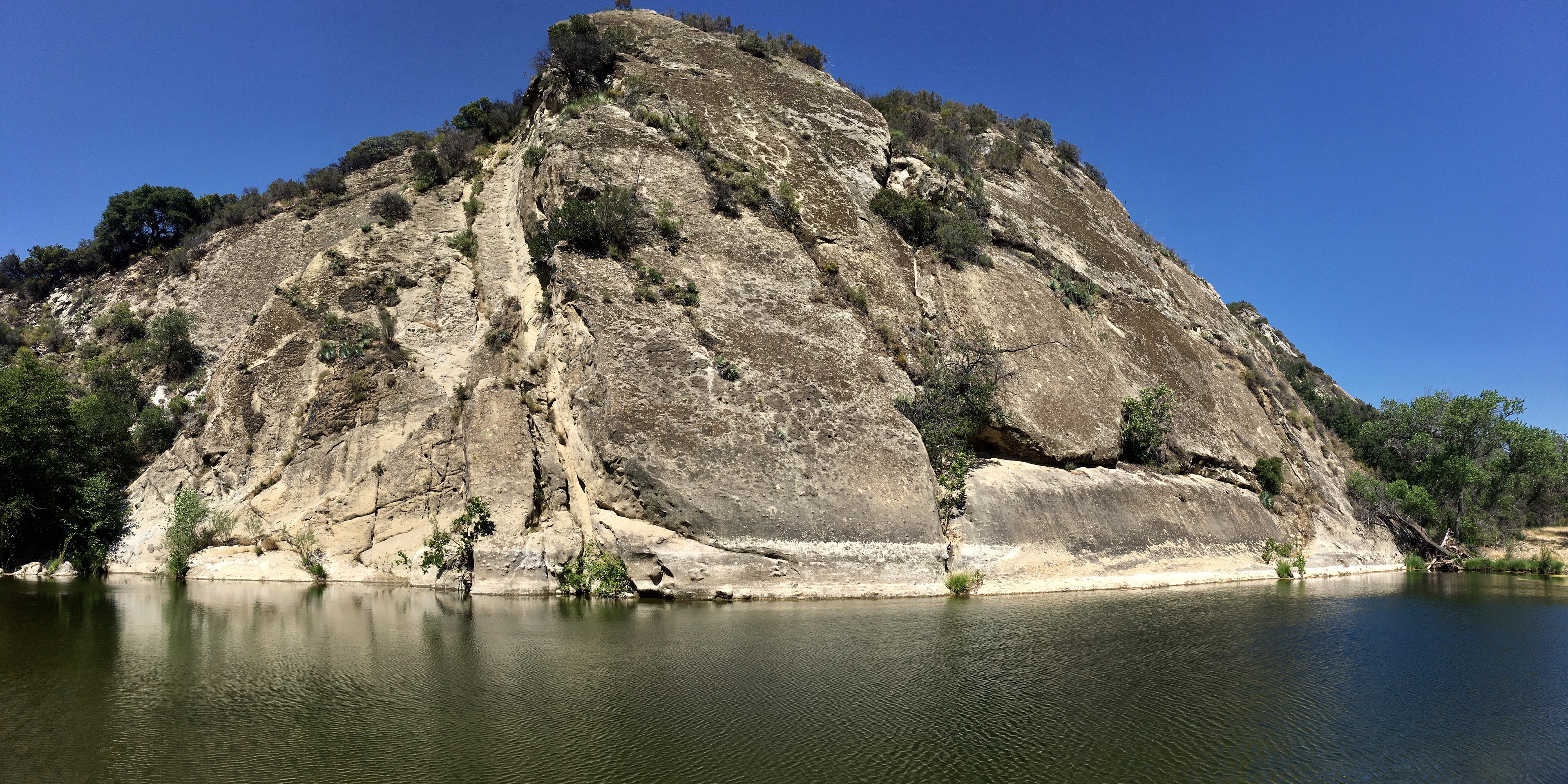
 Red Rock, Santa Ynez River, Santa Barbara County
“The writer’s duty to speak the truth—especially unpopular truth. Especially truth that offends the powerful, the rich, the well-established, the traditional, the mythic, the sentimental. To attack, when the time makes it necessary, the sacred cows of his society. And I mean all sacred cows.”
—Edward Abbey, “A Writer’s Credo”
“Virtually no article of faith, ideology, or institution—be this sacred or profane, this worldly or otherworldly—escapes his scrutiny.”
—Max Oelschlaeger on Henry David Thoreau, “The Idea of Wilderness”
I do not take kindly to being lied to. I do not accept without offense being misled. I greatly resent being treated like an uninformed, uneducated dolt to be taken advantage of and fleeced at will.
And that is how scores of people visiting the Santa Ynez River have been treated by the Parks Management Company.
The offense is greatly compounded when such deceitful practices are pursued in partnership with the federal government. The government is supposed to be an advocate and representative of the people, not an accomplice in corporate malfeasance.

Parks Management Company now tends a kiosk at First Crossing at the Santa Ynez River, where Paradise Road ends and Forest Route 5N18 or “River Road” begins and leads to the Red Rock Trailhead.
There are several improved day-use sites along River Road on the way to the Red Rock Trailhead that offer people picnic tables, BBQ grills and toilets. But there are many more unimproved areas along the road where people can pull over and park to swim or hike or picnic or space out and day dream or recreate as they so wish.
The Forest Service has granted a contract to Parks Management Company as a concessionaire to operate certain and select areas of the Lower Santa Ynez Recreation Area and charge recreationists a fee to use the sites. These sites are limited to improved day-use areas.
I do not object to this system, necessarily.
I am not opposed, necessarily, to private companies partnering with the government to manage recreation sites in the National Forest.
I am not opposed, necessarily, to paying fees to use day-use sites and campgrounds.
My fierce objection comes in response to the manner in which this system is being carried out. It is being operated in a deceitful manner that keeps the public uninformed and unaware, and it takes advantage of people financially.
This is no small matter.
When, on numerous occasions, I have arrived at the aforementioned kiosk at First Crossing, an employee of Parks Management Company has demanded that I pay a day-use fee. They have never asked if I am using the sites under their management or not. They just demand money.
There is one rather huge problem: Parks Management Company has no legal authority to demand such payment.
As per the Forest Service, the Special Use Permit granted to Parks Management Company pertains to “campground and recreation site operations” and to “the operation and maintenance of government-owned recreation facilities located on the Forest” and covers “campgrounds, trailheads, and day use or picnic areas, as well as providing the important maintenance and upgrades to these sites.”
The sites covered by the Special Use Permit are clearly defined and quite limited.
In point of fact, the Special Use Permit does not cover the vast overwhelming majority of the land above First Crossing.
Yet Parks Management Company is acting in a manner as though anything beyond First Crossing is a fee area the public cannot access without payment.
Clearly, unimproved dirt patches along a paved road do not meet the definition of being a campground or facility, and it also seems reasonable to presume based on the words of the Forest Service that these areas are also not what is meant by “recreation sites,” for the entire forest is a recreation site and the Special Use Permit does not pertain to the entire forest.
Proof of this is also found in the answer that comes from the mouth of Parks Management Company employees every time I say, “I’m not using any day-use areas. I’m just driving up the road to park in a dirt pullout to go for a swim.”
At this point the employee inevitably steps aside and waves me through without further incident.

Not once have I ever stopped at the kiosk and had any employee kindly inform me that I am not legally required to pay any fee of any kind to merely drive up the road or to park in a pullout and go swimming or hiking or to access the vast overwhelming majority of the forest above First Crossing which falls outside the bounds of Parks Management Company’s contract with the Forest Service.
Why has this never happened?
Not one single time.
Why is it routine policy for Parks Management Company to demand money from people who may not necessarily be legally obligated to pay anything whatsoever to the company?
There is a phrase for this sort of behavior. It’s called a lie of omission or what is known in technical parlance as exclusionary detailing.
That people do not have to pay Parks Management Company to drive River Road is a rather large and important detail that the company never, in my experience, mentions.
This is outrageous!
It’s a shameful exploitative act that they are perpetrating.
Why has there been no outcry from forest visitors?
It leaves me wondering . . . Am I the only one that cares about the rules around here?!

I recently had a conversation regarding this issue with a Santa Barbara County sheriff’s deputy at First Crossing.
I asked the deputy upon what legal basis Parks Management Company is justified in demanding citizens pay a day-use fee when not using day-use sites.
I opined that the company should be responsible for making sure people that use the day-use sites pay the appropriate fees, rather than being allowed to block access to the entire Lower Santa Ynez Recreation Area and demand payment from everybody regardless whether they’re using improved day-use sites and facilities or not.
It’s akin to setting up a road block on a long road leading to a pay-to-use campground and demanding a person pay that fee before driving the road whether they’re camping or not.
The deputy kindly ignored the question and did not answer. I asked several more times in various ways. The deputy would not answer, but would dodge and weave around the point at issue and talk of other tangential matters.
It was a civil and pleasant conversation, and it appeared he understood the point I was making. It was also plainly evident he did not want to say anything that might reflect badly on Parks Management Company.
In the end the deputy finally said that he was granting Parks Management Company some leeway, as they were new to the business here on the Santa Ynez River and still in the process of figuring out how to effectively manage the area.
(To clarify, the deputy did not mean that he was granting the company leeway to act in a manner beyond their scope of legal authority. He seemed to be speaking generally about not leveling too harsh a judgment on the fledgling company which took over management duties in November of 2016.)
Well that’s not good enough.
If Parks Management Company cannot or will not justly manage the sites covered in their Special Use Permit without abusing their authority as they currently are, then the company should have their permit revoked.
Unsuspecting recreationists misled by Parks Management Company in their pursuit of profit should not foot the bill for the company’s incompetence while they flounder about trying to figure out how to handle the duties they signed up to carry out.
If there is leeway to be granted, then the bias should be in favor of the tax paying public rather than a corporation trying to make a buck.
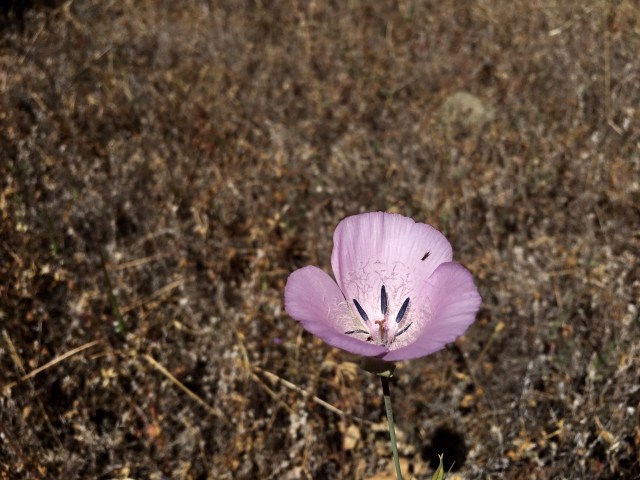 Mariposa lily growing along the Santa Ynez River.
“It was a glorious game. Theft robbed of the stigma of theft, crime altruistically committed—what is more gratifying?
John Steinbeck, “Tortilla Flat”
What does Parks Management Company have to say about this apparent abuse?
They must have made a killing charging all the people I saw along the river not using day-use sites on all those many busy summer days I was there.
What does the Forest Service have to say about this apparent abuse?
Can individuals also freely and without consequence act in a manner not in accordance with and outside the bounds of any special permits they may obtain from the Forest Service?
Or should we expect unequal treatment under the law?
The Forest Service asserts that they are “building the capacity for Parks Management Company to better deliver the high-quality services the public has come to expect from their recreation experience on the Forest.”
Good intentions are irrelevant.
It is a rather odd practice, to put it mildly and politely, to force people to pay a fee for services they do not use and are not legally obligated to pay!
What ever purported good intentions there may be in striving to provide people with quality recreational opportunities, it does not justify the manner in which the management company is acting nor erase the problem.


 The thermometer bounces between 108 and 111 degrees as I drive into the Mojave Desert on a recent June afternoon.
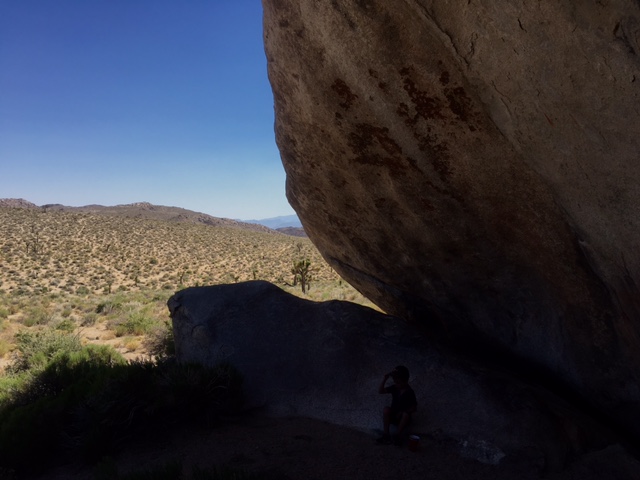 The gravel flat and resting stone beneath the huge painted boulder.
 A portion of the boulder’s painted wall that’s aside the gravel flat.
 Ungulates of some sort, perhaps deer.
 Some remarkably different looking ungulates compared to the predominant form given bighorn sheep in pictographs and petroglyphs in this region. The long curved horns extending over their back makes them resemble ibex more than sheep, though ibex are not California natives.
 Something that appears to be anthropomorphic figures.
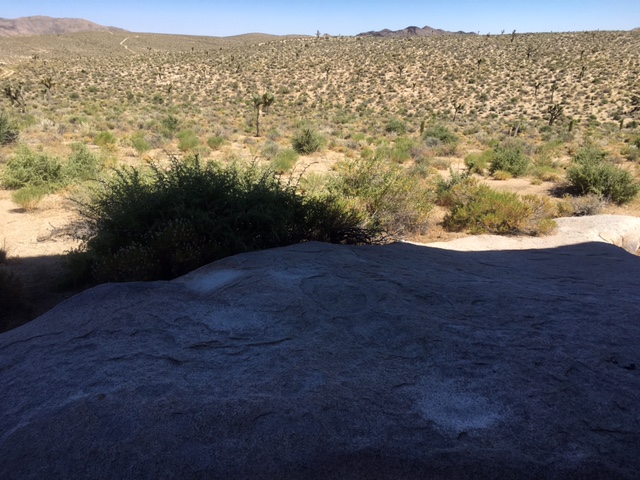 Several well-polished, shallow grinding slicks.
 California orange bellied newt (Taricha torosa).

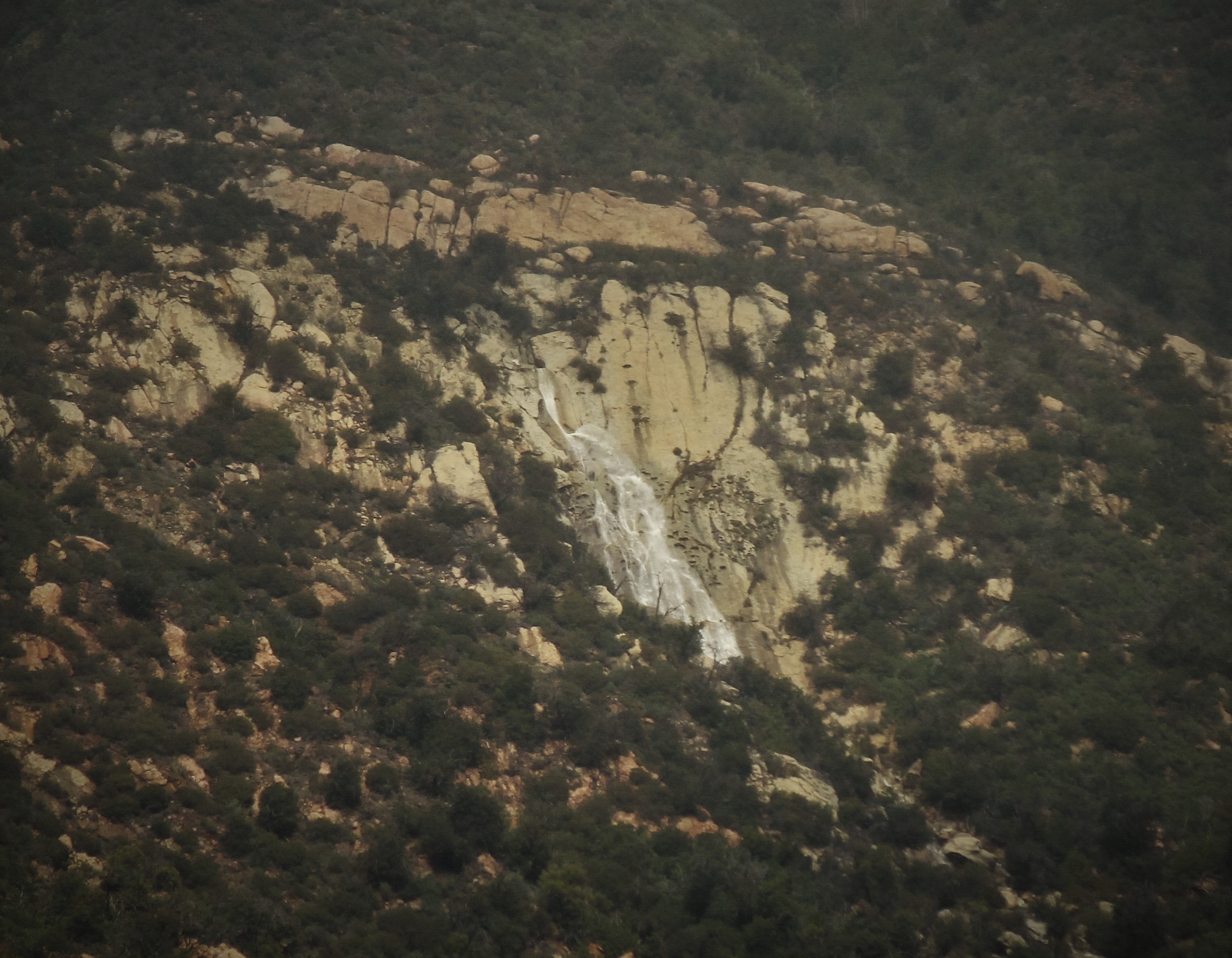
 The top of “Widda’s Tears.”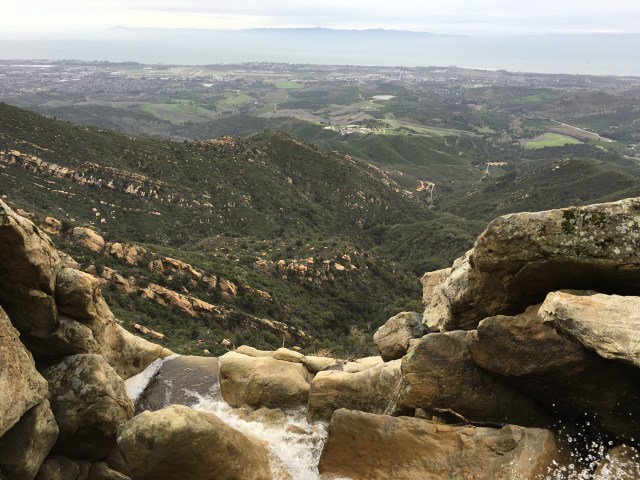















 Jack Elliott's Santa Barbara Adventure