Tafoni Weathered Stone

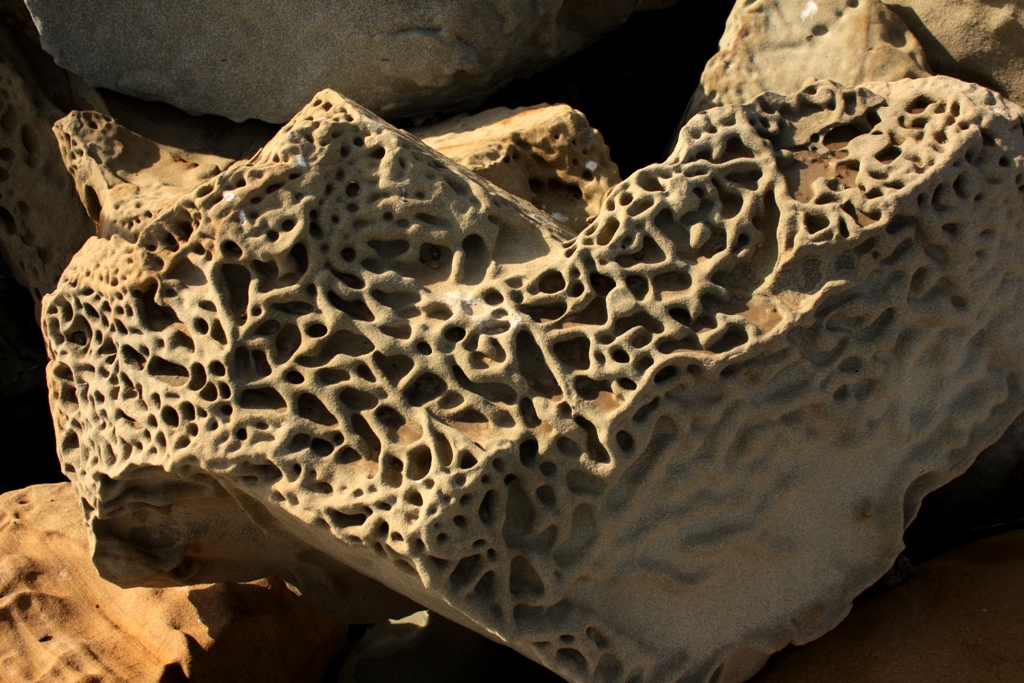
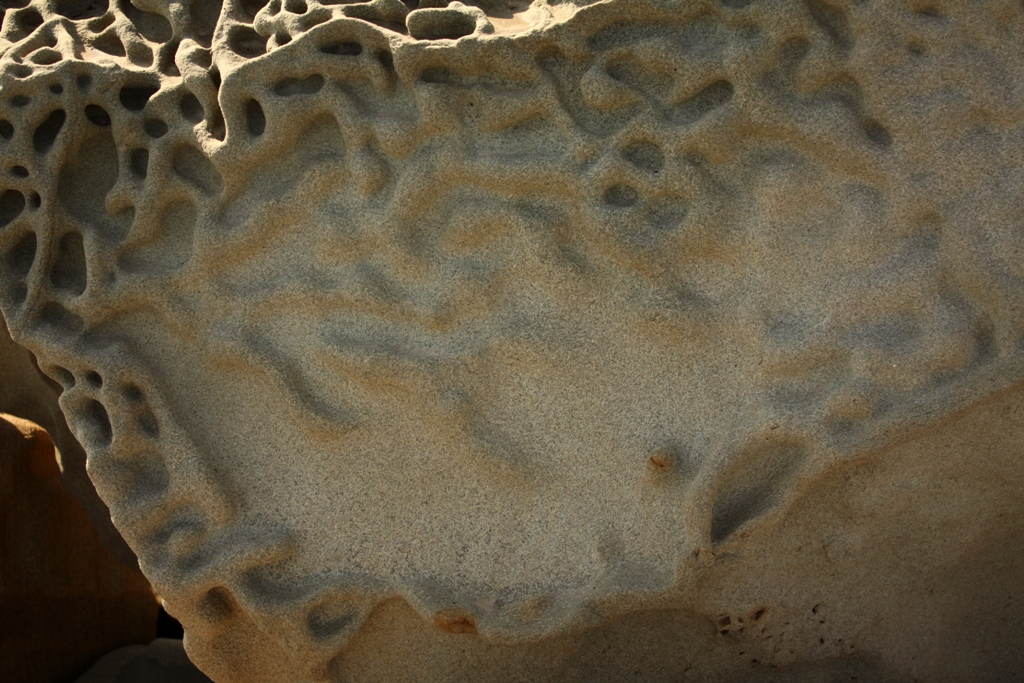
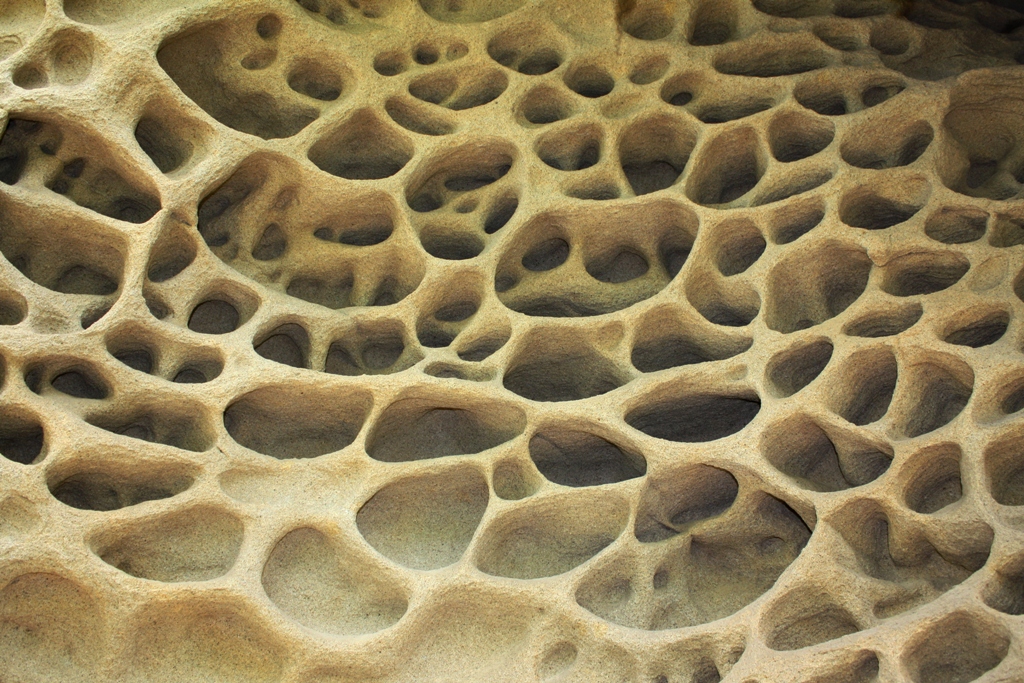
“Tafoni are ellipsoidal, pan- to bowl-shaped, natural rock cavities. These cavernous weathering features include tiny pits, softball-sized cavities, truck-sized caves, and nested and cellular honeycomb forms. Tafoni typically develop on inclined or vertical surfaces and occur in groups. These exquisite and fascinating cavernous weathering landforms are present on the surfaces of many different kinds of rocks located in a multitude of geographic regions around the world.”

—Jon Boxerman, Tafoni.com

Charles Darwin witnessed something akin to tafoni while sailing near Western Australia. He thought up an imaginative but mistaken explanation for how it was formed and wrote an entry about it on February 7, 1836:

“One day I accompanied Captain Fitz Roy to Bald Head; the place mentioned by so many navigators, where some imagined that they saw corals, and others that they saw petrified trees, standing in the position in which they had grown. According to our view, the beds have been formed by the wind having heaped up fine sand, composed of minute rounded particles of shells and corals, during which process branches and roots of trees, together with many land-shells, became enclosed.  The whole then became consolidated by the percolation of calcareous matter; and the cylindrical cavities left by the decaying of the wood, were thus also filled up with a hard pseudo-stalactical stone.  The weather is now wearing away the softer parts, and in consequence the hard casts of the roots and branches of the trees project above the surface, and, in a singularly deceptive manner, resemble the stumps of a dead thicket.”

In Santa Barbara County this remarkable phenomenon can be found in many different environments including the beach, creeks and exposed rock outcrops in mountain terrain. A variety of theories exist explaining how tafoni develops and grows, but it’s largely shrouded in mystery and among scholars and scientists there is disagreement over the matter.

A two-tone beach boulder in northern Ventura County with tafoni forming along its edge.
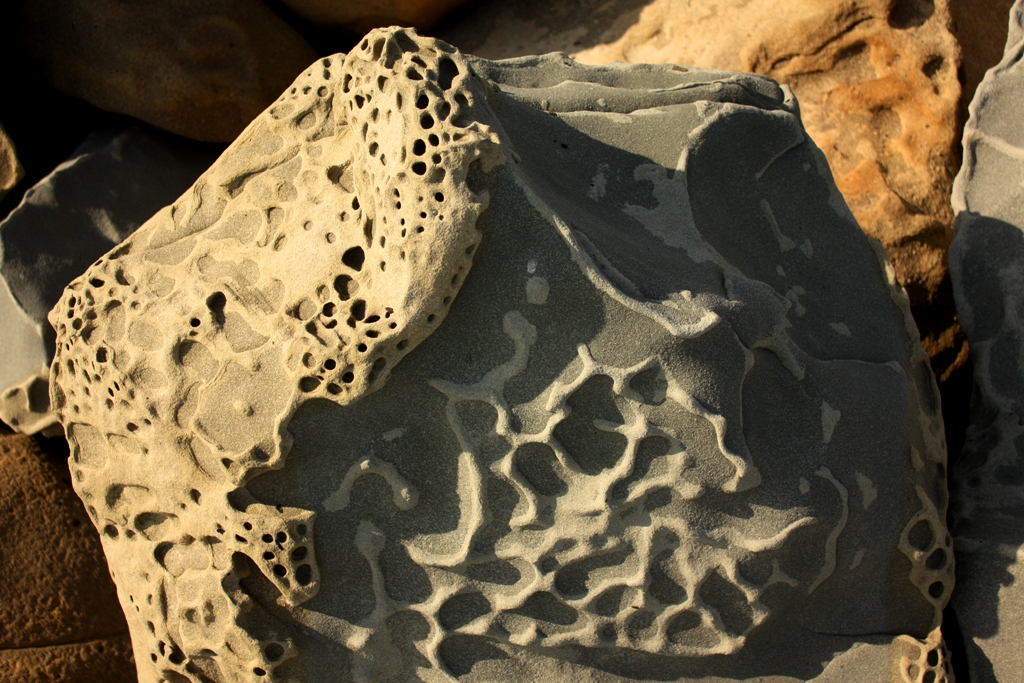
Tafoni slowly forming.

The previous six photos show Goleta/Campus Point.
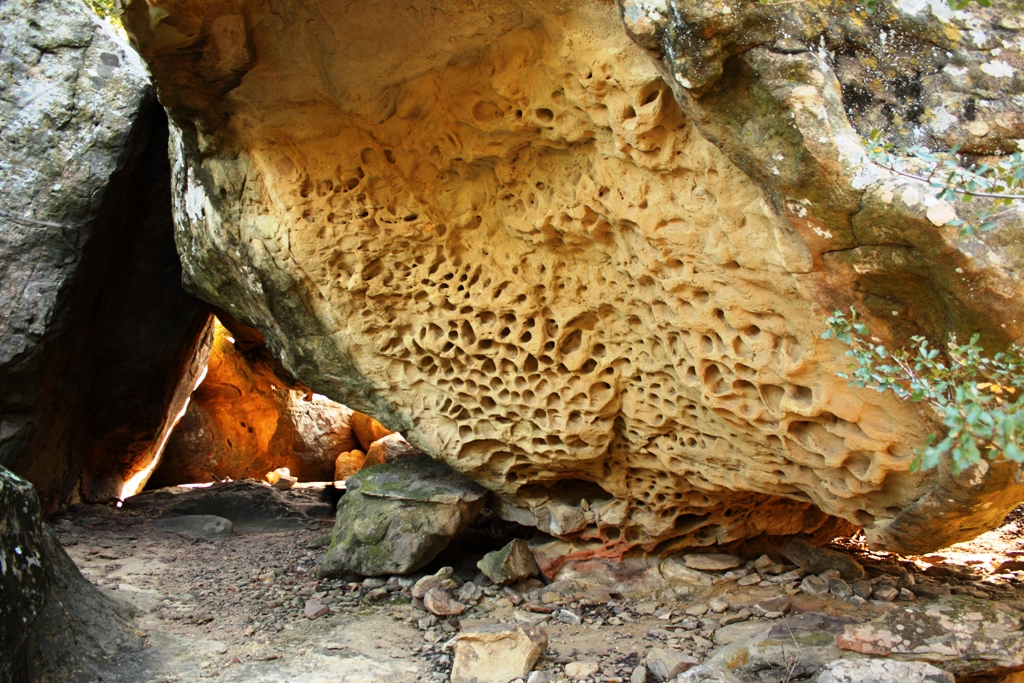
Devil’s Playground, Santa Ynez Mountains.

Painted Cave State Park, Santa Ynez Mountains.

Pool Rock, San Rafael Mountains. This specimen, shown in the above two photos, is in my opinion and to my knowledge the most spectacular example of tafoni in Santa Barbara County.

Sonoma County Coast.

Posted in Santa Barbara County | Tagged , , , | 6 Comments

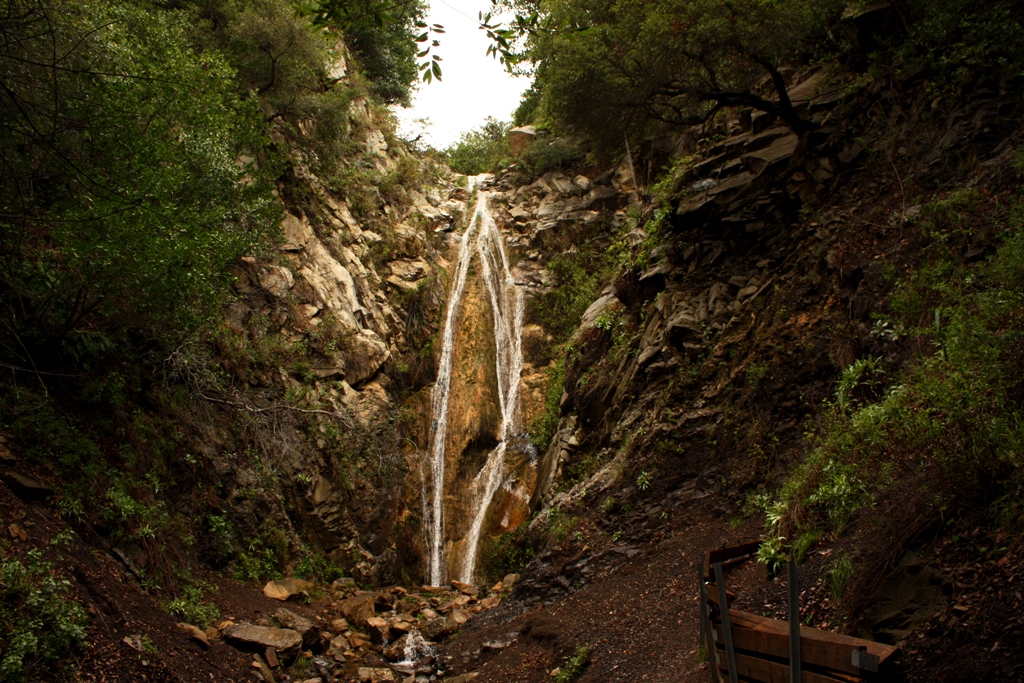
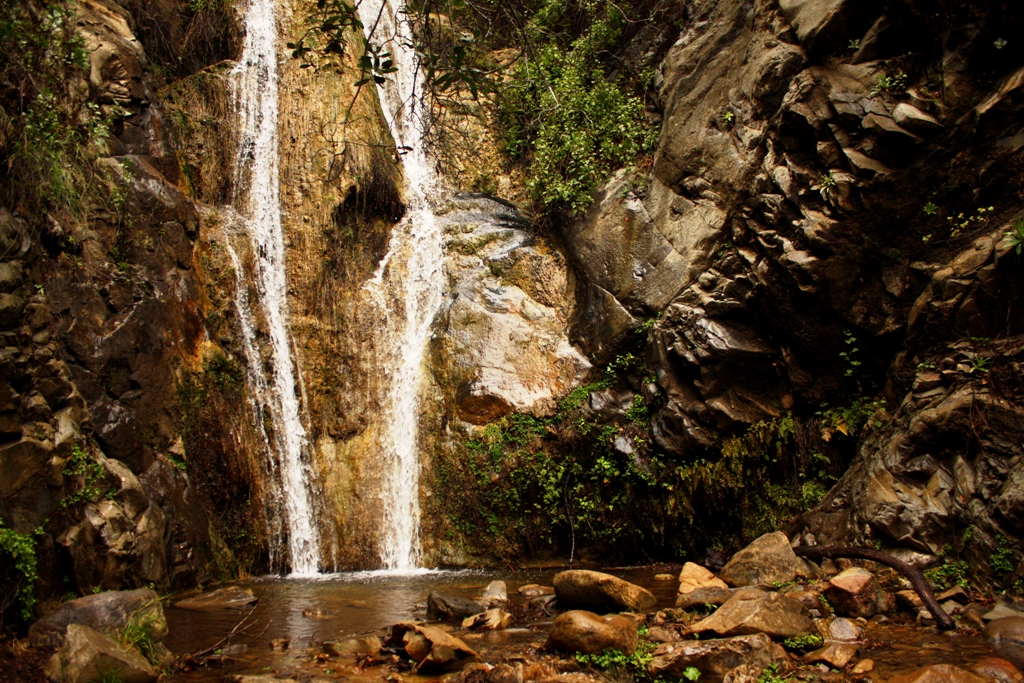
San Ysidro Falls

A thin stream of water flowing over San Ysidro Falls.

Related Posts:

Wellhouse Falls and the Waterfalls of Lewis Canyon, Waterfalls, Trout and Indian Mortars, Waterfalls of Ventura County, Scent of the Sea on a Ventura County Creek, Tangerine Falls, Coldspring Canyon, Indian Creek Falls

Posted in Santa Barbara County | Tagged , , | 1 Comment

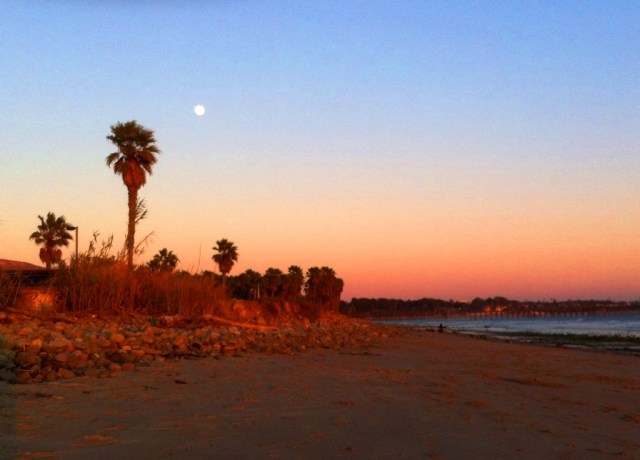
Beach Moonrise at Sunset in Ventura

Posted in Ventura | Tagged , , , | 1 Comment

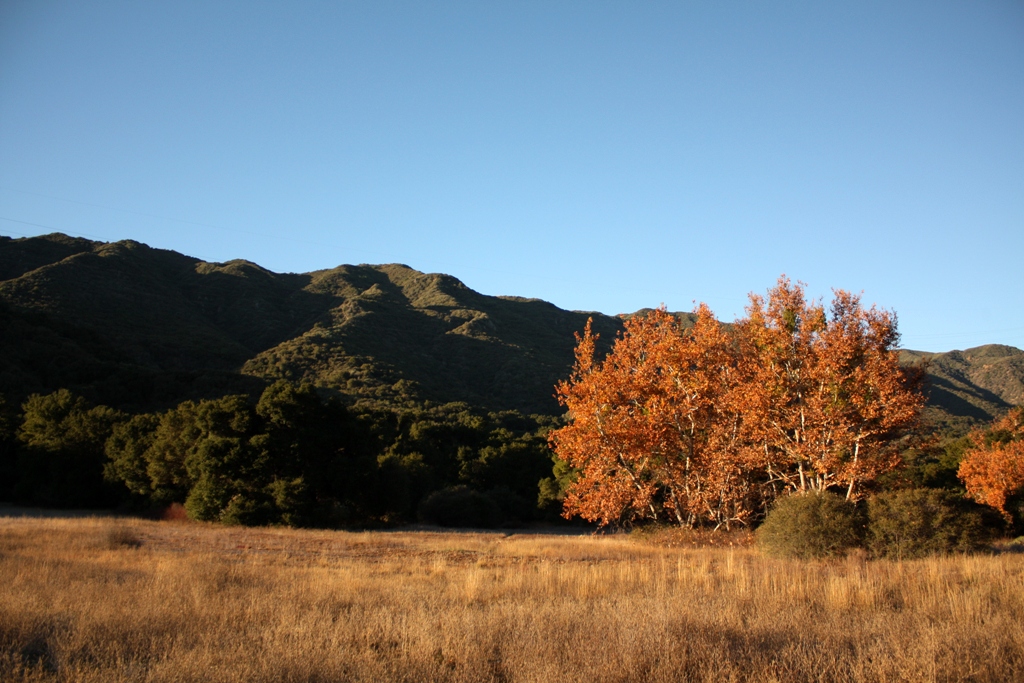
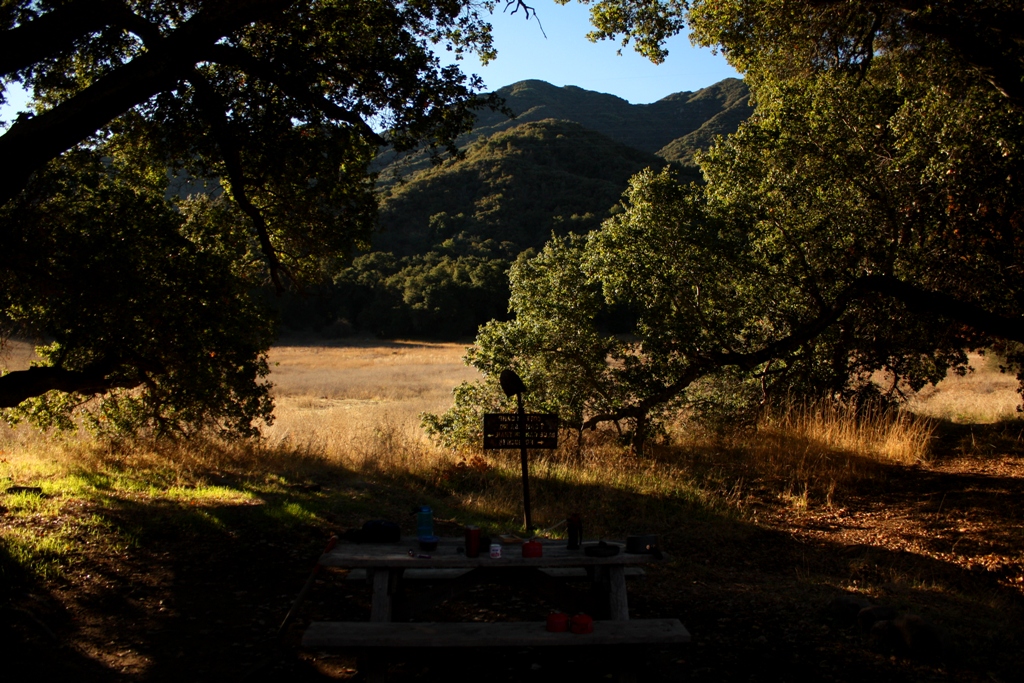
Cottam Camp Morning

Cottam Camp at the red dot.

I spent a long cold night at Cottam Camp. When it’s dead dark by 5:30 and you’re out on the trail with minimal provisions there’s a bit too much time to kill ‘tween sunset and sunrise. Sitting beside a campfire doesn’t always cut it on a frosty night. Especially with damp firewood that smokes and smolders more than it burns.

I nodded off somehow at dusk laying on the narrow plank picnic bench seat. When I woke crickets were chirping and I was staring up into the star filled blackness of night. I laid there for some time stargazing through the leafless cottonwood tree limbs listening to the trickle of the creek before heading to the tent.

I woke in the morning to a classic Santa Barbara blue-skied day without a cloud in sight. The water in the skillet by the fire ring had frozen over, but it was warm in the sun. I brewed up a batch of stiff coffee and watched morning head toward noon. Every so often a puff of steam would rise from the dewy meadow and shoot into the air in a plume like somebody exhaling a drag from a cigarette.

After throwing back a tall cup of joe, and gathering a few essential items in a daypack, I hit the trail down Santa Ynez River way for a hike around. The river was mostly dry and crusty but for a few shallow puddles of slowly flowing water that promptly seeped back under ground and disappeared.

When I reached the trailhead on East Camino Cielo Road later that day the sun was sinking into the sea. The backcountry mountains were tinged red from the sunset and the city lights in Santa Barbara were flickering on. Oddly enough, as I sat for a rest before driving home, the same fella I saw on a previous trip down the trail in August came hiking up to the crest of Cold Spring Trail with his dog. He crossed the pavement, as I saw him do last time, touched the far shoulder of the road and turned back toward town. I started the engine and pressed peddle on down the mountain glad to be driving rather than hiking home.

Steam rising from the dewy meadow in early morning.

The trail leading toward Cottam Camp in the shadows beneath the oaks.

Cottam Camp

The parting shot.

Posted in Santa Barbara, Santa Barbara County | Tagged , , , , , | 4 Comments

California Slender Salamander

California Slender Salamander (Batrachoseps attenuatus)

I remember seeing these tiny salamanders around the yard as a kid. They were one of the more intriguing creatures to find and always seemed odd and out of place. They had the puny body of a weird looking lizard and the shiny wet skin of an earthworm. They looked like they needed water, yet always turned up in places nowhere near a creek. I thought they were a salamander, but they didn’t really act like it.

Rather than a creekbed and crystal clear water, I have in my head an image of crumbly dark soil and oxalis that I associate with these types of salamanders. I must have come across a lot of them in winter and spring after the rains made the weeds grow.

I found this one in my backyard the other day. It turns out that it’s a California slender salamander and they don’t spend any time at all living in water. They rely on rain dampening the land and hide under things like rocks and logs where it is moist and burrow underground as the surface soil dries.

Bibliography:

Petranka, James W., Salamanders of the United States and Canada (1998)

Posted in Santa Barbara | Tagged , | 4 Comments