


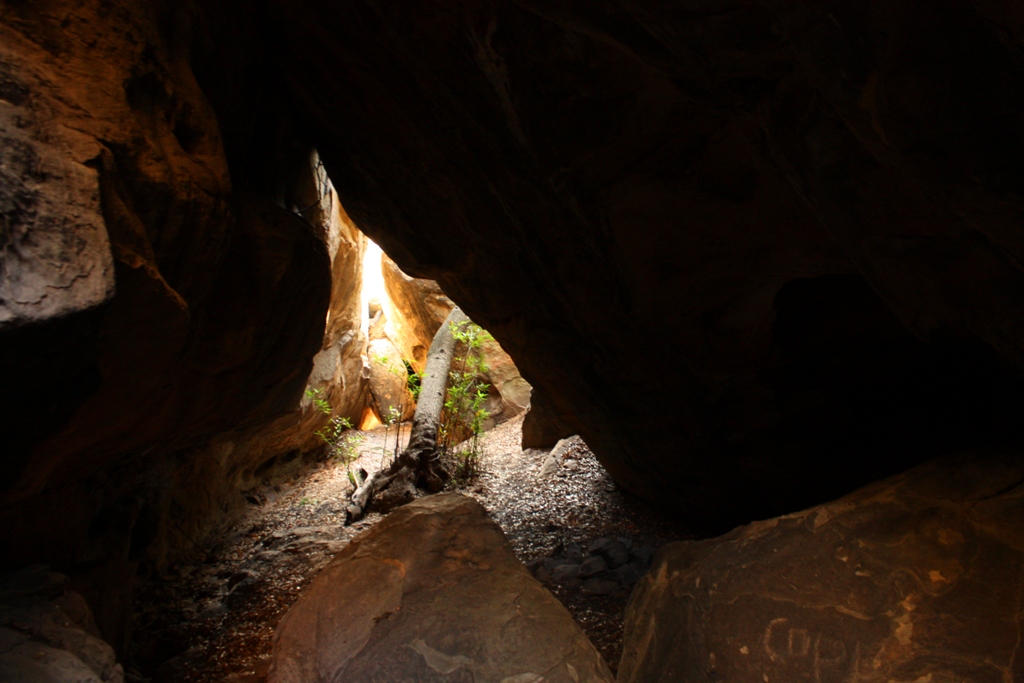
 The tunnel-like passage here wraps around to the left and is passable from one end to the other.
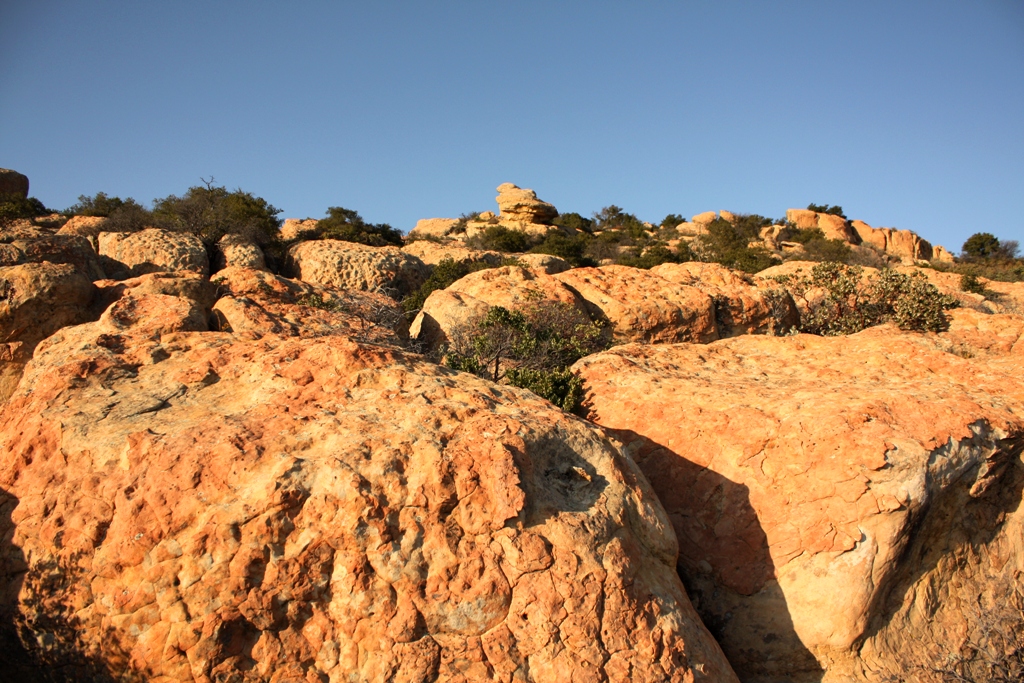
 The Devil’s Playground sandstone formation as seen from Goleta. It is the large rocky patch toward the top of the mountain.

The tunnel-like passage here wraps around to the left and is passable from one end to the other.
The Devil’s Playground sandstone formation as seen from Goleta. It is the large rocky patch toward the top of the mountain.
 Looking southeast from Miramar Beach in Montecito beneath a waxing gibbous.
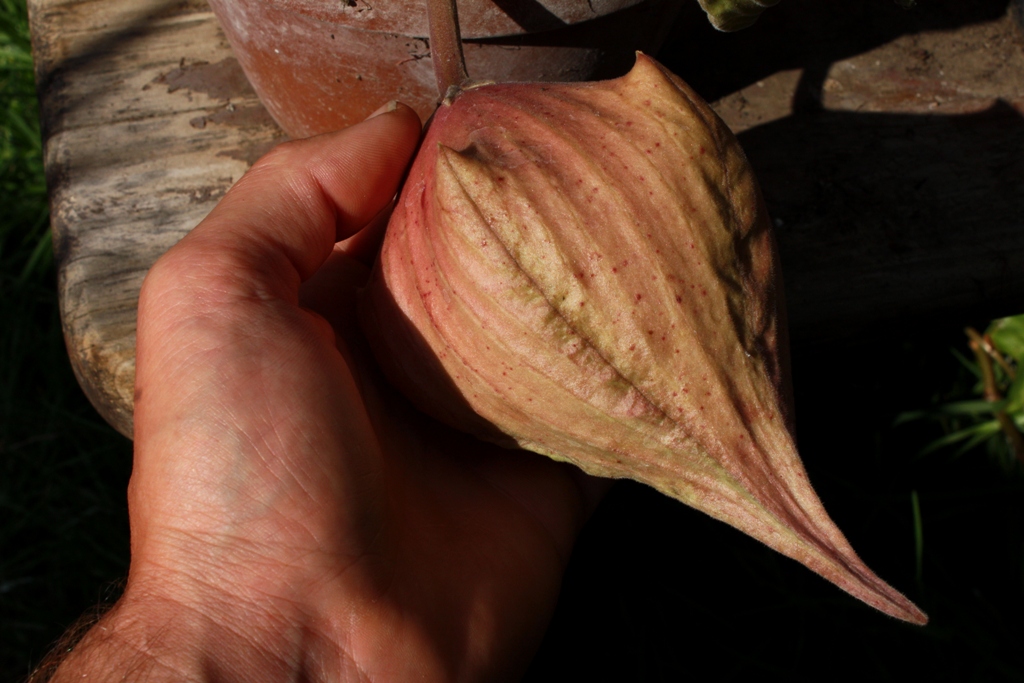
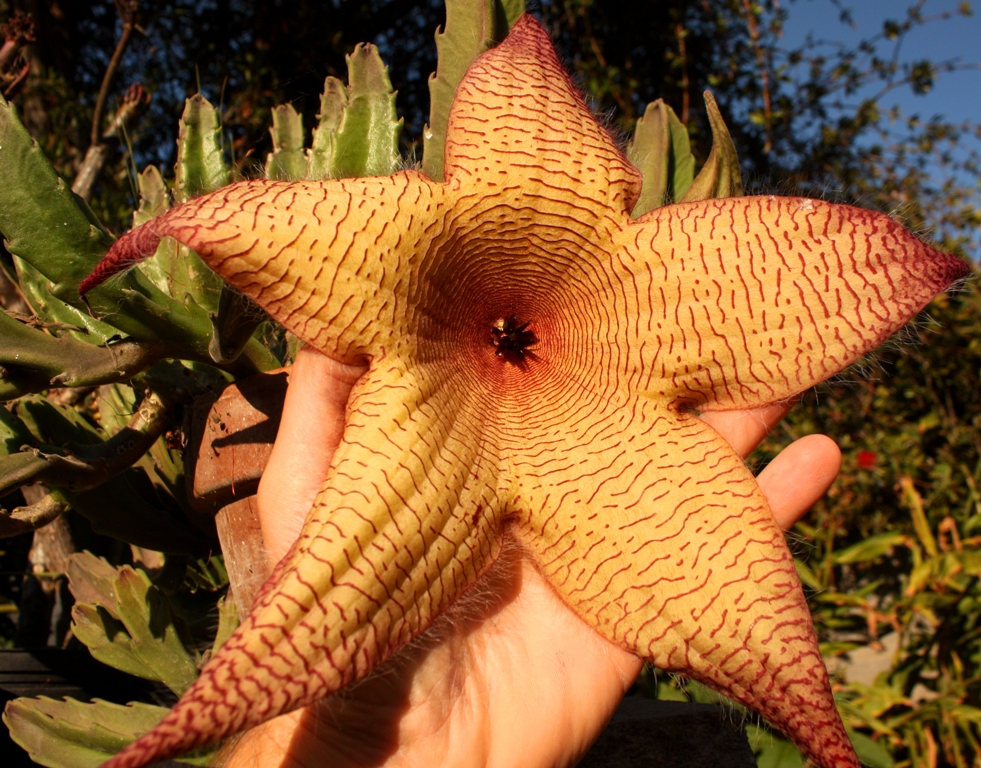
 The flowers are big and hairy and attract flies and beetles rather than butterflies and hummingbirds. Through a combination of color and design the bloom is made to appear like a bloody wound, while wafting from its petals floats the putrid scent of rotting flesh. The blooms are irresistible to dead animal loving insects.
The plant shown here started as a small finger length cutting that I took while on a hike on Oahu. Clumps of Stapelia were growing everywhere along a rocky wind swept ridge, although it’s not native to the island. This is the first flower since I rooted the cutting.
Related Post:
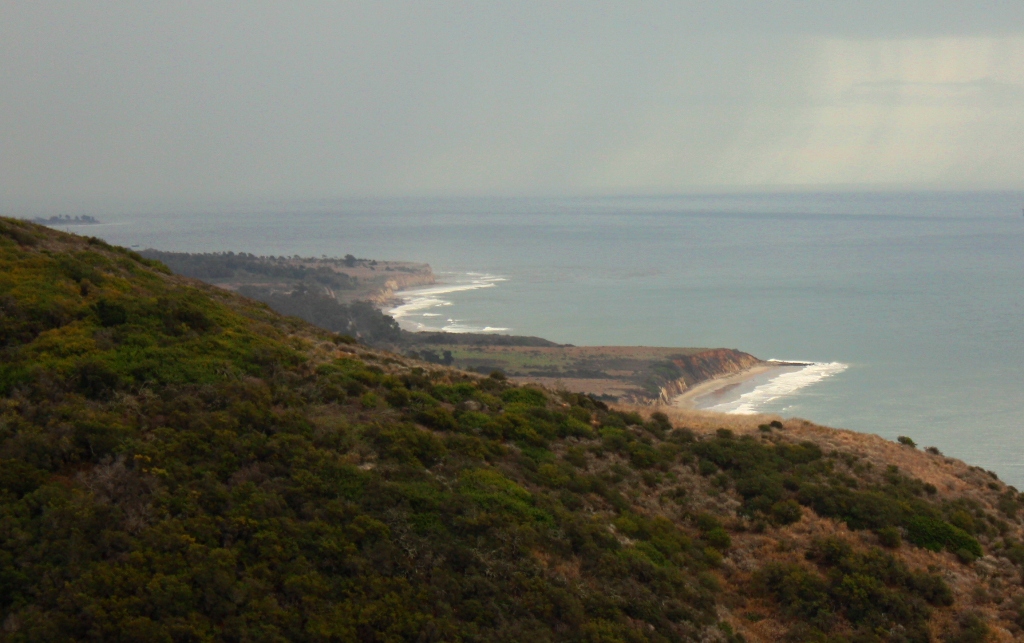 November rain showers off the Gaviota Coast.
Related Posts:
Paleopit, Surfing Cetaceans, Refugio Beach Sunset, Rincon Point Sunset, Miramar Beach Sunset

“She said that they had been living on frozen vegetables from the surrounding fields and birds that the children killed.”
—Dorothea Lange, photographer working for the U. S. Resettlement Administration
The image above, titled Migrant Mother, has been heralded as the epitome of the Great Depression era. A timeless portrait that captured in one individual’s crinkle-browed gaze the collective look of despair and uncertainty of the American nation as a whole. The photo was taken in 1936 near the small town of Nipomo, which is located in San Luis Obispo County, California.
It shows 32 year old Florence Owens Thompson (September 1, 1903 – September 16, 1983), the mother of seven children and the wife of a California migrant farm worker during the Great Depression. She is shown sitting in wait near a pea-pickers camp, while her husband and two sons took the radiator from their car into town for repair. Their automobile had broken down on Highway 101 while driving northward in a desperate search for work, which left them stranded in the area, where they were forced out of necessity and humble means to set up a rustic camp. In response to the photo the federal government shipped supplies of food to the area, but the Thompsons had already moved on.
 Florence Owens Thompson’s epitaph reads: “Migrant Mother: A legend of the strength of American motherhood.”













 Jack Elliott's Santa Barbara Adventure