(April 17/19, 2011)
The alarm was set to shatter the silence of the wee hours, but I woke before it went off after a half night’s restless sleep. My backpack sat on the couch in the living room loaded for three days of something somewhere, but I lay in the darkness conflicted, still not sure if I really wanted to go or where I wanted to go if I did go. And, no matter what, not too keen on crawling out of bed before sunrise.
The thought of sleeping in pinned me to the bed, tempting me. The lure of so easily melting into the soft warmth and plush comfort of a fluffy blanket and pillow top mattress, and slipping back into the realm of unconsciousness. And a naked woman laying beside me.
Peeling me from the mattress with a jolt of enthusiasm was the thought of waking in late morning and realizing I’m still at home in town rather than miles down some backcountry trail. At that point, the satisfaction of sleeping a few more hours evaporates without a trace as soon as my eyes spring open, and then a burdensome regret sets in. It metastasizes throughout the day until the sun sets in a spoil of unrealized potential. And so I was off after all.
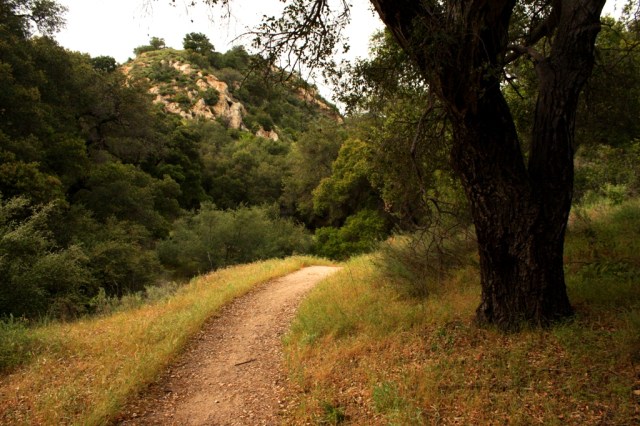
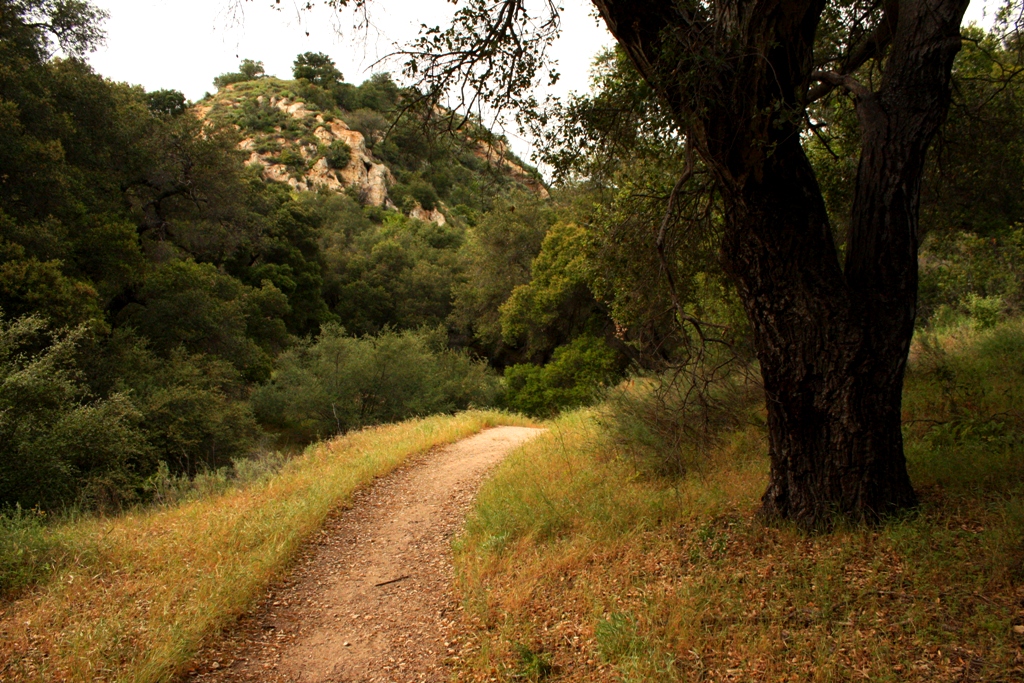
Glancing at my watch, the hands read 6:25 as I hit the creekside trail beneath a deceptively foggy looking sky, typical of a clear day at dawn. Somehow the deep azure hue of a cloudless day gets lost in the slant of early morning light.
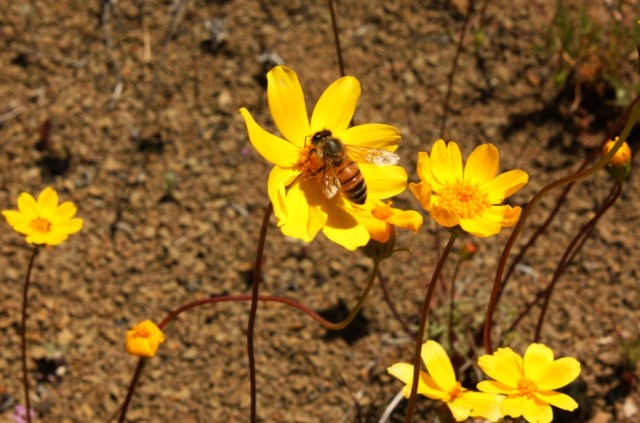
I began whittling away the long miles one short foot at a time. The cold air bit at my arms and I frantically rubbed them to generate warmth. Further up the path my arms felt icy to the touch, while sweat beaded my brow and steam wafted from my roasting hot head. Meandering up the small canyon there were relatively few wildflowers blooming in what is otherwise usually an exceptional nook for the seasonal show of color.
I broke stride for a longer break than usual at the spring on the south slope of Little Pine Mountain. It was gushing. A lone mountain biker rolled by jarringly. He wasn’t making it look too fun. He looked like he was riding a jack hammer. How did we ever drop trails without suspension? I wondered.
I contemplated the relative risks of our differing choices for the day, my mind with plenty of time to wander, and concluded it was more foolish to ride backcountry trails alone than it was to hike them solo. Later that afternoon, while pushing through some brush overhanging the trail, I lost sight of the path and slipped over the edge and a few feet down a short drop off. It turned out to be nothing close to serious, but it was an unsettling moment not knowing how far I was going to fall or how hard the impact might be.
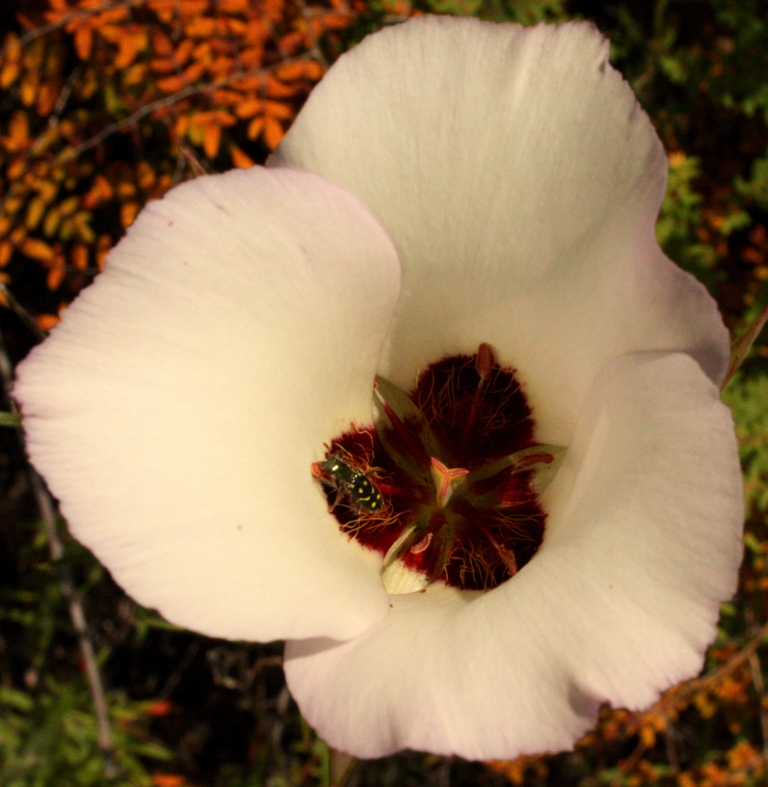
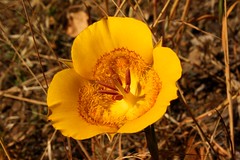
 Catalina Mariposa Lily (Calochortus catalinae)
“If one has driven a car over many years, as I have, nearly all reactions have become automatic. One does not think about what to do. Nearly all the driving technique is deeply buried in a machine-like unconscious. This being so, a large area of the conscious mind is left free for thinking. And what do people think of when they drive? On short trips perhaps of arrival at a destination or memory of events at the place of departure. But there is left, particularly on very long trips, a large area for daydreaming or even, God help us, for thought. …”
—John Steinbeck Travels with Charlie In Search of America
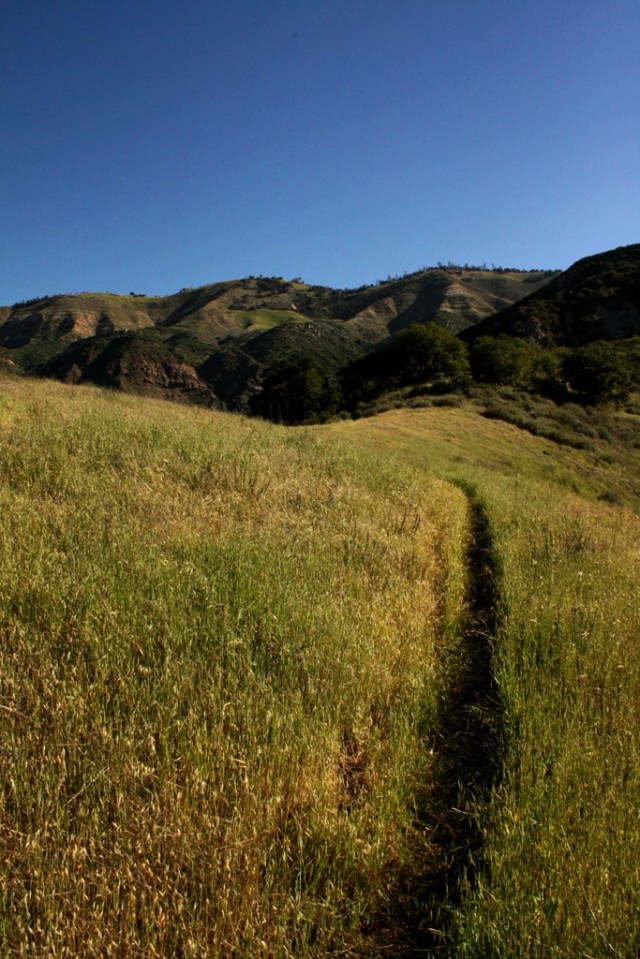
Along certain stretches of the thin winding dirt ribbon leading me to my destination, I seem to slip into a liminal realm between conscious states. I follow mindlessly the path before me. Walking on autopilot, a machine, I plod along the trail by rote as my mind flies through an abstract wilderness of thought and memory. My body passes laborious distances almost unknowingly, as my mind travels the paths of an unseen realm pondering and planning. The more intent the focus on a thought the farther removed from the trail I travel.
“… No one can know what another does in that area. I myself have planned houses I will never build, have made gardens I will never plant, have designed a method for pumping the soft silt and decayed shells from the bottom of my bay up to a point of land at Sag Harbor, of leeching out of the salt, thus making a rich and productive soil. … Finding this potential in my own mind, I can suspect it in others, but I will never know, for no one ever tells.” —Steinbeck
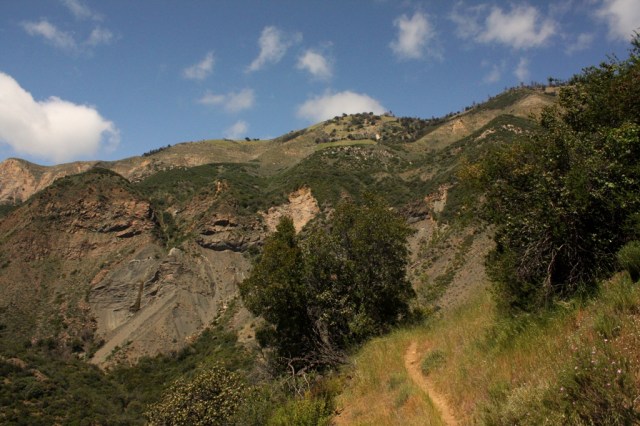
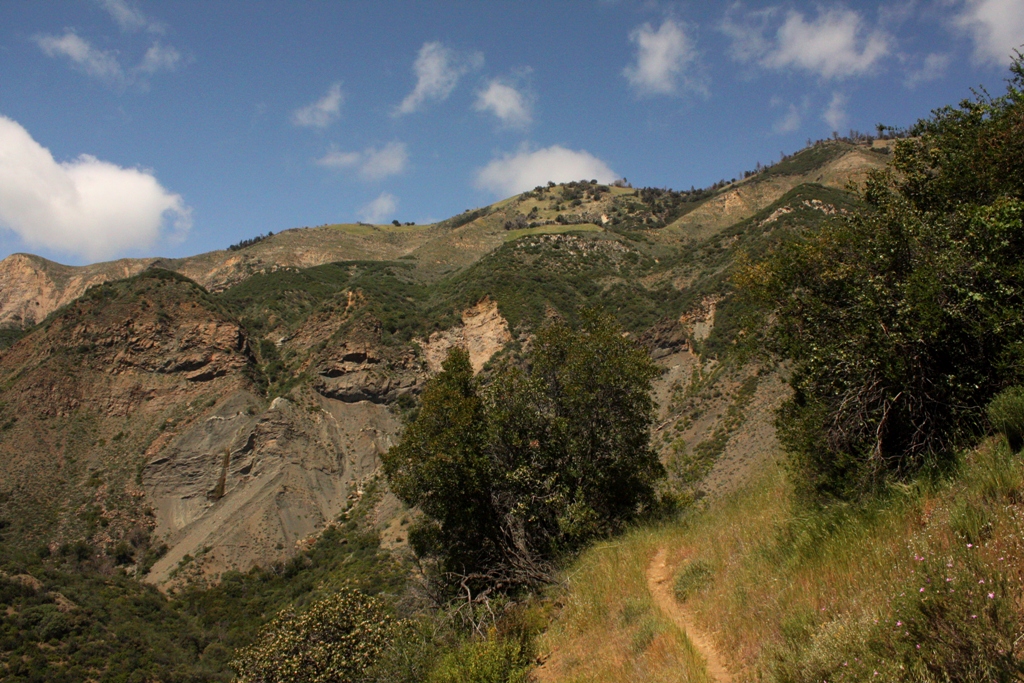
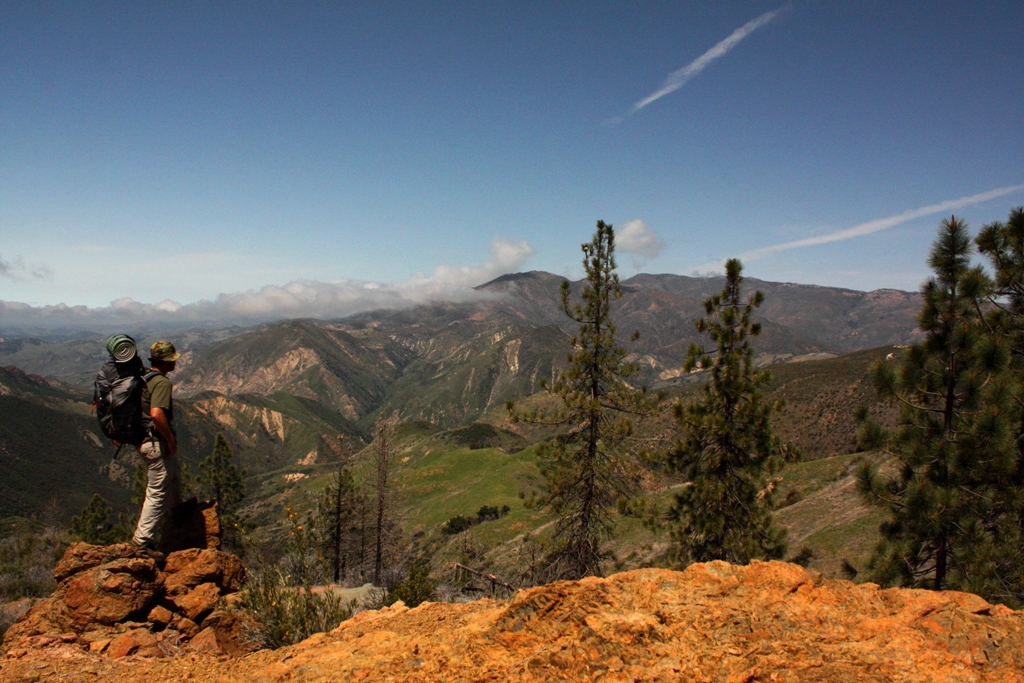
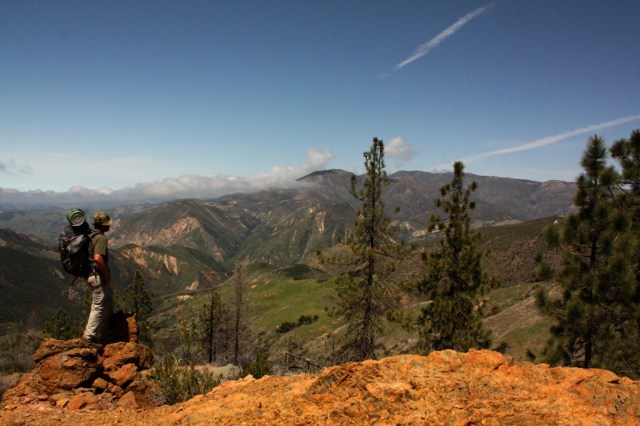 Along with a few wash outs and mudslides, some impassable to stock, fissures split the earth beside the trail all along the 40 Mile Wall. It looks as if, had we received a little more rain, then vast sections of the trail would be totally gone. I wonder if the flat trail catches rain like a gutter running along the otherwise sloping mountainside, which then soaks in and accumulates in greater quantities than it otherwise does elsewhere on the hill. Perhaps it is causing sections of the hill to slip. At least it looks to be slipping. Maybe it’s just the dirt drying up and cracking. I’ve never paid attention to it before.
In one of the actual mudslide areas, standing at the edge of the trail, I could see the lost section of footpath twenty yards down slope running through the grass in a patch of earth that had remained intact during the slide. A thin stream of water was running through the muddy slop and I could hear it trickling somewhere nearby. It sounded like it was falling underground, inside a deep enclosed pocket or hollow cavity. I carefully found my way over the unstable ground hoping not to fall into a muddy chasm or step in a sloppy soft spot.
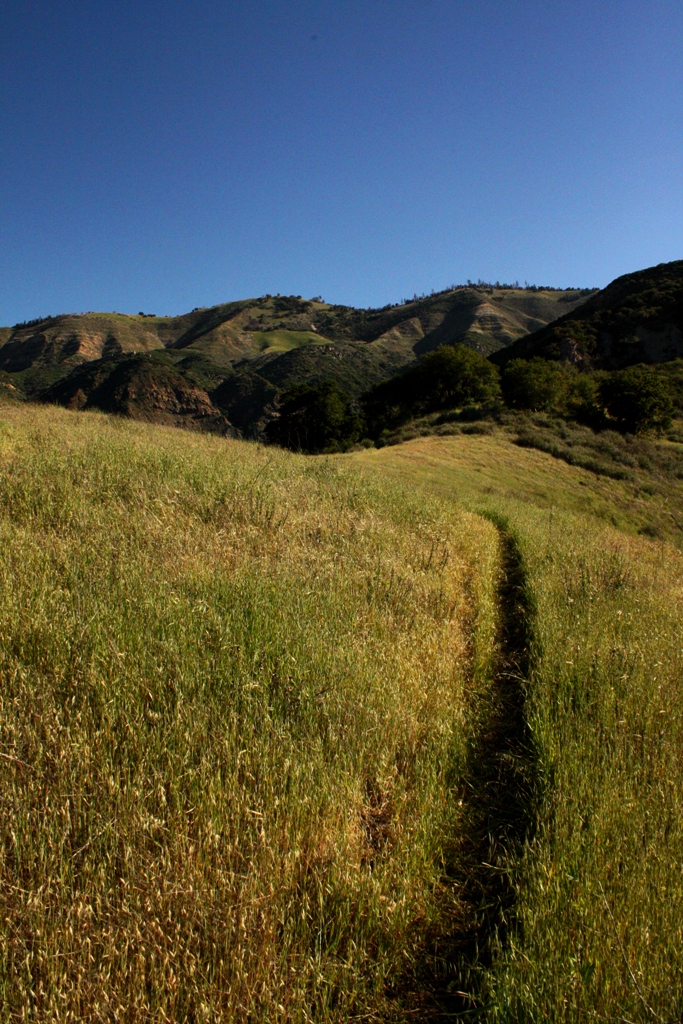
The trail skirting the wall is the hiker’s equivalent to the current motorist’s nightmare on the US-101 freeway. While the latter is riddled with teeth chattering, sometimes kidney jarring potholes, the former is pitted with gopher holes. They long ago made the trail into an ankle turning, knee hyper-extending four mile obstacle course of miniature pitfalls. And thanks to a thick carpet of two to three feet tall weeds the holes are essentially unseeable.
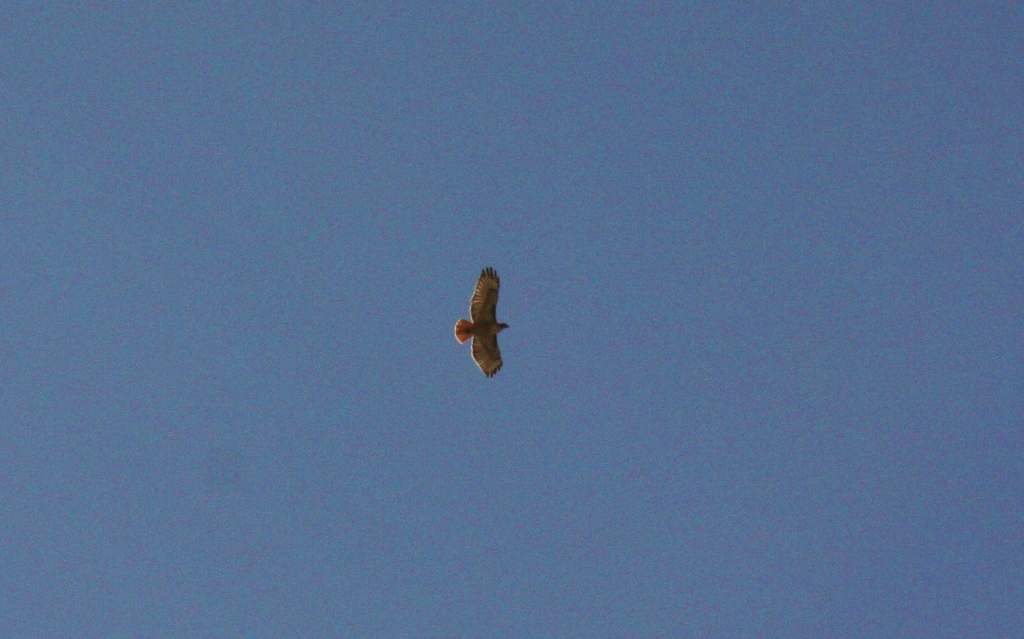
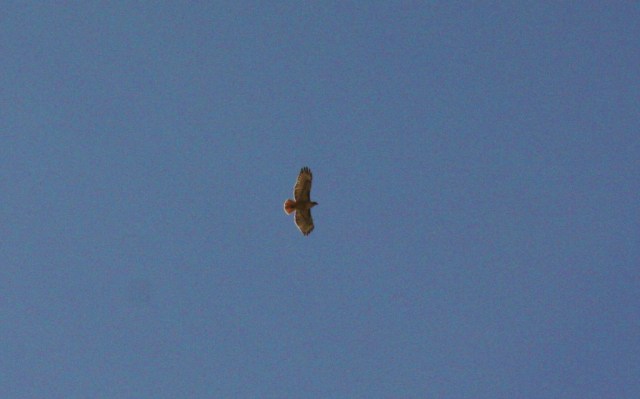 With little shade along the wall, I crawled up beneath a small shrub growing on a bend in the trail to seek shelter from the increasing heat of the early afternoon sun. I watched two Red-tailed Hawks riding the thermals rising off the ridge, soaring up and down the sun baked grassy slope, their fierce sounding cries breaking the backcountry silence.
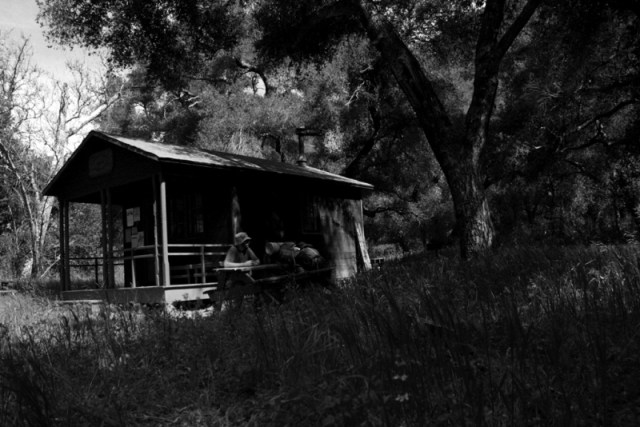
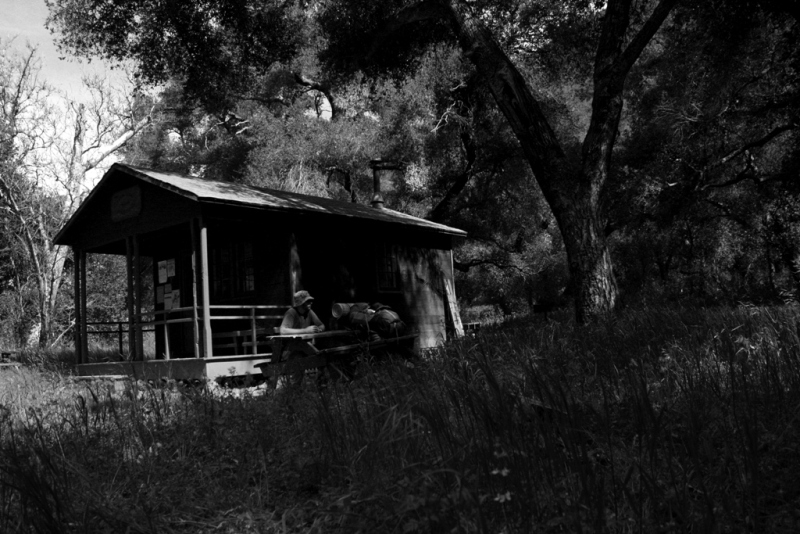
I made it to camp in early afternoon and spent the next day and a half moseying around the area and the nearby environs, interspersed with a few short hikes. I had no plan in particular. Each night, after I hit the sack, a dense blanket of fog filled the canyons before burning off by mid-morning the next day. I didn’t see anybody. The grass in camp was tall and green and untramped and the fire pits showed no signs of recent use.
When I walked up to my truck back at Sage Hill upon my return I saw, much to my expectation, a ticket for not having a so-called forest Adventure Pass. That makes probably like 20 of those tickets for me over the years. Meaningless and inconsequential. From the absolute freedom of the wilds smack back into the land of heavy regulation.
















 Jack Elliott's Santa Barbara Adventure