
 Santa Ynez Mountains
“Elephants’ habit of snapping or uprooting trees could explain why species such as oak, ash, beech, lime, sycamore, field maple, sweet chestnut, hazel, alder and willow can regrow from the point at which the stem is broken. In eastern and southern Africa there are dozens of tree species which resprout—or coppice—from the snapped trunk, and ecologists recognize this as an evolutionary response to attacks by elephants. … Trees that survive the attention of elephants often come to dominate the places in which the animals live: the ability to coppice confers powerful selective advantages.”
—George Monbiot, “Feral: Rewilding the Land, the Sea, and Human Life” (2014)
I went for a walk in the woods up an unnamed trailless canyon in the Santa Ynez Mountains. That water trickled in the creek was probably sign enough somebody was growing weed somewhere nearby. Marijuana seems to be everywhere that there is water in the forest.
Sure enough I came across an old grow site. The guerrilla growers had thinned the forest canopy and understory to let sunlight onto the ground where they had rooted their crop. I could make out vague depressions in the earth that had once held the pot plants, now filled with leaf mulch and the flush of annual spring greens.
 A coast live oak tree (Quercus agrifolia) cut in half by the growers that resprouted a limb.
A number of oak trees had been cut in half or coppiced some time ago by the growers, but had resprouted from the remaining trunks. How hardy are the oaks.
Fell an oak near ground level and a burst of new branches explodes from the stump. The burly hardwood withstands much abuse in campsites and other popular areas: shot for target practice, chipped and hacked up with hatchets and axes, and used as billboards for the carving of initials, driving of nails and stakes and whatever else. The scars can last decades.
Sometimes one finds old barbed wire fencing strung through the solid live wood of big trees. One can still see today in the backcountry of Santa Barbara County an “E” and an “F” carved into an oak around a century ago by the son of a pioneer family. (Eddy Fields’ Initials)
In A Sand County Almanac (1949) famed conservationist Aldo Leopold wrote of reading pine trees like books on his Wisconsin farm. The “spaces between the successive whorls of branches … are an autobiography that he who walks with trees may read at will.” The longer the space between each annual whorl of branches, Leopold advised, the more rain had fallen the previous year. The shortest spaces reflect drier years and droughts.
I wondered if, to the keen observer 100 years hence, the signs of marijuana grow sites would remain evident in the particular form of the once butchered trees, which had sprouted new limbs and grew on.
 Another tree that was decapitated by the growers and sprouted new branches.
But what else might the observer glean about the past from the way the trees appear today? What else might one read in the subtle clues of the forest? The “small-talk,” as Leopold called it.
In the particular growth habit of the oak had I also been witnessing a telltale sign of the late proboscideans, the distant relatives of today’s elephants that once thrived in California?
Was it a defensive characteristic imprinted through evolution into the tree’s genetic code in response to the behavior of American mastodons or Columbian mammoths, which had grazed or mauled the trees for so long?
Coast live oaks dominate the landscape around these parts like few if any other trees. One wonders if this is in some part due to the elephant-like megafauna that roamed the region during the Pleistocene and evolved alongside the trees. Prehistoric herbivores whose behavior was perhaps similar to that of today’s elephants, and in turn whose evolutionary influence might account for the particular growth habits and adaptations of certain trees, as Monbiot suggests.
 A fossil pygmy mammoth (Mammuthus exilis) skeleton found in Santa Barbara County, as displayed at the Museum of Natural History.
 A painting at the museum depicting a Columbian mammoth and the smaller American mastodon.
 The stairway to Arlington climbing out of Mission Canyon.
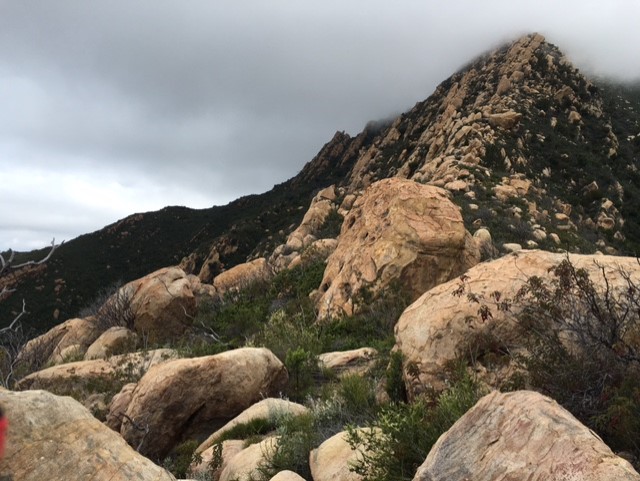 Another look up the stairway to Arlington. The trail winds through the rocks to summit in the clouds.
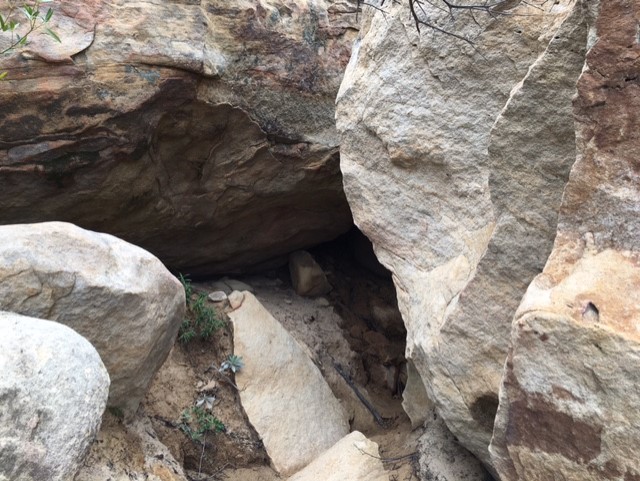 The trail passes under this jumble of boulders shown here and below.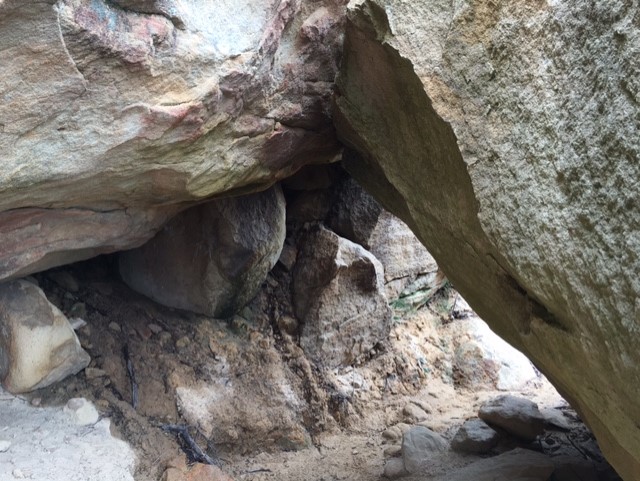
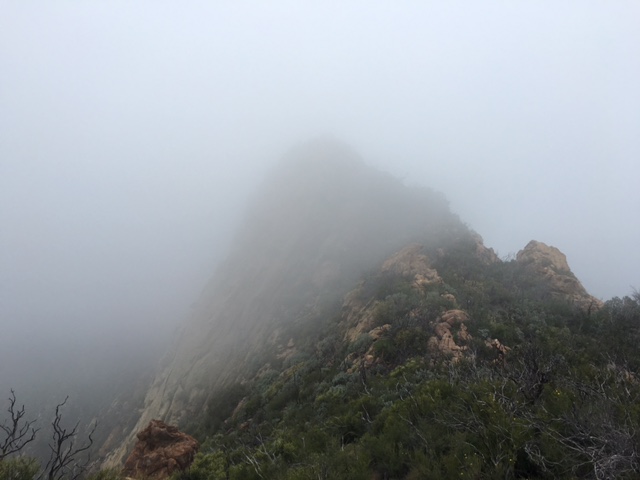 Approaching Cathedral Peak along the saddle from Arlington.
 Looking out of Cathedral Peak cave over Santa Barbara and the Pacific Ocean.
 The trail cutting through a patch of miner’s lettuce along the saddle between Cathedral and La Cumbre peaks.
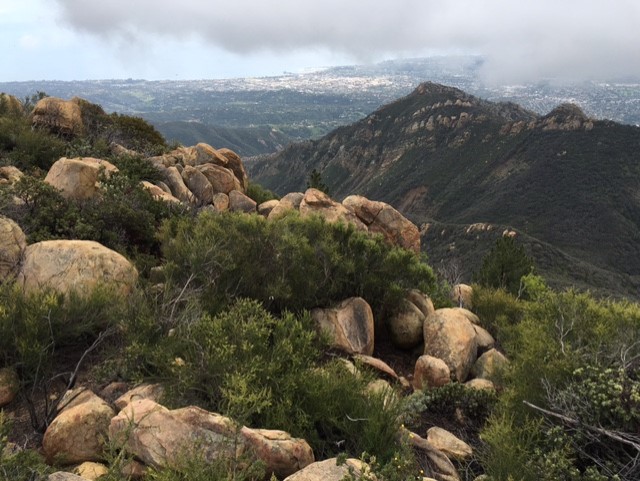 View from La Cumbre Peak of the backsides of Cathedral and Arlington.
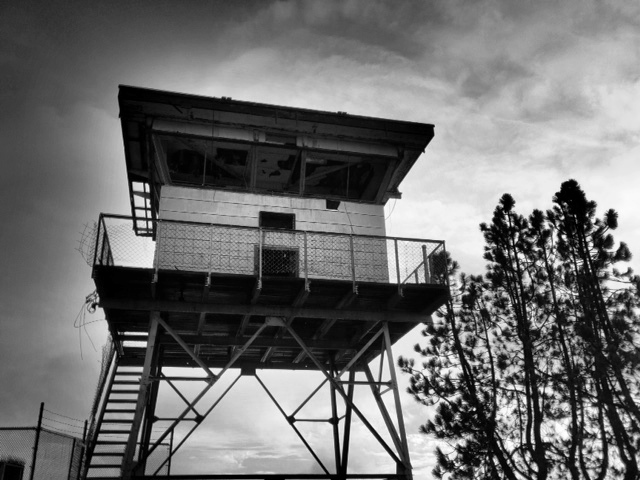 La Cumbre Peak fire lookout.
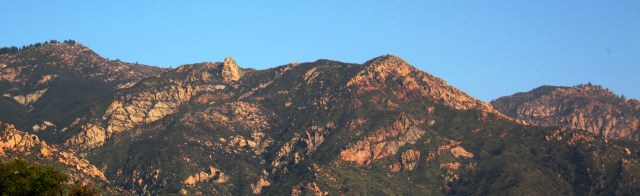 The banner feature photo for the blog shows the peaks in question lined up; the pyramidal Arlington just right of center frame, the huge sandstone knob of Cathedral, and the conifer-capped mound of La Cumbre on the top left.
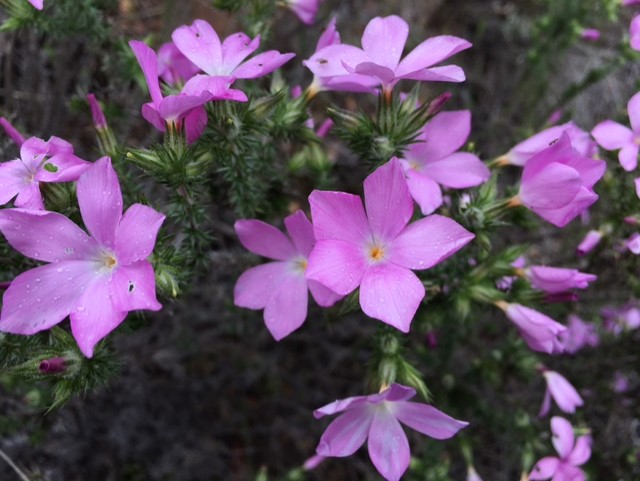 Leptodactylon californicum (prickly phlox)
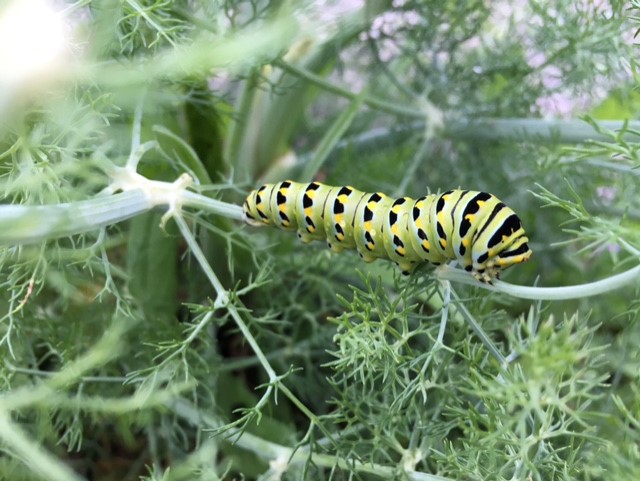 Anise swallowtail caterpillar.
 Arroyo Burro Trail runs out of the lower right-hand corner of the frame as it drops into the canyon shown below.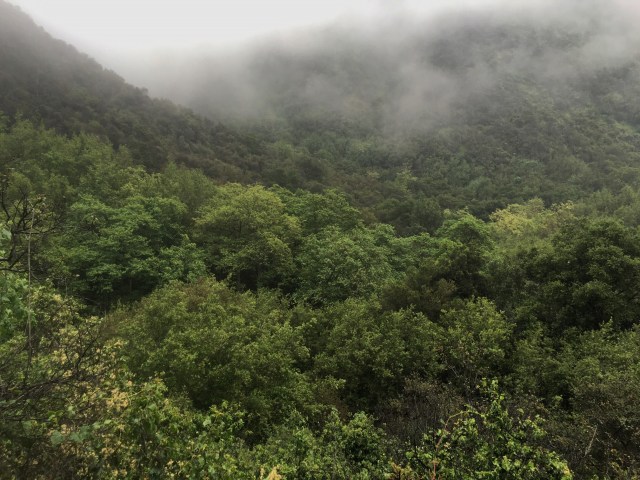
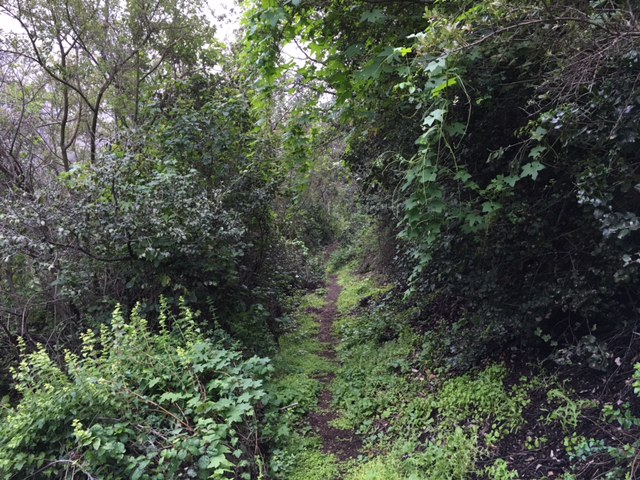 Upper Arroyo Burro Trail.
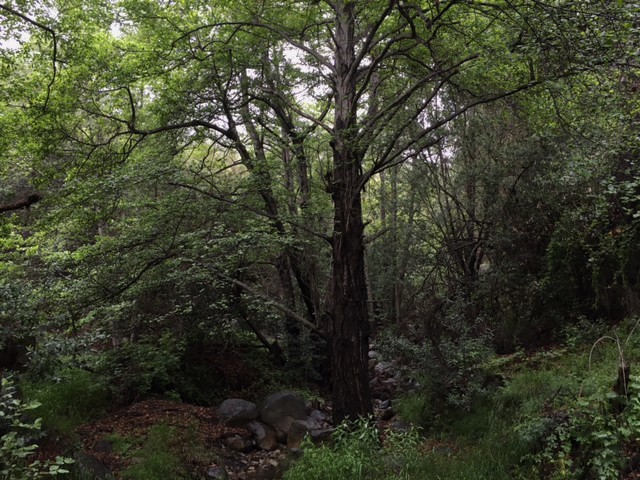 San Antonio Creek crossing.
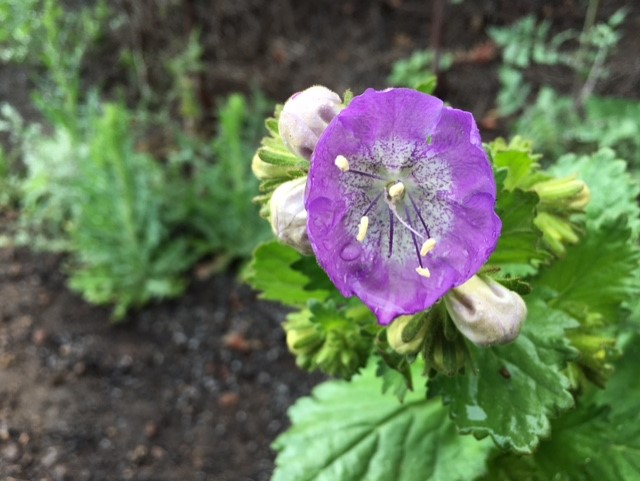 Phacelia grandiflora
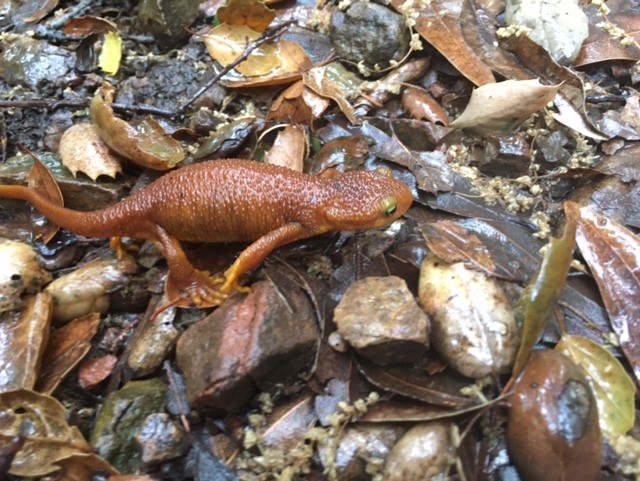 A California newt (Taricha torosa) crossing the trail heading away from the creek.
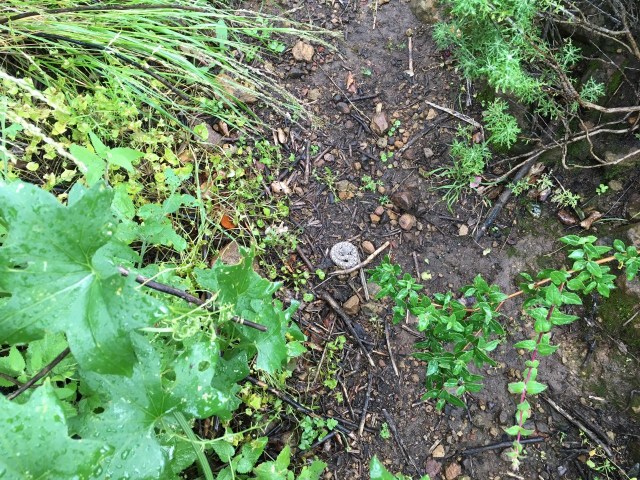 See the viper.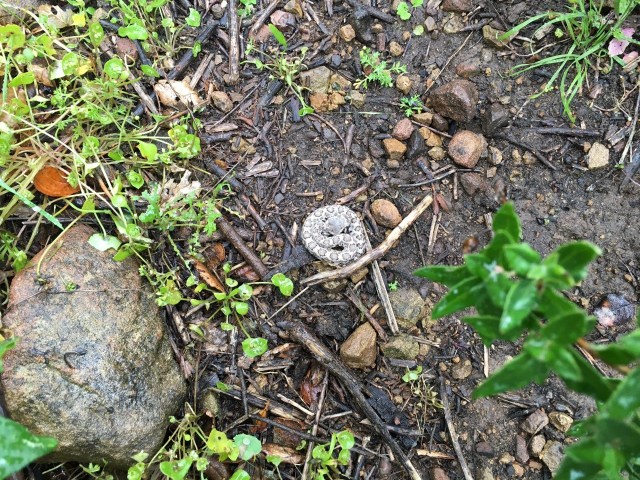
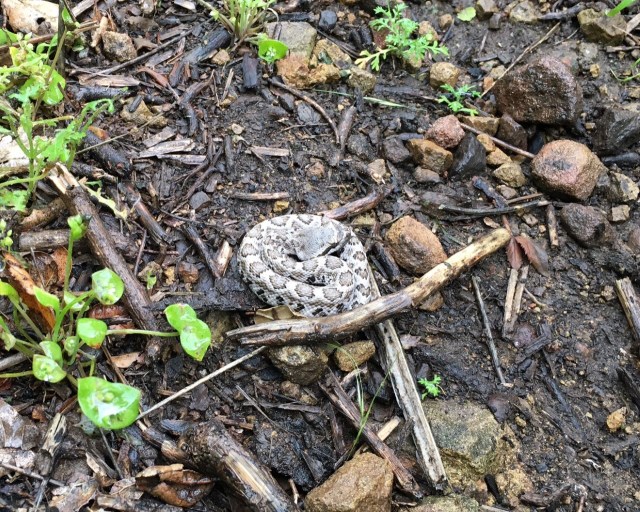 I opt out of the hike prematurely, leaving Arroyo Burro and walking down lower Jesusita to Steven’s Park, where I get a ride home just a few minutes away. I suppose the distance for the day at 11 miles.
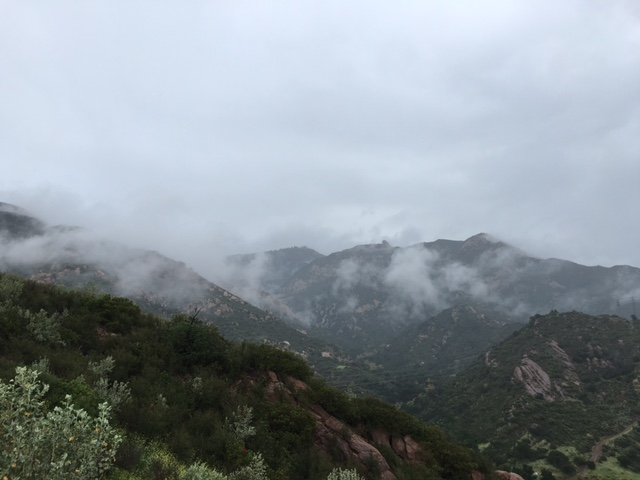 View from Arroyo Burro Trail looking up San Roque Canyon at the three peaks from whence I came.
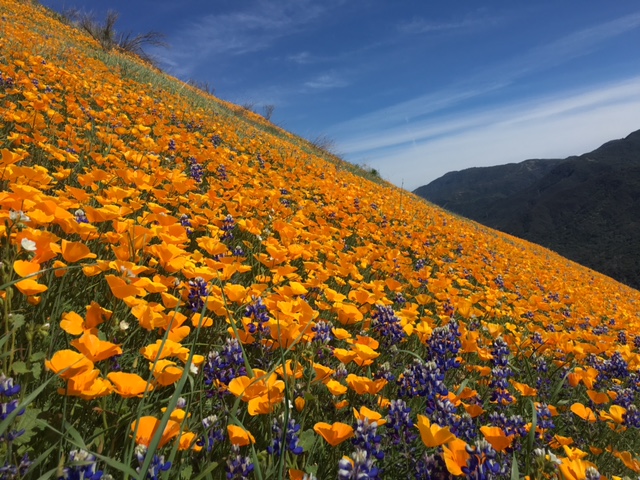
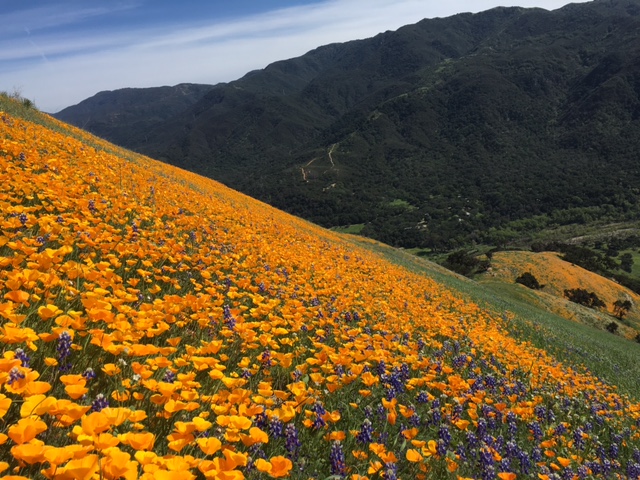
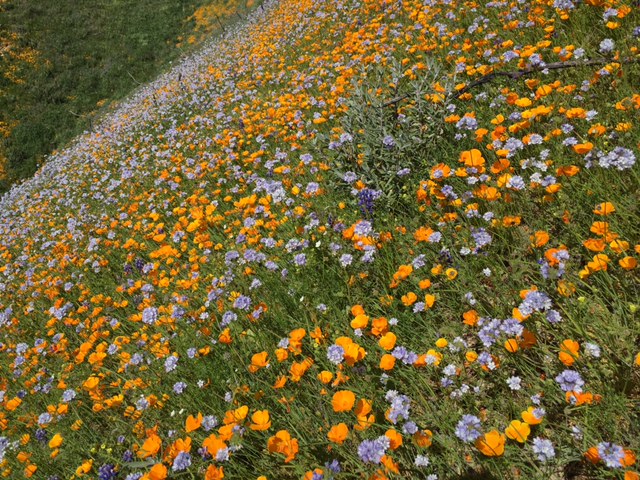
 California poppies on Grass Mountain, Zaca Ridge, Figueroa Mountain 3-26-2016
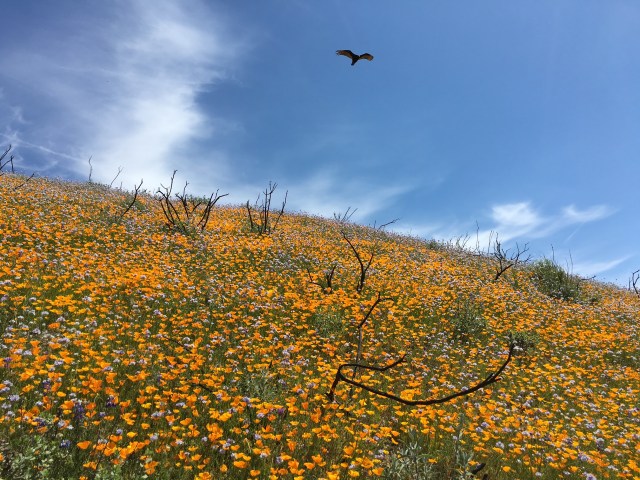
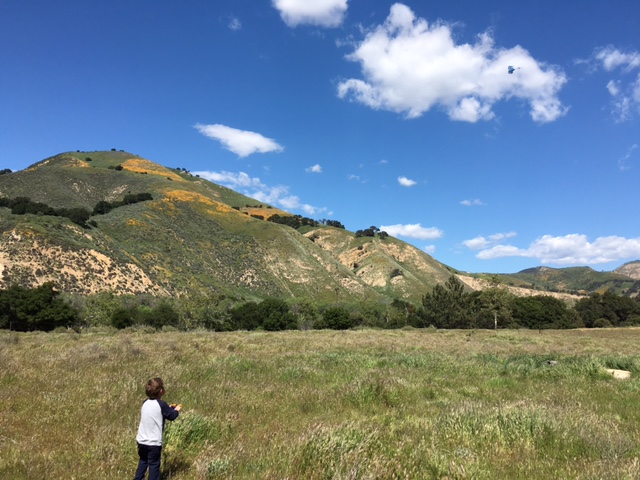 Kite flying below Sage Hill with a glimpse of the poppy fields abloom thereon.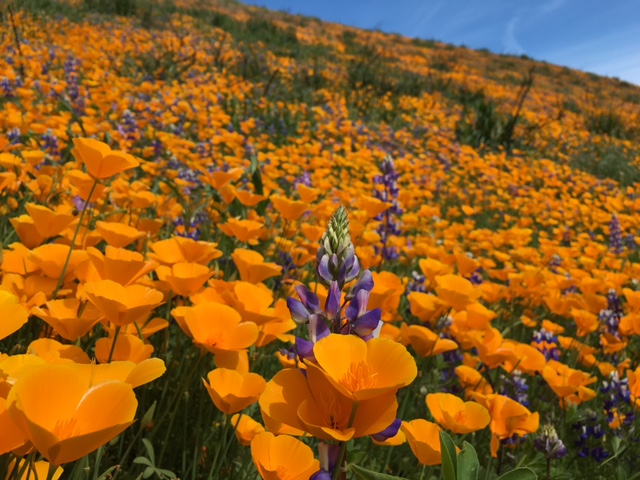





 A white-lined sphinx moth caterpillar.
 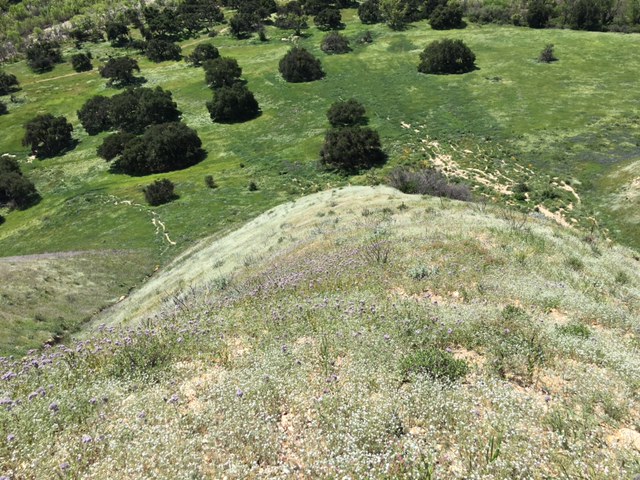 Looking down slope at the foot of Sage Hill and toward the Santa Ynez River just out of frame.
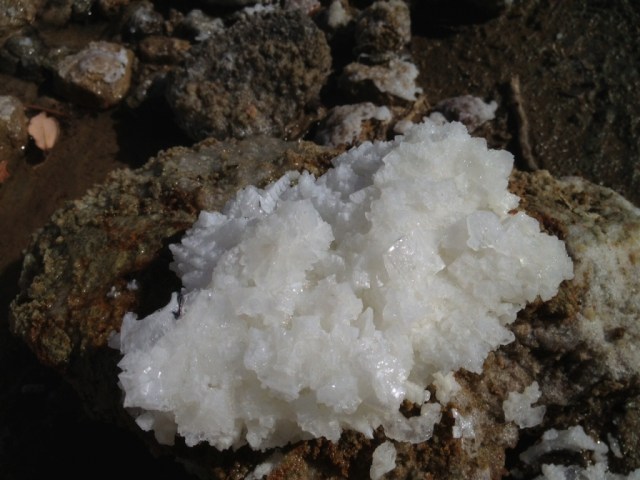
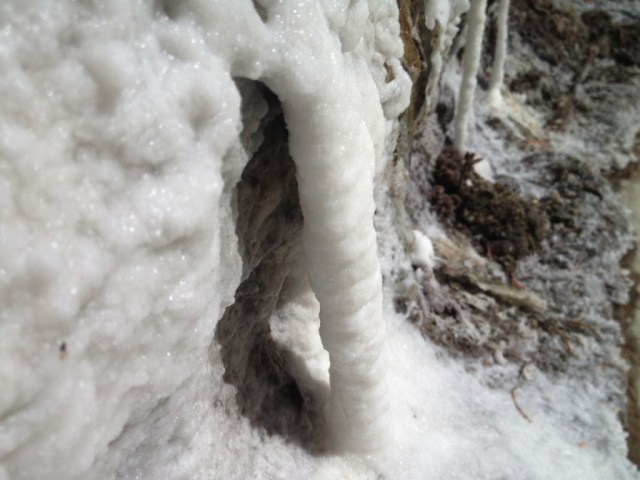
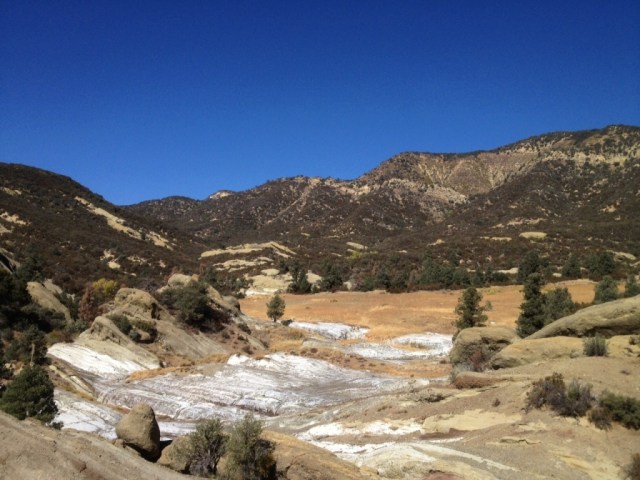
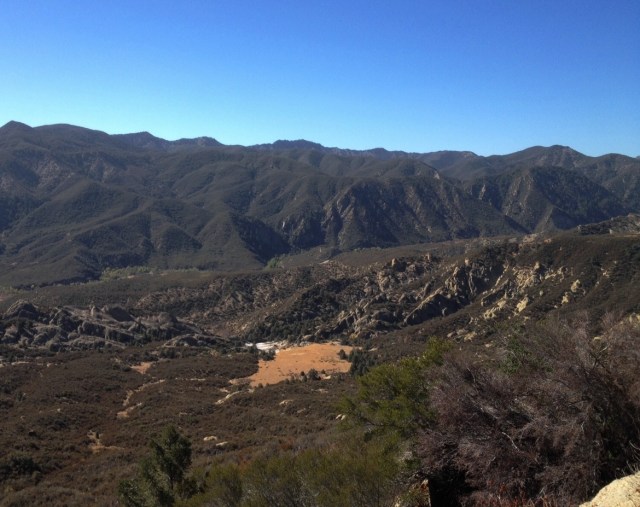 The place. Note the white mineral deposit on its far side.
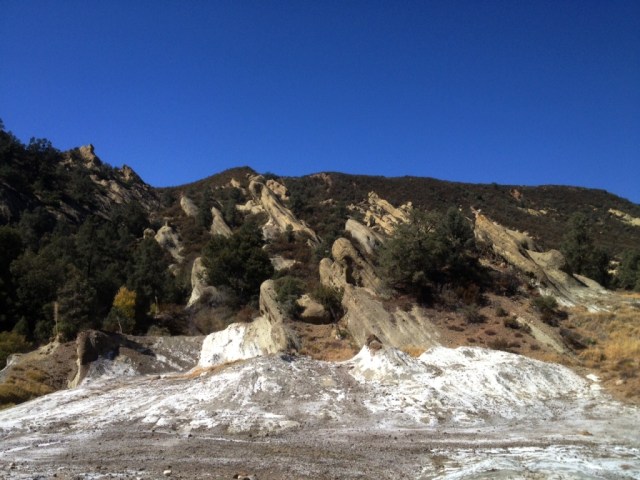
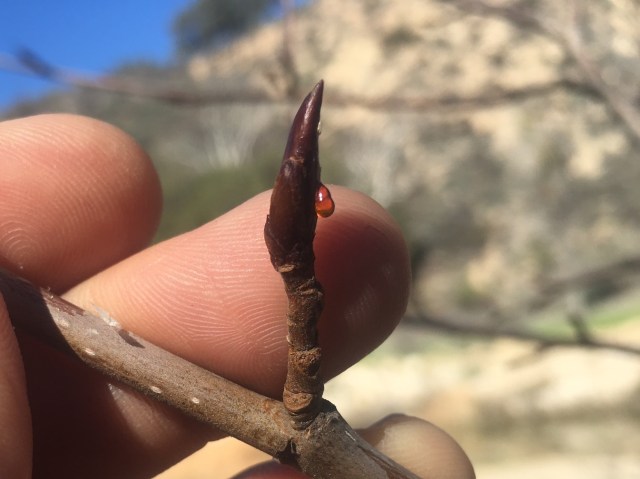 A dribble of resin oozing from the leaf bud of a black cottonwood tree (Populus trichocarpa) growing along the Santa Ynez River.
 A bud post-pop, the leaves sticky and redolent of the fragrant resin.
 Ooey gooey fragrant bud resin.










 Jack Elliott's Santa Barbara Adventure