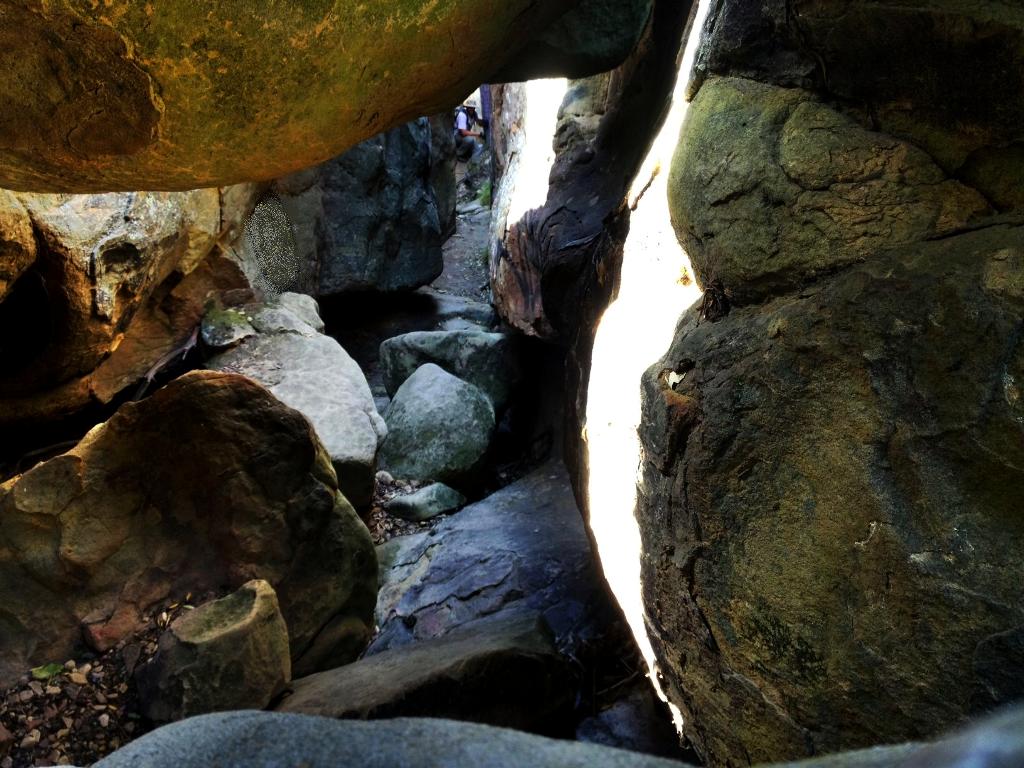
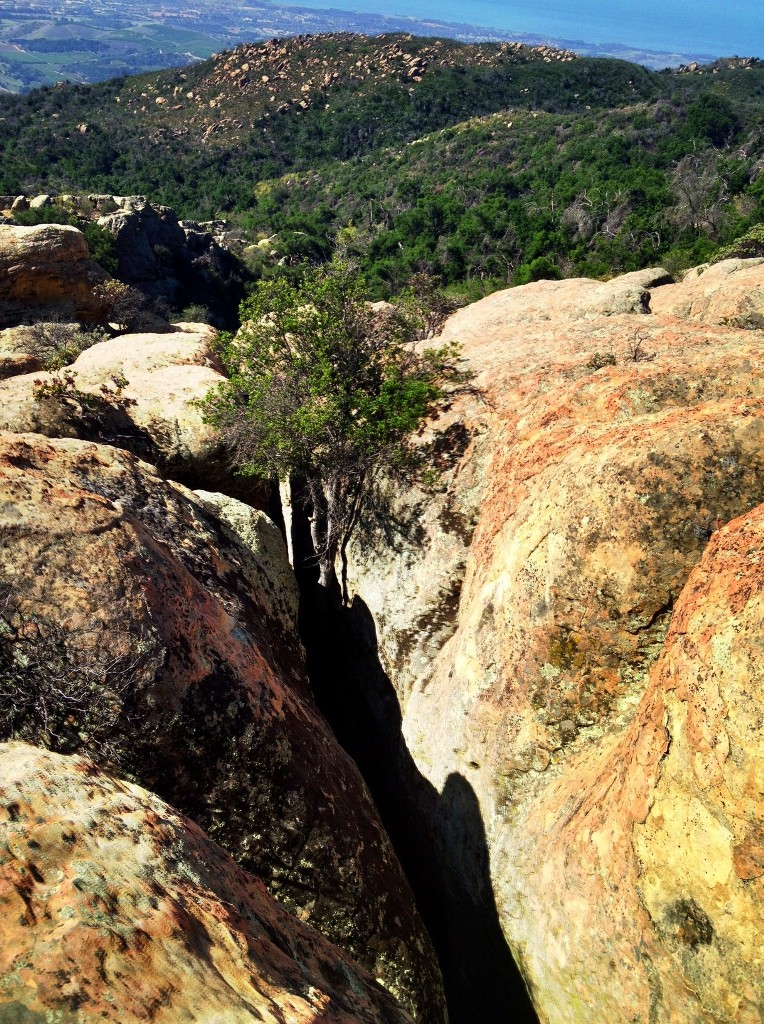
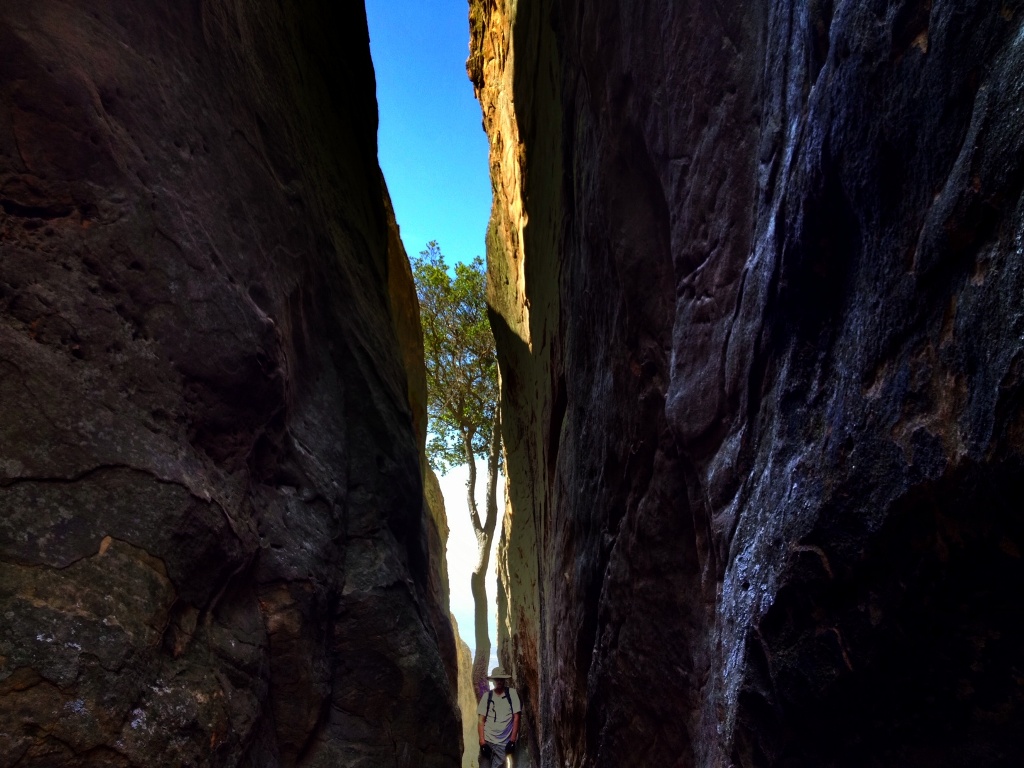
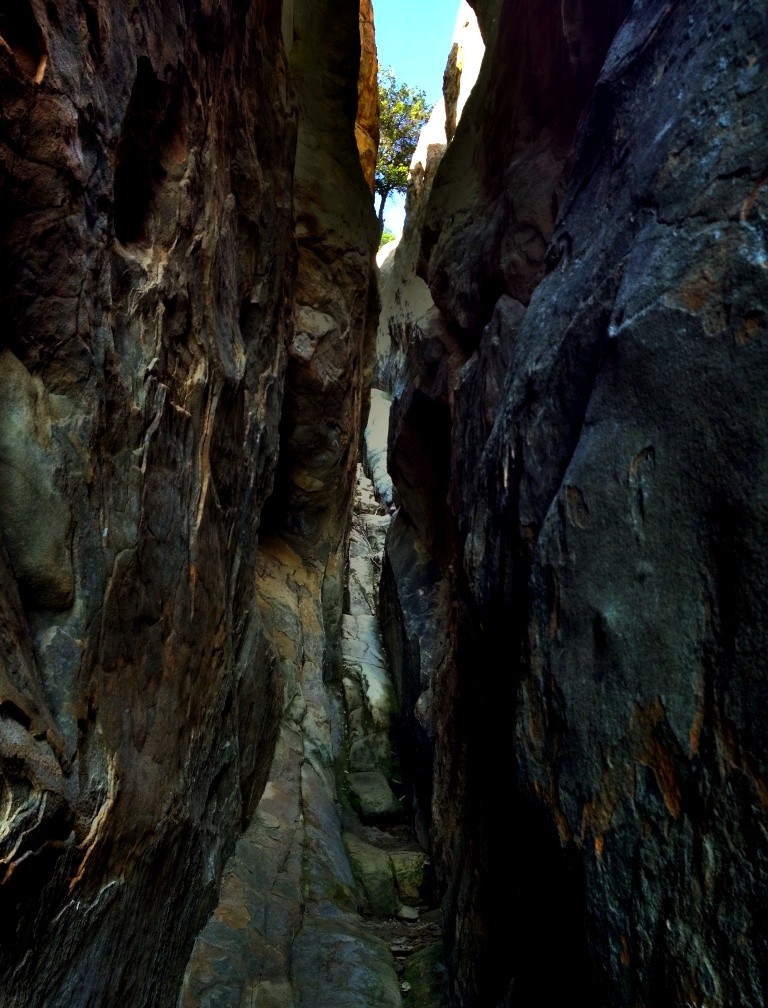
Teardrop, Santa Ynez Mountains

Tear Drop swimming hole Santa BarbaraBare bunned at Teardrop.

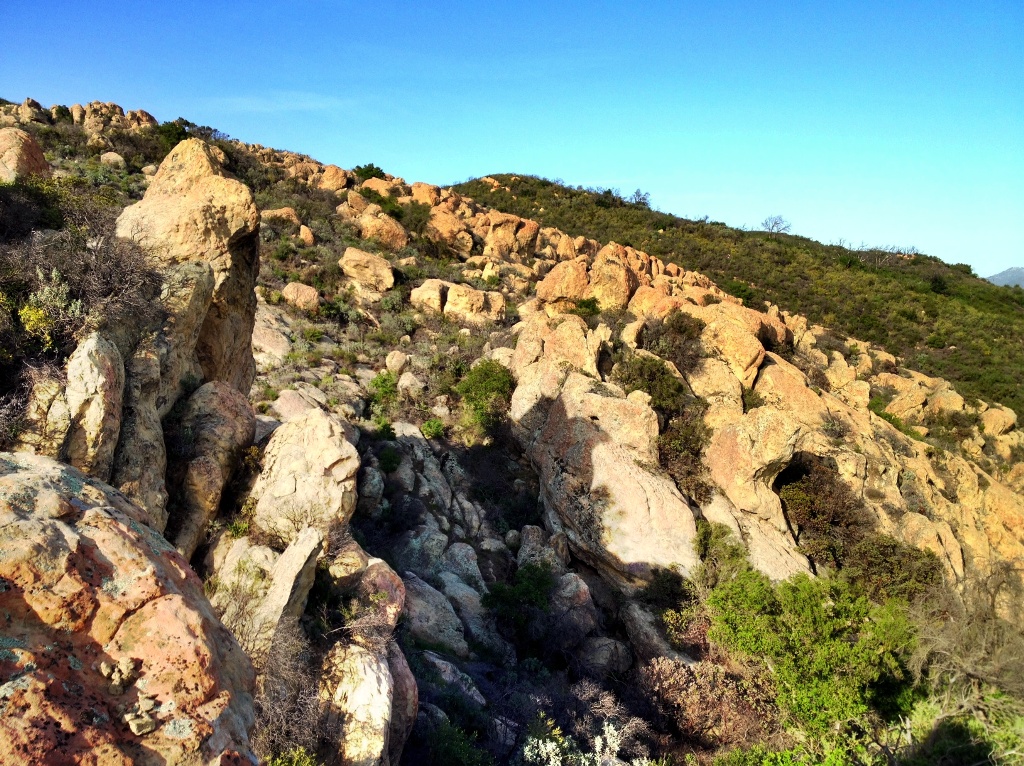
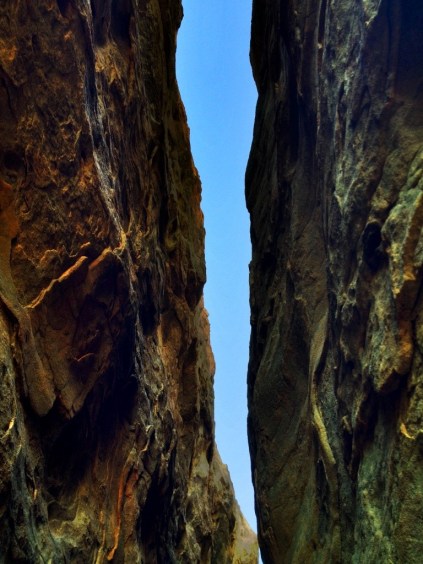
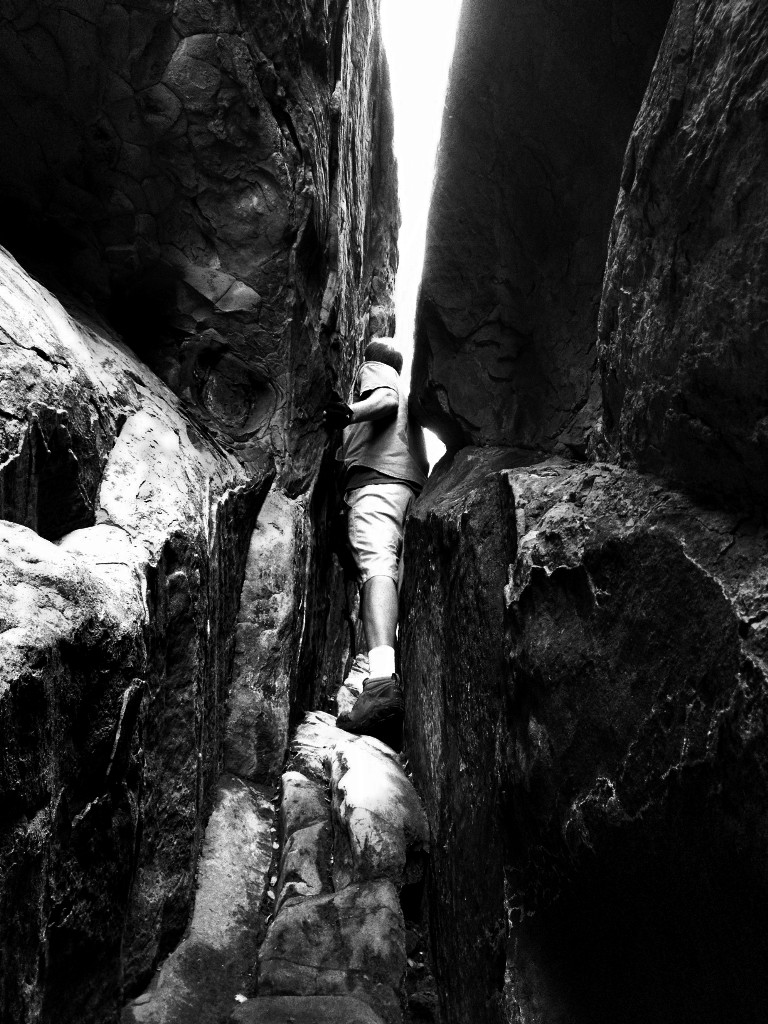
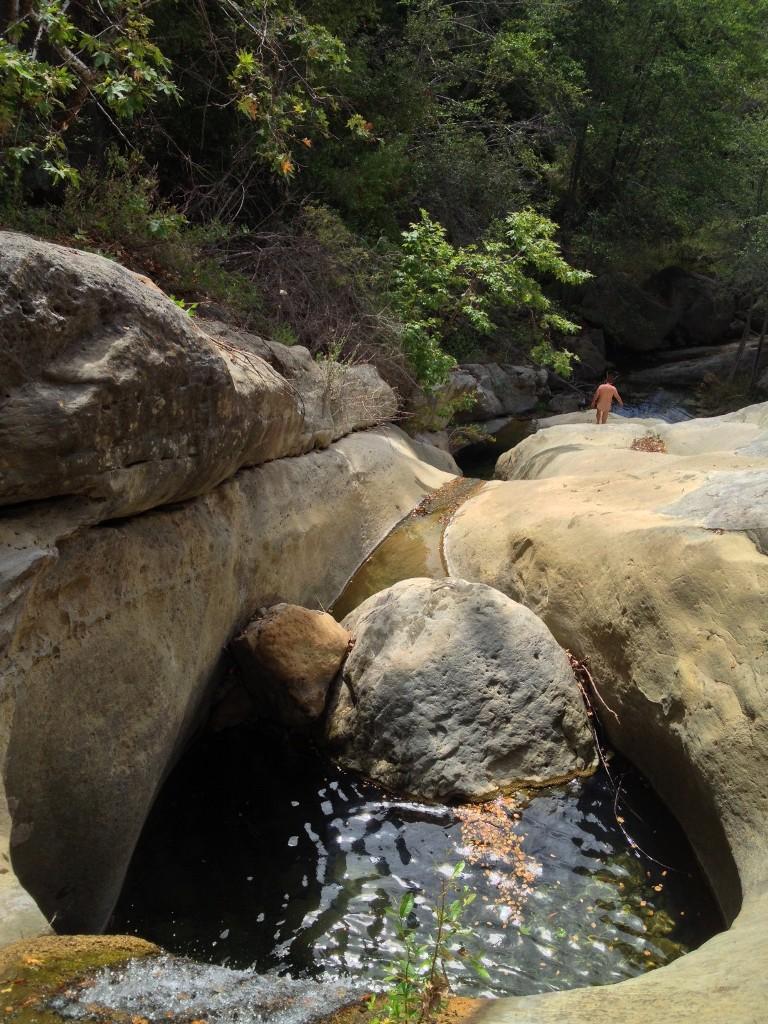
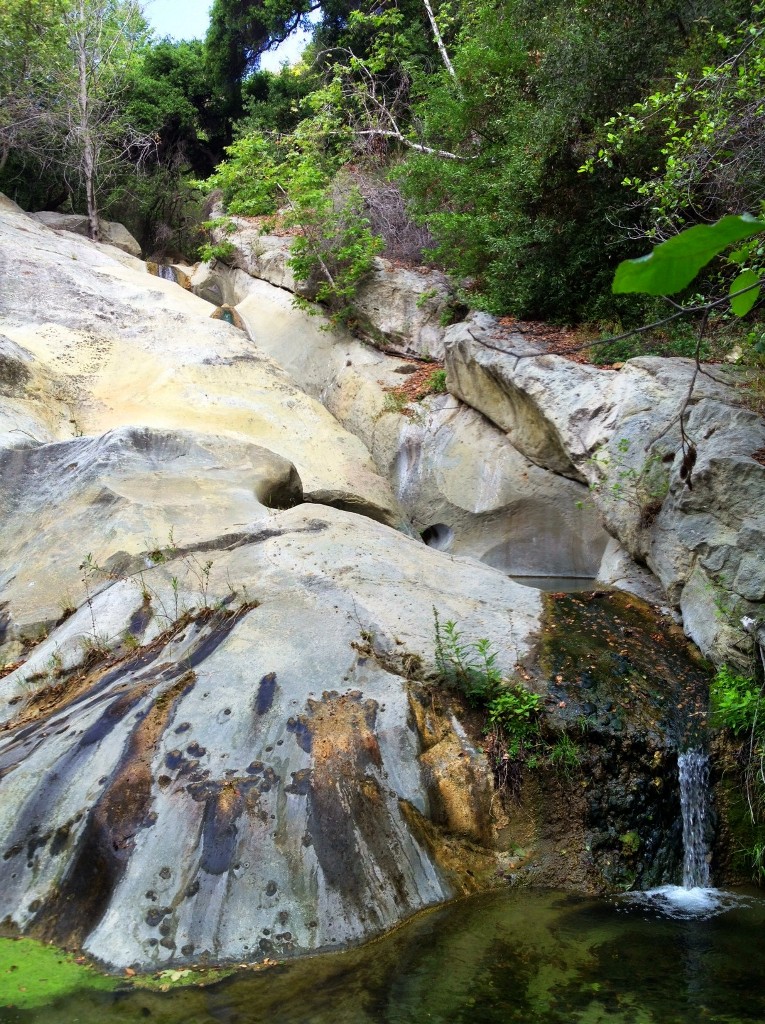
Teardrop was named for its shape. It’s a small swimming hole, a large bathtub, bored out of sandstone bedrock visually and audibly accented by a waterfall dropping into its emerald water. Like many swimming holes, its depth fluctuates through the years depending on how heavily it rains and if winter storms are strong enough to flush the pool of rocks or too weak and so it fills with sediment. Located on a steep slope of exposed bedrock, which provides plenty of room to lay around basking in the afternoon sun, it’s unshaded by forest canopy throughout the hottest part of the day. (Teardrop is located on private property that is off-limits to the general public without permission from Mr. A.)

Tear Drop swimming hole

The waterfall into Tear Drop.

Santa Barbara swimming hole Tear Drop
I lived for a time as a kid not much more than a stone’s throw up the canyon from Teardrop on the old Whitaker property in a Six Pac camper shell with my mom. As one might imagine, it was a humble, nothing fancy time of scant funds and some hardship. I woke more than once in the night to the sound of my mom weeping in the darkness, probably concerned about how to make ends meet and how little she was able to provide for her young son. Yet, as a kid who had few expectations or assumptions about how things should be I didn’t seem to lack much.

There was only one other kid around of my age, an often barefooted boy named Eric who lived with his hippie mom, “Rainbow,” and little sister, Aurora, in a trailer on the other side of a small sloping potrero. He once came to our house wearing nothing but a large bath towel because he apparently had no other clothes.

I didn’t much get along with him, however, and so I spent many hours alone exploring the Los Padres National Forest right outside our aluminum shelled camper door. There was little space inside our “home” for anything other than eating a meal or sleeping so I lived outdoors for the most part during daylight hours.

The point is not to recount some sob story or to say I had it particularly rough, many others had it way worse, but that in such lean times I learned to appreciate the subtle beauty and value of my surroundings, the natural wealth which too often seems to be overlooked by most people.

In combining my imagination with nature the possibilities for fun seemed limitless. I spent a lot of time outside in the mountains discovering in the forest ways to keep me occupied. It was a formative time that helped foster an interest in and appreciation for the Santa Ynez Mountains.

Tear Drop swimming hole Santa Barbara Los Padres National ForestLooking down the spillway from Teardrop pool.

Tear Drop swimming Santa BarbaraLooking up the spillway toward Teardrop.

Santa Barbara swimming holes Tear DropLooking up from the next pool down, the top of Teardrop waterfall barely visible.

Related Post:

Finding Frontier in the Forest Conquered

Posted in Santa Barbara County | Tagged , , , , , , , , , | 11 Comments

Native American Rock Art (Kern County)

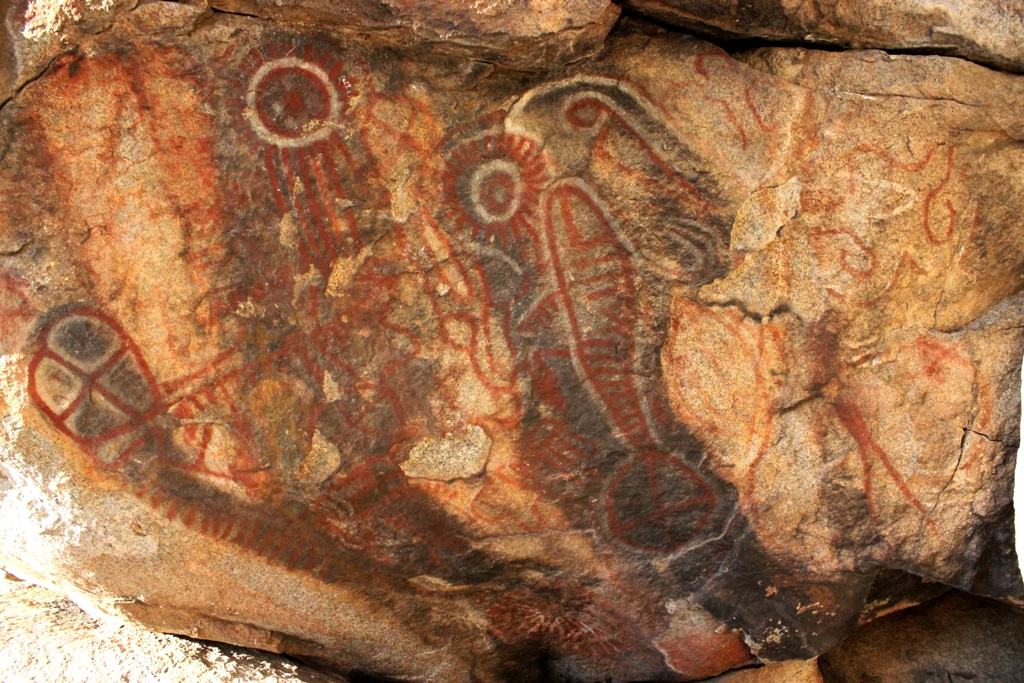
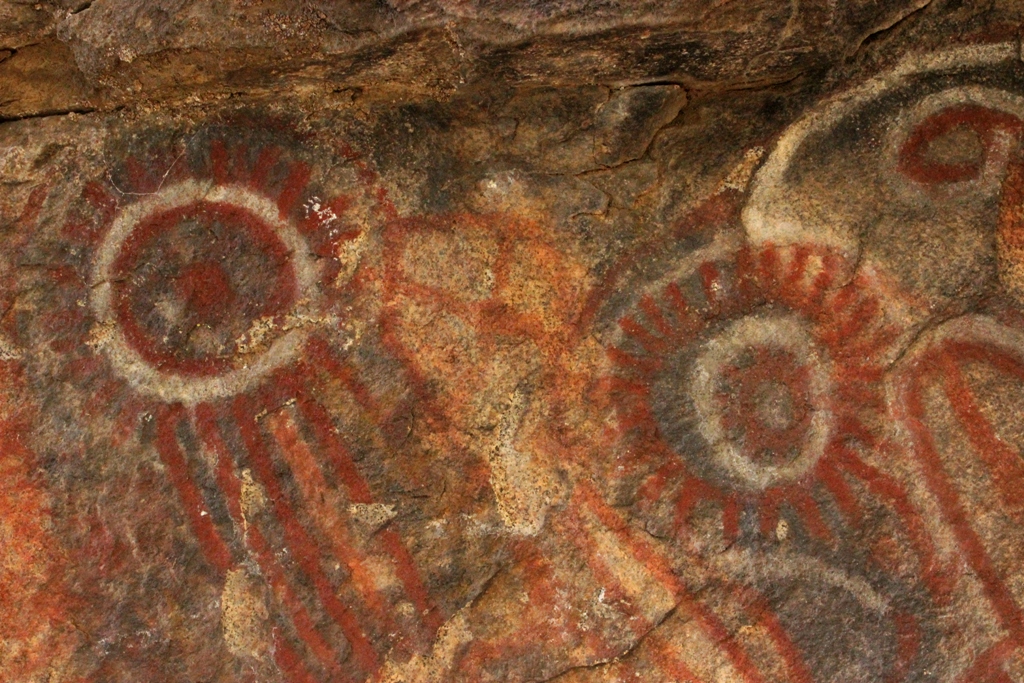
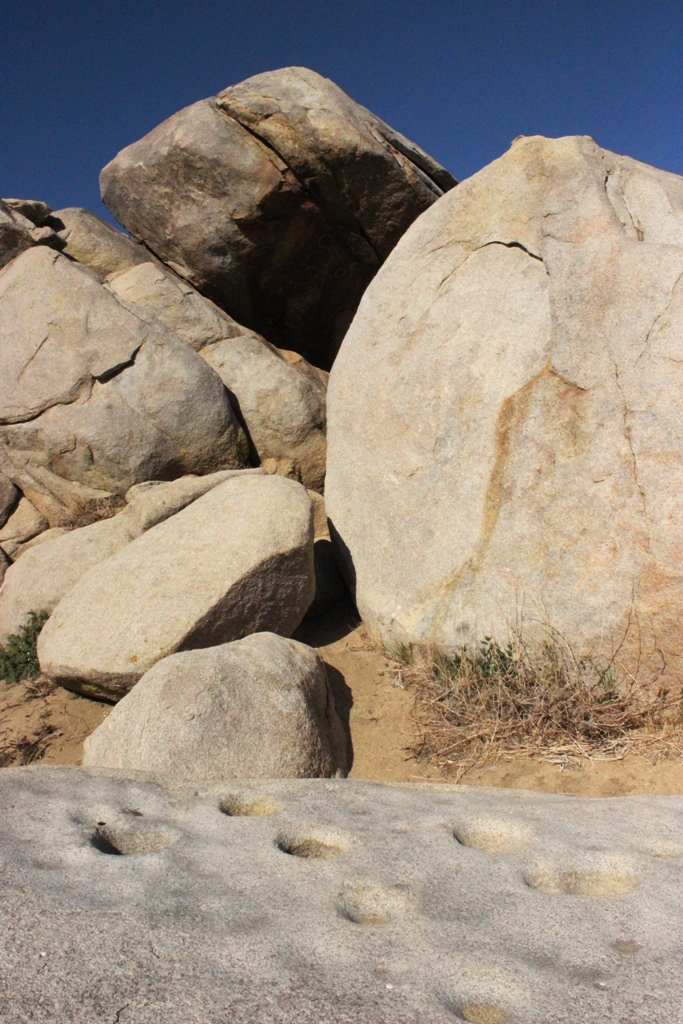
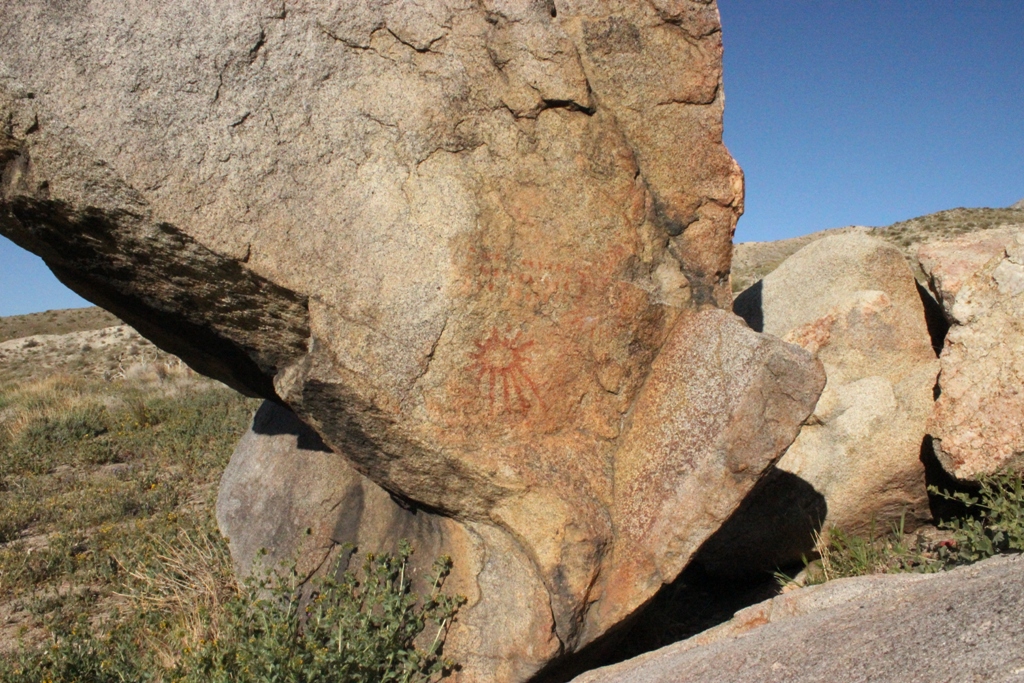
Indian rock art pictographsThis rock art panel painted on granite sits in a shallow canyon along the foothills of a mountain range on the edge of California’s Mojave Desert. More art adorns the underside of a natural shelter formed by the boulders, but has been nearly entirely erased by the elements. A large millstone with numerous mortars lays at the foot of the painted rock and an adjacent boulder is also painted.

Native American pictographs Kern CountyIndian mortars millstoneThe pictographs are found on the shaded face of the boulder.

Indian mortarsI always marvel at deep mortars bored into granite, an exceedingly hard stone. It reflects many long hours of use. Note the patina surrounding the work surface of the stone compared to the rougher edges of the boulder, which also reflects long use of the site. How long might it take to polish granite like that from mere contact with the hands, feet and rumps of humans using the  mortars?

Indian rock art Kern County

Posted in Kern County | Tagged , , , , , , , , , | 1 Comment

Indian Wells Canyon, Southern Sierra

Indian Wells Canyon Kern CountyA view of the ridgeline running down from Owens Peak, which was named by Major General John C. Fremont after Richard Owens, a captain who served in his California Battalion during the Mexican-American War.

During the war Fremont captured the city of Santa Barbara in 1846 after a treacherous night-time crossing over the Santa Ynez Mountains in a rainstorm. Today there is a public campground adjacent the Santa Ynez River named in Fremont’s honor and hikers can follow Fremont Ridge Trail which follows the battalion commander’s historic route over the mountains.

—Walker A. Tompkins, Santa Barbara, Past and Present. [1975]

Named for by John C. Fremont for Richard Owens (1812-1902), an Ohio born explorer (aka “Owings”), who accompanied him on his third expedition to California (1845–46). Fremont also named a valley, river and lake for Owens, whom he considered “cool, brave and of good judgment”. Owens served as Captain in Fremont’s California Battalion during the Mexican-American War, and was California’s Secretary of State during Fremont’s brief tenure as Governor (1847).

—Sierra Club

We put in a cursory effort to try and locate Native American rock art in Indian Wells Canyon, but came up empty, which isn’t a hard achievement to attain when looking for small stains of faded paint hidden along a monstrous mountainside stubbled with a million rocks and looming ridges and peaks.

We were rewarded, however, with awesome views of the Sierran landscape. Leaving the stark flatness of Mojave Desert, we climbed by four wheels up the long canyon ’til we reached high slopes covered in knobby granite and conifers and accented with the color of spring wildflowers.

Perhaps a few images may inspire readers to get out and explore places they’ve never seen, because you just never know what you may find even if you don’t find what you were looking for.

Indian Wells Canyon wildflowers and peaksIndian Wells Canyon hikes

Posted in Kern County | Tagged , , , , , , , , , , | 4 Comments

Burro Schmidt Tunnel and Shanty (1906-1930s)

Burro  Schmidt TunnelThe entrance into the Burro Schmidt Tunnel.

“What is it, what nameless, inscrutable, unearthly thing is it; what cozening, hidden lord and master, and cruel, remorseless emperor commands me; that against all natural lovings and longings, I so keep pushing, and crowding, and jamming myself on all the time; recklessly making me ready to do what in my own proper, natural heart, I durst not so much as dare?”

-Moby Dick, Herman Melville (1851)

Along US-395 a small unremarkable wooden sign informs drivers that yonder in the El Paso Mountains of the Mojave Desert can be found the “Burro Schmidt Tunnel.” And so we ventured.

Down a long winding, bumpy, whoop-riddled dirt road Stillman manned the helm of the “Perseverance,” as we followed uncertainly the poorly signed route, passing OHVs and Kalashnikovs, until we arrived at a rectangular shored, blackened opening leading into a nondescript hillside. There before us was a tunnel hand dug over the course of more than three decades through some 2500 feet of steely granite by William Henry “Burro” Schmidt.

The following, as written by David Stillman and shared here by permission, is the Ahabian story of an inexorable, madly obsessed man hellbent on completing the herculean task he set for himself, if for no other reason than to merely achieve his goal.

Burro Schmidt TunnelLooking down the Burro Schmidt Tunnel.

Burro Schmidt, the “Human Mole”

The desert breeds it’s own oddities, and the people who left them. Enter William Henry “Burro” Schmidt.

Schmidt was born in Woonsocket, Rhode Island. The year was 1871, and as he grew into a frail and small statured man, six of his brothers and sisters succumbed to tuberculosis. Fearing the same fate, Schmidt left for the hot, dry environs of California, arriving in 1894 at the age of twenty three.

He prospected in the mountains of Kern County, eventually filing claims in the desolate El Paso Mountains northeast of Mojave, CA. Here he set about his life’s work, and here Schmidt’s story gets incredibly weird.

Schmidt started mining, boring horizontally into a dirt capped mountain deep in the middle of egypt (a 4,400′ elevation mound in the El Pasos). In short order he encountered the solid bedrock under the mountain, bullet proof grey Kern granite. He must have encountered a couple veins of gold early on, or at least produced ore that assayed well because he kept at it, tunneling deeper into the mountain.

Burro Schmidt cabin El Paso Mountains“Burro” Schmidt beside his humble abode a short distance from his tunnel.

But Schmidt had a problem, he didn’t have a way to get his ore to the nearest smelters. At that time there were no roads by which he could transport the ore to Mojave or Garlock (20 miles away) where his ore could be processed, and the only route out of the mountains traveled through a treacherous canyon.

At this point Schmidt had few options. He had ore with gold in it, but no way to turn that into money. In this light one might understand how these circumstances could have led Schmidt to do what came next. The year was 1906.

At some point, presumably after frustrations with transporting his ore, Schmidt declared that he would continue tunneling straight through the mountain until he reached the other side. In this way he would devise his own bypass to the problem. So that’s what he did.

William Burro SchmidtSchmidt must have been a site to behold. He lived alone but for the company of two burros. He recycled the tins from his provisions to resole his shoes. His clothes were patched with burlap sacks. His cabin was a one room shanty with two windows, a door, and a secondhand hand wood burner which served to heat both the room and his food.

The shack, which still exists, was insulated on the inside with old newspapers, magazines, cardboard from foodstuffs, and holiday cards, all of which were tacked to the walls and ceiling to keep the heat in and the wind out. Most of these publications still remain in situ, many of which date back to the Great Depression.

Schmidt had no formal training in either prospecting or mine construction. He didn’t use any of the standard mining tools of the day, which would have included compressed air drills and jacks. Instead, he used only a pick, a shovel, a 4 pound hammer and a hand drill. On granite. Which is just ridiculous.

Later, after the mine and tunnel were underway, he began to use dynamite, again without a lick of experience or training. He came to the conclusion that short fuses save money, and would run out of the mine like the devil rode his heels every time he touched one off. On multiple occasions he showed up at neighboring mine camps injured, indicating he’d either cut the fuse too short or hadn’t run fast enough; probably both.

William Henry Burro Schmidt Schmidt was so frugal (a synonym for “broke”) that when the cost of kerosine for his single lantern rose, he would continue his work using only one two-cent candle per day. He survived numerous cave-ins during the excavation of his tunnel. Fortunately the shaft ran through solid granite because all indications are that he was too cheap to have purchased the timbers to properly shore up a less stable tunnel. He transported his ore out of the tunnel on his back before getting a wheelbarrow. Eventually he built a rail track and obtained a single ore cart.

In the 1920s a road was constructed through the nearby Last Chance Canyon which allowed an easy, downhill route into the desert. At last Burro Schmidt could safely transport the fruits of his labors. Here’s where reality becomes weirder than fiction. Schmidt, in his fifties by this time, and having tested his luck well beyond reasonable limits, should have settled down and started mining like it ought to be done. Nope. What makes Schmidt so perplexing as a human, and legendary in his time, is that he just continued doing what he’d decided he was going to do, digging his tunnel. His is an example where reasoned, rational intent does not conform to logic. Crazy as a soup sandwich.

William H Burro SchmidtSchmidt at work, the frail flesh of humanity versus the bullet proof granite of eternal creation. Note that he is not even wearing gloves.

By the time Schmidt saw daylight at the opposite end of his tunnel he was 67 years old. The year was 1938, and he had worked on his tunnel for 32 years. The tunnel was nearly 2,500 feet in length and he had removed roughly 5,800 tons of granite. As for the tunnel, he never did use it to move ore to Mojave or anywhere else, and upon it’s completion he sold the tunnel to another miner, Mike Lee, and moved elsewhere in the El Pasos.

William Henry “Burro” Schmidt died in 1954 at the age of 83 and is buried nearby in the desert town of Johannesburg. He was quoted as saying, “I never made a damn thing out of it.” In a monetary sense that statement may be true, but the irony is that his tunnel, bored through solid granite, will probably outlast many of the other monuments men have created for themselves. Ripley’s Believe It Or Not named Schmidt “the Human Mole,” and stated of Schmidt’s tunnel that it was “the greatest one-man mining achievement in history.”

 * * * * *

William Henry Burro Schmidt cabinSchmidt’s shanty.

Burro Schmidt cabin tin sidingRe-purposed siding made from tin containers, as similarly found on the historic homes of Bodie (Seen on this blog: Bodie, California Ghost Town).

Burro Schmidt’s one-room shanty remains standing a short distance from his tunnel. It is a rare time capsule of American history largely preserved as it was some 80 years ago thanks to desert conditions and the caring stewardship of the late Evelyn “Tonie” Seger, who with her husband purchased the site in 1963. Following Mrs. Seger’s death in 2003, however, the cabin has been neglected and ravaged by vandalism.

Inside Schmidt’s place is an impressive, veritable museum of Depression Era Americana in the form of newspapers, magazines, holiday cards and food cartons and labels dating from the 1920s and 1930s, which he had carefully nailed to the walls and ceiling as makeshift insulation.

Interestingly, some of the art found on these various labels tacked to the walls is the work of the West Coast printing titan of the era, the Schmidt Lithography Company of San Francisco, no apparent relation to Burro Schmidt.

“The art and business of printing in the San Francisco Bay Area are significant in the history of printing in the United States and have been an integral part of the cultural development of California.”

A Life In Printing: An Oral History, Ruth Teiser and Lawton Kennedy (2012)

“Schmidt Lithography Co. was once the largest printing company on the West Coast.”

The Virtual Museum of the City of San Francisco

Burro Schmidt cabin Depression Era magazineNote the National Recovery Administration (NRA) logo on this issue of Redbook magazine, which would mean the magazine dates from sometime between 1933, when the National Industrial Recovery Act was passed, and 1935, when it was, along with its ancillary policies and bureaucracies like the NRA, unanimously ruled unconstitutional by the Supreme Court.

Santurday Evening PostThe NRA logo also notable on each of these issues of The Saturday Evening Post

Saturday Evening Post 1934

Lucky Strike ad 1930sBurro Schmidt cabin newspaper 1936Newspaper from 1936

Arm and Hammer baking soda historic labelBUrro Schmidt cabin historic food labelBurro Schmidt cabin insulation Aunt Jemima historic pancake label Santa Claus Kellogg's Corn Flakes historic label Swift's Brookfield egg carton Delineator Magazine 1927 tomato cab label Saturday Evening Post 1931July 18, 1931

Sierra pure California Tonic tomato can label smart and final historic vintage tomato can label Quaker Oats historic vintage label Van Dyck cigars 1930s

American Legion Magazine Shasta Tea vintage label Goldenhead Milk Butter Colier's Magazine 1935 Liberty Magazine 1938 Golden State Butter Treasure Sardines vintage food label Lucky Strike vintage ad 1930sNothing like a Lucky straight to ease throat strain! Read the text: “Claudette Colbert tells how the throat-strain of emotional acting led her to Luckies.”

Burro Schmidt cabinThe interior of Burro Schmidt cabin thoroughly bespeckled with years of magazine and food labels. I’d venture to bet it actually looked fairly artful in its prime for what it was.

Posted in Kern County | Tagged , , , , , , , , , , | 8 Comments

Steelhead Fishing, Santa Ynez River (1948)

Santa Ynez River tributaryA tributary of the Santa Ynez River which once was the spawning grounds of thirty-inch steelhead.

Seventy years ago the Santa Ynez River in Santa Barbara County was known in California as “the most productive of all the little steelhead rivers of the south.” Bump into or know the right senior citizen and they can tell you about hooking loads of arm length sea-run rainbow trout in the Santa Ynez River, incredible tales one might wish were the fanciful imaginings of a dreamer, because to accept that it once really happened hammers home the devastating truth about just how much has been lost.

In the following excerpt from his book, Steelhead (1948), angler and author, Claude M. Kreider, artfully writes of his passion for and the thrill of steelhead fishing on the Santa Ynez River in what would later be seen to be the twilight years of the fishery’s heydays. A photo of Kreider hauling in a 29 inch, 10.25 pound steelhead from the Santa Ynez River can be seen on this blog at the following link: Native Steelhead of Yore.

Santa Ynez River tributary streamLos Padres National Forest, Santa Barbara County

Immediately upon reaching the river we turned down the road which followed its shores through a wide farming valley toward the ocean. We saw a few hopeful anglers along the riverbank but went on to the beach, obsessed with the desire of steelhead coming in from the sea. A railroad trestle spanned a wide tidal lagoon from which the current slipped in a wide shallow channel down across the sand and into the breakers.

Claude M. KreiderThe tide was high, and we could occasionally see a great fish tossed up on the crest of the giant combers to be thrown up on the sand, where it struggled nobly through the receding waters to reach the thin apron of fresh water that indicated so surely that nature’s guidance had been true. The unfathomable mystery of it all was overpowering. I was enthralled, steelhead angler for life.

A few hopeful anglers and others with deadly grabhooks were trying for the struggling fish in the shallow water as they forged up toward the lagoon, and I turned away in disgust. So noble a fish deserves at least a chance to regain strength in the lagoon above and to be angled for by sportsman methods when it again can be a worthy antagonist and have a fair chance to pit its great strength and speed against light tackle. Happily, in later years fishing was prohibited in this shallow outlet of the river.

Santa Ynez River springStanding midstream in the Santa Ynez River, a watercourse that flows only intermittently yet was exceptional habitat for huge runs of oceangoing rainbow trout.

Far back up the river and by now late in the afternoon, I stopped and assembled my tackle. There was no possibility of using the fly in the turbid water, so I reluctantly impaled a bait of bottled salmon roe on a No. 6 hook with two buckshot for weight to carry it down toward the bottom. A fairly stiffish fly rod of nine feet seemed to promise a good fight were a steelhead hooked and, at least, was the only possible concession to my preference in tackle and methods.

Just where to try for these great fish in those long opaque pools and churning riffles? This was surely a guessing game for the uninitiated. I could not know how far upstream the fish might have progressed, whether they traveled steadily or stopped to rest at favorable spots.

But the trout fisherman does not forget early training or the hard-earned knowledge of general stream craft. So I stopped at a long narrow run of deep water that was fed through a churning white-water chute. Those black swirls and the backwash looked decidedly fishy with indications of a deep pocket just out of the main current.

Santa Ynez RiverA placid length of the Santa Ynez River.

I placed my bait in a likely spot and after a few more casts felt a light nibble, as if a baby six-incher were taking it. A too slow strike brought up my bare hook. This was uninteresting, for even fair-sized rainbows of my experience had been always voraciously violent on the strike. So I tried again, and again came that gentle tug and my answering twitch of the rod tip. Instantly my rod arched sharply, and I was fast to a veritable submarine of a fish, my first steelhead!

At once this warrior shot far down the current, boring and charging with tremendous power. A great deal of line had melted from my large reel, which fortunately I had provided with ample extra backing line else this, my first great steelhead, would already have been gone.

But the pressure of the whipping rod at last slowed the fish, and it came out of the water in a tremendous flurry of spray to fall back with a mighty splash. My heart must of been racing, and I know my hands now trembled acutely as I manipulated rod and reel. Here, you see, in this little river of the farmlands fought the largest trout I had ever hooked.

Santa Ynez River steelhead fishingMorning serenity on the river.

My fish now charged back upstream, worked deep, surged under a mass of streamside driftand was gone! Not much chance for another here, it seemed, but I lighted my pipe for solace and with renewed optimism tried again. And in that same magic, whirling series of eddies within a few minutes I was fast to another great steelhead.

This one ran straight down the river, as the other had done, placing a tremendous strain on my sharply arched fly rod, and so excited was I by now that I did not know whether to try and snub that wild battler or just let him go and try and keep up. Never in a fairly wide experience with fresh-water rainbows had I experienced such wonderful speed and power in a hooked fish.

I wondered, while stumbling down along the littered shore, if my ten-pound leader was strong enough, if that little No. 6 hook could have bitten deep enough to hold this monster fish.

Santa Ynez River trout fishingMirror images on a deep pool along the Santa Ynez River.

I gradually gained some line at last by simply outrunning my steelhead, then it turned back upstream, necessitating speedy cranking of the fly reel, which retrieves line slowly at best. And now back at the head of the pool we fought the battle to a finish.

My fish was slowly coming in. Gently I submerged my large lake net in the water and slowlyoh, so slowly and carefullydrew my prize over it.

Back at the car in the gloom of the winter evening I weighed my beautiful fish, a silver-sided female with steel blue back which registered just 9 1/2 pounds. And my long suffering wife, who, I suspected, had had little faith in my winter fishing before, was properly congratulatory.

Santa Ynez River fishing

Related Posts:

Native Steelhead of Yore on the Santa Ynez River

Salmon Choking the Santa Ynez (1896)

Santa Barbara County Trout

Posted in Santa Barbara County | Tagged , , , , , , , , , , | 5 Comments