“Cabrillo’s description of the Chumash of the Santa Barbara mainland is the oldest ethnohistoric document concerning California Indians.”
—The Natural World of the California Indian, Robert F. Heizer & Albert B. Elsasser, University of California Press (1980)
Naturally occurring oil seeps have long been a defining feature of Santa Barbara County. In numerous locations, both on land and at sea, crude oil, or asphaltum, naturally oozes from the earth.
Being born in Santa Barbara, and spending a significant amount of time at various local beaches throughout my childhood, I grew to love the endemic fragrance of crude oil wafting in the beach breeze. Similar to a 21 year old that drinks themselves into a sickly stupor on their birthday, and for weeks afterwards cringes at the smell of alcohol, the scent of raw crude oil triggers vivid memories for me. But pleasant feelings rather than stomach turning repulsion.
As one might sniff a flower for its pleasing aroma, I love the sweet smell of crude oil. After travels through foreign lands, when I return to the California coast and catch its odor in the wind, I know I’m home.
Archaeological evidence indicates humans first began using oil from natural seeps in the Santa Barbara area around 5000 B.C. Several early Spanish explorers recorded numerous entries in their diaries about oil seeps, and their use by Chumash Indians in California.
A wood plank Chumash canoe, or “tomol,” caulked with a mix of pine pitch and asphaltum, called “yop” in their native language. The canoe was built in 1912 under the direction of 73 year old Fernando Librado Kitsepawit (b. 1839-1915),the last full-blooded island Chumash. The canoe is displayed at the Santa Barbara Natural History Museum.
In 1775, Spanish soldier Pedro Fages wrote of seeing asphaltum springs while exploring California. In San Luis Obispo County, near the old Spanish mission, he noted “as many as eight springs of a bitumen or thick black resin that the Indians call chapopote; it is used chiefly by them for caulking their small watercraft and tarring the vases and pitchers the women make for holding water.” Fages described the wood plank canoes built by the Chumash natives as being “. . .well joined and caulked, and of quite graceful lines.”
In 1772, the Spanish expedition through California led by Juan Bautista De Anza came across asphaltum oozing out of the ground and flowing into the ocean. Friar Pedro Font wrote of seeing “a good-sized spring of asphalt” near the base of what is today known as Conejo Grade along US freeway 101 in Ventura County. He also commented on the craftsmanship of Chumash plank canoes:
“They are very carefully made of several planks, which they work with no other tools than their shells and flints. They join them at the seams by sewing them with very strong thread and fit the joints with pitch by which they are made very strong and secure.”
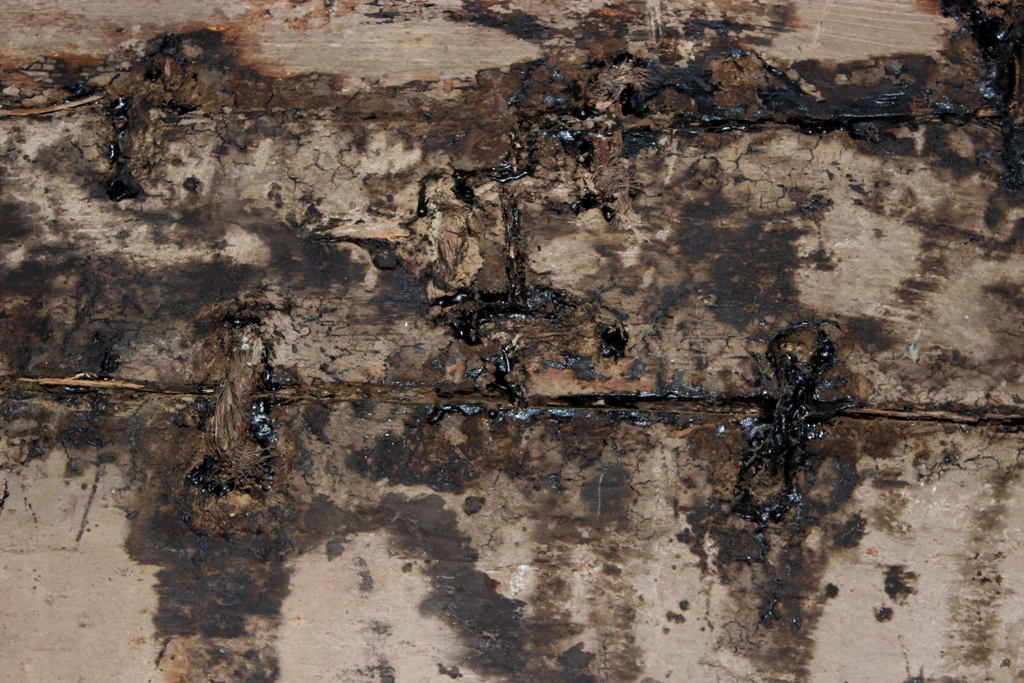
A close up view of the asphaltum and plant fiber used to seal and caulk the Chumash wood plank canoe at the Santa Barbara Natural History Museum.Oil stained stone caulking tools used by the Chumash in the crafting of canoes. The wood planks were hewed with stone adzes and sanded with shark skin.
Historical marker in Carpinteria, California at a towering, old sycamore tree a short walk from the oil seep featured in the video below.
In 1769, Spanish explorer Gaspar de Portola witnessed Chumash Indian craftsmen building canoes near their village Mishopshnow. The soldiers of his expedition named the village La Carpinteria or the Carpenter Shop. Today the small seaside town 10 miles southeast of Santa Barbara is still called Carpinteria.
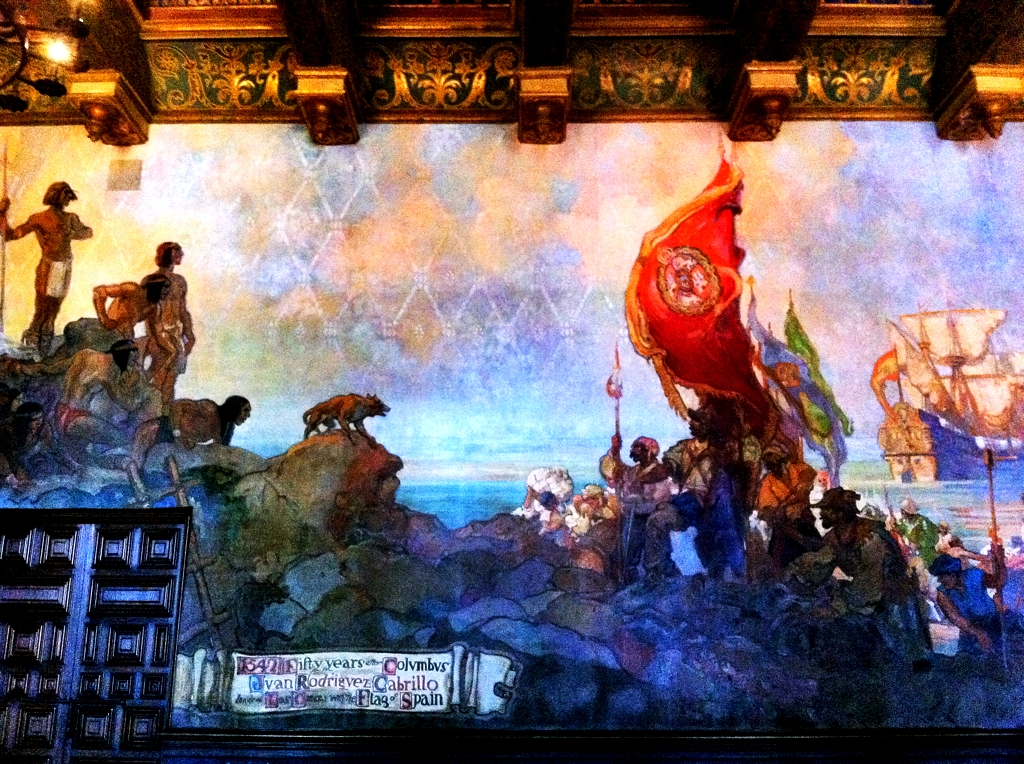
A mural depicting Cabrillo meeting the Chumash, as seen inside the Santa Barbara courthouse.
Some two hundred years earlier, Portuguese explorer Juan Rodriguez Cabrillo, sailing under the Spanish Crown, had recorded a similar account of the Chumash building canoes at the village of Mishopshnow. In 1542, the expedition he led witnessed the Indians using asphaltum from nearby seeps to caulk their canoes, and Cabrillo subsequently used it himself for similar purposes on two of his caravels.
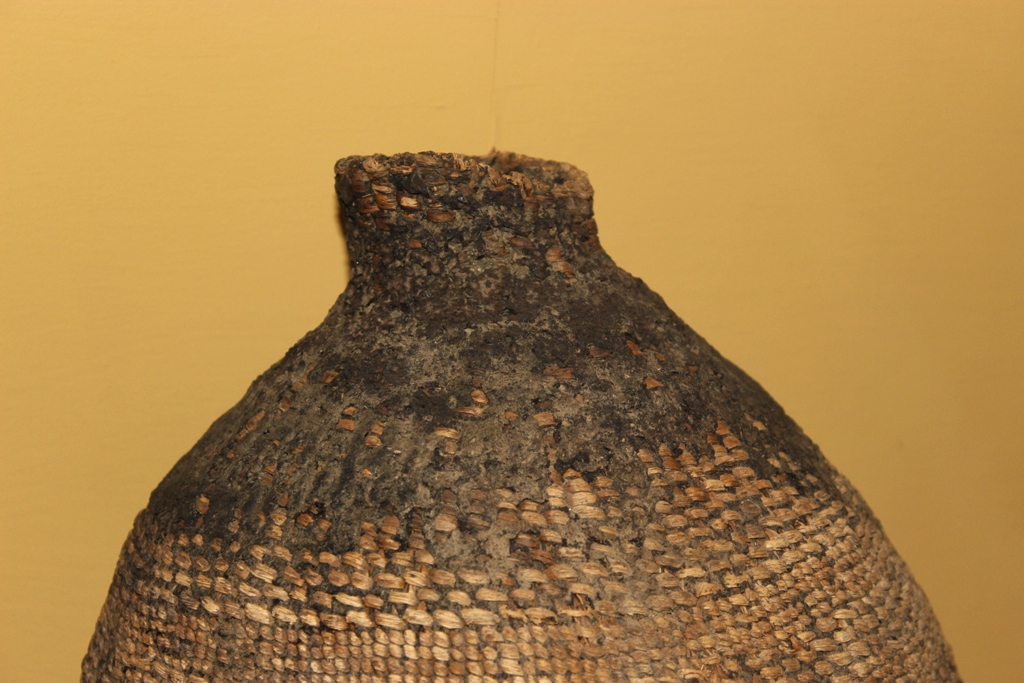
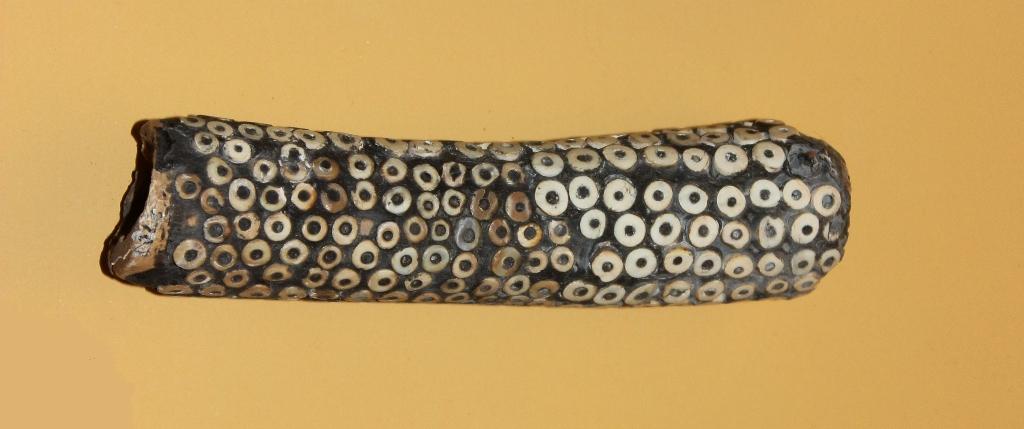
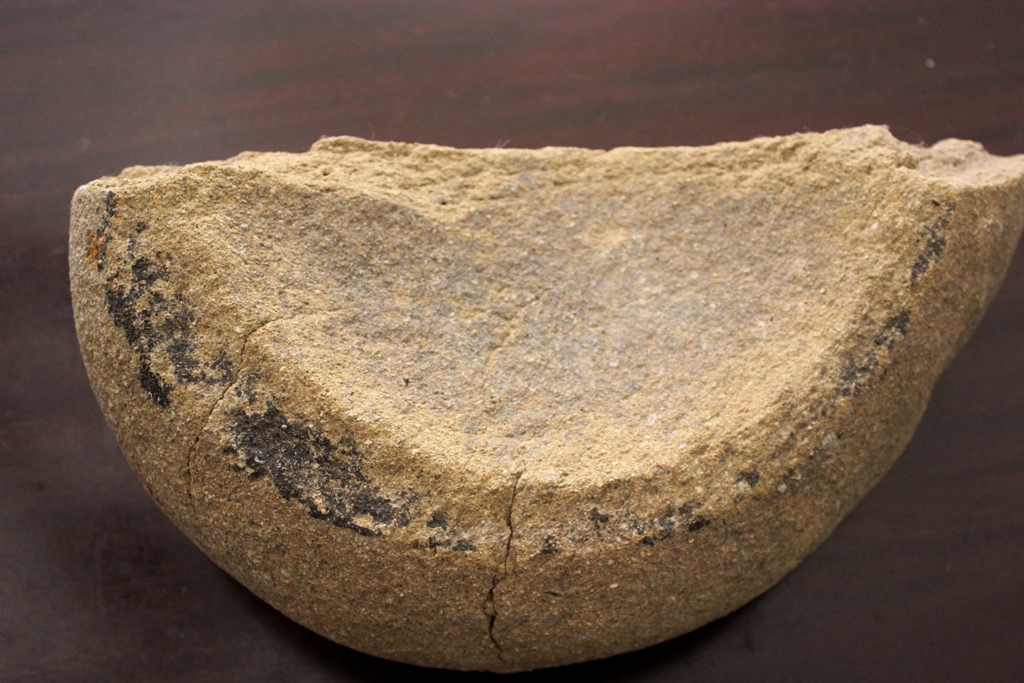
In addition to using asphaltum for sealing their seagoing canoes, the Chumash used the naturally occurring crude oil for a wide variety of decorative and practical purposes. The black viscous substance was used to waterproof water jugs made from plants and to make basket hopper mortars, whereby a bottomless basket was attached to a stone mortar base using asphaltum.
Asphaltum sealed Chumash water bottle on display at the Santa Barbara Natural History Museum.
Beads made of shell glued to animal bone using asphaltum.
A remnant half of a basket hopper mortar with the faint black stain of asphaltum still visible around its edge.
At Carpinteria State Beach, a few minutes walk from the historic location of Mishopshnow, oil flows freely from the ground and onto the seashore. Long after the Chumash first collected the asphaltum, Americans began recovering it from the same deposits and used it to pave some of the first streets in San Francisco and Santa Barbara. The same sort of crude oil springs once used by the Chumash to waterproof their renowned tomols and later to develop American cities can still be seen today.
“Two or more people disturb the ecologic complex of an area. I had to go alone and I had to be self-contained, a kind of casual turtle carrying his house on his back.”
—John Steinbeck Travels with Charlie In Search of America
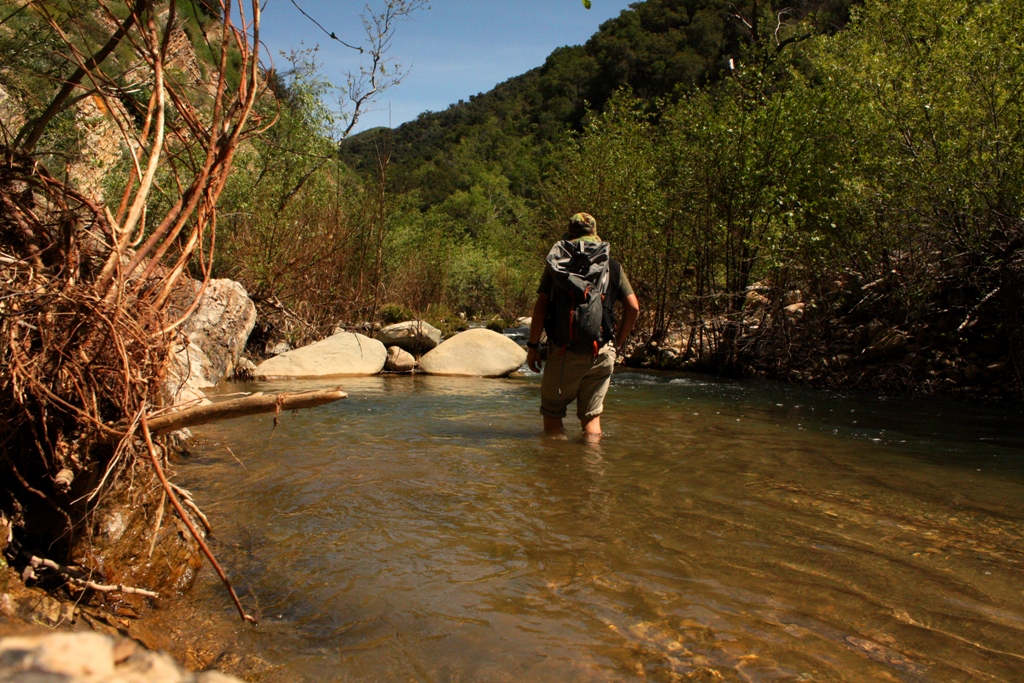
There are three partners whose character is all the same. Not that they don’t enjoy a good hike with a fellow friend, because they do, but at the same time, they are each other’s own best company when out on the trail.
They never have to wonder or concern themselves with whether or not they should keep hiking long hard miles, or slow the pace to a crawl, or stop for hours just to observe nature or to daydream; or should they hike up that creek or down another; or should they expend energy and time hiking over to investigate an interesting rock formation or not. The answer to any of these questions for all of them is inevitably yes.
When out on the trail there is never a distraction from the keen observation of their surroundings and the natural world around them. As such they are far more likely to see things that would, in the company of one or more other people, be overlooked, missed or simply not pondered.
Their attention is entirely focused on the environment through which they pass making for a sensory experience not likely possible should they be accompanied by anybody else.
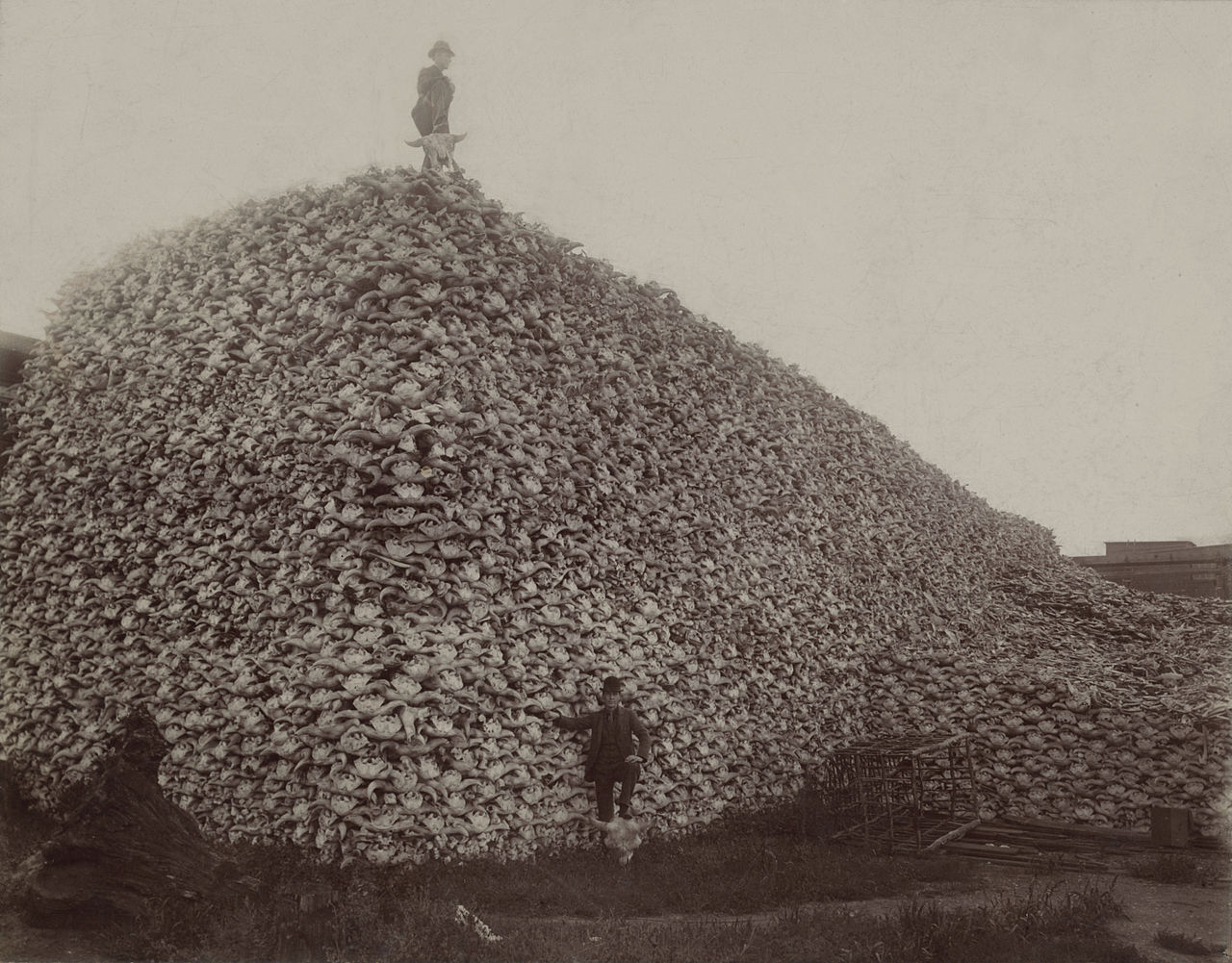
Two more photos by Clint Elliott from a recent trip to Montana. American bison once roamed the plains by the tens of millions before being hunted to the brink of extinction. Today they number less than one percent of their historic population.
“Besieged by hide hunters in the 1870s and 1880s,” writes Patricia Nelson Limerick in her book, The Legacy of Conquest, “the buffalo came close to disappearing. … Yellowstone holds the only continuously wild herd, augmented by animals raised domestically and then released.”
“From here on for several days he would see little but a thin scattering of ranches, established in the wake of the buffalo slaughter. There had been some hide camps in the past, but those would be gone now. Instead of gathering buffalo hides, men with no better work to do were gathering buffalo bones to be shipped to Europe for the making of bone china.
Remembering the great shaggy herds he had seen as a boy, living among the Comanches who had captured him, he gave way to a fleeting melancholy for so much that had been lost.”
—Elmer Kelton, Other Men’s Horses
A massive pile of bison skulls soon to be ground into bone meal fertilizer. Photograph circa 1870s.
“There is a great deal of century plant of the species which the Mexicans call mescali. The mode of using it is as follows: they make a hole in the ground, fill it in compactly with large firewood which they set on fire, and then throw on top a number of stones until the entire fire is covered but not smothered. When the stones are red hot, they place among them the bud of the plant; this they protect with grass or moistened hay, throwing on top a large quantity of earth, leaving it so for the space of twenty-four hours. The next day they take out the their century plant roasted, or tlatemado as they say [Spanish meaning “roasted”]. It is juicy, sweet, and of a certain vinous flavor; indeed a very good wine can be made from it.”
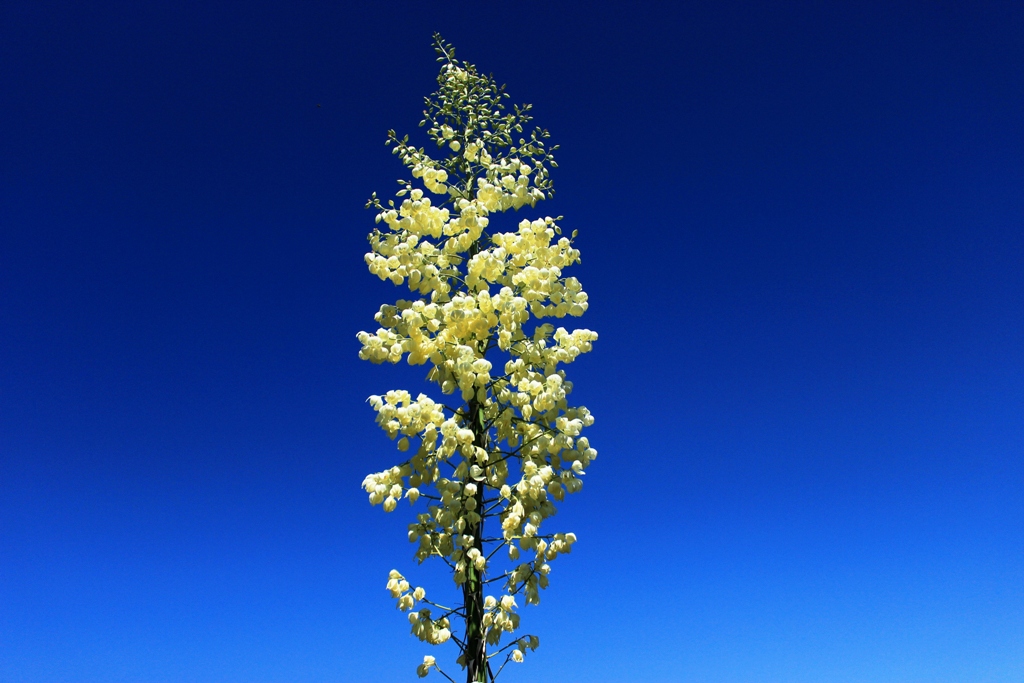
A freshly harvested yucca flower spike from the San Rafael Wilderness in Santa Barbara County.
Yucca whipplei is abloom right now around the Santa Barbara area and the Tri-county region in general. I ate some fresh yucca for the first time while out in the San Rafael Wilderness for a few nights last year. I snapped off a flower spike and took a bite out of it like it was an apple. I expected it to be disgusting and to have to spit it out immediately, but was surprised that it almost tasted good. I bit off, chewed and swallowed a few more chunks as I walked the trail toward camp.
It had a crunchy consistency somewhat like a mix between jicama and apple and had a sweet flavor. It was not, as I expected, fibrous and stringy but chewed up quite easily between the teeth. It was very close to being something I might actually want to pick and eat on a regular basis, but for a very subtle, bitter aftertaste. Perhaps the degree of bitterness varies between particular yucca plants, I don’t know.
I took the flower spike back to camp and baked it beside the campfire later that night. After it was cooked I cut it open lengthwise and was able to slice out chunks of the heart of the flower spike. It tasted better roasted. It had the same mildly sweet flavor, though when baked the sweetness was slightly intensified, and in addition it took on a distinctively rooty flavor that tasted good. But a trace of bitterness remained. The bitterness was ever so slight but still noticeable. I left the roasted flower spike sitting out by the fire pit that night and the next morning I noticed a rodent had hallowed out and eaten a decent amount of the soft inner core.
The Chumash Indians of the region (Ventureno, Barbareno, Ineseno, Obispeno) ate various parts of the plant including the base of the plant, leaves and flower stalk. They also used yucca for utilitarian purposes such as making cordage from the leaves, tinder from dried flower stalks and at times the points of stiff mature outer leaves were used as needles. Other California Indians such as the Cahuilla ate the fresh flowers raw. In historic times, the early Californios used yucca or what they called mescali for food and, as reported by Pedro Fages, for making wine.
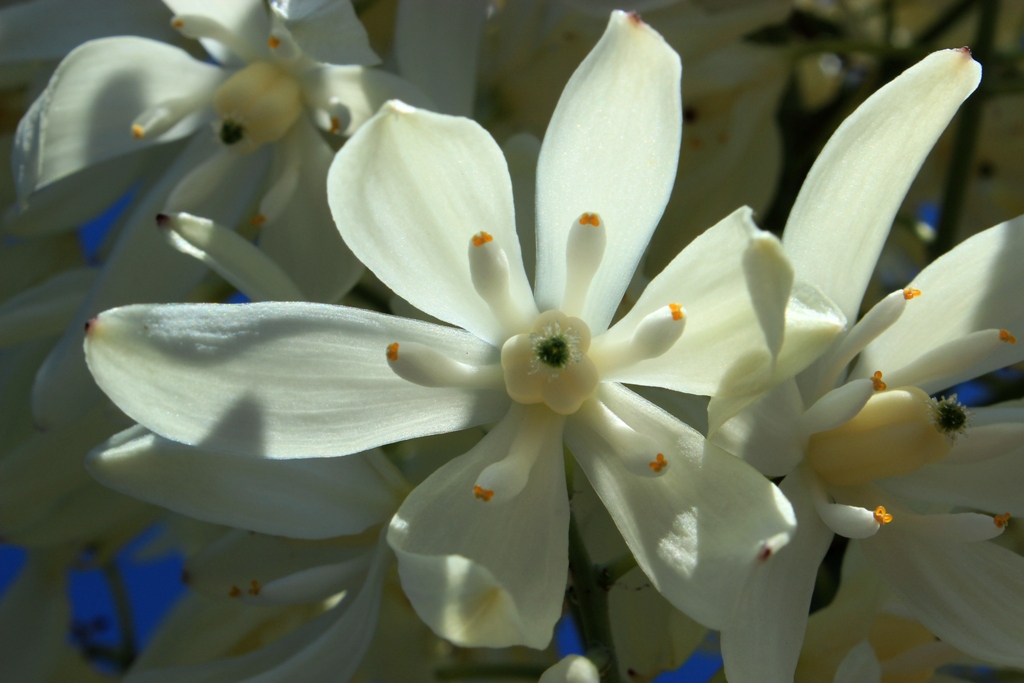
A closeup view of yucca flowers.
Bibliography:
Pedro Fages (b.1734 – 1794), A Historical, Political, and Natural Description of California, Herbert Ingram Priestly, translation, pages 50-53, Ramona, California, Ballena Press (1937).
Jan Timbrook, Chumash Ethnobotany: Plant Knowledge Among the Chumash People of Southern California, pages 226-28, Santa Barbara Museum of Natural History, Heyday Books (2007).
“He may be just a tramp, a guy that likes to roam about this great country without any special aim, just to thank the Lord for these beautiful mountains.”
-B. Traven, The Treasure of the Sierra Madre
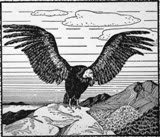
“. . .here, where there are still the silences and the loneliness of the earth before man, . . .”

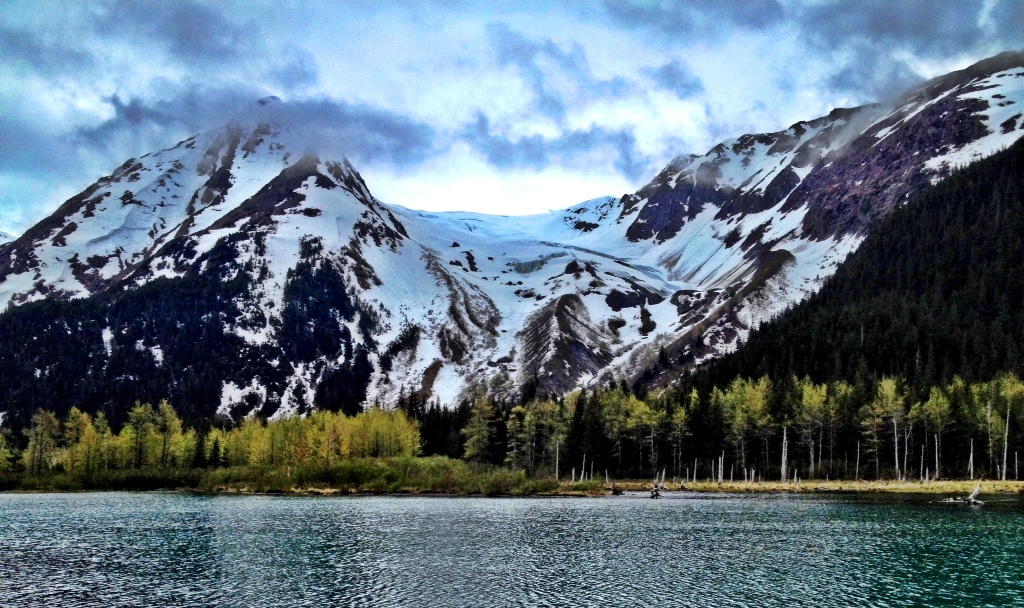 A friend of the blog, Micah Pueschel, of the band Iration, was up in Alaska last week playing a gig and snapped this wilderness shot.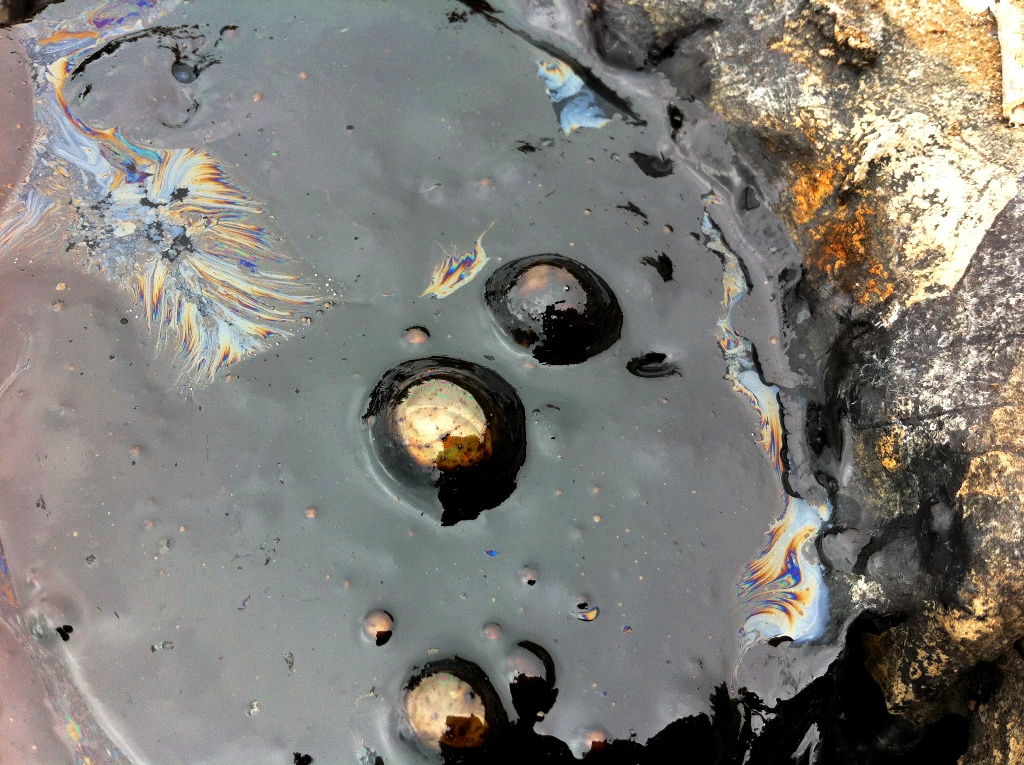













 Jack Elliott's Santa Barbara Adventure