Repatriation of Native American Remains and Artifacts

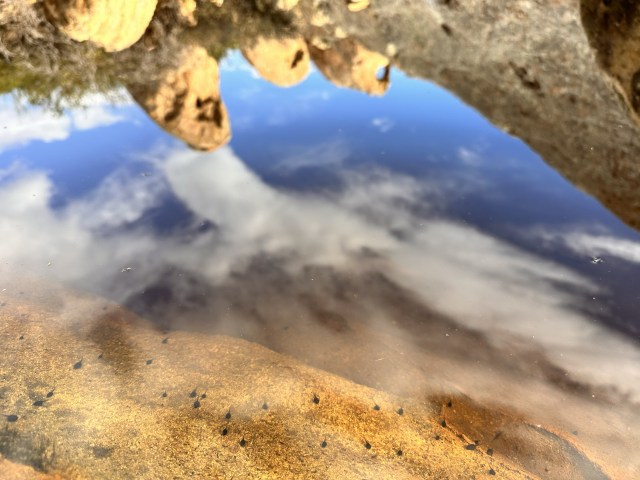
Asperitas clouds over Santa Barbara seen from our home on November 15, 2023.

October 2023

Gov. Gavin Newsom signed two laws Tuesday intended to compel California’s public university systems to make progress in their review and return of Native American remains and artifacts.

Decades-old state and federal legislation, known as repatriation laws, require government entities to return these items to tribes. Those artifacts could include prayer sticks or wolves’ skins that have been used for ceremonies.

Associated Press 

* * *

December 2023
..
California is pressing universities to repatriate thousands of Native American remains and artifacts
..
How two campuses are succeeding
When the state auditor reviewed the UC’s progress, UCLA stood out.

“We don’t do anything special at UCLA that isn’t supposed to be done legally at other UCs and Cal States,” said Michael Chavez, who started as UCLA’s archaeological collections manager and repatriation coordinator this year. 

Chavez credits the university’s 2020 audit results to the impact of his predecessor, former coordinator Dr. Wendy Teeter.
>>
“[She] didn’t allow any obstacles to get in her way in the pursuit of repatriation,” Chavez said. 

Since retiring from UCLA last year, Teeter now works with the Santa Ynez Band of Chumash Indians as an archaeologist where she reviews development projects and mediates between the developer and the tribe. 
..

Calmatters.org 

* * *

James Terry of New York accumulated a large collection of artifacts from the Santa Barbara area between 1875 and 1887. Most of the artifacts came from the Channel Islands. Terry was the first curator of anthropology at the American Museum of Natural History between 1891-1894, and the museum purchased his collection in 1891 (Nelson 1936). The purchase of large collections and subsequent employment of the collectors became a common practice.”

–Chester King, Overview of the History of American Indians in the Santa Monica Mountains (Page 65) Academia.edu

Posted in Santa Barbara | Tagged , , , , , , , , , , | 3 Comments

The Mysterious Three Stone Stack

What does this look like?

It looks like three stones stacked by human hands to me. 

Who? Why? When?

The rocks did not fall from the wall or ceiling of the cave that I could tell. There is no trace of a break or fracture in the cave or some such occurrence that may have sent the rocks tumbling and falling into place.

Yet, even if they had fallen naturally, it’s impossible to believe they landed stacked so elegantly. 

The rocks could have been set deeper into the stone hollow and thus farther into the dry shelter. But they are nonetheless well under the lip of the cave mouth and so sheltered fairly well.

The cave is found on the mountain in a deep canyon, on a relatively steep slope above a section of a creek that only runs seasonally, but that leads into a perennial stream just a short distance away. The photo is taken looking at a sharp angle up into the cave.

To reach this place requires a strenuous hike into Condor National Forest without aid of a trail anywhere and over some of the most rugged terrain I’ve hiked in the county.

The cave is impossible to see from any distance away due to the angle of its opening and a shroud of bushy chaparral. 

California Indians visited nearby places in old times and Americans more recently have grown marijuana plants in the canyon.

I don’t have a single reason to suspect that this is the work of guerilla weed growers. That does not make sense to me, for various reasons, not the least of which is the proximity of the cave to decent growing grounds, which are too far away.

I am inclined to think this is a much older artifact than something possibly left by weed growers or Americans of recent times.

The stones look like a possible deadfall gravity trap designed to catch small game, but it strikes me as an odd place to set one up.

The Chumash of old were known to have crafted such traps sometimes baiting them with an acorn (Harrington 1942)

Or maybe the stones were used to hold and store something out of dew and rain and off the ground, to keep it dry and well-aired and so preserved from rot. This possibility seems more likely to me than a trap.

What else might this be?

I don’t think those rocks ended up there on their own.

This is an artifact. An artifact of a different kind than usual.

And I wonder how long it’s been there, who left it and what it was used for.

Posted in Santa Barbara | Tagged , , , , , , , , , , | 1 Comment

A Sea of Debris and Plastic Microtrash

A plastic bin to hold plastic bags washed ashore along the Gaviota Coast.

“Our research found 6-to-1 plastic to plankton by weight in 1999. We went back last year [2008] and found 46-to-1 plastic to plankton – the weight had gone up, the volume had gone up, the number of pieces had gone up. Every decade, it’s getting close to 10 times worse.”

–Charles Moore on the ratio of plastic to plankton he found in the great Pacific garbage patch, as quoted in Earth Island Journal

Fifteen years ago I published a brief in a glossy print surfing magazine about plastic pollution in the ocean entitled, A Sea Of Debris.

In 1999, the ratio of plastic to plankton found in Pacific waters off the southern California coast had measured 5:2.

What must the ratio be today?

Gaviota Coast

A Sea of Debris (2008)

In 2005, on an atoll deep in the Pacific Ocean, a researcher found a small fragment of plastic from a WWII-era plane inside the stomach of a dead albatross.

For decades the fragment bobbed in ocean currents and tumbled about on desolate beaches. Eventually a bird mistook it for food.

At this moment tons of plastic trash spoil the world’s oceans. The accumulation between California and Hawaii alone is so immense it’s been given a name: The Eastern Pacific Garbage Patch. It’s purportedly the single largest dump on the planet. And it continues to grow. 

Beginning about 500 nautical miles off the coast of California, encircled by several major oceanic currents, the water swirls in a massive slow-moving eddy called the North Pacific subtropical gyre.

A natural phenomenon turn pollution trap where debris circulates for decades and covers hundreds of thousands of square miles.

Litter blown offshore and carried in river run off is drawn here by the surrounding currents. And much of it is plastic. It’s forever. 

Braemar

The environmental impact is incalculable. Countless seabirds, mammals, fish, and other creatures perish from ingesting bits of debris or getting tangled in it.

Yet, the plastic bottles, cigarette lighters, or even odd billiard ball are merely the most visible traces. Plastic breaks down through a process of photodegradation. It eventually becomes dust, but never disappears entirely.

A pioneer in research on the matter from Long Beach, CA, Charles Moore first began studying the problem ten years ago [1999].

A blog entry from his expedition earlier this year describes “an endless stream of delicate, white snowflakes, like plastic powder coating the ocean’s surface.”

The result is a poisonous mix of seawater with plastic outnumbering plankton in some areas.

Flotsam from the great Pacific garbage patch occasionally inundates atolls within the recently created Papahānaumokuākea Marine National Monument northwest of Hawaii. Deposits several feet high form along certain shorelines.

Being that the nature reserve is protected by our nation’s strongest environmental laws, the federal government has been compelled to act.

However, without a concerted multi-national effort and grassroots support, it will prove hard to remedy what has grown into a global blight of epic proportions.

Trout sculpture, Chase Palm Park

Posted in Santa Barbara | Tagged , , , , , , , , , , | 1 Comment

The Twelve-Inch Experience, Baron Ranch Corridor

Humboldt lily seed pod.

“Adults follow paths. Children explore. Adults are content to walk the same way, hundreds of times, or thousands; perhaps it never occurs to adults to step off the paths, to creep beneath the rhododendrons, to find the spaces between fences.”

—Robert Macfarlane, The Old Ways

Some level of maturity is required to enjoy a long trail walk through a forest without venturing so much as a single step anywhere off the path, “immediately adjacent” to it.

To walk the line requires discipline and self-restraint. 

Who will remain separated? To only ever peek at from afar, like some kind of museum exhibit, never up close and personal. To ignore visceral yearnings. To never wander off the twelve-inch wide path.

Adults can appreciate or at least abide by such restraint in service to a greater cause. 

Children want none of it. Some adults don’t either, actually. 

Immediately upon lower Arroyo Quemado Trail.

A fleeting moment of excitement struck one morning at the thought.

I’d take the kids for a hike where they had never been, within their own larger backyard in our county.

The thrill of novelty and seeing a new place for the first time. Very good! 

The good thought withered on the vine with the realization of how ludicrous the idea was, really. A wind past the teeth, head shaking sort of silly.

I couldn’t possibly expect my three children to remain on the twelve-inch wide path like subjects in a maze.

I would not want to enforce the rigid structure of an exclosure anyway, not here in this big forested canyon, where it clearly appears senseless and unnecessary.

And so we didn’t bother with the clipped and curtailed, the diminished experience that is the Baron Ranch corridor.

Calochortus fimbriatus. Guerrilla contraband imagery.

“The only area of the Ranch open to the public is the designated trail. Public access is prohibited in other areas of the Ranch. These areas, including areas immediately adjacent to the trail, are used for native plant restoration, wildlife conservation, and agriculture.”

County of Santa Barbara

That’s the County’s own super serious bolded emphasis, not added. 

The County is adamant! Just short of yelling in full capitals.

Their white-knuckled ardency is also seen in the oversized and numerous scowling signs along lower Arroyo Quemado Trail yelling DO NOT ENTER.

County employees prohibit stepping anywhere off trail in Baron Ranch under the guise of protecting nature.

Their exclosure of the people is based on nonsense, though, is it not?

Years pass and no restorative work whatsoever goes on anywhere along most of the nine miles of trails in Baron Ranch. 

And most of the forest at the so-called ranch will never be touched in this regard in any manner at all anyway, right?

The place is huge, much of which is no different than the surrounding national forest. 

The canyon is large and multi-forked, reaching from the Pacific seashore to the crest of the Santa Ynez Mountains.

Surely there’s room among the 1,083 acres of Baron Ranch to step off the trail now and again without unduly threatening something.

Are walking and conservation mutually exclusive?

Are we really supposed to believe we pose so significant a threat to canyon biology that freehiking cannot be accommodated?

That requires the willing suspension of disbelief.

Baron Ranch sign, entrance gate in background.

Is this not amusing if not alarming? 

The County acts with immoderate and disproportionate influence on local ecological dynamics, radically altering the land, reconfiguring coastal geography and watersheds, forest composition and the historical arrangement of plants and animals and fouling the air.

This is not to comment one way or the other in favor or opposition to these civil affairs surrounding Tajiguas dump. 

But to juxtapose the County’s bold and deep reaching actions on the Gaviota Coast with its treatment of walkers as if we are a problem, like some sort of barely tolerable existential threat.

Irony rings in the air. You can actually hear it when standing in Baron Ranch reading the sign suggesting visitors remain quieter, and not to upset the acoustic ambiance.

At the same time, one may hear the beeping of reversing bulldozers wafting over from Tajiguas dump next canyon over. The dump is the reason the County took ownership of Baron Ranch.

Good thing my children aren’t running around anywhere off the twelve-inch corridor hollering and having fun.

Could you imagine?

Plastic in County-made mulch at Baron Ranch, as seen here nearby the sensitive habitat sign.

Some of the larger plastic found in the mulch, collected in mere seconds from in and around native plantings in restoration work done in Baron Ranch. 

“Excuse me? You can’t be serious, man. You cannot be serious!”

–John McEnroe

If the condescension is not enough, the outrageous part may be seen in how the County of Santa Barbara is responsible for the spreading of microplastic trash in Baron Ranch. And in places all over elsewhere across the coastal littoral, which drains to the ocean, downhill and downstream of everything.

The County of Santa Barbara makes this microtrash mulch, which they sweet sell as “natural” and “ideal” and even suggest is “organic.”

The mulch is loaded with pieces of plastic.  It’s speckled with even smaller bits the closer one looks. 

What would a microscopic analysis of County mulch reveal? 

The City of Santa Barbara is a booster of the microtrash mulch program, offering rebates as encouragement.

This has gone on for years.

And so we ask the employees of both the County of Santa Barbara and the City of Santa Barbara, if they want to be bold and super serious about conservation, tell us:

How much microplastic trash has been spread county-wide in this manner?

The domain experts treat us like fools. Then they expect to be trusted and respected when they demand allegiance to their rules of exclosure.

Ventura County forest sign.

Posted in Santa Barbara | Tagged , , , , , , , , , , | 1 Comment

Figueroa Mountain Bug Bloom

Along the road to bugville in autumn. 

Springtime wildflower blooms on Figueroa Mountain capture all the attention.

But I’ve long marveled, too, at the winter ladybug blooms of the mountain.

December 2023

I hold onto a childhood memory of ladybugs blanketing big logs around Upper Bear Camp along the headwaters of Sisquoc River.

The bugs are one of only several memories of our long walk through from NIRA to Upper Oso.

Last year on Figueroa, ladybugs fluttered through the forest air on sunny afternoons so thickly in places I thought I might inhale them and had to cover my nose and mouth when passing through. 

I wonder if at times they might bloom in swarms so dense as to make hiking impossible.

NPR: A Swarm Of Ladybugs So Huge, It Showed Up On National Weather Service Radar

I see them more usually, however, clustered by the thousands on logs and branches and across the forest floor.

I once saw them en masse lining the individual stalks of blades of foot-tall grass that bent and swayed in the breeze under their weight.

February 2022

Posted in Santa Barbara | Tagged , , , , , , , , , , | 7 Comments