The Carrizo Experience: Ten Hours on the Plain III

This post is third in a series.

Read the first here: The Carrizo Experience: Ten Hours on the Plain I: Ruminants on the Range.

And the second here: The Carrizo Experience: Ten Hours on the Plain II: The Bedrock Mortars of Selby Rocks.

Painted Rock on the Carrizo Plain National Monument.

The Pictographs of Painted Rock

Author’s note: The photos of Painted Rock shared in this post were taken in August 2010. They are used here in lieu of the photo set taken at the time of this most recent visit, which were far too inferior in comparison due to the poor lighting and conditions that day.

Painted Rock sits like the tip of an iceberg poking above a sea of undulating grassland. The first time I made the journey to the site before it became a national monument, all I knew was that there was a massive monolith somewhere along the southern side of the Carrizo Plain that was adorned with Native American pictographs.

After arriving at the eastern entrance to the plain I drove slowly down the dirt road looking for the sandstone formation. It’s about thirty miles from the beginning of the monument to Soda Lake and Painted Rock is across from the lake. I had no idea how far to drive. After some 40 minutes of creeping up the plain and looking for a landmark that never showed, I had long begun to question where the hell I was going and how I was ever going to find the rock.

Then, finally, the grayish mounded form of Painted Rock emerged from the grassland far off toward the base of the Caliente Range. That is how the monolith so lavished with attention from humanity since ancient times appears to modern day visitors as they approach. Though set in an open expanse of treeless terrain in a landscape of few rocks, it is tucked within the rumples of the land and somewhat hidden from view.

Looking into the hollow of the horseshoe-shaped Painted Rock formation.

A view of the interior wall that holds or held some of the most notable pictographs. Historically, the rock art panel appears to have span some 30 to 40 feet in length. Following below is a small selection of some of the many pictographs to be found on Painted Rock.

A portion of the main panel showing the ravages of natural erosion, graffiti and bullet damage.

A badly eroded rock art panel showing natural sandstone exfoliation. Look closely to the right of the rock art and the name “Geo Lewis Nov 5, 1903” can be seen carved into the stone.

Posted in San Luis Obispo County | Tagged , , , , , , , , | 3 Comments

Sea Anemone

Anthopleura elegantissima

Sea anemones thrive in the intertidal zone of Santa Barbara County beaches due in part to microscopic organisms living within their bodies. A type of alga called zoochlorella grows inside the tissue of the anemones in a symbiotic relationship. Zoochlorella consumes carbon dioxide and nitrogenous and phosphorous wastes and in turn provides oxygen and nutrients to the anemones. Zoochlorellae are a type of green algae and its their presence that results in the green hue seen in anemones. Another type of alga, zooxanthella, is also found within sea anemones to a lesser extent and imparts a brownish tinge to their hosts.

Because the algae produce food through photosynthesis the sea anemones are dependent on sun exposure to sustain the microscopic plants within themselves so that they in turn feed the anemones. A scientific study conducted in Santa Barbara County waters of the Pacific Ocean suggests that sea anemones are able to survive lengthy periods of time without capturing their own food, because the algae provides sufficient nutrients for them. The anemones depend on photosynthesis for nourishment as much as they do catching their own food.

Bibliography:

A Snail’s Odyssey: A scientific account of the biology of shallow-water, benthic-marine invertebrates on the west coast of North America.

Posted in Nature | Tagged , , , , , , , , , , , | 3 Comments

Canoe Camping Along the Green River, Utah

A photo essay of a camping trip down the Green River in Utah by Clint Elliott and the boys:

This slideshow requires JavaScript.

Priorities.

Tally ho!

Petroglyphs

Clint Elliott hanging five.

A view of the Green River through the walls of ancient Native American ruins.

Ancient ruins.

The Clint Elliott Files:

Goddard Campground: The Lost Jewel of West Camino Cielo Canoe Campin’ and Fishin’ in Minnesota Sliding Down Mono Debris Dam Cliff Diving Montezuma Falls in Costa Rica

Posted in Backcountry, Nature | Tagged , , , , , , , , , , , , , | 6 Comments

Rose Canyon Video Clip

Here is a short iPhone-shot video clip of Rose Canyon I took back in December, but never published. The video goes with the previously posted recount of that trip, which will give some background information on why I was filming an apparently unremarkable backcountry canyon: Rose Canyon and Rowe’s Gulch.

The video is rough footage showing a pan of Rose Canyon above the old long ago abandoned Rowe’s Gulch backpacking Camp, which is in the Los Padres National Forest in the Santa Barbara backcountry. The video begins looking southward down canyon. It pans along the foot of the mountain toward the east, looking downward as it follows the dry weedy creek bed, and then looking back up toward the upper part of the canyon and on northward.


A USGS map showing Rose Canyon. The red dot notes the location where the video was taken from.

Posted in Nature, Santa Barbara County | Tagged , , , , , , , , , , , , , , | Leave a comment

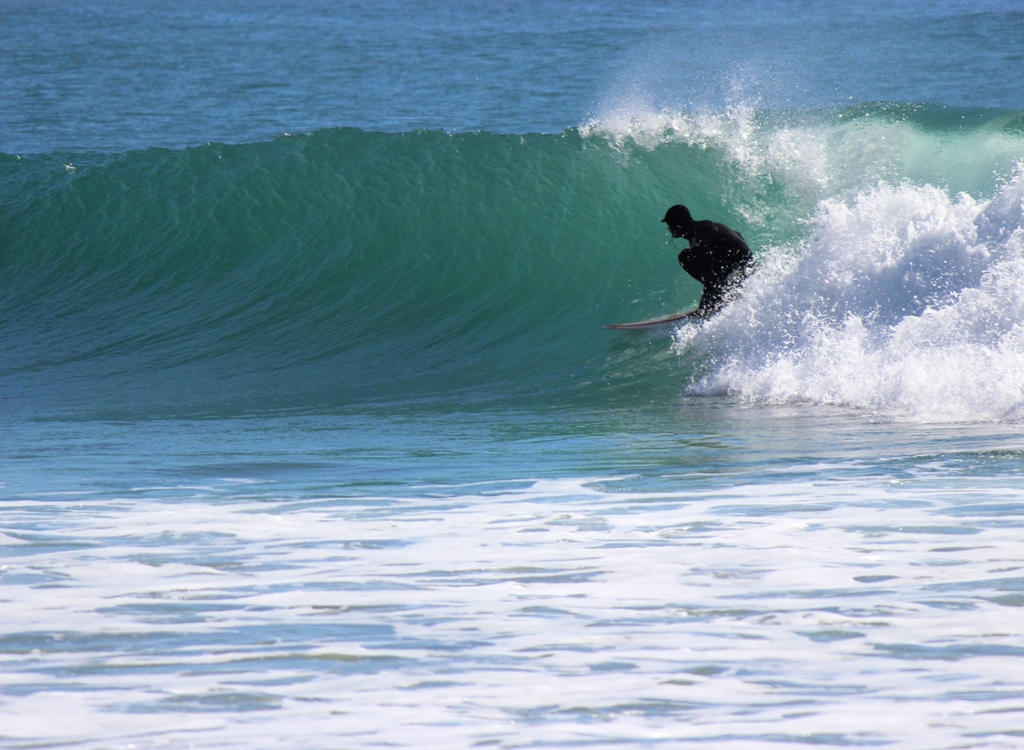
Sunset Surf

Last call.

Posted in Santa Barbara County | Tagged , , , , , , , , , | 2 Comments