Nira to Upper Oso: An Early San Rafael Experience

Here’s me in April 1991 posing in front of a San Rafael Wilderness sign. We had just climbed out of the Upper Sisquoc River watershed. I was as a young buck laying eyes on, what was for me, never before seen territory.

We put in at Nira Campground and had been out on the trail for several days, spending our first night at Manzana Narrows Camp. I vividly recall laying eyes on the sandstone formations at the top of White Ledge Canyon for the first time in my life, the next morning, after climbing out of the Manzana watershed. We popped through a narrow gap in the rocky hills near a creek and right into a huge sprawling albino Lizard’s Mouth. At least that’s how I saw it. Already having a fascination with rock formations and caves stoked by years of scrambling around the Santa Ynez Mountains closer to town, the landscape looked like a lithic playground of epic proportions.

We proceeded down White Ledge Canyon passing through a lush Happy Hunting Ground Camp and on down the trail to spend our second night at White Ledge Camp. The next day the weather began to change and the cloud cover thickened through out the day. It started raining as we approached the last several miles before the Sisquoc River and South Fork confluence, and so we holed up in the South Fork cabin the rest of the afternoon and night. The cabin at that time was little more than a rat nest made of four walls and a roof. But it was dry and we appreciated the wood burning stove and the dry fuel other hikers had kindly stocked. The river outside was dirt filled from runoff and rippin’.
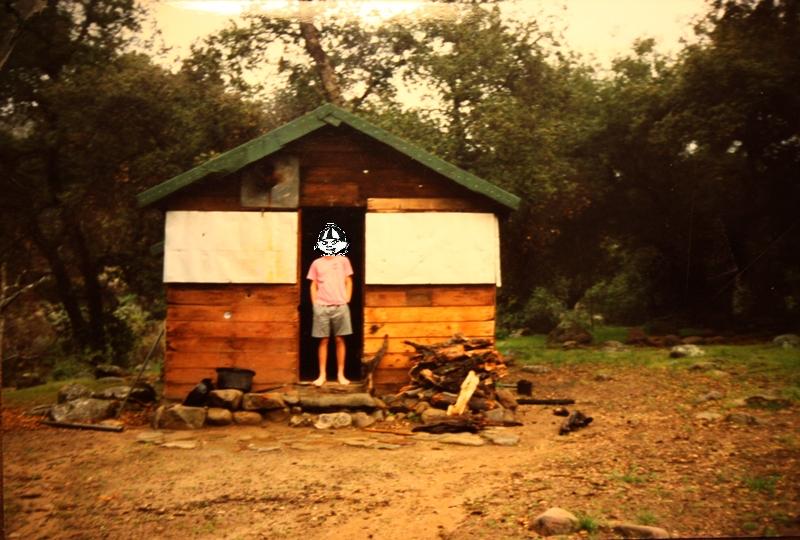
South Fork cabin in 1991.

Lazing the afternoon away reading a paperback at the cabin in June 2011. It is shown here after being restored by the Los Padres Volunteer Wilderness Rangers, which started, I believe, in 2008. Hat tip to all those involved!

The storm bathed the landscape in a gentle intermittent rain, but cleared during the night and the next morning we picked our way along a less swollen Upper Sisquoc. I spotted a large morel mushroom that third day.

We made it to Upper Bear Camp after more deep river crossings than we cared for. It was a mite chilly and there was some snow still scattered about. On a huge pine log near camp, there was what to this day is still the largest clump of ladybugs I’ve ever seen.  The backside of Big Pine Mountain also had a cap of crusty old snow, which we crunched over on our way down the fire road after staying the night at Upper Bear.

The first photo in this post was taken on Big Pine-Buckhorn Road east of Alamar Camp after having climbed out of the Sisquoc headwaters. We followed the road to Bluff Camp that day and set up for the night. It was an easy walk compared to what came next.

The following day we plodded along until well after dark, grinding through mile after curving mile of seemingly endless fire road. It was one of those hikes where you round a bend only to see the road running along the ridge far off in the distance, and you sigh in exasperation, as it winds around numerous hills to disappear and then reappear even further off in the distance. We had hoped to reach Upper Oso Campground. We didn’t make it.

We covered somewhere around 15 miles before my little brother finally could go no further. He put in a hell of a day for how young he was. We ended up rolling out our sleeping bags right on the thin strip of dirt that was the trail, somewhere on the south face of Little Pine Mountain, above Nineteen Oaks Camp.

We must have chewed some jerky and trail mix or something for dinner, but I don’t recall. We surely didn’t cook anything. We were plumb tuckered. The second half of the trip wasn’t the most inspired course to take, that’s for sure, but altogether, the route got us just about as deep into the backcountry as is possible around these parts. It was certainly a remarkable experience for kids of our age.

The last morning we walked the remaining short distance down Oso Canyon and through a vacant Upper Oso Campground. The gate was still closed at First Crossing. We waded across a shallow spot in the Santa Ynez River and hitched a ride to Paradise Store, where we called for our ride back to civilization.
Posted in Santa Barbara | Tagged , , , | 6 Comments

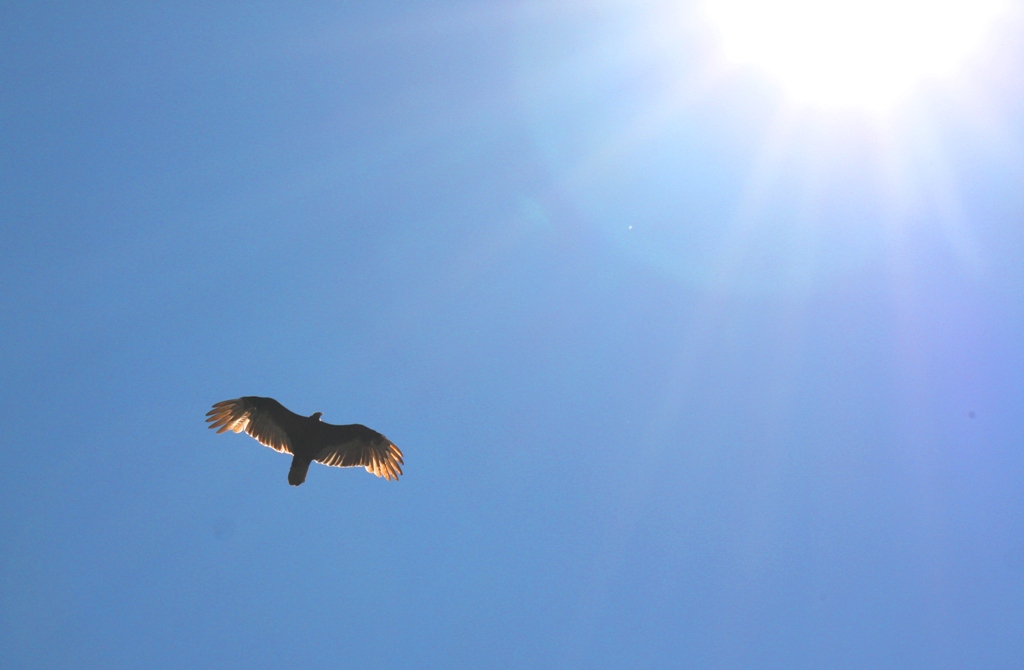
Turkey Vulture

A turkey vulture (Cathartes aura) soaring on the thermals above East Camino Cielo Road high atop the Santa Ynez Mountains above Santa Barbara.

According to a widely accepted theory in ornithology, turkey vultures use their feces to help cool themselves down during hot weather. It is called urohydrosis, which means that the birds direct their poop onto their legs and feet, which, through evaporation, helps lower their body temperature.

Vulture poop serves other utilitarian purposes, as well. The birds, by necessity, have cast iron stomachs that can handle the routine consumption of gangrenous and putrefying, bacteria-ridden meat that would kill many other animals. Although at a certain point of decomposition the birds will forgo eating carrion.

Powerful enzymes in the stomach work to metabolize biotoxins and when the vulture poops on his legs and feet, the same stomach juices kill microorganisms the bird picks up when walking on dead animals. Vulture poop is erosive, too, and it has been found to rapidly eat away the leather jesses used to restrain captive birds.

Yet, aside from serving as creatures of mere trivial interest, turkey vultures play an important role in the wild. Not only do the birds help rid the environment of rotting carcases, they prevent the spread of deadly affections.

“Vultures are one of the better disease control mechanisms out there,” Christopher Brand is quoted as saying in an Audubon magazine article from 2008. He is a research chief for the USGS National Wildlife Health Center in Madison, Wisconsin. “They check the flow of infectious wildlife diseases such as botulism and possibly anthrax.”

Were it not for vultures then deadly contagions would be more prevalent. By eating rotting flesh that serves as a vector for disease, and killing microorganisms during the digestive process, vultures do away with some of nature’s most wretched pestilence.

Bibliography:

http://archive.audubonmagazine.org/features0811/horrorShow.html

http://archive.audubonmagazine.org/letter/letter0901.html

Posted in Santa Barbara | Tagged , | 4 Comments

The Origin of the Name “California” and the Island Myth

Nicholas de Fer's map of 1705 showing California as an island. It is titled "Cette Carte De Californie et Du Nouveau Mexique." Image provided courtesy http://www.RareMaps.com — Barry Lawrence Ruderman Antique Maps Inc.

The Origin of the Name “California”

“There ruled on that island of California, a queen great of body, very beautiful for her race, at a flourishing age, desirous in her thoughts of achieving great things, valiant in strength, cunning in her brave heart, more than any other who had ruled that kingdom before her. . .Queen Calafia.”

—Garcia Ordonez de Montalvo, “The Adventures of Esplandián” (1510)

The name “California” derives from a novel written by Garcia Ordonez de Montalvo in the 16th century titled, “Las Sergas del muy esforzado caballero Esplandian, hijo del excelente rey Amandis de Gaula.” It was the fifth book in a series of Spanish romance novels.

The story tells of a mythical island called “California” ruled by Queen Calafia and warrior women “of vigorous bodies and strong and ardent hearts and of great strength.” The queen and her warriors venture forth on forays, where they seize and kill men they come upon. Any man found in their domain they eat. And although sometimes they have children from those they make peace with they keep only daughters and murder sons. It is a land near the Terrestrial Paradise, where the only metal in existence is gold. A land where griffons abound, which the women take as pets and feed to them the men they capture and the sons they bear.

Where Montalvo got the idea for the name remains unknown, but several plausible theories exist. One idea holds that it stems from an Islamic term for leader, which is “caliph.” The Spanish equivalent being “Calif.” In Montalvo’s novel Queen Calafia is a sovereign ruler who is allied with infidels against Muslims. Thus the name “California” is a logical designation for the land she ruled over.

Montalvo’s novels were popular reading material and the legend of California island was not unknown to New World explorers of the time. But like much in history no definitive understanding informs us today of the events surrounding the actual naming of the land that is now part of the United States. “No clear account has come down to us,” Dora Beale Polk writes, “about how the name was chosen, where, when, or by whom. All we have to date are tantalizing scraps of information.” What is understood is that the name was first applied in some manner to the Baja peninsula. Either the headland known today as Land’s End near where Cabo San Lucas is located or in reference to the entire peninsula itself.

The Island of California Myth

“A general tendency of geography and romance prevailing in those days was to locate in an insular landscape the scene of adventures and the place of wonders and marvels.”

Leonardo Olschki Storia letteraria delle scoperte geografiche (1937)

Spanish explorers of the 16th century thought California was an island. It was a myth that ebbed and flowed through the centuries based on the reports of various maritime explorers of different nationalities. Despite occasional doubt cast upon the legend and contrary evidence, the mistake was reflected on maps for a couple hundred years and became one of the great cartographic errors of all-time.

Upon landing on the Baja California peninsula in 1535, Hernán Cortés believed he had found an island. In describing his discovery as insular he is credited as the originator of the island theory. Cortés thought the body of water later named in his honor, the Sea of Cortés, was actually a strait separating mainland Mexico from the island of California. In 1539, he sent an expedition led by Francisco de Ulloa to circumnavigate the imagined island and it was Ulloa that named the Gulf of California in Cortés’ honor. Ulloa, however, was unable to lay the myth to rest and correct Cortes’ erroneous belief. The legend lived on.

Yet, as early as 1542, the notion of California being an island was largely dismissed and cartographers began showing the region attached to the mainland. Despite the change in general sentiment, though, all views remained at most “ambiguous or fence-straddling theories,” Polk writes. The myth proved hard to kill.

Maps drawn in subsequent years, such as the one featured here from 1705, resurrected the island myth. It was not until 1747 that the true nature of California was finally settled. In that year, Spanish monarch Ferdinand VI issued a royal proclamation based on the exploration of the Jesuit missionary, Fernando Consag, and informed the world that “California is not an island.” There was finally too much evidence for myth and fantasy to outweigh empirical facts on the balance of reason. At long last the uncertainty was over.

A detail showing the “Canal of Santa Barbara” as thought to exist in 1705. It was a place name later mentioned by Richard Henry Dana, Jr. in 1835. Today it is better known as the Santa Barbara Channel.

Bibliography:

Dora Beale Polk, The Island of California: A History of the Myth (1991)

Posted in California | Tagged , , , , , , | 16 Comments

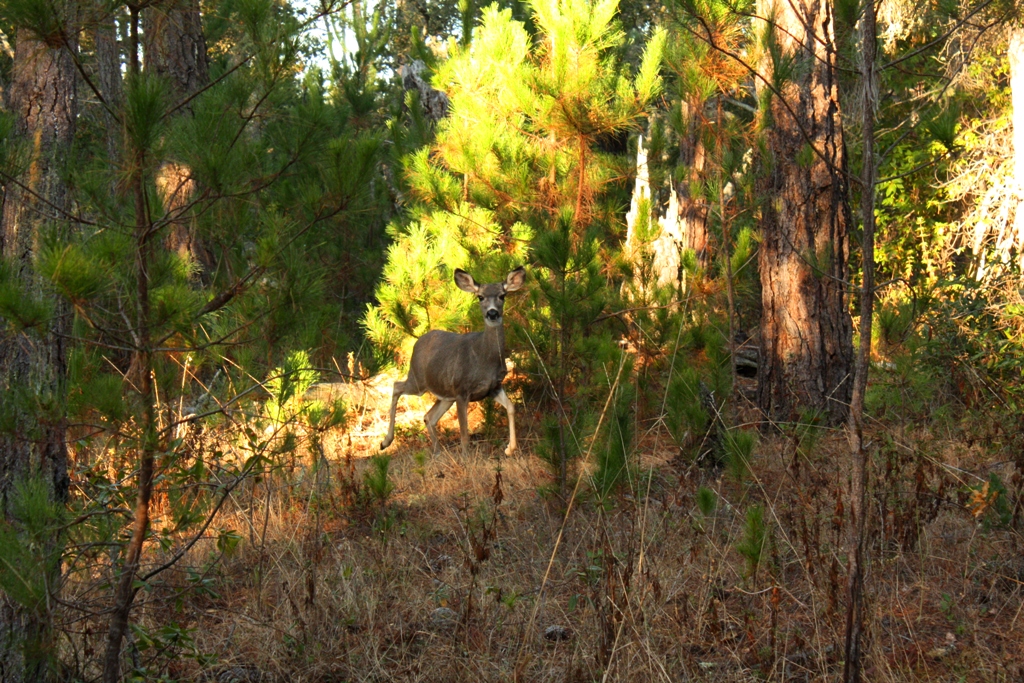
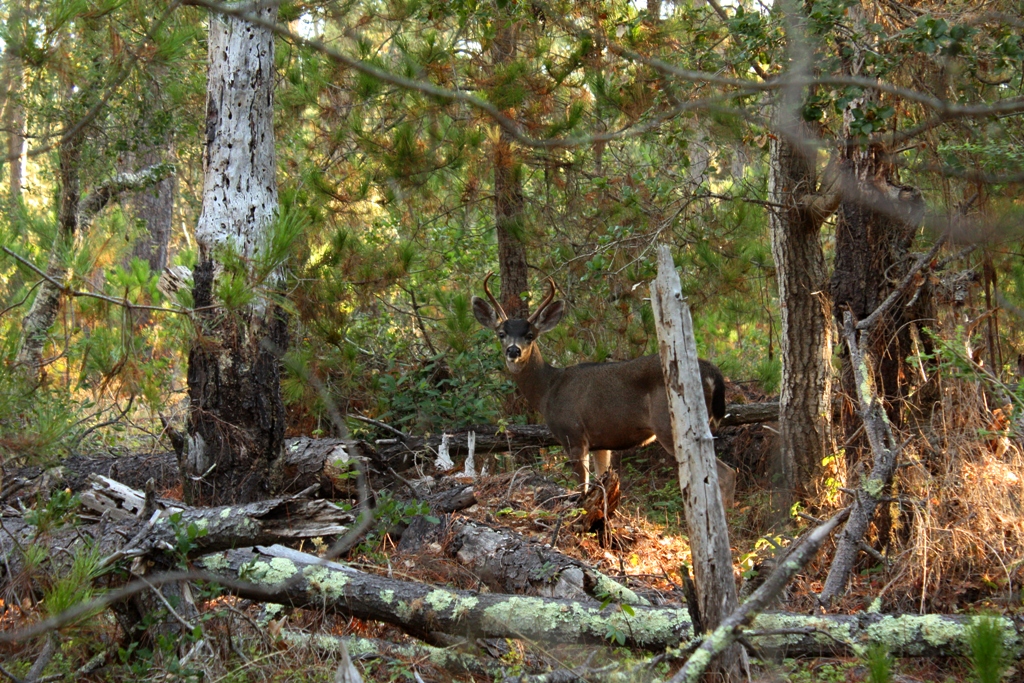
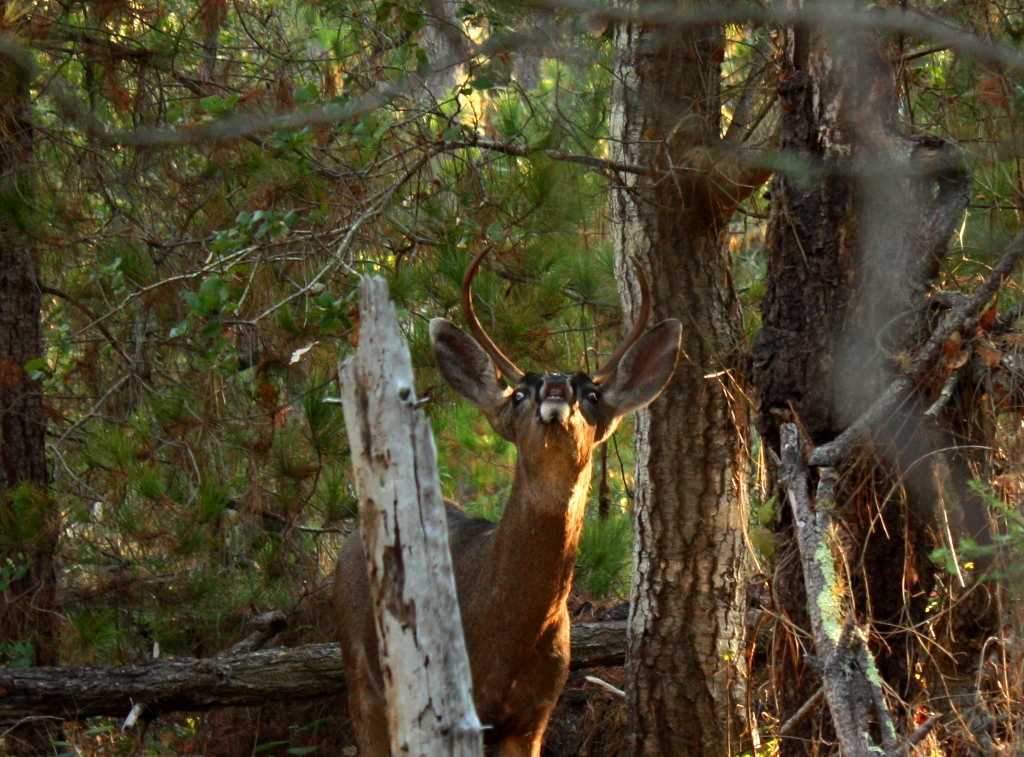
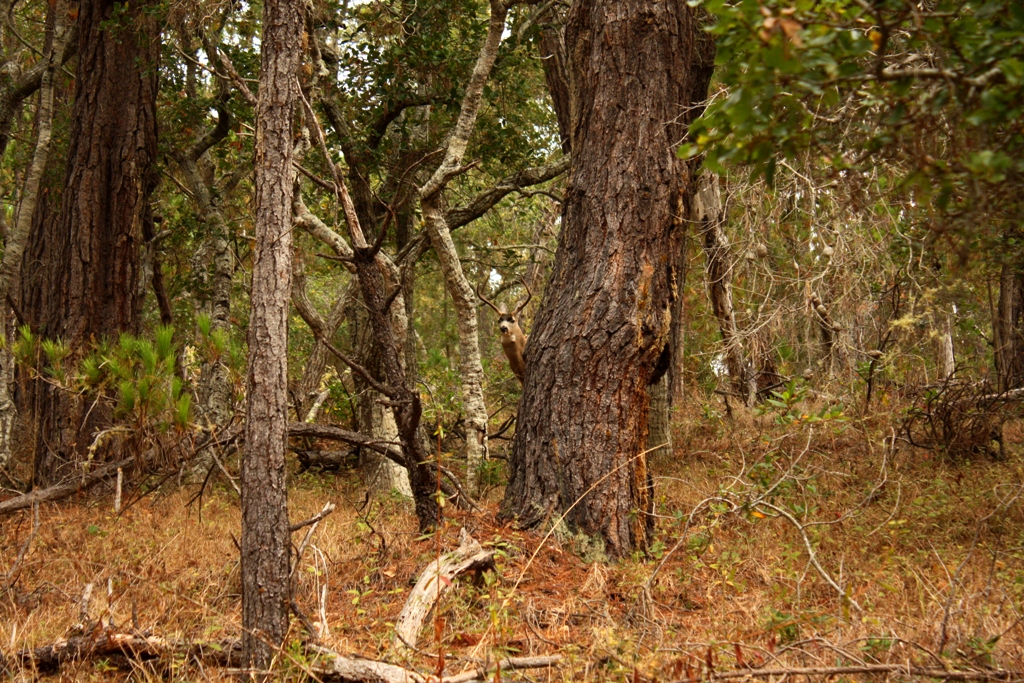
2×2 Bucks

I was out wandering around the woods up in San Luis Obispo County on Sunday and saw a number of deer. I walked up on two doe and one small buck that were remarkably unafraid. I watched them for about 20 minutes sometimes getting as close as 10 to 15 yards away. I never startled them and eventually I just walked away leaving them nibbling away on grass. Then later I happened across an older buck with a larger rack of antlers that was a bit more wary and wouldn’t let me get close to him, as he stood behind a tree watching me intently.

Posted in San Luis Obispo County | Tagged , , | 1 Comment

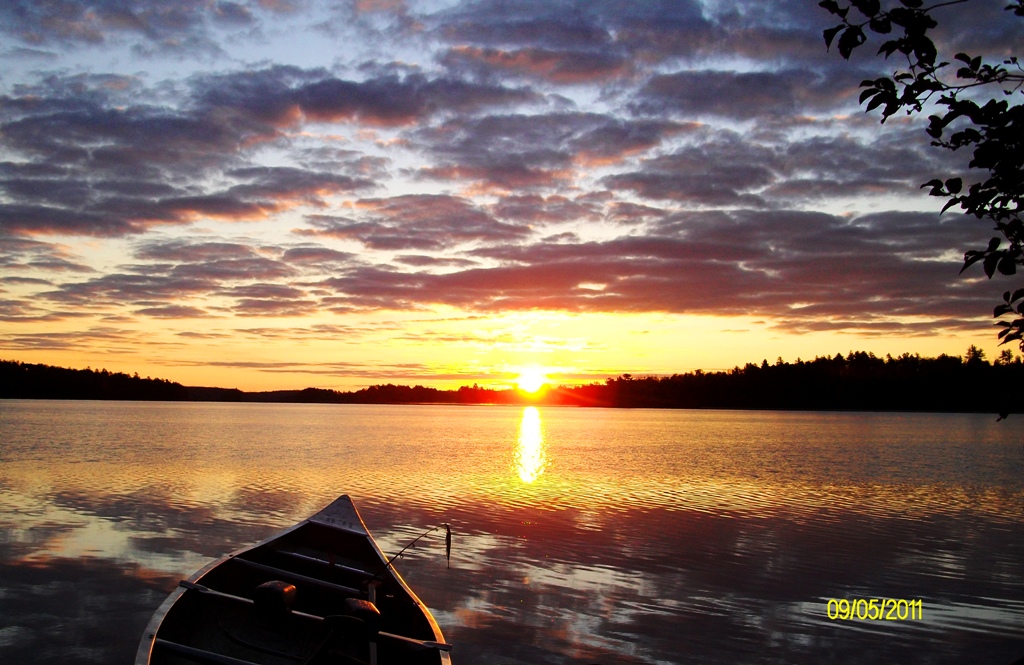
Canoe Campin’ and Fishin’ in Minnesota

Clint Elliott plying the waters far from home.

Northern Pike

Related Posts:

Clint Sliding Down Mono Dam

Clint in Costa Rica Cliff Diving Montezuma Falls

Posted in Snapshots | Tagged , , , | Leave a comment