The Ol’ Swimmin’ Hole

“Most of these places, however, were not marked as special on my map. But they became special by personal acquaintance. … I remembered what Ishmael had said in Moby-Dick about the island of Kokovoko: ‘It is not down in any map; true places never are.’”

Robert Macfarlane “Wild Places”

The Essence of Place

Our natural inheritance here in this neck of the woods may not include the largest or most spectacular of water parks. But nor have we such wants. We certainly have no need. We barely have water these days, but we get by just fine.

We appreciate each place for its own character. We do not measure our place by the standards of other places. “I—the royal we, you know. The editorial.”

We are humble in our desire. Allow us a small sandstone tub just large enough to dive into, to feel the wash of cool fresh water over our face on a warm day, to sink to the bottom with held breath and pinched eyes, to bob around. And we are happy.

For even the grandest of waterfalls and deepest, largest of pools may find it hard to compete with the affection for a small place in your home county.

Pinners. Scrawny drought-stricken coast live oak acorns in the fall of 2018. 

After seven years of scant rainfall and extreme drought—Santa Barbara arguably being hit hardest out of any county in California—finding pools that aren’t stagnant or moss-covered and still appealing enough to jump into has become increasingly hard to accomplish, if one finds water at all remaining in the watershed. Many places have dried up altogether. Many places have remained dry for years now.

And so one must put in more effort venturing farther and deeper afield where what little rain has fallen in recent years still manages to trickle out of the ground in sufficient volume to fill a few puddles worthy of attention.

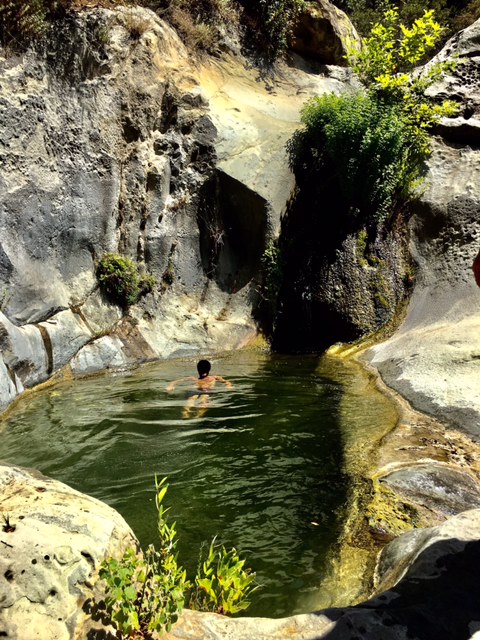
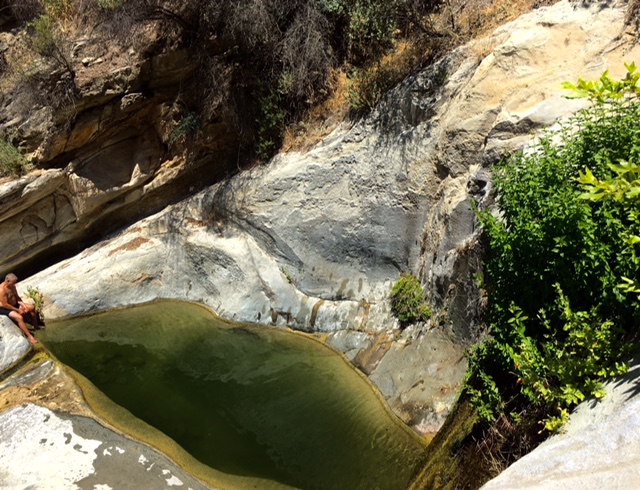
My dad and uncle first stumbled upon this swimming hole over 50 years ago when out exploring the wilds of Santa Barbara County, a favorite family hobby.

They knew not what they might find that day so long ago, but went anyway with not so much as a hint from anybody that a cool emerald pool awaited them out there in the forest after a hot sweaty trek.

August 2018

On a hot summer day we sat poolside smoking Cuban cigars and listening to the blues, the two elders telling tales of meeting tobacco farmers in Cuba and enjoying the fruits of their labor.

They told of learning from the farmers how they dried and cured their leaves over the course of a couple of years; of visiting the drying sheds; of sitting in their humble homes; of chickens standing on kitchen tables beside makeshift wood-burning stoves; of a farmer withdrawing from under his straw mattress supple, golden-brown cured personal stash pressed between sheets of newspaper and hand-rolling cigars of exceptional quality for their indulgence.

These stories were those of travelers that went out to find for themselves lively experiences, not tourists having been led to trendy traps detailed in books and articles with explicit directions. That’s personal acquaintance. In that grows a deeper appreciation. It’s to love rather than merely like. And one begins to know something of the essence of true place.

Once upon a time many decades ago in a similar vein, these two adventurous travelers had set out and found for themselves this liquid gem we now enjoyed on a sunny summer afternoon, somewhere yonder deep within the wilds of Santa Barbara County.

It’s the old swimming hole. Where relaxation is found, fun had and memories made.

Posted in Santa Barbara | Tagged , , , , , , , , , , | 6 Comments

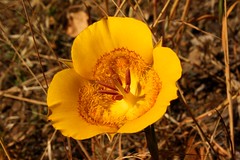
Fire Poppy (Papaver californicum)

Great Scott! He’s found it.

Our indefatigable wanderer of lands of lesser interest, fumbling, bumbling, stumbling his way onward deep within the myriad folds of the wildfire wasted, drought stricken, flash flood ravaged Santa Ynez Mountains, having mustered the resolve and endurance to grimly persevere while laboring under the slight strain and insignificant suffering of various minor and unremarkable ailments and injuries to toes, feet and one knee, has nevertheless heroically triumphed in the face of such adversity and managed to locate the fleeting and ever elusive fire poppy, Papaver californicum.

Also known as the western poppy, but that doesn’t sound as cool, does it? And nor does it appreciate this peculiar poppy’s relationship with flames.

The fire poppy is often said to grow only after wildfire burns the land, hence the name. Perhaps that makes this particular endemic annual uncommon if not something of a rarity.

Whatever the case may be, it’s certainly not seen anywhere near as often as most other wildflowers in Santa Barbara County. The fire poppy is not a flower that one can plan a future outing to see during any ol’ spring and be guaranteed to find fields of them like California poppies.

Although with the significant increase in anthropogenic wildfires in our region, this may be less true today then in decades past. One wonders if humanity is aiding in the increase or expansion of the fire poppy’s otherwise relatively small population or at least bringing them to bloom more frequently than would otherwise happen naturally.

Core samples from the Santa Barbara Channel suggest that over the last 600 years large wildfires burned about every 65 years.

So presumably, having coevolved with fire, the tiny fleck of a seed from this tender small plant can lie about on the dry and hot forest floor, in this land of long summers and so little rain, for decades on end before then surviving the intense scorch of wildfire, and finally sprouting.

That’s an impressive feat. I can hardly last a day hiking out there in Los Padres National Forest.

This presumption on my part about the longevity of poppy seed appears to be true. In 1999, the Goat Fire burned 300 acres on Catalina Island off Southern California. Following that incident fire poppies were documented for the first time growing on the island.

The seeds had apparently been lying dormant for an extended period of time before being triggered by the fire. There was no prior record of their existence on the island.

Extreme heat and scarification of the seed coat trigger the sprouting of certain types of plants that generally grow after a wildfire. The fire followers or fire ephemerals, as these plants are sometimes called, because they pop up for a brief dance in the sun after fires, then disappear for extended periods of time until the next blaze arrives.

These sorts of events may perhaps break the dormancy of fire poppy seeds, but there is another much more interesting phenomenon which might better explain why the poppies grow after fires.

The burning brush and trees of a wildfire produce chemicals found in smoke that regulate plant growth known as karrikins, which are deposited on the surface of the soil. When watered in by seasonal rains karrikins stimulate rampant germination and vigorous seedling growth.

The Santa Ynez Mountains and San Ysidro Creek canyon above Montecito following the Thomas Fire, as seen on January 11. Montecito Peak is the prominent point seen frame right.

On another note that may also be of interest, these particular poppies featured here sprouted with the epic rainstorm that hit Santa Barbara County in the early morning hours of January 9, 2018. Recall that in my last post way back on January 8, I noted the following:

. . .as of this moment now, 10:34 1-08-18, it is expected to rain quite a bit. Evacuation warnings have been issued for areas burned in recent wildfires like the massive Thomas Fire as flash flooding is expected. Several inches at least are expected.

Estimated at its greatest intensity, the downpour dumped about a half an inch in five minutes and three-quarters of an inch in 15 minutes in the mountains immediately above town. Anywhere from about two to three inches of rain fell on January 9 alone. And anywhere from four to eight inches fell between January 8 and 10 in the greater region.

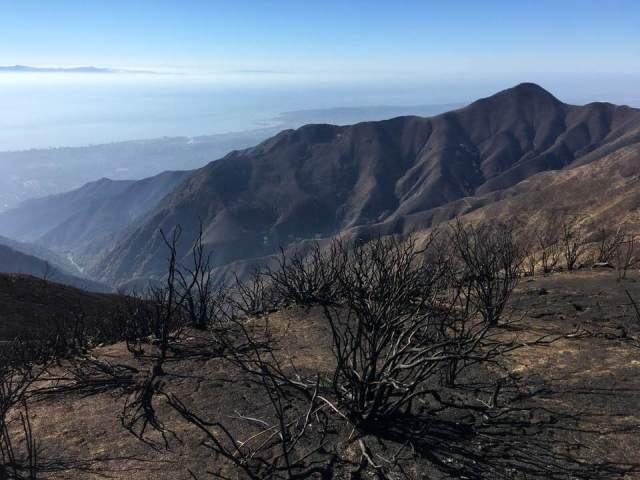
The rain fell hard on the Santa Ynez Mountains which had been left bald from the Thomas Fire the month before, as seen above. The water hit the firehardened hydrophobic soil and rushed off the 3,000′ slopes with virtually nothing to slow it down and no absoprtion.

These conditions resulted in a deluge of runoff which ripped down the canyons, overflowed creeks by some 30 to 40 feet as I’ve seen on recent hikes and then flushed out into residential neighborhoods in a wave estimated to have been 15 to 20 feet high.

This was the rain event that led to the Montecito Flash Flood or mudslides or debris flow, as it’s alternatively been called, which killed at least 21 people and destroyed at least 500 homes.

Montecito looked similar to a war zone afterward. The power and force of the flood is incomprehensible to me. The destruction it wrought is shocking in the true sense of the word. I return to the damaged sites months later and stand in silence no less stunned.

No words I could possibly scrounge up and string together can appropriately convey what it looked and felt like in the aftermath or even still to this day, and I’m not a survivor; I was safe and sound that night.

I do not wish to make a clumsy attempt at describing what Ive seen so I will simply just say this: It’s a four fingers placed to a quavering mouth with wide eyes sort of thing.

Maybe a real writer might come close to relating something of what it feels like, what it looks like, what it sounds like. So if you wish, you might read what local novelist TC Boyle wrote about the incident: The Absence in Montecito by T. Coraghessan Boyle.

Anyway. . .

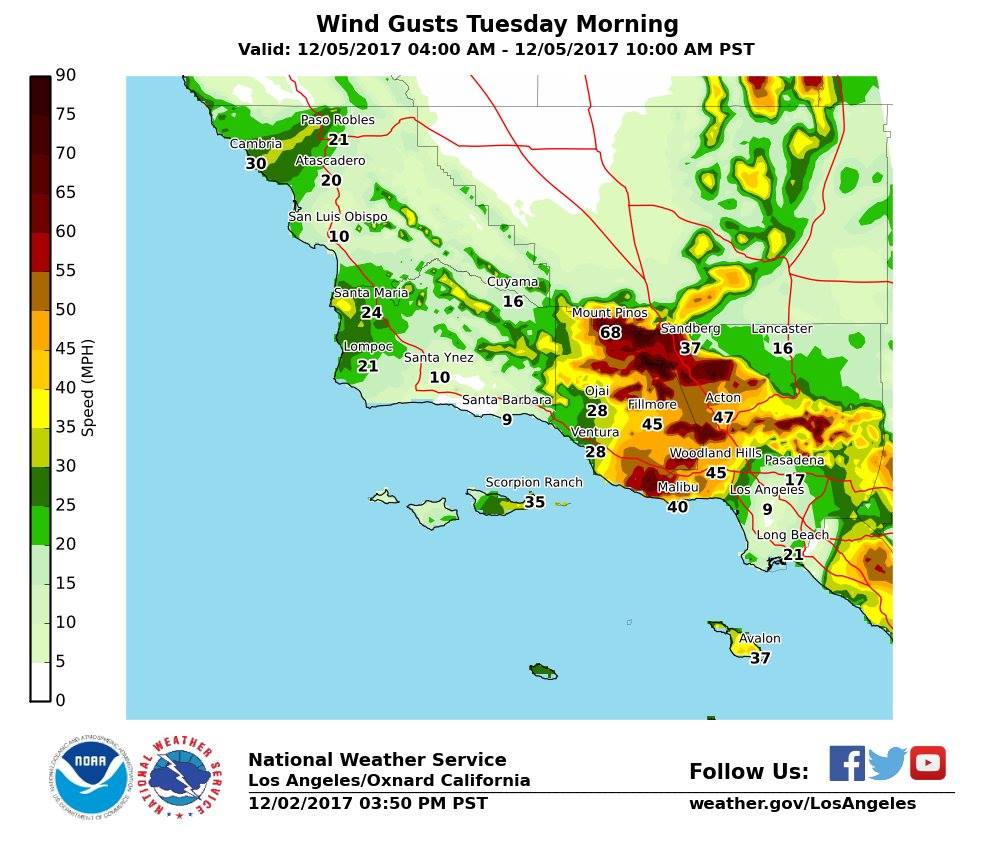
Notably, fierce Santa Ana winds had whipped up the same evening the Thomas Fire had been ignited and right where it had started in early December. The strong, warm and dry winds had pushed the fire at incredible speed over drought desiccated land and helped turn it into the state’s worst conflagration on record.

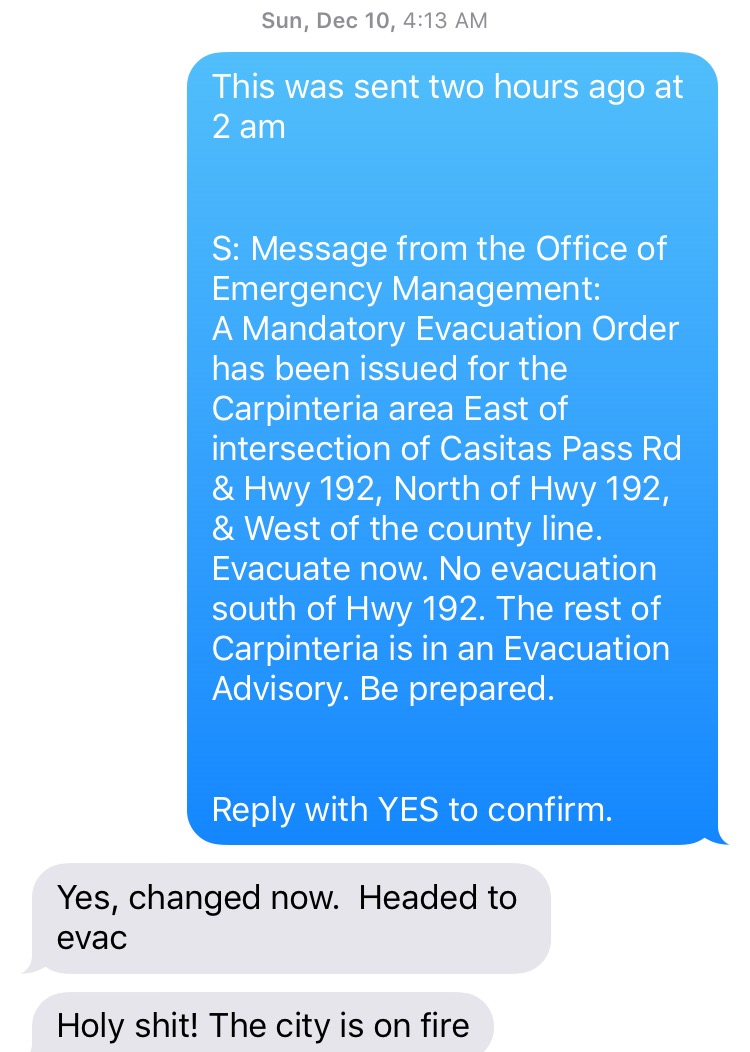
We had to evacuate at four in the morning at one point. Here is a text I sent my wife and her “Holy shit!” response: Mandatory Evacuation Notice.

Then the next month in early January the aforementioned rain storm hit with a vengeance no less wicked than those winds.

And the most intense rainfall, of all the places in the entire county it could have happened, was centered in the bald mountains directly above Montecito.

From the ugly and powerful destruction of those ashes and flood waters rose the tender beauty of these fire poppies.

Click HERE to see a NOAA graphic of the wind and HERE to see a NOAA graphic of the rain. The odds of those events happening must be astronomical.

Reference:

Joan Easton Lentz, A Naturalist’s Guide To the Santa Barbara Region

Catalina Island Conservancy

Posted in Santa Barbara | Tagged , , , , , , , , , , | 10 Comments

The Summer Microburst, September 3, 2017

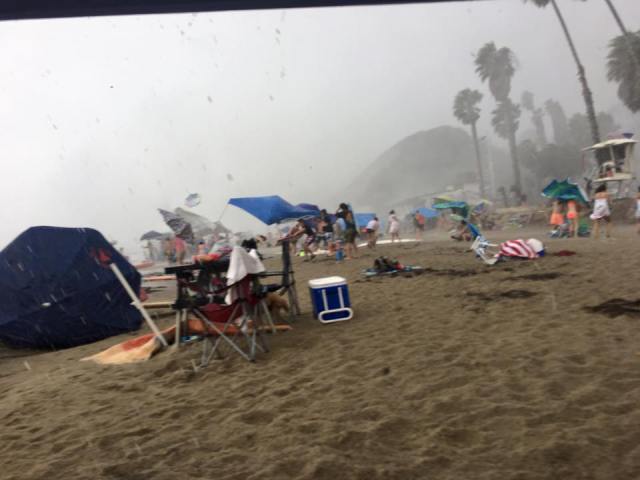
Looking out from under the shade canopy. Note the umbrella in the air in the distance for some sense of the action and all the dark dots of palm tree debris even higher overhead and the bend in the trunk of the largest tree. That’s some wind!

“I’ve come to know that the white mind does not feel toward nature as does the Indian mind, and it is because, I believe, of the difference in childhood instruction. I have often noticed white boys gathering in a city by-street or alley jostling and pushing one another in a foolish manner. They spend much of their time in this aimless fashion, their natural faculties neither seeing, hearing, nor feeling the varied life that surrounds them. There is about them no awareness, no acuteness, and it is this dullness that gives ugly mannerisms full play; it takes from them natural poise and stimulation. In contrast, Indian boys, who are naturally reared, are alert to their surroundings; their senses are not narrowed to observing only one another, and they cannot spend hours seeing nothing, hearing nothing, and thinking nothing in particular. Observation was certain in its rewards; interest, wonder, admiration grew, and the fact was appreciated that life was more than mere human manifestation; that it was expressed in a multitude of forms. This appreciation enriched Lakota existence.”

Luther Standing Bear, “Land of the Spotted Eagle” (1933)

Let me tell you about the last time it rained in Santa Barbara, because it never rains in Santa Barbara.

It will not rain.

It has not rained.

It may never rain.

On this particular summer day, however, it rained with a vengeance.

The clouds unloaded a deluge that dropped from the sky as if thrown from a giant bucket. The torrent hit the beach with a violent burst of wind that sent people fleeing for cover and left small children crying.

I was at The Pit, otherwise variously known as “Hendry’s” or “Arroyo Burro Beach.” I was there all day. I watched the storm build, and build, and build.

Some people, dangerously oblivious to their surroundings and utterly lacking any sense of situational awareness, have said the storm blew in without warning.

Plenty of warning signs were provided to the observant spectator of nature’s game, I’d say.

But it appeared most people’s senses this day were “narrowed to observing only one another.”

One local media source reported this as a “massive storm” with “massive rain.” Checking the county webpage for rainfall one will see that this brief down pour measured about 1/4 of an inch.

Weather that day, despite mixed high patchy clouds, was excellent. The beach was packed with people enjoying yet another exceptional Santa Barbara summer day. September here is typically the best summer weather of the season.

Yet, dark lumpy clouds began condensing ever more thickly over La Cumbre Peak in early afternoon. Standing in the sand at The Pit one can see the peak through the cleft in the rolling hills between Hope Ranch and the Mesa. The weather noticeably changed.

The mountains eventually vanished from sight behind a fuzzy gray depthless curtain, the typical cloudy look of rain showers seen from afar.

The rain front rolled over the city in due time, spreading from the mountains, over the foothills and out over the coastal plain.

I watched this play out for probably at least 30 minutes, but maybe closer to an hour as I played with the kids.

Then as the rain front blotted out the city a huge rain cloud began building over the Mesa’s Douglas Family Preserve which sits stop the coastal bluffs overlooking The Pit. This cloud was one of the blackest, wickedest clouds I have ever witnessed. That’s not saying much, but it was certainly a rarity around Santa Barbara in summer on the beach.

I pointed to the menacing cloud a couple of times, told the kids it was about to unload a downpour like they’ve never seen. All of their young lives thus far had been lived during the drought, their sister just three years older having been too young as a toddler to remember the few years she had lived before the record dry spell. They hardly know rain.

To rain at the beach in summer on what was not long before a nice day, after years of withering drought, well this was something to see.

That they feel the varied life that surrounds them.

Everybody else, so far as I could tell, were oblivious. Or perhaps I was oblivious to them. Whatever the case, there must have been at least a few other people who had some idea about what was to happen, but in general everybody seemed clueless.

Then the cloud broke open and its guts fell out, dumping a torrential burst of rain onto the beach and drenching everybody within seconds.

It was awesome.

The crowd went frantic and chaos ensued.

Having seen the coming storm approaching, I had pulled down the shade canopy to its lowest height, and I was holding onto the frame underneath like a monkey hanging from a branch to keep it anchored from the wind I knew was to hit.

People ran from the beach to the parking lot, abandoning their possessions as they made futile efforts to avoid getting wet while they all got drenched. A couple of people sought shelter under my canopy before giving it up and shuffling off into the windy downpour.

I howled with enthusiasm, cheering on the storm like a spectator in the stands watching a sporting event. The kids were awestruck and wide-eyed.

The wind blew down the canyon through which the creek flows from along Las Positas Road, hit the beach parking lot and ripped through the palm trees tearing large clumps of old dried fronds from their trunks sending them flying like spears and projectiles.

A second later the wind slammed the Boathouse Restaurant like a terrible backhand sweeping anything loose and light enough into the air and thrashing other items against the glass curtain that surrounds the outside dining area. In a split second diners went from enjoying a meal to being soaking wet in the midst of a dangerous squall.

The gust took up huge shade umbrellas from the restaurant and threw them into the ocean like tiny cocktail adornments, carrying them away some thirty yards or more. Everybody’s umbrellas and shade canopies on the beach where thrown into the air, tumbled and twisted up or tossed into the Pacific Ocean.

Some people screamed out in terror. Children cried. People ran from the beach in a duck like soldiers boarding a helicopter.

I was enjoying the spectacle, holding down my canopy. People must have thought I was a lunatic hooting and hollering.

Looking over the beach immediately after, the place was strewn with towels and coolers and busted up umbrellas and canopies that were twisted up like pretzels. It looked like a bomb went off with debris scattered everywhere and people wandering around in a daze.

Clint Elliott tells me of seeing the after effect of a microburst in the forests of the Pacific Northwest. The downdraft hits the ground with such a force that it flattens huge patches of trees.

The beach cleared out with only a small number of people remaining when just a few minutes before it was a crowded summer day. Some people left their things never to return.

Hours later there was still abandoned property left in place and trash strewn about. People were reporting left items to the lifeguards. The lifeguards were cutting up the twisted corpses of shade canopies and umbrellas with electric saws and hauling them to the dumpster on their ATV. Restaurant employees were hauling their umbrellas out of the sea.

Then as the chaos subsided, and the clouds began to break up, and the sun once more showed, and we few die-hard Pit Locs chatted among ourselves about our experience, Arroyo Burro Creek began ever so slowly swelling with runoff.

The creek had been dammed up as a shallow pooled slough behind a sand berm, as is typical. I first noticed water having slyly rolled over dry sand. Instead of the damp line spreading out from the edge of the slough, dry sand began right where the water stopped.

Despite the intensity of the rain shower it was brief and momentary, and I was surprised to see the now departed storm reflected in the rising creek. Yet here I watched as the water slowly rose and eventually later that day broke through the sand berm and drained into the sea.

After five years of epic drought, the rare summer rainfall was a treat. And the way it blew in was a special experience.

‘Twas a scene to behold, not an ordinary day.

Nature, and the people.

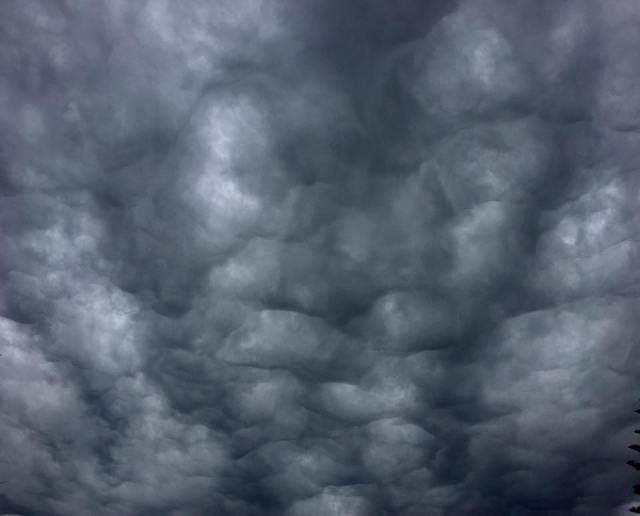
Clouds that did not rain on November 16, 2017.

(Postscript: I hacked out a few words of this post months ago then promptly got distracted by other priorites. Recently as I pulled it out of the drawer it still had not rained and there was no rain in the extended forecast. Hence the opening lines. However, as of this moment now, 10:34 1-08-18, it is expected to rain quite a bit. Evacuation warnings have been issued for areas burned in recent wildfires like the massive Thomas Fire as flash flooding is expected. Several inches at least are expected.)

Posted in Santa Barbara | Tagged , , , , , , , , , , | 9 Comments

From Graffiti to Graffito, Trash To Treasure

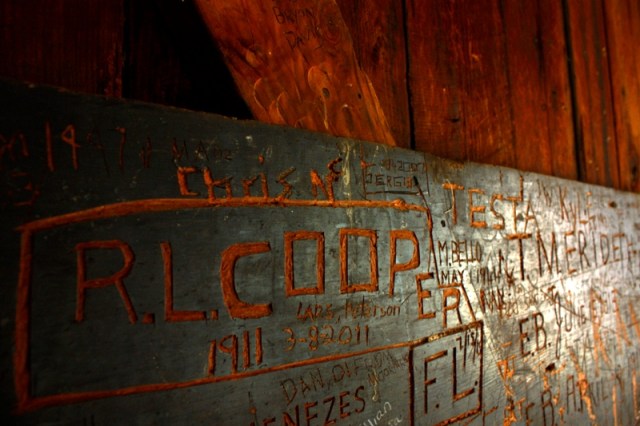
Manzana Schoolhouse Ran Rafael Wilderness Los Padres National ForestThe old black board inside Manzana Schoolhouse, a free-for-all graffiti panel. (Manzana Creek Schoolhouse Circa 1893)

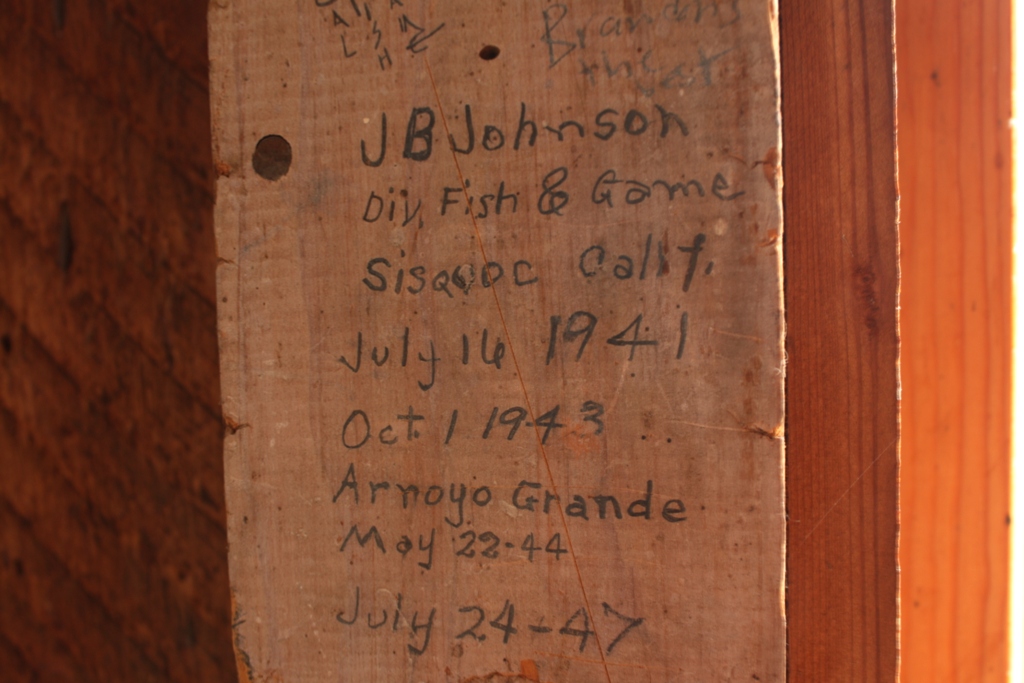
Inside the old Manzana Creek schoolhouse within the San Rafael Wilderness of Santa Barbara County one hundred years worth of names and dates cover the walls. R.L. Cooper carved his name and date into the blackboard back in 1911 and one hundred years later, long after the building was officially designated an Historical Landmark, Lars Peterson added his mark.

The initials and dates are crudely rendered and commonplace, but I enjoy reading over the oldest of them. They are an intriguing piece of history.

I’m not sure where the line is, the specific year or decade, but I hate the newer dates. It’s a contradiction I find interesting.

How long does it take for something to turn from trash to artifact, from graffiti to treasured piece of history?
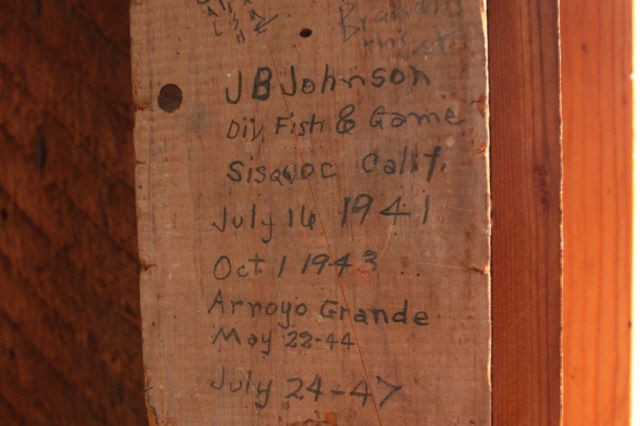
Manzana Schoolhouse San Rafael WildernessOne of many scribblings on the interior of Manzana Schoolhouse.

Canyon de Chelly White House ruinssWhite House ruins, Canyon de Chelly, Arizona

The cliff of solid sandstone loomed over us, a massive bulging lithic forehead, dark water stains trailing like beads of sweat down its face. We stood on the canyon floor on a sandy bench beside the wide and shallow stream, the puny presence of humanity amid a land of gargantuan geological features, gazing up at the ruins of Anasazi cliff dwellings built sometime between 350 and 1300 A.D.

Wanting to gain a better look at the buildings far overhead that were once accessed by ladders, Clint Elliott and I tramped across the creek to the other side of the canyon and picked our way up a rocky slope directly across from the ruins.

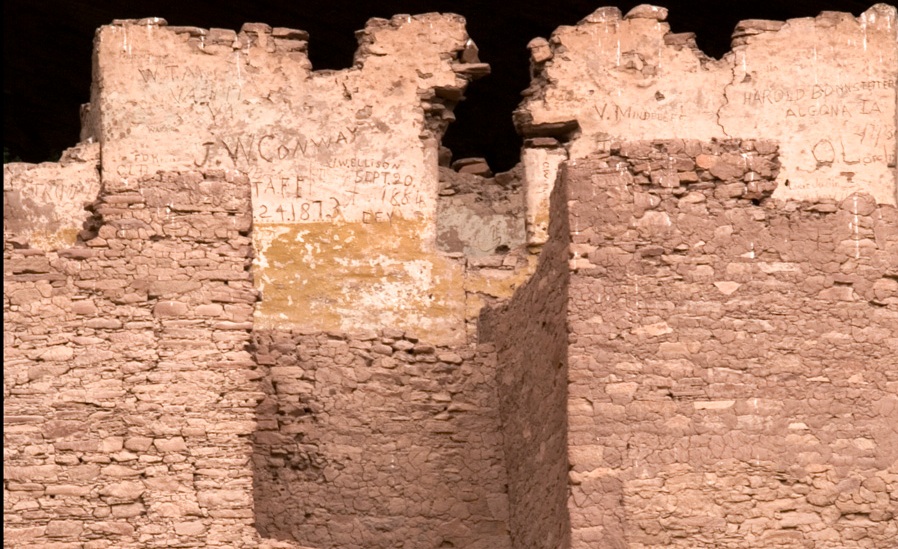
With a telephoto lens we could see names scratched into the side of a wall dating from the mid-nineteenth century, the handles of white American men that had passed through the canyon for some unknown reason, cavalry soldiers, perhaps, or cowboys or drifters of other sorts. Who now could possibly know?
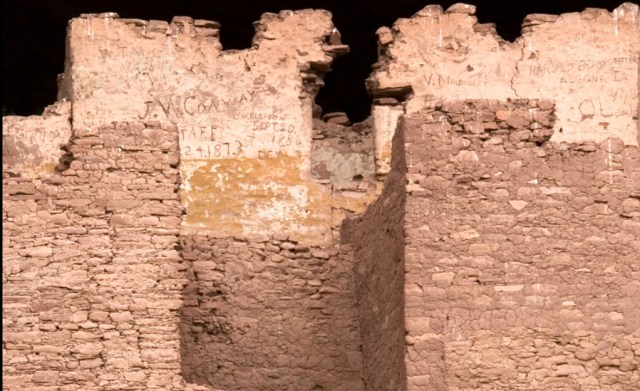
Canyon de Chelly White House ruinsNames and dates carved into a wall of White House ruins in the late 1800s.

While the names and dates are, or at least were at the time, the work of vandals who defaced an archaeological site, gazing through the lens at the inscriptions I felt nearly as much a sense of interest, curiosity and appreciation for the letters and numbers as I did the ruins themselves.

Rather than taking away from the ruins the names added to them. Rather than viewing them as a transgression perpetrated by disrespectful people, I looked at the graffiti as another piece of American history holding its own particular value and hinting at its own unknown story, which is no less a part of the region’s past events then are the ruins.

Yet, if I were to see a new name carved beside a recent date, say for example, J. Elliott 2004, it would anger me. If I were to run across a person in the act of carving their name into the wall I would probably confront them, and likely without exercising much if any leniency, understanding or tact whatsoever. Such is my irascible nature.

Though were I somehow to return 150 years later the same hypothetical inscription would take on an entirely new meaning and value. The scratchings would cease to be vandalism and would have matured into an artifact. If not in 150 years then surely after 500 years. At some point, after enough years had passed, the marking would become a treasured piece of history.

rock art pictograph vandalism graffitiA remnant Native American rock art panel in San Luis Obispo County whereupon somebody deeply carved into the sandstone: “Geo Lewis Nov 5 1903.” Judging by the superficial scratch marks crisscrossing over the name, some people clearly do not appreciate the carving, as might well be understood. But what if the pictograph was painted by Indians in the year 1200 and the date carved by a European explorer in 1303? Would they feel the same? 4000 BC and 3003 BC?

In a previous post, Upper Santa Ynez Camp Vandalism, I mentioned seeing some recent vandalism at a backcountry campsite. Somebody carved “Amber and Dad” into an oak tree. Seeing the fresh, reddish hued carving emblazoned into the oak bark angered me. It was not there on my last visit the previous year.

I ran my fingers over the ugly scar trying to understand why Amber and her dad would do such a thing. I shook my head, lips pinching tight, thinking of the sort of family values that would lead the two to such selfish, disrespectful and inconsiderate actions.

I must confess, however, that as wayward youth I had done similar things. So did Eddie Fields, as noted below. And oddly, in some way, I’ve thanked Master Fields for his vandalism.

eddy fields initial manzana creekThe “F” carved by a young Eddie Fields a century ago.

I do find older such markings as noted above interesting. In fact, not only do they not anger me, I actually purposely seek them out, hiking miles to see them and ponder the life and times of those that left their marks.

Along Manzana Creek in San Rafael Wilderness Eddie Fields carved his initials into an oak tree some 100 years ago, yet if somebody carved a fresh name beside those old initials I would be angered. (Eddy Fields’ Initials, Manzana Creek Circa 1900)

Are not markings left by American settlers and pioneers a valuable piece of history? Should they not be legally protected like “objects of antiquity” as the American Antiquities Act of 1906 reads? At what point do these cease being vandalism and mature into something of value worth preserving?

Although by today’s mores and social norms, and under current law, many of these same actions are frowned upon or illegal and punishable by fine or imprisonment, by some, admittedly twisted, strain of logic, if I were to prevent a vandal from adding his mark to a tree or a rock, then I’d be depriving future generations of some sort of artifact.

This may sound ludicrous, but consider an example to illustrate the point.
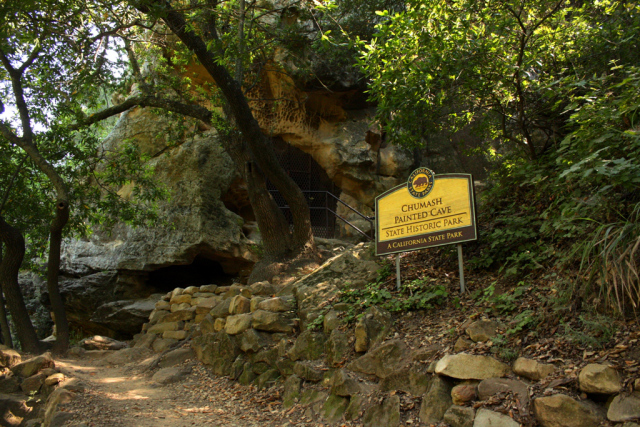
Santa Barbara Chumash Painted Cave State Historic ParkChumash Painted Cave State Historic Park
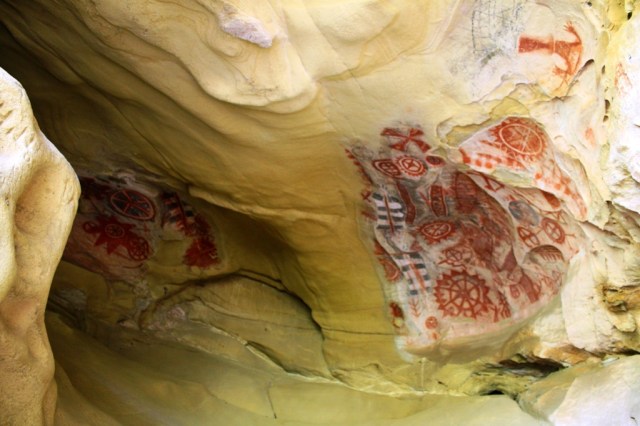
Santa Barbara Chumash Indian Painted Cave Santa Ynez Mountains

Santa Barbara Chumash Painted Cave rock art pictographs

“The pictographs at Painted Cave are in no sense ordinary or typical of California rock art. The complexity of subject matter, the vivid use of colors, the semi-abstract visualizations executed with great care and intricate detail, and the condition of the paintings all lead scholars to rank this site as being among the finest examples of its kind left by Native Americans in the western United States.”

Travis HudsonGuide to Painted Cave, (1982)

“Cabrillo’s description of the Chumash of the Santa Barbara mainland is the oldest ethnohistoric document concerning California Indians.”

Robert F. Heizer & Albert B. Elsasser, The Natural World of the California Indian, (1980)

Would not a name and date from the 16th century carved into sandstone bedrock by an early Spanish explorer in California be a valued piece of history worth preserving? Would it not be legally protected in the same vain as an “object of antiquity”?

Imagine if Portuguese explorer, Juan Rodriguez Cabrillo, had carved his name into a boulder on the beach at the seaside town of Carpinteria to mark his arrival along the Santa Barbara coast. Undoubtedly the site would be marked with an official plaque at the least if not legally protected and listed in the National Register of Historic Places.

What if the initials and date, “JR Cabrillo 1542,” were carved alongside the rock art in Chumash Painted Cave State Historic Park in the Santa Ynez Mountains above Santa Barbara?

Would the mark somehow be less valuable or less important? Would people dismiss it as graffiti and scratch it out?

I suspect it would be a feature which visitors would purposely look for in the cave and be sure to see for themselves, and that any pamphlet or signboard about the site would mention it.

Were somebody in 2012 to scratch out that marking, would they not be legally liable for defacing a treasured piece of history?

If not codified in law would it not at least be a relic valued by contemporary culture, and the vandal that destroyed it despised?

Is it time that renders such things valuable?

Or the social or historic standing of the particular person that created them?

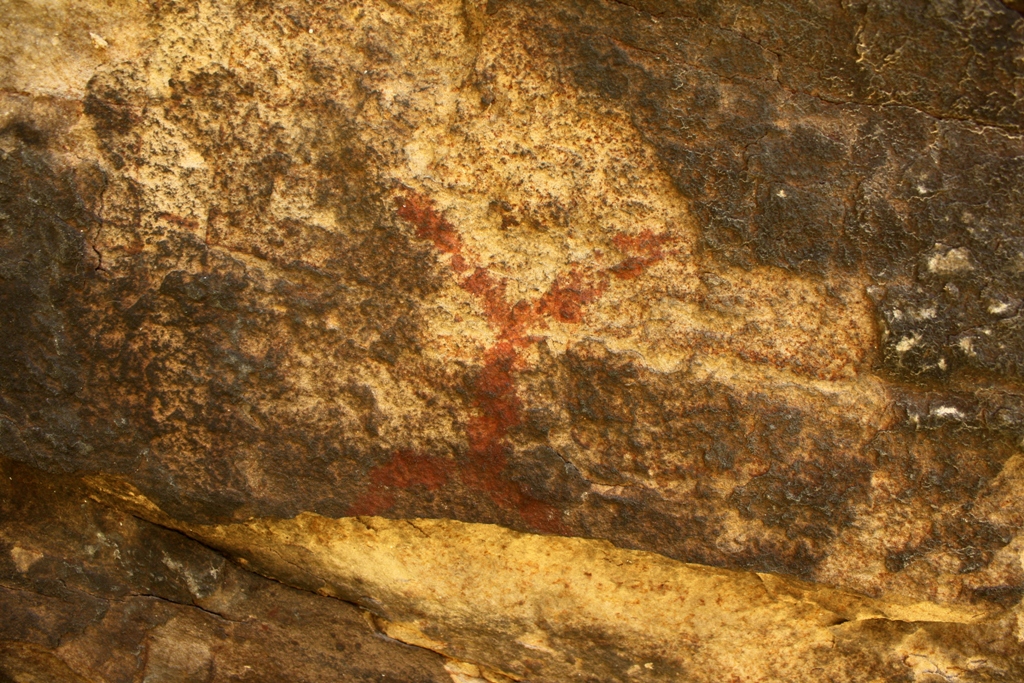
Happy Hunting Ground Chumash Indian pictographs rock art San Rafael WildernessA remnant of a Chumash pictograph found along a trail in the San Rafael Wilderness.

Such telltale traces of times past abound in the southern Los Padres National Forest. The oldest can be seen in the form of pictographs and petroglyphs painted on and pecked into the walls of sandstone abris and other rock surfaces by the historic population of Chumash Indians.

What makes lesser, by their own cultural standard, specimens of Chumash rock art something precious, but the skilled work of a contemporary graffiti artist rendered on a cave wall vandalism?

Some of the pictographs found in the forest appear to be little more than hastily applied smudges of monochrome paint. They took no appreciable degree of skill or time to create relative the finer works found at other Chumash sites. If in their relative red ocher hued crudeness there is no aesthetic value or exposition of exceptional talent and ability or remarkable cultural expression, then it seems that the passing of time is the sole metric by which the art’s value is judged.

One might reasonably object to note that rock art paintings are priceless relics from a lost culture.

While that is true and certainly lends a significant degree of value and importance to the pictographs, if not representing their value entirely, it is hard to imagine that had historical events taken a different course, and today there remained a vibrant and fully functioning society of full-blooded Chumash still practicing their traditional culture, that these prehistoric traces left by their ancestors would in some way be devalued or less protected.

This seems to beg the question: Why then is it not acceptable for other peoples to begin their own rock painting traditions?

Chumash rock art pictograph santa ynez mountains santa barbaraRock art in the Santa Ynez Mountains of Santa Barbara County. Channel Islands National Park is seen along the distant curiously sloping horizon. Apparently your cell phone snapshot taker here was a bit off kilter this afternoon. (EDIT: 12-6-17 See comments regarding authenticity of this pictograph.)

Would society accept new and continued painting of rock surfaces throughout the forest by contemporary Native Americans? If so would that acceptance extend to people of all ethnicities?

One might argue that these hypothetical full-blooded contemporary Chumash should have the sole right to create pictographs because they would merely be carrying on old traditions. But they did not always paint rock surfaces. It surely cannot have been a practice without a beginning. There must have been a period of time when their ancestors did not paint rocks.

Yet it seems plainly evident that people today would never be allowed to start their own rock painting traditions. And it’s hard to imagine even a master artist being granted such permission.

As we’ve seen in one case, a lady that drew and painted images on rocks in at least seven national parks was banned from the parks for two years, sentenced to 200 hours of community service and made to pay restitution. (LA Times: Woman who defiled national parks with graffiti banned from 524 million acres of public land)

EM Walker Chorro Grande 1901 Rock CarvingA sandstone boulder in the Sespe Wilderness, whereupon somebody carved the date “1901.” I would photograph this rock, too, out of an interest for relics in the forest. But a name carved into a nearby rock with the date 2001 would anger me and I would never take a photo of it.

Photo ©EM Walker (Hat Tip Mr. Walker. Check out his weblog, The Los Padres Expatriate Hiker and his vintage photo collection featuring the southern Los Padres National Forest.)

I am not advocating anybody start painting or chiseling rocks out in the forest. I’m merely pondering the matter.

Time renders many things, including vandalism and graffiti, important and of some value when enough of it has passed. Even litter turns to treasure.

What gets a person a $1000 dollar fine for littering one year, fifty years later becomes an artifact protected by law, and the person that removes the trash, lest they have a special permit, subject to a fine similar to the one who originally carelessly threw it out.

Had director Cecille B. DeMille not littered the Guadalupe-Nipomo dunes of Santa Barbara County with the remains of the movie set from his 1923 production, “The Ten Commandments,” but instead cleaned up and thoughtfully disposed of the garbage properly, then archaeologists wouldn’t be excitedly excavating the trash heap at this very moment as I write, and there would be no international headlines celebrating the “find.” (UK Sun: Sphinx head discovered beneath sands of California blows dust off one of the greatest stories of extravagance in Hollywood history)

Even trash becomes treasure at some point.
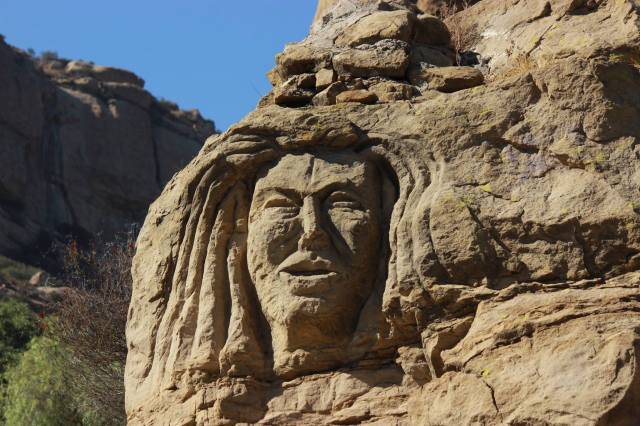
Santa Monica Mountains. “Looks like a felony to me,” said my uncle.

Posted in Uncategorized | Tagged , , , , , , , , , , | 6 Comments

Beachcombing Venice, Italy

art-noveau-ceramic-venice-italy

We wandered Venice, Italy threading our way through the narrow canyon-like alleyways of urban stonework. We knew not where we were but on the island.

A visitor doesn’t have to concern herself with getting lost on a small island as she would in a major continental city, and the insular containment offers a sense of security and freedom to roam without worry.

And so we did wander without any idea where we were headed or where we’d end up, the uncertainty and unfamiliarity an invigorating elixir of emotion.

To the outskirts of town, the edge of the island, past boarded up beachside buildings, the garden nooks overrun in rank windblown seed sprouts, fences netted over in spindly vines.

See the beach on low tide. The darkened oily-looking and algae-covered cobblestones and the easy ripple of seawater lapping the Venetian shoreline.

Onto the rubbly beach we stepped, picking our way over the exposed stony seafloor, human egrets stepping measuredly across the rounded rocks, heads angled downward, eyes scanning nooks and crannies for quarry, ready to strike out with a hand and snatch up what treasure might be found, the objet trou.

Therein the gravel filter of the seashore held a collection of hundreds of years worth of urban debris. A circular-shaped blob of clear glass stamped with a company or makers’ name and a date of 1812. It appeared to have once been attached to a handblown bottle, perhaps old fine wine, I mused.

A small water-worn vessel covered in a fine coating of slime. I bent, grabbed and held aloft the fine piece of vintage ceramic. Wiping the mossy growth away I could see the organically inspired curvilinear letters composing the phrase, “Drink Love.” Judging by the shape of the handicraft and the font I supposed the piece to be about one hundred years old, dating back to the era of Art Nouveau.

Those were the souvenirs for the trip, with sentimental value and backstory, thus better than anything bought in one of the many storefront tourist traps in town, as beautiful and grand as much of the work may be, such as Murano glass.

And there the objects rest. The hodgepodge. Scattered across the tops of shelves, piled in an old hand-hewn sandstone bowl and jumbled in a little wire and glass case. Each  piece tells a story. Pages in the novel of a life. Lifted from a dusty garage shelf each item starts the play of a memory of some moment had somewhere some years ago.

Were it not for the found object there may well be no recall of that moment of life. Were I to throw it out the memory would fade and disappear. Gone as if it never happened. I hold on to the object to hold on to my life.

Posted in Italy | Tagged , , , , , , , , , , | 2 Comments