A Treasure Hunt For Chumash Pictographs and the Vicious Protector

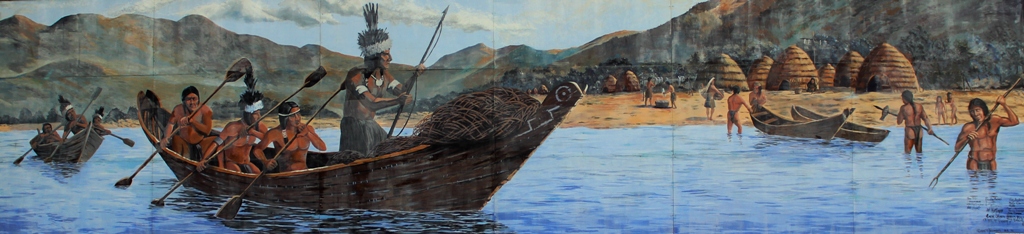
Chumash maritime culture fishing scene mural Lompoc Santa Barbara CountyA mural in Lompoc, Santa Barbara County depicting a seaside Chumash village scene.

Little of what Bill said made reasonable sense.

He stood on the other side of his termite infested, dry-rotted, wobbly fence, which was missing slats and had gaping holes, saying that the reason he would not allow us on his property to view a Chumash pictograph panel was because he was protecting it.

He was, in his own words, “a vicious and violent protector.” He was calm and peaceful and obviously being hyperbolic or perhaps his sense of humor was as bone dry as the surrounding landscape. Maybe despite his serene demeanor, however, he really was a mean animal if provoked. “I don’t own the rock art,” he said. “I’m just a temporary protector of it.”

In the grand scheme of things, in a philosophical sense, he was correct. The art may be on his private property, but his life is short, fleeting, a mere speck in time relative the universe. Nobody really owns anything, by that measure, but are only temporary caretakers for the short period of time during which they exist on this planet. Ownership is a legal abstraction, a man-made concept that exists only in the human mind.
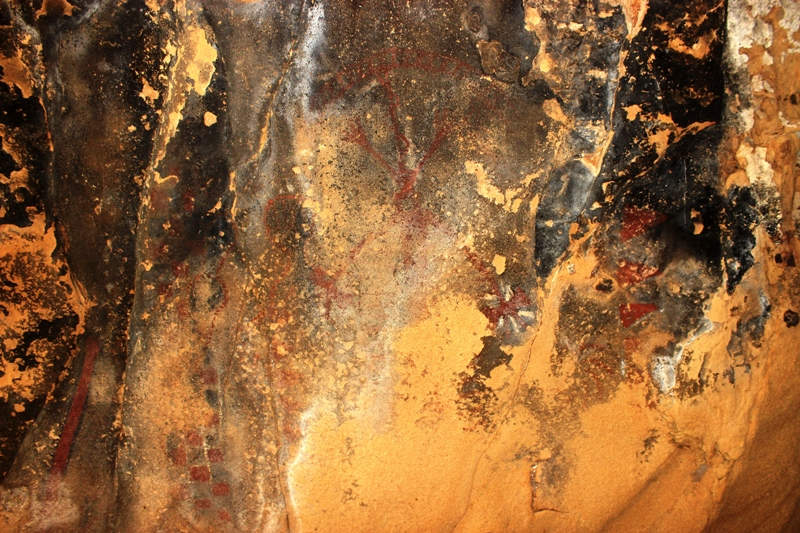
Chumash Indian Rock Art Pictograph Santa BarbaraA Chumash rock art panel in the Santa Barbara backcountry holding one of my all-time favorite design elements, which is seen here in the top half of center frame.

Chuck took the lead in trying to break through the armor plated steely resolve Bill represented. From this angle and that angle he attempted to gain access but was met each time with steadfast denial. He tried this. He tried that. And it went on from there. What if we never tell anybody? No. What if we promise, take a solemn oath, never to post photos of the site online? No. What if we don’t take any photos? No. How about just a quick glance? No. No. No.

Ten minutes prior to this fence line standoff, Chuck had spotted Bill in his driveway and approached him to ask if by chance he knew the location of the pictographs. We had been hopping around a pile of boulders, across the road from Bill’s house, looking for the treasure we had driven some distance to search out and find by way of a few scant clues. The boulders seemed an unlikely place, their location did not match the one telltale clue we had clung to all afternoon in our questing, but we were running out of ideas and so we checked anyway, and then Chuck saw Bill across the street.

Bill had played dumb. “I’ve heard that there is supposedly some Indian rock art somewhere around here but I’m not sure where it’s at.” I had been laying a few yards away under the canopy of oak trees on a boulder in the shade, enjoying a brief respite from the heat and the previous few hours of fruitless hiking. Chuck had chatted with Bill for some five minutes before we hopped in Chuck’s car and returned back up the small residential lane a second time for a final attempt to locate the sought after site.
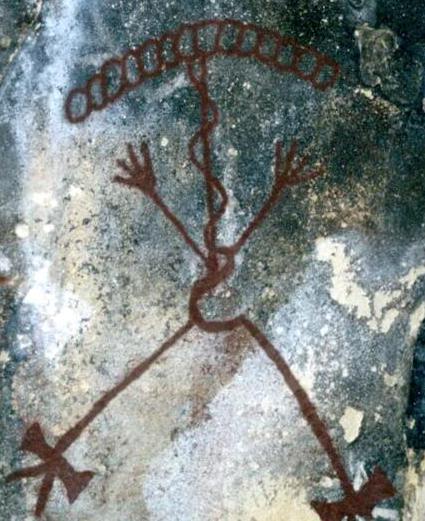
Chumash Pictograph DesignA touched up version of the design element noted and shown in the previous photo. This is a redrawn image that enhances the design and relatively accurately conveys the general sense of the original artwork, but is not an exact representation.

After some two hours, maybe three or more even, of hiking up and down and all around a fully exposed, all but shadeless, hot south-facing mountainside in the summer swelter, we had one last option to investigate. The option, like the boulder pile across from Bill’s house, did not match the aforementioned clue, and so we had not pursued it earlier, but we had no better ideas at this point.

We headed downstream, or more properly described, down a small dry drainage channel that funnels runoff down the mountain during periods of significant precipitation. It seemed unlikely we would find here what we had already expended so much energy searching for, but it was our last hope before admitting failure for the day and heading home.

Twenty to thirty yards down the narrow drainage, which held only minimal brush and a few stunted oaks due to so little annual rainfall, it opened to a flat beside the creek bed. There before us protruding from the hillside adjacent the creek was an outcrop. Bingo! This was it. This had to be it.

We approached the site for a closer look onto what was obviously private property, and as we stood about conferring with each other, a man spoke to us from beyond the fence line. It was the owner. The same man Chuck had just spoken to face to face on the other side of the house and whom, bald faced, fed him a big ball of lies and pretended to know nothing. Later Chuck would say that he wouldn’t want to play poker with Bill, who had so well hidden the fact that he owned the rock art Chuck had stood before him inquiring about.
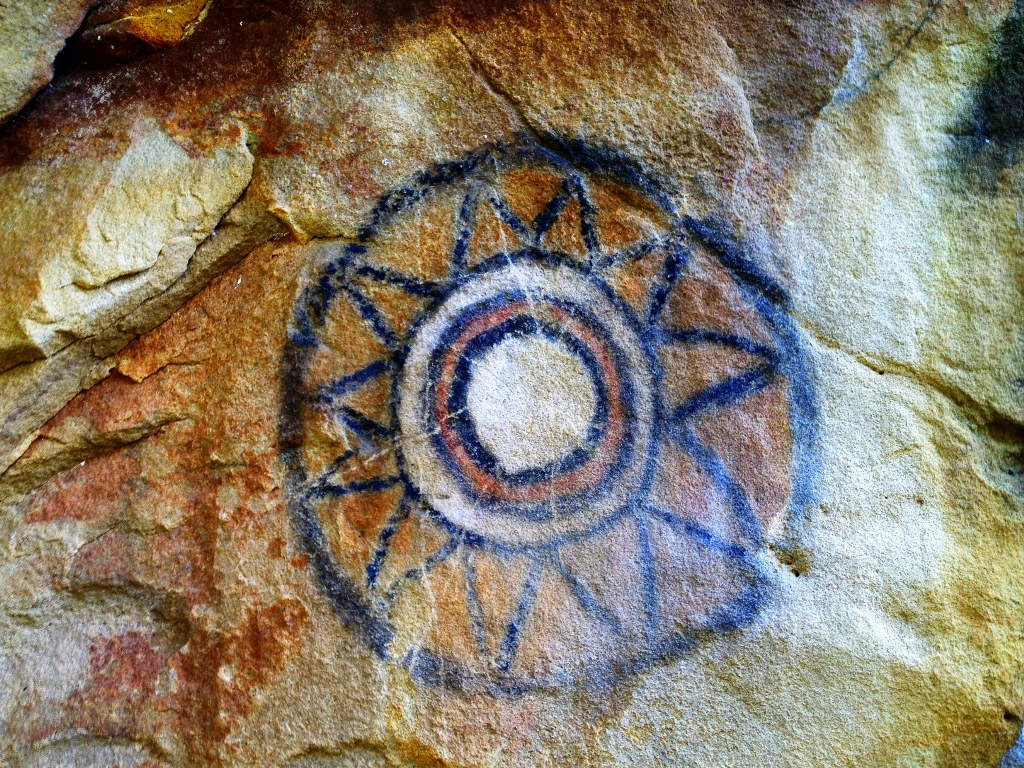
Chumash rock art pictograph santa ynez mountains santa barbaraAn exceptional Chumash mandala pictograph in the mountains of Santa Barbara County.

“I feel bad,” Bill repeated several times during the lengthy over-the-fence conversation, speaking of his refusal to allow us a peek at the rock art. Yet he stood firm and would not relent. He kept insisting he was a protector defending the art and repeatedly justified his denial of our friendly requests on that basis.

I understood his reluctance to allow strange men appearing at his backyard unannounced onto his property to view a rare, fragile and priceless piece of antiquity. I respected that, but what he was saying made no reasonable sense, and that bothered me more than his obstinate refusal.

I don’t appreciate being taken for a fool, like a small child who lacks the mental capacity to reason and see through a patently absurd argument.

We now knew exactly where this archaeological site was located. We knew his street address. We knew his name, and through various public records could find out a lot more about him. We could pinpoint the site location on Google satellite imagery and broadcast a map and GPS coordinates to the world, if we were so inclined. At this point we could tell anybody we wanted to regardless of whether he let us onto his property or not.

By refusing to allow us even so much as a brief glance at the pictographs Bill wasn’t protecting anything. His claim was prima facie ludicrous. He had tried to prevent our discovery of the site, and thus tried to protect it, by lying to Chuck earlier but that failed. We were persistent and determined. As Chuck told Bill over the fence, “We have a nose for these things.”

There was nothing any longer to protect, because we knew where it was. The only way he would be protecting the art was if he allowed us onto his property and then we somehow tried to harm the art right in front of him and he forcibly stopped us, but that was a wildly silly idea. We just wanted to see it.
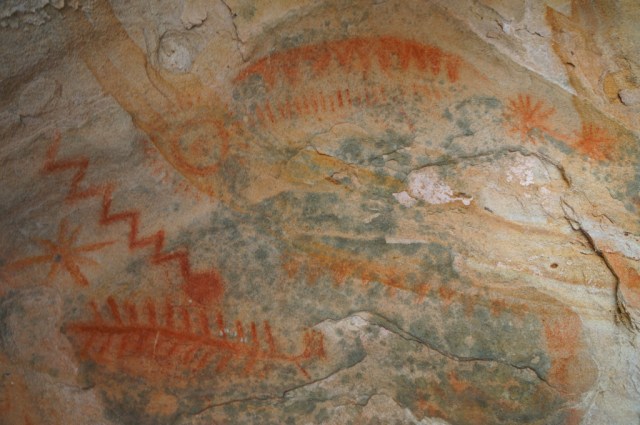
DSC05797Chumash pictographs in the Los Padres National Forest of Santa Barbara County.

I remained silent, though I wanted to let Bill know what he was saying was foolish, and that I well knew it. If he was willing to put up such a fallacious argument to justify his action, or was unable to see the falsity of what he was saying, then he would not likely be receptive to reason and so was a waste of further time.

We left Bill, the great self-described protector, after failing to convince him to let us see the treasure he hardly kept hidden beyond his shoddy, rickety fence. For a man who so adamantly claimed to be a defender of the site, he sure put little effort into keeping it hidden and secure from wayward eyes. And we wondered what the dust kicked up from the dog we heard barking in his yard did to the art.

We were kind and considerate and left on good terms. In the end, at least for me, as much as I wanted to see the pictographs, and as much as Bill’s lame excuse irked me, the fact that we were finally successful in locating the site, and did so on our last effort and after so much work, was a worthy reward in itself. The treasure hunt paid dividends even though we were ultimately denied the jackpot.

Chumash Yokut Salinan rock art pictographs San Luis Obispo CountyRock art in San Luis Obispo County.
Posted in Santa Barbara County | Tagged , , , , , , , , , , , | 12 Comments

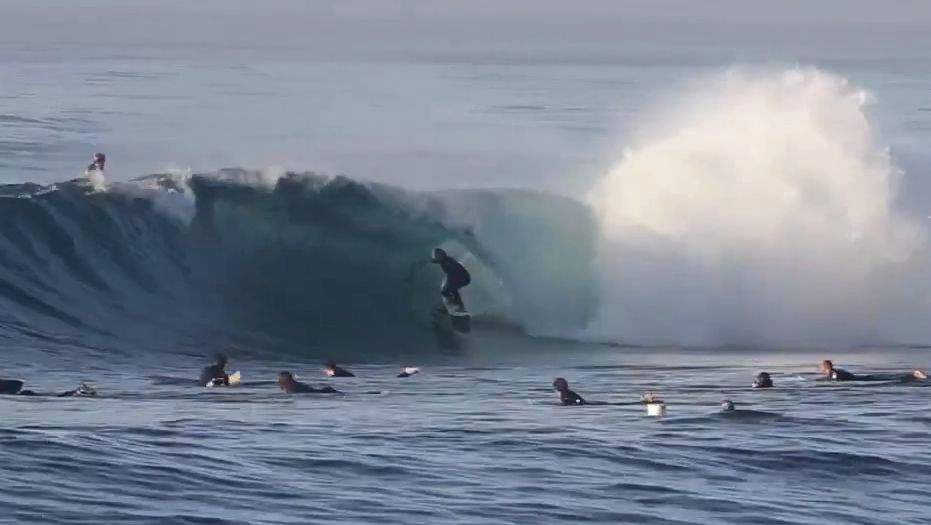
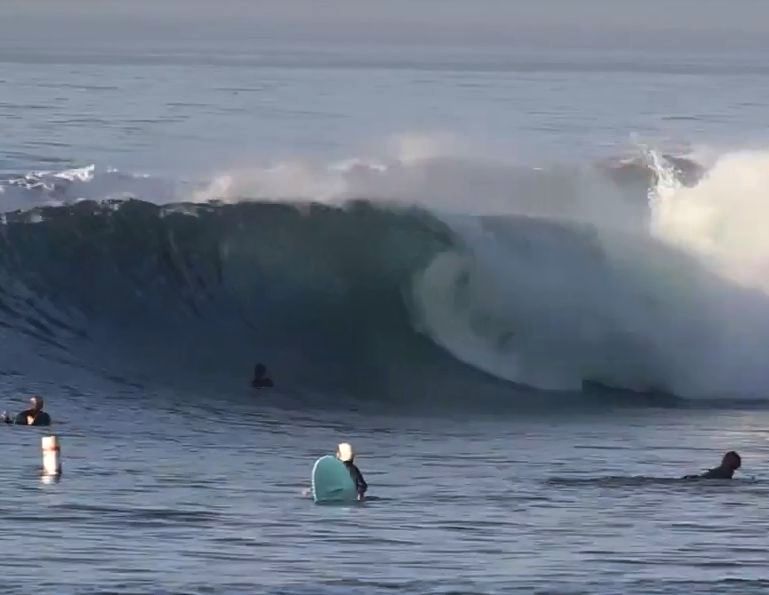
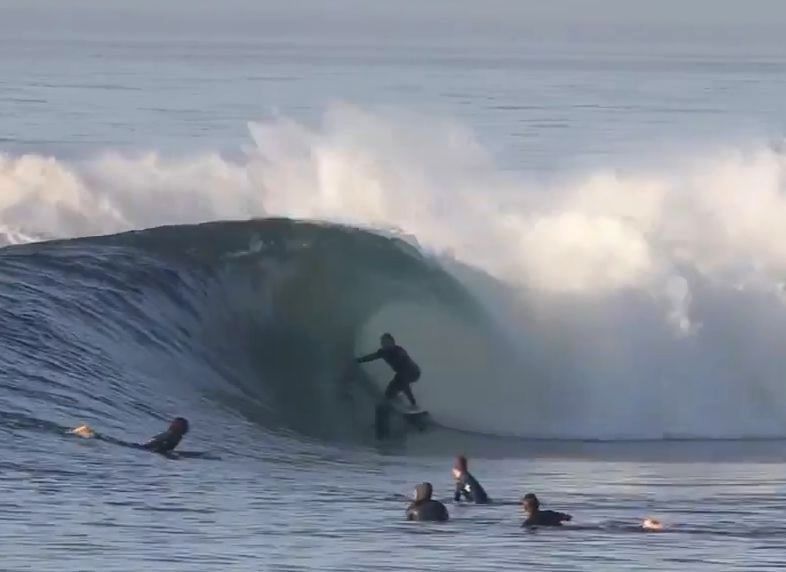
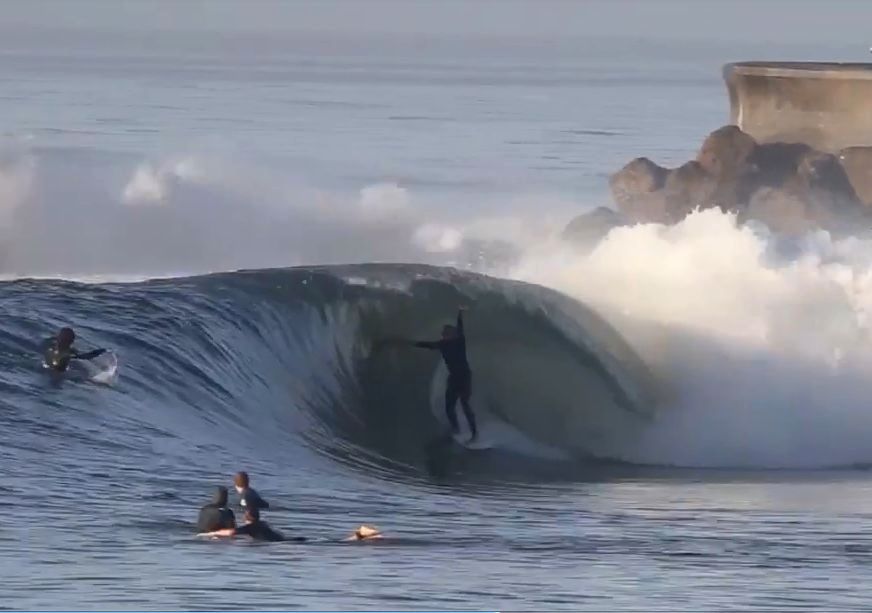
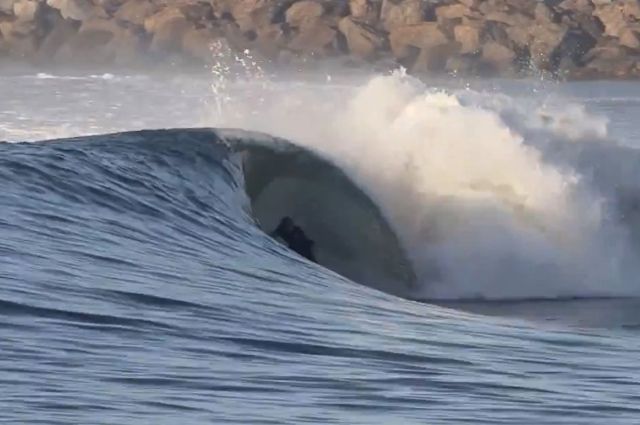
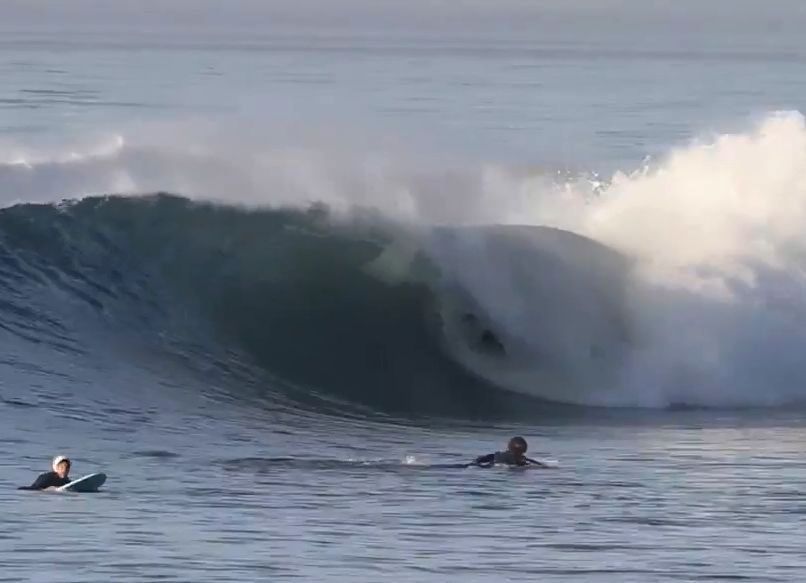
Gabe Surfing Sandbar, Hurricane Marie 8-27-14

Gabe Venturelli making it look easy. Good to see a friend, a Santa Barbara local, getting it like not many people do. In the middle of summer, no less. Pacific love.
“Look at this shot of Sandbar yesterday,” my wife says to me this afternoon, and holds out her iPhone to reveal a video of an epic wave featured on some surfer magazine page on Facebook entitled, “An Endless Barrel at Sandspit.” Such are the times, cell phones and social media, and, well, blogs like this. Much hated by many, but that’s reality these days.

“Wow. Oh man,” I reply, thoroughly envious of whomever it was that picked off the reeling grinder showing on the tiny screen.

“You’re not pissed off you missed that are you?” she asks knowing me all too well.

I refrain from answering her directly and after a brief pause, which effectively meant, “Hell yeah I’m pissed!” I continue the conversation with: “I drove by there yesterday late morning during high tide.”

I had a brief moment to check the surf at that time. I knew it wouldn’t be as good as when the tide dropped, nowhere near as good, but I had to lay eyes on the scene as soon as I had a chance anyway. It was a rare swell event.

“It was unreal!” I continue. “There were four SUKs out there!” SUK being a pejorative for SUP, which means Stand Up Paddleboard. “I’ve never seen anything like it. Just ridiculous!”

Frame grabs from video by Tony Modugno:

Gabe Venturelli Sandbar Hurricane Marie 8-27-14 (1) Gabe Venturelli Sandbar Hurricane Marie 8-27-14 (2) Gabe Venturelli Sandbar Hurricane Marie 8-27-14(3) Gabe Venturelli Sandbar Hurricane Marie 8-27-14 (4) Gabe Venturelli Sandbar Hurricane Marie 8-27-14 (5) Gabe Venturelli Sandbar Hurricane Marie 8-27-14 (6)Gabe Venturelli Sandbar Hurricane Marie 8-27-14
Late in the afternoon, that is the yesterday featured in the video my wife had shown me, not having felt like battling the mob I knew would show up at low tide Sandbar on an epic south swell, and not having wanted to try and elbow my way into waves amid the frenzy of wave-starved surfers, I had opted to go elsewhere.

I certainly did not score anything remotely close to what’s seen in the video, but my afternoon was made sweet and memorable nonetheless with some clean and green long walls at a break that rarely works in summer. The last time I had surfed there in summer was in the mid-nineties, after wakening one morning at a friend’s house along Gaviota to the sound of meaty shorepound slamming the beach, and the air laden with ocean mist. It was a rare treat to surf there once again in summer.

Gabe Venturelli Sandbar Hurricane Marie 8-27-14(1)

I see an old friend I grew up with at the beach today after having seen the video. He mentions that he saw Gabe, a mutual friend, at Sandbar on that glorious aforementioned yesterday. That he got one of the best waves he’s ever seen, saw it from the wharf across the harbor channel. He says he later saw it on video on the Web. Could it be? I wonder to myself. Naw. Couldn’t be. What are the odds?

I return home later and check the Web and sure enough, Gabe immortalized. I hadn’t recognized his style the first time I saw the video. “That was Gabe, that video you showed me,” I tell my wife. She knows him, too. “Wow!” she says. “You always said he was a good surfer.”

“Yeah. He’s really good.”

Related Post:

8@20 WNW 286°

Posted in Santa Barbara | Tagged , , , , , , , , , , , | 7 Comments

Barger Canyon Arch

Barger Arch Santa Barbara HikingLooking through Barger Arch toward Santa Barbara.

A coast live oak tree obscured for most of my life this frontside feature of the Santa Ynez Mountains. Arroyo Burro Trail, which cuts the mountainside nearby, was one of the first trails I explored as a boy. Riding my bike to Stevens Park and hiking up San Roque Canyon. My house sat beneath Barger Peak, just a few miles as the condor flies from the arch.

In later years we’d hike up Northridge Road, a steep length of skin-stripping asphalt below the trail and arch, and bomb it on skateboards wearing down the chosen Powell IIIs until they lost their bulky cubic form, turned into long thin cylinders and eventually got core-rot, could no longer bear the torque and ripped apart. We walked up La Vista Road innumerable times, also beneath the arch, and flew down it on skateboards testing our humble high-speed skills against gravity and pushing luck.

We wandered on foot the empty ridgeline above Northridge and connected it to Arroyo Burro Trail and down into upper San Roque Canyon. Now there are a couple of estates perched on that ridge overlooking Santa Barbara making such walks legally impossible.

We hiked, bushwhacked and crawled our way over and through the various folds of Barger Canyon. Thoughtlessly rode motorcycles across private land therein and were run into the hillside by an irate Robert A.

Barger Canyon Arch Santa Ynez Mountains Santa Barbara HikesA frontal view of the arch showing the burnt branches of the oak tree.

Yet in all that time, through the years, in all those hours of unsupervised and unstructured recreation, crisscrossing the foothills of this particular section of the Santa Ynez Mountains, I never knew the arch in Barger Canyon existed.

Perhaps, though, it did not exist as it does today. Maybe it was smaller or even nonexistent. Standing beneath it now one can clearly see how a massive chunk of sandstone fell at some point from the outcrop thus creating the arch, if not entirely, then as it currently stands.

Barger Arch Santa Ynez Mountains Los Padres National ForestSitting under the arch.

Then the Jesusita Fire stripped bare the mountain slope in 2009 defoliating the oak tree and exposing the arch as I had never seen it. A new feature was suddenly and dramatically revealed.

And along with it so too came the revelation that there was, amazingly, even this close to the city in a place in full view from areas all over town, and somewhere I grew up roaming, still some frontiers to explore, still some of the unknown to discover, still surprises and new experiences to be had, even in the nearest portions of Los Padres National Forest.

Barger Arch Santa Barbara HikesView through the arch.

Santa Barbara Hope Ranch Laguna Blanca dry droughtOverlooking a dry Laguna Blanca, living up to its Spanish name due to the drought, with Barger Canyon arch noted by red dot. (Laguna Blanca Lake)

Related Posts:

Twin Arches, Gaviota Crags (from afar)

Twin Arches, Gaviota Crags (up close)

Finding Frontier In The Forest Conquered

Posted in Santa Barbara | Tagged , , , , , , , , , , | 4 Comments

Chumash Rock Art, a Pool of Water and a Chipmunk

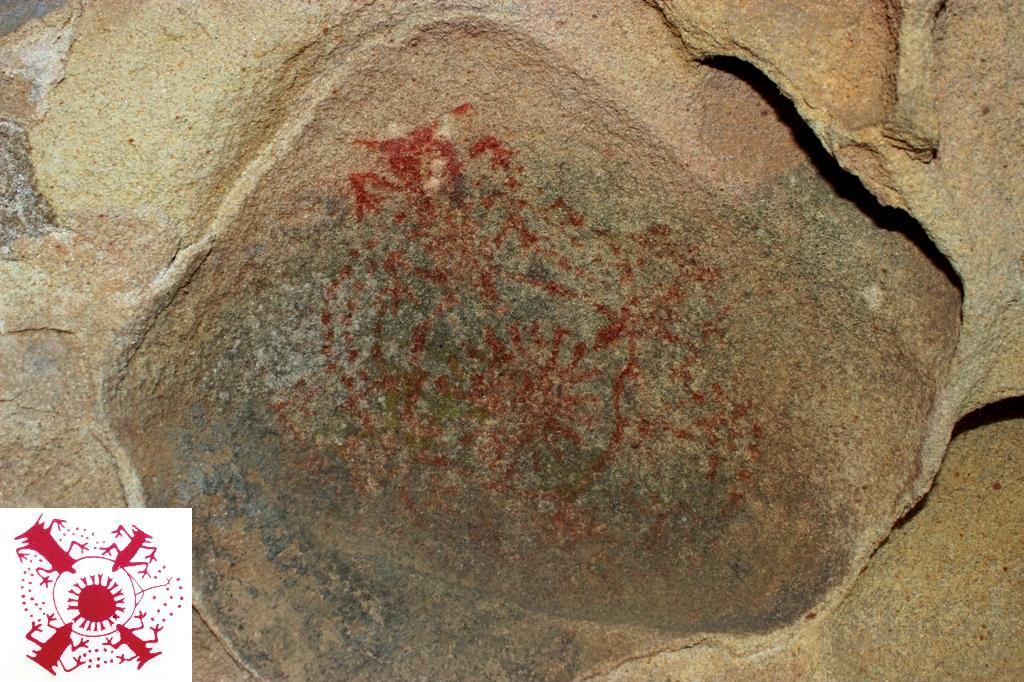
Chumash rock art pictograph painted cavesA Chumash pictograph with inset showing a recreation of the design.

A seasonal creek flows by this Indian rock art site in Santa Barbara County and there is a spring not far from the paintings. When flowing the creek cascades several feet over an exposed outcrop of bedrock and into a small pool near the painted alcove. On the face of the outcrop where the waterfall flows there is a cavity in the rock that catches and holds water for far longer than the pool below the falls.

I checked this natural tank in mid-July out of an interest in seeing, during the current severe drought, how long it will hold water through the summer. It was still holding a decent amount despite no rain in over three months, the last precipitation amounting in total to about one inch which fell on the first and second of April. As of August 8, the tank still held water, remarkably clean looking water, and was a magnet for honey bees seeking moisture.

water hole tank Chumash Pictograph Rock Art site Santa Barbara

The small protected tank.

I sat beside the small puddle watching polliwogs wiggle around. A week earlier I had scooped up and saved twenty or so of those same tadpoles from a tiny volume of water, nearly dried up, which was held in a cavity on the same rock, just above the puddle where they now swam.

I sat wondering if the longstanding puddle ever served as a precious source of stored water for the Chumash. There is the spring lower down the creek, but in such a dry landscape, during a record drought, any bit of water catches my attention and seems remarkable.

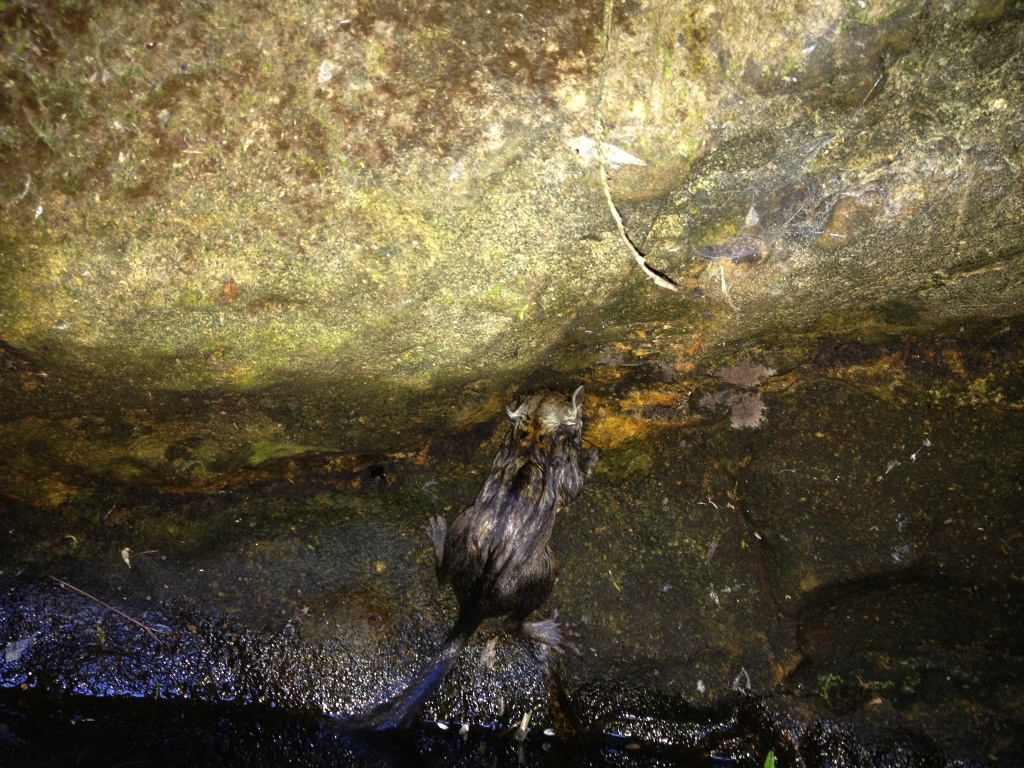
I had been sitting there for ten minutes or so when I suddenly noticed a chipmunk clinging precariously to the rock just above the waterline. It was wet and shaking and had his face pressed against the rock. It looked like it was going to fall into the water at any moment.

My camera flash caused it to do so and I watched it for a couple of seconds frantically trying to swim, fatigued, its puny body vertical in the water, barely able to keep its nose above the surface. It was unable to claw its way back up onto the rock despite its desperate bid for life and after bobbing there for a moment its head dipped below the waterline. I could see it wasn’t going to make it.

water hole

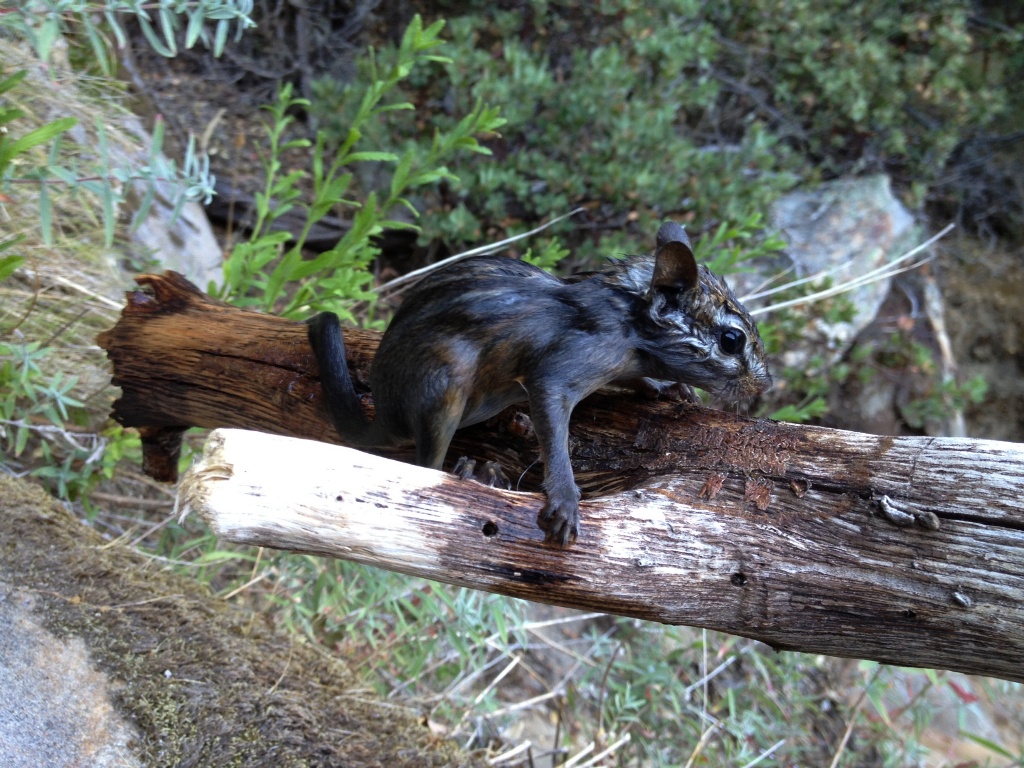
I jumped off the rock and snatched a stick from the ground and thrust it into the water. Should have seen how fast and how solidly the little thing grabbed the wood. I brought the stick out of the water and slowly set it beside me. The chipmunk just sat there clinging to it.

I reached into my pack to grab a few raw almonds, thinking to leave them there for it to nibble as I left, but realized I had taken out my trail snacks and left them in the car. It was getting close to sunset, and as the chipmunk sat there shivering, I wondered if it would live through the night or succumb to hypothermia in its wet and weakened condition.

In making an effort to carefully carry the chipmunk on the stick up to a patch of sunshine, he jumped off and scampered through the brush. He found his way up to the exposed bedrock shelves, which were still soaking up the day’s last remaining rays of direct sunlight.

As soon as he left the shadows and hit the sunny rock he froze and collapsed like a lizard on a hot stone on a cold day. I laid my palm flat on the stone beside me which had already fallen into the shadows and it was exceptionally warm to the touch. The heat radiating from the bedrock must have felt awesomely good to the poor little cold bugger, which had just spent who knows how many hours or maybe days trying to avoid drowning.

chipmunkClinging on for dear life.

chipmunk rescueThe moment of rescue.

Posted in Santa Barbara County | Tagged , , , , , , , , , , | 5 Comments

Hiking Every Season In All Conditions

Sespe Wilderness Cedar Creek hikeBryan route finding off-trail in Sespe Wilderness.

“I came to know that country, not in the way a traveler knows the landmarks he sees in the distance, but more truly and intimately, in every season, from a thousand points of view.”

N. Scott Momaday, The Way To Rainy Mountain (1976)

“If I think about one lifetime, maybe we have eighty years if we’re lucky. That’s not many seasons to be out. If we only come out during one season we’ve missed out on three quarters of a lifetime.”

Ray Mears

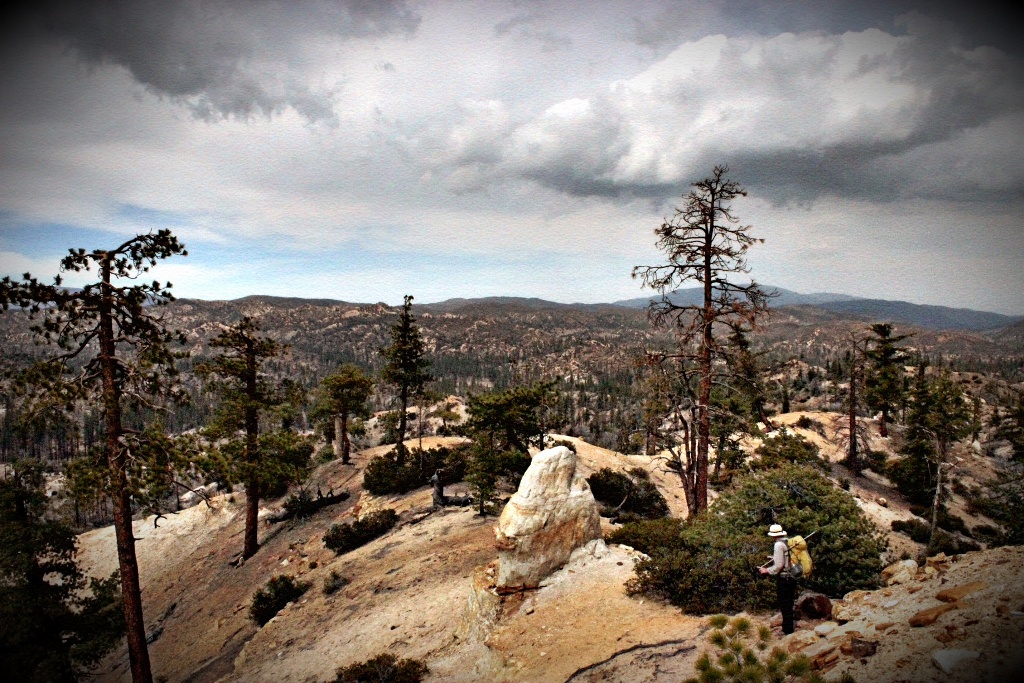
I have heard talk of a “hiking season” in the southern Los Padres National Forest, as if walking is akin to hunting and only legally permitted for a short time during a select period of each year.

The reasoning, I presume, is that summertime temperatures in the backcountry tend to be hot, in the nineties and upwards of one hundred. The land and creeks and rivers are dry or stagnant. The forest is swarming with pesky nostril and eyeball loving flies and campfires are prohibited. These conditions differ greatly from spring when the streams tend to flow, the temperatures are mild, the flies have yet to emerge and a rippin’ good fire can be freely kindled.

Self imposed limitations, however, necessarily result in limited experiences, and in turn a narrow understanding of the land, its plants and animals. It may also, perhaps, result in a more limited appreciation for the forest than might otherwise be afforded the person who visits the woods during all seasons and conditions.

Sespe Wilderness Cedar Creek TrailCedar Creek Trail, Sespe Wilderness

A mountain field carpeted in poppies and lupine for a few weeks during the mild temperatures of April is a remarkable sight, but it is all the more striking and incredible when one knows what the field looks like in August during 100 degree heat. (Seasonal Change In Wildflower Fields of Figueroa Mountain)

The dynamic and lively sound of a rushing creek filling a canyon is likely not appreciated as much by those who have never heard the same canyon dead silent during late summer when the creek has gone dry.

I wish to know the forest and everything there within during all seasons, when it’s hot and when it’s cold, when it’s dry and when it’s wet or frozen, when skies are blue and when they are cloudy, when it is not raining and again when it is pouring, when the days are long and when they are short, when the shadows are long in early morning and late afternoon and when they are short at midday.

For during each span of time a world of difference can be found resulting in a greatly varied collection of experiences which all hold in themselves their own unmatched value, and when the various pieces are combined the puzzle is put together and the picture complete.

Cuyama BadlandThe Cuyama Badlands. One of the wildest and least trod stretches of land in all the southern Los Padres National Forest.

Posted in Santa Barbara | Tagged , , , , , , , , , | 10 Comments