Marijuana in the Woods: Endangering Hikers and Killing Wildlife

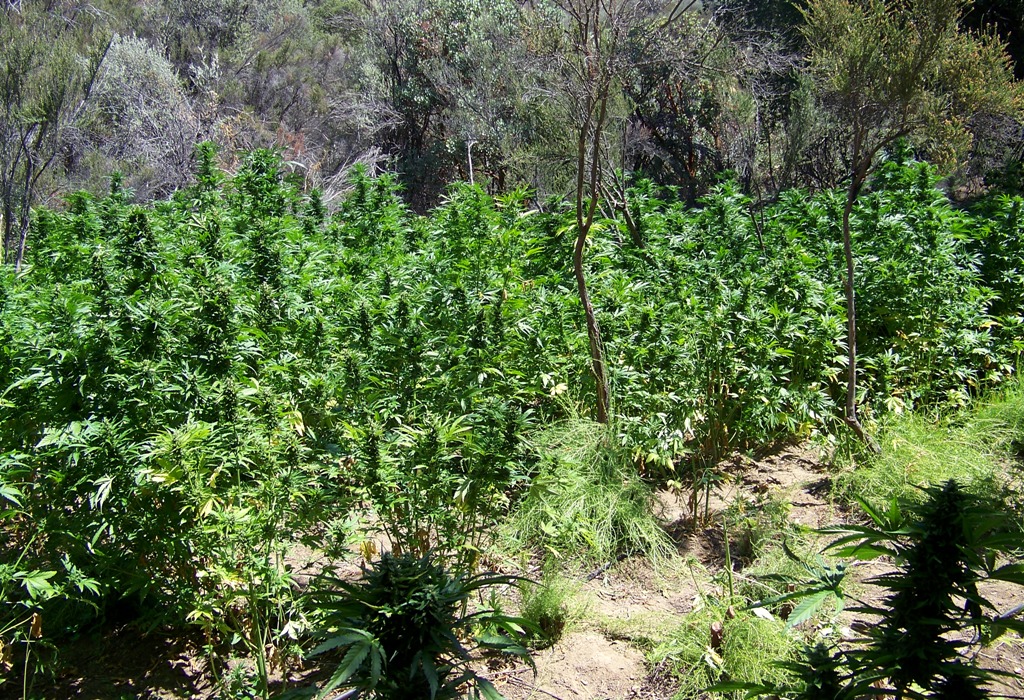
marijuana santa barbaraMarijuana growing in the Los Padres National Forest. (Santa Barbara Sheriff’s Department)

Marijuana Increasingly Grown In National Forests

According to the Santa Barbara Sheriff’s Department, “large-scale marijuana cultivation is a serious and increasingly widespread problem on public lands in California, including the Los Padres National Forest.” In 2010, out of California’s 18 national forests, the Los Padres ranked fifth for the number of marijuana plants eradicated by law enforcement officers.(1)

I have come across numerous marijuana grow operations over the years. Too many to recall. Both inactive no longer used sites and actively growing plants. I’ve seen them in one form or another in Bear Canyon, Potrero John Creek and Godwin Canyon in Ventura County. In Santa Barbara County, I’ve come across several grow sites in the Montecito foothills, Cieneguitas Canyon, Goleta foothills below West Camino Cielo and in Lewis Canyon, to name just a few.

Choose any major canyon or flowing creek and there is a decent chance that it’s in current use or has been used previously to grow marijuana. Spend enough time off-trail in this part of the Golden State and a hiker is likely to stumble across the work of guerrilla growers at some point.

In times past, out of youthful naiveté, I was never concerned about the danger of a potential run-in with a grower. Over the last couple of years, however, my view of this issue has changed. Now I feel the creep of concern wash over me when out alone off-trail in the woods and I see the tell-tale signs of growers.
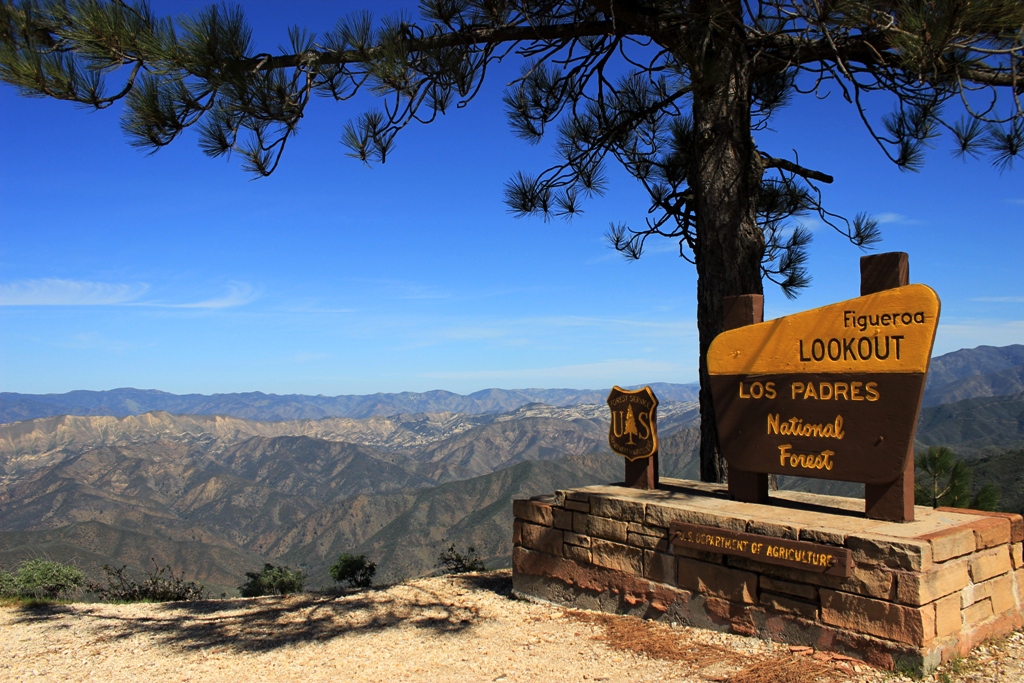
Figueroa Mountain LookoutA Threat To Hikers

Whereas I once assumed that weed growing around these parts was the work of harmless potheads looking to grow their own smoke and make a few dollars, it is now clear that in many instances they are operated by Mexican drug cartels, and other ruthless characters who will not hesitate to turn my day into a living nightmare. News reports chronicle the finding of high power rifles and law enforcement officers being fired on when raiding grow sites.

I never carried a firearm a single time in my younger years, but I’ve now been forced to wrestle back and forth against a growing compulsion to carry a gun whenever I go for an off-trail hike. I would rather not. I have no interest in getting into a firefight and I have enough to carry without the added burden of lugging around a loaded pistol.

But the law does not provide protection, it punishes the perpetrator after the fact. Dialing 911, if by chance there is cell service, is a futile waste of time when I’m far away up some remote roadless canyon. Calling for help that takes hours to arrive is pointless when all I have are seconds to defend myself.

I am fed up dealing with the consequences of growers in the forests and open spaces I frequent. I don’t appreciate having to concern myself with the possibility of being shot at or maimed or killed by booby traps when I’m recreating.
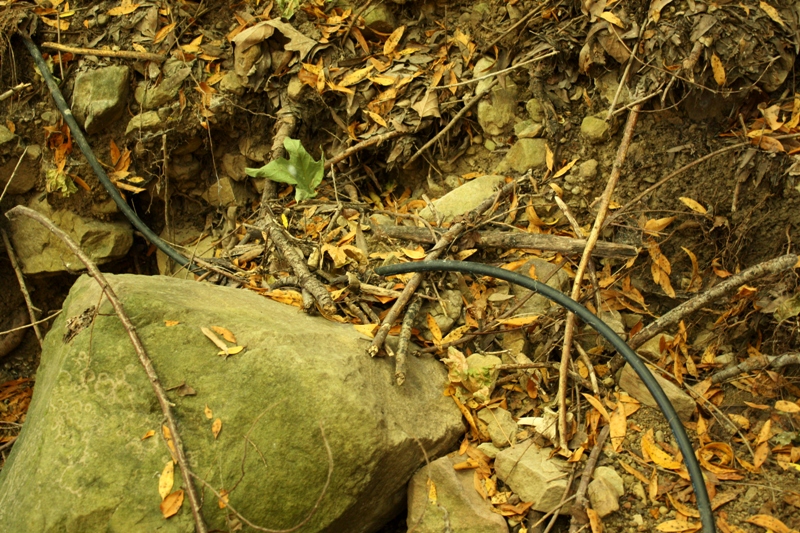
marijuana grow irrigation lineThe tell-tale sign of a weed growing operation, black plastic irrigation tubing running through a canyon.

Consequences of Chemical Fertilizer in Riparian and Marine Environments

I’m disgusted and angered by the tons of trash and toxic chemicals left behind by growers. I recently found a couple of hundred pounds of chemical fertilizer left beside a tributary of Sespe Creek, which during winter rains will leach into the drainage and wash down stream threatening critical habitat for the endangered southern steelhead. The nitrates from the fertilizer can spur harmful algal blooms in creeks and rivers, which can lead to hypoxia or depleted levels of oxygen that can suffocate fish.

But it does not stop there. Eventually the fertilizer may reach the ocean where it works in a similar manner but with an added twist. The fertilizer fed algal blooms can release vast quantities of the neurotoxin domoic acid into the water, which is absorbed and concentrated in shellfish like clams and mussels.

Aside from the possibility of poisoning humans, these are favorite foods of southern sea otters, which are officially listed under the Endangered Species Act as “threatened.” The otters eat the poison laden shellfish and become sick or die. In addition, blue-green algae cause microcystin intoxication in sea otters, a deadly liver infection.
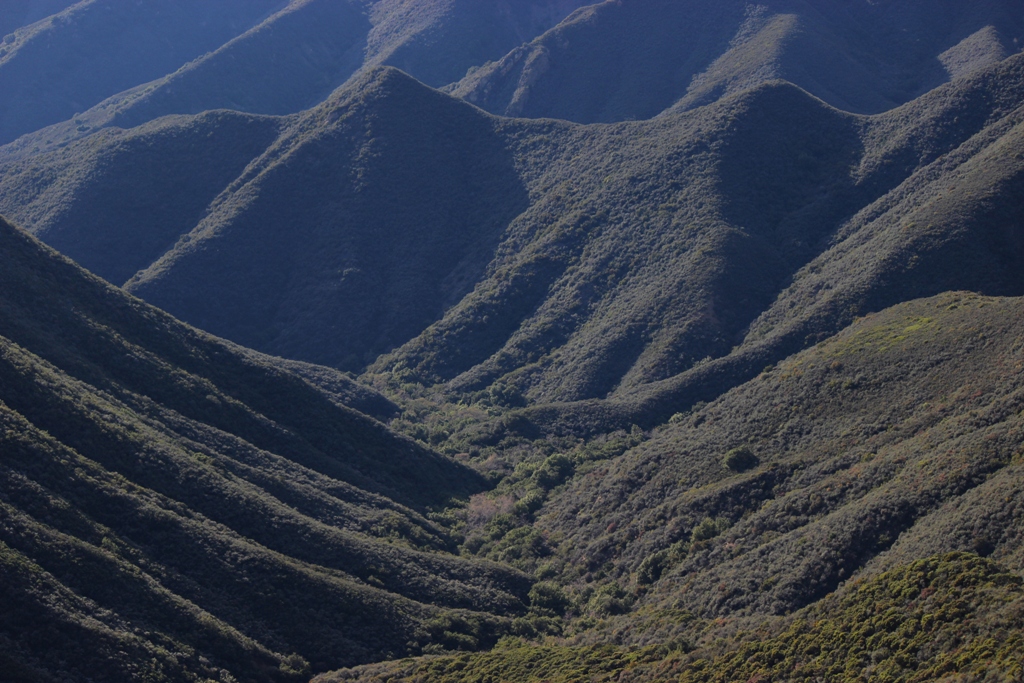
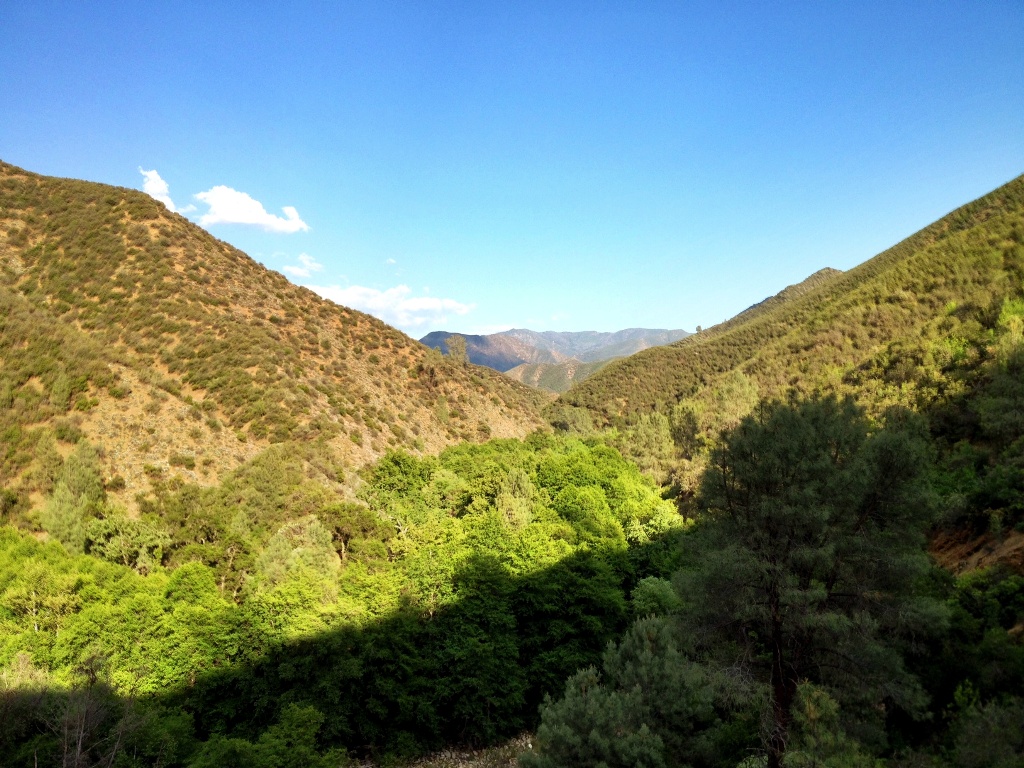
los Padres National Forest marijuana growLos Padres National Forest creeks are prime pot growing territory.

Does it stop there? Theoretically, no. Sea otters are a keystone species that play a vital role in the marine environment. They feed upon, and thus help check the population of, sea urchins which are voracious eaters of kelp. If sea otters disappear so does the kelp, as the urchin population explodes and devours entire kelp forests leaving behind barren reef.

Kelp forests hold one of the greatest concentrations of biodiversity in all the world’s oceans and support about one quarter of native marine life in local waters. The submarine forests provide essential habitat for over 800 organisms from the tiniest sea creatures to large game fish and mammals. As the otters go, so does the kelp and all other life that depends on it.

While it may be a stretch to link such wide ranging destruction to marijuana growers, it is possible with enough chemicals washing into local watersheds. More to the point, though, the environment is already under enough stress from various causes, including massive fertilizer runoff from the state’s intensive agriculture. Additional sources of loosed chemicals only serve to exacerbate existing problems.
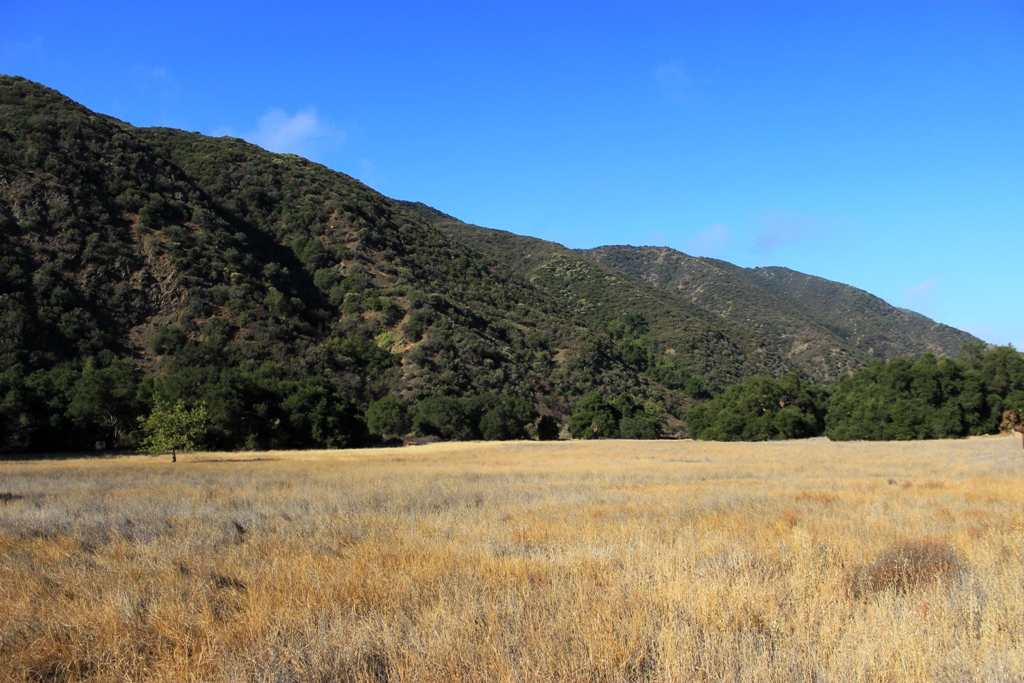
Upper Santa Ynez RiverA potrero in  the upper Santa Ynez River watershed of the Los Padres National Forest.

Consequences of Pesticides on Wildlife

Lush well-watered pot plants growing in the hot and dry Mediterranean climate of Southern California are extremely attractive to hungry and thirsty rodents. To combat this problem growers haul in and carelessly disperse large quantities of rodenticide.

The result is the indiscriminate, incidental death of countless other animals from owls and hawks to bobcats and mountain lions, who die of secondary poisoning from feeding upon rats and mice that have eaten the rodent bait.

The poisoning of carnivores like coyotes, bobcats and mountain lions from anticoagulant rat bait is well documented. According to the National Park Service, 80 percent of bobcats in the Ventura County area that were tested had some form of rat poison in their systems and their population has plummeted.(2) While this is largely attributed to common residential and commercial use of poisons, it illustrates the catastrophic impact resulting from such deadly chemicals.

It is also possible for still more species to die of tertiary poisoning. For example, a condor feeding upon a bobcat that died from eating poisoned rats. It is not out of the ordinary for an area around a grow zone to reek of death.

In 2010, over three million marijuana plants were eradicated from Los Padres National Forest alone. Consider how many pounds of chemical fertilizers, pesticides and herbicides were used to grow them and the impact it had on wildlife. And that is merely from grow zones that were discovered by police and it also does not include all other forestland outside officially designated national forests.
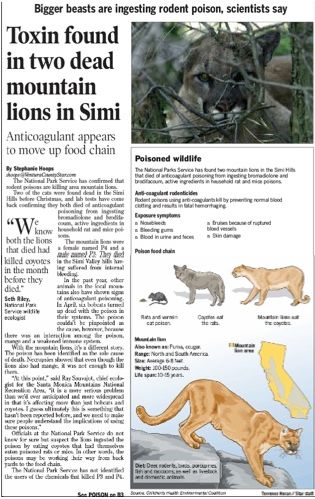
screen shotAn article in the Ventura County Star newspaper detailing the tertiary poisoning of two mountain lions from rat poison.
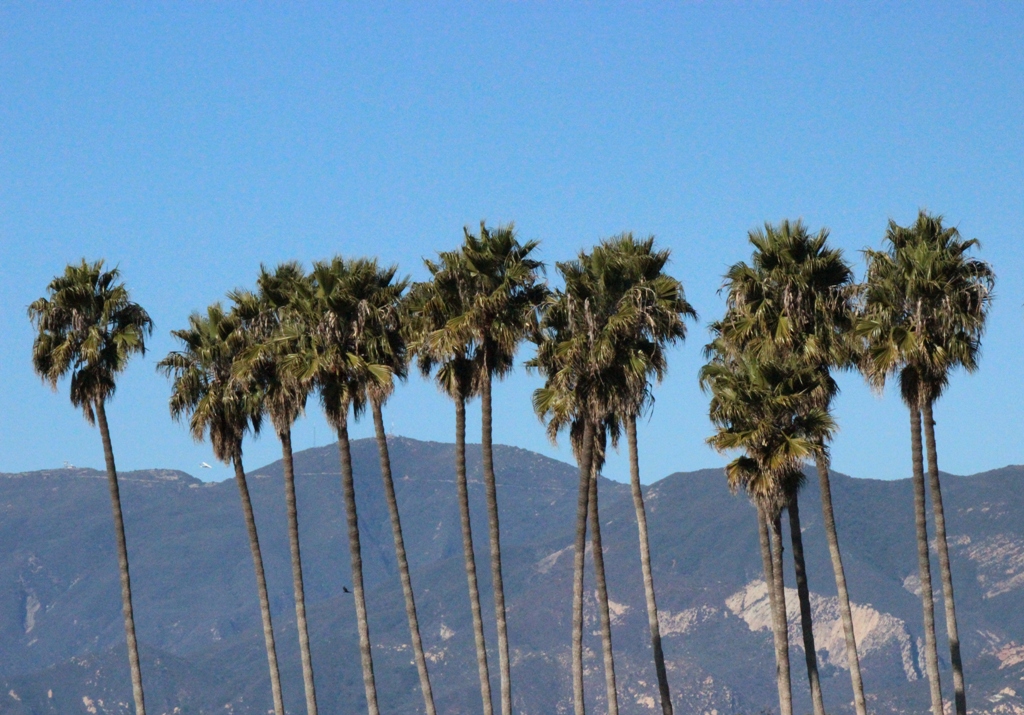
Palms at Goleta BeachThe Santa Ynez Mountains are a grower’s dream. Plants rooted on the sun-saturated south facing mountainside enjoy long hours of direct sunlight, intensified by the mirror-like reflection off the Pacific Ocean, and if growing on a slope get hit with direct sunlight from root to tip.

My Opinion

I take a libertarian position on the matter of marijuana possession and use. I find it utterly preposterous that the government has outlawed a plant. The issue for me is not marijuana, but how and where it’s grown. I draw the line when it comes to the careless, inconsiderate and destructive practices of guerrilla growers polluting my backyard and threatening my life and well being, just so they can make a buck or fill their stash box.

UPDATE July 26, 2013:

July 25, 2013

“$85 million in pot plants seized

The individuals responsible, cut down the native vegetation, introduce toxic chemicals into these National Forest lands, harm the wildlife and divert natural water supplies into naturally arid landscapes. A major focus of these marijuana eradication operations is the removal of the chemicals, poisons and trash that were unlawfully introduced onto our National Forest lands.”

http://m.keyt.com/news/85-million-in-pot-plants-seized/-/19201834/21156456/-/622asrz/-/index.html
Posted in Santa Barbara County, Ventura County | Tagged , , , , , , , , | 24 Comments

Chumash Indian Rock Art Pictograph

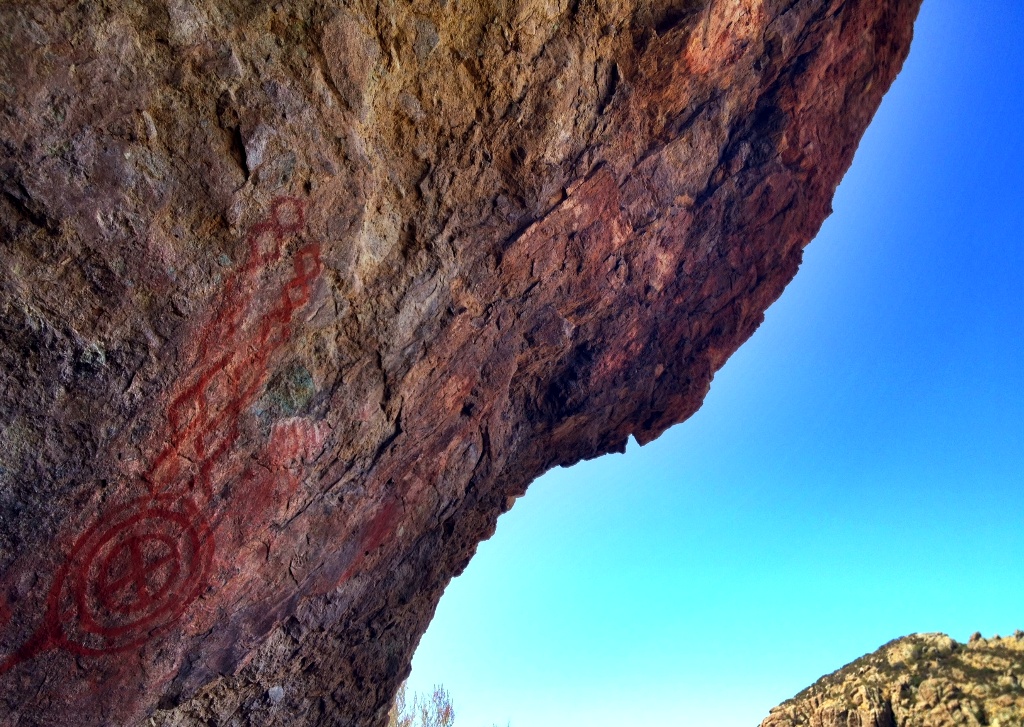
california rock art pictographsLittle Ms. E and I ventured out for a short hike Wednesday morning to a pictograph site. This is the fifth Indian rock art site I’ve taken her to and it required the longest and most strenuous hike for her yet. I ended up carrying her on my shoulders, but we made it. It will be some time before she’s ready to visit the more remote backcountry sites, but as she gets older we’ve been extending the range of our outings a little at a time.

The pictograph adorns the wall of a shallow, northwest facing alcove overlooking a small seasonal creek. There are no bedrock mortars. The outcrop sits along the top of a rolling hill of grass and chaparral near the mouth of a canyon and it offers expansive views of the surrounding countryside.

rock art pictographs

Posted in California | Tagged , , , , , , , , | 6 Comments

100° Hike

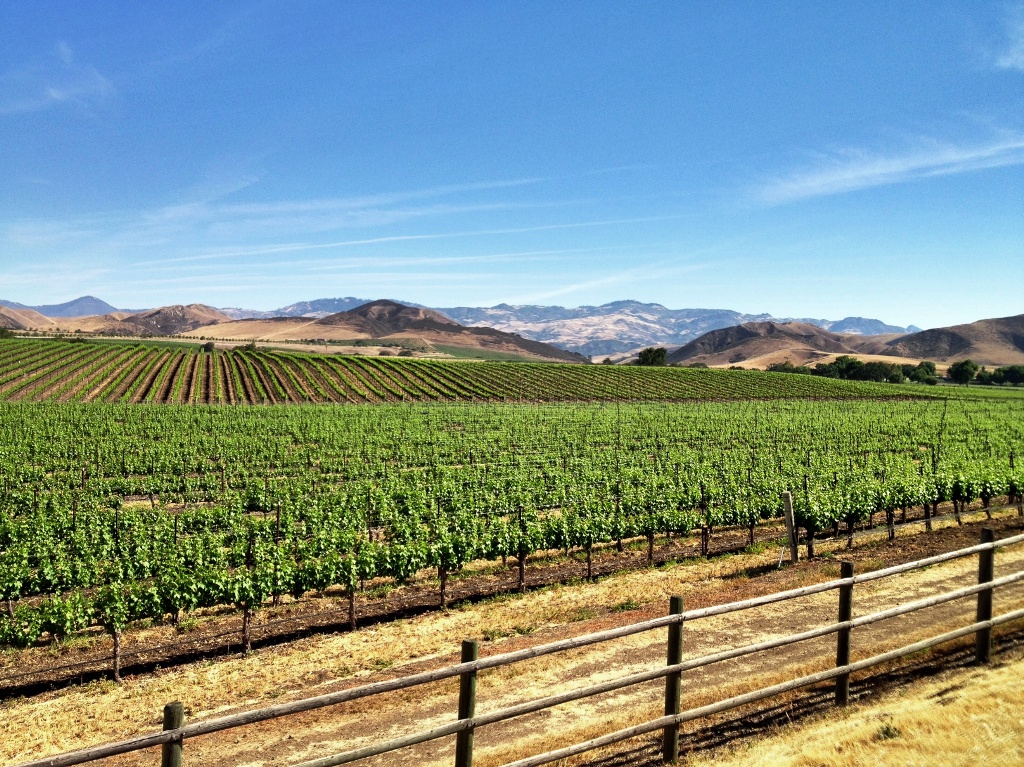
Santa Ynez Valley viticulture winemakingSanta Ynez Valley viticulture as seen on drive to trailhead.

It’s an ordinary summer day. It’s not one of those media hyped heat wave events, but it’s supposed to be hot out. Such forecasts don’t really apply to the backcountry, though, and I expect it to be hotter than called for.

County-wide to date Santa Barbara has received less than half its normal rainfall amount for this season. And a little more than half the normal amount of rain fell the previous season. Bradbury Dam at Lake Cachuma last spilled in 2011.

The San Rafael Wilderness is hot and dry. It’s withered, shriveled, and crunchy. And hordes of tiny flies are out in search of heads to ceaselessly buzz around and eyes, ears, noses and mouths to crawl into. These less than pleasant conditions deter most people, a fact confirmed by my arrival at a parking lot devoid of vehicles.

Manzana Creek San Rafael WildernessManzana Creek

San Rafael WildernessSun scorched trail

I plod along the trail with my head down and a steamy red face, step by heavy step up the gravely mountainside, glistening and dripping with sweat, my heart throbbing audibly in my head. The world bobs and weaves with the motion of my head as I stomp along, randomly glancing out here and there from under my hat brim. The only sounds are my heavy footsteps, the forceful rush of breath in and out of my nose and the rhythmic dull thump of my heart.

It’s like I’m fighting against myself as I hike, because as I struggle along, sucking and puffing wind, legs laboriously scissoring back and forth, the world around me, the plants and rocks and everything else, it’s all still and silent. It’s not doing anything. It’s not for me or against me. It’s inanimate. Indifferent.

It’s always like that, of course, but on this exceptionally hot day the feeling seems particularly acute as I grind my way up the sweltering slope. I’m working myself toward dehydration, fatigue and heat stroke and all I’m doing is slowly walking up a dirt path.

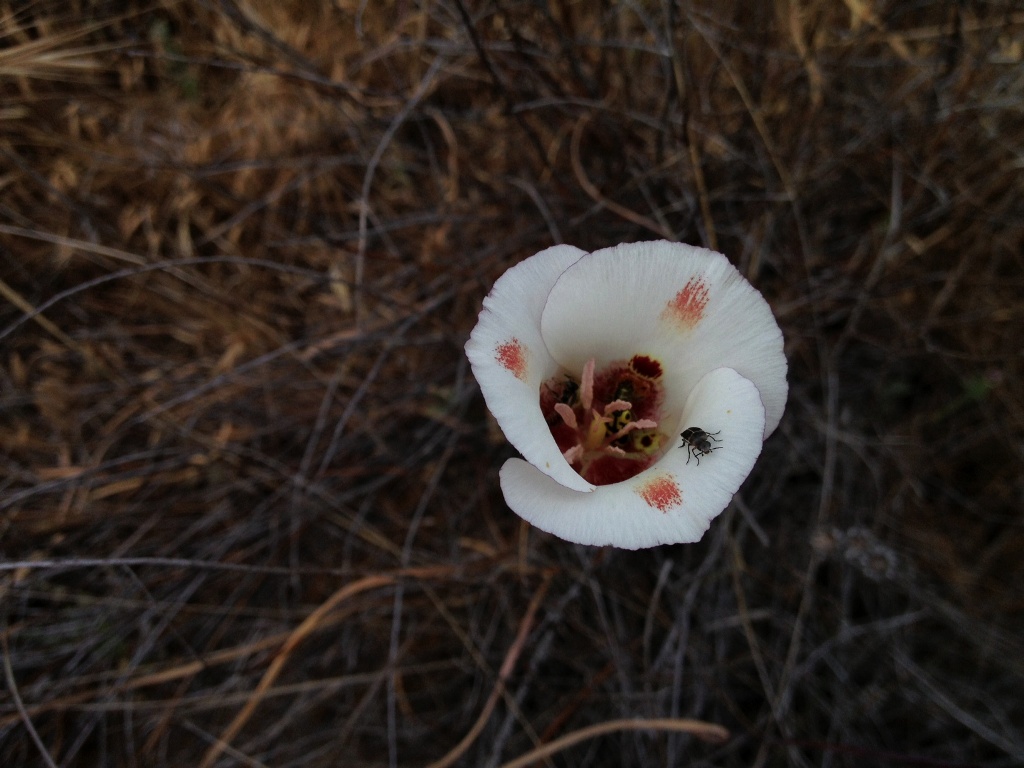
mariposa lily 2Mariposa lilies

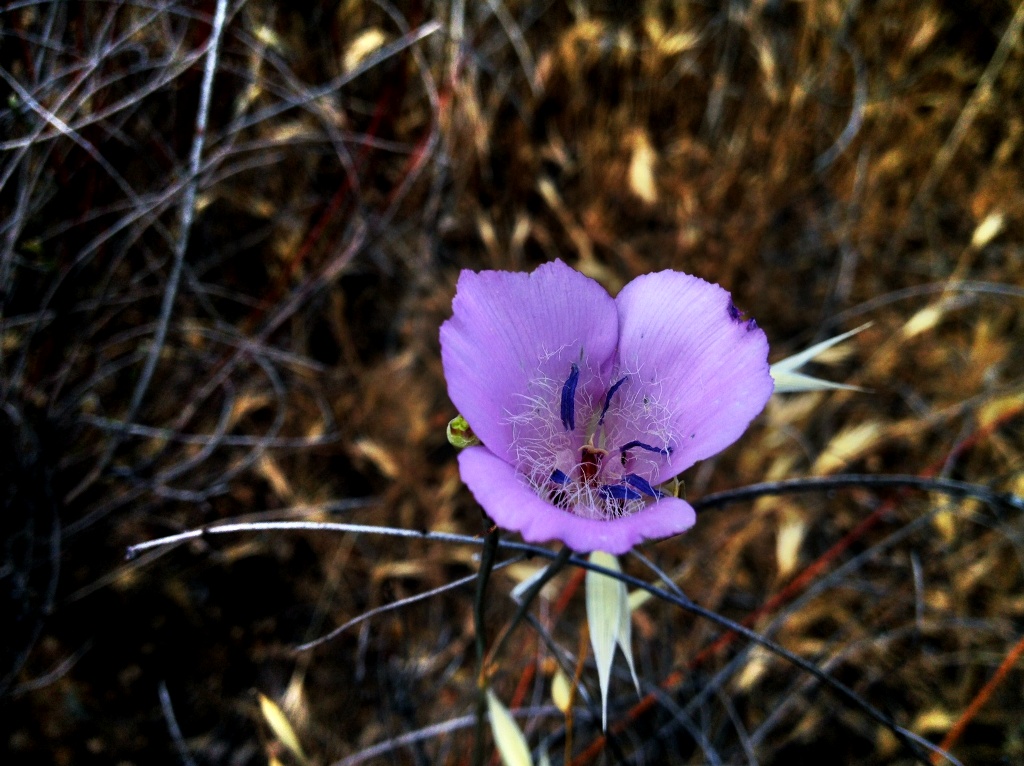
mariposa lily

I slog up the mountainside through the crispy dry chaparral, caught between the life shriveling, merciless glare of the sun overhead and the rocky mountainside underfoot radiating its solar energy back at me.

I come upon a scant patch of shade under an overhang of brush. The shadow falls over a small trailside slope of bare soil. I collapse onto the dirt, scrunching myself up against the shadowy foot of the chaparral and trying to escape the sun’s deadly wrath.

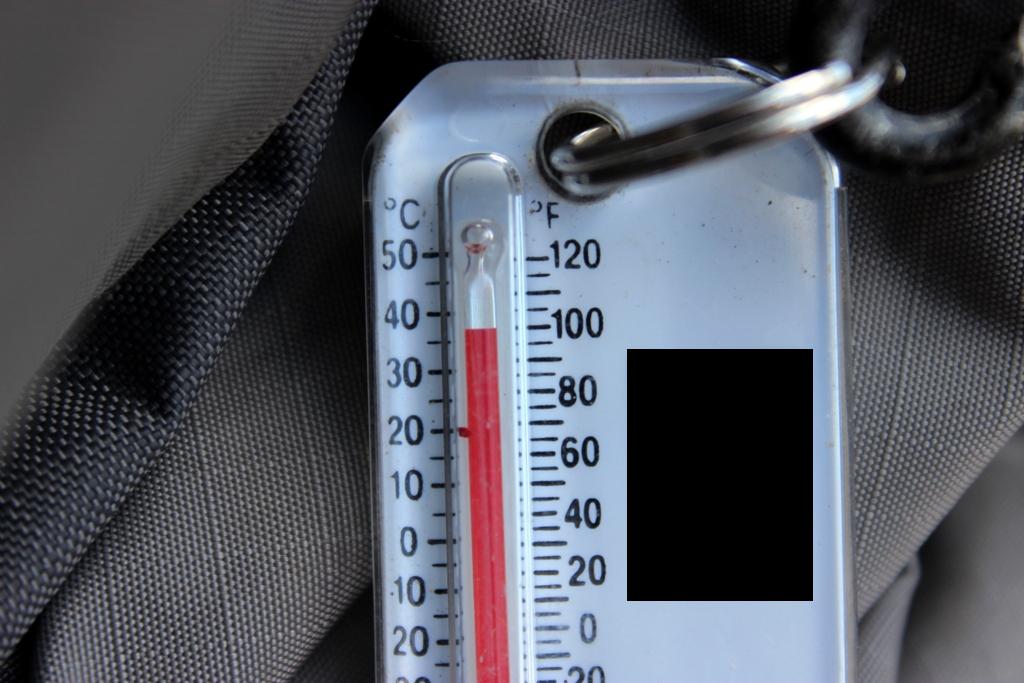
Like a victim cowering from an aggressor, I curl up in the shadow. I’m able to get most of my body out of the sun except my lower legs, which I try to shade by placing my hat on a raised knee like an umbrella. After ten minutes or so I glance at the thermometer on my backpack in the shade: 100 degrees.

San Rafael Wilderness (2)

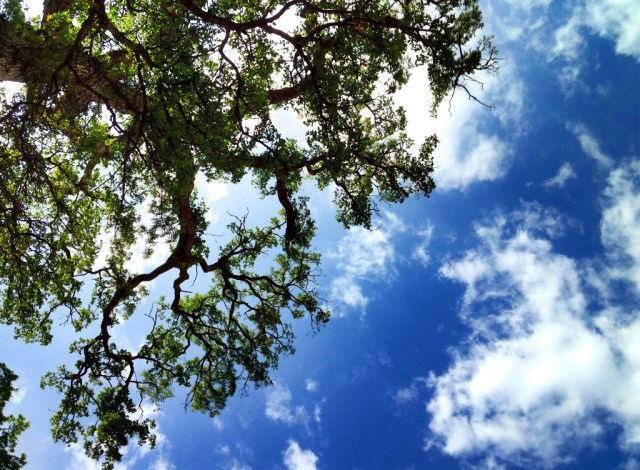
san rafael wilderness oak treeI march over the crest of a chaparral covered hill and down into a lightly wooded grassy glen, eagerly looking forward to another rest in the shade. The odd patch of sloping grass on the brushy mountainside is sparsely dotted with oak trees casting big shadows.

I plop down under a large tree to cool down, hydrate, refuel and allow my fluttering heart to slow down. I’ve only covered a couple of miles, but the short hike thus far has inflicted a disproportionately large degree of strain on my body. I feel beat.

100The forest seems empty and lifeless in the heat and absence of water. The fleeting splash of vibrant green, lent briefly to the drab hills seasonally by the flush of grasses and other small annual plants, has long since withered and faded to neutral earth tones. It will be months before it rains again.

Peering over the parched landscape shimmering in the afternoon heat it does not appear as if life here is thriving. It’s hard to imagine that the plants and animals are doing much more than merely enduring. Of course, this view is based on my own experience. I can’t avoid projecting my own strain and struggle onto other lifeforms.

Compared to months earlier, or years as the case may be, when the creeks and arroyos were flowing and filling the canyons with the sound of rushing water, now there is a heavy silence, a notable sound of absence. The land feels less dynamic and less alive without the roar and trickle of running water.

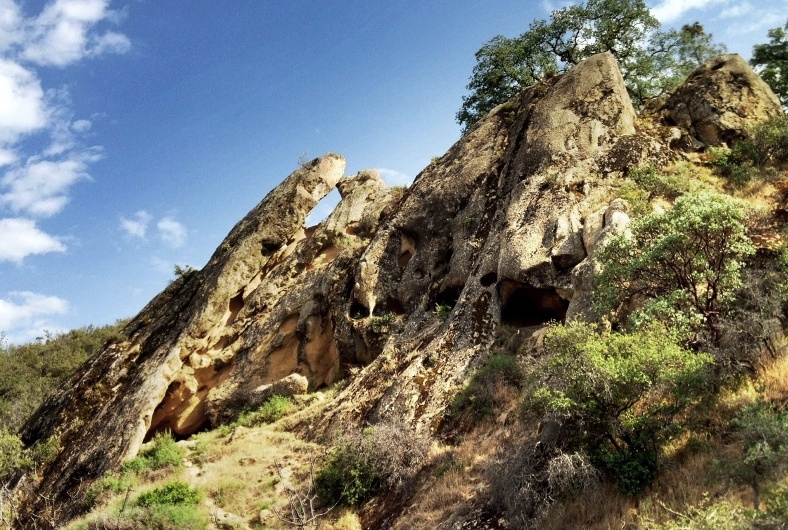
san rafael wilderness cavesLeaving the grassy hollow behind, I wade through the sparse brush, over the sandy soil and rocks and through wildfire scorched skeletons of chaparral and a few little trees. I’m traversing an uneven expanse cut by several deep, but narrow arroyos.

One of these small drainage chutes, while dry like all the rest, drops over a wall of bedrock and into a lush, muddy pocket surrounded on either side by walls of sandstone. It’s a rare seep. The water oozes out of cracks in the bedrock at the base of what would be a small cascade during wet weather, but now it’s a mire unsuitable for drinking or anything else unless in desperate need.

Nonetheless, I take note. I always find springs and seeps in this semi-arid, usually dry landscape interesting and worthy of attention. Time spent in this forest is too often dominated by the need of water so it always catches my eye when I come across it.

Such a seep as this reminds me of something in a western novel. A lone remote water hole hidden from sight in a rough land. It makes me think of the different animals it may attract during day and night, the peoples of the past, Indians, pioneers and early explorers, that may have relied on it.

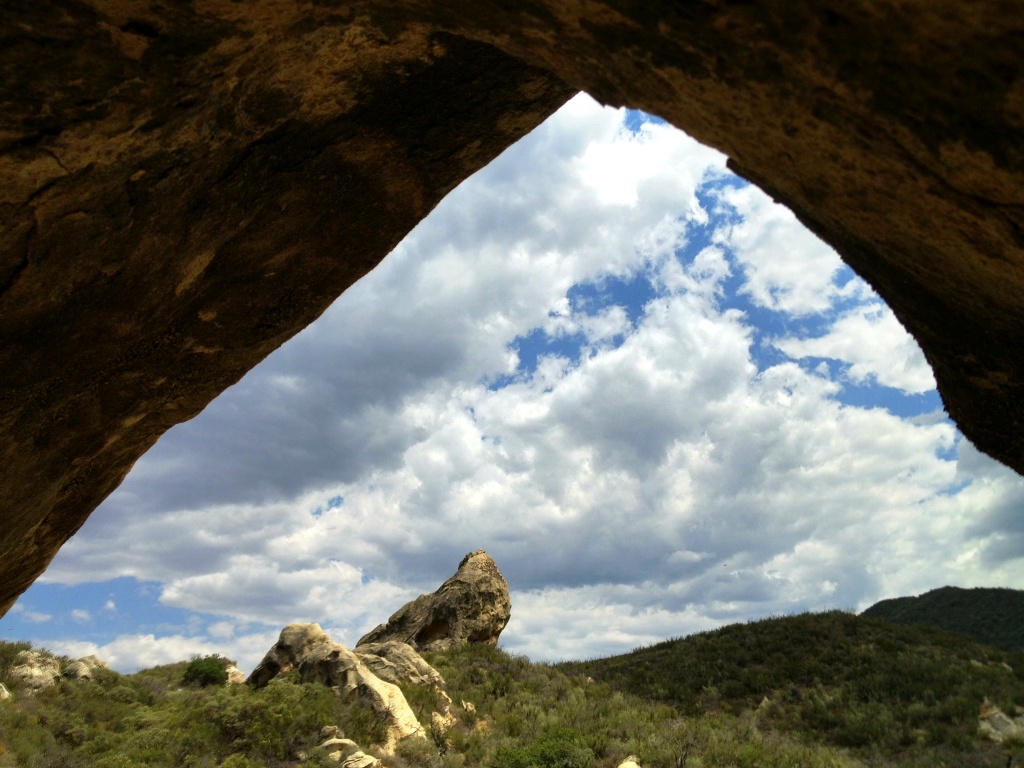
San Rafael Wilderness Los Padres National ForestI find a cave and crawl inside seeking refuge. Laying on my back on the cool sandstone I gaze out over the landscape surveying the desolate, inhospitable backcountry realm. My view of this day is entirely shaped by the sweltering temperature and dryness of the land. It’s a different perspective than when I’ve come here on other milder days.

It’s brutal out there. It can be miserable, painful and deadly. This isn’t a pleasant leisurely stroll. This is a punishing battle. It’s a land where I don’t seem to belong but for fleeting visits. Wilderness, as oh-fficially defined, is a land “where man himself is a visitor who does not remain.” Temporary visitation isn’t a choice, though. It’s an undefiable reality.

When facing nature with only what’s in a backpack, one may hold out for some time, even thrive for a period, but eventually she whittles you down and wears you out, and sends you fleeing from her indefatigable elements like a refugee seeking safe harbor and nourishment.

The 100 degree heat has left me tired, sticky lipped and with a thirst that my bottle of warm water cannot quench. Lying in the cave lost in meandering thought, I feel the heavy creep of weariness settling over me and my eye lids growing heavy.

I succumb. My eyelids fall shut.

And I doze.

Posted in Santa Barbara | Tagged , , , , , , , , , | 4 Comments

Remarkable Auto Tour In Southern California (1907)

Fording Santa Ynez River 1907“. . .we located a ford and secured two men and a team of horses to tow us through the current, which was very swift.”

The following passage, excerpted from the journal of a businessman named J. B. Powles, was included in a longer story published in April of 1907 by The Ranch, a newspaper based in Seattle, Washington. The passage relates, in part, the adventure of Powles as he drove an early make automobile, “a twenty-horsepower 1907 model Franklin machine,” through the California countryside during winter.

The route he took through Santa Barbara County over rough and rocky dirt roads was originally made for horses. This period of history was a transitional time between horse drawn carriages and gasoline powered vehicles. Much of Powles’ experience revolves around dealing with the hazards and poor conditions of the rural and primitive roads, which had originally been built for stagecoaches and buckboards.

In the full article Powles mentions numerous times the road being washed out or undermined by the river and repeatedly writes of the muddy conditions and the need to use tire chains. In one instance he admits turning back to rest for the night “owing to condition of roads and darkness.”

Like other narratives published in newspapers of the time, in which the novel thrill alone of driving the newly created automobile is the point of the story, Powles’ trip log reads like a report on road conditions and how his “machine” handled them.

Owing to the long stretches of desolate countryside and wilderness between towns, the absence of any communication out on the road but for word of mouth, the challenging conditions of remote roads and questionable reliability of early automobiles, it seems it really was a “remarkable” experience to go out for a cross country drive in southern California in the early twentieth century. Traveling by auto was an exciting but iffy prospect.

screen shot

J. B. Powles

J. B. Powles

February 18Left Paso Robles and took the road to Pismo Beach so as to divide the day’s ride. The roads were only fairly good and as we were not certain of our course we followed the telegraph poles. Left Pismo Beach shortly after noon and joined the main road to Arroyo Grande. Stopped at Santa Maria for instructions as to how to get to Los Olivos and then missed the road and took the one to Los Alamos. This was a very dangerous road because of bridges being out and the roadway undermined by the overflow of the river. We resumed the right course and proceeded to Los Olivos. After passing this place we lost our way to Alamo Pintado, but were redirected. There were lots of washouts along the way. At both Alamo Pintado and Paso Robles we found that no other vehicles had been through for seven weeks on account of the bad roads.

February 19Had to avoid the regular pass to Santa BarbaraGaviota Passbecause of bad wash outs. We took the San Marcos Pass, which is dangerous under any conditions, and is prohibited to automobiles. After leaving Alamo Pintado we encountered the river and found that the bridge was washed out. After some trouble we located a ford and secured two men and a team of horses to tow us through the current, which was very swift. From here on the road was very tortuous and dangerous. It was steep and rocky and we used the low gear almost constantly. At the highest elevation the pass was 3,300 feet above sea level. We crossed 38 arroyos. We reached Santa Barbara just after dark, with little carbide and very little gasoline left.

February 19At Santa Barbara, we learned that the roads were entirely out and impassable and we consequently decided to ship our automobile to Los Angeles and took the steamer State of California to port of Los Angeles.

Franklin Model D 1907 roadsterA 1907 Franklin Model D roadster.

Related Post:

Gaviota Pass (1906)

Posted in Santa Barbara County | Tagged , , , , | 4 Comments

Blue Elderberry Wildcraft

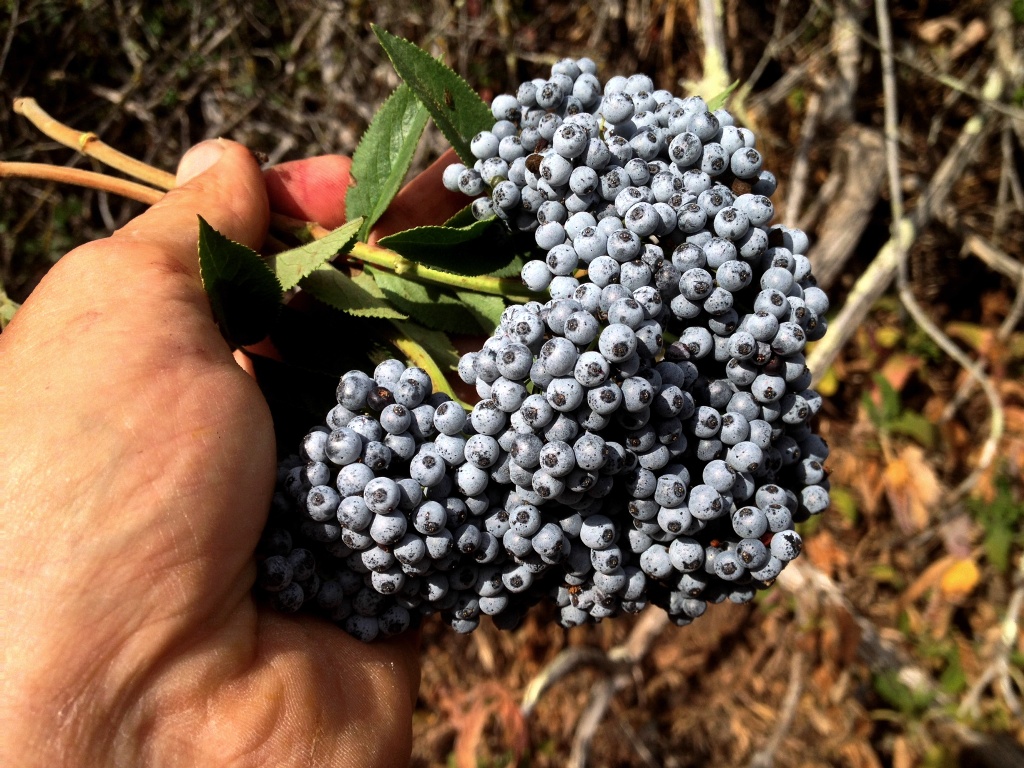
elderberry treeClusters of wild blue elderberries.

“Delectable dishes made from elderberry are a leftover from old time housekeeping, when table luxuries were not so varied and abundant as they are now.”

New-York Tribune, September 11, 1921

Wild elderberry trees are abloom and loaded with ripe fruit around these parts of California right now, the heavy clusters of blue berries dangling from small trees everywhere in branch bending profusion.

The elderberry or elder tree has been valued in one form or another as an edible and for medicinal and health purposes of all sorts for thousands of years. The berries are nutritious and exceptionally high in antioxidants. Modern research suggests that elderberries may be an effective treatment for the flu and that they offer a wide array of other potential health benefits. It’s a plant with numerous utilitarian purposes, too, and there exists an extensive record in world literature and the annals of history regarding its many uses.

The Chumash Indians used the elderberry plant medicinally and as a source of wood for crafts and toolmaking. It was used to make fire sticks for creating fire by friction and to make a type of four foot self bow for hunting. Elder wood self bows were valued over sinew-backed bows for hunting sea otters on the Santa Barbara Channel Islands, because they held up better when drenched in sea water. The bows were effective in taking small game, but were sometimes used on larger animals such as deer. Elder wood was also used to make flutes and other musical instruments. (Timbrook)

blue elderberries

elderberries (3)Two pounds of freshly harvested blue elderberries destemmed, washed and ready for use.

Newspaper articles about elderberries from the early twentieth century mention them as if they’re some nearly forgotten wild curio that belong to a different era, something grandmas used to forage for to bake pies and make jelly with once upon a time in the olden days, when people made homemade stuff from scratch.

When collected in a container the ripe fruit has a subtle perfumy fragrance somewhat similar to a rose. Blue elderberry juice is a deep purply red and has an opaque, rich hue like the blackish inkiness of concord grape juice or red wine. Fresh elderberries taste bitter, but they’re edible and have good flavor. They can be used to prepare a number of different tasty foods from glazes for roasted meats like venison to ice cream and wine.

elderberry syrupElderberry pancake syrup.

elderberry jellyA smudge of elderberry jelly.

elderberry wine makingElderberry wine making seen here in two photos that accompanied a story published in the New-York Tribune in 1907.

elderberry wine 1907Pouring elderberry juice into the barrel.
Posted in Santa Barbara | Tagged , , , , , , , , , | 2 Comments