Who’s watching?
Tell me, who’s watching?
Who’s watching me?
— Rockwell, Somebody’s Watching Me
Brian D. Fitzgerald from 999 Hot Springs Lane was caught in Los Padres National Forest leading a work crew of men with hand tools in an effort to destroy the Montecito Hot Springs on the morning of May 28, 2024.
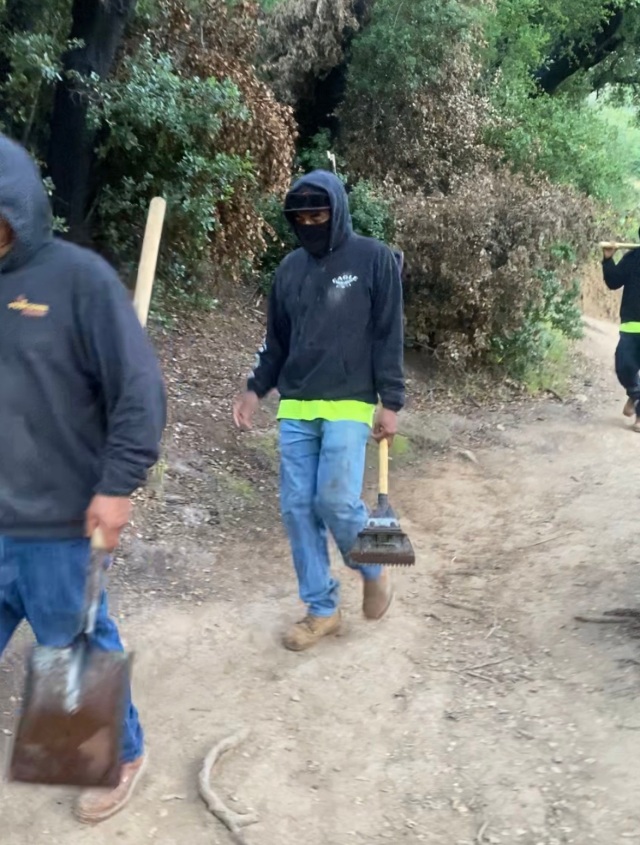
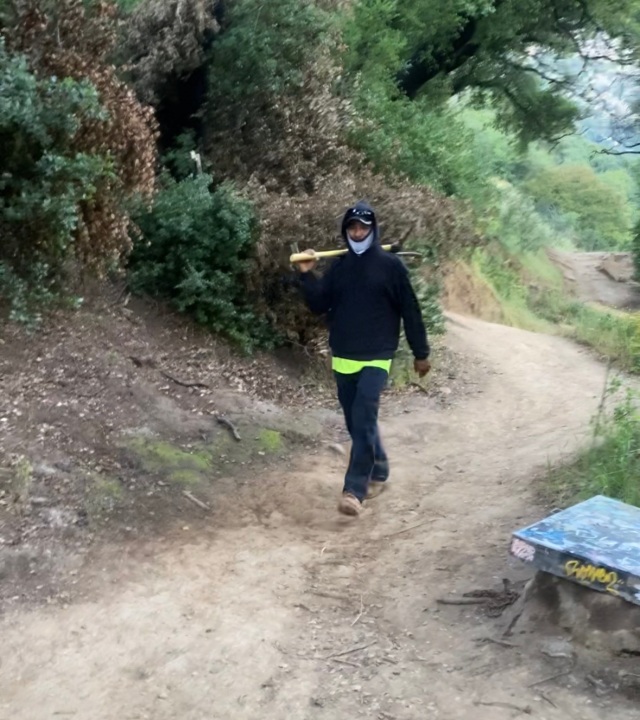
Videos show Mr. Fitzgerald in all black attempting to conceal his identity, and other men dressed in Eagle Demolition company work attire, all marching away from the hot springs that had been damaged.
I received the videos the next morning, May 29. When first played, I was surprised to immediately recognize the voice of Brian D. Fitzgerald, as he attempted to flee the scene at a fast walk, scuffling his way down the trail, arguing and getting testy.
People that know the man would recognize him from his voice alone, of course. A screenshot of his face is surely helpful. And his body type and gait further reveal his identity.
Some people know who he is and what he did, yet remain silent. His attempt at hiding is good only so long as their silence is sustained.
That is if we did not already know his name. And we hold no such reservations.
Private eyes
They’re watching you
They see your every move
Private eyes
They’re watching you
Private eyes
They’re watching you watching
You watching you watching you
— Hall and Oates, Private Eyes
I would swear an oath and take the stand in a court of law to make the identification.
That’s not the point here, but that’s how certain I am that I recognize Brian D. Fitzgerald’s voice.
We had spoken in person on more than one occasion in the days before May 28.
And so it is I know his voice.
I always feel like somebody’s watching me
And I have no privacy
I always feel like somebody’s watching me
Who’s playing tricks on me?
— Rockwell, Somebody’s Watching Me
One time in particular I shan’t soon forget. He had come walking towards me as we spoke at each other back and forth, myself stopping a moment from a hike up the trail, himself in his driveway having just driven up.
He finished that brief chance passing between us by turning sour and telling me in a nasty tone, “Go to the hot springs and smoke your weed.”
I had been asking him about the camera he had chosen to mount in the oak tree overlooking the public road. The new camera with a robot voice that yells at passing hikers from afar who are minding their own business, “Hello, you’re currently being recorded.”
The robot voice camera is on private property, indeed, but set with such sensitivity that it triggers and goes off when a hiker walks the adjacent public road.
Another time when I saw him he had yelled at me with admirable spunk and vigor, “You got a problem with that?!”
He had hired laborers to add more stones to the top of the rock wall fronting his fairly recently purchased three-acre trailside estate. I had told him to build his big beautiful wall even higher.
On yet another, later occasion, days after he had been caught and was the known vandal of Montecito Hot Springs, he poked his head over his wall with gusto to speak with me.
He started to speak and when I looked over at him he broke off mid-word, turned his head quickly and walked away.
I told him as he fled that I had videos implicating him. He denied the videos existed. He did not deny his guilt. I think his choice of words was revealing.
In the video, note that he argues about and denies that wrecking the springs is illegal. He does not deny that he wrecked the springs, but accepts the premise of the question that he’s guilty when asked if he knew it was illegal to do it. Again, his particular choice of words is revealing, I think.
On a side note, whether what he did was illegal or not does not matter to us.
I told him as he walked swiftly away from me seeking to hide in his garage, making an obvious effort to conceal his face, that I recognized his voice in the video. I offered to show him a clip to prove it.
It was the dandiest right quick change in behavior you might ever have seen. He went from an authoritative glance over his wall to gladly gone fast as possible and wilted away.
Why so suddenly shy, Brian?
Who’s watching me?
I don’t know anymore
Are the neighbors watching me?
Who’s watching?
Well, is the mailman watching me?
Tell me, who’s watching?
And I don’t feel safe anymore, oh, what a mess
I wonder who’s watching me now
Who?
The IRS?
— Rockwell, Somebody’s Watching Me
On the morning of May 28, I have been told that the gate at Hot Springs trailhead was shut and that the existing chain and keyed lock had been manipulated to appear as if the gate was locked closed and impassable.
This was unusual, presumably having been done to dissuade hikers from taking the trail while Mr. Fitzgerald and crew worked to ruin the hot springs.
Damage to the springs was fairly superficial, delivered in several forms, but readily repaired.
At least a couple of the men dressed in Eagle Demolition sweatshirts and t-shirts have been identified by Dave Docherty at Eagle Construction and confirmed to be employees.
Mr. Docherty was not helpful when first contacted, although he did return my call. He tried to blow me off in a phone conversation. He told me that I was wasting his time.
He told me to talk to the cops, apparently thinking that would scare me off and that I wasn’t for real.
Funnily enough, when I told him that that might be a good idea and that we both could go talk to the police together, he demurred and dropped it.
When I sent him the videos after our conversation he then responded in an email with new found kindness and enthusiasm. He wrote:
I will get to the bottom of this to be sure, so that whoever paid someone monies to destroy the Hot Springs will be identified.
I haven’t heard a peep from Mr. Docherty since. Apparently he’s still trying to get to the bottom, to be sure.
Shouldn’t Eagle Construction be keenly interested in finding out what exactly happened and clearing the company’s name posthaste? If that’s possible.
Did Mr. Fitzgerald hire employees from Eagle Demolition to help him wreck the Montecito Hot Springs?
Surely the laboring men in the videos did not wake up early, hike three miles round trip and work for free.
Were the men paid money? If so how much? If they were not paid cash money, how were they compensated?
What do Brian D. Fitzgerald and Dave Docherty have to say?
Come on, boys. Stand up and speak. Inquiring minds want to know.
While both men are expected to remain seated and silent, now there is a permanent record to speak forever regardless.
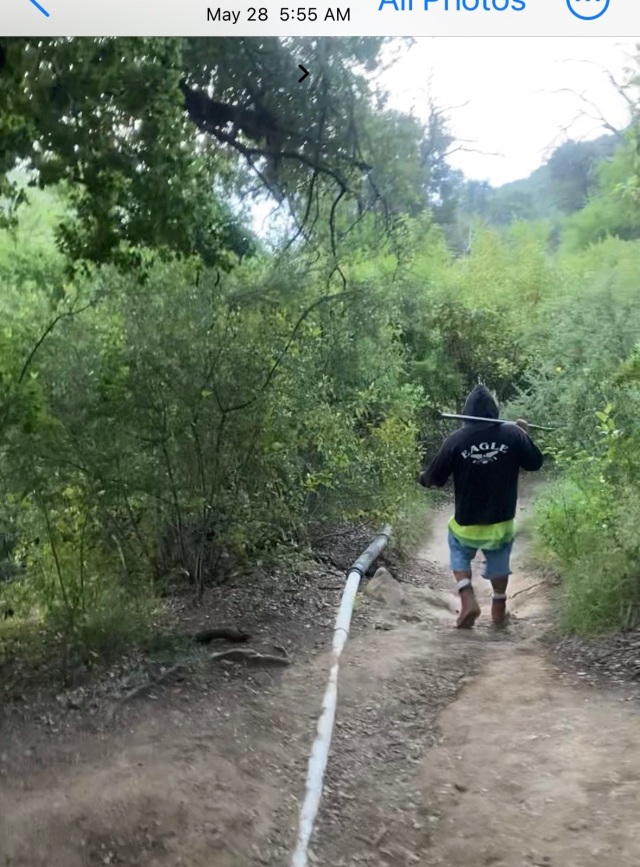
UPDATE: Here is a YouTube video so that everybody can match Brian D. Fitzgerald’s voice. Don’t take my word for it. Watch the two videos. Listen to the voice.
Evolve Media – Brian D. Fitzgerald Full Interview

https://www.youtube.com/watch?v=GeHDhSq-Rq8


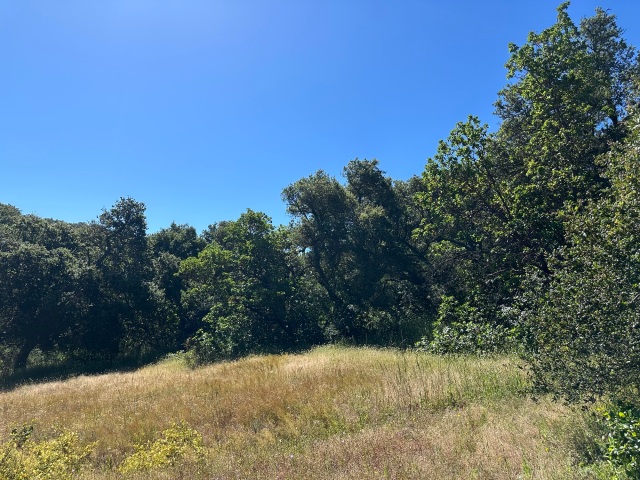
 Strawberries and poison oak.
 Santa Barbara strawberries. The sweet depth of flavor is among the richest, if only but a bit.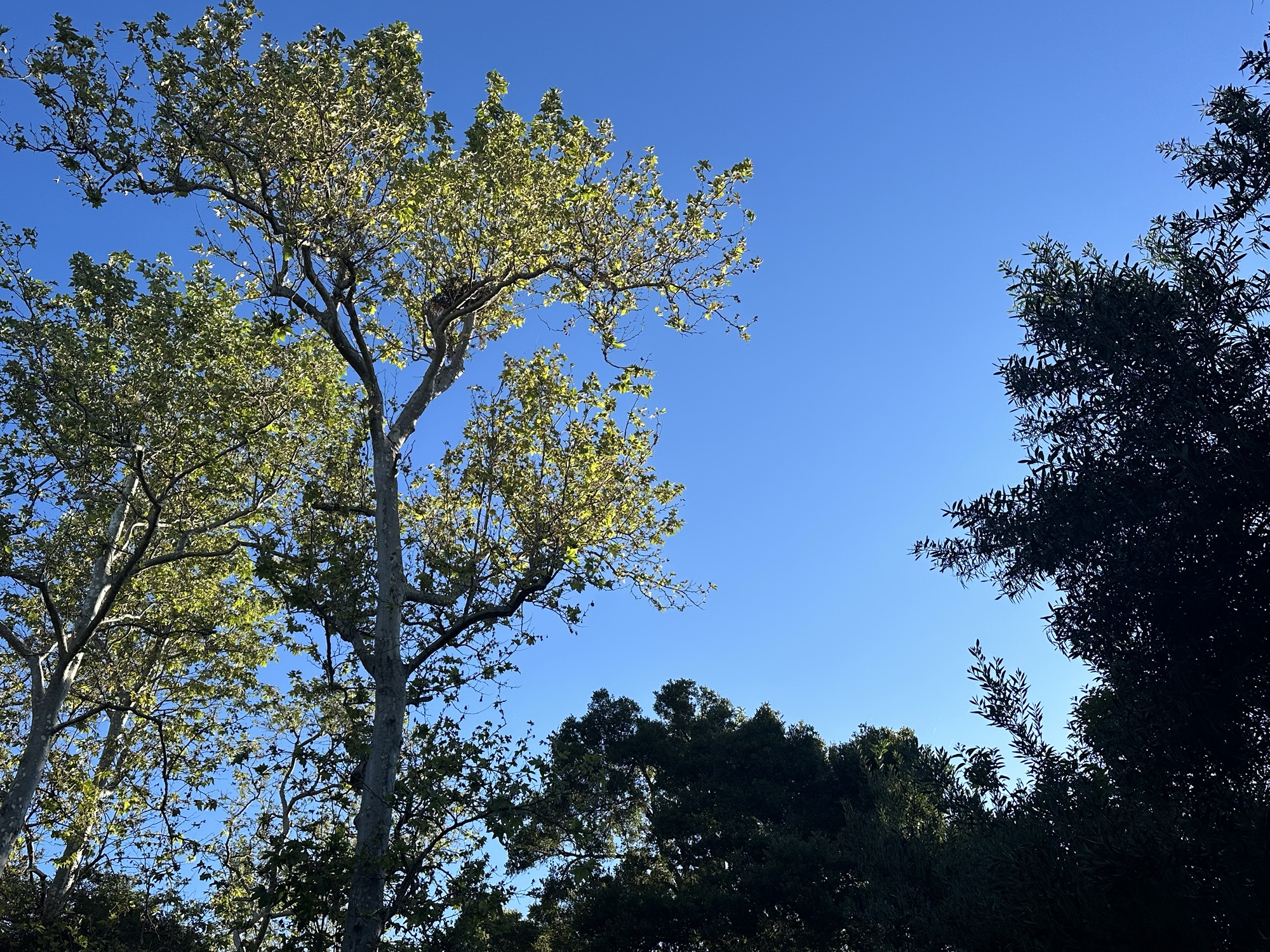
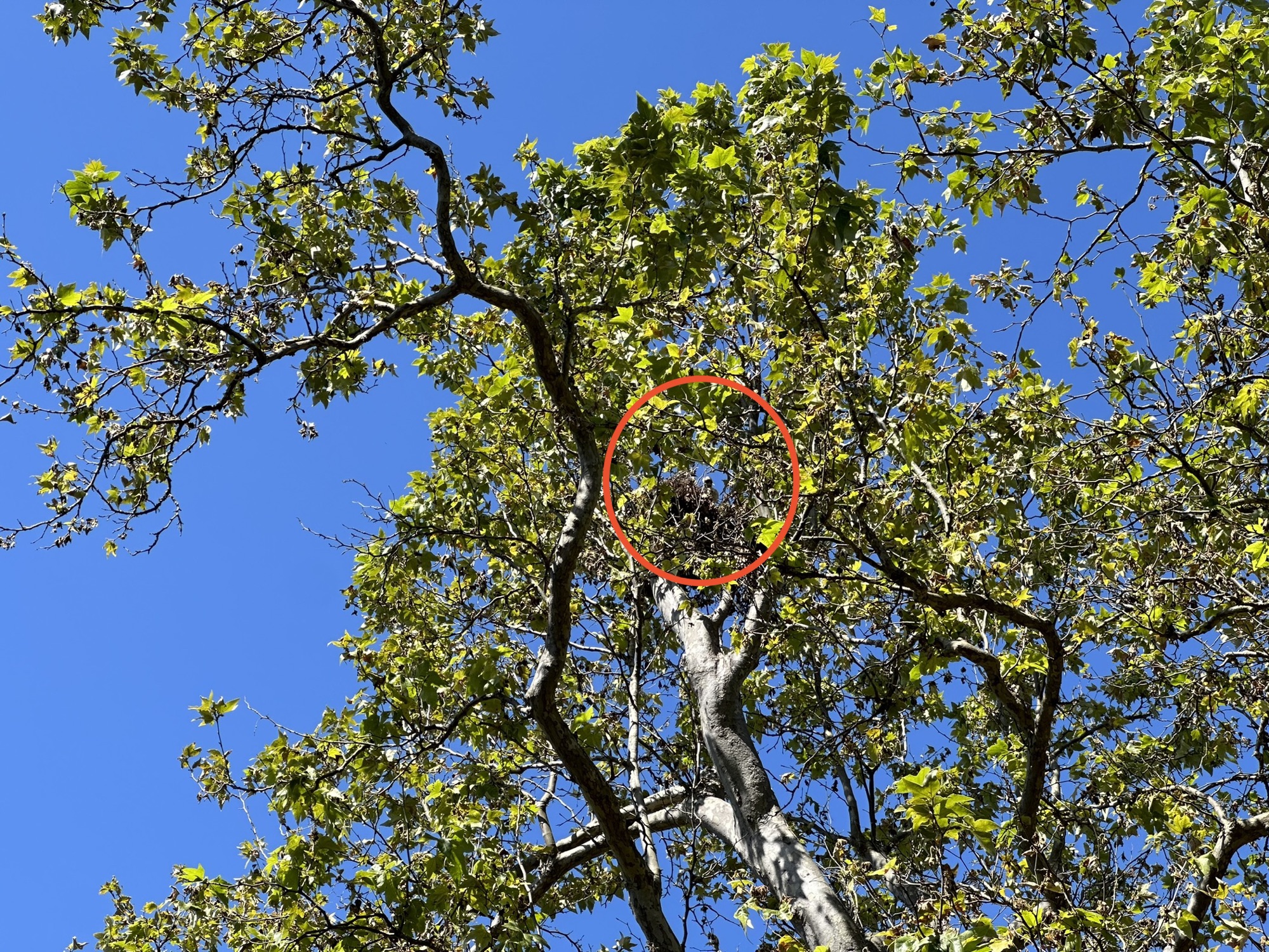
 Who’s watching who?
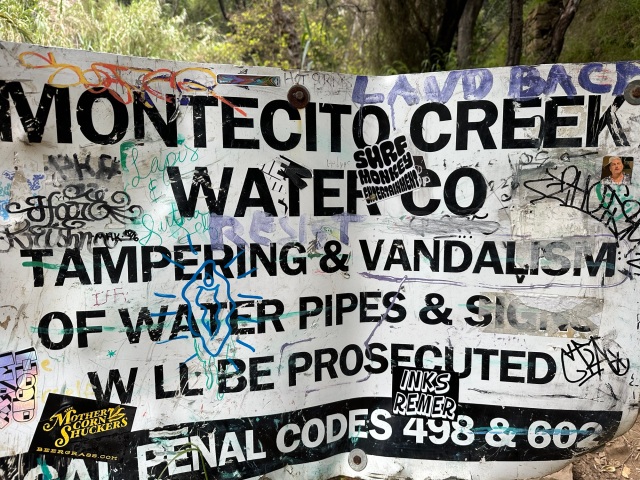 Somehow, we’re supposed to believe that the men missed seeing this sign.