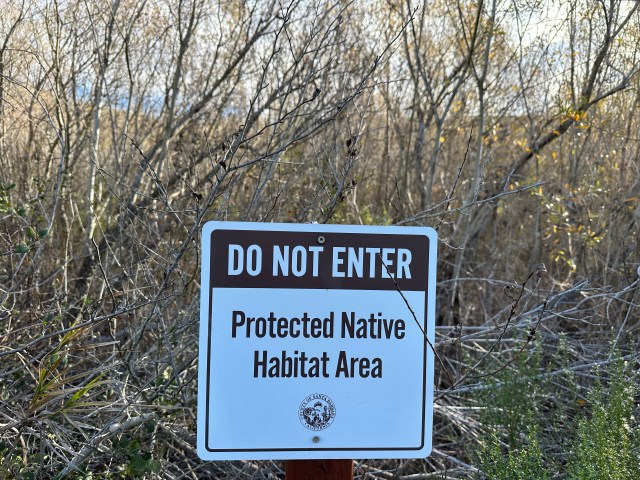
 Yikes. Alright already, sheesh. A wall of nearly impenetrable willow needs no sign. Nobody is going in there.
And we destroy everything we can find
And tomorrow when the human clock stops and the world stops ticking
We’ll be an index fossil buried in our own debris
–Bad Religion Part IV (The Index Fossil)
Buried in signs. Automatic Man strikes again.
They’re ruining the place to save it at Baron Ranch Preserve.
Like they ruined the spring at San Marcos Preserve to protect it.
The actions of leading officials and their subcontractors appear terribly insensitive and lacking in critical thought, and exhibit no creative or pragmatic vision for the future.
They unnecessarily patronize and perpetuate existing economic systems of heavy industry and the resultant downstream ideas of heavy development, which are parts of the larger problem at issue that we need to reduce and strive to wind down.
This is a public disservice and the wrong road to take leading into our future.
I was born on planet Earth
The rotating ball where man comes first
It’s been around for a long, long time
But now it’s time to watch it die
–Bad Religion, Watch It Die
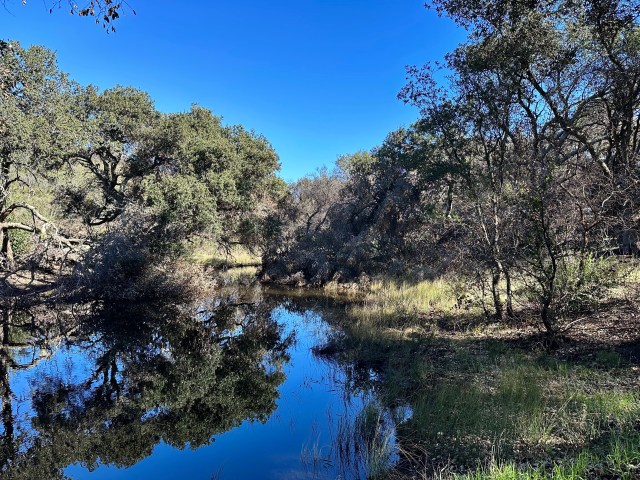
There was no problem with destructive bicycle traffic in the willow thicket along lower Arroyo Quemado creek in the Baron Ranch Preserve, such that warranted the installation of this signage.
Nevertheless, the county employee standing before both of us on that previously mentioned day insisted the signs, which she told us cost $3 million all told, were important for the protection of sensitive habitat.
When I asked why, she was adamant. She told us that bicyclists and hikers had been running roughshod through the creek.
“You could step on a turtle,” she said.
I asked what sensitive meant. I wanted to know. I still want to know.
I also asked: “If a human foot tramples a small creature to death by accident, but the dynamic biological systems at play create more to fill the void, and the populations are stable or growing, is that sensitive habitat?”
What documentation exists–studies, data, anything at all whatsoever–suggesting there was a problem in lower Arroyo Quemado?
She did not have a reasonable answer, and did not offer anything beyond lackluster opinion and empty rhetoric. She also could not define the word on the signs she said cost so much.
Sensitive appears to mean nothing more important than that some leading official(s) somewhere personally desires the exclusion of humanity for some reason.
The word on the sign is as meaningless as it is elastic. They might stretch it to cover anything they wish at any time, because it does not have a defined meaning.
Pursuit of the positive ends they envision justifies their negative means in practice, I guess.
There is no reason for the common bicyclist to go into pointless and dead end willow thickets and brambly places. To suggest otherwise defies common sense.
There is nothing to see in the arroyo but an unremarkable wide and thin seasonal wash, and nowhere to go, but out the other side of the thicket to somewhere a road already leads, but which is off-limits and dead ends anyway.
And so most people never went in there, never would, never will.
And yet the signs. Lots of them.
 Trailside bloom, Erigeron foliosus. A fantastic native perennial for the home garden that is drought-hardy and grows in sun-blasted hot areas, throwing flushes of three-foot-high mounds of flowers.
Sign, sign
Everywhere a sign
Blockin’ out the scenery
Breakin’ my mind
Do this, don’t do that
Can’t you read the sign?
–Five Man Electric Band, Signs
I told the lady that the purchase of industrial products shipped from across the country was an outrageous waste of money and resources and a terrible pollutant.
That such practices run contrary to the spirit and principles of preservation, conservation and the long-view vision of biological sustainability that undergird it all.
The employee’s retort was that the signs were purchased locally. This was a bogus answer, and an insult.
To suggest the signs are locally sourced is a major misrepresentation.
I noted that the base components of the signs were manufactured by different companies in heavy industry, located in different places throughout the country or world. Then it’s all shipped by air, rail and truck, and done so multiple times over.
Those signs cannot possibly come from town, but necessarily must come from many other places far away.
Like simple wood pencils, metal signs are something everyone uses, but no single person can make by themselves.
Have you considered that no one person even knows how to make a sign all by themself? It’s actually a major industrial endeavor.
See I, Pencil by Leonard E. Read.
You could trace the metal sign components all the way back to the original source in intensive, extractive mining operations and the earth ripped asunder.
To the industrial plants where the raw materials were shipped to be manufactured into base components.
To the factories producing sign blanks and hardware and lumber and ink.
And what about the printer? You need a machine to letter the signs. How many components make up that machine and where do they all come from? What about the machines that make those components?
Add on the cost of silviculture and logging of trees prior to being made into lumber for the signposts.
Add on the chemical production for the anti-rot preservative treatment that’s California compliant.
And so on and so forth. How far do you want to trace it?
At some point down the long disfiguring and dirty industrial chain, we come to the little local Santa Barbara sign seller in town.
The only things local are the words chosen in the abstract within somebody’s head in town to be printed onto the sign.
None of it was necessary. A tremendous waste, so outrageously thoughtless.
And now the trail looks like hell for it.

Local Livelihoods and a Culture of Craft
Probably one of the most valuable yields coppice woodlands could provide is a renewed local economy based on home-scale production of useful and necessary products.
As our current globalized economic system self-destructs before our eyes, we must begin to think about strategies to create a meaningful, right livelihood that enables people to express their skills and creativity and contribute to the renewal of our communities.
It seems clear that we need to build a new modern economy around the production of goods and management of land-use systems that serve the people who use them.
In the very same way that coppice sustained a skilled and independent class of craftspeople and land managers historically on the European continent, could we see a similar evolution of a productive community of citizens providing products for neighbors and community members today? I believe so. In fact, I believe it is and will be essential!
While this is no small task to design and implement, human history proves time and again that we cannot separate ecology from economy.
—Mark Krawczyk, Coppice Agroforestry: Tending Trees for Product, Profit, and Woodland Ecology
I told the county employee that the smart way to protect the riparian corridor along the willow thicket was to use the willow itself.
Coppice the willow and use the wood poles to weave an aesthetically pleasing, natural fencing.
A wildcrafted willow fence compliments the existing wild ambiance of a natural place and welcomes walkers with warmth and dignity.
I wrote of coppicing in the post about the trashing of San Marcos Preserve spring. In my home garden I coppice a mulberry bush after harvest and use the poles for fencing and supports for vegetables and fruit trees.
Yet such a practice goes much deeper in its wisdom than mere utilitarian function.
By coppicing the willow in Baron Ranch Preserve, we could provide a never ending supply of a local resource produced sustainably and grown effortlessly on-site.
A fence that is gloriously free of the pollution and negative economic externalities associated with the manufacture and shipment of industrial products.
Moreover, if wildcrafted from green poles the willow fence would take root and begin to grow into a living structure that could be pruned and formed as desired.
When my children attended The Oaks Parent-Child Workshop nursery school in Santa Barbara we built a rough interpretation of the traditional Chumash willow pole house or ‘ap. Some of the poles were still green when pushed into the earth and took root after several weeks and began to grow green and leafy.
A willow pole fence could be inspired by natural form like art nouveau with organic and curvilinear lines and loops. It could be made to look more traditional in design like a cottage garden or ranch or farm fence. It might be woven to blend in entirely and not even be seen at all.
Such a fence is wildly adaptable as needed, naturally.
If there arose a problem of destructive traffic in the creek, the use-trail or hole in the bush leading in could be plugged with a section of willow fence without degrading the ambiance of place, and done so quickly, and cost nothing but a person’s time.
The entire trail along the arroyo does not and would not need fencing, but if it did, that is certainly possible too, and with a light touch.
Otherwise if woven from fresh yet dead willow poles, after so many years of use, when it became too old and rotten, the fence could be biologically recycled on-site back into the Earth and a new fence wildcrafted.
I told the lady, with her sore knees headed to her doctor’s appointment that day, civic functions could be organized.
Invite people of all ages to come volunteer on the preserve to learn and harvest willow, and weave and install the clean, cleverly unobtrusive fence.
Natural fencing that is pleasing to look at and even touch. In fact, you might even feel better after smelling it, because wood is good for you.
We should keep natural places more natural.
Evidence suggests there are benefits to wood for the human mind and mental well-being over metal and other materials. One would think these findings are applicable.
“The effect of wood on the nervous system showed that the brain becomes calmer and less stressed, probably because wood is natural and more familiar for humans.”
–Wood and Its Impact on Humans and Environment Quality in Health Care Facilities, National Institutes of Health
I suggested local scouting groups might earn badges.
School classes could come for field trips.
Volunteer projects could be offered to enthusiasts, while also extending opportunities to local students to satisfy necessary credits for graduation. Community service work could be offered.
This is how to tie people directly to the land and forge deeper relationships as knowledgeable caretakers. To turn people on instead of off. To enrichen and raise up culture while doing the same for the land.
To build sense of communal ownership and enthusiastic responsibility as local stakeholders, as rooted in love of place developed through visceral first-hand personal experience in the field, education and edification.
Telling people no fails to accomplish much if anything positive, and sometimes it can be counter productive.
Guiding behavior through positive reinforcement is usually more effective than shouting no.
Buying costly signs from outside and turning the trail into a gauntlet bristling with negativity is of no benefit whatsoever, for people or land.
The gaiadamned signs are posted so close to each other on either side of the trail yelling at walkers that one sign can be seen from the other.
Aside from the waste and the unsettling ambiance the signs create, the number installed is curiously excessive, the posting oddly heavy handed.
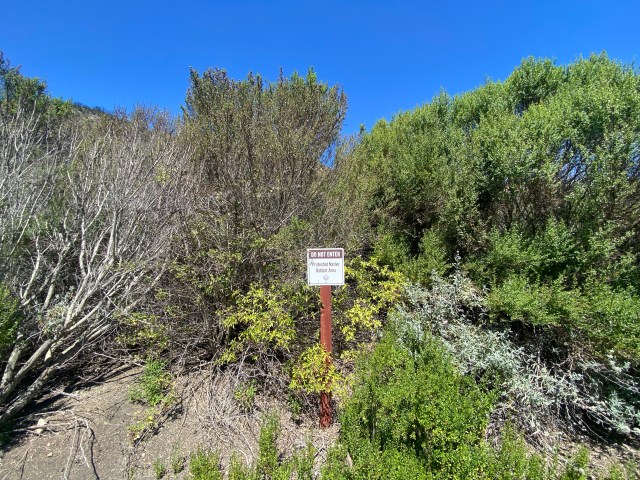 Unnecessary unsightly, costly signage. Nobody went in there anyway.
Change of ideas, change of ideas
What we need now is a change of ideas
–Bad Religion, Change Of Ideas
Coppicing and weaving willow is a way to highlight the value of California Native Traditional Ecological Knowledge, and to reinvigorate once dying, yet highly effective wildland management practices. The ancient deep ecology that has for too long been ignored.
All these wonderful opportunities of enrichment for the people and the natural world were missed when an obscene amount of money was squandered on the purchase and installation of such heartlessly rude and ugly signage.
We are poorer for it monetarily and culturally. The land suffers too.
Of course, it would take money and resources to fund a willow fencing project and classes and work programs, even if it’s otherwise something simple to do.
I figure $3 million ought to cover it.
 Welcome to Baron Ranch Preserve.
Related Posts:
Restoration Travesty, San Marcos Foothills Preserve
Hiking is Not a Crime: Hiker’s Pre-check Forest Entry Pass
The Myth Of Wilderness and Ethnocentrism: Race and Recognition In the Woods

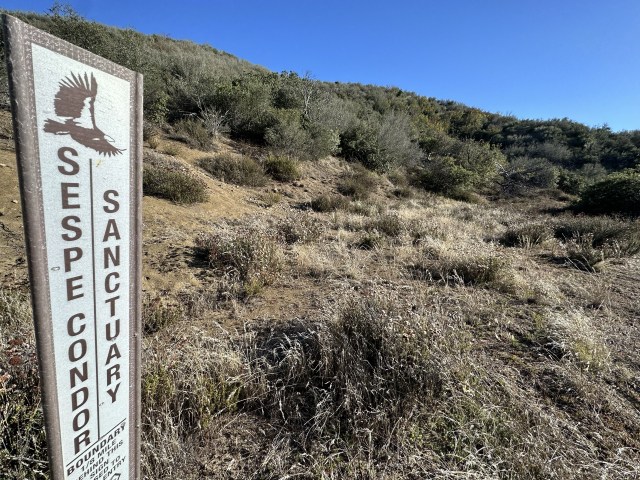 A thin sign in Sespe Wilderness only but several inches wide with not another sign in sight.
 Restoration travesty (January 2023)
 The original thin little footpath, newly decommissioned, but still regularly walked by the usual suspects. (January 2023)
 Bachelor’s Button on West Mesa, San Marcos Foothills Preserve
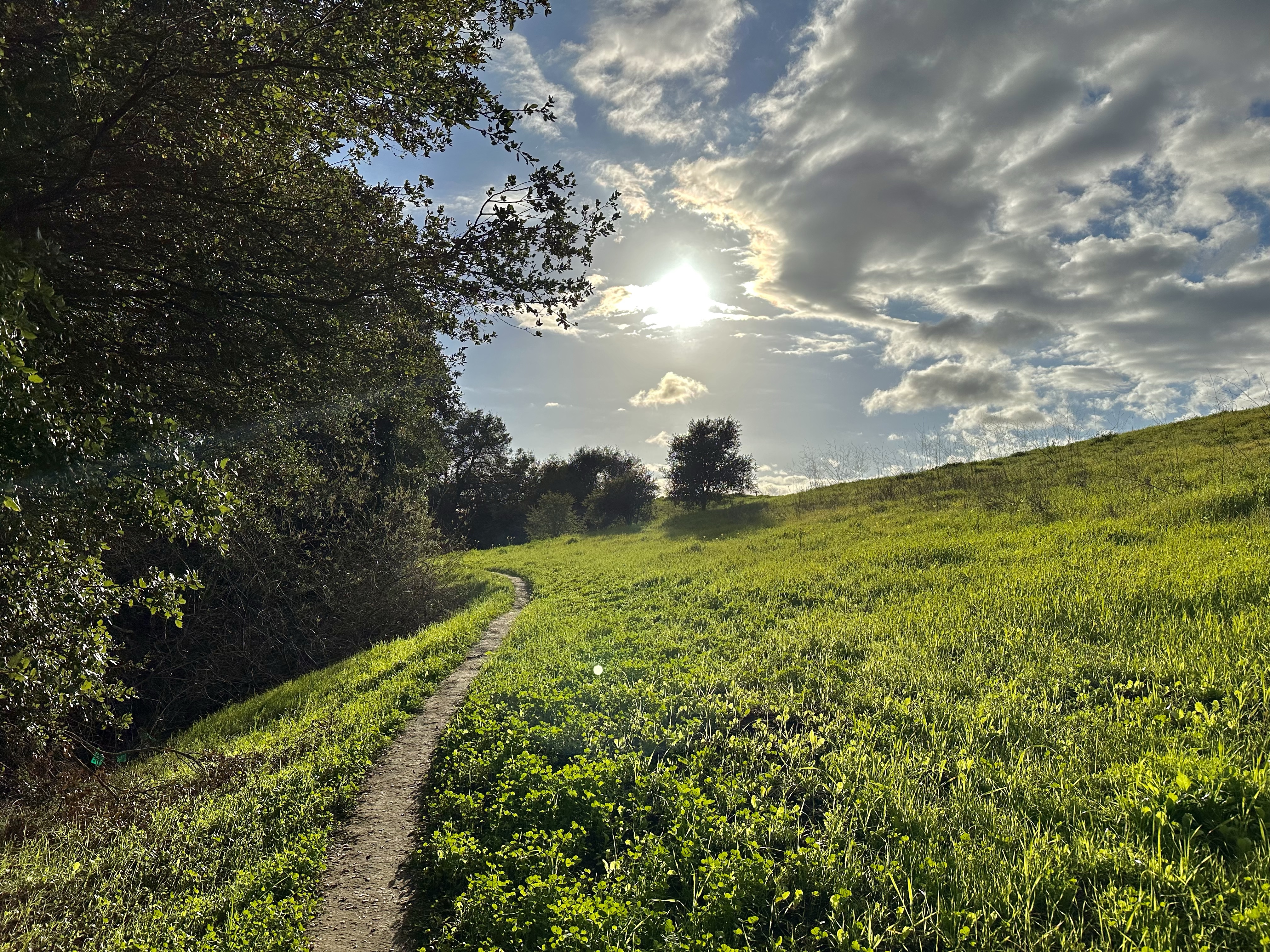
 Sunset glow on an iris in the preserve.
 View of Spring Potrero as it looked in 2016.
 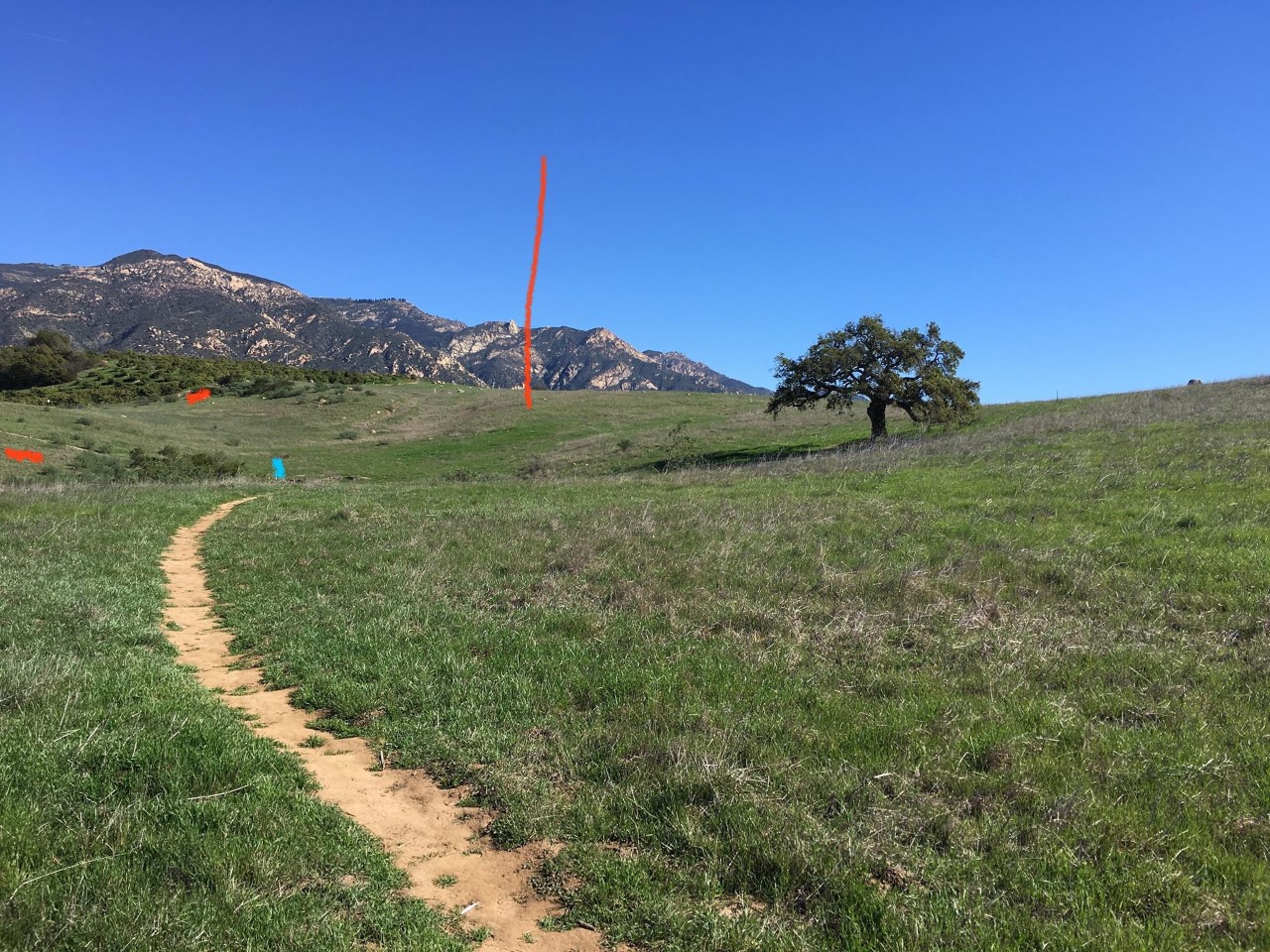 Looking over the spring denoted by the blue dot and onto bowling Spring Potrero noted by the large red line. The other two red slashes underline the course of the people’s path, hardly visible.
 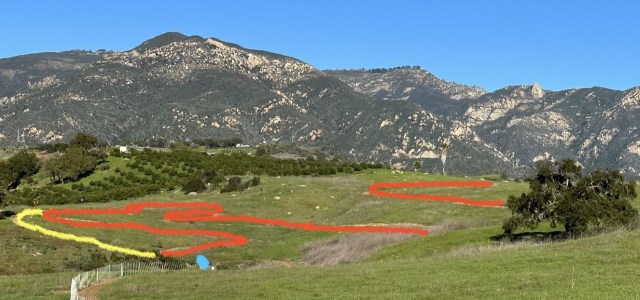 The view showing the course of the new pathway in red and the old trail in yellow. (January 2023)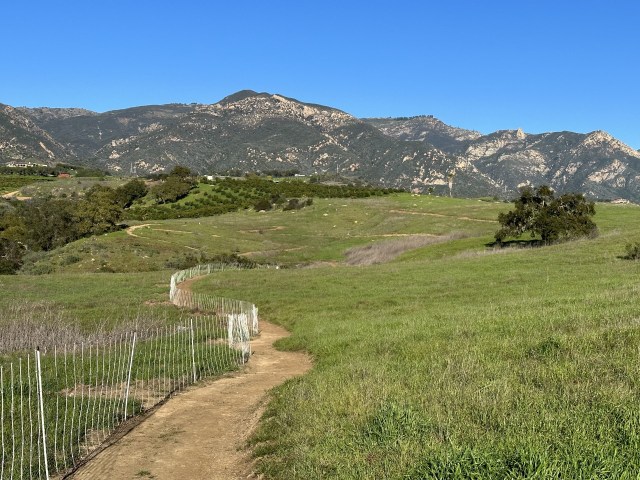
 Mindless meanders.
 Detail of U.S. Forest Service map from 1938.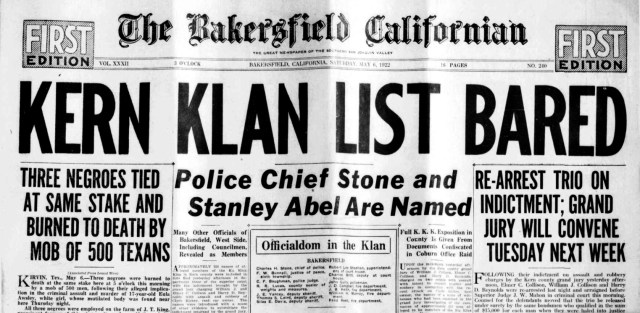










 Jack Elliott's Santa Barbara Adventure