“I love the feeling when it falls apart.”
–Red Hot Chili Peppers, Desecration Smile

“By virtue of and pursuant to the authority vested in me by the act of June 4, 1897, 30 Stat. 1, 11, 36 (U.S.C., title 16, sec. 473), it is ordered that the name of the Santa Barbara National Forest, in the State of California, be, and it is hereby, changed to Los Padres National Forest.”
—Franklin D. Roosevelt
Executive Order 7501
The White House
December 3, 1936
____________________________
“It will be seen that the Santa Barbara National Forest was the result of a consolidation of different national forest units.
It was located, however, in six counties and residents of other counties somewhat resented the name Santa Barbara.
Public pressure was brought to bear on local administrators to change to a name less identified with one county.
The four counties of Ventura, San Luis Obispo, Santa Barbara and Monterey, in which the bulk of the national forest was located, were all closely identified with mission history, and the trail of the Mission fathers led over the rugged slopes of the Santa Barbara National Forest.
Furthermore, nine of the old missions were located adjacent to the national forest area, already replete with an atmosphere of Spanish and Mexican days.
It was quite logical that the name finally chosen, ‘Los Padres’ (The Fathers), would be met with universal approval, so by executive order of President Franklin D. Roosevelt, dated December 3, 1936, the Santa Barbara National Forest became Los Padres National Forest, ‘The Forest of the Fathers’–a fitting memorial to its first white users.”
–William S. Brown, June 1945 (rev.1972) History of Los Padres National Forest, 1898–1945
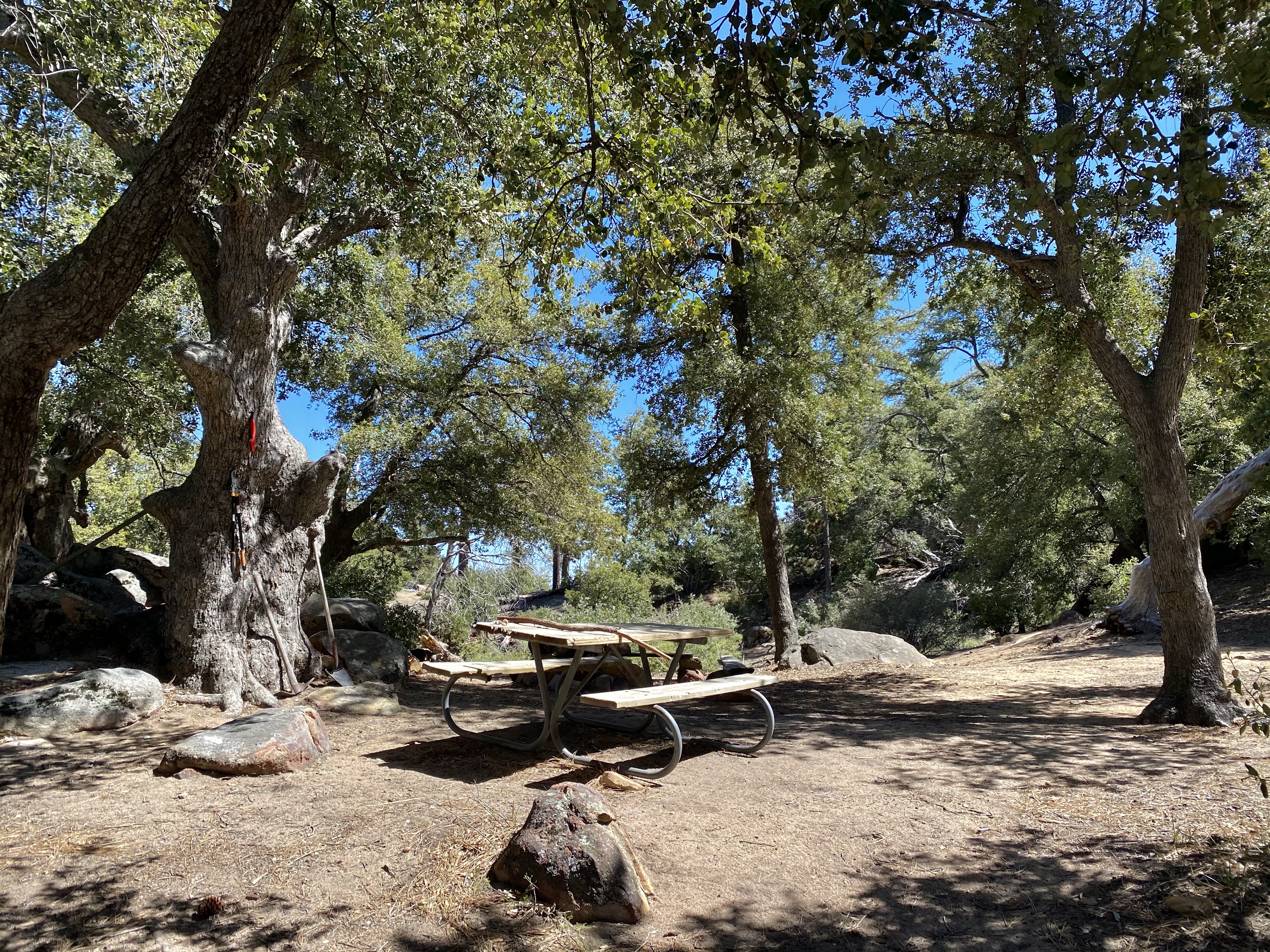 Afternoon in Condor National Forest
Something is wrong with the name Los Padres as it was applied to our national forest and we need to change it.
I first wondered out loud about this back in June of 2020: Rename Los Padres National Forest? Race and Recognition In the Woods.
I wade once more into the breach.
This is not a matter of applying contemporary mores to old choices made way back when.
This is not about fickle opinion or trying to make the past conform to today’s turbulent and finicky cultural preferences.
The name was as wrong in 1936 when it was first chosen as it is today.
Furthermore, whatever harm came to Native Americans at the hands of Los Padres is not my concern in this post, and that the name may be offensive to some people because of that history is not important here at the moment.
Those arguments for change are insufficient and miss the larger problem with the name. My focus is elsewhere, and much deeper.

The argument for change needs to be focused on the name itself as it was applied to our forest, not the emotions of some people in reaction to that name.
We can find outrage and grief and insult across America. It’s a brutal and violent history in many ways and in many areas, which guarantees roiling emotions.
If we extend the logic of the argument about the name being offensive, it suggests we should rename hundreds or thousands of places in America, because they honor people who in addition to their great accomplishments also did some bad things or said some bad things.
That’s not a good argument for change. It casts far too wide a net and calls into question the naming of such places as Comanche National Grasslands.

“Enemies, meanwhile, were enemies, and the rules for dealing with them had come down through a thousand years.
A Comanche brave who captured a live Ute would torture him to death without question.
It was what everyone had always done, what the Sioux did to the Assiniboine, what the Crow did to the Blackfeet.
A Comanche captured by a Ute would expect to receive exactly the same treatment (thus making him weirdly consistent with the idea of the Golden Rule), which was why Indians always fought to their last breath on battlefields, to the astonishment of Europeans and Americans.
There were no exceptions.
Of course, the same Indians also believed, quite as deeply, in blood vengeance.
The life of the warrior tortured to death would be paid for with another torture-killing if possible, preferably even more hideous than the first.”
—S.C. Gwynne, “Empire of the Summer Moon: Quanah Parker and the Rise and Fall of the Comanche, the Most Powerful Indian Tribe in American History.”
“The name Comanche is derived from a Ute word meaning ‘anyone who wants to fight me all the time,’” the Britannica entry reads.
I rather like that. And I am not suggesting we rename Comanche National Grasslands.
But it memorializes a people that, among many other things, almost wiped the Apache off the map once and for all and inflicted upon them, and anybody else caught, extraordinarily imaginative acts of cruelty, torture and death.
“Comanches were incredibly warlike,” author S.C. Gwynne says in a National Public Radio interview. “They swept everyone off the Southern plains. They nearly exterminated the Apaches.”
That’s a serious word, exterminate.
It was not by happenstance that some of the last frontier taken by the United States Army in the nation’s westward expansion was that of the Comanche, whom were perhaps the greatest mounted archers since the Mongols.
When Americans first came across the Comanche in Texas in the 1830s, they found what they saw nearly impossible to believe and were astounded by the incredible horsemanship and archery skills of the warriors.
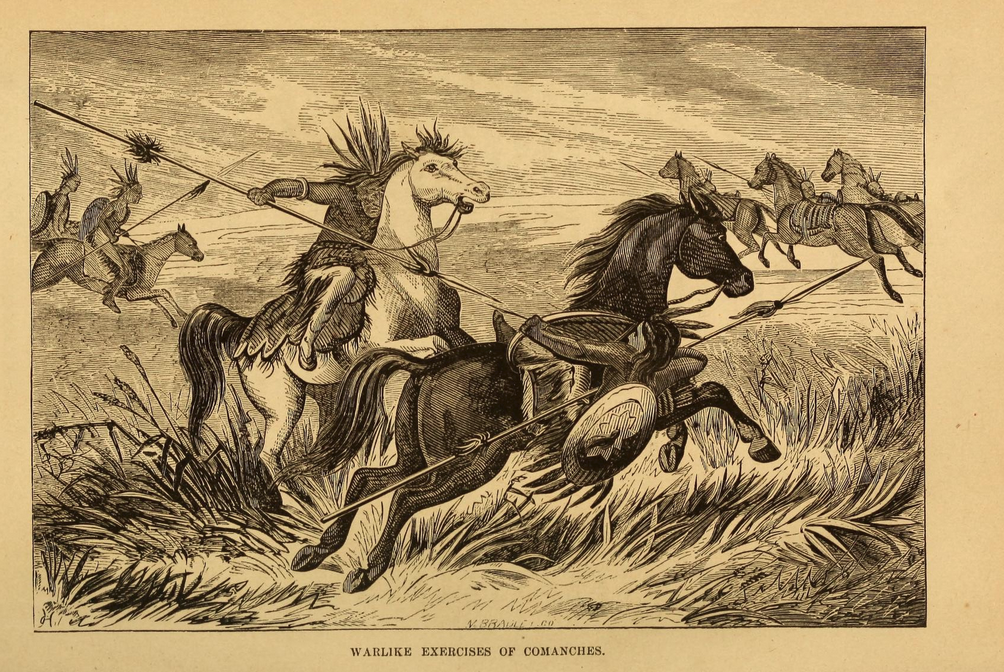 A vintage print from a book on American Indians by John George Woods (1877). Look carefully and note the three side-mounted warriors in the upper right corner. Comanche National Museum and Cultural Center
“There is one warlike feat in which all the Comanche warriors are trained from their infancy.
As the man is dashing along with his horse at full speed, he will suddenly drop over the side of his horse, leaving no part of his person visible, except the sole of one foot, which is fastened over the horse’s back, as a purchase by which he can pull himself to an upright position.
In this attitude he can ride for any distance, and, moreover, can use with deadly effect either his bow or fourteen-foot lance.
One of their favorite modes of attack is to gallop towards the enemy at full speed, and then, just before they come within range, they drop upon the opposite side of their horses, dash past the foe, and pour upon him a shower of arrows directed under their horses’ necks, and sometimes even thrown under their bellies.
All the time it is nearly useless for the enemy to return the shots, as the whole body of the Comanche is hidden behind the horse, and there is nothing to aim at save the foot just projecting over the animal’s back.”
—James Hobbs, Wild Life In the Far West; Personal Adventures of a Border Mountain Man (1872)
The Comanche waged wars of annihilation against other Native American tribes for hundreds of years. Ultraviolent killer raiding was part and parcel of their identity and who they were at that time.
A Comanche raid might entail theft, kidnap, enslavement, gang rape, torture and wanton killing. Including the slaying of small children.
That may be offensive to anybody these days. In the scope and nature of violence and intent toward adversaries like the Apache, there is no question whatsoever that it far exceeded anything that ever happened between Los Padres and California Indians.
Do we change the name of Comanche National Grasslands because it may be offensive?
I don’t think so. That isn’t the argument to be made against the name Los Padres either. It misses the much more serious problem at issue as I see it.
 Eagle’s Head on the way to Mission Pine.
Let’s look critically at William S. Brown’s brief chronicle of the renaming of Santa Barbara National Forest in 1936 to Los Padres, as quoted at the beginning of this post.
“The four counties of Ventura, San Luis Obispo, Santa Barbara and Monterey, in which the bulk of the national forest was located, were all closely identified with mission history, . . .”
That the missions were located in the same county as the forest is a remarkably tenuous connection of no significance. Thinking up a vaguer, more unimportant association might be a challenge.
But that’s the best Brown could muster with what he had to work with, because there isn’t much else to speak of so far as a connection between Los Padres and the forest.
Los Padres did not locate their missions within the forest nor carry out their most passionate work there.
Apparently they were memorialized for, essentially, cutting down trees and diverting water from the forest, maybe some hunting. I’m stating it simply. That was largely their use of the forest in Santa Barbara County, at least.
Today’s Mission Pine Spring Camp and Mission Pine Basin Camp in the Santa Barbara backcountry are references to Los Padres’ cutting of timber for construction of the mission in Santa Barbara.
It was built in part with Chumash Indian labor.
The remnants of the padres aqueduct system can still be seen in mountain canyons.
This is not to make an environmental judgment call on tree cutting and water diversion, but to suggest that what Los Padres did in the forest was not particularly impressive and not worthy of national recognition.
I’d say it, uh, pales in comparison to what our own citizens had accomplished in Condor National Forest.
 Barefoot in the mountains of Santa Barbara County.
Through time and space nobody was more closely identified with the bulk of the forest itself than California Indians. Everybody knows this and has always known this.
Even back in 1936, with a more limited understanding of Native history and much less appreciation of Native peoples, the people who named our forest certainly knew who was there foremost and longest.
That close connection with raw nature had long troubled most Americans.
Brown’s reasoning falls apart under the most minimal of considerations and can bear no scrutiny whatsoever.
It seems that the forest itself or human achievement therein did not figure into the naming of Los Padres National Forest. Apparently, there was something else.
 Sunset Valley, aptly named.
Brown emphasized race in his history of the forest and whiteness was a topic of interest to him with such phrases like “the first white men” and “the coming of the white man.”
The reasons for this are left unelucidated and remain a mystery to me, other than to conclude Brown was a man of his times preoccupied with such notions.
Brown wrote of the Indians and he noted their long presence and tenure on the land. He referenced in passing white aggression and mentioned in a sympathetic manner the poor treatment of the Indians.
Yet still, nevertheless, in Brown’s words above I see certain people raised up and illuminated, while other people were overlooked. One group of people was white and the other was not, as it happened.
Whatever the case may be regarding intent, the end result was the same. Certain people were ignored and written out of history.
A national narrative might be narrowly and exclusively crafted to suit and advance a particular view of the past, and done so by the people with the greatest access to the systems of power governing and defining society.
I’d like to suggest a correction to Brown’s narrative.
More likely, that was not the trail of Los Padres, but rather, the trail of California Indians that the mission fathers followed. Yet it’s been erroneously attributed to Los Padres as evidence justifying the name of the forest.
Isn’t that what really happened?
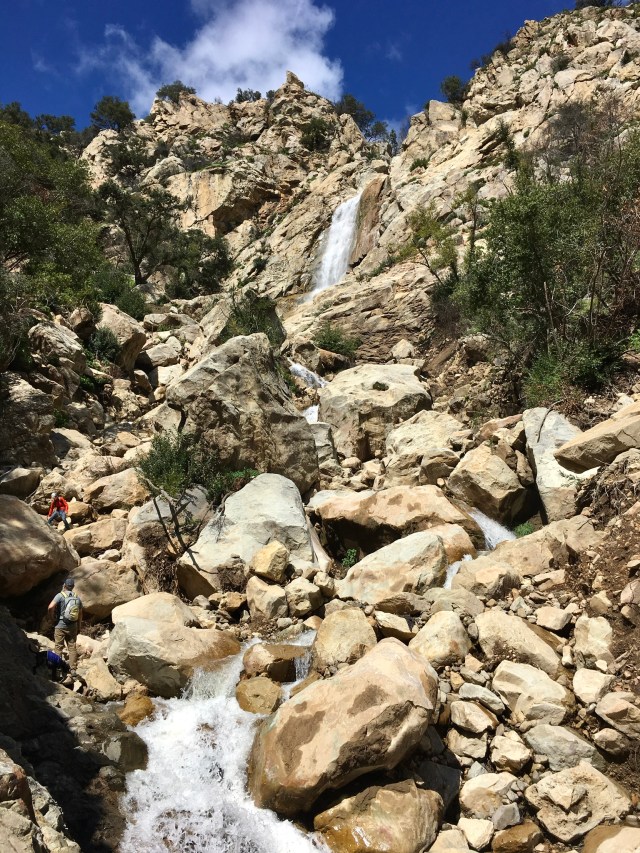 Tangerine Falls after the floods and Montecito Debris Flow catastrophe.
In the case of crossing over the Santa Ynez Mountains behind Santa Barbara, a Chumash trail was eventually followed, more or less, by American road builders and now here today we have Highway 154 known as San Marcos Pass, officially named the Chumash Highway.
Los Padres did not come here and start bushwhacking new trails through a virgin steel wool forest of impenetrable chaparral that could stop an army.
Los Padres surely walked through a forest thinned by Native tending practices.
Beyond that, they must have followed existing trails long ago created by those humans that were here for thousands of years before them, as any sensible person would do. They weren’t idiots.
Right?
Weren’t these trails first walked by the Chumash and then later followed by explorers, Padres, pioneers, settlers, stagecoaches, automobiles and hikers?
Isn’t that what really happened?
From my post in 2020:
“In 2007, in support of renaming San Marcos Pass the Chumash Highway, then California State Assembly representative, Pedro Nava, cited a ‘peer reviewed study that demonstrated the profound historical significance of the 8,000-year-old Chumash trail network.’”
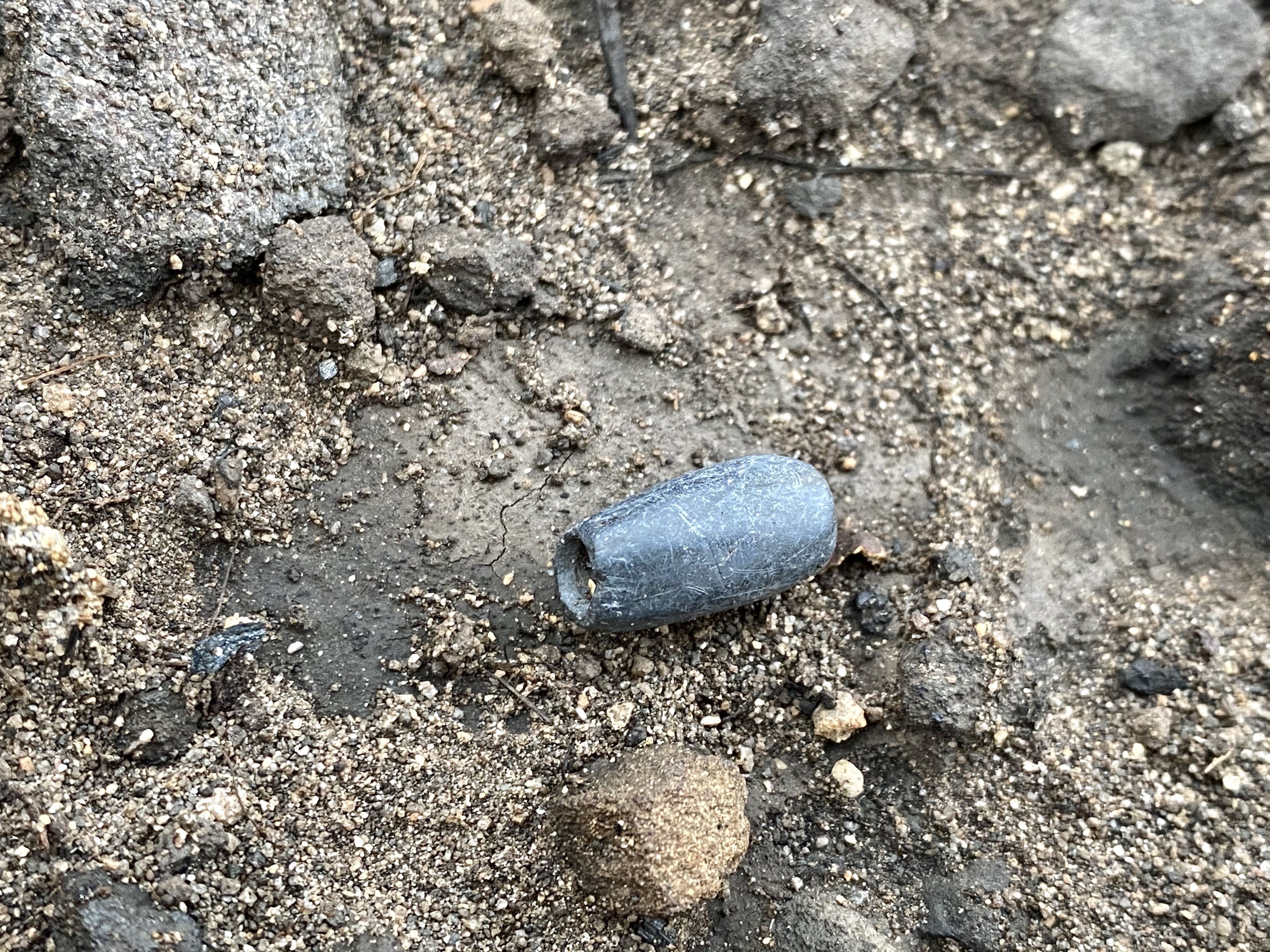 A long-lost Native American stone bead seen in Condor National Forest.
Brown continued with the tortured reasoning:
“Furthermore, nine of the old missions were located adjacent to the national forest area, already replete with an atmosphere of Spanish and Mexican days.”
Adjacent. Why is a flash-in-the-pan relative short period of work and life adjacent the forest by Los Padres of greater importance than over eight thousand years of living and working within it by California Indians?
If, that is, the important matter here is the forest and human achievements thereabouts.
It’s a rhetorical question. I’m holding Brown to his own standard to illustrate the absurdity.
I would not expect the forest to be named after California Indians in 1936, but if they were searching back then for people that truly used and knew the forest, then that is the obvious, eminent group of folks.
It’s as if the farther from the forest a person lived or were born and the less relevance the forest had in their lives, then the more likely the forest would have been named after them.
What is this nonsense?
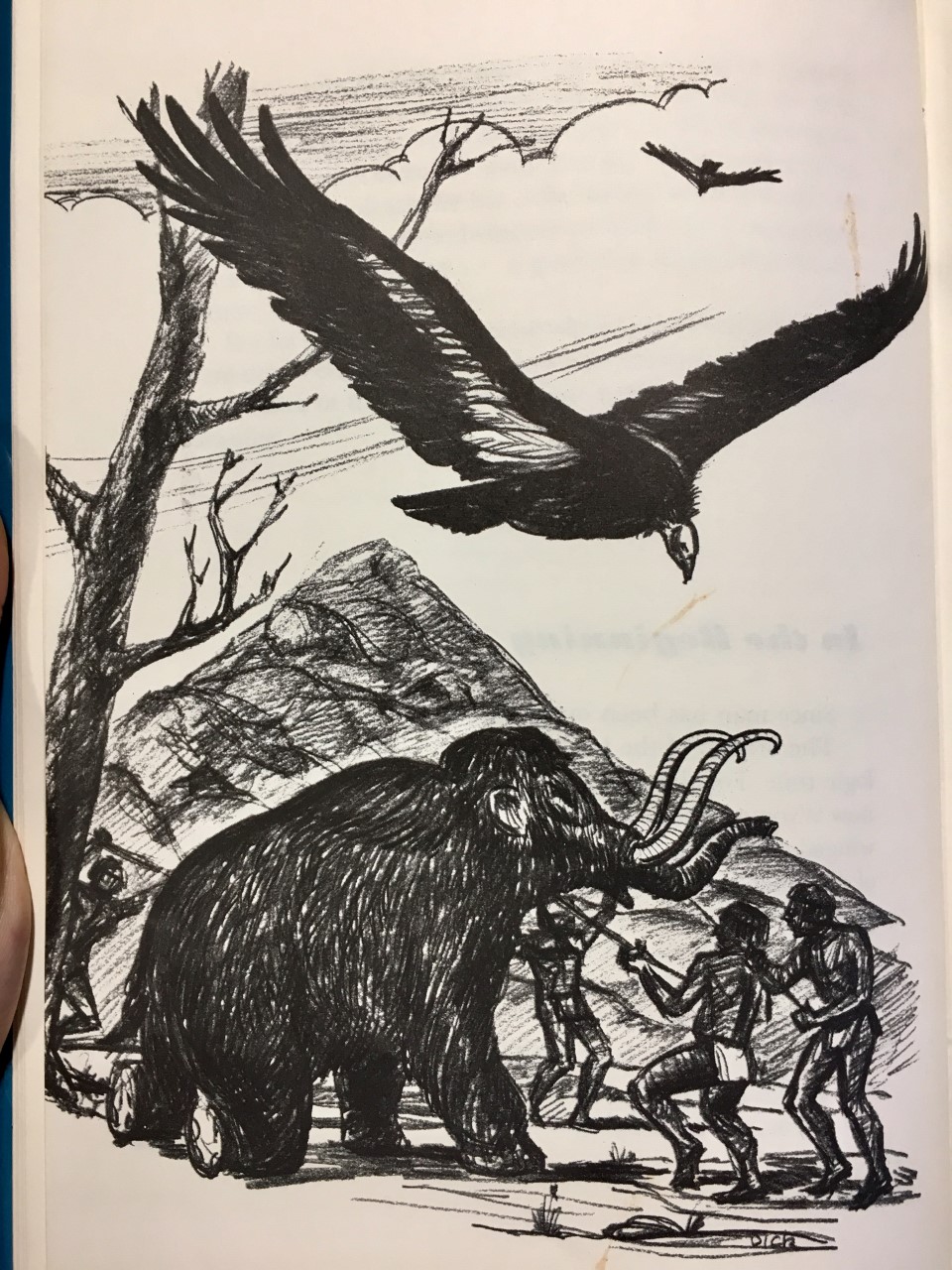 A Dick Smith sketch in his Condor Journal (1979). Mammoth and Mastodon Sign: Reading Trees In the Santa Ynez Mountains
Brown wrote a whopper:
“It was quite logical that the name finally chosen, ‘Los Padres’ (The Fathers), would be met with universal approval, . . .”
That’s diplomacy at the end of a bayonet. I suppose it is logical that the captive will submit and accept anything when he has a steel blade pressed to his throat.
Universal did not mean universal back then.
Universal in 1936 meant some people, such as blacks most notably but also Latinos and others, were denied the vote through various schemes and intimidation or outright force, and segregated or beaten into submission or all of the above and then strung from trees like piñatas.
Let us tell it like it was and not be wishy-washy.
“When any white man in the world says, give me liberty or give me death, the entire white world applauds.
When a black man says exactly the same thing, word for word, he is judged a criminal and treated like one.
And everything possible is done to make an example of this bad n****r so there won’t be any more like him.”
—James Baldwin
There was the Civil War from 1861-65 and the subsequent failure of Reconstruction and the rise of the Jim Crow-era through the 1930s, but one might also look back to the Mexican-American War and see evidence of this long fight over the idea of whiteness.
“The war of 1846-48 provided Americans with a venue to confront their own internal conflicts as they fought a war heavily promoted by politicians and the press in the name of white, Anglo-Saxon supremacy.”
—Paul Foos, A Short, Offhand, Killing Affair: Soldiers and Social Conflict During the Mexican-American War
In losing the war, Mexico gave up a huge swath of the Southwest to the United States including California. And in California between 1850 and 1935, scores if not hundreds of Latinos were lynched.
During the 1930s, as well, hundreds of thousands of American citizens of Mexican ancestry were rounded up in raids and deported to Mexico without due process, losing not only their security in right of place as citizens, but possession of private property, too.
Those were egregious violations of the most fundamental of all of American civil rights.
That was what “universal” meant back then.
Naming the forest in honor of white men was a much different thing back in 1936 compared to what it might be today if it happened.
Such a naming today would necessarily be more democratic and so stand on the greater legitimacy of organic community consensus. That’s true honest-to-goodness civic nationalism.
In 1936, we are not talking about a benign political majority merely enjoying its legitimate power through the ballot box to shape society in wholesome ways and name its national treasures.
No. That is not how it happened.
Universal approval meant that the hegemony of the white ruling class ensured what they wanted, no matter what, at any cost.
It wasn’t like they allowed anybody else to be in the running. Unless they were literally running, like back to Mexico or for their lives.
Isn’t that how it really worked?
Isn’t that what really happened?
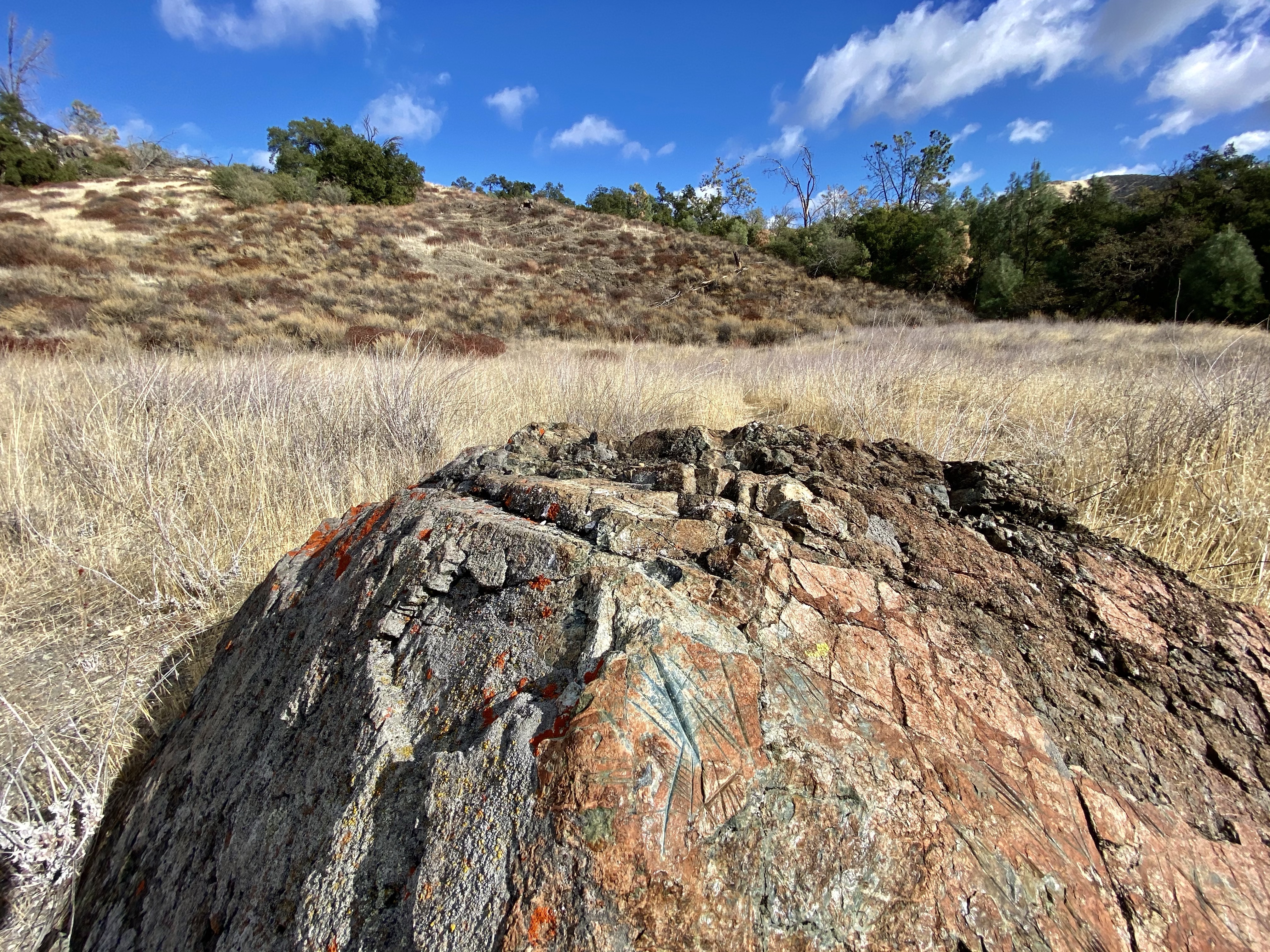 Traces of past human hands, incised grooves.
Brown wrote just a mere nine years removed from the event that the new name was “a fitting memorial to its first white users.”
The word white itself is not “offensive, racist language.” I hope to offer something more intelligent and worthwhile than kneejerk cries of racism.
Language recognizing the first white man to march through wilderness is no more offensive and racist than that recognizing the first black man to do the same. Like for example York crossing the continent.
Nonetheless, Brown’s choice of words is relevant and problematic.
When we consider, as we have, what else Brown wrote, and we place the naming of the forest within some rough framework of historical context as follows below, a picture emerges that taints the name Los Padres.
In the period of time during which the forest was named there was a vicious and violent fight over the idea of whiteness. Of course, this issue had long been fought over in America.
Brown’s remark about white users ties, to some degree and in some manner, the naming of our forest to this long standing fight over race.
Aside from Brown’s comment, however, we should not separate the naming of the forest from the social and political atmosphere in America at that time, of which the name is a product.
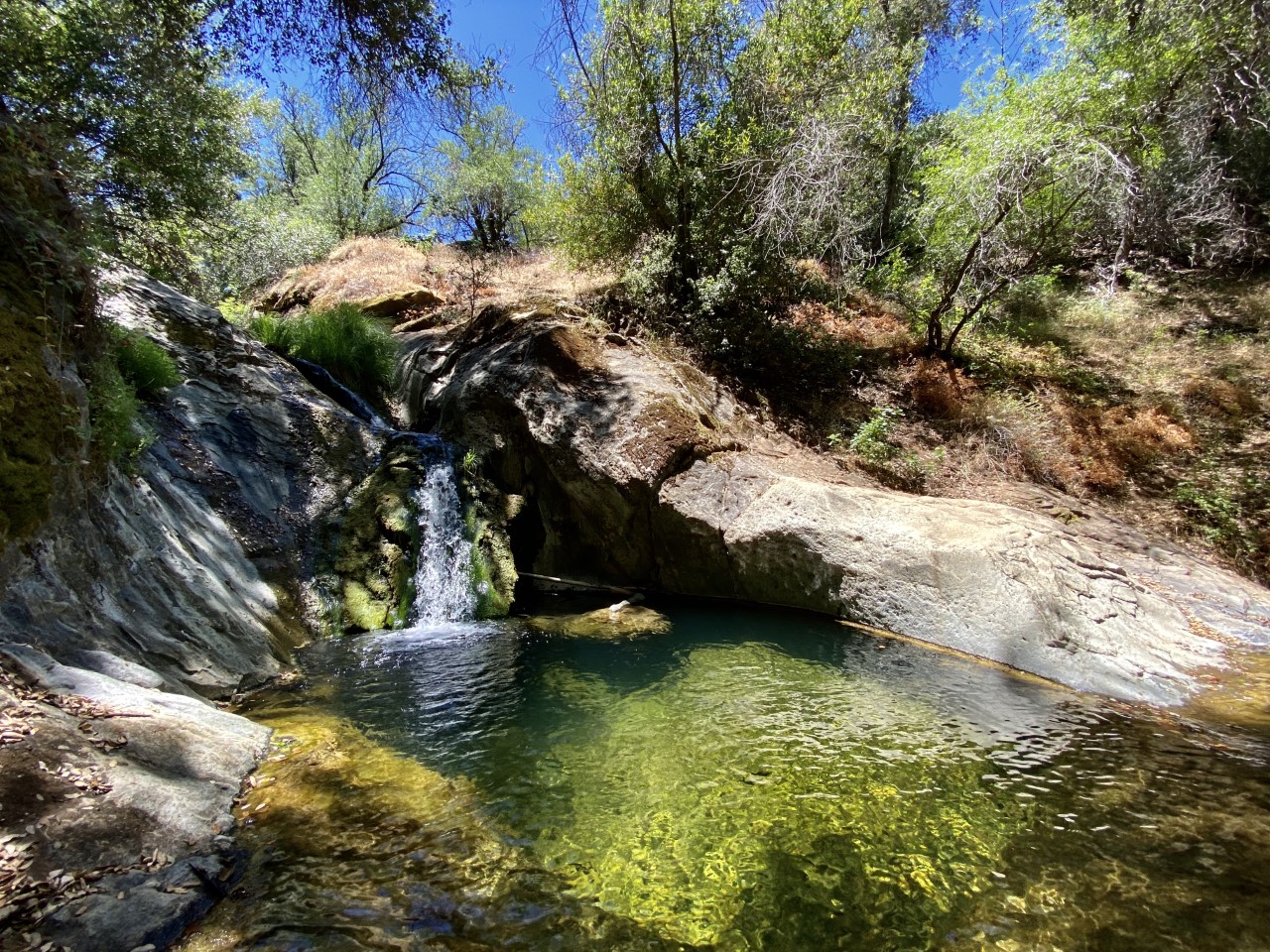
The name Los Padres was bestowed in 1936.
That’s twelve years after Native Americans were granted citizenship in the Indian Citizenship Act of 1924.
And seven years after David Banks Rogers, first curator of anthropology at the Santa Barbara Museum of Natural History, published his book, “Prehistoric Man of the Santa Barbara Coast.”
He described a high state of Native American cultural specialization.
Funny how American citizens with a rich and ancient history in the forest, and whom knew the most about it all, were overlooked and ignored.
Instead, they named our forest after the religious agents of a foreign imperial power whom knew almost nothing about it and didn’t do much therein when they did briefly venture into it; a foreign power the United States had just been at war with thirty-eight years earlier in the Spanish-American War.
What is this madness?
 Under rump and foot. The boulder they staged this photo while posing on is decorated all over in old Native American rock art.
“No one was white before he/she came to America,” James Baldwin wrote.
“There is, in fact, no white community,” Baldwin declared in his essay “On Being White. . .And Other Lies” in 1984.
“It took generations, and a vast amount of coercion, before this became a white country.”
The creation of race in America was a device designed to advance the political power and economic domination of the white ruling class. This is what Baldwin was talking about.
When Los Padres first came here they were not known as white people. They were known as Spaniards. Only later in America did the Spanish become white, as in Brown’s history book. Viola!
When European immigrants first came to America they were not called white. They were not known by skin tone so much as nationality. They were called English and French and German and Scottish and Norwegian.
They were called Irish and looked askance at and their light complexion bought them little or no acceptance or privilege. This is not to say the Irish ever suffered anything similar in kind or scale that black Americans had; they did not.
Nevertheless, the Irish, with their history of indentured servitude in Britain, were not keen on oppression and so they were in turn hated for it in America. To become white in America the Irish set aside those views.
“. . .the relativity of race is shown in the sea change it entailed, whereby emigrating Irish haters of racial oppression were transformed into White Americans who defended it.”
“On the steps of the Lincoln Memorial in 1963, Martin Luther King outlined a dream of an America where people would not be judged by the color of their skin.
That dream has yet to be realized, but some three centuries ago it was a reality.
Back then, neither social practice nor law recognized any special privileges in connection with being white.”
–Excerpted from the Penguin Random House webpage about Theodore W. Allen’s two volume set, The Invention of the White Race
Update: 4-23-25:
“As early as the nineteenth century, deeds in Brookline, Massachusetts. forbade resale of property to ‘any negro or native of Ireland.’
Such provisions spread throughout the country in the 1920s as the preferred means to evade the Supreme Court’s 1917 Buchanan racial zoning decision.”
—Richard Rothstein, The Color of Law; A forgotten history of how our government segregated America (2017)
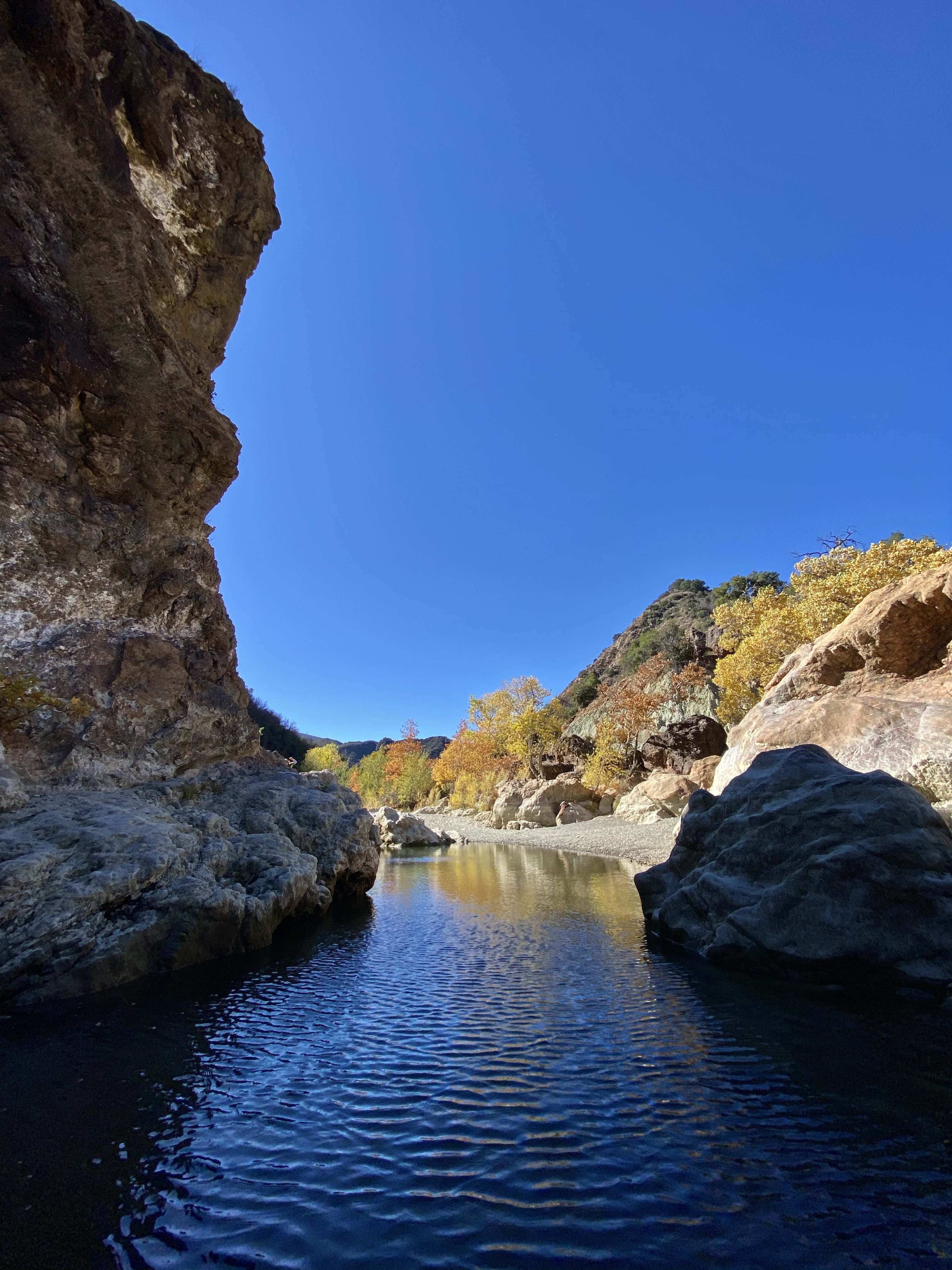 Santa Ynez River in fall, linking montane and marine in Condor National Forest.
I’d rather not celebrate the first achievements of each racial category that’s been foisted upon us, these arbitrary and constrictive fabrications. Such celebrations are lost on me.
As Santa Barbara thinker, Kristian Blom, says rather smartly of racial categories in his writings on cultural evolution, they are but “imaginary taxonomies.”
“Culture is Biology. Therefore, it’s irrational to talk about ‘Black Americans’ or in any way creating imaginary taxonomies.
It’s irrational to organize a society and policies around such taxonomies.”
—BlomSays.com
Taxonomies sprung on us from the poisoned well of slavery and that have troubled and divided us and warped our understanding of ourselves and our community ever since.
“Race is the child of racism, not the father.”
—Ta-Nehisi Coates “Between the World and I”
 Condor National Forest reading room.
Something of the relativism of race, and how the fight over the idea of whiteness warped society, may be seen in the history of the Mexican-American civil rights organization LULAC, the League of United Latin American Citizens, founded in 1929.
Early in its history LULAC advocated for the inclusion of Mexican-Americans into the American mainstream under the imaginary taxonomy of white.
When a city directory in Texas recategorized Mexican-Americans in the 1930s, LULAC demanded a correction and insisted Mexicans were white.
“LULAC declared that the system was an attempt to ‘discriminate between the Mexicans themselves and other members of the white race, when in truth and fact we are not only part and parcel but as well the sum and substance of the white race.’”
–Benjamin Marquez, LULAC The Evolution of a Mexican American Political Organization
Something similar happened in 1936 when the U.S. Bureau of the Census recategorized Mexican-Americans.
“LULAC engaged in a series of lobbying activities as soon as it discovered that Mexican Americans would be categorized as part of a group of dark-skinned minorities.”
Mexican-Americans sought to identify as white as a bulwark against discrimination and a means to break through the barriers put before them by those in the political majority, whom wielded power with brutal, exclusive intent.
During the same period of time Mexicans fought to be white under the law, some 400,000 American citizens and legal residents of Mexican ancestry were illegally deported from California.
In total, it is estimated up to two million Mexican-American citizens, many of whom had been born in the United States, were forcibly relocated to Mexico between 1929 and 1935.
The State of California issued a formal apology in 2005: Apology Act for the 1930s Mexican Repatriation Program.
Something similar to the Immigration Act of 1924 which sought overall to “preserve the ideal of U.S. homogeneity” by banning all immigrants from Asia, the mass deportation of Mexican-American citizens during the 1930s was aimed at maintaining white ruling class domination.
What might be described as a herrenvolk democracy, “democratic for the master race but tyrannical for the subordinate groups.”
“The seed of Nazism’s ultimate objective—the preservation of a pure white race, uncontaminated by foreign blood—was in fact sown with striking success in the United States.
What is judged extremist today was once the consensus of a powerful cadre of the American elite, well-connected men who eagerly seized on a false doctrine of ‘race suicide’ during the immigration scare of the early 20th century.
They included wealthy patricians, intellectuals, lawmakers, even several presidents.
Perhaps the most important among them was a blue blood with a very impressive mustache, Madison Grant.
He was the author of a 1916 book called The Passing of the Great Race, which spread the doctrine of race purity all over the globe.
And, continuing without edit, here’s how these ideas about whiteness informed and influenced U.S. law:
Grant’s purportedly scientific argument that the exalted ‘Nordic’ race that had founded America was in peril, and all of modern society’s accomplishments along with it, helped catalyze nativist legislators in Congress to pass comprehensive restrictionist immigration policies in the early 1920s.
His book went on to become Adolf Hitler’s ‘bible,’ as the führer wrote to tell him.”
–Adam Serwer, White Nationalism’s Deep Roots
__________________________________________________________
“Brenton started my real research into the problems with immigration and foreigners in our White lands, . . .”
–Payton Gendron quoted in the Washington Post, alleged mass shooter accused of killing 10 and wounding three others in a racist rampage on May 14, 2022. He references mass murderer Brenton Tarrant.
_____________________________________________________________
You thought all that was bad enough, I’m sure, Dear Reader. But it gets worse.
In addition to the lynching and violence and deportations and general discrimination, there was also forced sterilization, much of it perpetrated against children.
“What is often not appreciated is that Nazi efforts were bolstered by the published works of the American eugenics movement as the intellectual underpinnings for its social policies.
. . .
The Nazis, when proposing their own sterilization program, specifically noted the ‘success of sterilization laws in California’ documented most notably by the American eugenicist P.B. Popenoe.”
—U.S. Scientists’ Role in the Eugenics Movement (1907–1939): A Contemporary Biologist’s Perspective
“At the age of 16, Iris was committed to a California institution and sterilized.
Iris wasn’t alone. In the first half of the 20th century, approximately 60,000 people were sterilized under U.S. eugenics programs.
Eugenic laws in 32 states empowered government officials in public health, social work and state institutions to render people they deemed ‘unfit’ infertile.
California led the nation in this effort at social engineering.
. . .
Working-class youth, especially youth of color, were targeted for commitment and sterilization during the peak years.”
–Nicole L. Novak and Natalie Lira, California Once Targeted Latinas for Forced Sterilization
“’It’s been so amazing, a little surreal,’” Stacy Córdova, whose aunt Mary Franco was forcibly sterilized when she was 13 years old in 1934, told Noticias Telemundo.”
—California compensates victims of forced sterilizations, many of them Latinas
Continuing with Benjamin Marquez on LULAC during the 1930s:
“[LULAC’s] struggle to eliminate racial discrimination was designed to give Mexican-Americans the opportunity to compete in the economic marketplace on an equal footing with Anglo-Americans. . .and fit in with the white majority.”
“There were political and social advantages to be gained by having Mexican Americans officially recognized as members of the white race.
The group was searching for a formula that would give Mexican Americans free access to the economic market even if the basic assumptions of racism went unquestioned.”
“However, there is evidence to suggest that these political attitudes carried over into the social sphere, and that these early activists did not wish to be associated with blacks socially or politically.
LULAC credited a Dr. T. J. McCamant with bringing the Census Bureau’s classification scheme to its attention.
Using the language of racism itself, it thanked him for helping LULAC discover the ‘n****r in the woodpile.’” [asterisks added]
That was LULAC in an editorial in 1937 when Mexicans were legally white. That was one year after Los Padres was named in 1936.
That was eight years before William S. Brown published his history of the forest in 1945 celebrating the name Los Padres as “a fitting memorial to its first white users.”
This is the same year California parents and LULAC prevailed in a lawsuit against the segregation of Mexican-Americans in Orange County. And two years after the Zoot Suit Riots.
By the letter of the law at the time the forest was named, those white users Brown wrote of could have in fact been Mexicans.
And yet at the same time, when those users were using the forest they weren’t even really white, as Baldwin reminded us.
It’s all screwed up.
In the midst of this racially charged violent atmosphere of segregation and sterilizations and immigration raids and deportations of natural born American citizens for, essentially, not being white, the forest was named, by the same group of people enforcing this violent regime of exclusion and terror, for foreign white men whom had virtually no attachment to the woods.
I do not think the picture needs to be any clearer.
The name Los Padres must be thrown out.

Consider the case of two memorial plaques in Santa Barbara as artifacts of this fight over the idea of whiteness.
The placement of the plaques in 1927 and 1938 frames the naming of Los Padres National Forest in 1936.
On July 7, 2020, in response to my post pondering the renaming of our forest, reader Paul M. (To be renamed Pablo de la Playa) commented on this blog.
He brought our attention to a plaque placed at the Santa Barbara Courthouse in 1927 by the Daughters of the American Revolution, which honored the Gaspar de Portola expedition of 1769 as the “first white men to march through the wilderness of California.”
Father Junipero Serra, most prominent of Los Padres, accompanied Portola on the expedition.
The Portola plaque has since been removed. Another plaque on the same boulder was also removed, which had memorialized “the first white women” to march through California.
Five days later, on July 12, 2020, Jerry Roberts posted a piece on Newsmakers:
Historic Courthouse Plaques Recognize Santa Barbara’s ‘First White’ Men and Women: County Supervisor Gregg Hart Objects to ‘Offensive, Racist Language’
Six days after that, on July 18, 2020, Roberts published an Op-Ed by Frank Ochoa:
Some Reflections on the Disputed Courthouse Plaques – from a Student of Santa Barbara History
The language on the plaques memorializing white people was “clearly incorrect,” Ochoa writes, as “the group was not all ‘white.’”
It was not clearly incorrect. It may be true that not every single person with Portola was white, but that is a strawman argument.
The plaque did not state that the expedition as a whole was white. The plaque clearly stated who was being memorialized. And the men whose title or position were specified were, indeed, white.
In addition, we cannot define the language on the plaques based on what the word white is thought to mean in 2022, but must understand the word as it was in 1927 and 1938.
I submit that it would not have been out of the question to see Mexicans supporting the language and placement of those plaques back in 1927 and 1938, when Mexicans were legally white.
Jose Francisco Ortega, the historical figure mentioned in the op-ed link above, would have been recognized and celebrated as a white man. So too would have many others in the Portola expedition that might not today be thought of as white.
The language on those plaques when placed at the Santa Barbara Courthouse was correct even if it did omit or not mention other historical facts.
The reason to bring this up is to note that there is a larger, far more important point that is being missed by all the people in both of those links.
This was not just a simple and honest factual oversight on the Portola plaque and it should not be treated as such.
The Daughters of the American Revolution intentionally focused on and memorialized white men, while ignoring everybody else. That’s my contention, at least.
The people who placed the plaques were not clueless idiots. They were intelligent, and they knew exactly what they were doing.
As in Brown’s history book, so too with the plaques. Certain people and their actions and certain views of history were elevated, while other people were ignored and written out of the national narrative.
“This is how history and everything else is whitewashed,” Candace the reader commented six years ago here on this blog.
Ten thousand years of California Indian history in the forest was ignored and a few years of Los Padres’ lives adjacent the forest were memorialized.
The language and the placing of the plaques on the boulder at an entrance to the Santa Barbara Courthouse are monuments claiming history for the idea of whiteness, tying the nation to a purposefully exclusive narrative, to be celebrated front and center in the public square with the official stamp of government.
Naming Los Padres National Forest was something similar in kind, to one degree or another, it appears to me.
Place the naming of the forest in historical context along with Brown’s one line comment and it appears to be a monument in legislation to the idea of whiteness, as represented in the visage of Los Padres.
That Brown is correct about Father Serra being white, that we can say this is today factually accurate of Los Padres, would be to miss the larger, more important point about the naming of our forest in 1936, as apparently happened with the two plaques in town.
 Tying the next generation of caretakers to their Public Lands.
I’d like to offer an historical aside about how people were ignored and written out of history.
Have you heard of James Beckwourth? Most everybody else hasn’t either.
He was the black mountain man whom discovered a northern route through the Sierra Nevadas now called Beckwourth Pass.
As noted on historycolorado.org:
“By the time the ‘Wild West’ became cemented in the minds of the American population, Beckwourth had faded from view in favor of other, whiter heroes with equally outlandish tales. . .
“Beckwourth’s story, like those of so many other people of color, was sidelined and dismissed.
“He achieved as much as, if not more than, his most famous white counterparts.
“’The fact is that for a long time he was lost to history because of his color,’ said Edward Wallace.
‘In the 1950s, Hollywood made a movie called Broken Arrow, and Beckwourth was one of the characters…but he was played by a white actor.’”
“People don’t recognize the contribution of blacks to the American West,” said Edward Wallace.
“There were blacks in every aspect of society throughout our history here.”
 Sisquoc River
The histories of California Indians in general, and in our local example the Chumash in particular, have been marginalized, sidelined, ignored and forgotten in a similar way as has James Beckwourth’s.
This despite brilliant cultures and remarkable achievements.
In Brown’s history of the forest we see how the accomplishments of California Indians might be overlooked or even possibly attributed to white people.
In both the Portola plaque and LULAC’s legal fight to be white we see how people of other races were subsumed into the relative and imaginary taxonomy of whiteness and how their histories and life stories and identities might be twisted and warped or ignored altogether, whitewashed and forgotten.
I don’t think the forest was the most important matter to those that named it Los Padres.
I think we see this reflected quite plainly in Brown’s words, a rhetorical contortionist straining himself mightily and at odd angles to make so much as even the slightest connection justifying the name.
I think the naming of the forest was more likely a show of misguided white solidarity; the ruling class of the time identifying with Los Padres for no other reason than their race and doing so during a time of intense racial angst.
This happened during the same general time in which nonwhite immigrants were being denied entry to the United States in order to maintain white homogeneity, and while Mexican-American citizens were being sterilized or rounded up and deported, and black Americans were bound up in a web of Jim Crow laws never quite having been emancipated after all.
The same people whom formed the base of support politically, legally, extralegally and socially behind this violent oppression surely must have served too as what Brown called the “universal” support for the name Los Padres being applied to our forest.
How could it have been any other way?
Not that there was a vote taken, but that the only voices that mattered back then where those that were white. It was their way or the highway. Correct?
And we cannot have the same people who punished, threw out of the country or killed anybody they wanted to for not being white naming our forest for white men.
The naming of our forest for Los Padres was fundamentally unjust and illegitimate.
If Santa Barbara National Forest was renamed the first time because the name didn’t make simple sense, since the forest extended into three other counties, too. Well then the hurdle to overcome for renaming was long ago set far lower than we need. We can step right over.
Because it does not make sense either to name the forest after Los Padres whom did so little therein and had virtually no connection to it.
And, most importantly, the name is racially suspect and therefore fatally tainted.
Los Padres have their grand historical monuments, the California missions most prominently. And these shall remain, of course, as much else should as well.
We need not any longer grant them the national monument that is the name of our forest.

We need a name for our forest that every citizen might be proud of and that celebrates the forest itself.
In an epoch, the anthropocene, when the environment is buckling under the destructive pressures of the human race and natural biological systems are collapsing, we need to refocus on the natural world.
Brown wrote:
The four counties of Ventura, San Luis Obispo, Santa Barbara and Monterey, in which the bulk of the national forest was located, were all closely identified with mission history, . . .
The bulk of the multi-county forest is more closely identified with the condor, being its critical habitat. Now that’s quite logical!
When the forest was renamed in 1936, California condors existed nowhere else on earth but within Los Padres.
“By the late 1930s,” a National Park Service page reads, “no condors remained outside of California.”
As Brown himself wrote back in ’45:
“Los Padres is the exclusive home of the California condor, the largest native bird on the North American Continent.”
The Los Padres should become Condor National Forest.
Walk Condor Trail through Condor National Forest.
The name is obvious, sensible, and sensitive, and particular to place in a mindful and inspiring way.
The name would celebrate one of the most iconic animals in American wildlife and all the world.
The name would also celebrate the incredible story of American conservation which brought the great vulture back from the brink of extinction, after we almost succeeded in killing it off, that is.
In addition, the name would refocus our attention on the forest itself and the wildlife therein, rather than humanity in the form of some dudes or dudette like Cleveland or Los Padres or Lady Bird Johnson. Enough of that!
Language is important.
Such refocusing of our attention and principle intentions through language and name change may also be seen in the current California Department of Fish and Wildlife, which was renamed in 2013 from the old Fish and Game moniker.
Wild animals in California became officially recognized in this reiteration as creatures of inherent value other than things to be hunted and killed for food or trophy.
The Los Padres should become Condor National Forest.
Let it be.


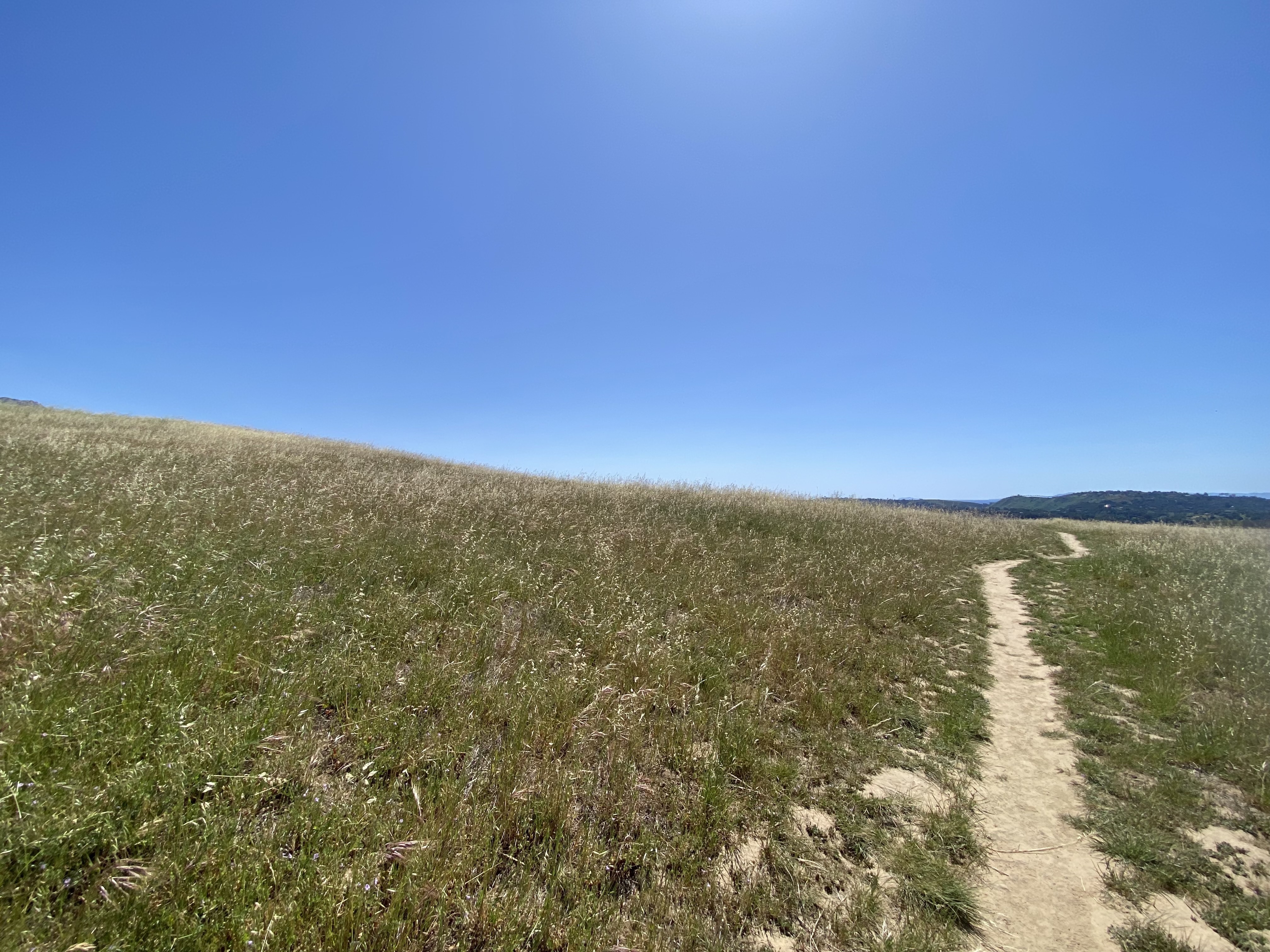 Take a walk.
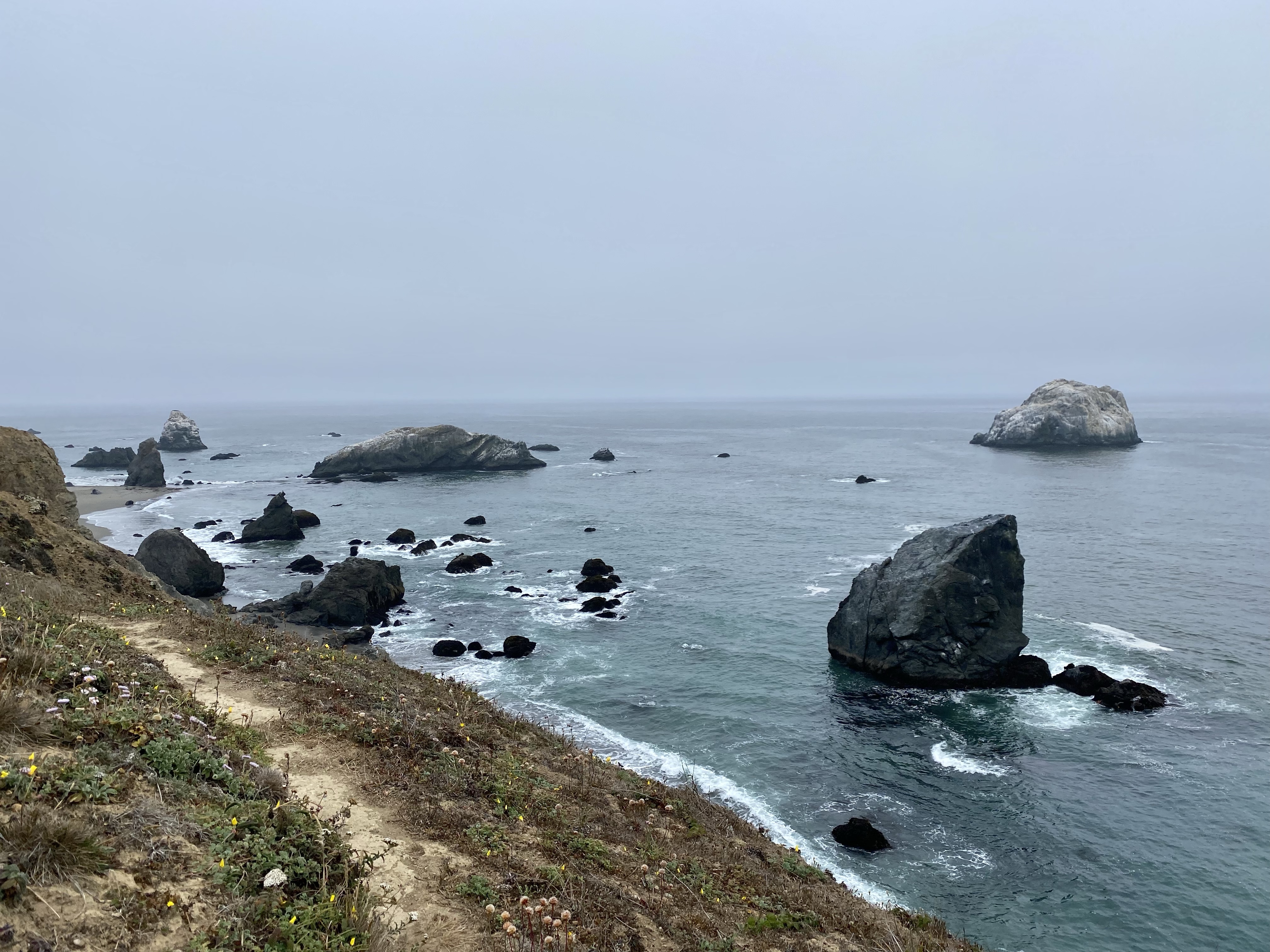 Edge of the continent, Sonoma County
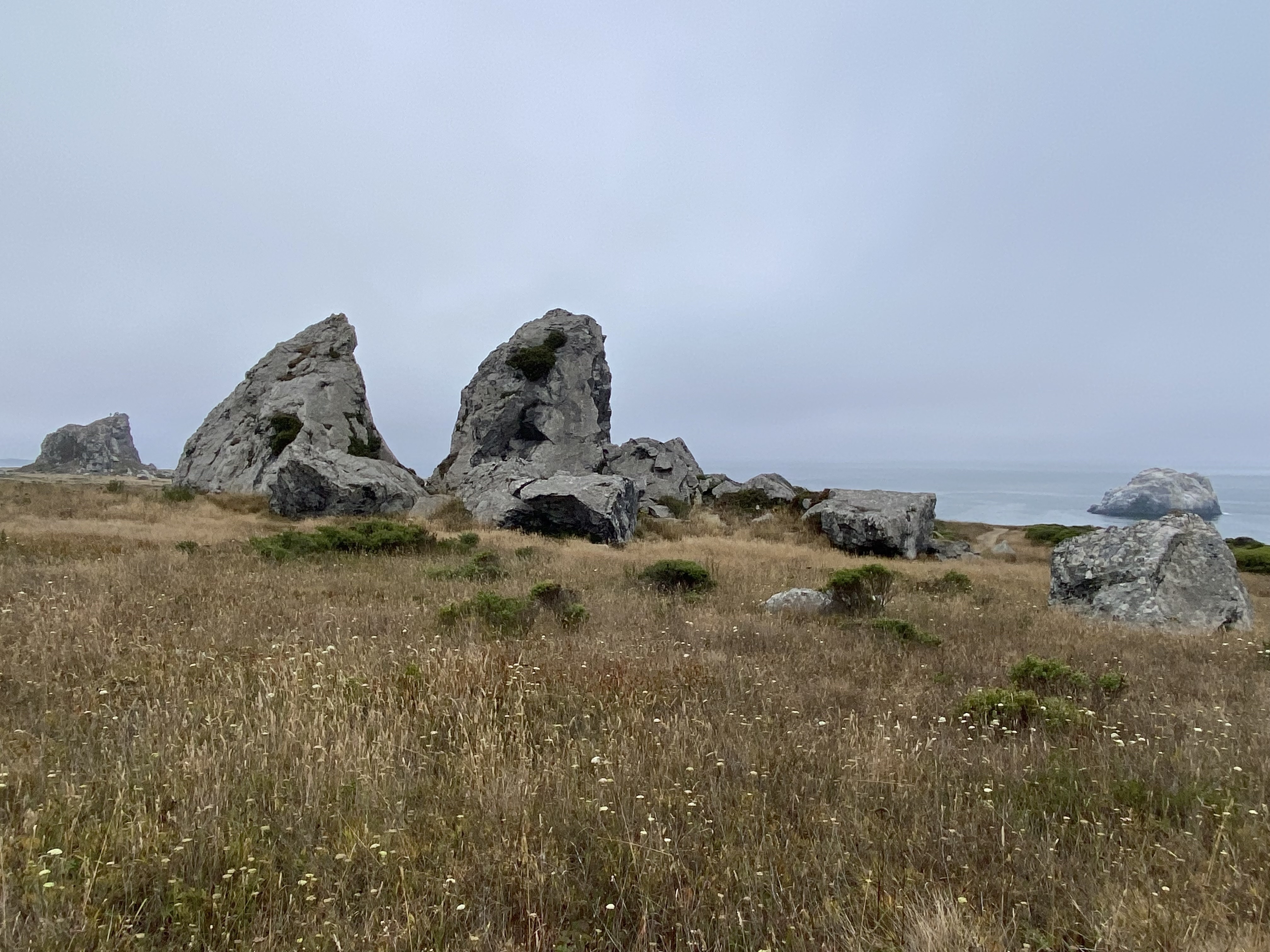 Mammoth Rocks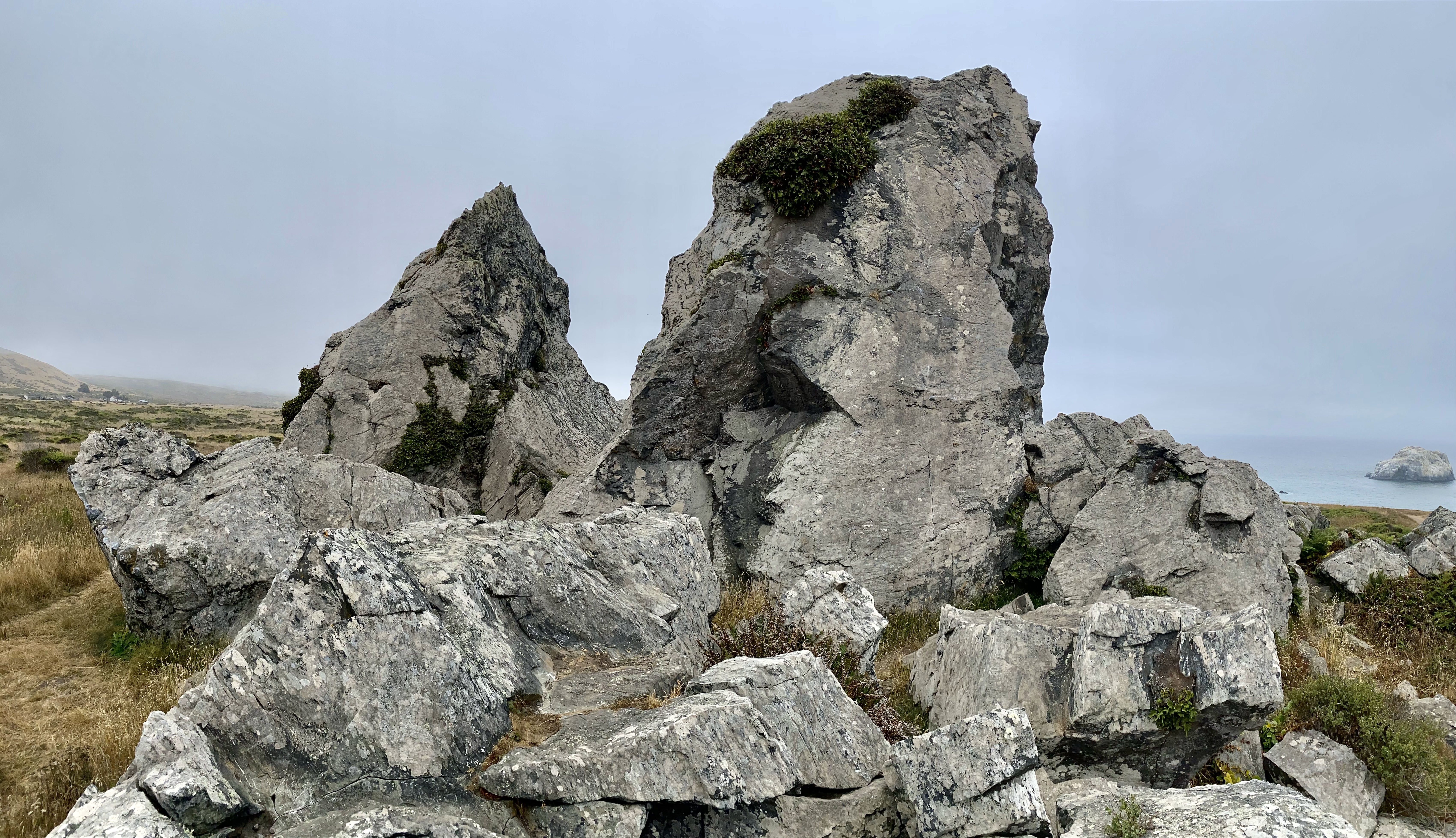
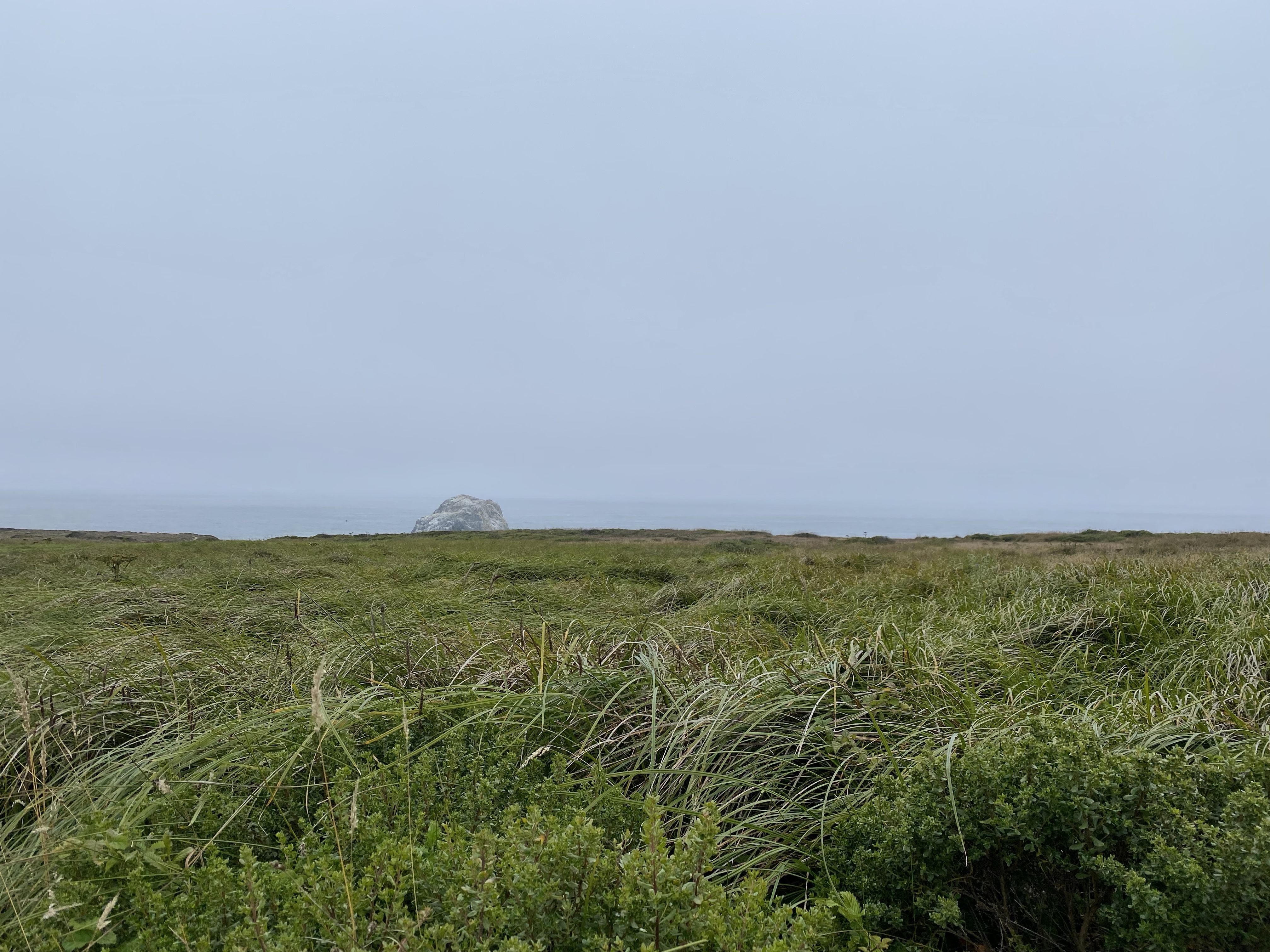 The relic wallow thick in waist to chest-high grasses.
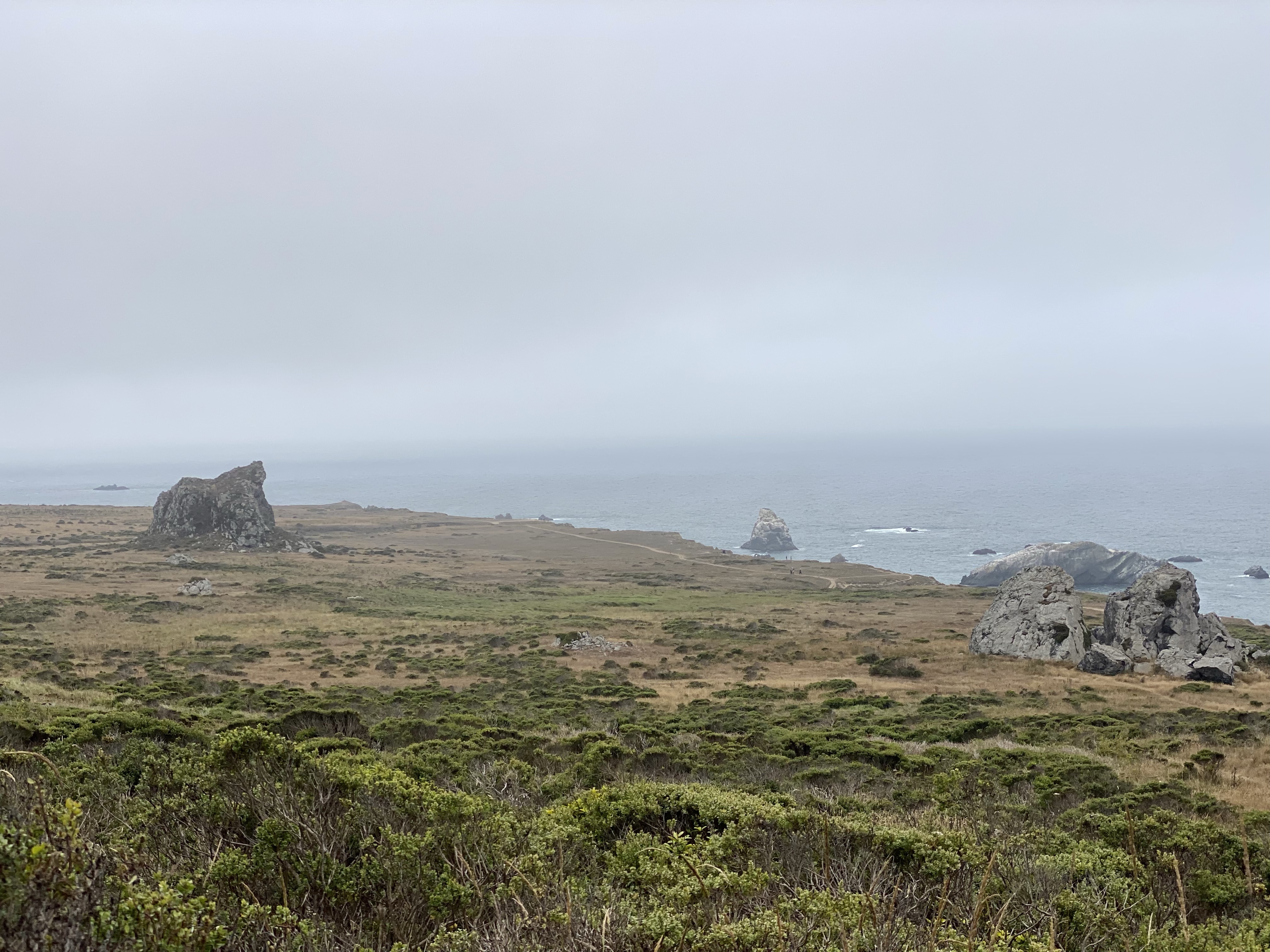 Another view of the wallow from afar, which lies between the two outcrops, about center-frame in the image.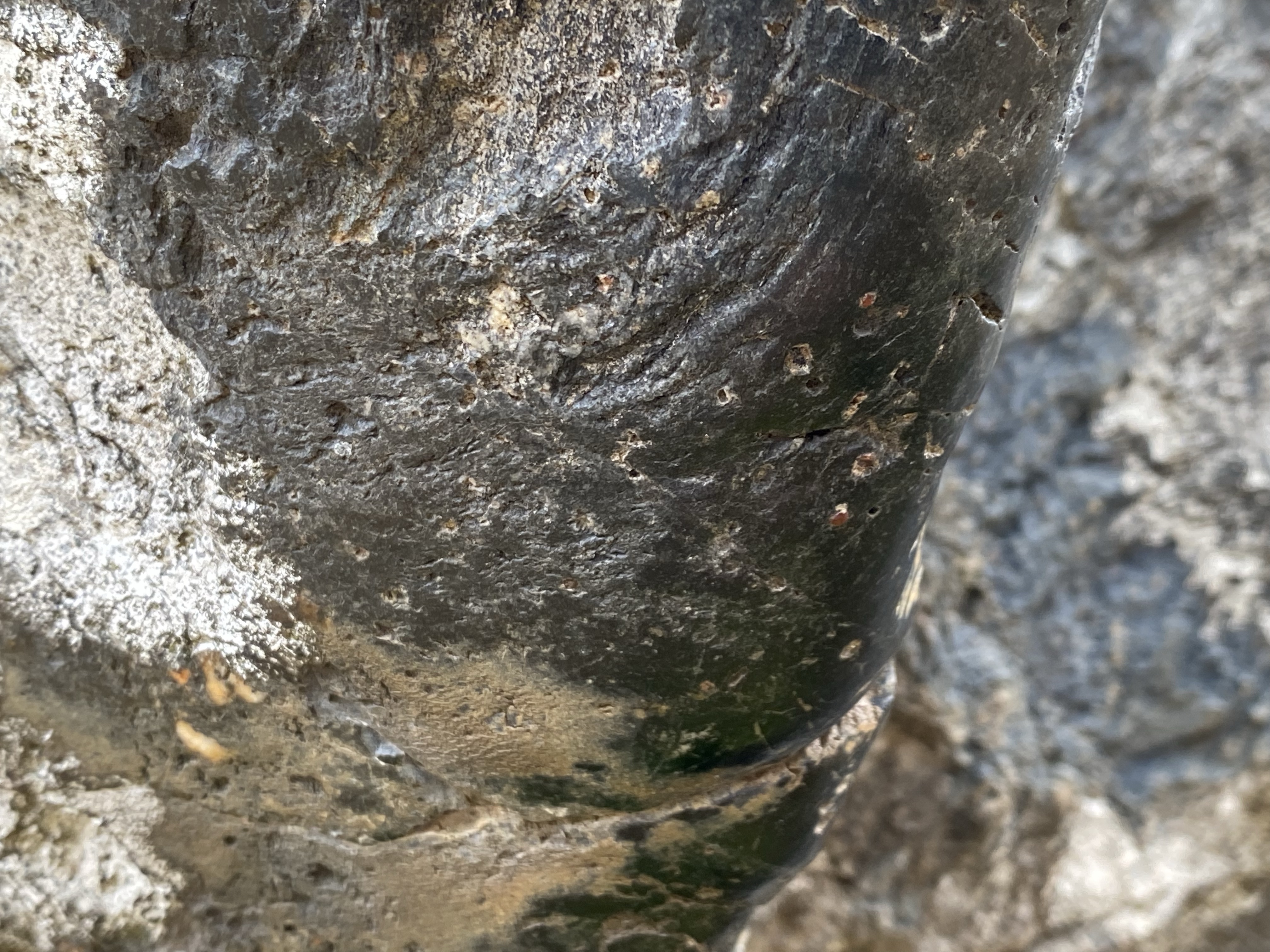
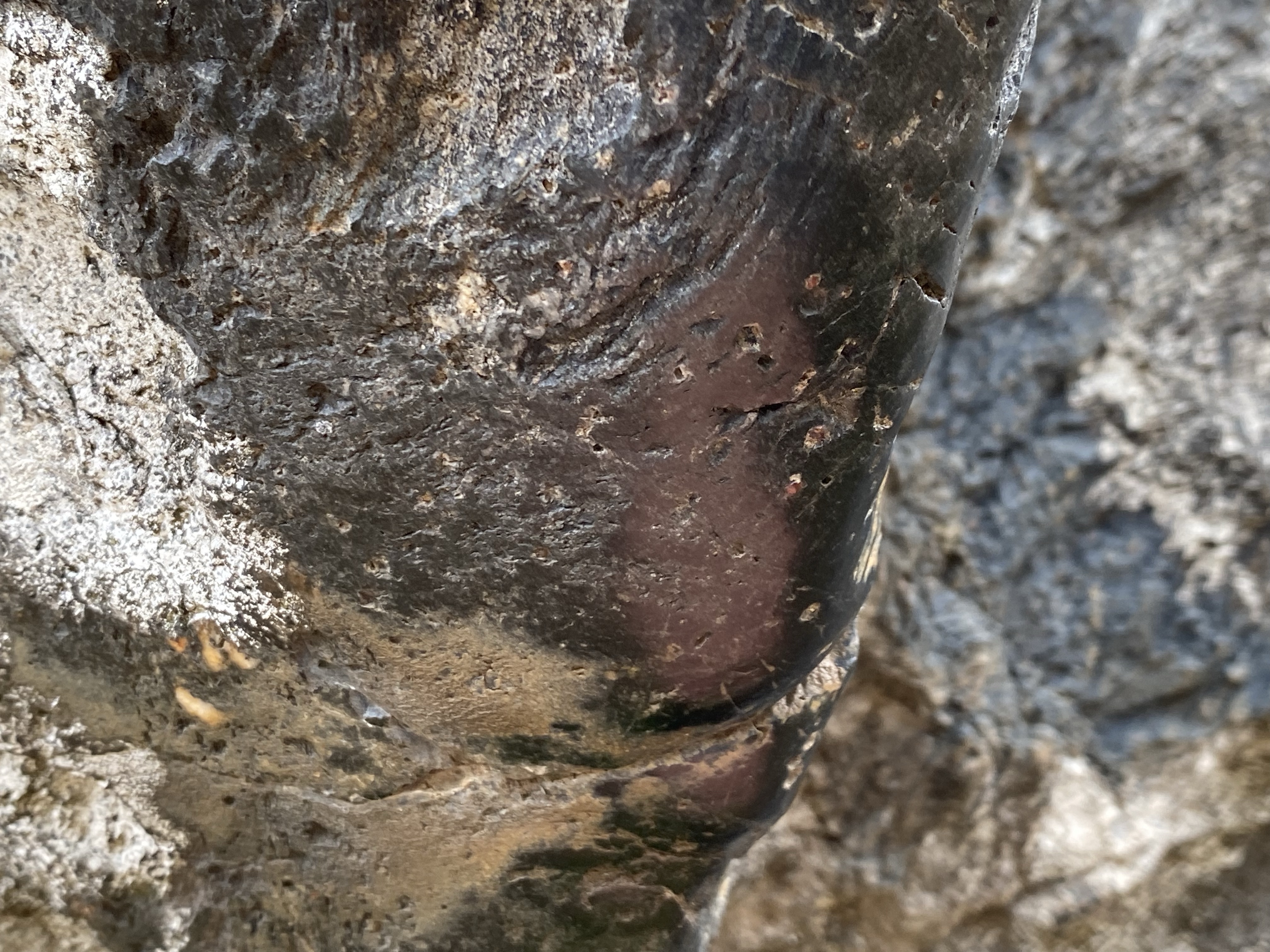
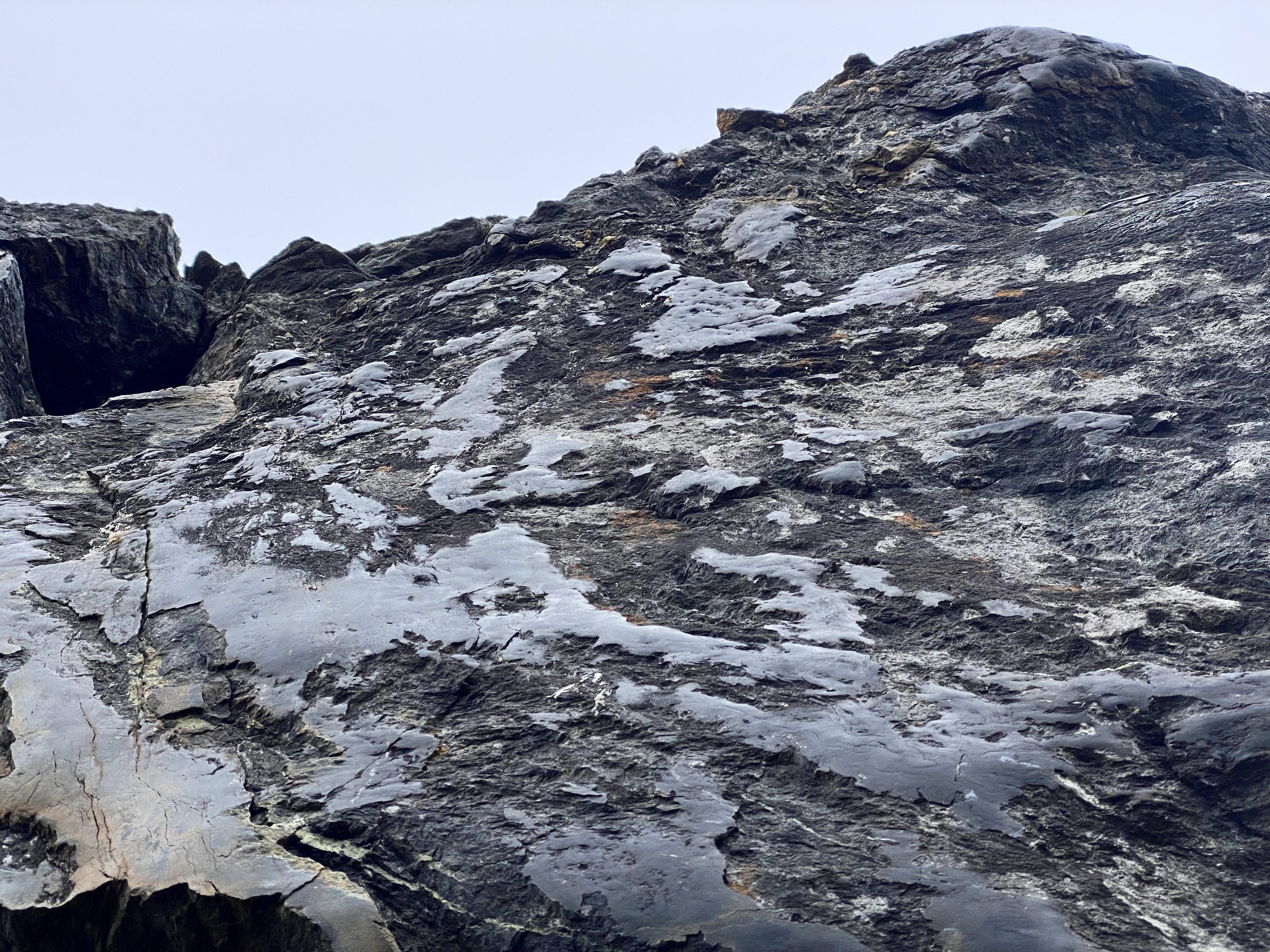 A view of the polished stone as seen when standing and looking upward. It is clear and easy to see when standing beside the outcrop that the polished patches on the schist rise well over one’s head. Scholars have measured the polish up to around the 12 foot level, well above the reach of any animals in historic times like cattle or sheep.
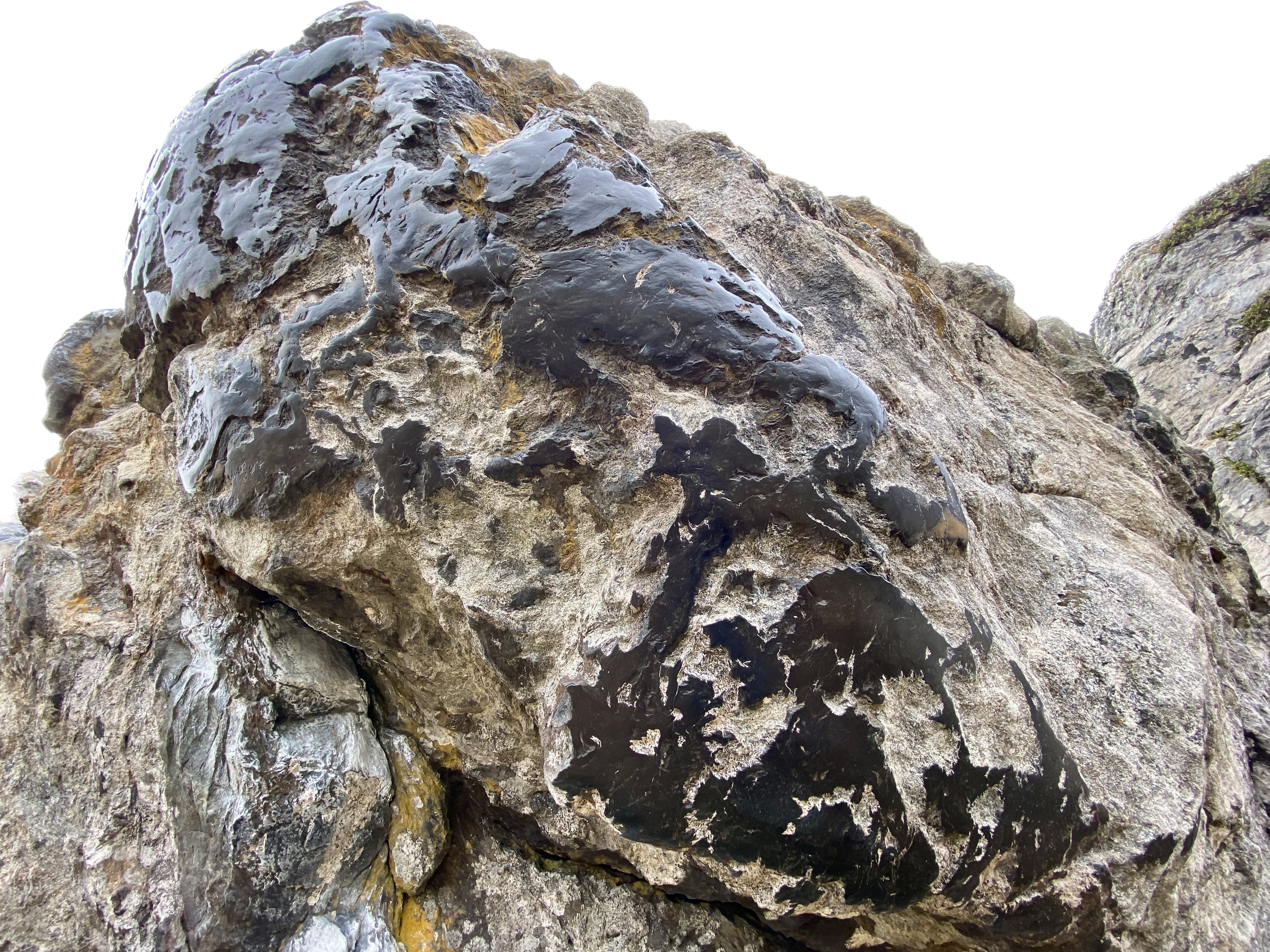 A knobby protuberance on the outcrop polished black and shiny.
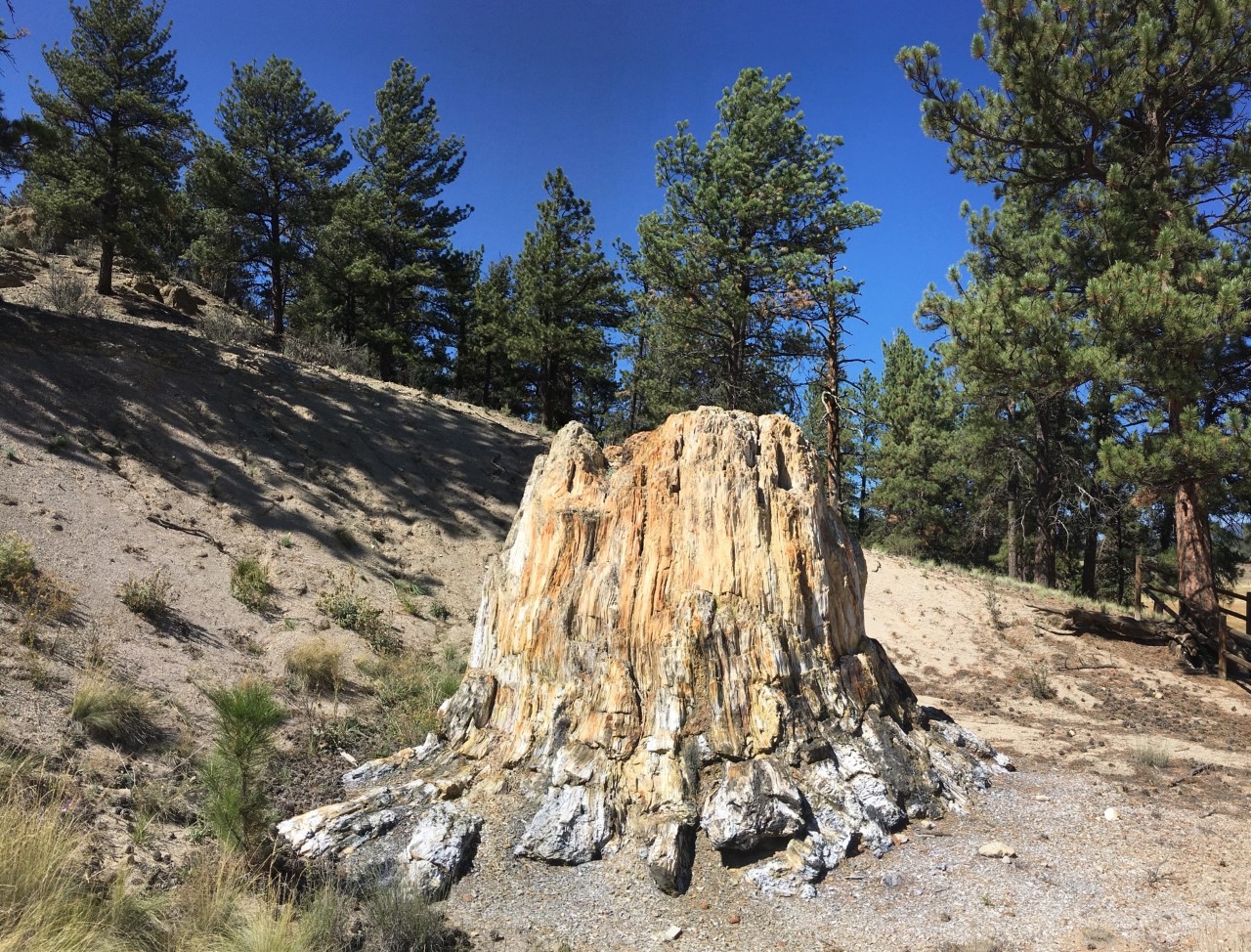 A 34 million-year-old fossil redwood stump at Florissant Fossil Bed National Monument in Colorado.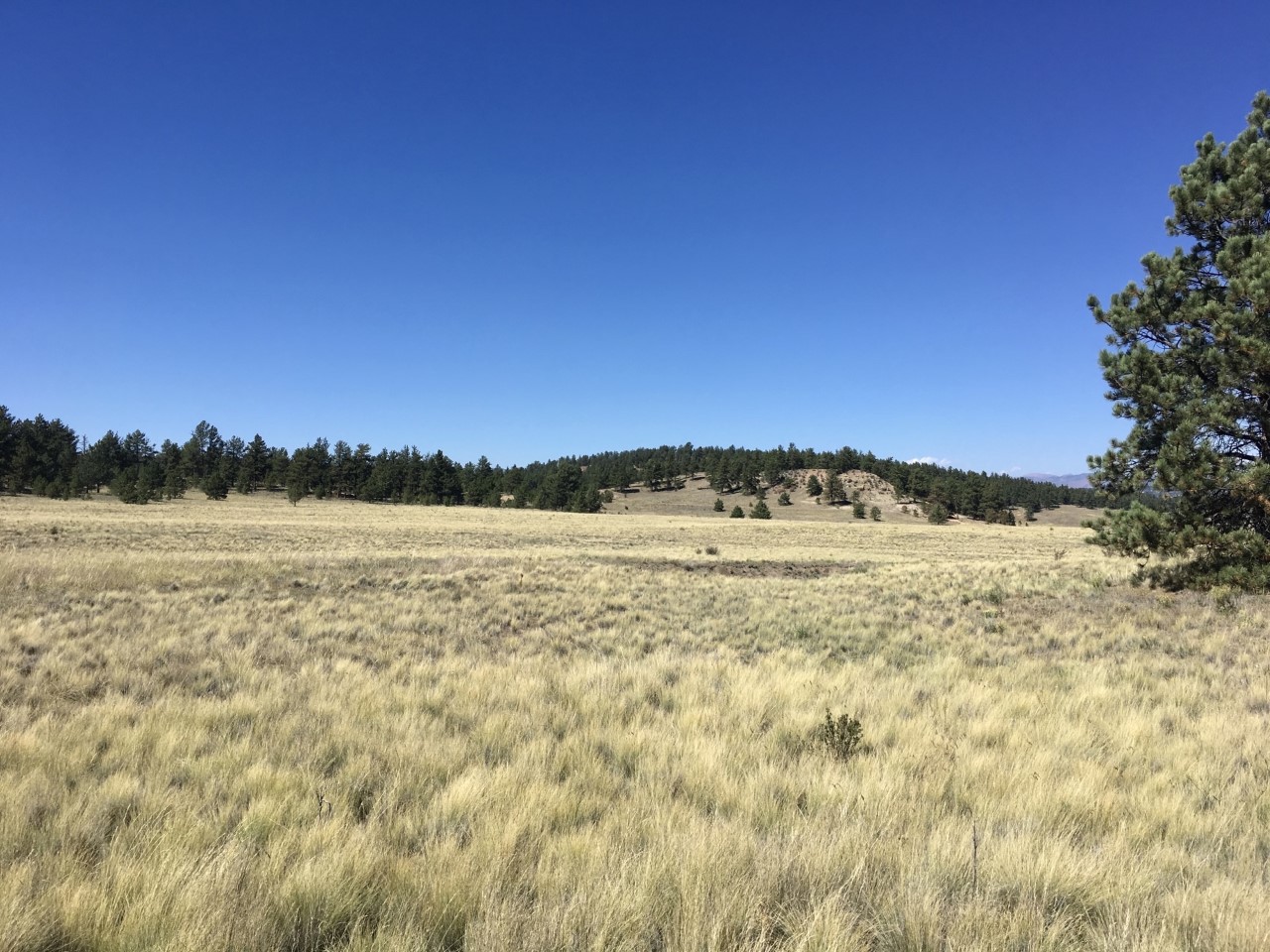













 Jack Elliott's Santa Barbara Adventure