Naming Santa Barbara’s Modoc Road

Walking tracks, west of town. Keep on keeping on.

This offering relates to the preceding, Mark of Conquest; Benchmark and Mortar.

The previous post mentioned the Modoc War of 1872-73 in California.

Emphasis has been added below to highlight portions specifically mentioning the Modoc War and Modoc Road.

Halls of power.

“The Hope Ranch area was first mentioned in written history in Captain Gaspar de Portola’s diary when, with 65 leather-jacketed soldiers, he marched across the mesa April 20, 1769, accompanied by two Franciscan friars, Ft. Juan Crespi and Ft. Francisco Gomez.

[Previous Post: Summer Microburst at Arroyo Burro (2017)]

He was greeted at Arroyo Burro by friendly Indians from Cieneguitas (swamp or little marshes) also identified as Sagspileel, that portion of Hope Ranch which lies between Modoc Road and the old Hollister Avenue, now Highway 101,  . . .

. . . Going back to the 1870s and Thomas Hope, Owen O’Neill in his History of Santa Barbara County, says:

‘Hope was greatly opposed to the opening of a country road through his property, and his determined efforts to prevent it resulted in friction between himself and some of the townspeople, especially P. J. Barber, it principal advocate, throughout the early seventies.

Because of the numerous rough encounters at law and with the shillelagh of this fighting Irishman, who had bought the land and considered himself privileged to keep people off it, the road has ever since been called the ‘Modoc Road,’ for at this period California papers were filled with references to the brisk and bloody incidents of the ‘Modoc War’ with the Indians in the north.”

—Harold S. Chase, Hope Ranch: A Rambling Record (1963)

“In October 1854, Hope was authorized to act as Special Indian Agent for the Indians at the Cieneguitas settlement.

It was his duty to protect the Indians and their rights. He received no compensation for this duty.

In 1873, he gave the county at 120-foot wide strip of land running all the way to Turnpike Road for a new road (now Hollister Avenue).

When a deputy county surveyor began putting in stakes for another road which ran through the site of the Indian village, Hope objected.

He sent the ranch foreman, an Indian leader named Juan Justo, to stop the survey at his property line.

Hope followed and demonstrated his intention to stop the process by brandishing his shillelagh, after which he promptly galloped into town and turned himself over to the judge.

He was fined $25 for obstructing a public servant in the commission of his duties and later paid an additional $1,000 for assault and battery when the surveyor filed a lawsuit.

The road went through at a time when newspapers were filled with accounts of the Modoc Indian uprising in Northern California.

Since County officials felt they had encountered a war during the survey, they named the road ‘Modoc.’

—Walker A. Tompkins, Hope Ranch (1980)
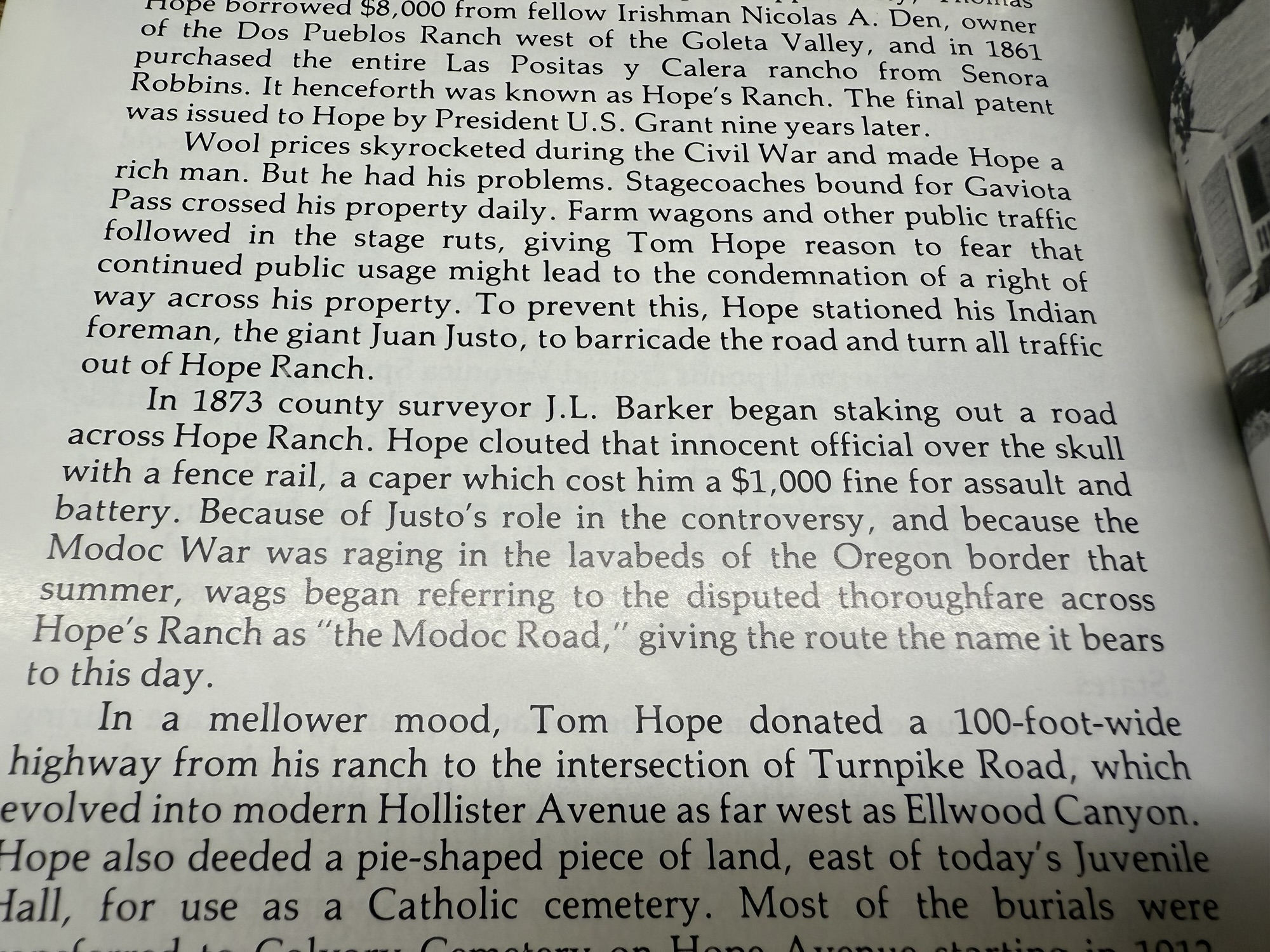
“Stagecoaches bound for Gaviota Pass crossed his property daily.

Farm wagons and other public traffic followed in the stage ruts, giving Tom Hope reason to fear that continued public usage might lead to the condemnation of a right of way across his property.

To prevent this, Hope stationed his Indian foreman, the giant Juan Justo, to barricade the road and turn all traffic out of Hope Ranch.

In 1873 county surveyor J.L Barker began staking out a road across Hope Ranch.

Hope clouted that innocent official over the skull with a fence rail, a caper which cost him a $1,000 fine for assault and battery.

Because of Justo’s role in the controversy, and because the Modoc War was raging in the lavabeds of the Oregon border that summer, wags began referring to the disputed thoroughfare across Hope’s Ranch as the ‘Modoc Road,’ giving the route the name it bears to this day.”

—Walker A. Tompkins, Santa Barbara Neighborhoods (1989)

The title of this here weblog is borrowed from Walker A. Tompkins’ , The Yankee Barbareños: The Americanization of Santa Barbara County, California 1796 – 1925

Posted in Santa Barbara | Tagged , , , , , , , , , , | Leave a comment

Mark of Conquest; Benchmark and Mortar

United States Coast & Geodetic Survey benchmark (1872) on a Chumash mortar stone, Santa Barbara County.

“The reverence attached to the artifacts of history is a thing men feel.

One could even say that what endows any thing with significance is solely the history in which it has participated.”

–Cormac McCarthy, The Crossing

If we consider the context of the times when this benchmark was placed sometime in 1872, it takes on a different meaning than might be conveyed at first glance.

What appears light hearted and cool because it’s old, an innocuous artifact of America’s past, may exude a far heavier and solemn feel when placed within the frame of history.

At first its insensitive placement may seem only sloppy and thoughtless.

I know many people who couldn’t care less about history and have no interest whatsoever in artifacts. They look on with utter indifference if shown such.

It’s not implausible that the people who set this benchmark held no appreciation for the mortar stone and were blind to its cultural value and significance.

However, when considered in context it seems that this benchmark may actually have been set with purposeful disdain.

I tend to think it was placed for reasons beyond mere need of a stone to attach it to, in a precise location, as per institutional necessity.

The general area at large where this stone resides beside the Santa Ynez Mountains offers exposed outcrops here and there and other boulders, too.

Other options existed and it appears that discretion could have been exercised. This seems all the more plausible when we look at other benchmarks in the region.

Other examples illustrate that use of existing stone in the field was not even necessary to satisfy the mandate of official government business.

At least one benchmark in the Santa Ynez Mountains was placed rather crudely and less permanently by comparison.

See Craig R. Carey: Kennedy Ridge and the East Camino Cielo, Redux.

Carey shows a benchmark fitted into cement, apparently whipped up on-site and filled to form at the time of installation.

Consider the historic atmosphere when this benchmark was set.

The savages were in the way; the miners and settlers were arrogant and impatient; there were no missionaries or others present with even the poor pretense of soul saving or civilizing.

It was one of the last human hunts of civilization, and the basest and most brutal of them all.

—Hubert Howe Bancroft (1963)

That’s Bancroft writing about California during the Gold Rush era. (Source: National Park Service)

Peter Burnett, first governor of California (1849-51), spoke of this conflict in the first State of the State speech:

“That a war of extermination will continue to be waged between the races until the Indian race becomes extinct must be expected. While we cannot anticipate this result but with painful regret, the inevitable destiny of the race is beyond the power or wisdom of man to avert.

When considered within the context of his entire address, it seems clear Burnett was not calling for a war of extermination, but giving voice to the existing violence and mass killings of the time, which seemed intractable.

The sentiment he expressed was similar to the rising tensions of the same period that, despite numerous efforts to reign them in, spun out of control and exploded into the Civil War.

California entered the Union as a non-slave, free state by way of the Compromise of 1850. The compromise preceded the Kansas-Nebraska Act (1854).

These attempts to dial back rising hostilities between anti-slavery and pro-slavery factions only served to precipitate the outbreak of vicious fighting, which came to be known as Bleeding Kansas (1854-61), and which was a prelude to the Civil War.

Stolen: Chumash

“When the movie was over, I called my wife, nine hours ahead in Italy.

‘I should come home,’ she said.

‘No, I’m okay,’ I said. ‘Come on, you’re in Rome. What are you seeing today?’

‘The Vatican.’

‘You can’t leave now. You have to go and steal something. It will be revenge for every Indian. Or maybe you can plant an eagle feather and claim that you just discovered Catholicism.’

‘I’m worried.’

‘Yeah, Catholicism has always worried me.’

‘Stop being funny.’

—Sherman Alexie, War Dances (2010)

Legacy of conquest, Santa Barbara County backcountry graffito, Condor National Forest. The artistic rendering was cleverly drawn over a faded sign instructing us to “not destroy your American heritage.” I do not believe, by and large, that land was stolen, and I would present a lengthy, intellectually rigorous and well-reasoned, heavily footnoted argument to the contrary. But many fellow Americans do hold that opinion sincerely and deeply.

The early 1870s figure significantly in the history of the American Indian Wars.

By 1871, the Comanche—who had nearly exterminated rival tribes such as the Apache and Tonkawa—had halted the seemingly unstoppable march of Manifest Destiny dead in its tracks, and began to push the lines of the American frontier backwards.

“The western frontier was an open and bleeding wound, and the Comanches, more than anyone else, were responsible. What was once the vanguard of America’s westward migration had become a smoking ruin littered with corpses and charred chimneys.”

“The fall of 1871 marked a profound shift in the white man’s thinking,” S.C. Gwynne writes in, “Last Days of the Comanches”, an article published in Texas Monthly (2010).

This marked the beginning of the end of the Comanche’s powerful reign.

Santa Barbara County frontcountry

In 1872, after many years of violence, the United States Army attacked the Modoc Indians of Northern California in what became the fiercest, most costly battle of the American Indian Wars fought in the state.

The Modoc War of November 29, 1872 to June 1, 1873 was widely reported throughout the country and even into Europe.

In the conflict, some 50 to 70 Modoc warriors, backed by their families in women and children, fought as many as 1,000 Army soldiers.

Under siege, out-numbered, out-gunned and hungry the deft warriors were armed with an intimate knowledge of the volcanic homeland they were defending.

Their skills and use of the sharp and ragged, cave-filled lava flows served as force multipliers and the Modoc leveraged this advantage to put on a stunning show of martial prowess against the soldiers.

The Army never succeeded in taking the Modoc in battle, who were hole up in a volcanic stronghold, and the war settled into a stalemate.

On April 11, 1873, the Modoc assassinated Brigadier Gen. Edward Canby during peace talks, the highest ranking United States military official ever taken by any Native Americans.

It seems unlikely that federal agents working on the coast survey in California were unaware of the intensity and extent of fighting happening across the country at that time.

In light of the historic atmosphere within which it was placed, it appears that this United States Coast & Geodetic Survey benchmark from 1872, a medal of American civilization, if you will, was fixed in place as a mark of triumphant domination.

This gives the benchmark a different meaning altogether than most others in Santa Barbara County.

* * *

California Truth and Healing Council;  Voices of Native Americans via video trailer. Governor’s Office of Tribal Affairs

The Modoc War, a video presentation.

S. C. Gwynne, Empire of the Summer Moon: The Rise and Fall of the Comanches, the Most Powerful Tribe In American History

Craig R. Carey, Hiking and Backpacking Santa Barbara & Ventura Counties: A Complete Guide to the Trails of Southern Los Padres National Forest

Posted in Santa Barbara | Tagged , , , , , , , , , , | 1 Comment

Hat Tip to the Selfless Samaritans In Service to Others

Pope Francis died this morning, Easter Monday. An incredible date for such a man to pass on.

The extraordinary event called to mind the deaths of Thomas Jefferson and John Adams, the second and third presidents of the United States, respectively, and the last remaining revolutionary patriots of their time that had helped birth the nation.

Jefferson and Adams both died on July 4, 1826, of all days.

The Vatican reported that Pope Francis died, in part, due to heart failure.

There is something ironic about that, too. A big-hearted, selfless man devoted to the service of others, whose heart finally gave out and could bear no more.

The smallest, least among us are sometimes the most beautiful. A tiny riverside bloom standing strong in the glare of backcoutry heat.
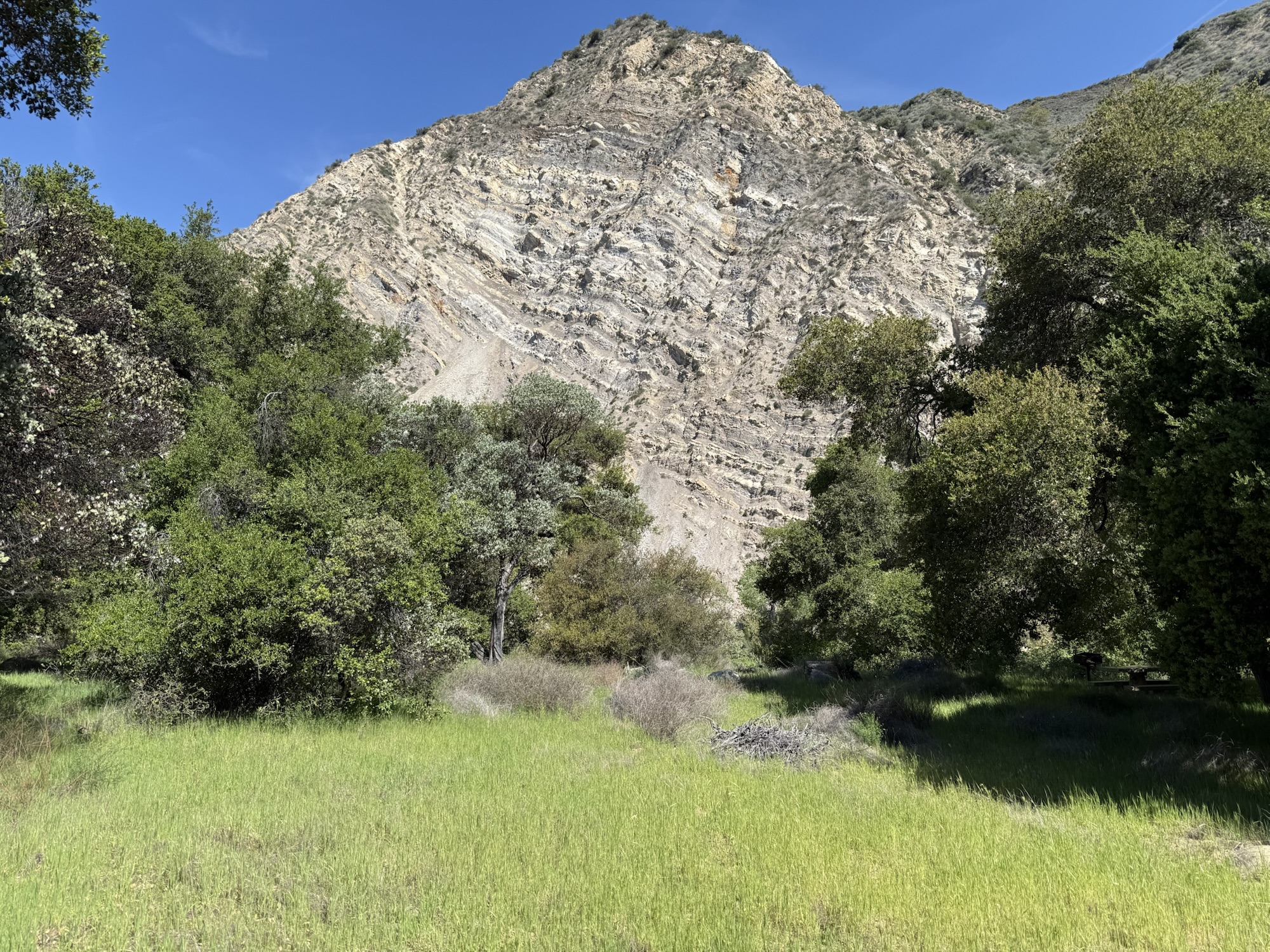
We wandered the river on Monday morning in wonderful blue-skied weather, through the spring-greened forest and along the shores of emerald waters.

We saw a bee swarm, an osprey and a small bobcat.

We heard a resonant human voice in the canyon early on.

Then only bird song, water trickle and the breeze through the trees.

Later in the afternoon we saw two people quietly sunbathing at Red Rock on our walk back.

But once we reached the road again, the quietude was buffeted by the rising and falling groan of large, low geared engines and fast spinning wheels humming on pavement and the buzz of aircraft.

Around the corner sped trucks, larger trucks, more trucks, an ATV with a helmeted team, SUVs, and air support overhead.

There might have been about a dozen vehicles of various sorts pass by in 15 minutes.

And they all were in some hurry!

It was an all-hands-on-deck affair, with search and rescue, forest rangers and forest firefighters, in common white pick-up trucks and beefy big-wheeled green engines, sheriffs in metro black and white SUVs, county fire personnel in their beefy big-wheeled white engines, and at least one helicopter.

Two ambulances waited at the First Crossing kiosk where Paradise Road meets River Road.

Somebody or -bodies were out there in desperate need of help, but it didn’t seem their specific location was even known, based on our talk with two of the men at work.

We’re fortunate to have such a small army of selfless individuals willing to rush out into the forest at a moment’s notice to perform rescue operations, render aid and save lives.

Santa Barbara County is mostly a rural place, with Los Padres National Forest alone making up 30% of it.

First responders are tasked with providing life sustaining services across a rather large swath of rugged, hard to travel, inhospitable terrain.

It’s heartening to see so many people rushing to help a single person, so many lives working together, at risk to their own health and well-being, for just one life.

Without questions of cost or whether or not the person in need may have acted foolishly and brought it on themselves in some manner or suffered a freak accident no fault of their own.

It does not matter. A person needing help gets help, regardless.

The only questions asked are: How bad is it? and Where are they?

And then the rescuers come running.

This was a sight to see as we walked on down the road. And on this day of the pope’s passing it seemed particularly poignant, the unnamed and unknown in service to strangers.

We tip our Filson flat-brimmed hat to the good Samaritans of selfless service, who rush to our aid in times of dire need and do for us what we cannot do on our own.

We salute you!

Posted in Santa Barbara | Tagged , , , , , , , , , , | Leave a comment

The Intelligence of Coyote Tobacco (Nicotiana attenuata)

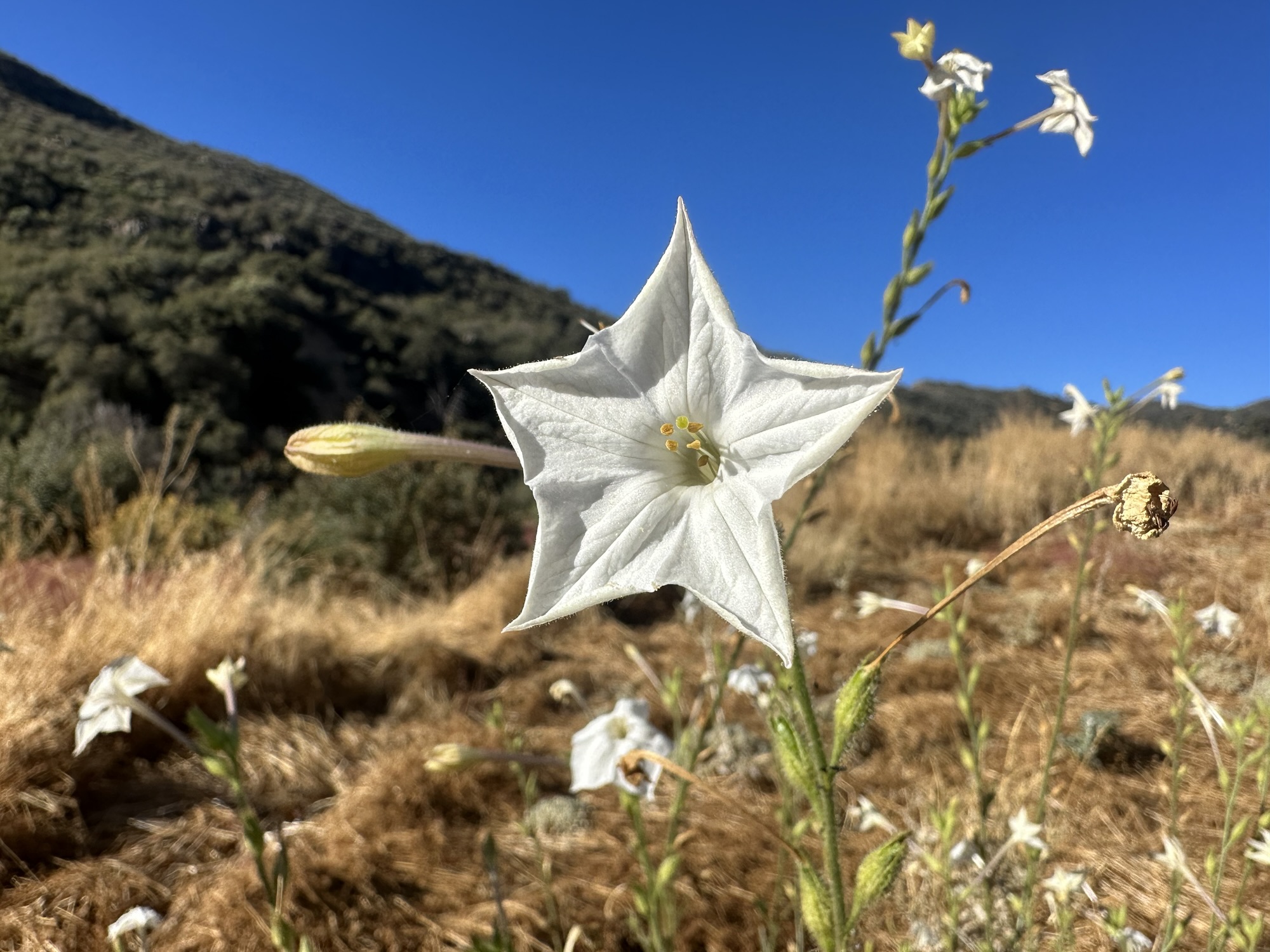
Wild tobacco growing in the Sierra Madre Mountains of Santa Barbara County. (Fall 2024)
If we define intelligence as an ability to perceive, understand and respond effectively to environmental stimuli, then we might attribute to plants what is normally considered characteristic only of humans, and to a lesser extent members of the animal kingdom.

When a person gets bit by a blood-sucking parasitic insect, like a mosquito or a tick, they respond with defensive force to pluck it from their skin, shoo it away or crush it.

A young inexperienced and unlearned child might allow a mosquito to land on their arm and observe the pest as it taps her skin to feed.

Yet it’s not long before the feel of discomfort signals a problem and the child responds accordingly. The child may flinch or cry out or smack the insect dead.

It takes little experience in life to learn that these organisms represent a threat and to learn to identify them on sight and act preemptively.

A person may also learn about a pest from other knowledgeable people without first seeing one for themselves.

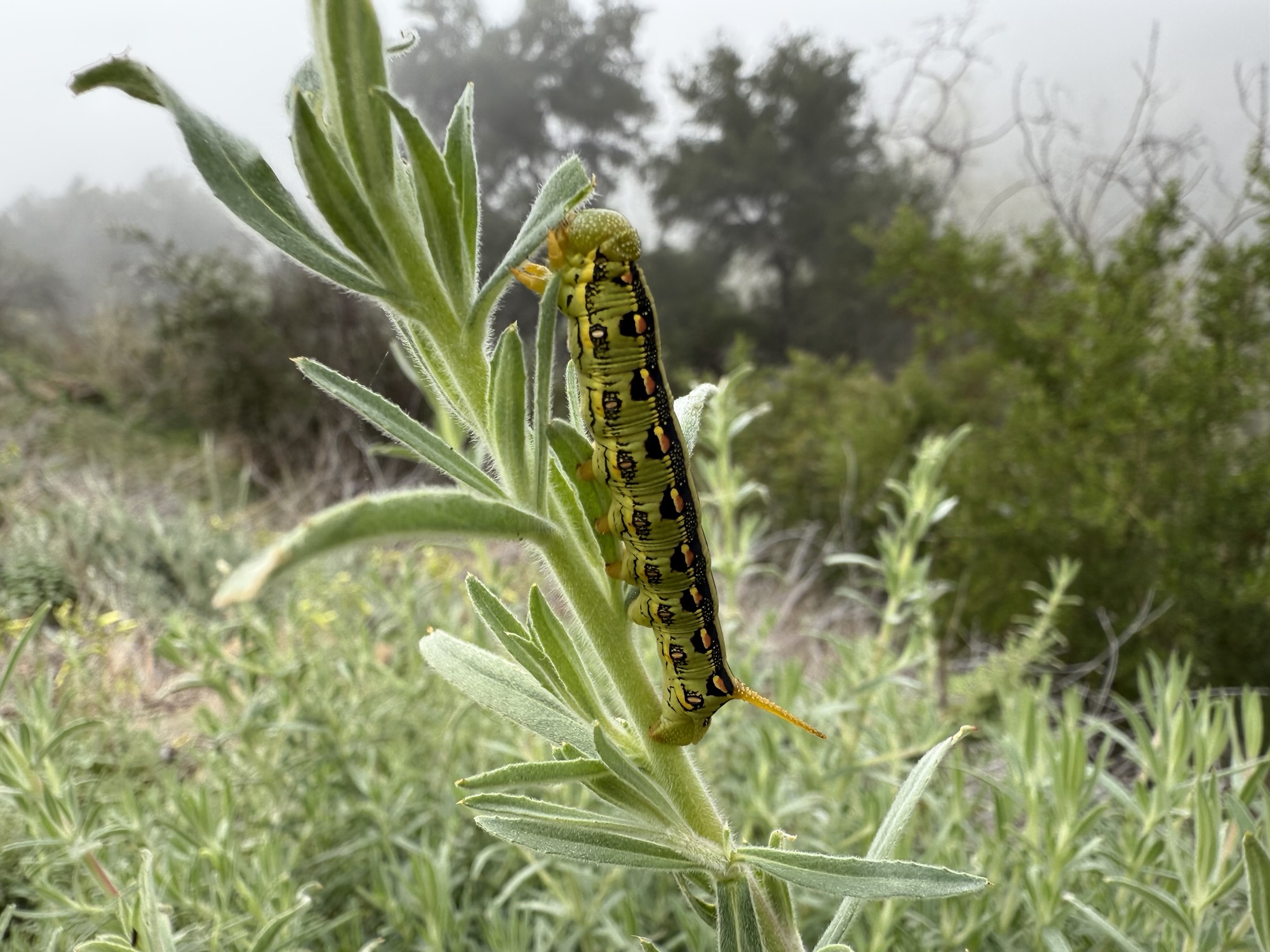
Hornworm, Manduca sexta, feeding on an unknown plant in the Santa Ynez Mountains of Santa Barbara County. (Spring 2025)
There exists many different sorts of human intelligence.

Among them are two broad categories proposed, in 1943, by psychologist Raymond Cattell. Building on the work of others, he defined two strains; fluid and crystallized.

National Library Of Medicine: Hebb and Cattell: The Genesis of the Theory of Fluid and Crystallized Intelligence

Fluid intelligence is an ability to reason and problem solve in the moment without use of previously acquired specialized knowledge.

Crystalized intelligence describes the portfolio of knowledge and skills gained through primary sensory experience.

But what strain of knowledge comes innate, held in seed, and activated at germination?

Crazy Larry

Coyote tobacco is smart enough, if we allow use of such a word primarily reserved for higher life forms, to recognize when it’s being attacked by an herbaceous predator.

Furthermore, the plant can distinguish between different sorts of leaf eating predators feeding on its body and respond in different ways.

Wild tobacco can increase biosynthesis of nicotine, a neurotoxin, in its roots and flush the poison into stems and leaves, to rid itself of the predator.

Tobacco can also emit volatile organic compounds into the air, which can attract natural predators of the insect or worm eating its leaves, thereby calling beneficial insect allies to its own defense.

These defense mechanisms may greatly retard predator attack in both a “bottom up” and “top down” manner, by altering both insect egg laying behavior and consumption rates.

“As a consequence, a plant could reduce the number of herbivores by more than 90% by releasing volatiles,” scientists have found.

American Association for the Advancement of Science: Defensive Function of Herbivore-Induced Plant Volatile Emissions in Nature

Moreover, nearby tobacco plants in the neighborhood may also detect these volatile organic compounds wafting in the air and recognize them as signaling an imminent threat.

Nearby plants may then increase their own levels of nicotine poison to combat insect attack.

“Studies have shown that the chemical signals resulting from injury are directly proportional to the extent of damage the plant has sustained,” scientists have found.

Science Direct: Plant Chemical Defenses Against Insect Herbivores—Using Wild Tobacco as a Model

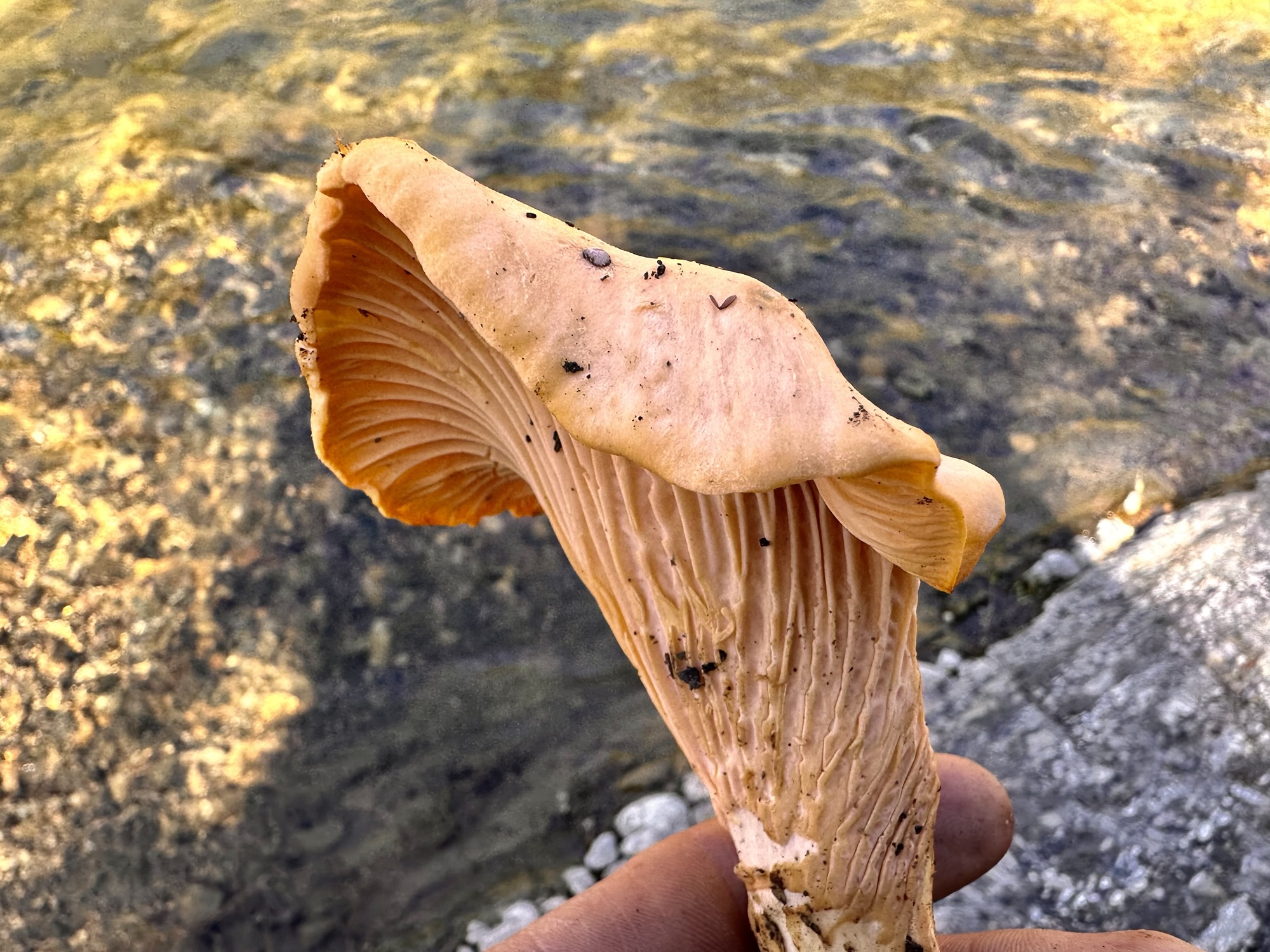
A chanterelle showing its defining feature of decurrent plicated ridges, which sets it apart from other similar looking, inedible and poisonous gilled mushrooms.

Coyote tobacco is not alone in its ability to communicate with other plants and organisms.

In a previous post here six years ago, we discussed how oak trees communicate through subterranean fungal networks established by symbiotic fungus, like the sort that fruits chanterelle mushrooms.

Trees communicate through these fungal networks using chemical signals as well as electrical impulses.

These impulses can travel a third of an inch per second to notify neighboring trees about potential threats like insects or relate information about drought.

In the case of an insect attack, each oak tree connected to the network receives news of an imminent threat from trees already being eaten by bugs, and each tree then responds to the message defensively by boosting their output of toxic and bitter tasting tannins into their bark and leaves.

The Mighty Chanterelle and the Gnarly Oak

(As sourced: Peter Wohlleben, The Hidden Life Of Trees)

Is this not some form of intelligence?

That’s one wily plant!

I think I’ve met some humans in the course of life that exhibit less consciousness and intelligence than plants like these.

Posted in Santa Barbara | Tagged , , , , , , , , , , | Leave a comment

The Journey of a Root (1907) and Plant Intelligence

 Los Angeles Herald, February 24, 1907.

The Journey Of A Root

From Santa Barbara, California, there comes a story of a most interesting freak of vegetable life, which is strictly vouched for.

Through a certain garden ran, some years ago, a sewer made of redwood timber. This sewer was again cased by an outside sewer.

Across the sewer there was built a brick wall many feet high, and in such a way that is was pierced by the inner sewer, which it enclosed tightly, while the outer sewer ended abruptly against the wall.

The outside sewer casing had in course of time decayed, and a eucalyptus tree, standing some sixty feet away, had taken advantage of this and sent one of its roots to the coveted spot in a direct a line as possible.

Here the root entered the outside sewer and followed its course as far as it could. At last it came to the wall which shut off its course, and it could go no further, the inside sewer being perfectly tight.

But on the other side of the wall the sewer and its casing continued, and this eucalyptus tree evidently knew how t0 get there.

Some three feet high in the brick wall there was a little hole an inch or two in diameter, and this the eucalyptus tree was aware of, as its big root began to climb the dry wall and face the sun and wind until it found the hole, through which it descended on the other side and entered the sewer again and followed it along as formerly.

How did the tree know of the hole in the wall?

How did it know that the sewer was on the other side?

How could it direct the root to go and find the place with such precision?

The roots of any plant grow always and unerringly in the direction of its food, just as the eucalyptus tree did.

Thirteen years ago I came across this historic newspaper piece in the archives and filed a copy here on this weblog as an unpublished draft.

Yesterday I was in the book nook at Santa Barbara Botanic Garden, browsing through volumes of interest, when I happened across a single sentence that struck with force, triggered memory recall, and as Will Hunting said, blew may hair back. (Movie clip: Good Will Hunting 1997)

This old newspaper article relates what was at the time an inexplicable feat of plant sentience.

How? How? How? They asked.

Some one hundred years later, we the humans are finally beginning to develop our understanding of plant intelligence, and we have something of an answer to those questions.

The aforementioned sentence of interest:

“Pea shoot roots appeared to be able to hear water flowing through sealed pipes and grow toward them,. . .”

—Zoë Schlanger, The Light Eaters: How the Unseen World of Plant Intelligence Offers a New Understanding of Life on Earth (2024)

The description related in the newspaper article is a remarkable, anecdotal case in point example of what scientists today have discovered.

Pea plants have demonstrated an ability to sense, not only differing amounts of soil moisture, and to use this information to direct their root growth toward primary sources and the wettest places. Which is probably obvious, that roots grow toward water.

But what is not so obvious; plants have also demonstrated an uncanny ability to sense acoustic vibrations in the soundscape made by the force of running water and to act accordingly.

Tree root growing down into the circular tree mold formed when a lava flow covered the forest in Volcanoes National Park and surrounded the trees. The moisture in the tree kept the trunk from burning just long enough for the lava to cool and form the cast. (March 2025)
“Because water is essential to life, organisms have evolved a wide range of strategies to cope with water limitations, including actively searching for their preferred moisture levels to avoid dehydration.

Plants use moisture gradients to direct their roots through the soil once a water source is detected, but how they first detect the source is unknown.

We used the model plant Pisum sativum [pea] to investigate the mechanism by which roots sense and locate water.

We found that roots were able to locate a water source by sensing the vibrations generated by water moving inside pipes, even in the absence of substrate moisture.

When both moisture and acoustic cues were available, roots preferentially used moisture in the soil over acoustic vibrations, suggesting that acoustic gradients enable roots to broadly detect a water source at a distance, while moisture gradients help them to reach their target more accurately.”

—Gagliano, M., Grimonprez, M., Depczynski, M. et al. Tuned in: plant roots use sound to locate waterOecologia (2017)

“Acoustic gradients enable roots to broadly detect a water source at a distance,” say, for example, sixty feet away, through open air and dry surfaces.

Wild man, wild.

Posted in Santa Barbara | Tagged , , , , , , , , , , | Leave a comment