Fossil Falls, A Glacial Relic of the Pleistocene

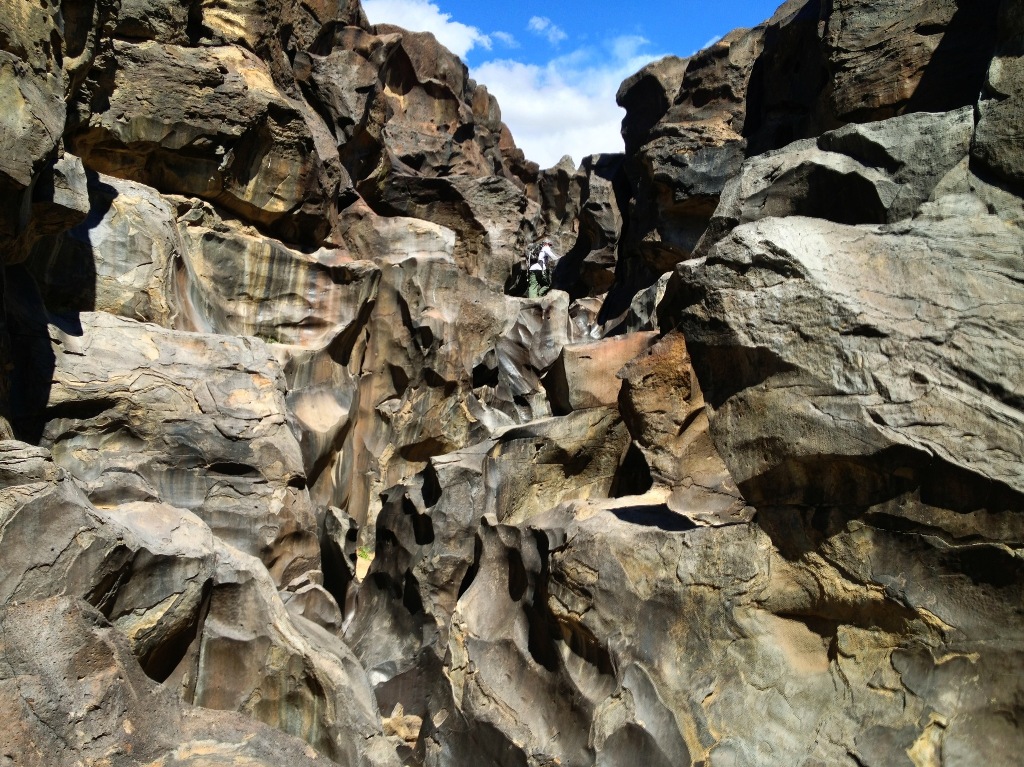
Fossil Falls CaliforniaDavid Stillman scrambling up familiar territory, through the gullet of Fossil Falls and over the slick, water polished basalt.

Standing in the arid Owens Valley of California, beside an ancient dry riverbed that can barely be discerned amid cragged lava flows and sandy flats, I strain my imaginative powers trying to picture a lush pluvial environment, wherein tree-lined streams lead down from the distant, icy Sierran peaks poking into the sky and feed a powerful, fast-flowing river.

The sign before me describes the richness of a riparian landscape that is the opposite of what exists around me. Men, women and children, I read, carry on life’s daily activities enjoying the natural wealth of a bountiful land of verdure and abundant animal life. I look away from the sign and see heat waves, barren mountain slopes, fields of dark volcanic rock and much bare dirt and sediment with only a meager speckling of native plants that can barely be called scrub brush. The environment here has radically changed since the times thousands of years ago when humans lived along the shores of this now non existent river.
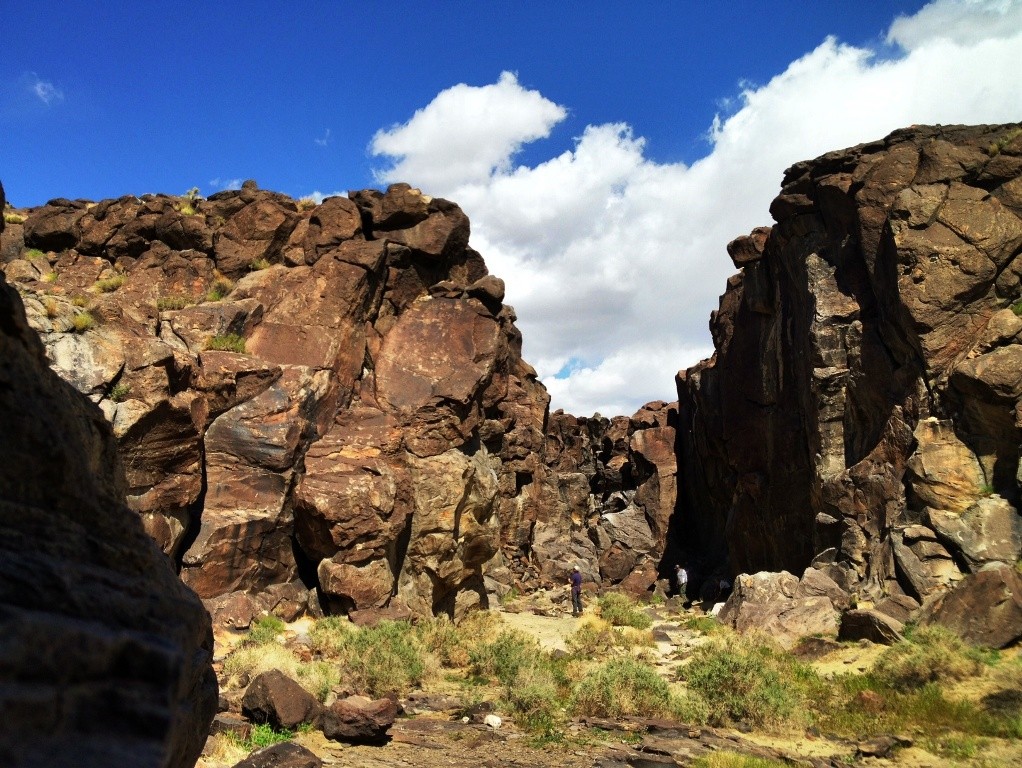
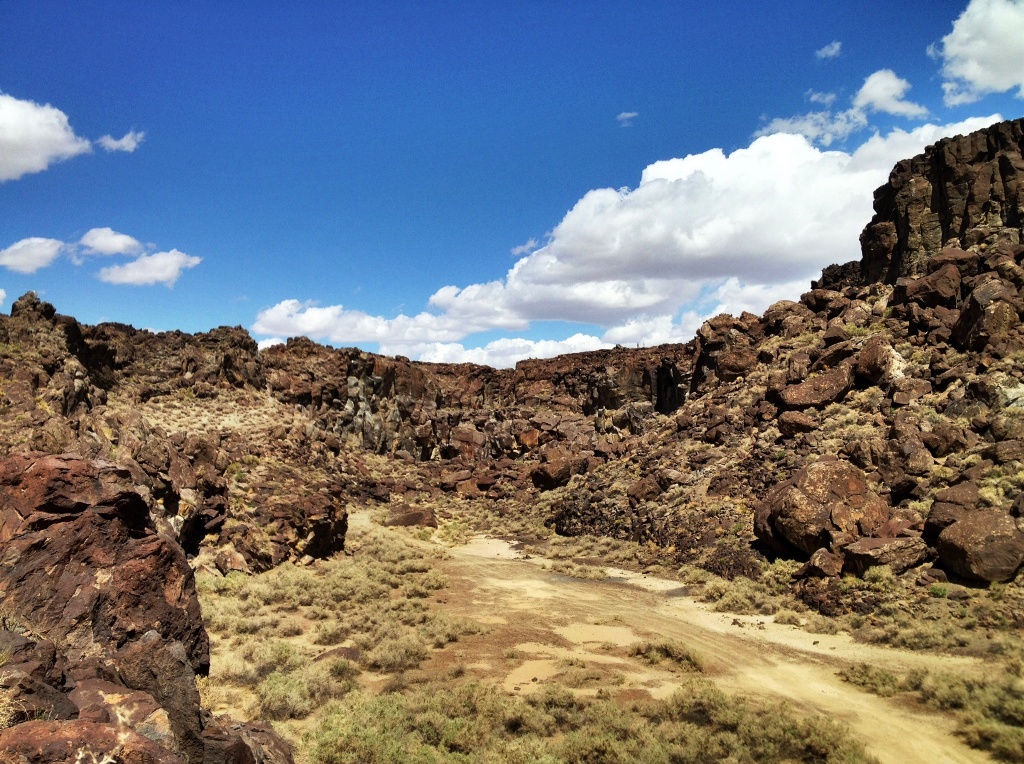
Fossil FallsLooking up the riverbed toward upper Fossil Falls.
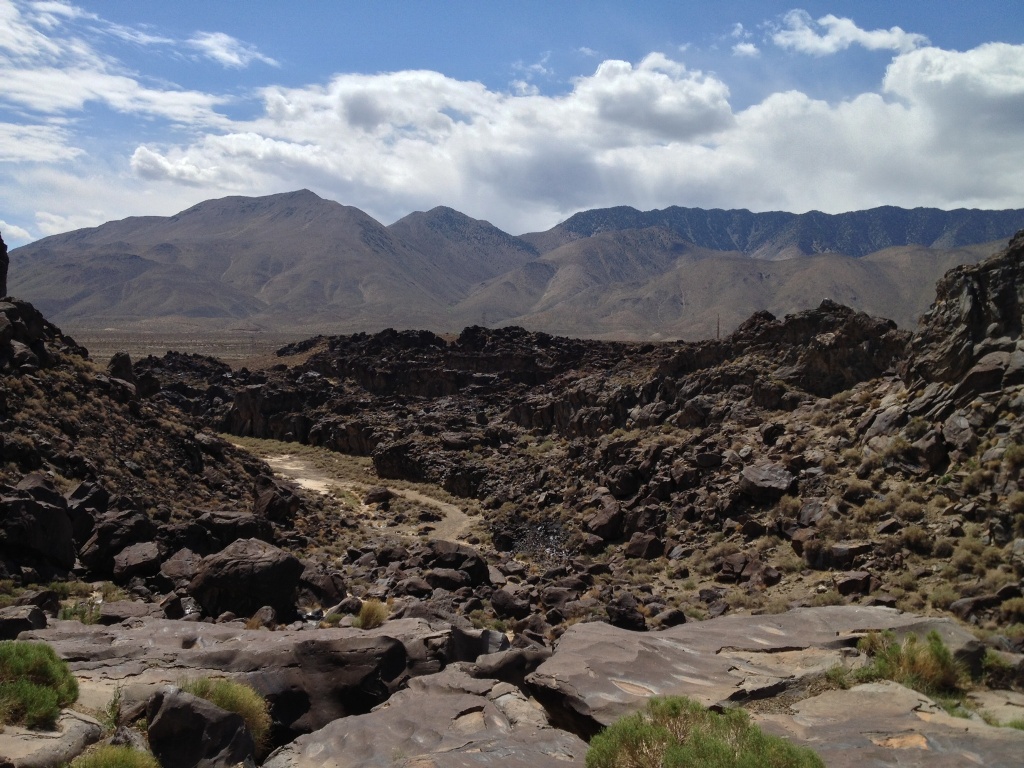
Fossil Falls Owens Valley CaliforniaLooking over the precipice of lower Fossil Falls.
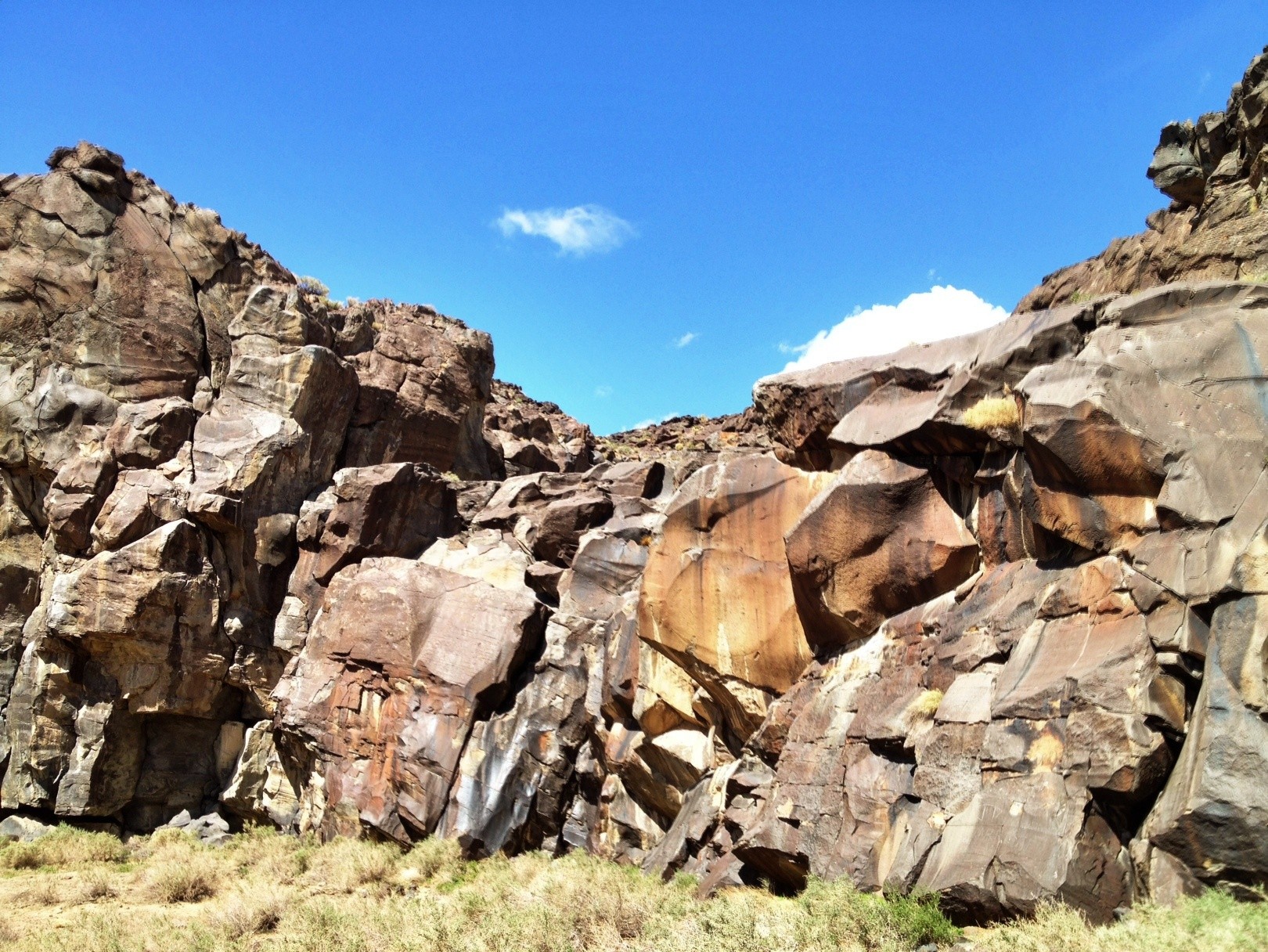
lower Fossil FallsLower Fossil Falls

Fossil Falls Owens ValleyLooking up the ancient Owens River toward the falls.

I’m at Fossil Falls, a pair of ancient waterfalls that have not flowed for at least 10,000 years. When lava oozed across the drainage channel the glacial Owens River carved its way through the volcanic rock creating a series of large falls. The basalt is slick and glassy, having been polished by the heavy sediment load carried by the turbulent prehistoric river. Rocks and boulders caught in vortices bored pits and deep round holes into the volcanic rock leaving behind a lithic sort of Swiss cheese formation, some holes large enough to crawl into.

Today there remains an extraordinary landscape of naturally sculpted, stark beauty. The traces of prehistoric humanity can still be seen in the form of millstone mortars, petroglyphs and even the rock rings that once served as foundations for dwellings. Obsidian flakes cast off from the crafting of tools are scattered all over the ground.

The following text is taken from the Bureau of Land Management:

AREA DESCRIPTION: Fed by the rains and snows of the last Ice Age, the Owens River once flowed from Owens Lake down through this narrow valley between the Coso and Sierra Nevada Mountain ranges. Several times during the last 100,000 years, the discharge from the Owens River has been great enough to form a vast interconnected system of lakes in what are now the arid basins of the Mojave Desert.

The rugged and primitive features of Fossil Falls are the product of volcanic activity. As recent as 20,000 years ago, volcanic eruptions poured lava into the Owens River channel. The erosional forces of the Owens River acted upon this volcanic rock, forming the polished and sculpted features that now can be seen at Fossil Falls.

EARLY CULTURE: Some 10,000 to 20,000 years ago the first human beings camped along the ancient rivers and lakes of the Mojave Desert. These prehistoric people harvested lakeshore resources and hunted large animals.

By 6000 BC, extreme aridity caused the last of these ancient rivers and lakes (including the Owens River) to disappear. The grasslands, marshes, and large mammals that had once flanked these lakes vanished. Prehistoric human populations may have partially abandoned low-lying desert areas in search of food and water in upland mountains areas.

WAY OF LIFE: Around 4000 BC, climatic conditions again shifted from the extreme aridity of the preceding period to the relatively moderate conditions that exist today. A cultural pattern was established that emphasized the use of a wide variety of desert plant foods that included both small and large mammals, reptiles, insects and waterfowl as well.

With only slight adjustments such as the additions of pottery and the bow and arrow, this way of life was still being practiced by the Little Lake Shoshone Indians at the time of the first European explorations of the Mojave Desert. Many of the archaeological sites at Fossil Falls are dated between 4000 BC and European contact in the 19th century.
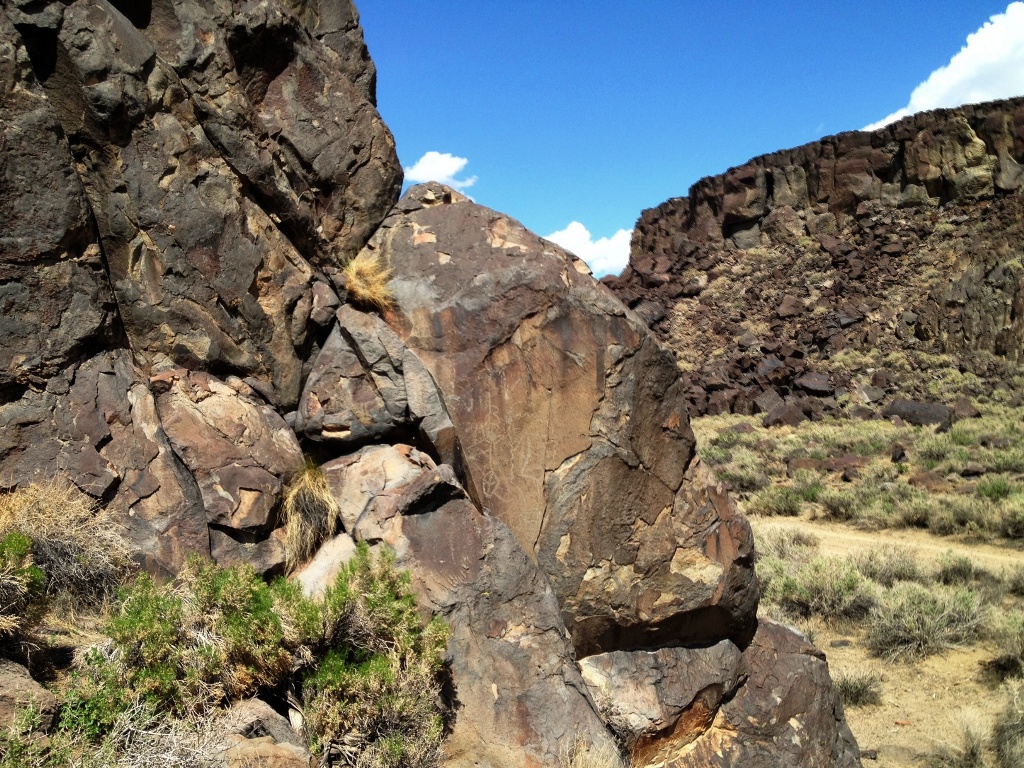
Petroglyphs Fossil Falls CosoPetroglyph panel on rock face at center frame.
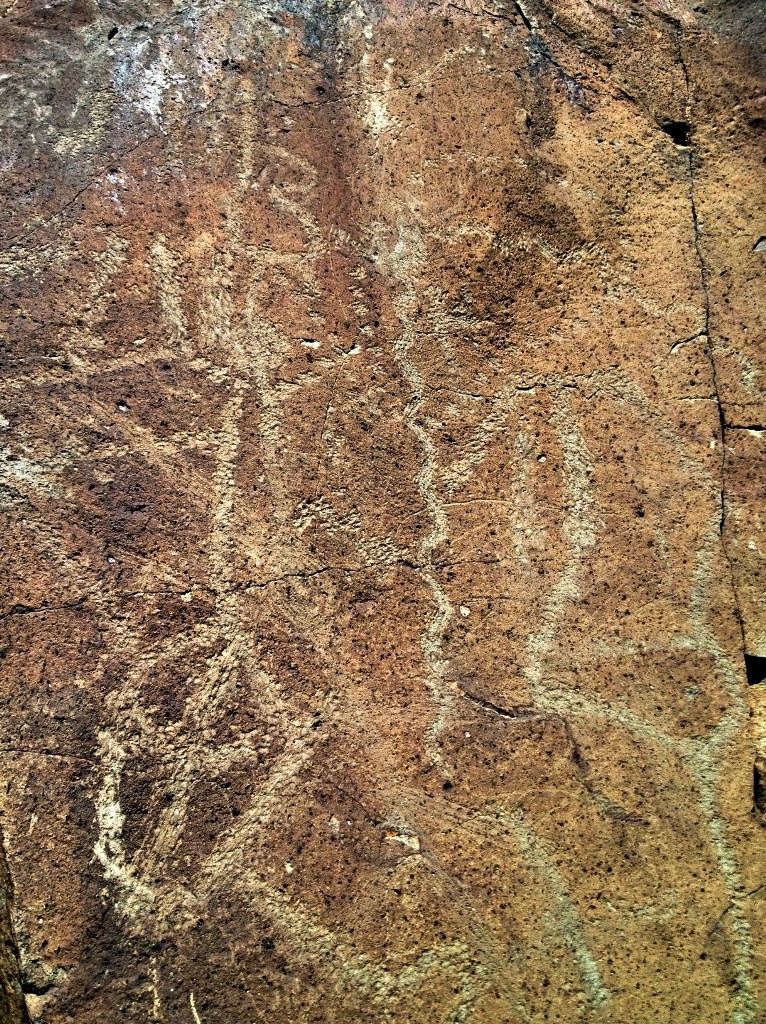
Fossil Falls petroglyph

Reference:

Geology Underfoot In Death Valley and Owens Valley, Robert Phillip Sharp, Allen F. Glazner (1997)
 

Posted in Inyo County | Tagged , , , , , , , , , , | 4 Comments

Sespe Hot Springs From Piedra Blanca

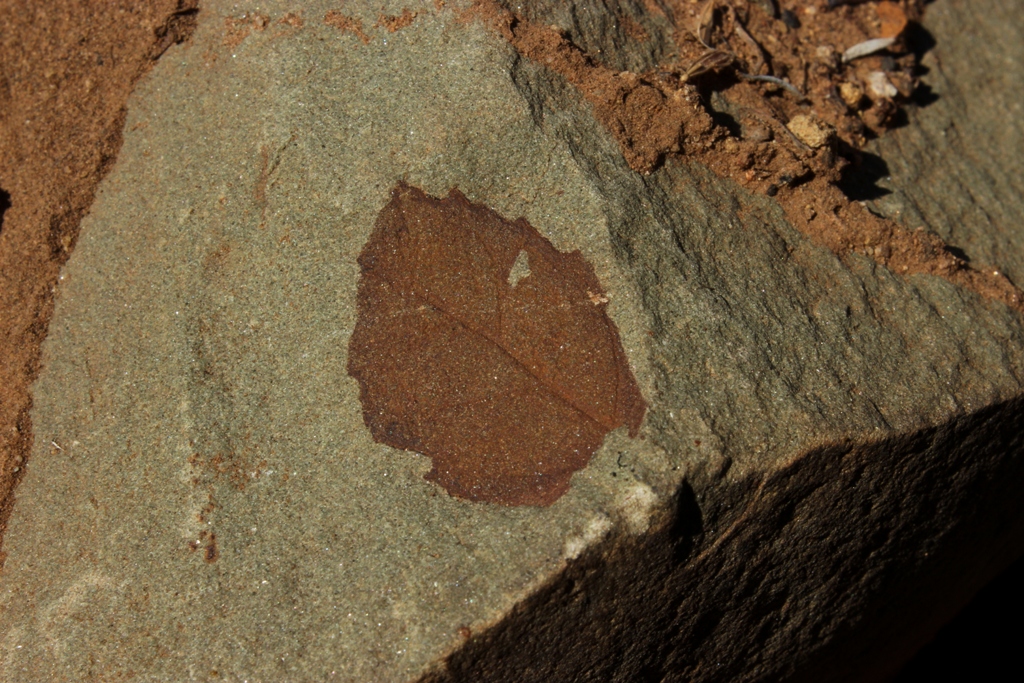
fossilized oak leaf Sespe WildernessFossilized oak leaf found along the Sespe Trail. Note the veins and serrated edges.

Sespe Creek poolsA Late, Hot Start

I didn’t start walking from Piedra Blanca Trailhead until a few ticks before ten in the morning, at least four hours later than I had hoped to begin my hike. Everybody else had long since hit the trail. I was the lone straggler.

With about 16 miles to hike, struggling with the weight of an overloaded pack beneath the unpleasant Sespe sun, which at times makes a person feel like an ant being scorched under a magnifying glass by some malicious giant in the sky, I was concerned about making Sespe Hot Springs before sundown. I had no doubt that I’d make it in a day, but thought I may have to finish by headlamp.

Normally such a prospect would be no cause for concern, in fact it would add a welcome tinge of adventure to the day. Stillman and I had hiked this trail starting at four o’clock in the morning, walking for hours in darkness, and that made for a great experience, a blazing white slivered moon and glittering amber-hued Venus low and large in the sky. (Sespe Creek: Piedra Blanca to Devil’s Gate)

But never having hiked up to the hot springs from Sespe River, I was not relishing the thought of finding my way for the first time up an unknown canyon in the dark even if the trail was well traveled.

Sespe River CreekSespe River or is it a creek? There seems to be some confusion, but if the Santa Ynez can rightly be labeled a river than so too should the Sespe for it is, when flowing, long, powerful, deep and dangerous.

Long segments of the Sespe River Trail wind alongside the watercourse nearly entirely devoid of shade. Longer stretches, that is, than one might prefer with no shadows sufficiently large enough to provide respite from the blistering solar radiance. Winter here can feel like summer. While it may be chilly in what shade may be found, hiking the exposed trail on a cloudless day can be unpleasantly hot. In summertime it can be downright brutal.

I continually passed deep, cold emerald pools because I hadn’t sufficient time to stop for a swim. It was tough to disregard the growing urge to leap in the water. But if I was to meet up with the others, among whom were Craig R. Carey.net, EM Walker.net, VC Canyoneering.com, I had to keep marching.

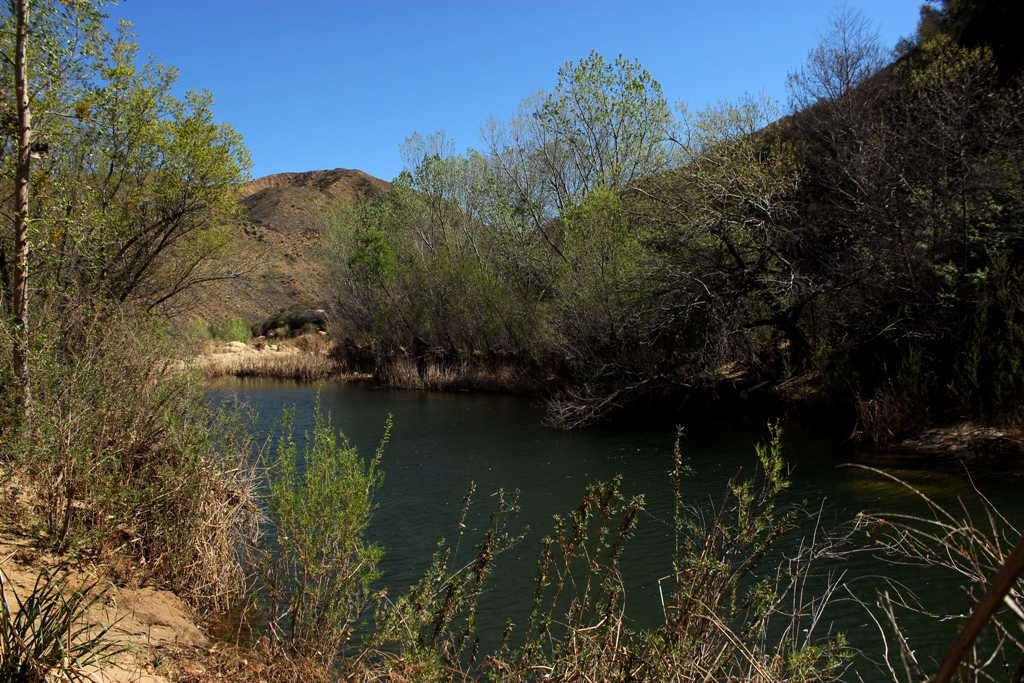
Sespe Swimming HolePools of the Sespe sit like oases amid a parched land of searing heat.

At one turn in the river I stood on the trail peering down at the shimmering water as sweat trickled down my steamy hot face, my feet seemingly aflame from the earth’s radiant heat and the friction from constant walking. The lure of the chilly liquid, and urge for cold refreshment, was finally too irresistible to deny any longer.

I plodded down a path across a grassy flat, and through the dappled light cast by old cottonwood trees along the river bank, searching for an entry point into a pool, somewhere I could leap in and instantly be enveloped in the running river of rain. I found only shallow riffling flats, nothing colored in that inviting hue of clear green characteristic of calm, deep pools.

I turned and looked back at the trail climbing away from the river up the west facing, rocky, fully exposed slope baking in the late afternoon sun, cursing myself for foolishly wasting precious time and energy. I walked by prime, deep pools all day, then was lured down to the waterline along a section of the river I knew was not good for swimming.

Frustrated, huffing through the sand and brush, I made my way back to the hard packed trail, hotter and thirstier than I was thirty minutes earlier, accomplishing the exact opposite of my intention. For some reason I kept expecting to walk up on a rattlesnake, something to add further insult to my foul mood, but thankfully a serpent never showed.

Onward forth I stomped.

Sespe Creek Swimming Hole

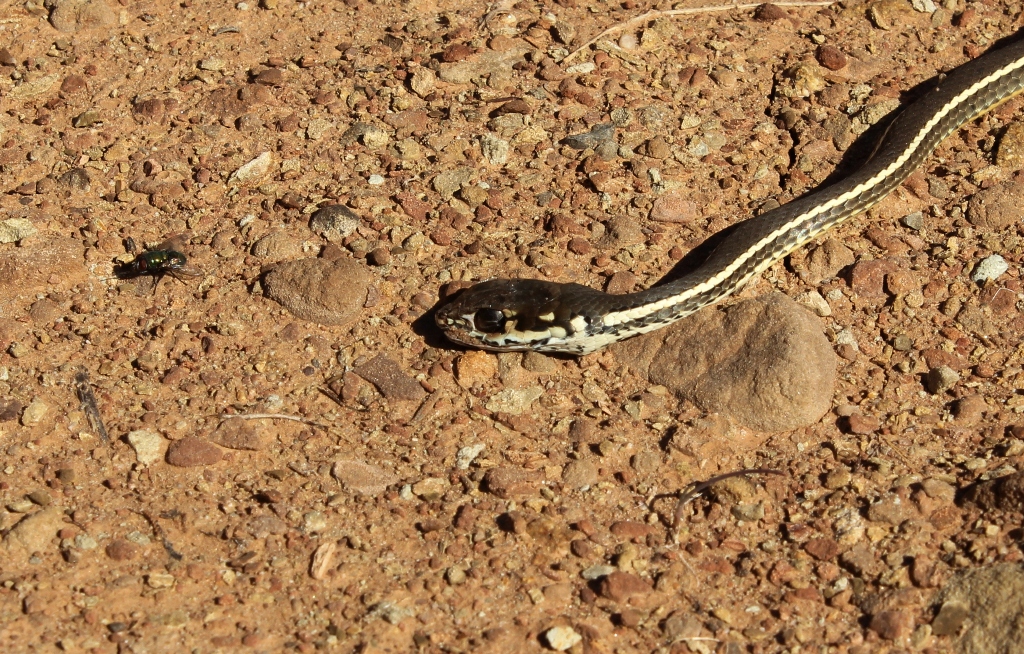
dead snake and flyClean up crew. One guy’s fatality is another dude’s feast.

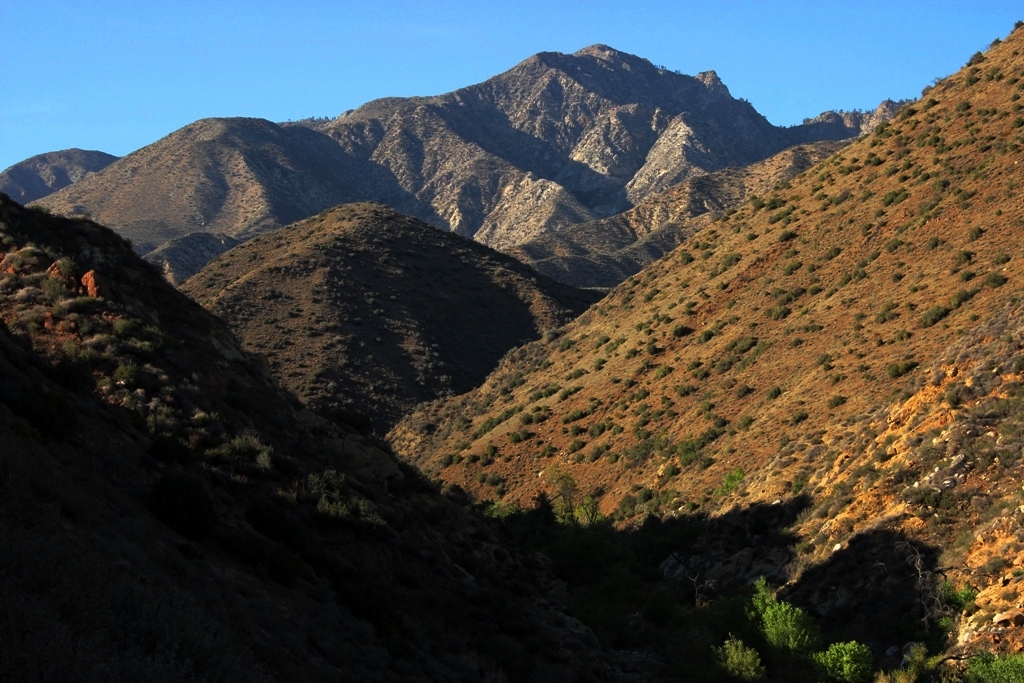
Sespe Hot Springs Canyon San Rafael PeakLooking up Hot Springs Canyon at San Rafael Peak. That west flank looks mighty appetizing, though naturally it hides a number of obstacles, perhaps impassable, from brush to loose rocky slopes and unseen steep creases in the mountainside. But one never knows how something tastes just sitting around looking at the menu, you must order and have a sample.

Posted in Ventura County | Tagged , , , , , , , , , , | Leave a comment

Western Fence Lizard (blue-belly)

Western Fence Lizard blue-bellyA blue-belly lizard on a fallen log atop Pine Mountain in the Sespe Wilderness.

Blue-belly lizards always interested me as a boy. Sort of like a cat attracted to movement, they naturally captured my attention when they scurried around on boulders in creeks or my backyard fence.

Then my dad taught me how to fashion a lasso from the pliable flower stalk of green wild oats. I could use the grassy length of plant to get close enough to catch the otherwise uncatchable speedy reptiles by slipping the noose over their head, which pulled tight when they darted away.

Another fascinating lesson came when I learned to put a blue-belly to “sleep” by slowly turning it on its back and gently stroking its belly. It’s small experiences like that, I suppose, which helped instill in me an interest in the natural world as I grew up, and made me to understand that moments of wonder and amusement could be found in the smallest of things.

Blue Belly Lizard Western FenceA blue-belly hiding out in a tiny cave along the hike to Arrowhead Spring in the Los Padres National Forest.

In a previous post, Ticks, Lizards and Lyme Disease, I mentioned a fascinating biological connection between blue-belly lizards and a decrease of the debilitating Lyme disease found in California. Another notable characteristic of blue-belly lizards is their ability to change color.

Contrary to misinformation found on the Internet, however, these lizards do not change color for defense purposes as a means of subterfuge, but do so to help thermoregulate. Blue-bellies have a third eye of sorts called a parietal eye, which is seen as a dot on the large scale found behind their two eyes. It communicates with their brain based on a measurement of ambient sunlight to determine, depending on their need to warm or cool themselves, how dark or light their skin tone should be, which increases or decreases, respectively, the amount of heat they absorb from the sun.

Sometimes the small and seemingly ordinary things have interesting stories to tell for those willing to take the time to listen.

Reference:

Joan Easton Lentz, A Naturalist’s Guide to the Santa Barbara Region (2013)

Posted in Santa Barbara County | Tagged , , , , , , , , , , | 6 Comments

SPAM, Backcountry Delicacy Par Excellence

SPAM“. . . the mouthwatering taste of SPAM® Classic seasoned with black pepper. It’s a delicious dream come true.”

In a previous entry I dubbed the Santa Barbara County original, Hidden Valley Ranch Dressing, “a nutritionist’s nightmare, a glutton’s godsend.” Well, folks, I venture to say we have a new-found contender in the arena of arterial abuse deserving of its own exclusive post. Glorious, of so ever glorious, SPAM!

Prior to a recent backpacking trip into the Sespe Wilderness, I cannot recall if I ever tasted of the canned meat product that has become the subject of so many pop culture wisecracks. Now that I have, I will never forget that first experience.

When I eased my sore muscles down to sit in camp beneath the palm trees after a hard day’s 16 mile hike, and I caught a whiff of black pepper seasoned SPAM being pan-fried, it was indeed a dream come true. To quote, once more, Homer Simpson, “Really, the only word for it is . . .(some guttural, saliva bubbling phonetical utterance.)” I carried nothing in my pack that could even remotely contend with it.

The sizzle and pop of 15 juicy grams of highly salted fat per serving emanating from the darkness was enough in itself to induce an unusual eagerness to sample the pink gelatinous fare Craig was frying. Though I feigned only slight interest, being that I was not the one that lugged in the heavy tinned foodstuff.

In a realm wherein boiling water serves as the key to nearly every meal, and how good could anything possibly be that requires hot water to rehydrate it, to smell fried black pepper seasoned SPAM was akin to taunting a starving hyena with fresh meat. My salivary glands constricted and the drool did flow.

Sespe Wilderness Los Padres National ForestSespe Wilderness, Los Padres National Forest. Does that v-slot canyon not beckon all backcountry bush crawlers?

I mentioned this SPAM-errific experience to a Hawaiian born friend. In Hawaii, SPAM became somewhat of a cultural cornerstone after WWII. SPAM musubi can be found in convenience stores like other fast food items such as those hotdogs that roll endlessly around on heated metal cylinders.

My friend, the frontman for a popular reggae band heard on the radio, let it be known that he and his bandmates added a rider to their contract that included the requirement that SPAM be a staple food item when they tour. They hooked their bus driver on it like a drug and he came to expect, if not demand, a hot SPAM panini whenever he worked. My friend advised me that to do it right, one must fry it until it nearly blackens, so it gets a spotty dark brown crust, which is precisely how Craig served it.

I can’t say that I’m hooked to the point that I’ll be eating SPAM when in the comforts of home or demand a contract ensuring I receive regular servings, but I have no doubt I’ll be packing it along the next time I hit the trail for an overnighter. Who needs refrigerated filet mignon for $25 a pound when you can pack shelf-stable SPAM for $3.99? And never mind the price, it’s the taste alone that makes it the stuff of dreams. Of course, it helps to be famished and far from the convenience of a fully stocked kitchen.

The only remaining question now is whether I dare proceed to the next obvious step, which is dipping fried SPAM in Ranch Dressing. Yet, perhaps the better query is whether or not I have the will power for sake of my health to ignore the thought and refuse the temptation.

San Rafael Peak, Hot Springs Canyon, Sespe WildernessLooking up Hot Springs Canyon at San Rafael Peak in the Sespe Wilderness.

Posted in Ventura County | Tagged , , , , , , , , , | 6 Comments

Rain Beetle

rain drop caught in spider webA drop of rainwater suspended in a spider web stuck to the underside of a boulder.

Prior to the recent few downpours last month in late February and early this March, it hadn’t rained in a long time. Just a smattering of precipitation had fallen here or there over the many months, but hardly enough to wet the ground in most places and everything was so dry from the ongoing drought that a day or so later, with a little sun and a light breeze, there was hardly a trace of moisture left.

Santa Barbara County-wide rainfall totals

Before February, as per the County’s official measure, it had been over a year since it had rained more than a single inch during the course of a day. I had started thinking it may become the season I remember ever after as the winter it didn’t rain.

Then it finally did rain: 2.47 inches on February 27th, 2.60 inches on the 28th, 1.16 inches on March 1st and 2.00 inches on the 2nd. The precipitation that fell during those several days amounted to almost half the total rainfall of the previous season.

Last season’s rainfall county-wide measured in at 46 percent of normal. With most of the wettest part of this season past the tally stands at just 43 percent of normal. Those recent four days of rain very well may end up being the vast overwhelming majority of all precipitation for the entire year! (As an aside, apart from the lack of rain, this winter in Santa Barbara has also been the warmest in five years according to University of California, Davis.)

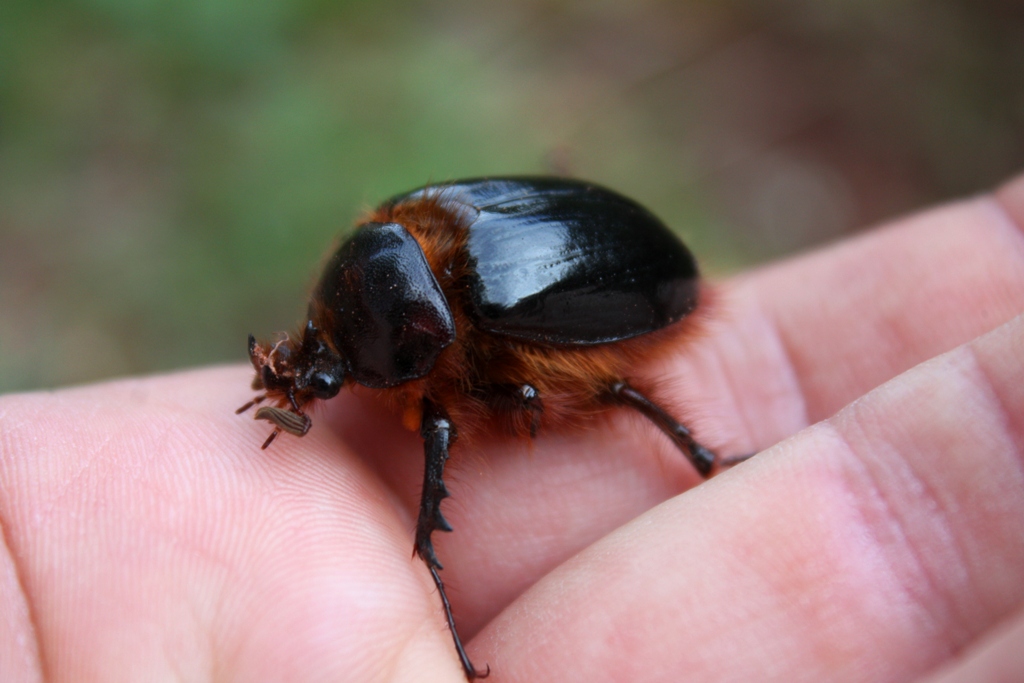
Rain Beetle PleocomaA rain beetle (Pleocoma spp.).

“By tying its mating cycle to that of the rain, this beetle can remain underground for long periods of time in case of drought.”

Joan Easton Lentz, A Naturalist’s Guide to the Santa Barbara Region (2013)

Rain beetle larvae live underground for ten or more years before finally emerging as mature adults to mate. Male beetles fly low over the land, often while it’s raining, in search of females. As fancy looking as their finely, evolutionarily tailored body appears, once they emerge from the ground as an adult they never eat, as their mouthparts are not functional and they have no developed digestive system.

A decade of burrowing around as a grub underground eating roots, much to the frustration of fruit tree growers, only to emerge into the open air just long enough to get some and then die. The life of a bug.

I always wish I could get inside bugs and drive or fly them around like a big truck or an aircraft, like they had an air conditioned cab or a cockpit with plush captain’s chairs. By the looks of a rain beetle, I bet I could have some serious fun cruising around in them like Spaceman Spiff.

Related Posts:

Tarantula Hawk, World’s Worst Sting: “blinding, fierce, shockingly electric. A running hair drier has been dropped into your bubble bath.”

Deluge and Drought In Santa Barbara County

Posted in Santa Barbara County | Tagged , , , , , , , , , | 3 Comments