Wild Cucumber, Trout and Pictographs

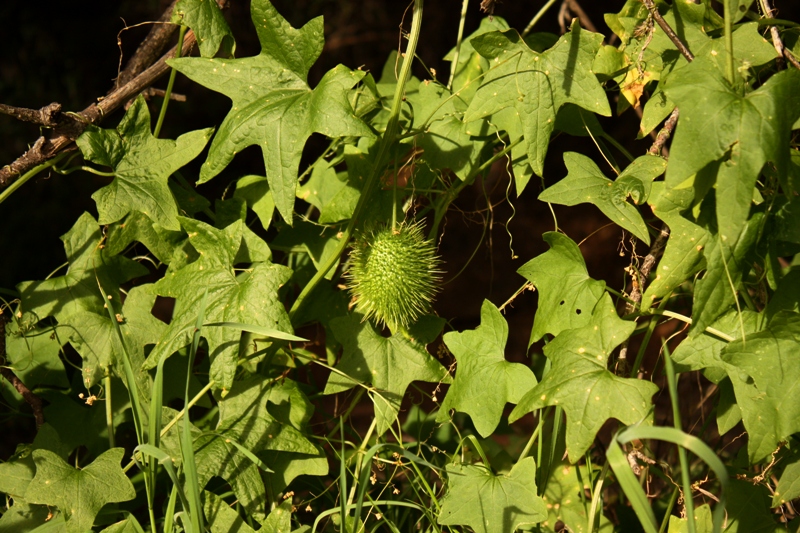
Wild cucumber (Marah macrocarpus, previously called Echinocystis macrocarpa), also known as Manroot or Bigroot, was called molo’wot’ in Barbareño Chumash and chilicote in Spanish. Got it?

“And when they came to Marah, they could not drink of the waters of Marah; for they were bitter: therefore the name of it was called Marah.”

Exodus 15:23

Wild cucumber is a California native perennial found in Los Padres National Forest and its environs. Despite its common name it tastes bitter and is not edible. Its scientific genus name, Marah, is taken from the bitter waters so named in the Bible, Marah meaning “bitter” in Hebrew. Also called “Bigroot” or “Manroot,” the herbaceous vine sprouts from a tuber that can grow to massive proportions and weigh several hundred pounds.

wild cucumber manroot bigroot chilicothe

“The Sinkyone used soaproot and manroot, either separately or together, pounded up and placed in deep holes of creeks when the water was low, good for trout and suckers, sometimes steelhead.”

Paul D. Campbell, “Survival Skills of Native California” (1999)

California Indians used wild cucumber for a variety of purposes. A number of tribes used it to poison or stupefy fish in freshwater streams or coastal tide pools. With enough of the mashed fruit or root added to the water, the fish eventually float to the surface dead or dazed from the narcotic effect and can be speared or snatched by hand.

Paint for rock art pictographs was made from wild cucumber seeds, which render an oil when toasted or fire blackened that was used as a vehicle for pigment.

“It is not known exactly what type of binder the Chumash added to their pigment, but it is reasonably certain that it was the same or similar to that of the Yokuts. These Indians made their binder of the juice of milkweed (Asclepias fascicularis) mixed with oil extracted from the crushed seeds of the chilicothe (Echinocystis macrocarpa).”

Campbell Grant, “The Rock Paintings of the Chumash” (1965)

“An excellent red paint was made. Many rock paintings made with it are still to be seen, although it has not been used for many years. Three different ingredients were used in its manufacture, one being the oxide of iron already spoken of as being used to make a black dye. Another was turpentine obtained from pine trees, and the third the ground up kernels of the seeds of chilicothe, Echinocystis macrocarpa. These were probably valued for the oil they contain.”

—Philip Stedman Sparkman, “The Culture of the Luiseño Indians” (1908)

Chumash rock art pictographsChumash pictographs

Posted in Reference | Tagged , , , , , , , , , , , | 9 Comments

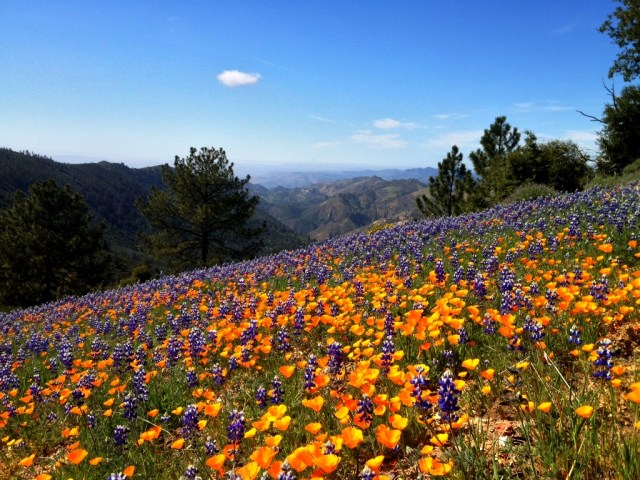
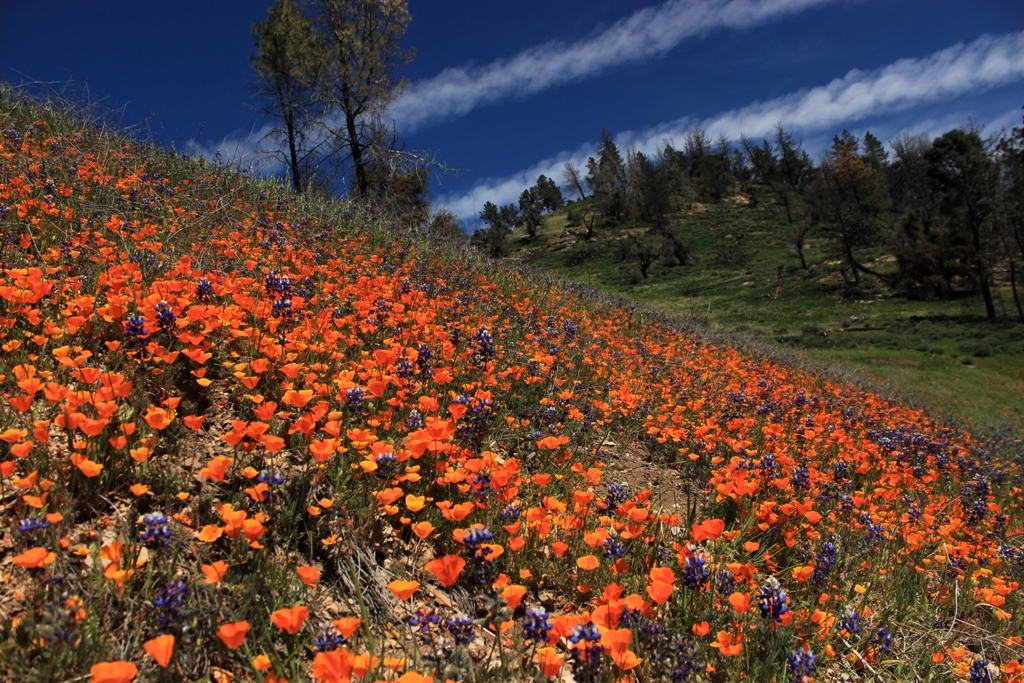
Figueroa Mountain Poppy and Lupine Bloom

Figueroa Mountain wildflowersFigueroa Mountain wildflowers on Wednesday.

Figueroa Mountain wildflowers

Figueroa Mountain wildflowers

Figueroa Mountain wildflowers

Posted in Santa Barbara County | Tagged , , , , , , , , , , , | 6 Comments

Little Pine Mountain

 Jack Elliott

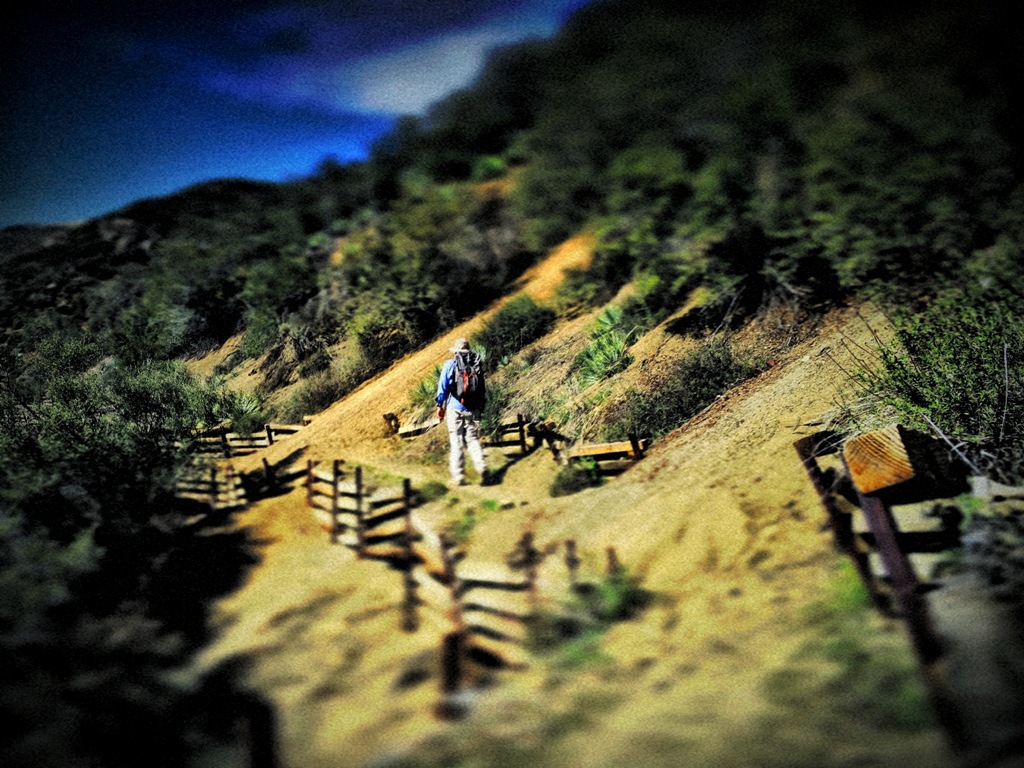
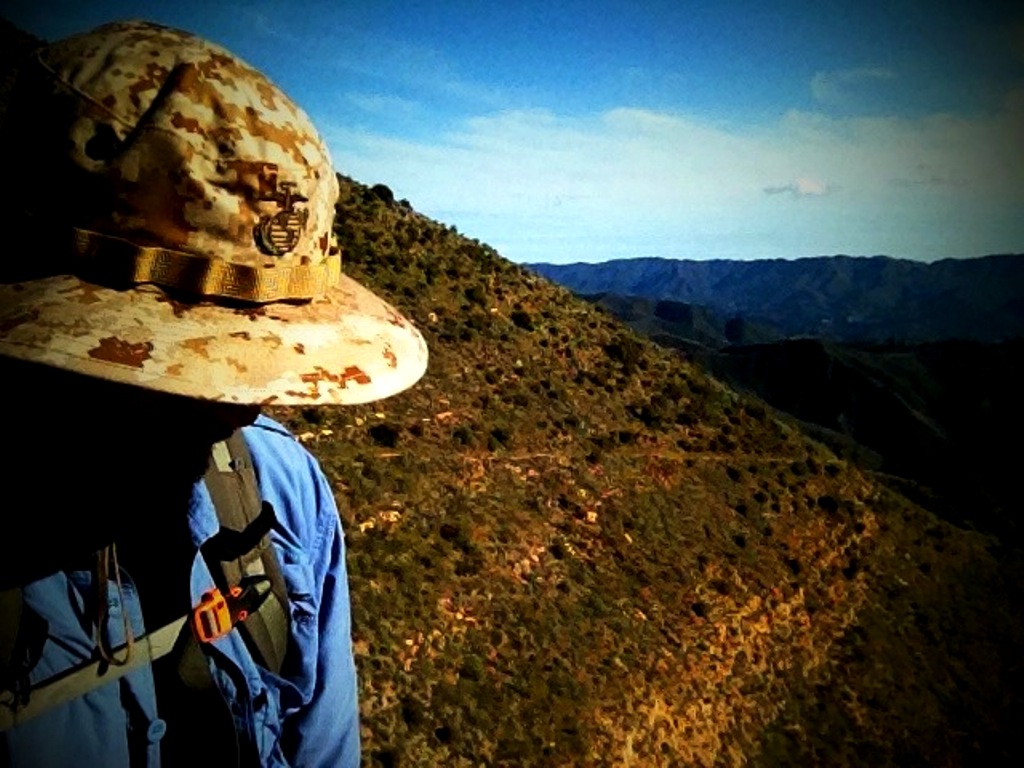
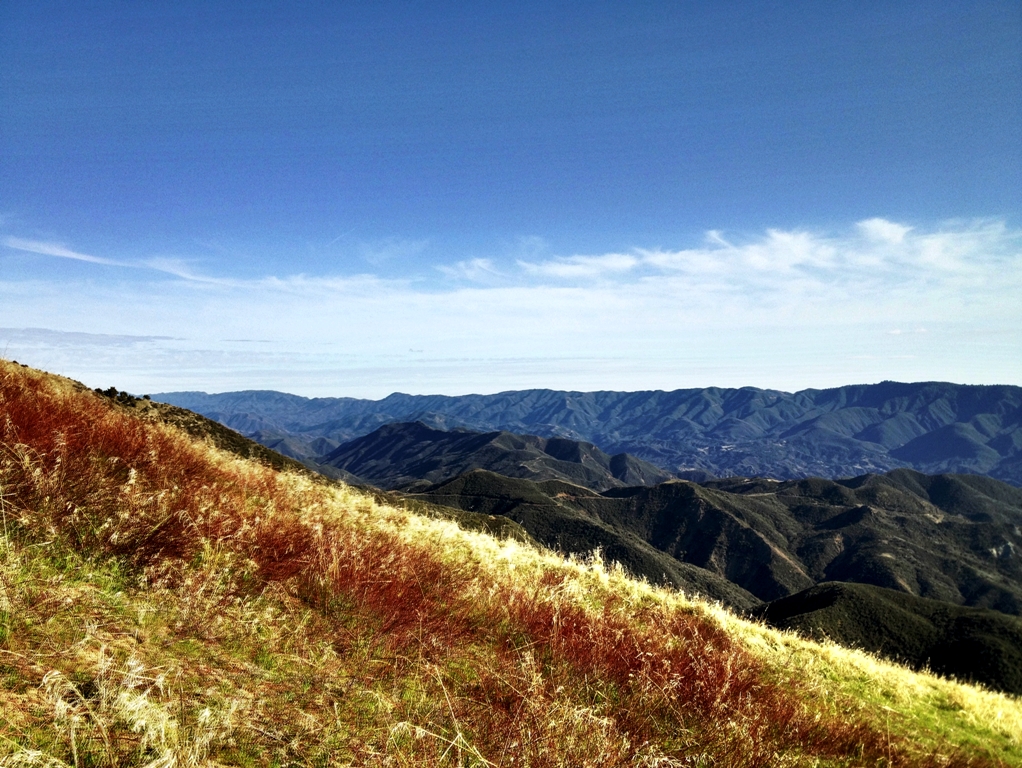
I walked the Santa Cruz Trail up to the top of Little Pine Mountain. It’s about 15 miles round trip with some 3000′ elevation gain. The mountaintop offers views of the Santa Ynez Valley to the south and the deep Santa Barbara backcountry to the north.

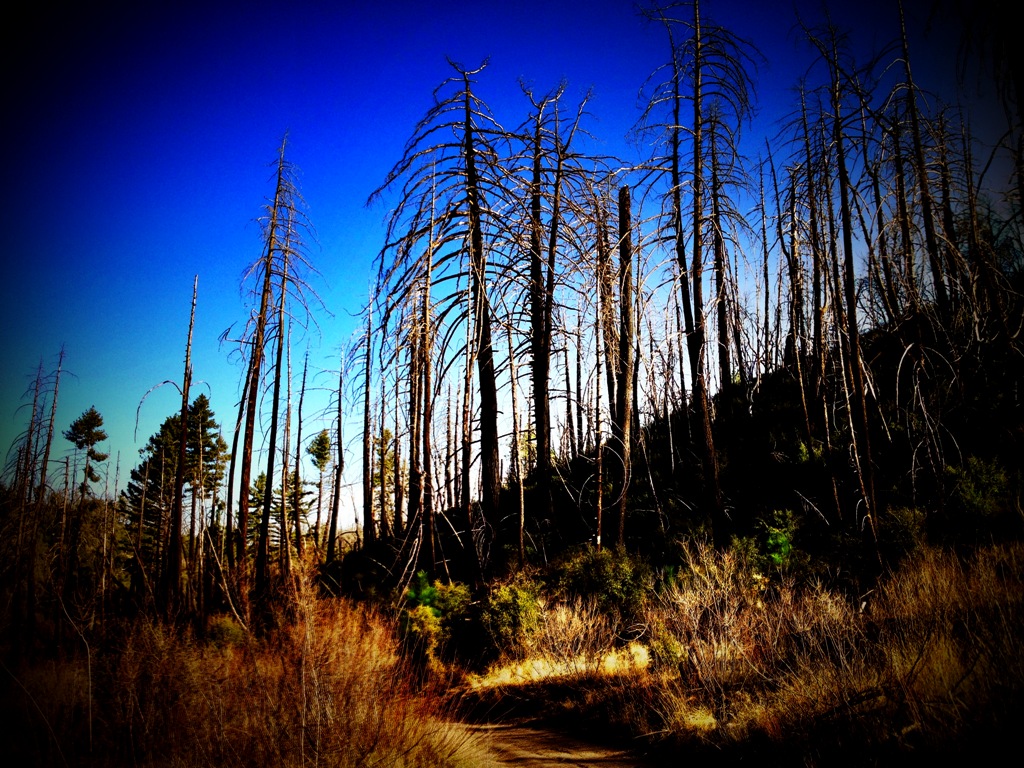
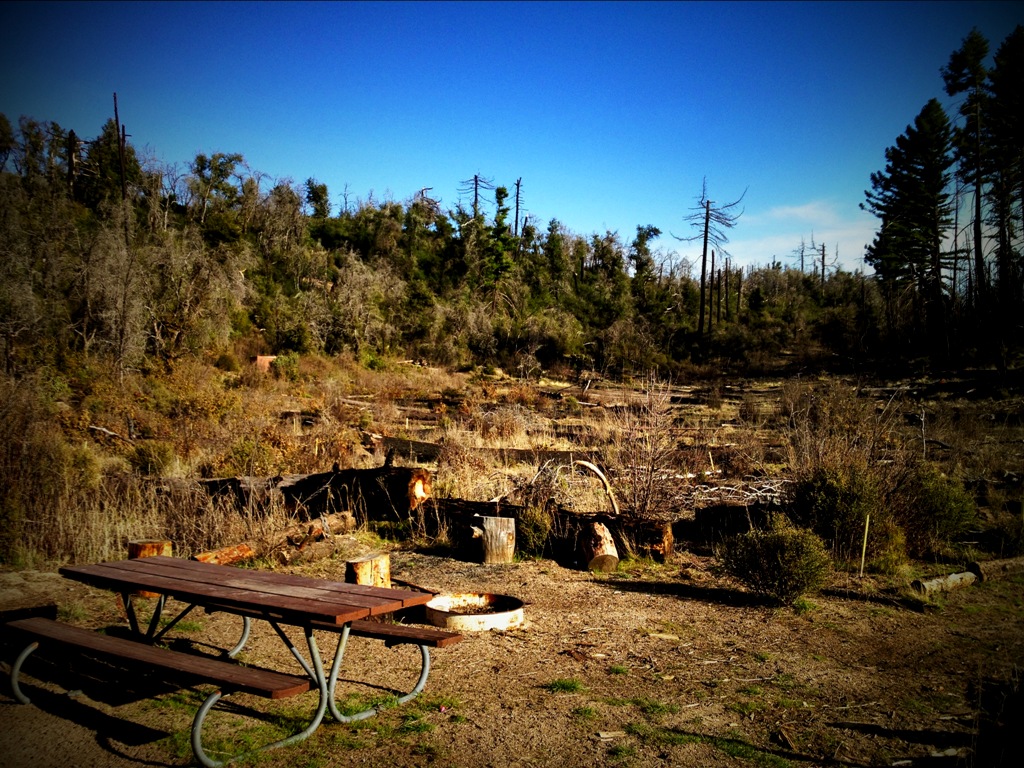
Little Pine hollow is one those nooks of the forest I used to frequent. As a kid I often rode motorcycles up there from Upper Oso Campground. I camped there a few times, grilled steaks over wood fires. Sat at night in the grass out on the mountain’s south face and stargazed. It was a pleasant wooded bowl. But for whatever various reasons, one day came to be my last visit for an extended period of time. I hadn’t been there for at least two decades. It was a sad sight to behold since I was last there, walking into the fire stricken depression of death that was once a shady green dell.

As I wandered into Happy Hollow Camp, deer bounding through the grass, I felt a profound loss. The same feeling I’ve had many times over the last few years seeing so much of the forestland around the Santa Barbara and Ventura region torched in various fires. Charcoal-colored widow makers bristled from the earth. I was angered. Sitting on a picnic bench surveying the landscape I was plagued with the thought of the way things were and what I will never see again. Ever. All of those towering trees standing like giant blackened matchsticks. The little green sprouts of several feet will never in my time grow to the height or girth of the trees they stand to replace. I will never see the landscape as it was when I knew it last. It’s an impossibility. I do not have enough years left in life.

To some degree I suppose I was marinating in the bitter acidity of my own selfishness. Although the area burned from a human-caused fire rather than natural phenomenon, wildfire is an inextricable element of the wild world. It could have been a lightning strike that burned the mountain top to a crisp and I would have felt the same sense of loss and anger, as if I had a natural right to experience the forest as I want it to be rather than how it is.

I sat for ten minutes lost in thought. It was after four in the afternoon, the sun dropping toward the horizon. I wandered off eastward, busted my way through the thickening regrowth and out onto the grassy south face of the mountain. The Santa Ynez Valley was veiled beneath the hazy blue hues of late afternoon shadows, but Big Pine Mountain in the distant backcountry was spottily lit up.

The walk down Little Pine back to Upper Oso Campground measured in the realm of exceptional, with cool temperatures accented by light puffs of warm wind, the sweet fragrance of blooming white ceanothus, quietude and the golden apricot hue of late afternoon winter light. I walked into the campground in the fading twilight, a group of campers circled round their blazing fire. I wished to be doing the same, but my six hours of escape were over, it was back to the city for me.

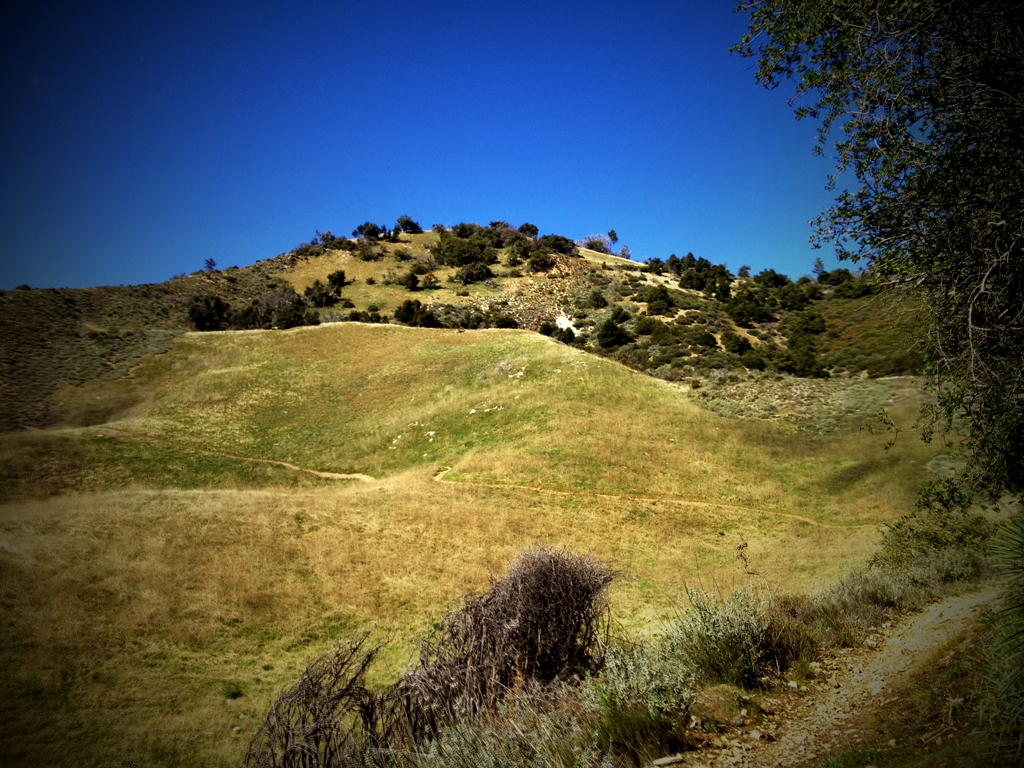
Little Pine The rounded grassy top of Little Pine Mountain.

Oso CreekOso Creek alongside the lower trail.

little pine Looking up at Little Pine Mountain.

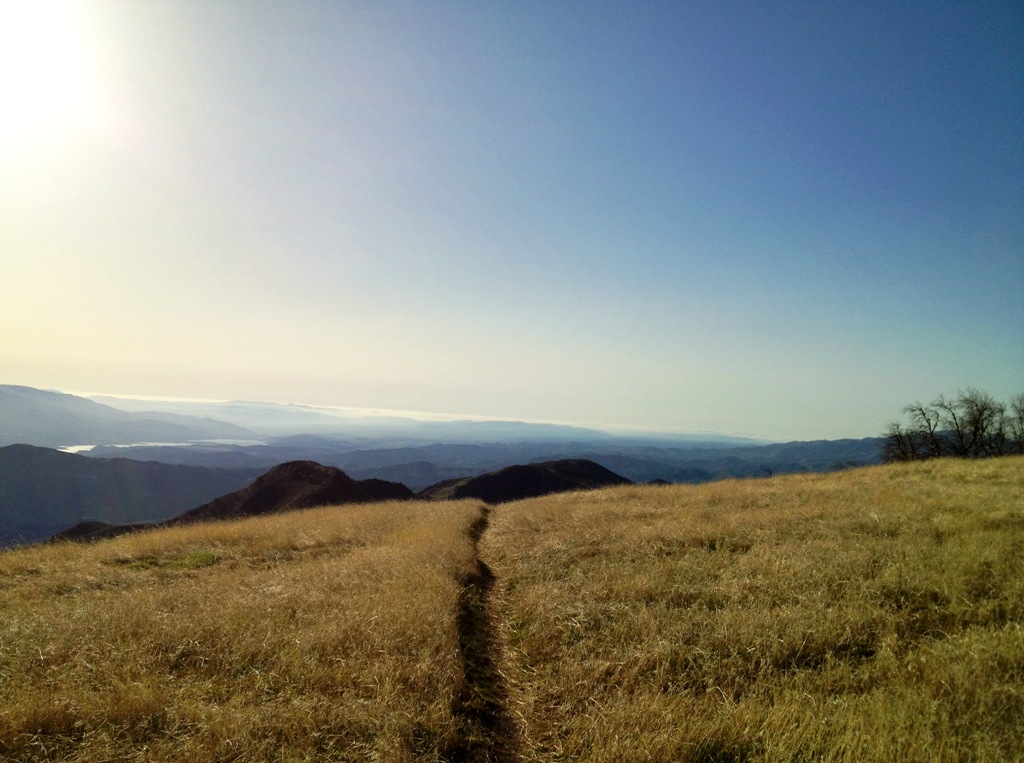
little pine Little Pine Santa Cruz Trail through the grass.

Little Pine Winding up the steep south slope of the mountain, approaching Alexander Saddle, the trail cutting across the hill in the background.

little pineHappy Hollow

Little Pine Happy Hollow Camp

little pine 9.1Looking southeast from Little Pine

little pine The view westward from Little Pine and over Alexander Peak, Cachuma Lake in the distance.Big PineWest Big PineBig Pine 2Big Pine

Posted in Santa Barbara County | Tagged , , , , , , , , , , , | 3 Comments

Bald Eagle

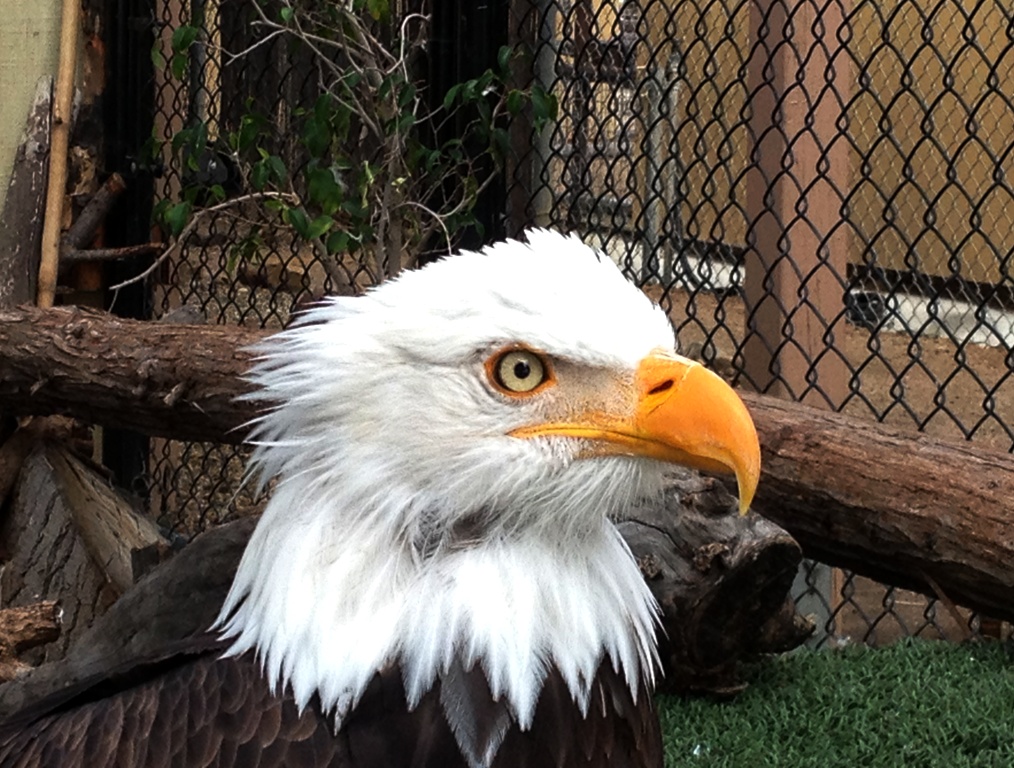
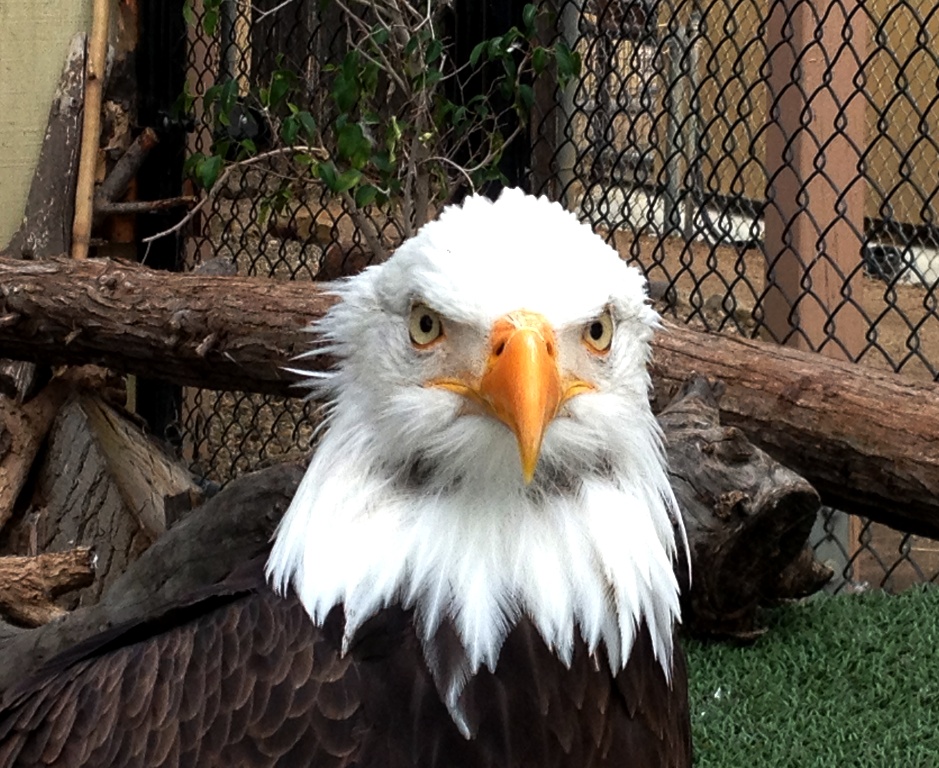
We took the kids to America’s Teaching Zoo at Moorpark College in Ventura County on Monday. I’ve seen bald eagles in the wild around here at Cachuma Lake in Santa Barbara County and Lake Casitas in Ventura County, but this is the closest I’ve ever been to one. Even in a zoo as it was it’s still an experience I appreciate.

Bald eagles are more prevalent in other parts of the country so some readers may think it odd or find it amusing in some way that I seem to make a big deal about them here. Seeing bald eagles in the wild around these parts is, I think it’s fair to say, an uncommon experience. Unless you’re one of the few people that regularly frequent the few areas the few eagles around here inhabit. That’s a lot of “fews.”

These photos were taken with my cell phone camera. In other words, I wasn’t poking a zoom or telephoto lens through the fence from a distant viewing area. The bald eagle exhibit at Santa Barbara Zoo doesn’t typically offer visitors as close a viewing experience. This eagle was perched on a log no more than two feet from my face. The bird’s piercing eyes and penetrating gaze was intense.

Bald Eagle History

Bald eagles once soared in numbers over vast expanses of pristine marine and freshwater wilderness in Santa Barbara County. Referred to as a fish eagle, the white-headed raptors prey primarily on aquatic vertebrates, although they are also known to scavenge and feed on carrion. The native steelhead of yore, which once swam up the Santa Ynez River in runs of 20,000 to 30,000 or more must have fed not only the now regionally extinct grizzly bears but bald eagles, too.
Bald eagles historically nested on all of the Santa Barbara Channel Islands feasting on the abundant marine life. By the 1960s, perched at the confluence of human actions that left their habitat severely polluted and degraded, their population had been decimated and they vanished from the island chain.

Restoration efforts by the Institute for Wildlife Studies (IWS) to reintroduce eagles to the islands began in 1980, but were unsuccessful due to lingering traces of DDT. Between 2002 and 2006, IWS released 61 eagles on Santa Cruz Island, and in 2006 the eagles were once more nesting.

In 2007, the U.S. government removed the bald eagle from the Endangered Species List, but it remains listed as a state-endangered species in California.

In 2010, a record number of bald eagle nests and hatched chicks were observed on Catalina, Santa Cruz and Santa Rosa Islands: 13 nests and 15 chicks. The two chicks on Santa Rosa marked the first time in 60 years bald eaglets were known to have hatched on the island.

Historically, the Channel Islands alone were home to around 35 nesting pairs of bald eagles. At the time they were listed as an endangered species, there were fewer than 30 nesting pairs known to exist in all of California, most of which lived in the northern part of the state.

As part of the ongoing restoration effort, there are currently several live webcams set up overlooking bald eagle nests on the Santa Barbara Channel Islands:

Posted in Ventura County | Tagged , , , , , , , , , , , , | 5 Comments

Figueroa Mountain Wildflowers III

Figueroa Mountain PoppiesWe took the kids up to Figueroa Mountain yesterday for a picnic. While the coastline was buried under a heavy marine layer as we left town, the mountains were warm and sunny. It’s a relatively sparse poppy and lupine bloom this year, the hills already looking withered despite the green grass. Zaca Ridge wasn’t looking like it had too many flowers so we didn’t even venture over there. Grass Mountain had no visible poppies, but looked like it might have had a thin patch of lupine.

Figueroa Mountain lupines

Figueroa Mountain Poppies LupineCompare this photo to one I shot from the same general area in March of 2010 in the thumbnail link below.

Related Posts:

Figueroa Mountain Poppies and LupineFigueroa Mountain Wildflowers II

Figueroa Mountain Wildflowers

Posted in Santa Barbara County | Tagged , , , , , , , , , , | 3 Comments