Lone Wandering

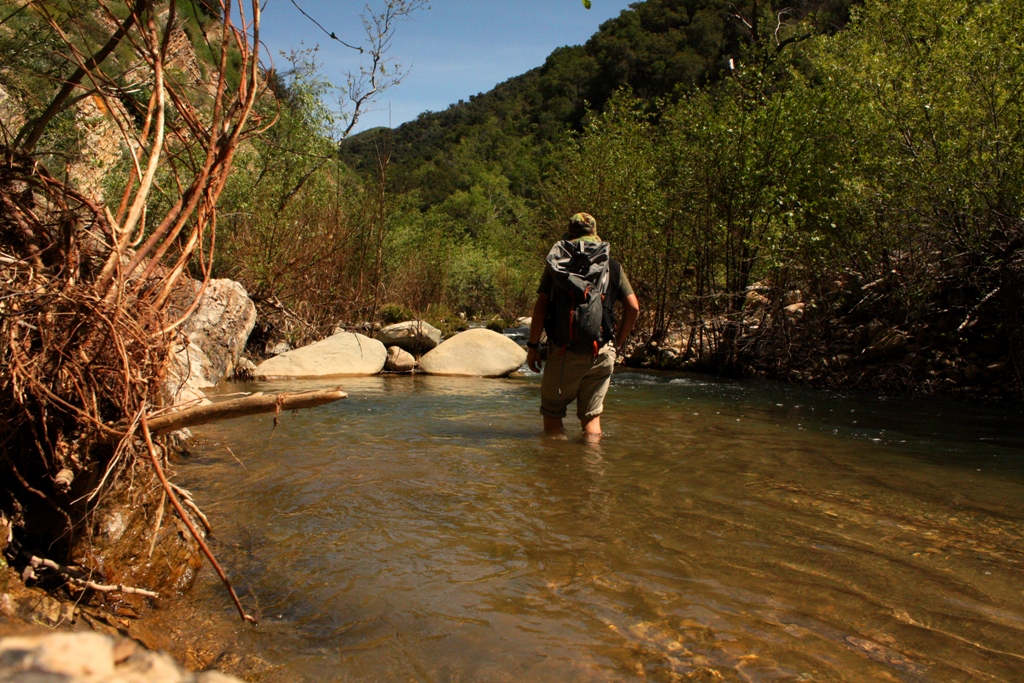
Santa Barbara County Backcountry

“Two or more people disturb the ecologic complex of an area. I had to go alone and I had to be self-contained, a kind of casual turtle carrying his house on his back.”

—John Steinbeck Travels with Charlie In Search of America

There are three partners whose character is all the same. Not that they don’t enjoy a good hike with a fellow friend, because they do, but at the same time, they are each other’s own best company when out on the trail.

They never have to wonder or concern themselves with whether or not they should keep hiking long hard miles, or slow the pace to a crawl, or stop for hours just to observe nature or to daydream; or should they hike up that creek or down another; or should they expend energy and time hiking over to investigate an interesting rock formation or not. The answer to any of these questions for all of them is inevitably yes.

When out on the trail there is never a distraction from the keen observation of their surroundings and the natural world around them. As such they are far more likely to see things that would, in the company of one or more other people, be overlooked, missed or simply not pondered.

Their attention is entirely focused on the environment through which they pass making for a sensory experience not likely possible should they be accompanied by anybody else.

These three pards are me, myself and I.

Posted in Santa Barbara County | Tagged , , , , , , , , , , , , | 5 Comments

American Bison

Inexcusable are the men before our time/I’d like to kick their ass for what they left behind

Bad Religion, Unacceptable

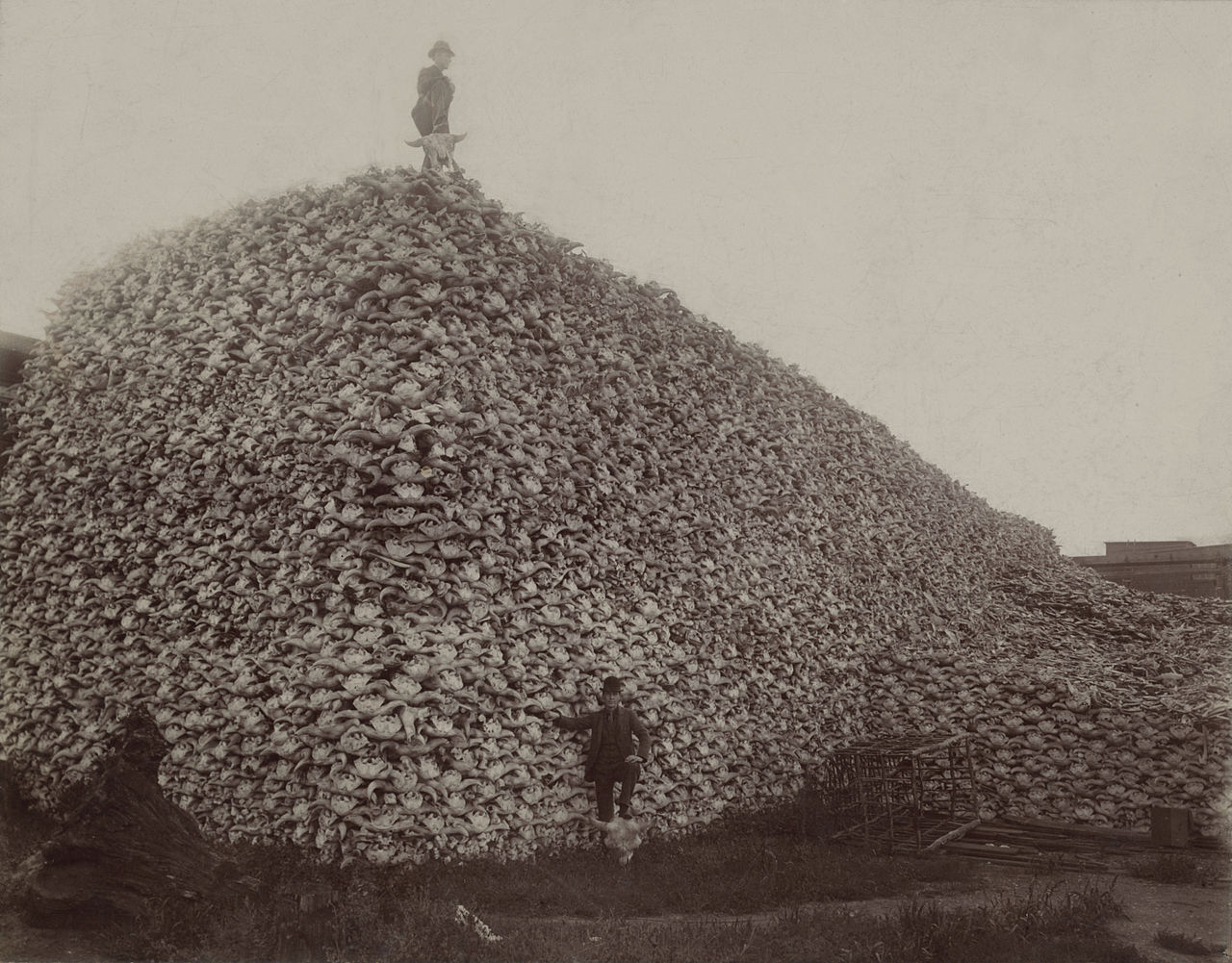
Two more photos by Clint Elliott from a recent trip to Montana. American bison once roamed the plains by the tens of millions before being hunted to the brink of extinction. Today they number less than one percent of their historic population.

“Besieged by hide hunters in the 1870s and 1880s,” writes Patricia Nelson Limerick in her book, The Legacy of Conquest, “the buffalo came close to disappearing. … Yellowstone holds the only continuously wild herd, augmented by animals raised domestically and then released.”

“From here on for several days he would see little but a thin scattering of ranches, established in the wake of the buffalo slaughter. There had been  some hide camps in the past, but those would be gone now. Instead of gathering buffalo hides, men with no better work to do were gathering buffalo bones to be shipped to Europe for the making of bone china.

Remembering the great shaggy herds he had seen as a boy, living among the Comanches who had captured him, he gave way to a fleeting melancholy for so much that had been lost.”

Elmer Kelton, Other Men’s Horses

A massive pile of bison skulls soon to be ground into bone meal fertilizer. Photograph circa 1870s.

The Clint Elliott Files:

Lower Yellowstone Falls Canoe Camping Along the Green River, Utah — Canoe Campin’ and Fishin’ in Minnesota Goddard Campground: The Lost Jewel of West Camino Cielo Sliding Down Mono Debris Dam Cliff Diving Montezuma Falls in Costa Rica

Posted in Montana | Tagged , , , , , , , , | 4 Comments

Eating Fire Roasted Yucca

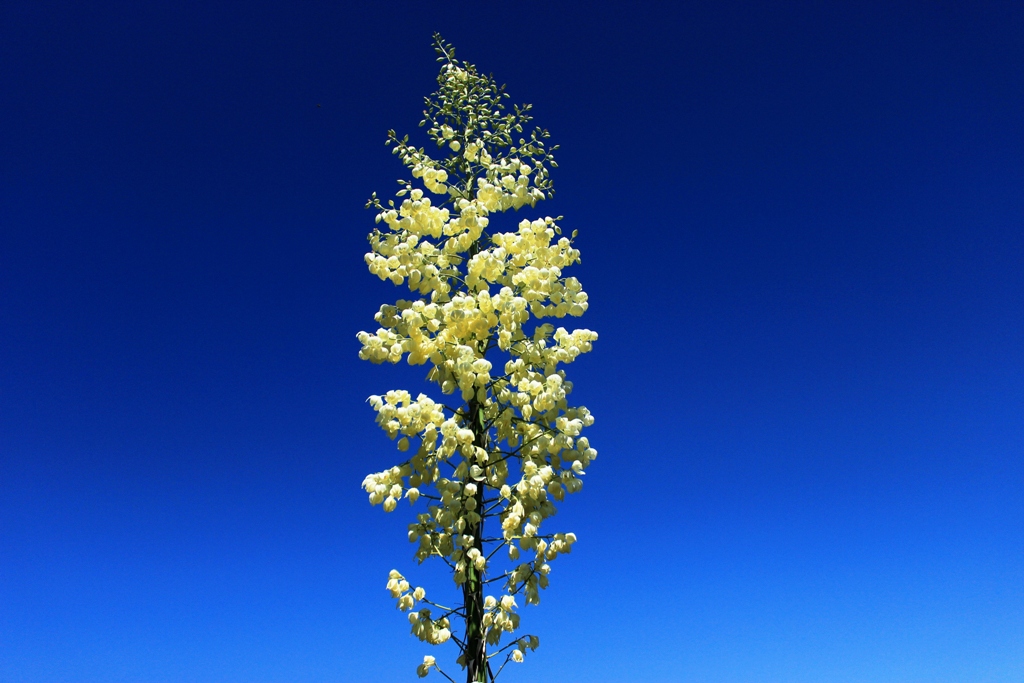
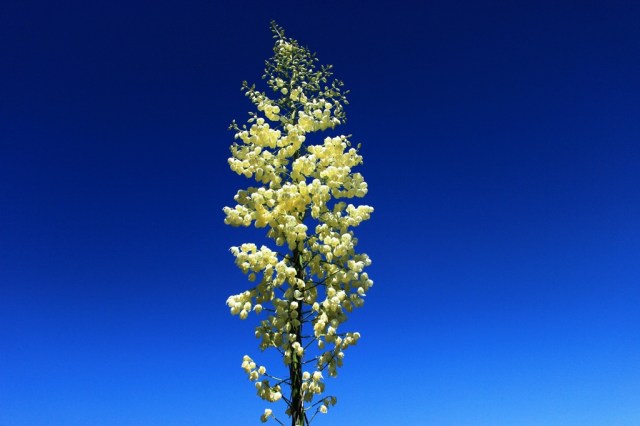
A yucca flower spike in full bloom.

“There is a great deal of century plant of the species which the Mexicans call mescali. The mode of using it is as follows: they make a hole in the ground, fill it in compactly with large firewood which they set on fire, and then throw on top a number of stones until the entire fire is covered but not smothered. When the stones are red hot, they place among them the bud of the plant; this they protect with grass or moistened hay, throwing on top a large quantity of earth, leaving it so for the space of twenty-four hours. The next day they take out the their century plant roasted, or tlatemado as they say [Spanish meaning “roasted”]. It is juicy, sweet, and of a certain vinous flavor; indeed a very good wine can be made from it.”

Pedro Fages (1769)

A freshly harvested yucca flower spike from the San Rafael Wilderness in Santa Barbara County.

Yucca whipplei is abloom right now around the Santa Barbara area and the Tri-county region in general. I ate some fresh yucca for the first time while out in the San Rafael Wilderness for a few nights last year. I snapped off a flower spike and took a bite out of it like it was an apple. I expected it to be disgusting and to have to spit it out immediately, but was surprised that it almost tasted good. I bit off, chewed and swallowed a few more chunks as I walked the trail toward camp.

It had a crunchy consistency somewhat like a mix between jicama and apple and had a sweet flavor. It was not, as I expected, fibrous and stringy but chewed up quite easily between the teeth. It was very close to being something I might actually want to pick and eat on a regular basis, but for a very subtle, bitter aftertaste. Perhaps the degree of bitterness varies between particular yucca plants, I don’t know.

I took the flower spike back to camp and baked it beside the campfire later that night. After it was cooked I cut it open lengthwise and was able to slice out chunks of the heart of the flower spike. It tasted better roasted. It had the same mildly sweet flavor, though when baked the sweetness was slightly intensified, and in addition it took on a distinctively rooty flavor that tasted good. But a trace of bitterness remained. The bitterness was ever so slight but still noticeable. I left the roasted flower spike sitting out by the fire pit that night and the next morning I noticed a rodent had hallowed out and eaten a decent amount of the soft inner core.

The Chumash Indians of the region (Ventureno, Barbareno, Ineseno, Obispeno) ate various parts of the plant including the base of the plant, leaves and flower stalk. They also used yucca for utilitarian purposes such as making cordage from the leaves, tinder from dried flower stalks and at times the points of stiff mature outer leaves were used as needles. Other California Indians such as the Cahuilla ate the fresh flowers raw. In historic times, the early Californios used yucca or what they called mescali for food and, as reported by Pedro Fages, for making wine.
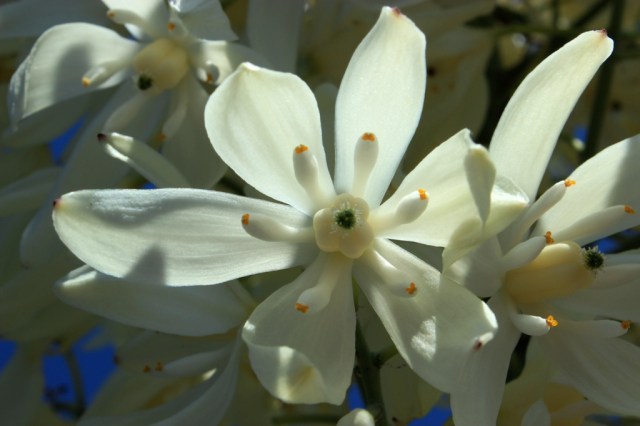
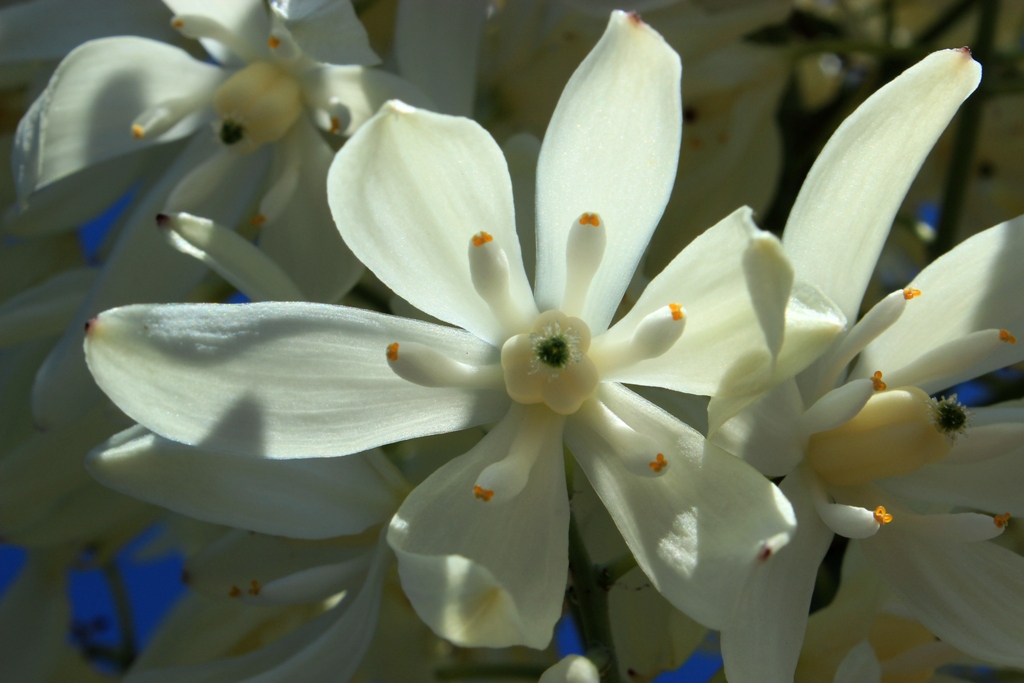
A closeup view of yucca flowers.

Bibliography:

Pedro Fages (b.1734 – 1794), A Historical, Political, and Natural Description of California, Herbert Ingram Priestly, translation, pages 50-53, Ramona, California, Ballena Press (1937).

Jan Timbrook, Chumash Ethnobotany: Plant Knowledge Among the Chumash People of Southern California, pages 226-28, Santa Barbara Museum of Natural History, Heyday Books (2007).

Related Post:

Making Soap From Yucca Video

Posted in Santa Barbara | Tagged , , , , , , , , , , , , | 4 Comments

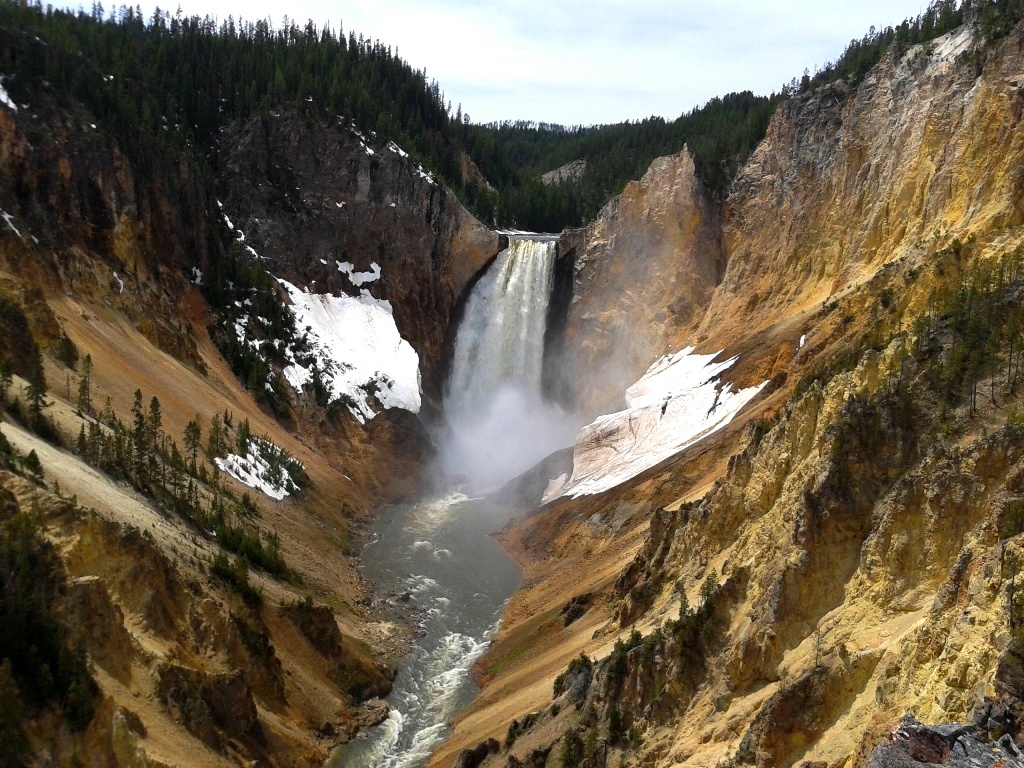
Lower Yellowstone Falls

Lower Yellowstone Falls

A recent photo from Clint Elliott, who was up in Montana last week.

The Clint Elliott Files:

Canoe Camping Along the Green River, Utah — Canoe Campin’ and Fishin’ in Minnesota Goddard Campground: The Lost Jewel of West Camino Cielo Sliding Down Mono Debris Dam Cliff Diving Montezuma Falls in Costa Rica

Posted in Montana | Tagged , , , , , , , , , , | 2 Comments

Annular Solar Eclipse

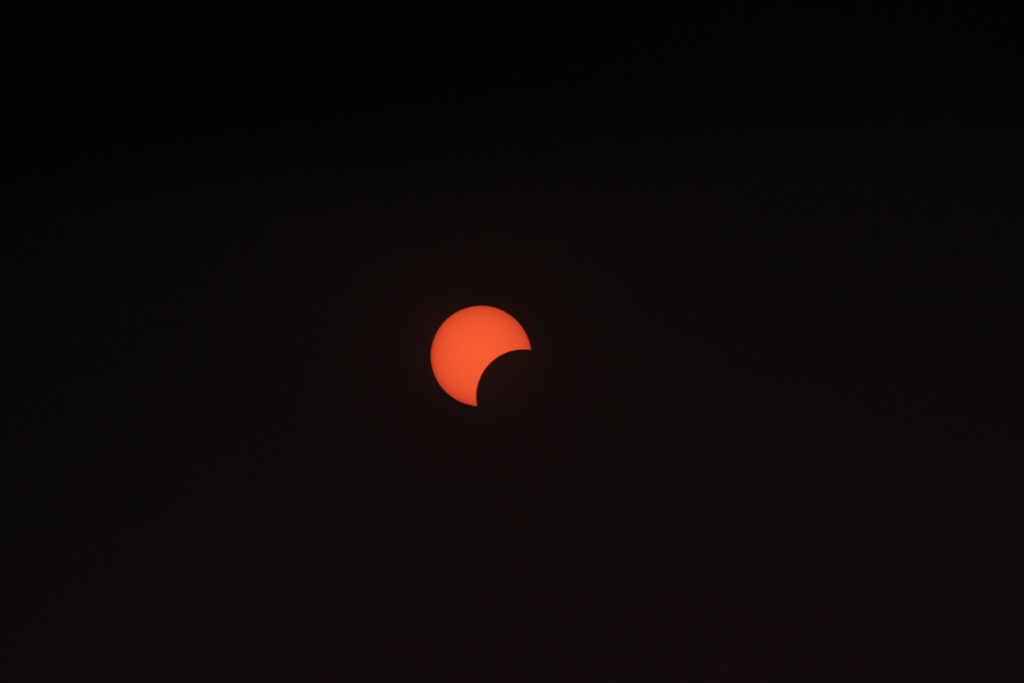
As the moon moved in front of the sun the daylight noticeably waned, and the landscape took on the warm-colored glow of late afternoon winter light, though with less intensity and an eerie shadowy cast to it.

While you could just barely, sort of see something of the eclipse with the naked eye when looking at the sun for a split second, as filtered through sunglasses and the branches of nearby pine trees, it was effectively invisible without the use of special glasses with super dark lenses like welding goggles. We joked about foolishly looking at the sun without eye protection: “Did you see the eclipse?” “Yeah. It was the last thing I ever saw.”

An annular solar eclipse occurs when the moon is furthest from the earth during its orbit and closer to the sun. This allows the much smaller moon to block out most of the much larger sun; similar to blocking from view a huge building way down the street by putting your fist in front of your eyes. According to the Los Angeles Times, the next time southern Californians will see an eclipse of this magnitude will be in 2071.

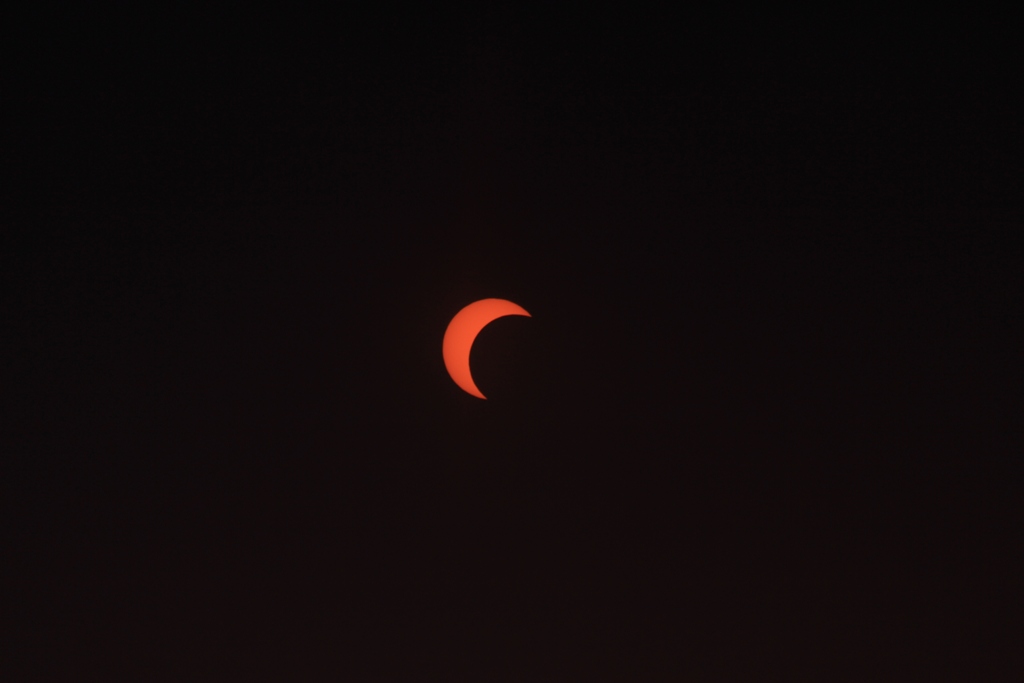
Views of the annular solar eclipse of May 20, 2012 as seen from La Cumbre Peak, Santa Barbara, California:

The eclipse at 5:45 pm.

6:15 pm

The peak of the eclipse at 6:38 pm.

Posted in Santa Barbara County | Tagged , , , , , , , | 8 Comments