Remarkable Auto Tour In Southern California (1907)

Fording Santa Ynez River 1907“. . .we located a ford and secured two men and a team of horses to tow us through the current, which was very swift.”

The following passage, excerpted from the journal of a businessman named J. B. Powles, was included in a longer story published in April of 1907 by The Ranch, a newspaper based in Seattle, Washington. The passage relates, in part, the adventure of Powles as he drove an early make automobile, “a twenty-horsepower 1907 model Franklin machine,” through the California countryside during winter.

The route he took through Santa Barbara County over rough and rocky dirt roads was originally made for horses. This period of history was a transitional time between horse drawn carriages and gasoline powered vehicles. Much of Powles’ experience revolves around dealing with the hazards and poor conditions of the rural and primitive roads, which had originally been built for stagecoaches and buckboards.

In the full article Powles mentions numerous times the road being washed out or undermined by the river and repeatedly writes of the muddy conditions and the need to use tire chains. In one instance he admits turning back to rest for the night “owing to condition of roads and darkness.”

Like other narratives published in newspapers of the time, in which the novel thrill alone of driving the newly created automobile is the point of the story, Powles’ trip log reads like a report on road conditions and how his “machine” handled them.

Owing to the long stretches of desolate countryside and wilderness between towns, the absence of any communication out on the road but for word of mouth, the challenging conditions of remote roads and questionable reliability of early automobiles, it seems it really was a “remarkable” experience to go out for a cross country drive in southern California in the early twentieth century. Traveling by auto was an exciting but iffy prospect.

screen shot

J. B. Powles

J. B. Powles

February 18Left Paso Robles and took the road to Pismo Beach so as to divide the day’s ride. The roads were only fairly good and as we were not certain of our course we followed the telegraph poles. Left Pismo Beach shortly after noon and joined the main road to Arroyo Grande. Stopped at Santa Maria for instructions as to how to get to Los Olivos and then missed the road and took the one to Los Alamos. This was a very dangerous road because of bridges being out and the roadway undermined by the overflow of the river. We resumed the right course and proceeded to Los Olivos. After passing this place we lost our way to Alamo Pintado, but were redirected. There were lots of washouts along the way. At both Alamo Pintado and Paso Robles we found that no other vehicles had been through for seven weeks on account of the bad roads.

February 19Had to avoid the regular pass to Santa BarbaraGaviota Passbecause of bad wash outs. We took the San Marcos Pass, which is dangerous under any conditions, and is prohibited to automobiles. After leaving Alamo Pintado we encountered the river and found that the bridge was washed out. After some trouble we located a ford and secured two men and a team of horses to tow us through the current, which was very swift. From here on the road was very tortuous and dangerous. It was steep and rocky and we used the low gear almost constantly. At the highest elevation the pass was 3,300 feet above sea level. We crossed 38 arroyos. We reached Santa Barbara just after dark, with little carbide and very little gasoline left.

February 19At Santa Barbara, we learned that the roads were entirely out and impassable and we consequently decided to ship our automobile to Los Angeles and took the steamer State of California to port of Los Angeles.

Franklin Model D 1907 roadsterA 1907 Franklin Model D roadster.

Related Post:

Gaviota Pass (1906)

Posted in Santa Barbara County | Tagged , , , , | 4 Comments

Blue Elderberry Wildcraft

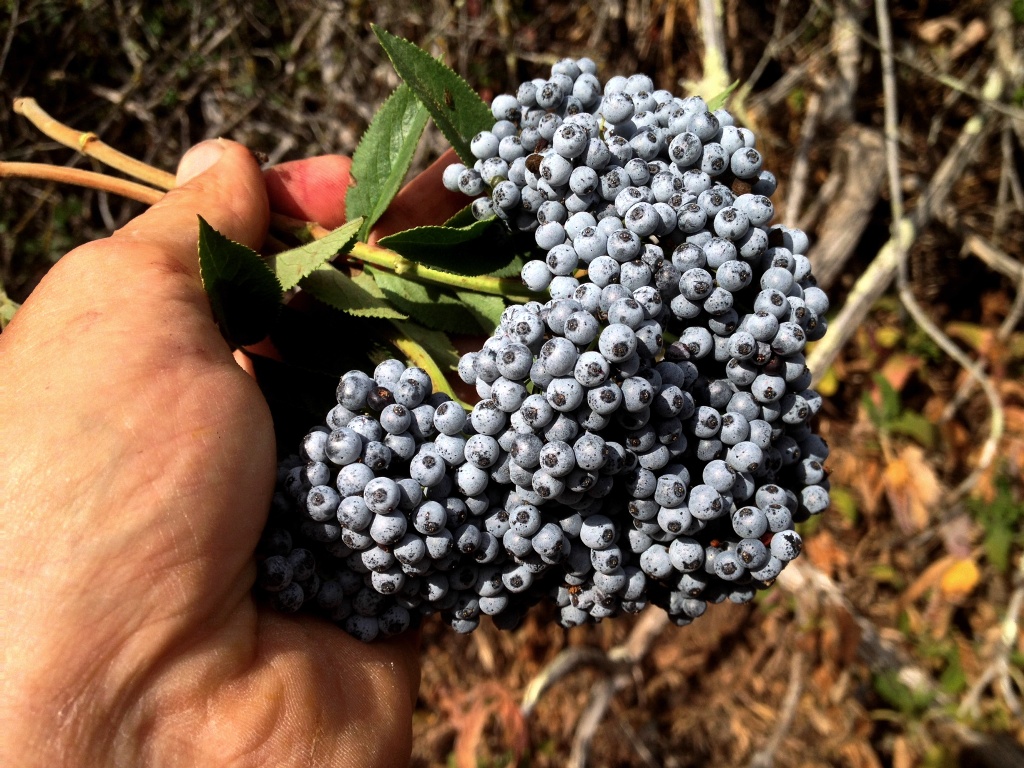
elderberry treeClusters of wild blue elderberries.

“Delectable dishes made from elderberry are a leftover from old time housekeeping, when table luxuries were not so varied and abundant as they are now.”

New-York Tribune, September 11, 1921

Wild elderberry trees are abloom and loaded with ripe fruit around these parts of California right now, the heavy clusters of blue berries dangling from small trees everywhere in branch bending profusion.

The elderberry or elder tree has been valued in one form or another as an edible and for medicinal and health purposes of all sorts for thousands of years. The berries are nutritious and exceptionally high in antioxidants. Modern research suggests that elderberries may be an effective treatment for the flu and that they offer a wide array of other potential health benefits. It’s a plant with numerous utilitarian purposes, too, and there exists an extensive record in world literature and the annals of history regarding its many uses.

The Chumash Indians used the elderberry plant medicinally and as a source of wood for crafts and toolmaking. It was used to make fire sticks for creating fire by friction and to make a type of four foot self bow for hunting. Elder wood self bows were valued over sinew-backed bows for hunting sea otters on the Santa Barbara Channel Islands, because they held up better when drenched in sea water. The bows were effective in taking small game, but were sometimes used on larger animals such as deer. Elder wood was also used to make flutes and other musical instruments. (Timbrook)

blue elderberries

elderberries (3)Two pounds of freshly harvested blue elderberries destemmed, washed and ready for use.

Newspaper articles about elderberries from the early twentieth century mention them as if they’re some nearly forgotten wild curio that belong to a different era, something grandmas used to forage for to bake pies and make jelly with once upon a time in the olden days, when people made homemade stuff from scratch.

When collected in a container the ripe fruit has a subtle perfumy fragrance somewhat similar to a rose. Blue elderberry juice is a deep purply red and has an opaque, rich hue like the blackish inkiness of concord grape juice or red wine. Fresh elderberries taste bitter, but they’re edible and have good flavor. They can be used to prepare a number of different tasty foods from glazes for roasted meats like venison to ice cream and wine.

elderberry syrupElderberry pancake syrup.

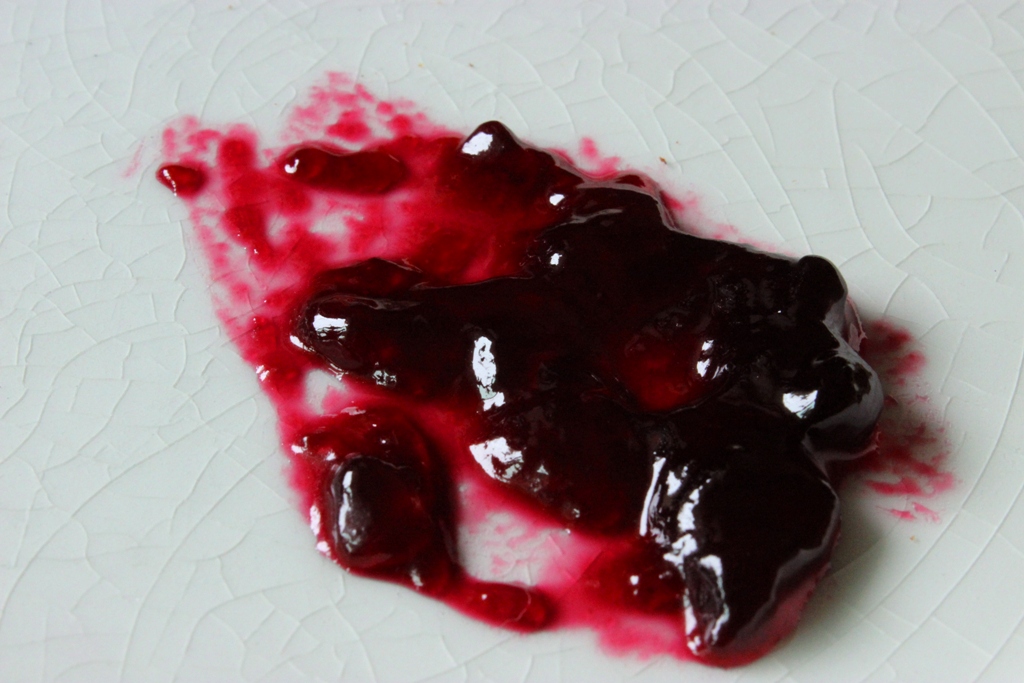
elderberry jellyA smudge of elderberry jelly.

elderberry wine makingElderberry wine making seen here in two photos that accompanied a story published in the New-York Tribune in 1907.

elderberry wine 1907Pouring elderberry juice into the barrel.

Posted in Santa Barbara | Tagged , , , , , , , , , | 2 Comments

Roaring River Falls, Kings Canyon National Park

Roaring River Falls, Kings Canyon

“Kings River Canyon calls forth the most enthusiastic encomiums of all who have visited it. The rocks tower in majestic altitude above the bed of the tumultuous stream, their profiles carved by the elements in shapes that suggest the work of a grand sculptor, while waterfalls dash down every intersecting rivulet and over every rocky canyon. For miles through this narrow cavity in the mountains sublime scenes in infinite variety greet the eye of the enraptured observer. Mount King, at an altitude of 13, 316 feet, Mount Woodworth and Mount Brown, of almost equal height, are the sentinels of this mighty fissure.”

San Francisco Call, “The Glories of Kings River Canyon,” March 21, 1897

Posted in California | Tagged , , , , , , , , , | 6 Comments

Rolling with Little Ms. E, Sequoia National Park

Sequoia National Park

You have to be committed to push a stroller along a rocky mountain trail for two miles up and down a small canyon, while wearing flip-flops. Or maybe you just need to be committed.

The trail began as a three-foot-wide pathway made of packed decomposed granite and turned to asphalt for a short distance. As we ventured further into Sequoia National Park’s Giant Forest, however, the trail turned to dirt and quickly narrowed to the width of a footpath. It led through some dense underbrush, which appeared impassable with the stroller. We had apparently reached the terminus of our great adventure just a few yards beyond the paved walkway.

I considered our limited options for a moment before deciding to ditch the stroller. We’d march ahead, and when the time came, I’d carry Little Ms. E on my shoulders for a bit. But immediately after walking through the narrow brushy section the trail opened up. I had her wait while I went to get the stroller and I tossed our water bottle on the ground near her as I turned back.

Sequoiadendron giganteum giant sequoiaSequoiadendron giganteumbrook troutBrook trout

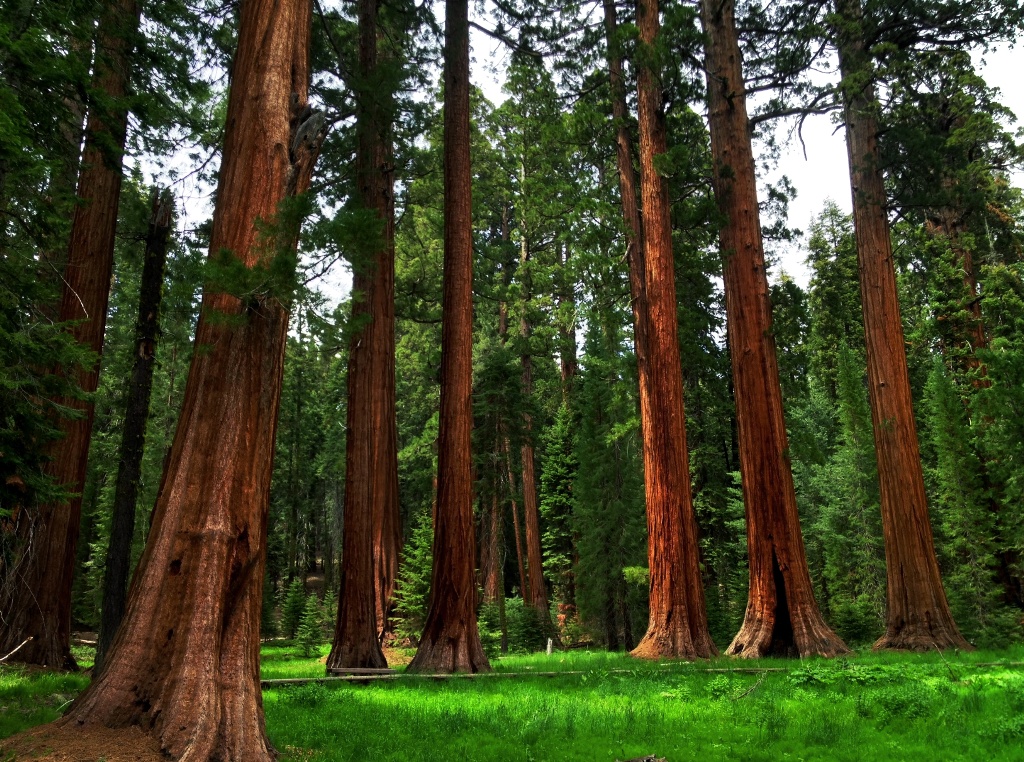
Giant Sequoia TreeWith Little Ms. E back in the saddle we were rolling again. I forced the stroller across off camber sections leaning over steep slopes, pressing it against the hillside and fighting the pull of gravity, and I pushed it up and over and over and down bouldery step-like sections, and rammed it through several narrow brushy spots barely wide enough to pass through. We made good use of the stroller’s five point harness and its rear suspension.

In one part, where the trail passed between two trees, we had to push our way up the bank a few feet through the twigs and needles and around one tree and back down onto the trail. In another part, squeezing between a tree and a granite outcrop, I had to fold the stroller up and carry it through. But that was as rough as it got.

When we stopped for a break, and I eagerly went for the water, I realized that I’d forgotten to pick up the bottle after getting the stroller. And so we went without a drink for the couple of hours we were out. We passed by several clear flowing streams and I regretted not having my pocket-sized water filter.

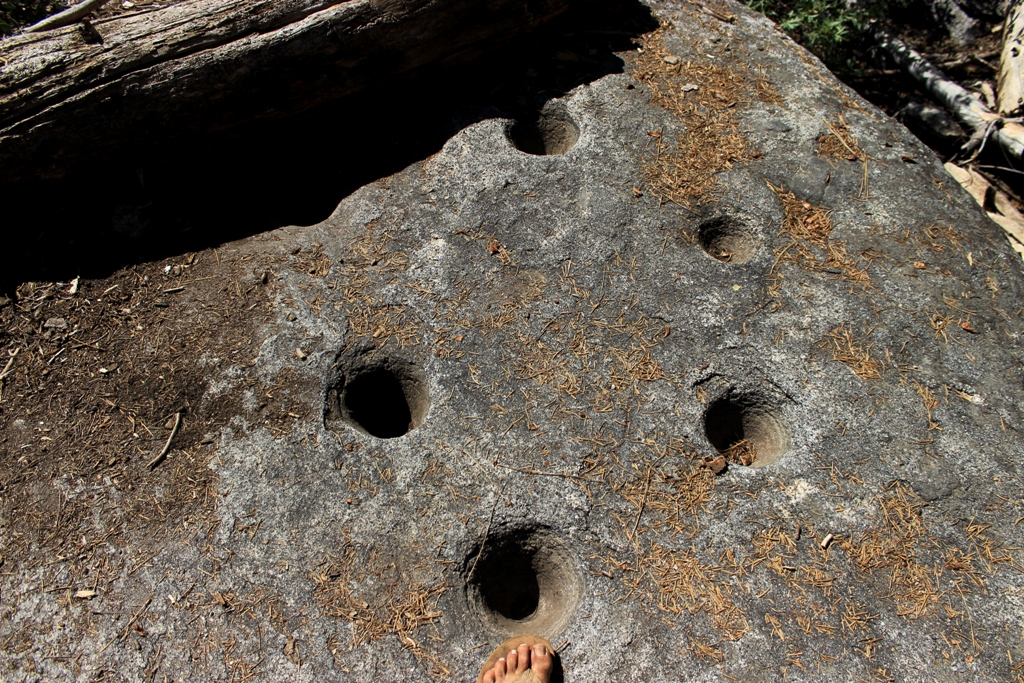
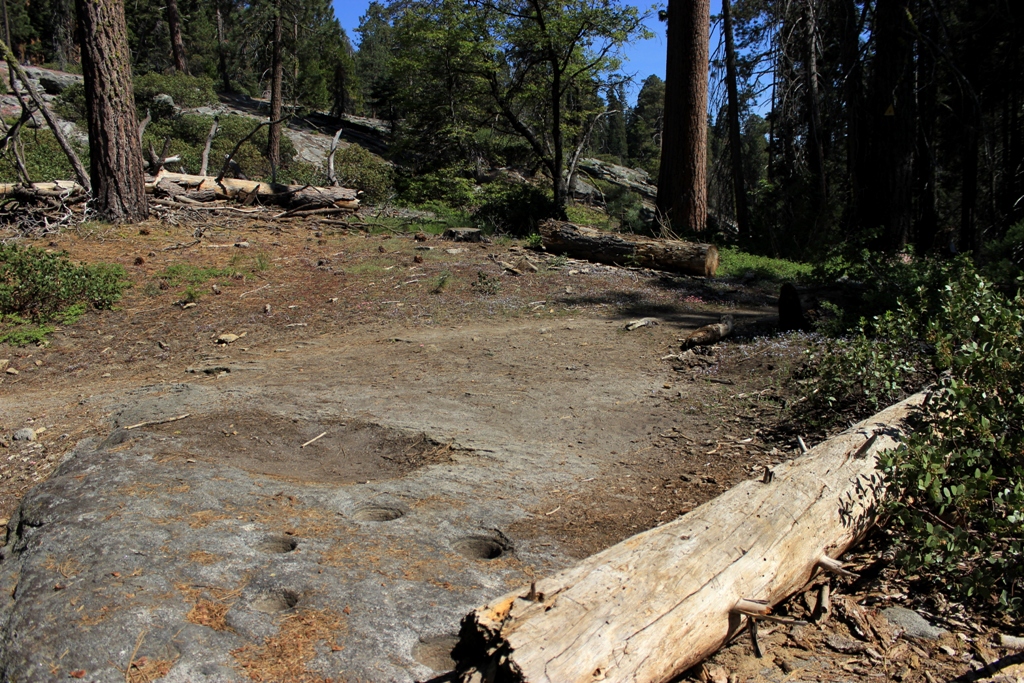
As we crested a slope coming out of the canyon we came upon the collection of bedrock mortars we set out to see. The mortars overlooked a brook trickling clear cold water through a crease in the granite-capped mountainside.

wildflowersbedrock mortarbedrock mortarsAs we explored the land surrounding the mortar site two people came walking down the trail. They sauntered by and we exchanged a few friendly words. The lady had seen me taking photos and when she saw a pine cone a moment later she insisted I take a picture of it. The cone was sitting nearly upright with its tip pointing into the air. The lady went on to explain with great enthusiasm that she could tell the pine cone had rooted into the soil because of the way it was sitting. She thought pine cones were actually seeds themselves like a coconut or something.

On our way back down the trail my daughter spotted a marmot. On our way up the trail she had pointed out a bear walking through the woods behind me. I’m typically an observant person and I put a premium on situational awareness, but I’ve apparently got work to do on this front. Nevertheless, I was happy to see Little Ms. E keeping her surroundings in focus.

Going downhill on our way back was considerably easier and quicker, of course. We seemed somewhat far away on the hike up the quiet canyon to the mortars, having left the throngs of tourists behind, but following the quick walk down the mountain it seemed we had hardly gone anywhere. How ever far it may have been, though, it may as well have been another planet for Little Ms. E, who was seeing things for the first time.

brown bearThere’s a bear over there.

marmotMarmot

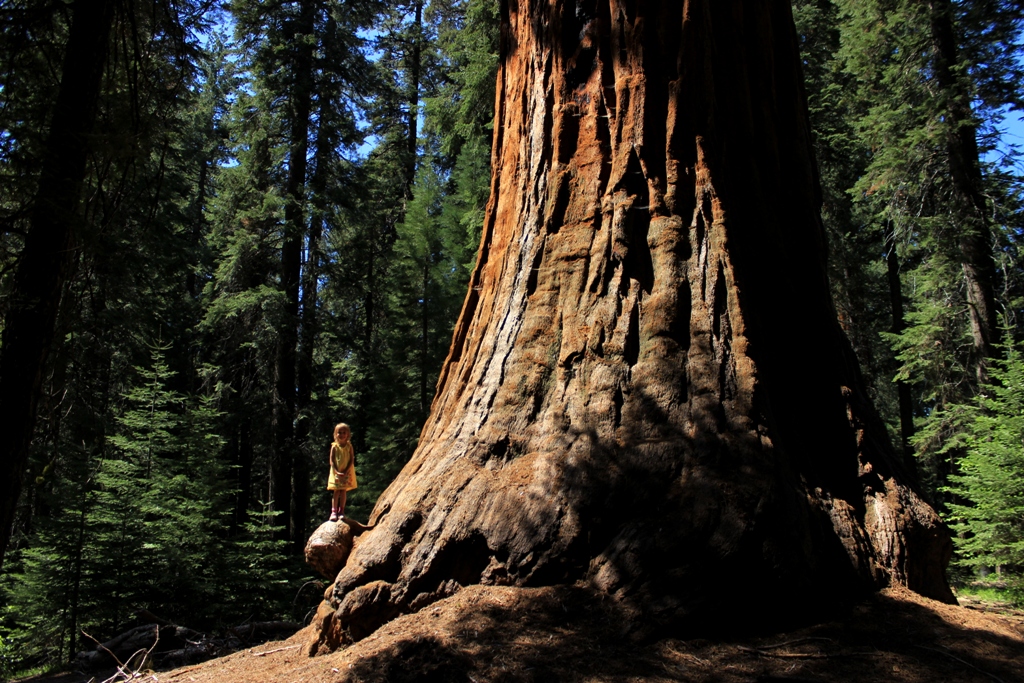
giant Sequoia fire scarsGeneral Sherman giant Sequoia treeThe General Sherman giant Sequoia tree is estimated to be 2300 to 2700 years old and is considered to be the largest tree in the world by volume or the largest living thing on Earth.

General Sherman by the tape:
Height above base: 274.9′
Circumference at ground: 102.6′
Maximum diameter at base: 36.5′
Diameter 60 feet above base: 17.5′
Diameter 180 feet above base: 14
Diameter of largest branch: 6.8′

Posted in Santa Barbara | Tagged , , , , , , , , , , | 4 Comments

El Saucito Ranch House, Carrizo Plain (1878)

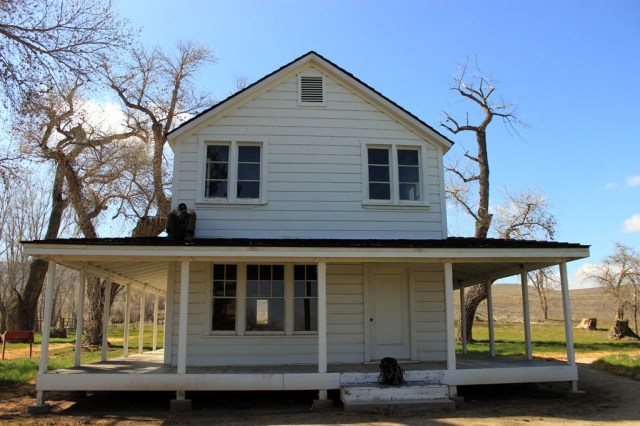
El Saucito RanchThe El Saucito Ranch house, built of redwood by Chester Rude Brumley in 1878, was occupied until the late 1960s and is the oldest still standing farm house on the Carrizo Plain.

“Mr. Brumley has grown grapes, figs, pears, apples and other varieties of fruits and berries, his grapes are very large and very sweet and make large and luscious raisins. The other fruits were of the very best quality and some of the figs brought to San Luis were thought the best ever eaten by those whose fortune it was to get them. Apples and pears bore so heavily as to break down the trees.”

Myron Angel (circa 1880s)

El Saucito ranch lies as a speck on the vast, bleak Carrizo Plain. Standing on a slope far above the old pioneer homestead, the world silent but for the gentle rush of wind over my ears and nary a sign of other people, the ranch sits like a far-flung outpost of civilization amid the emptiness of hundreds of thousands of square acres of sweeping grassland.

I can see the faint line of Soda Lake Road from afar, and the tiny clump of bushes and trees with a tinge of white that is the building housing the Carrizo Plain National Monument Visitors Center. But aside from those tell-tale signs of humanity, it appears as if very little change has come to the surrounding landscape over the last 140 years. It appears as lonely today as it was when the old house was first built.

Peering across the plain down upon the puny dots that are the ranch and its few outbuildings, in what is now the nation’s most populace state with an economy larger than that of most countries, utter desolation is its defining feature, even today. What must it have felt like in the 1870s when Brumley lived there with his wife, Margaret, and their children?

El Saucito Ranch HouseA trap door in the porch just outside the French doors provides access to a root cellar.

The Brumleys first lived in a house made from the dirt of the plain itself, a one room adobe, before building their elegant two-story wooden home. They were reportedly the only permanent residents for nearly 600 square miles. This at a time when miles were far longer than they are today, as the common conveyances were all pulled by horse over rough substandard roads. That’s a long way to travel for provisions and a hellish journey if in need of a doctor.

El Saucito Ranch was a self-contained oasis. Self-reliance was not optional, of course, it was a necessity of pioneer life, so far removed was the Brumley residence from the rest of the world. A powerhouse on the property generated electricity. Any machines that broke down were repaired onsite in the large detached garage presumably using whatever spare parts or material were on hand.

The sort of ingenuity required to run such a remote ranch is hinted at in a storage and sorting tree at the workshop, where spare nuts, bolts, small parts and other odds and ends were kept for future use or reuse. The homemade upright storage receptacle was crafted from old concave metal plow disks attached at intervals horizontally to a metal pole, the disks serving as makeshift holding bins.

The Brumleys raised sheep, cattle and horses and grew a wide variety of produce. There is a well on the property and a windmill that once drew cool water from the underlying aquifer. There is a small open reservoir that lies deep in the ground below the level of the surrounding plain and is surrounded and shaded by willow trees. This is the same willow thicket that purportedly originally attracted Brumely’s attention as a tell-tale sign of water, and which is the natural feature for which the ranch is named. Saucito means little willow in Spanish.

carrizo plains 113

During the time the Brumley’s lived at El Saucito there were still Native Americans roaming the countryside. A display at the ranch relates one such experience recalled by one of the Brumley daughters:

“Life on the lonely plain was a big change from life of San Francisco. Nellie Brumley remembered a morning alone in the house with her mother when a band of 20 Indians arrived, chanting and asking for water. A nervous Margaret ordered Nellie to hide in the house, while she presented the Indians with water and a pail of freshly-baked cookies. The Indians ate all the cookies. . .down to the last crumband departed as abruptly as they had arrived.”

Carrizo Plain Soda LakeEl Saucito ranch is seen here as a few trees and a speck of white about center frame. The white saltpan of Soda Lake is seen to the left and the Temblor Range, created by the San Andreas Fault, is in the distance beneath the clouds.

Related Post:

Ruminations on a Hart-Parr 18-36H Tractor (1930)

Posted in San Luis Obispo County | Tagged , , , , , , , , , | 12 Comments