Semen Stains, Fake Tequila and Cava de Oro in Mexico

Sonoran Desert MexicoSonoran Desert

“The traveler was active; he went strenuously in search of people, of adventure, or experience. The tourist is passive; he expects interesting things to happen to him. He goes ‘sightseeing.’”

Daniel J. Boorstin, The Image: A Guide to Pseudo Events in America (1961)

Through the eye withering, searing summer heat of the Sonoran Desert we roll southward. The sun shines through the window burning my bare arm, the futile blow of air conditioning inches away unable to compete against its solar radiance from ninety-three million miles away, the glass hot to the touch. I slouch toward the center of the truck trying to avoid its unbearable glare.

It’s a wasteland out theredirt, rocks, cacti, mesquite and little else. The barren, shimmering land stretches out limitlessly before us with no other signs of life but for the few vehicles we pass. And the odd man on a bicycle, or even afoot, pressing northward through the hellish inhuman conditions lugging a gallon jug of water. It’s mind-blowing to behold, unfathomable to an absurd degree.

The hottest ambient temperature I have experienced was in the Sonoran Desert at 120 degrees. It seems impossible that anybody could travel in these sweltering conditions by such rudimentary means. I wonder if I could even survive, should we break down, laying still in the dappled shade of the sparse dessert brush.

What must be compelling these disheveled men to risk traveling through this harshest of environments with so little? Their dark, wrinkly skin visibly glistens with sweat as we pass by, like strips of beef sizzling on a grill, carne asada on an asphalt griddle.
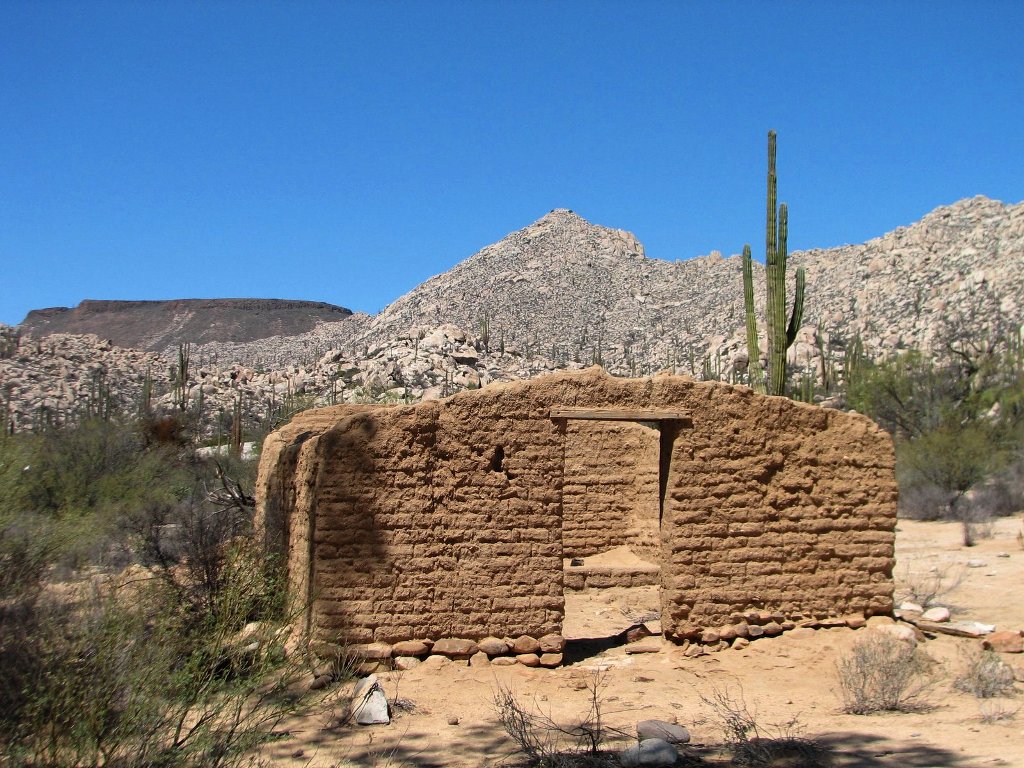
Desert adobe MexicoAdobe ruins left by somebody that gave up their relentless struggle against the Mexican desert.

The hours tick by with the constant spinning of our four balding tires. Deeper and deeper we plunge into the heart of the Mexican mainland. We drive for eighteen to twenty hours at a time, with short intermittent stops for gas and tacos and empanadas from random roadside food stands at all hours of day and night, where they chop taco meat on battered old greasy logs, flies buzzing.

Some how I manage to avoid becoming violently sick for several days, but later, in the high mountain town of Taxco, it hits with a crippling, bowel blasting vengeance. Desperately running to the bathroom, I don’t know whether to first squat or bend over, as it shoots with equal force from both ends.

We spend scant hours sleeping over in a few decent hotels, but also a couple of seedy rooms where I try to touch as little as possible and grimace when stepping bare foot into the showers. One room is too disgusting to bear, the unwashed sheets polka dotted in semen stains and who knows what else. If the walls could talk I would not want to hear their stories. After wrangling with the man that took our money and gave us the key we secure a cleaner room down the road. With only a few hours of sleep we waken dazed and heavy headed and roll out.
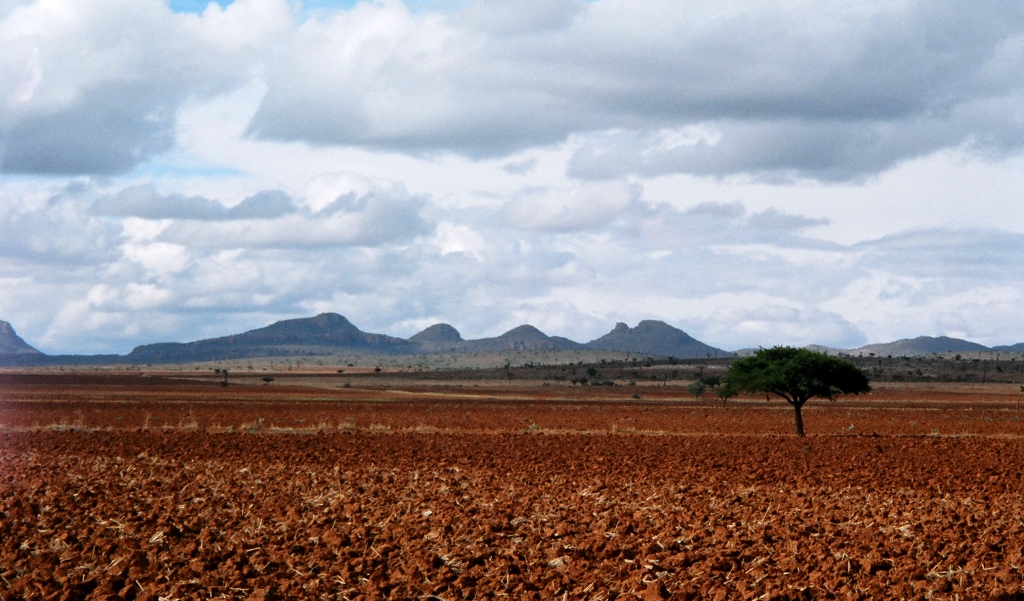
MexicoFreshly tilled Mexican countryside.

Approaching the outskirts of Tequila, I’m surprised that it’s so small. For whatever mistaken reason, I had anticipated the seat of production for this world famous liquor to be as large as the reputation of the drink it delivers to the farthest corners of the earth, to be humming with the bustling blur of a sprawling metropolis, but it’s just another small town in the Mexican countryside like so many others.

Pulling up to one of the first street vendors we come to, we eagerly slide stiff legged from our vehicle and mosey over to inspect the offerings. Various sizes of bottled tequila of differing hues sit atop a wooden table. After sipping samples and conversing with a woman, who stokes our interest by informing us that this tequila was smuggled out of the Patron factory, we negotiate a price and take with us a couple of bottles. And on we roll.

Much later, somewhere too far down the road to return, we crack the cap on a bottle and sample a swig. It’s fake. Tastes like something used to strip paint, certainly not what we had sampled. Maybe it’s a poorly made sugarcane moonshine or cheap mescal and maybe we’re lucky we didn’t go blind drinking it. What ever it is, we dump it. While I take it in stride with some degree of humor, it’s a blow to Clinton’s pride. I’m a rookie. He’s a veteran. He lives in Mexico.

Clint is an adventurer and has spent a fair part of his life traveling through South America and the Mexican interior always seeking out the less visited nooks and crannies. His trips are real, raw and original, not the hackneyed tour schedules of travel companies full of tourist traps listed on Wikipedia. He speaks fluent Spanish and is street wise in Latin American ways. But this time some petty swindler got the best of him and it’s clear, though he says little, that he’s stewing over it.

blue agave Tequila MexicoBlue agave plants, from which tequila is distilled, growing near Tequila, Mexico.

The building looks like the ruins of better times past. It appears to be under construction, likely never ending, because so long as a building in Mexico is not finished its owner owes no taxes on it. It sits beside a two-lane asphalt road in El Arenal, Jalisco, down the road from Tequila and on the way to Guadalajara. It’s fronted by a stone wall and open muddy soil on this gloomy, rainy afternoon. A gaping cargo entry door sits open and it’s dark within.

There are no signs of people or reason to think anybody frequents the place other than a few fading tire tracks in the mud. Most people would drive right by oblivious to its existence or maybe afford it a passing glance at most if it happened to catch their attention, but it’s the sort of place with an irresistible appeal to Clint and so he pulls in and parks.

We wander about, me doing so more to stretch my cramped legs than out of any real interest. It’s an unremarkable place. I’m along for the ride, Clint is leading the way. We peek inside, but it’s dim and unlit and nothing we see compels any further investigation.

As we turn away from the building a truck pulls in behind our rig and out steps a middle-aged man dressed in ranch attire common to Mexican men who work with their hands, denim jeans, a hand crafted leather belt and a light-colored long-sleeve shirt. His thick grizzly hair is neatly trimmed, his face smooth as well-worn saddle leather. He’s fit for his age, with broad shoulders and a narrow waist, and walks erect with an air of confidence and strength. He commands respect by sight alone.

My previously casual feeling evaporates before this man’s deliberate march. I’m a gringo thoroughly out of my element deep in a foreign country snooping around private property. A country where one must not only worry about being robbed by bandits and thugs, but shaken down by the police, too, which has happened to me more than a few times over the years.

roasted agave hearts "pinas"Freshly roasted blue agave hearts laying outside the oven, door removed, in the Cave de Oro tequila distillery. © Bill Bumgarner

Hildado is the man’s name and this is his distillery where he crafts limited production tequila, Cava de Oro. You won’t hear it hyped in flashy American commercials, won’t see its snazzy giant banner ads at major American sporting events and won’t see it on American shelves. It’s available in small quantities only in Mexico.

Hildado invites us inside and as we follow him in we see his assistant, a wiry bespectacled younger man that’s the polar opposite of his boss in appearance, sitting in the darkened room before the glow of his laptop screen.

The computer is an oddly out of place modern device in what looks like an old derelict building housing little else but wood barrels and a couple of small, utilitarian machines. While the making of fine tequila requires skill and specialty knowledge, the tools to do it are but few and simple.

tequilaShredding the roasted agave hearts. © Bill Bumgarner

Hildado gives us a tour of his distillery and explains the tequila making process. It’s a humble operation by the standards of other large companies like Patron or Jose Cuervo, but in his own small space with limited equipment he crafts liquor of exceptional quality. While tourists flock in droves to the factories of those other world famous brands, Hildado’s boutique distillery, the equivalent of a little heard of microbrewery compared to Budweiser, is just the sort of place for a traveler like Clint.

Hildado shows us the oven where the agave hearts are roasted, where they’re shredded, where they’re juiced and the tank where he lets the agave juice settle before transferring it to oak casks to age. One end of the building holds the preparatory equipment and the other side is stacked with barrels of aging liquor, all bearing the signed labels of Mexico’s official tequila regulatory inspectors ensuring that it’s genuine. Phony tequila is a big problem, as we learned first hand, and the Mexican government takes it seriously.

Hildado grabs a five gallon bottle half full of fresh water, a two liter bottle of Squirt soda and a bottle of his tequila and invites outside for drinks. For the next two hours we sit sipping his tequila with him and his assistant. Clint offers suggestions and advice on how to market Cava de Oro in the U.S., and though we just met Hildado by random chance, it’s as if he is an old friend who just gave us a personal tour and taught us how to make tequila.

And that, friend, is the benefit of exploring the path less traveled and peeking into the darkened corners of the world often overlooked, ignored or purposely avoided by others.

Be a traveler, not a tourist.

tequila cava de oro

Posted in Mexico | Tagged , , , , , , , , , | 4 Comments

Gaviota Pass Overlook, Gaviota State Park

Gaviota CoastThe Gaviota Coast and Santa Ynez Mountains.

“The Gaviota Coast is the largest stretch of undeveloped coastline remaining in Southern California, and is representative of the only coastal Mediterranean ecosystem in North America.”

—Gaviota Coast Conservancy

Surf in the morning. Spearfish into midday. Hike the afternoon away. Ah yes, the beauty and bounty of the Gaviota Coast.

The Gaviota Coast is an especial place. It is remarkable for its rich marine and terrestrial biodiversity, desolate beaches, surf, rocky mountains and the rarity of a prodigious stretch of undeveloped California coastline.

Aside from my affinity for such exceptional characteristics it is a place of particular sentimental value to me. I lived for awhile in a canyon along the Gaviota Coast as a kid and spent much time exploring the beaches and mountains unsupervised by adults.

During this time I developed a close connection to the area that would grow, as I later spent time working at several different residences and ranch properties along this stretch of rural coastline, as well as at exclusive homes in Hollister Ranch. Even in my menial duties on remote $15 million estates the bucolic beauty of my surroundings never escaped me nor lost its luster.

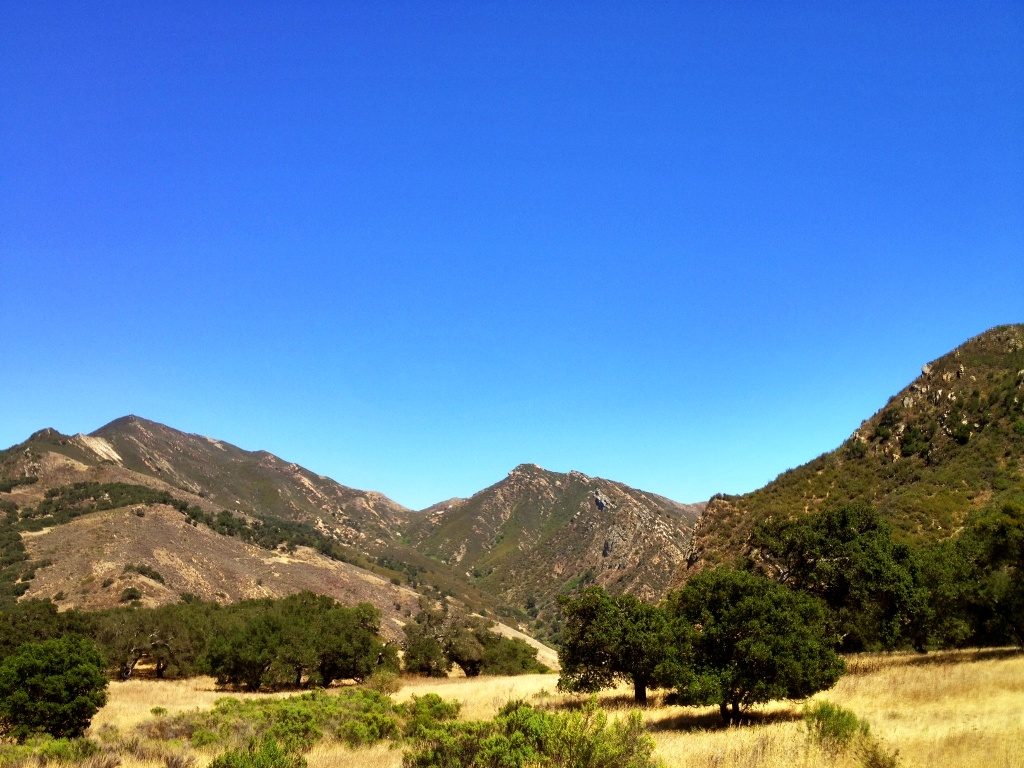
Gaviota State Park hikingThe mounded peak overhead in the distance is the objective, overlook point.

Los Padres National Forest mapThe westward pointing finger of the southern Los Padres National Forest.

One of the many beauties of the Gaviota Coast are the Santa Ynez Mountains. The crest of this coastal range forms a westward pointing finger of the Los Padres National Forest (LPNF) reaching Gaviota State Park, which makes it possible to access the forest on foot by way of trail from the sandy wet seashore at the park. Such beach to backcountry trail access into the LPNF is possible nowhere else in Santa Barbara County.

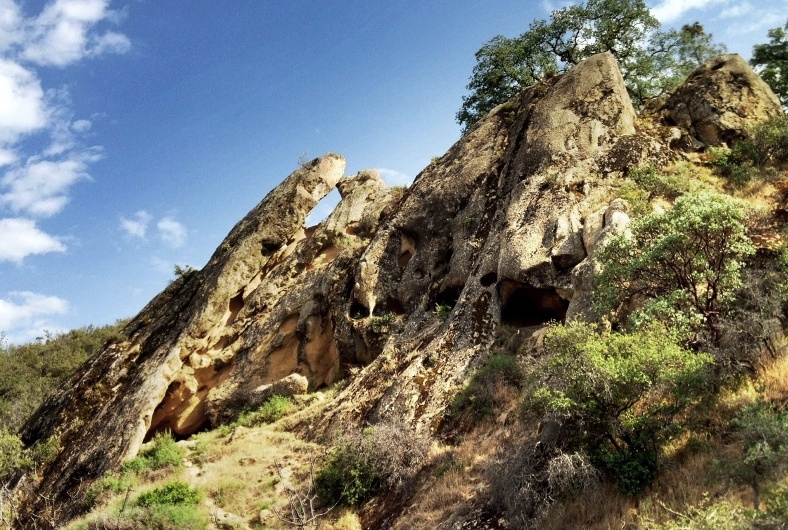
The Beach to Backcountry Trail in Gaviota State Park leads passed the Wind Caves and a short side branch of the trail leads to a prominence overlooking Gaviota Pass.

Gaviota hikingGaviota PeakGaviota Peak on the left and the overlook mountain on far right.

Gaviota State Park hikesA view from the trail.

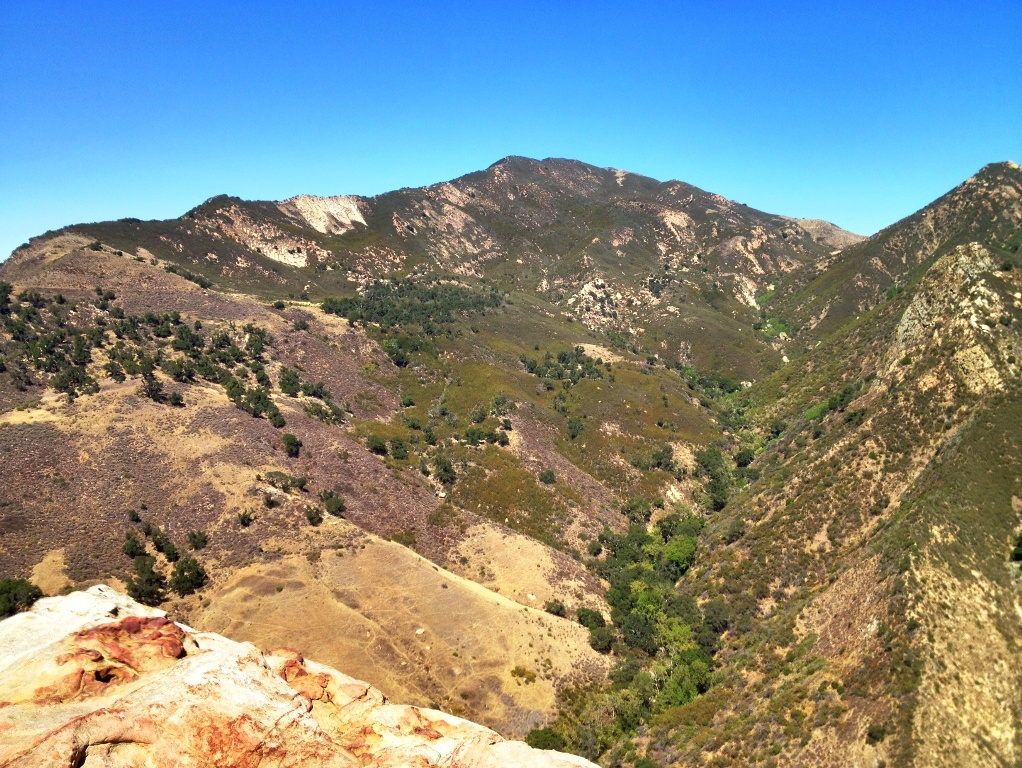
Gaviota Peak hikeA view of Gaviota Peak from Gaviota Pass overlook.

Gaviota State Park aerial viewHighway 101, Gaviota State Park beneath the railroad trestle and the Pacific Ocean.

Related Posts:

Two Arches, Gaviota Coast

Gaviota Pass and U.S. Route 101 (1930s)

Motoring on the Gaviota Coast (1906)


Posted in Santa Barbara County | Tagged , , , , , , , , , | 10 Comments

Marijuana in the Woods: Endangering Hikers and Killing Wildlife

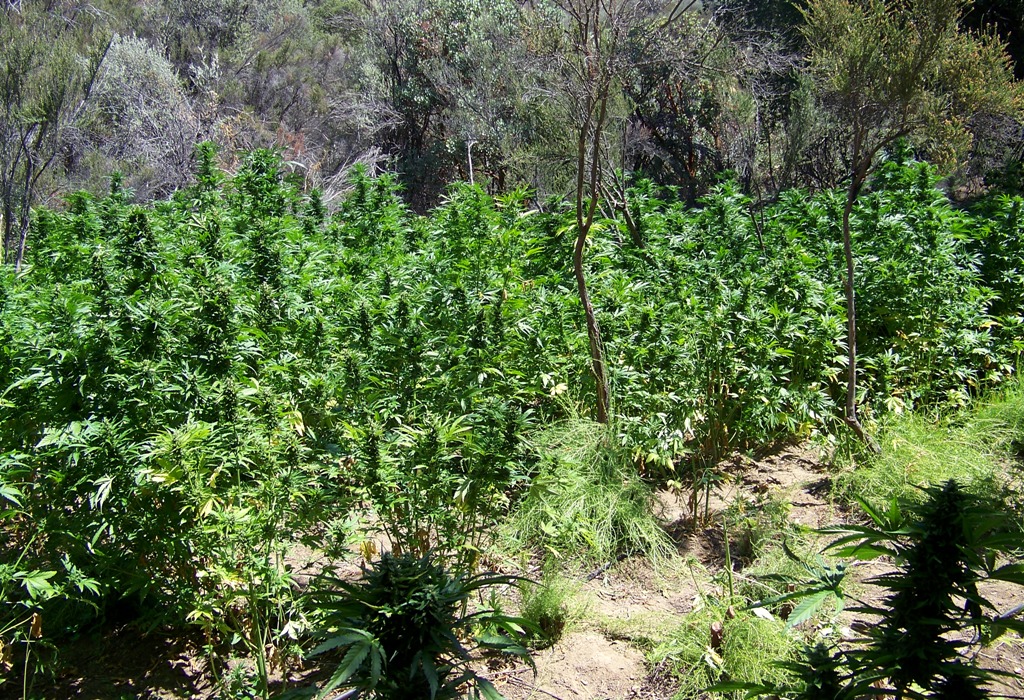
marijuana santa barbaraMarijuana growing in the Los Padres National Forest. (Santa Barbara Sheriff’s Department)

Marijuana Increasingly Grown In National Forests

According to the Santa Barbara Sheriff’s Department, “large-scale marijuana cultivation is a serious and increasingly widespread problem on public lands in California, including the Los Padres National Forest.” In 2010, out of California’s 18 national forests, the Los Padres ranked fifth for the number of marijuana plants eradicated by law enforcement officers.(1)

I have come across numerous marijuana grow operations over the years. Too many to recall. Both inactive no longer used sites and actively growing plants. I’ve seen them in one form or another in Bear Canyon, Potrero John Creek and Godwin Canyon in Ventura County. In Santa Barbara County, I’ve come across several grow sites in the Montecito foothills, Cieneguitas Canyon, Goleta foothills below West Camino Cielo and in Lewis Canyon, to name just a few.

Choose any major canyon or flowing creek and there is a decent chance that it’s in current use or has been used previously to grow marijuana. Spend enough time off-trail in this part of the Golden State and a hiker is likely to stumble across the work of guerrilla growers at some point.

In times past, out of youthful naiveté, I was never concerned about the danger of a potential run-in with a grower. Over the last couple of years, however, my view of this issue has changed. Now I feel the creep of concern wash over me when out alone off-trail in the woods and I see the tell-tale signs of growers.

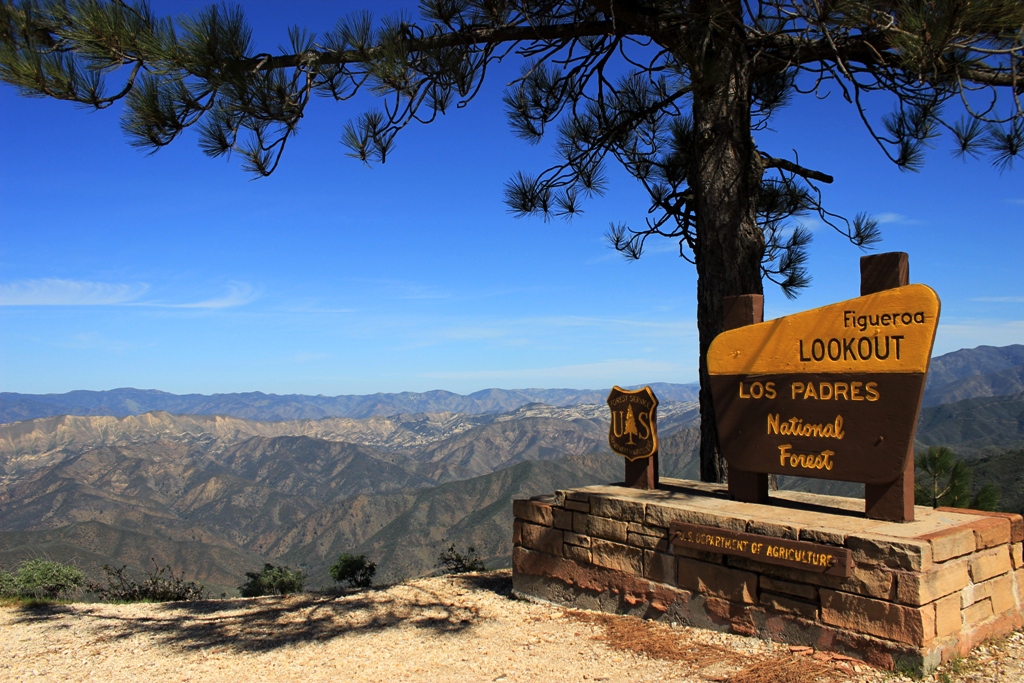
Figueroa Mountain LookoutA Threat To Hikers

Whereas I once assumed that weed growing around these parts was the work of harmless potheads looking to grow their own smoke and make a few dollars, it is now clear that in many instances they are operated by Mexican drug cartels, and other ruthless characters who will not hesitate to turn my day into a living nightmare. News reports chronicle the finding of high power rifles and law enforcement officers being fired on when raiding grow sites.

I never carried a firearm a single time in my younger years, but I’ve now been forced to wrestle back and forth against a growing compulsion to carry a gun whenever I go for an off-trail hike. I would rather not. I have no interest in getting into a firefight and I have enough to carry without the added burden of lugging around a loaded pistol.

But the law does not provide protection, it punishes the perpetrator after the fact. Dialing 911, if by chance there is cell service, is a futile waste of time when I’m far away up some remote roadless canyon. Calling for help that takes hours to arrive is pointless when all I have are seconds to defend myself.

I am fed up dealing with the consequences of growers in the forests and open spaces I frequent. I don’t appreciate having to concern myself with the possibility of being shot at or maimed or killed by booby traps when I’m recreating.

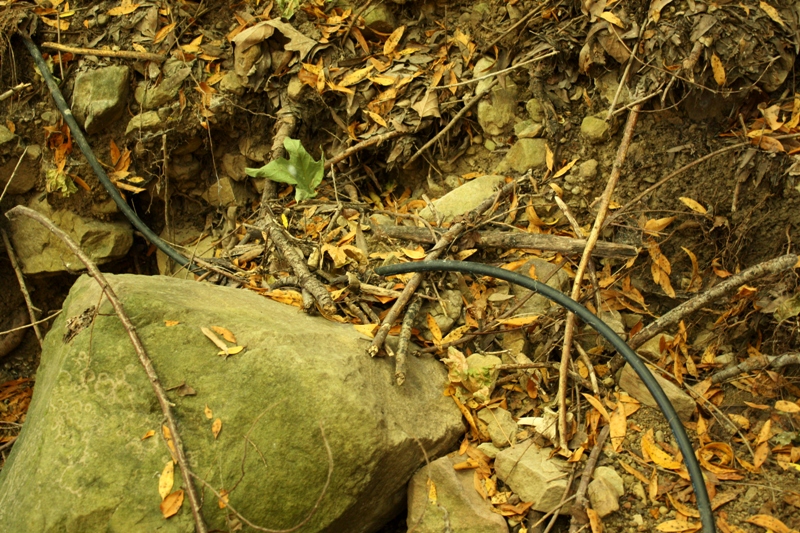
marijuana grow irrigation lineThe tell-tale sign of a weed growing operation, black plastic irrigation tubing running through a canyon.

Consequences of Chemical Fertilizer in Riparian and Marine Environments

I’m disgusted and angered by the tons of trash and toxic chemicals left behind by growers. I recently found a couple of hundred pounds of chemical fertilizer left beside a tributary of Sespe Creek, which during winter rains will leach into the drainage and wash down stream threatening critical habitat for the endangered southern steelhead. The nitrates from the fertilizer can spur harmful algal blooms in creeks and rivers, which can lead to hypoxia or depleted levels of oxygen that can suffocate fish.

But it does not stop there. Eventually the fertilizer may reach the ocean where it works in a similar manner but with an added twist. The fertilizer fed algal blooms can release vast quantities of the neurotoxin domoic acid into the water, which is absorbed and concentrated in shellfish like clams and mussels.

Aside from the possibility of poisoning humans, these are favorite foods of southern sea otters, which are officially listed under the Endangered Species Act as “threatened.” The otters eat the poison laden shellfish and become sick or die. In addition, blue-green algae cause microcystin intoxication in sea otters, a deadly liver infection.

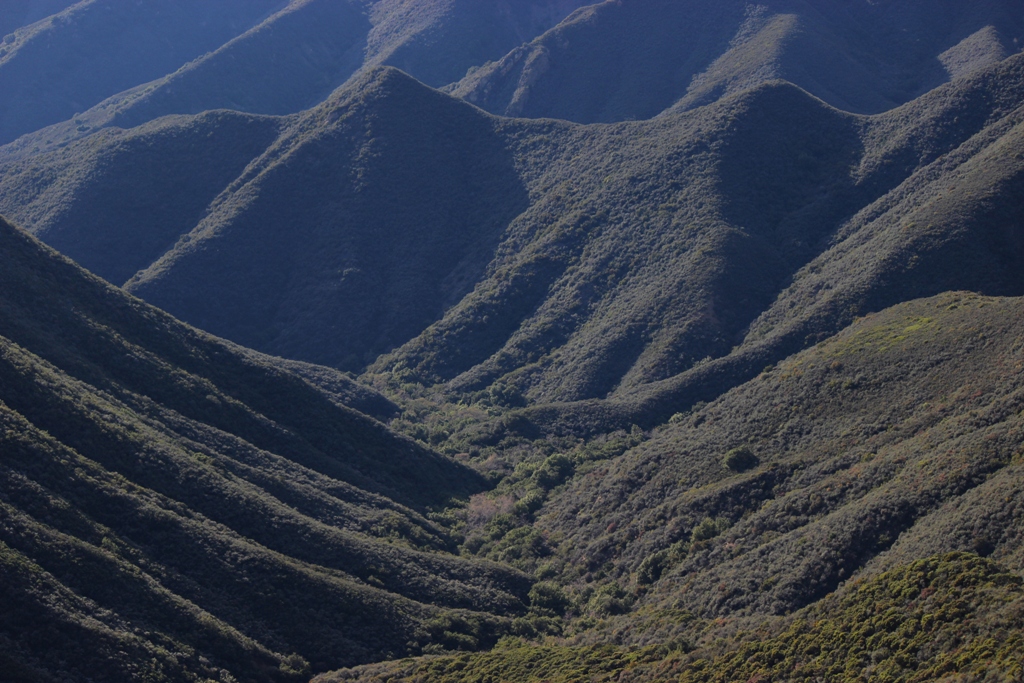
los Padres National Forest marijuana growLos Padres National Forest creeks are prime pot growing territory.

Does it stop there? Theoretically, no. Sea otters are a keystone species that play a vital role in the marine environment. They feed upon, and thus help check the population of, sea urchins which are voracious eaters of kelp. If sea otters disappear so does the kelp, as the urchin population explodes and devours entire kelp forests leaving behind barren reef.

Kelp forests hold one of the greatest concentrations of biodiversity in all the world’s oceans and support about one quarter of native marine life in local waters. The submarine forests provide essential habitat for over 800 organisms from the tiniest sea creatures to large game fish and mammals. As the otters go, so does the kelp and all other life that depends on it.

While it may be a stretch to link such wide ranging destruction to marijuana growers, it is possible with enough chemicals washing into local watersheds. More to the point, though, the environment is already under enough stress from various causes, including massive fertilizer runoff from the state’s intensive agriculture. Additional sources of loosed chemicals only serve to exacerbate existing problems.

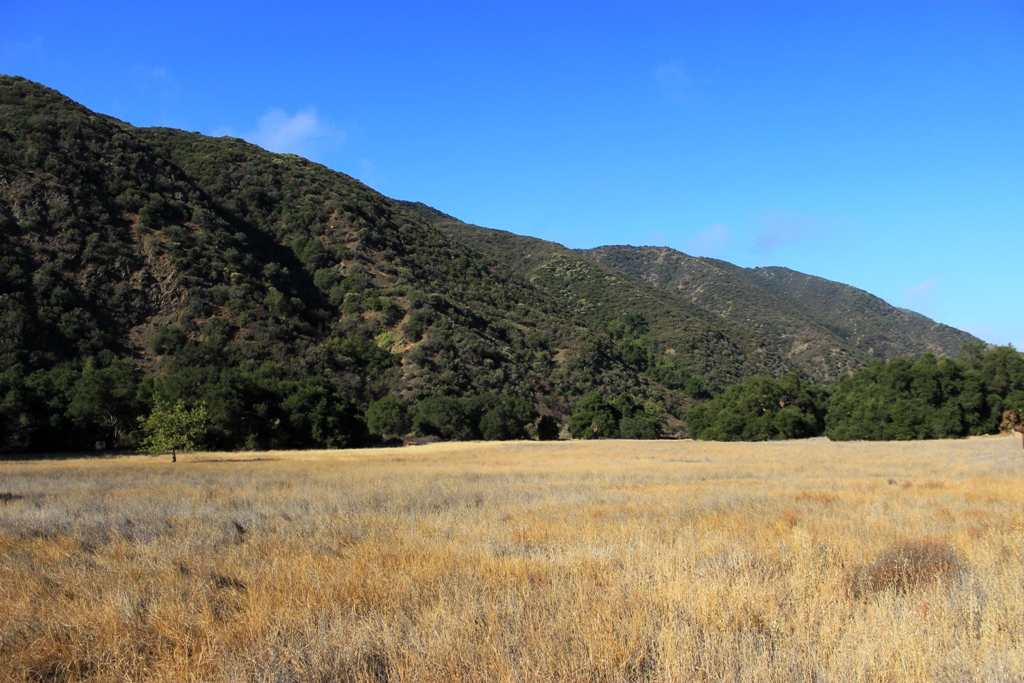
Upper Santa Ynez RiverA potrero in  the upper Santa Ynez River watershed of the Los Padres National Forest.

Consequences of Pesticides on Wildlife

Lush well-watered pot plants growing in the hot and dry Mediterranean climate of Southern California are extremely attractive to hungry and thirsty rodents. To combat this problem growers haul in and carelessly disperse large quantities of rodenticide.

The result is the indiscriminate, incidental death of countless other animals from owls and hawks to bobcats and mountain lions, who die of secondary poisoning from feeding upon rats and mice that have eaten the rodent bait.

The poisoning of carnivores like coyotes, bobcats and mountain lions from anticoagulant rat bait is well documented. According to the National Park Service, 80 percent of bobcats in the Ventura County area that were tested had some form of rat poison in their systems and their population has plummeted.(2) While this is largely attributed to common residential and commercial use of poisons, it illustrates the catastrophic impact resulting from such deadly chemicals.

It is also possible for still more species to die of tertiary poisoning. For example, a condor feeding upon a bobcat that died from eating poisoned rats. It is not out of the ordinary for an area around a grow zone to reek of death.

In 2010, over three million marijuana plants were eradicated from Los Padres National Forest alone. Consider how many pounds of chemical fertilizers, pesticides and herbicides were used to grow them and the impact it had on wildlife. And that is merely from grow zones that were discovered by police and it also does not include all other forestland outside officially designated national forests.

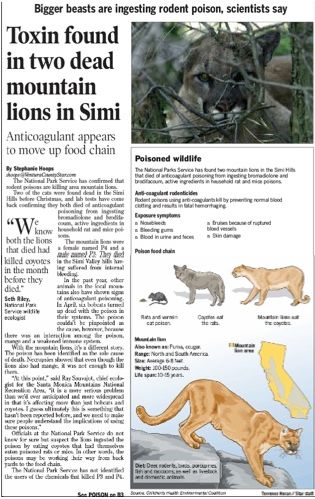
screen shotAn article in the Ventura County Star newspaper detailing the tertiary poisoning of two mountain lions from rat poison.

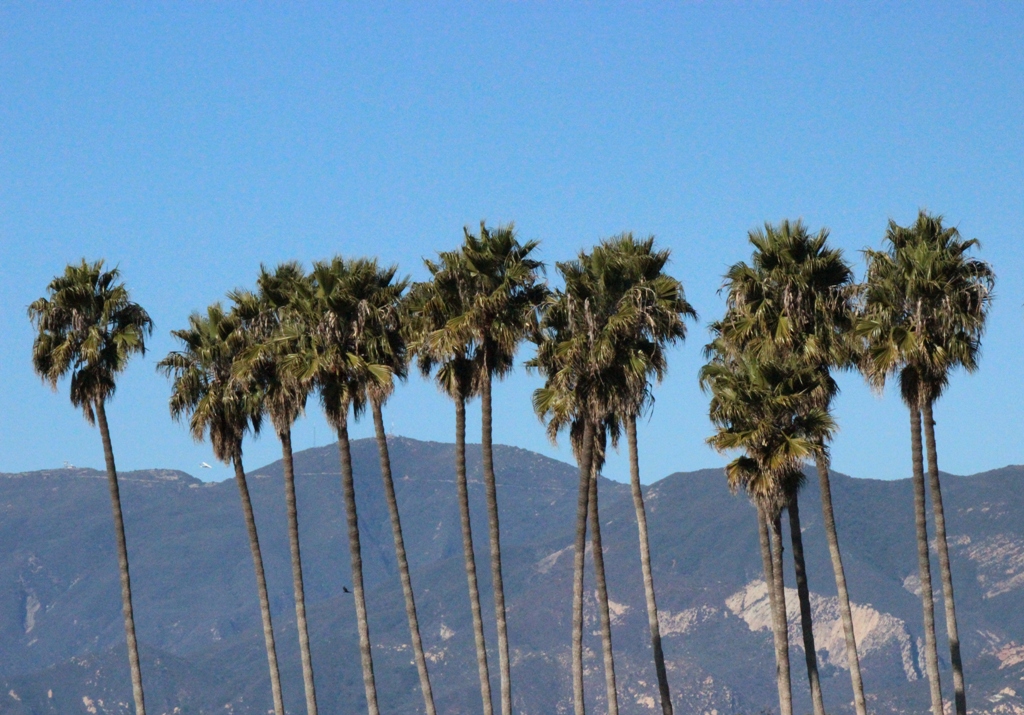
Palms at Goleta BeachThe Santa Ynez Mountains are a grower’s dream. Plants rooted on the sun-saturated south facing mountainside enjoy long hours of direct sunlight, intensified by the mirror-like reflection off the Pacific Ocean, and if growing on a slope get hit with direct sunlight from root to tip.

My Opinion

I take a libertarian position on the matter of marijuana possession and use. I find it utterly preposterous that the government has outlawed a plant. The issue for me is not marijuana, but how and where it’s grown. I draw the line when it comes to the careless, inconsiderate and destructive practices of guerrilla growers polluting my backyard and threatening my life and well being, just so they can make a buck or fill their stash box.

UPDATE July 26, 2013:

July 25, 2013

“$85 million in pot plants seized

The individuals responsible, cut down the native vegetation, introduce toxic chemicals into these National Forest lands, harm the wildlife and divert natural water supplies into naturally arid landscapes. A major focus of these marijuana eradication operations is the removal of the chemicals, poisons and trash that were unlawfully introduced onto our National Forest lands.”

http://m.keyt.com/news/85-million-in-pot-plants-seized/-/19201834/21156456/-/622asrz/-/index.html

Posted in Santa Barbara County, Ventura County | Tagged , , , , , , , , | 24 Comments

Chumash Indian Rock Art Pictograph

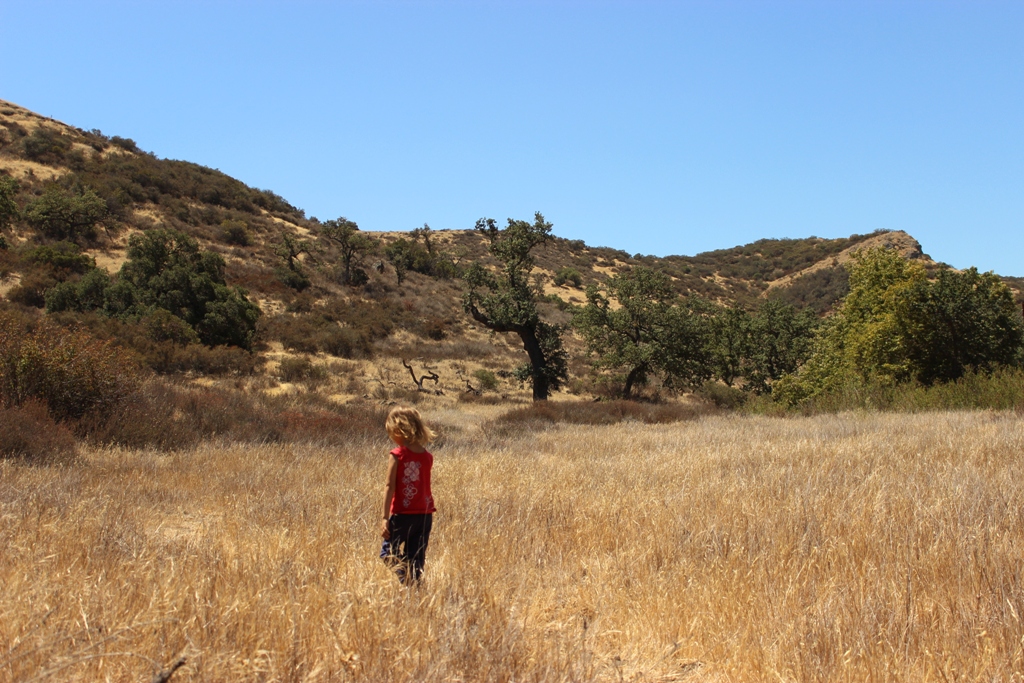
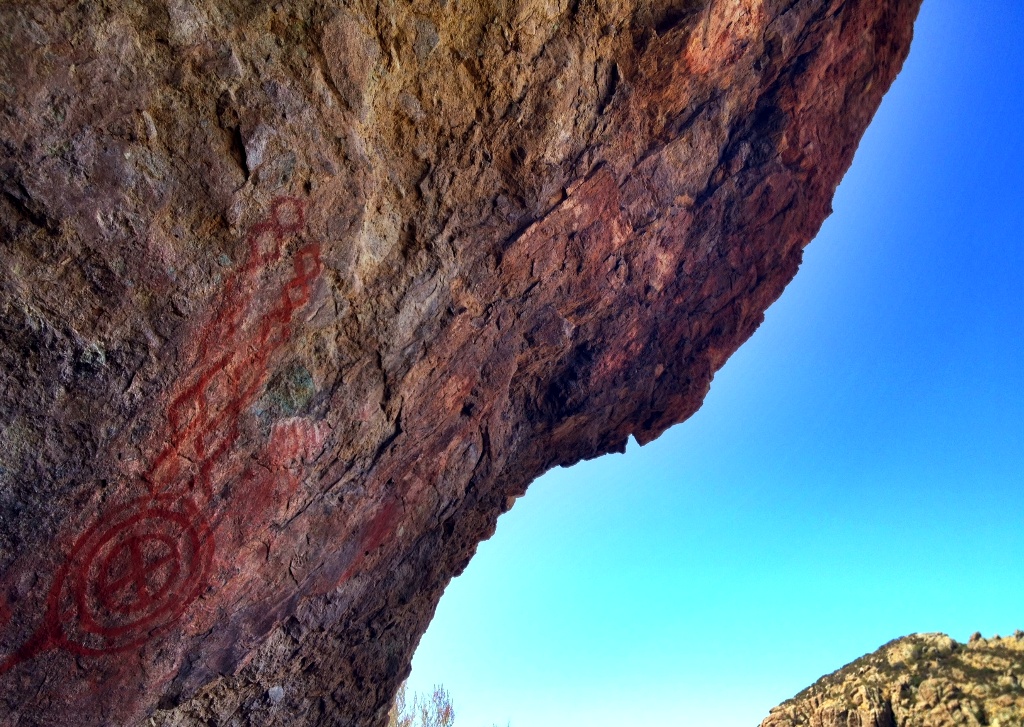
california rock art pictographsLittle Ms. E and I ventured out for a short hike Wednesday morning to a pictograph site. This is the fifth Indian rock art site I’ve taken her to and it required the longest and most strenuous hike for her yet. I ended up carrying her on my shoulders, but we made it. It will be some time before she’s ready to visit the more remote backcountry sites, but as she gets older we’ve been extending the range of our outings a little at a time.

The pictograph adorns the wall of a shallow, northwest facing alcove overlooking a small seasonal creek. There are no bedrock mortars. The outcrop sits along the top of a rolling hill of grass and chaparral near the mouth of a canyon and it offers expansive views of the surrounding countryside.

rock art pictographs

Posted in California | Tagged , , , , , , , , | 6 Comments

100° Hike

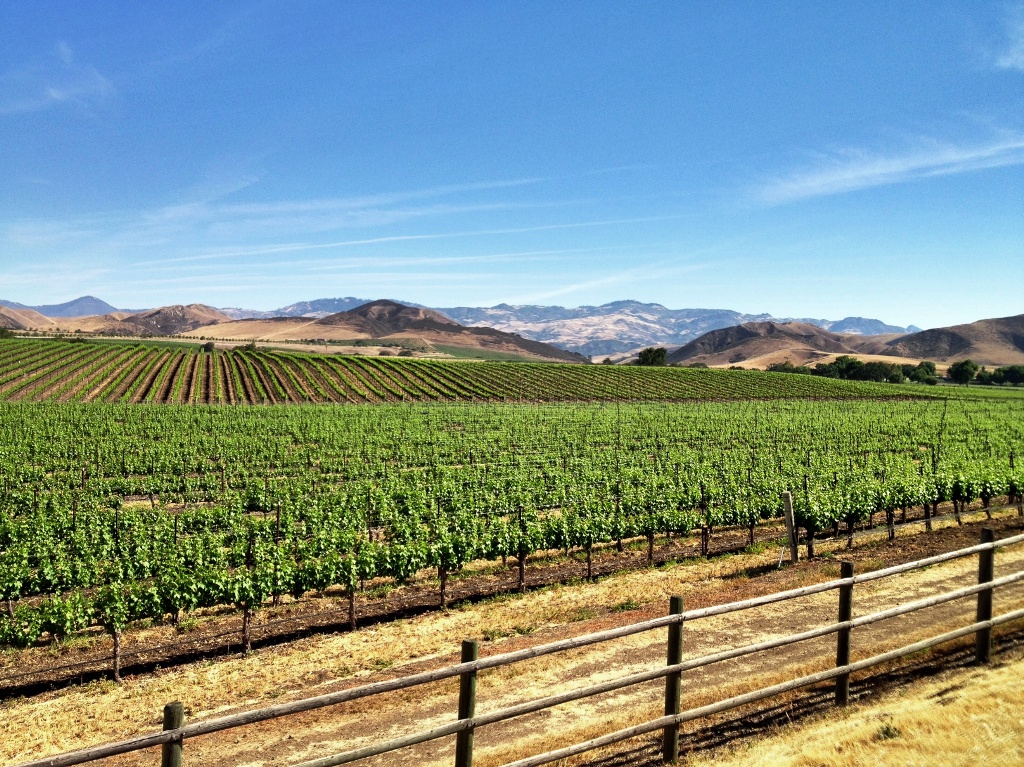
Santa Ynez Valley viticulture winemakingSanta Ynez Valley viticulture as seen on drive to trailhead.

It’s an ordinary summer day. It’s not one of those media hyped heat wave events, but it’s supposed to be hot out. Such forecasts don’t really apply to the backcountry, though, and I expect it to be hotter than called for.

County-wide to date Santa Barbara has received less than half its normal rainfall amount for this season. And a little more than half the normal amount of rain fell the previous season. Bradbury Dam at Lake Cachuma last spilled in 2011.

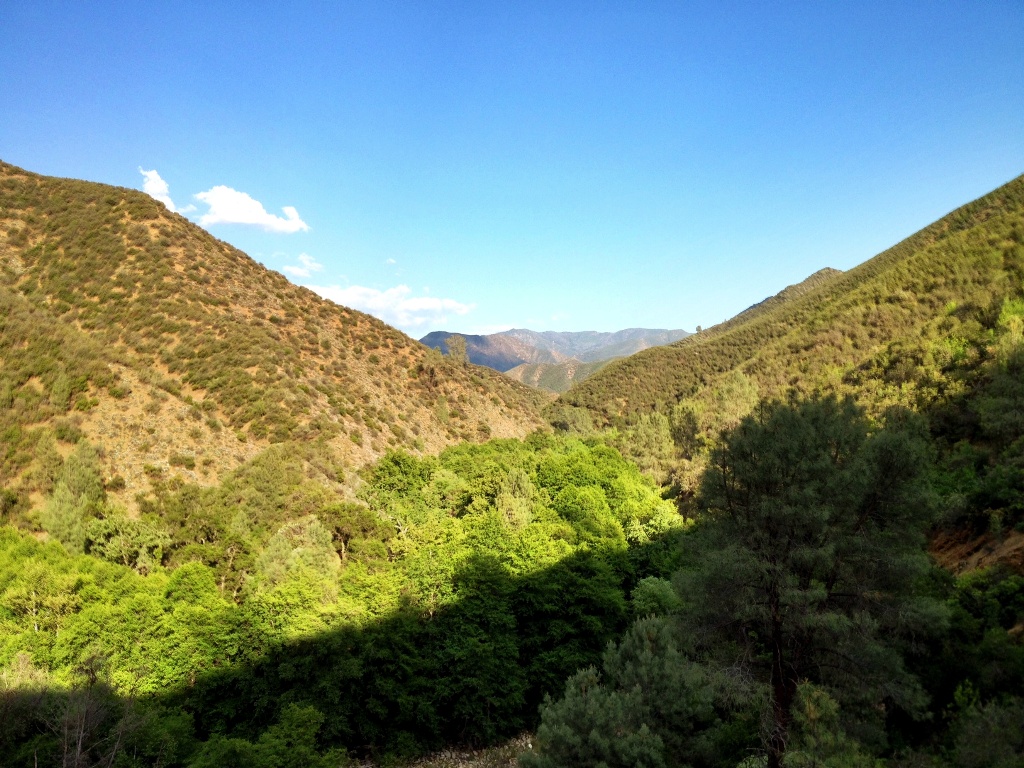
The San Rafael Wilderness is hot and dry. It’s withered, shriveled, and crunchy. And hordes of tiny flies are out in search of heads to ceaselessly buzz around and eyes, ears, noses and mouths to crawl into. These less than pleasant conditions deter most people, a fact confirmed by my arrival at a parking lot devoid of vehicles.

Manzana Creek San Rafael WildernessManzana Creek

San Rafael WildernessSun scorched trail

I plod along the trail with my head down and a steamy red face, step by heavy step up the gravely mountainside, glistening and dripping with sweat, my heart throbbing audibly in my head. The world bobs and weaves with the motion of my head as I stomp along, randomly glancing out here and there from under my hat brim. The only sounds are my heavy footsteps, the forceful rush of breath in and out of my nose and the rhythmic dull thump of my heart.

It’s like I’m fighting against myself as I hike, because as I struggle along, sucking and puffing wind, legs laboriously scissoring back and forth, the world around me, the plants and rocks and everything else, it’s all still and silent. It’s not doing anything. It’s not for me or against me. It’s inanimate. Indifferent.

It’s always like that, of course, but on this exceptionally hot day the feeling seems particularly acute as I grind my way up the sweltering slope. I’m working myself toward dehydration, fatigue and heat stroke and all I’m doing is slowly walking up a dirt path.

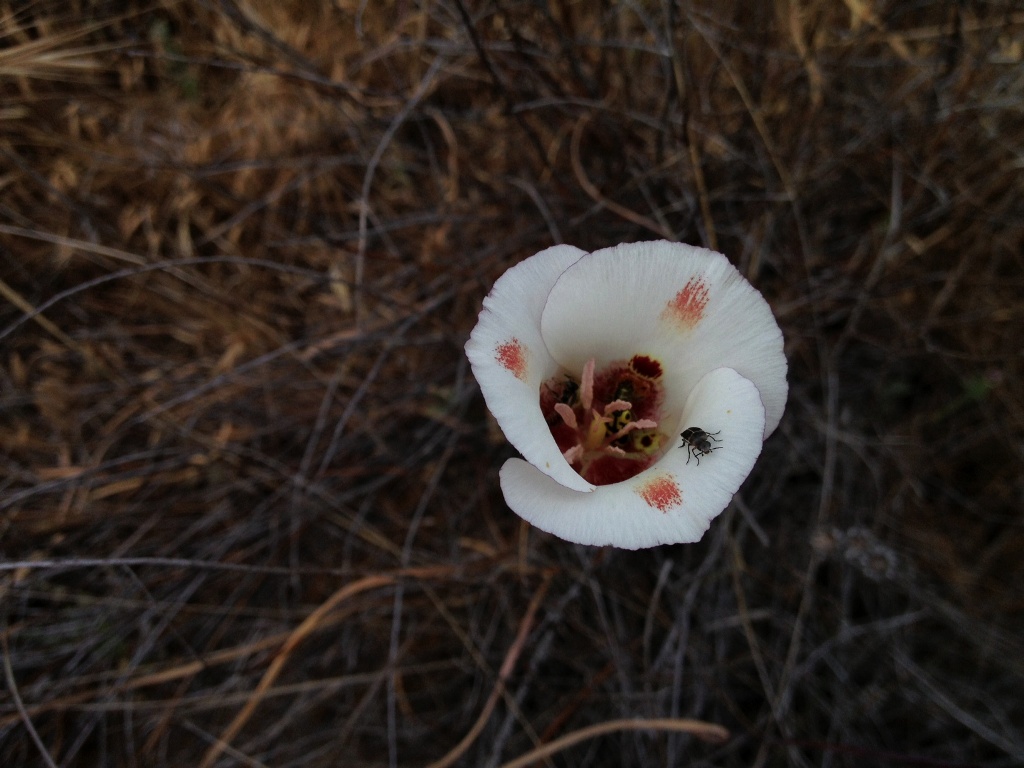
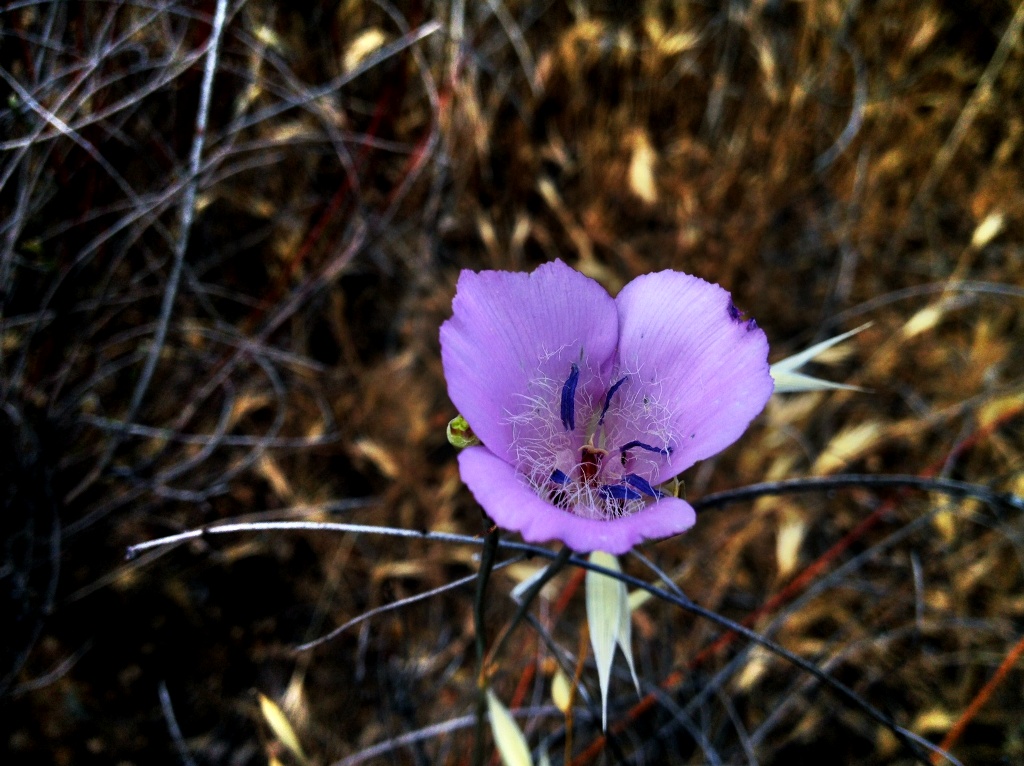
mariposa lily 2Mariposa lilies

mariposa lily

I slog up the mountainside through the crispy dry chaparral, caught between the life shriveling, merciless glare of the sun overhead and the rocky mountainside underfoot radiating its solar energy back at me.

I come upon a scant patch of shade under an overhang of brush. The shadow falls over a small trailside slope of bare soil. I collapse onto the dirt, scrunching myself up against the shadowy foot of the chaparral and trying to escape the sun’s deadly wrath.

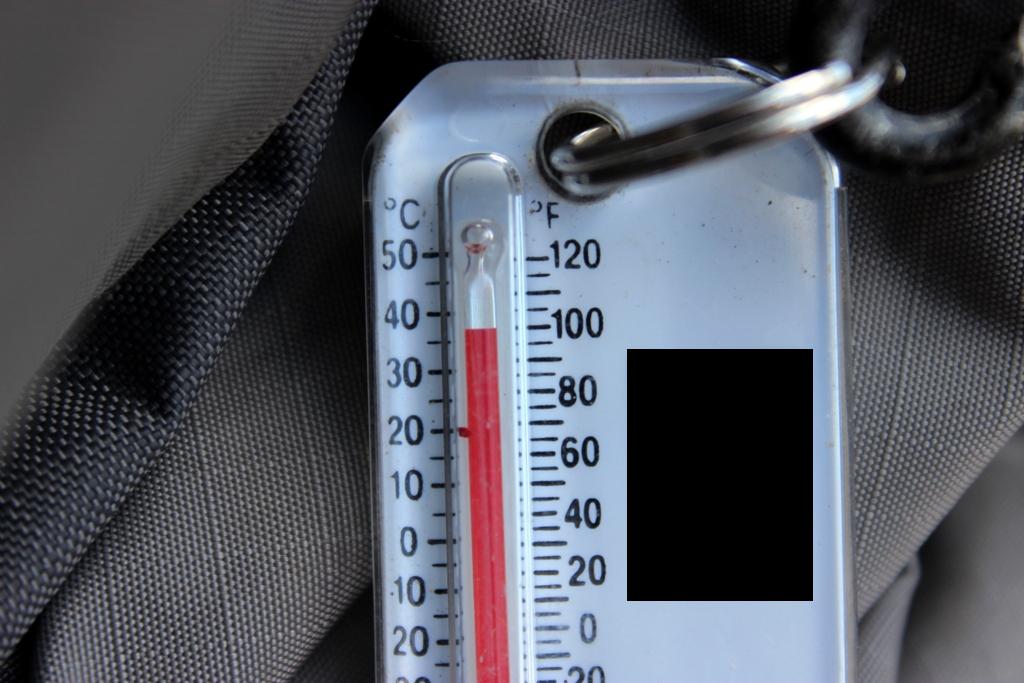
Like a victim cowering from an aggressor, I curl up in the shadow. I’m able to get most of my body out of the sun except my lower legs, which I try to shade by placing my hat on a raised knee like an umbrella. After ten minutes or so I glance at the thermometer on my backpack in the shade: 100 degrees.

San Rafael Wilderness (2)

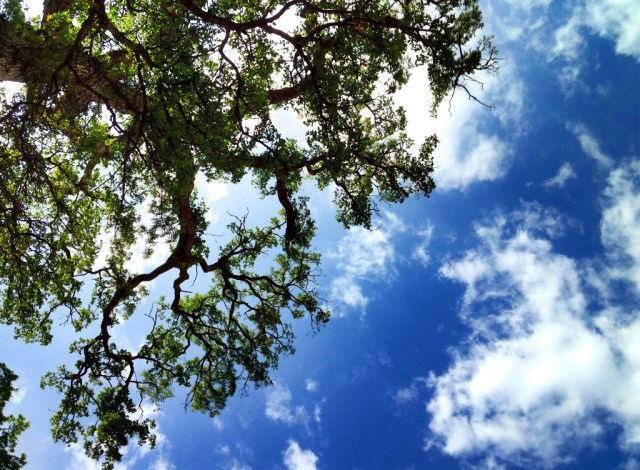
san rafael wilderness oak treeI march over the crest of a chaparral covered hill and down into a lightly wooded grassy glen, eagerly looking forward to another rest in the shade. The odd patch of sloping grass on the brushy mountainside is sparsely dotted with oak trees casting big shadows.

I plop down under a large tree to cool down, hydrate, refuel and allow my fluttering heart to slow down. I’ve only covered a couple of miles, but the short hike thus far has inflicted a disproportionately large degree of strain on my body. I feel beat.

100The forest seems empty and lifeless in the heat and absence of water. The fleeting splash of vibrant green, lent briefly to the drab hills seasonally by the flush of grasses and other small annual plants, has long since withered and faded to neutral earth tones. It will be months before it rains again.

Peering over the parched landscape shimmering in the afternoon heat it does not appear as if life here is thriving. It’s hard to imagine that the plants and animals are doing much more than merely enduring. Of course, this view is based on my own experience. I can’t avoid projecting my own strain and struggle onto other lifeforms.

Compared to months earlier, or years as the case may be, when the creeks and arroyos were flowing and filling the canyons with the sound of rushing water, now there is a heavy silence, a notable sound of absence. The land feels less dynamic and less alive without the roar and trickle of running water.

san rafael wilderness cavesLeaving the grassy hollow behind, I wade through the sparse brush, over the sandy soil and rocks and through wildfire scorched skeletons of chaparral and a few little trees. I’m traversing an uneven expanse cut by several deep, but narrow arroyos.

One of these small drainage chutes, while dry like all the rest, drops over a wall of bedrock and into a lush, muddy pocket surrounded on either side by walls of sandstone. It’s a rare seep. The water oozes out of cracks in the bedrock at the base of what would be a small cascade during wet weather, but now it’s a mire unsuitable for drinking or anything else unless in desperate need.

Nonetheless, I take note. I always find springs and seeps in this semi-arid, usually dry landscape interesting and worthy of attention. Time spent in this forest is too often dominated by the need of water so it always catches my eye when I come across it.

Such a seep as this reminds me of something in a western novel. A lone remote water hole hidden from sight in a rough land. It makes me think of the different animals it may attract during day and night, the peoples of the past, Indians, pioneers and early explorers, that may have relied on it.

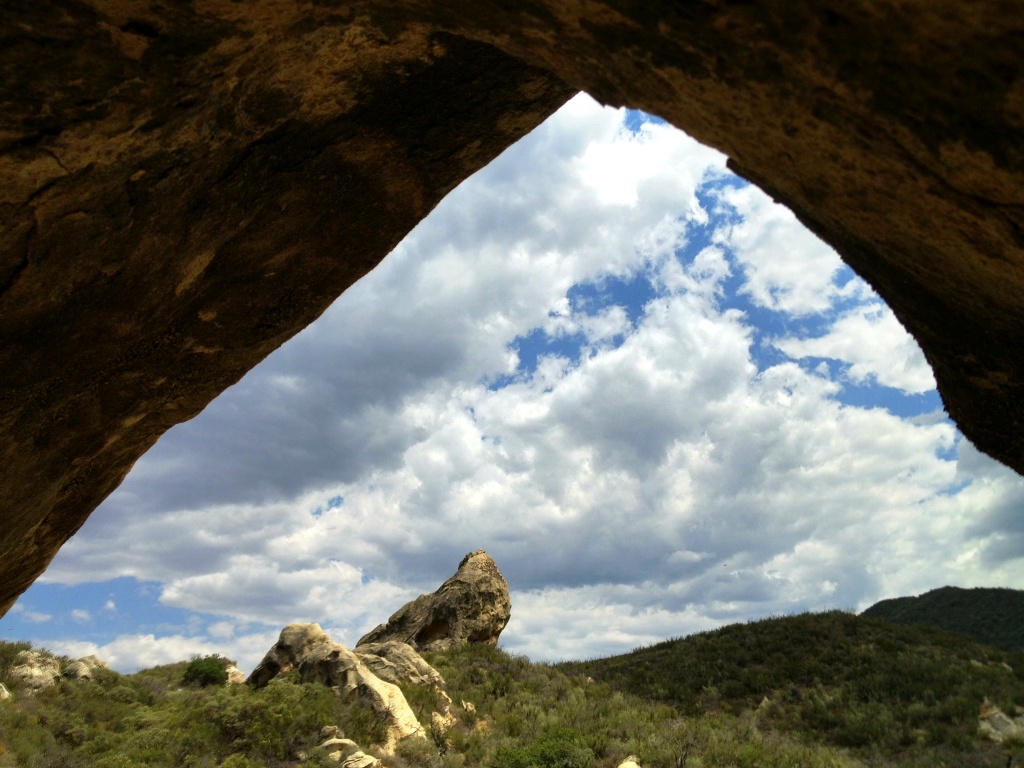
San Rafael Wilderness Los Padres National ForestI find a cave and crawl inside seeking refuge. Laying on my back on the cool sandstone I gaze out over the landscape surveying the desolate, inhospitable backcountry realm. My view of this day is entirely shaped by the sweltering temperature and dryness of the land. It’s a different perspective than when I’ve come here on other milder days.

It’s brutal out there. It can be miserable, painful and deadly. This isn’t a pleasant leisurely stroll. This is a punishing battle. It’s a land where I don’t seem to belong but for fleeting visits. Wilderness, as oh-fficially defined, is a land “where man himself is a visitor who does not remain.” Temporary visitation isn’t a choice, though. It’s an undefiable reality.

When facing nature with only what’s in a backpack, one may hold out for some time, even thrive for a period, but eventually she whittles you down and wears you out, and sends you fleeing from her indefatigable elements like a refugee seeking safe harbor and nourishment.

The 100 degree heat has left me tired, sticky lipped and with a thirst that my bottle of warm water cannot quench. Lying in the cave lost in meandering thought, I feel the heavy creep of weariness settling over me and my eye lids growing heavy.

I succumb. My eyelids fall shut.

And I doze.

Posted in Santa Barbara | Tagged , , , , , , , , , | 4 Comments