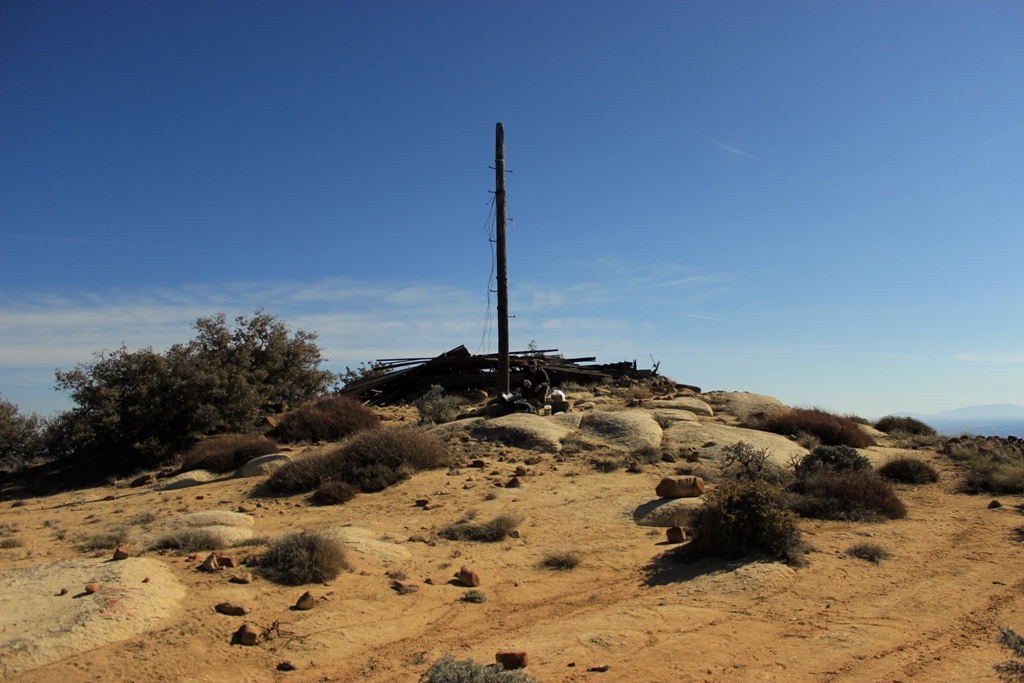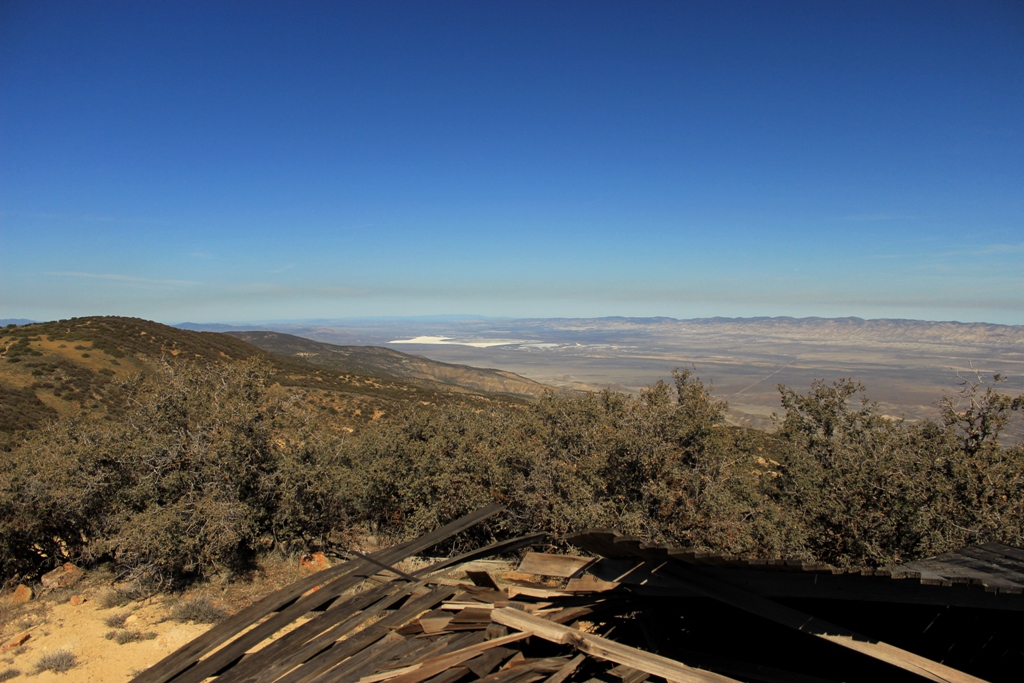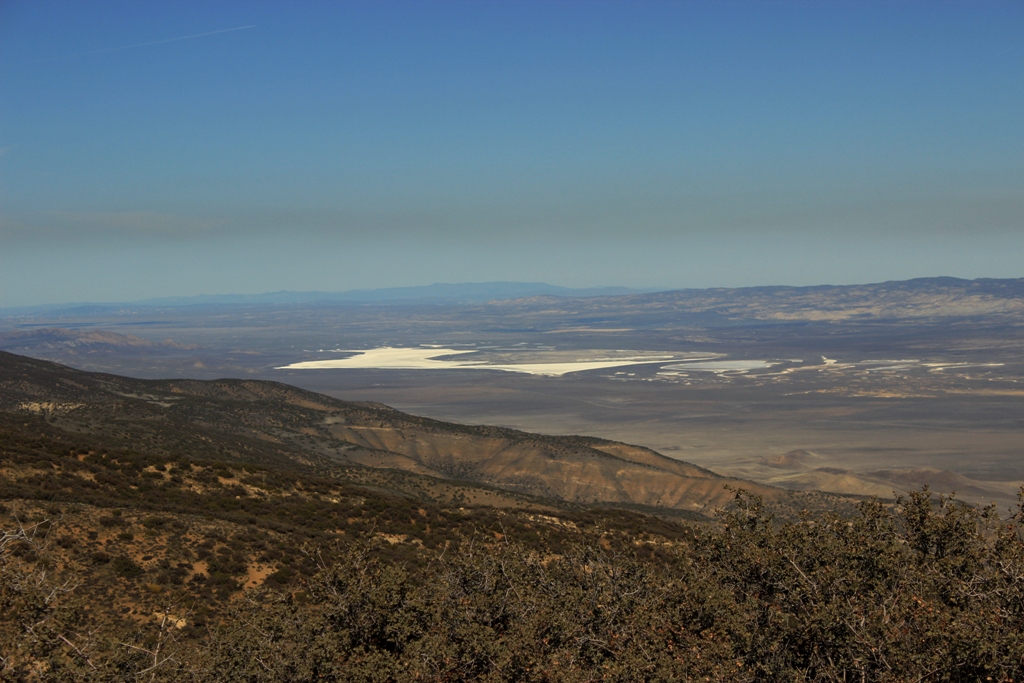
Astray Again on White Mountain

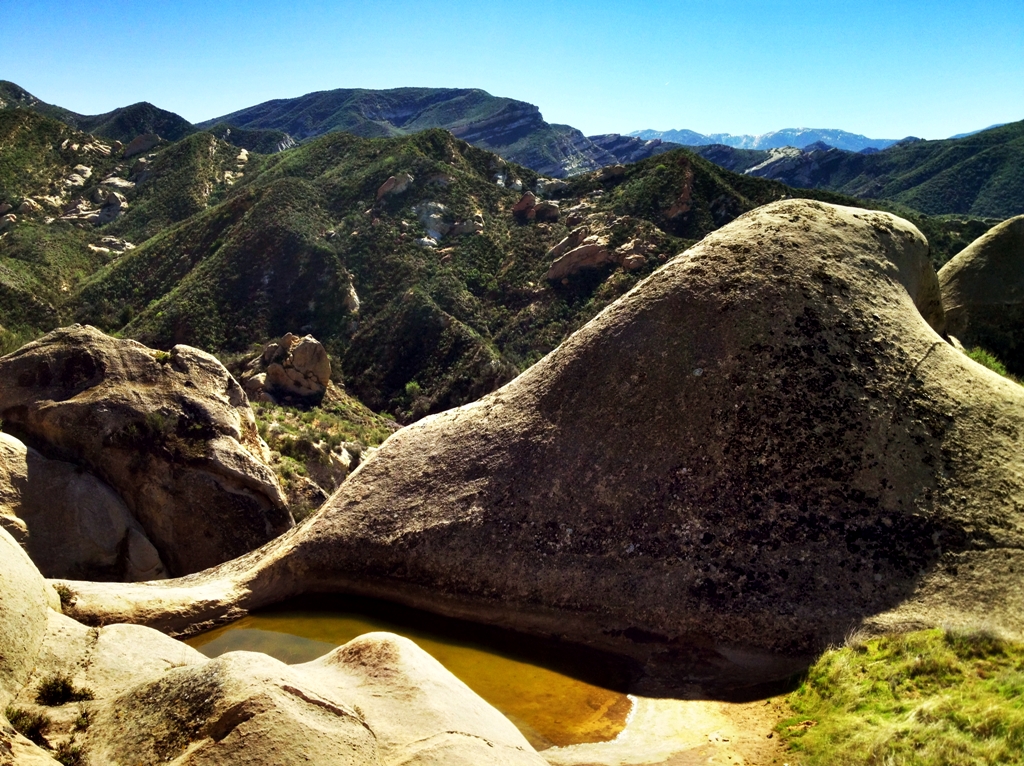
White MountainWhite Mountain on the far right.

It had been almost twenty years since I last made the short hike from Gibraltar Road to White Mountain. A couple of friends and I hiked up to its rocky crags for an afternoon spent exploring the boulders and caves. As the sun was setting we began heading back. By this time we weren’t seeing or thinking too clearly for one reason and another and we soon lost the trail which disappeared before us. We began combing the area in the fading light searching for the route off the mountain but nobody could find it. Then finally, while off alone pushing my way through the brush for some time, I located the trail and was able to lead the crew back to our vehicle.

On a recent Wednesday afternoon I parked on Gibraltar and took the same unmarked route up a small ravine that leads to the east flank of White Mountain. Off and on throughout the few hours I was out I thought of my last adventure on the mountain and how we barely made it off. It was due to luck brought about by unflagging effort that I had finally crossed over the trail and made it back to the car. It was an amusing experience to think back on as I climbed through the chaparral and manzanita now greatly thinned from recent wildfire and still regrowing. Little did I know I was about to repeat the very mishap that I underwent some 20 years earlier.

White Mountain White Mountain

I arrive at the rocky crags and sparse pine trees and begin a leisurely look around, scrambling up and down gritty sandstone faces, crawling through tunnels and caves and climbing atop some of the more prominent monoliths. I find a sizable rock riddled with little caves that weave through its innards like mole tunnels, and that has a half bowl-like alcove facing due west looking into the sun, which is by now low in the sky but still above the horizon. I find a comfortable spot and lay back against the warm stone on this cool winter afternoon, pull some snacks from my pack and relax taking in the view of the rocks and pines and the Pacific Ocean thousands of feet below.

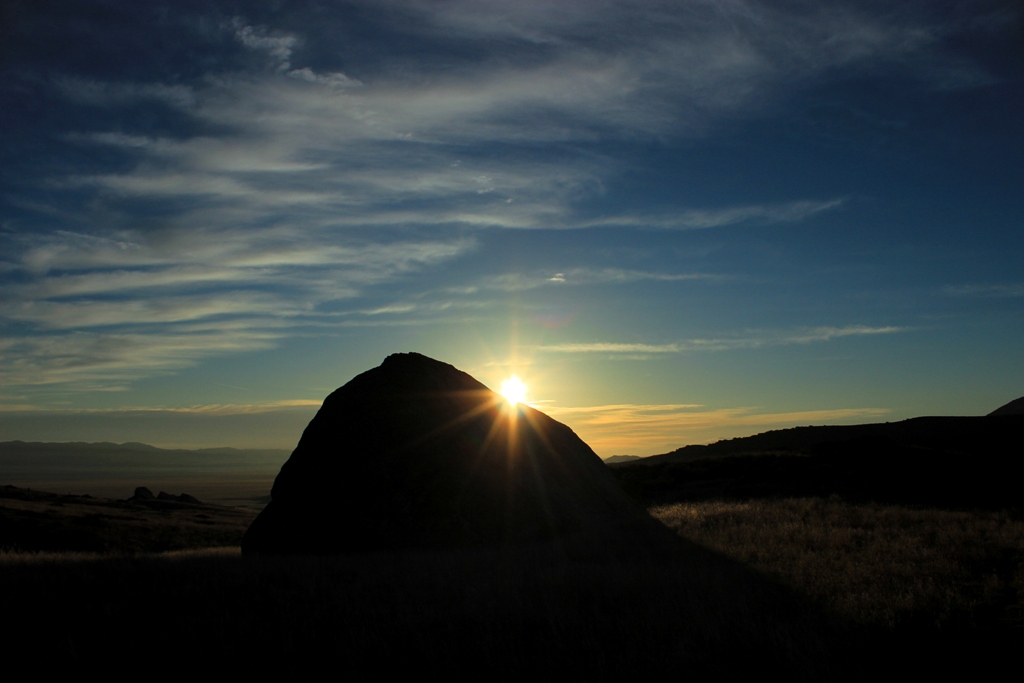
I don’t get much sleep these days. It comes in bits and pieces and I’m lucky if I get four hours of intermittent sleep a night. Up on the mountain, one minute I’m lounging on the rock nibbling snacks and the next thing I know I waken. Upon opening my eyes I’m startled and in my sleep fogged mind I’m confused to see how dark and shadowy my surroundings are. A second later I realize that’s because the sun is actually sitting half below the horizon about to sink into the sea. I frantically grab my gear together, sling my pack on and begin charging over the rocks hopping boulders back to the trail.

Despite my concern, the sunset over the coast is too beautiful to ignore so I turn and snap a couple of shots with my iPhone. I know the light will begin fading rapidly and I need to move quickly, but I walk only a bit further before stopping for more photos. As I head onward I’m relieved to find the faint path through the fire regrowth. Just follow it back, simple as it gets, right? But less than a minute later a bad feeling ripples through me. I anticipate the trail disappearing into the darkness of twilight. And sure enough I’m comfortably walking the path one second and in another few ticks of the clock I lose it.

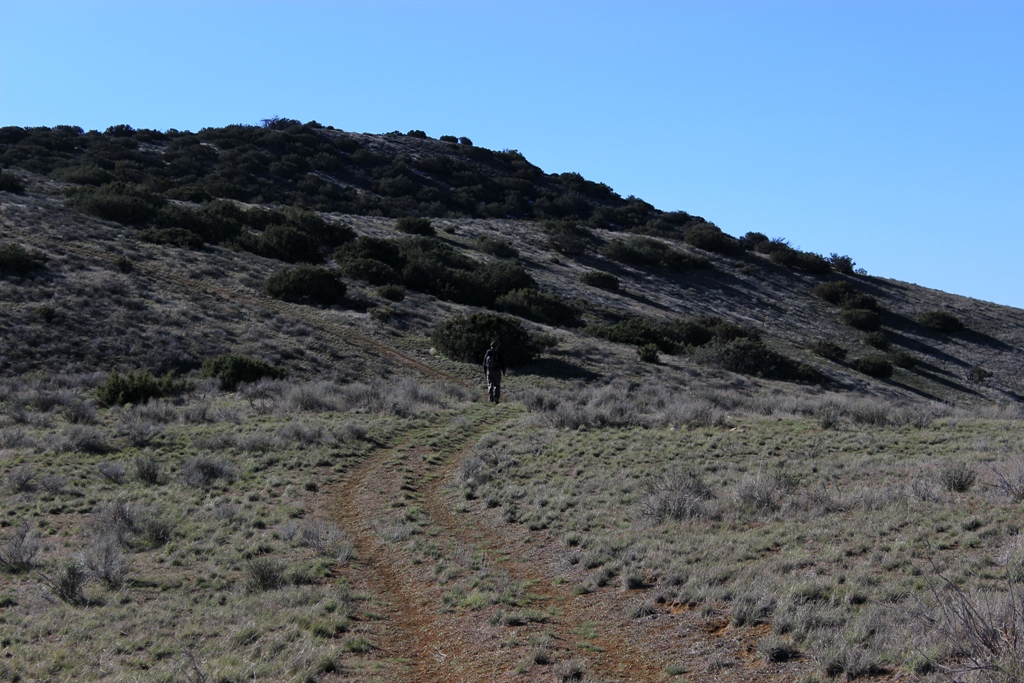
white mountain This is about as wide open and obvious as the trail gets in one of the more densely grown areas. Other sections have much less brush and more open soil, which makes this lesser walked unmarked use trail no easier to find in fading light.

I double back and find the path and reorient myself. But I quickly lose the trail where the bushes sprout from the ground in spotty tufts with bare soil surrounding each clump of brush. The trail is indistinguishable from the myriad natural paths formed by the open soil between all the brush clumps, which grow several feet apart. I stop and look over the land before me trying to decide where the trail would most likely lead. It’s getting dark quickly and I need to find my way posthaste. I try to pick out a path but it’s a futile attempt. It’s already too dark to see far in front of me. I carry on at a fast walk looking for any sign of the trail, but nothing shows so I continue in the general direction I feel is the correct way.

I’m no longer concerned. I’m somewhere beyond that. I know maintaining a calm, collect mental state is essential, and I’m not panicking, but I’m thinking nervously about the possibility of not being able to locate the trail before twilight ends and night swallows the land in blackness. I’m starting to sweat with beads percolating up on my brow. I’m wandering in a meander around a sloping hillside searching in vain. I reason that I can’t afford to waste any more minutes searching in circles for the path and so start pushing through the knee-high, sparsely growing brush down the ridgeline that I’m confident I came up. I hope to pass over the trail eventually.

White Mountain

I scamper up over a rock slab and spot a four inch thick chaparral limb long ago sawed in half. I’m thrilled to see the sign and keep heading down slope, but I end up in a wall of brush. I turn right and push my way through the area of least resistance for twenty yards before accepting that I’m going the wrong way. I head back, quickly but deliberately, a slight jog to the sawed limb, and I start again down slope following what I think may be the trail. But once more I end in the same wall of brush.

Twilight is fading as I run back up the semi-clear route I twice followed to no avail and relocate the sawed limb. This time I head uphill and it feels like the right way. It’s open enough to walk without too much resistance. This could be it. But it quickly ends and once more I’m mentally groping around in the thickening darkness.

For the next several minutes I circle around but find no sign of a route. I try this way, that way, this way and that way again. I end up in the same couple of dead ends so I stop to consider my options. I have to make a choice and I feel it will be decisive. It will either lead me out or doom me to fumbling through the brush in utter darkness or worse, huddling through a long cold night. Do I search for the trail? Barge through the brush down the ridge to where the trail might be cutting north back down to the road? Or bust my way through the dense chaparral in front of me toward where I believe the road lies?

This is ridiculous. Absurd! My mind sets aside the search and my thoughts turn to self-denunciation. I can see the city lights. I can see cars with their headlights on driving up Gibraltar. But I’m effectively lost. Walled in by chaparral. I know where I need to go, but I can’t get there because I lost the thin trail through the impenetrable bramble. This is just pathetic! ******* idiot!

I pull my cell phone from my pocket and see that I have reception, but only 14% of my battery remaining. I turn it off just in case I am forced to use it at 3:30 in the morning when I’m shivering my way toward hypothermia in the winter night with only a short sleeved t-shirt on and thin nylon pants. Even then I don’t know that I’d call. I really don’t want to suffer through a long bitter night on the mountain, but I’m a big believer that what one gets themselves into they must, if at all possible, get themselves out of without relying on help from others. Self-reliance not dependence. Anything but dependence. I despise dependence with pathological contempt.

I’ve mentioned elsewhere on this blog that “I’d rather spend a cold miserable night lost in the woods and have another try at finding my way out next morning, rather than call for help. I’d die sooner from embarrassment than exposure.” And this case on White Mountain is no different. There was no way in hell I was going to call for help! If I couldn’t find the second, alternative trail out that leads in from the north, then I’d call my wife and let her know I had some dues to pay for my stupidity and that I’d see her tomorrow morning some time. Maybe I’d call a friend to come up the trail and give a few shouts to guide me back. Worse case, I’d find a cave in the rocks to hunker down in, start a small fire and shiver my way through the night.

Of my options I’m pondering which choice to make. Only a slight, faint glow of sunlight remains and I only have time for one option. And so I make the call. (To be continued. . .)

white mountain

Posted in Santa Barbara County | Tagged , , , , , , , , , , , | 14 Comments

California Campin’ Surf Shot

surf

Posted in Ventura County | Tagged , , , , , , | 2 Comments

Alice Keck Park Park

Alice Keck Park Memorial Garden

I went to Starr King preschool in downtown Santa Barbara, which is across the street from Alice Keck Park Memorial Gardens shown in the photo above. As a little kid I came to know the public ornamental gardens as Alice Keck Park. I continued to know the garden park by that name well into my adult years. Then one day I finally came to understand that the lady after which the public gardens are named had the last name of Park. So, it’s Alice Keck Park Park. . .

Posted in Santa Barbara | Tagged , , , , , , , , | 4 Comments

Cachuma Mountain, Los Padres National Forest

View from Cachuma Mountain The view looking at Hurricane Deck from Cachuma Mountain on Monday afternoon.

Cachuma cachuma Looking east from the slope of Cachuma Mountain.

cachuma The, or a, route up Cachuma Mountain.

cachuma A butterfly decided to fly through the frame.

cachuma It kept circling around and landing near me.

cachuma A panoramic of Manzana Creek drainage.

cachuma USGS summit benchmark.

cachumacachuma Cachuma Mountain from across Santa Ynez Valley.

Posted in Santa Barbara County | Tagged , , , , , , , , , | 1 Comment

Dragon’s Back Ridge, Carrizo Plain

Carrizo Crossing Coiled barbwire on Carrizo Plain

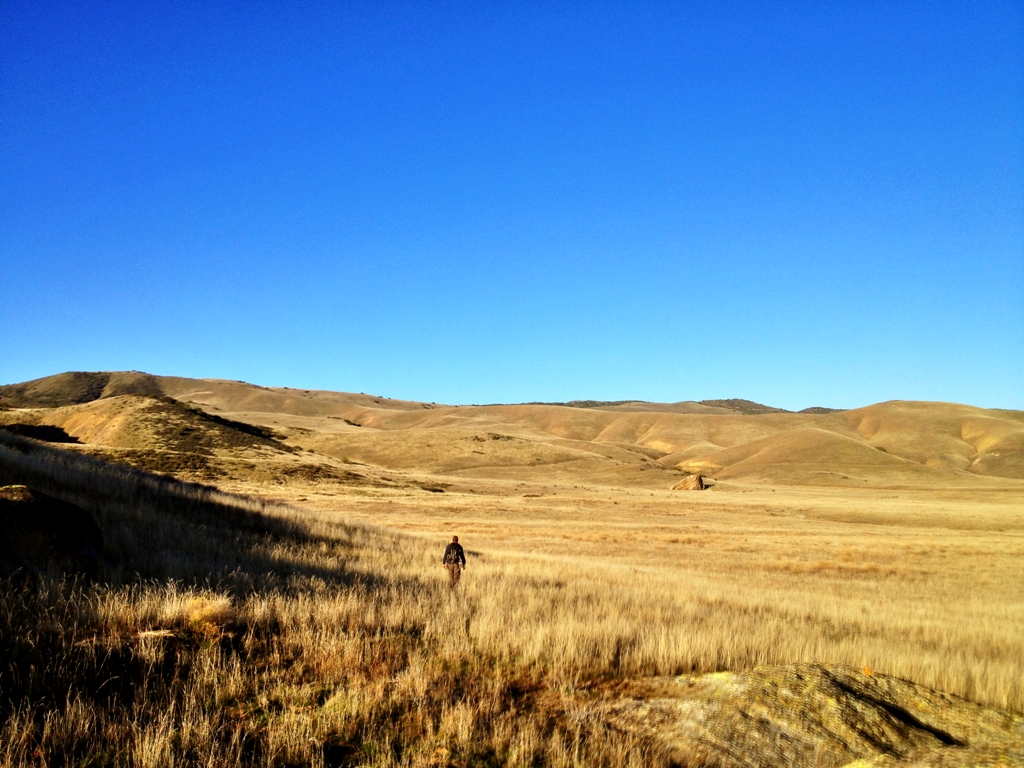
I drove out to the Carrizo Plain National Monument after a few days of intermittent rain showers. It is a semi-arid grassland of several hundred thousand acres that remains today, for the most part, as it was hundreds if not thousands of years ago. That alone, in the nation’s most populace state of California, is perhaps a remarkable enough trait in itself to warrant a visit by backcountry gadabouts, those who appreciate the simple pleasure of roaming freely within vast, open natural spaces and unspoiled landscapes. The nearby San Joaquin Valley, by contrast, has been carved up into a patchwork of farm fields, ranches and subdivisions.

I go to the Carrizo Plain when I feel like escaping the artificial metropolitan bubble of humanity and its hurried masses, but don’t feel much like hiking. I enjoy the plain’s winter ambiance, after seasonal rains dampen the dessicated terrain and when the temperatures are cool and lumpy gray clouds float overhead. It is a place I cherish for its serenity and desolation and its palpable silence. At first glance, upon my initial visit years ago, it seemed like a wasteland of little interest, but over the last decade I have developed a rather keen appreciation of its many subtle and dramatic characteristics and the natural and anthropological wonders found there.

cow boneSun-bleached bone on the plain.

The San Andreas Fault runs through the eastern side of the plain forming the appropriately named Temblor Range. It is here that on January 9, 1857 the 7.9 magnitude Fort Tejon earthquake resulted in a 30 foot offset in Wallace Creek, which can be seen today in the arroyo’s dramatic z-shaped meandering course.

While the northern side of the Temblor Range is sparsely dotted with juniper, the southern face is barren due to the lack of rain. The result is a starkly beautiful landscape with sections of badland terrain. Perhaps the most prominent example of this barren landscape is found in Dragon’s Back Ridge, which has formed as a result of the tremendous pressure created along the San Andreas Fault, where the Pacific Plate and North American Plate slide passed each other.

On this most recent trip I took a walk across the width of the plain and on up to the top of the Dragon’s Back. I had hoped to see some pronghorn antelope or perhaps a San Joaquin Kit fox, but, alas, no such luck. I saw nothing larger than a single jackrabbit speedily bounding away from me. I passed by several empty vernal pools in this relatively dry year, but not much else.

I passed over a couple of undulations in the otherwise flat plain, and as I proceeded farther into the depths of the plain, I turned regularly to look back and note my location relative the distant Caliente Range, which defines the southern flank of the Carrizo Plain, and for some time my truck was hidden from sight.

Later, while on top of the Dragon’s Back, my truck was barely visible and only when the light hit the metal and glass just right to cast a reflection. My vehicle looked puny, a mere speck, against the vastness of the grassy plain. It was not easily seen, which despite carefully surveying the landscape on my way to the ridge to avoid becoming lost, made it easy to lose my place of return.

Of course, use of a GPS would have rendered such concerns irrelevant, but I prefer not to rely too heavily on such technological crutches. They are convenient and handy, but no substitute for real skills. And I also find it more entertaining and satisfying finding my own way rather than having my eyes glued to a machine.

DragonsApproaching Dragon’s Back Ridge.

Dragon’s Back is comprised of a long line of steep gullies and pointy ridges along it’s southern slope. These ridge lines are steep sided and the tops typically span roughly some three to six feet across and form a sort of ramp that can be walked up and down. Animal trails run along each of these pointy ridges or spines and in certain locations here and there atop the main ridge lie piles of animal poop like that of coyotes or foxes. It is clearly an active location though I saw no life. The top of Dragon’s offers commanding views of the Carrizo Plain.

In late afternoon dark clouds condensed over the ridge casting a deep shadow over the plain. My truck no longer reflected sunlight and it disappeared from sight. As I headed down the ridge back to the plain I took a bearing on a prominent feature of the distant Caliente Range, which corresponded to the location of my truck, and headed toward it hoping not to stray too far from where I needed to go.

As I made the final approach to where I had parked, a hole formed in the dark cloud blanket overhead and a bright shaft of sunlight shown from above on my truck like a giant spotlight. I turned for a last look a Dragon’s Back and the golden light of late afternoon illuminated the ridge against a blackened backdrop of thick cloud cover.

Dragons Back Walking up one of the spines on the ridge.DragonsLooking west from the top of Dragon’s Back.Dragon's BackLooking east at the ridge I walked down to get back to the plain.

Dragons raptors nestA raptors nest in what might be the only tree on the Carrizo Plain, Dragon’s Back Ridge in the background.Dragons Dragon’s Back in the golden glow of late afternoon sunlight.

Red Tail hawkA Redtailed hawk I flushed off the ground when checking nearby Soda Lake prior to visiting Dragon’s Back.

Dragons

Related Posts:

The Carrizo Experience: Ten Hours on the Plain I: Ruminants on the Range.
The Carrizo Experience: Ten Hours on the Plain II: The Bedrock Mortars of Selby Rocks.
The Carrizo Experience: Ten Hours on the Plain III: Pictographs of the Plain
The Carrizo Experience: Ten Hours on the Plain IV: Soda Lake
Wallace Creek Offset at the San Andreas Fault
Cave’s Eye View on the Carrizo Plain
Summertime Soda Lake
Soda Lake Winter Reflections
Elkhorn Plain
Selby Rocks
Carrizo Plain Wildflowers
Datura Bloom on the Carrizo
Carrizo Tom

Posted in San Luis Obispo County | Tagged , , , , , , , , | 11 Comments