
This post is the third entry in a series of four:
First: Gladiator Games of Bulls and Bears: A California Blood Sport (1800s)
Second: Gladiator Games of Bulls and Bears: Recollections of Jacinto Damien Reyes (1880)
Fourth: Gladiator Games of Bulls and Bears: Sport of Roping Grizzlies (1911)
 Lassoing a grizzly with riatas.
“. . .and not again in all the world’s turning will there be terrains so wild and barbarous to try whether the stuff of creation may be shaped to man’s will or whether his own heart is another kind of clay.”
—Cormac McCarthy, Blood Meridian (1985)
The New York Tribune published the following story on July 17, 1904. It relates tales of the “two most famous grizzly fighting dons in Southern California,” and describes how at the Franciscan Old Mission “bulls fought bears in Santa Barbara for the amusement of the countryside.” Ojai and the Santa Ynez Valley are also mentioned. Included are two photos originally published with the story, as well as several illustrations that were published by other newspapers.

 Photos originally published with the newspaper story in 1904, which show a grizzly bear crossing a stream in the Rocky Mountains.
In the mountains of the West, the vast and tumbled Rockies and the jagged, far reaching Sierras, the grizzly has become the particular desire of the most modern hunters, the men who sally forth with rapid cameras instead of repeating express rifles, who press a high speed shutter instead of a hair trigger. It takes daring nerve to face one of these fierce, fight loving creatures with nothing more death dealing than a camera, and the photographic hunters tell of many narrow escapes.
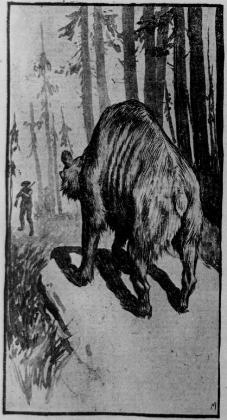
The San Francisco Call, January 20, 1901
They are not the first grizzly hunters, however, to scorn the rifle in hunting the huge bears. One of the camera hunters found this out a few weeks ago when he settled down for a rest by the Pacific in the Santa Barbara Valley after a successful, though bloodless, campaign through the California mountains in which he secured a number of fine grizzly negatives. It was not long before the old Spanish dons, who form the “oldest settler” portion of the population, heard of him, and came around to see his “brave pictures,” as they called them.
No hunters ever knew the grizzly more intimately than these men of mixed Spanish and Mexican blood. They hunted with riata and bowie knife, scorning the safety of the rifle as do the camera hunters of to-day. But the game they played was more dangerous, for they had to be in at the death, while with the man of dry plates and films there is no such end. The excitement of the personal conflict more then repaid the Spaniards for the risks they ran, and they ran many, for in those golden says, in the Ojai and Santa Ynez valleys, there was a grizzly for every acorn bearing wild oak, and some of them weighed more than a ton, if the old dons can be believed.
The sight of the grizzly photographs was enough to make the old dons fight over their battles, showing a scar for nearly every one. The photographer found many of them in the crumbling adobe houses along the coast. Their hair is white, their steps tottering, their eyes half dim, and their speech growing thick, but they remember most vividly the battles of their youth.
The two most famous grizzly fighting dons in Southern California died not long ago within a few months of each other. They were Carlos Rodriguez and Emedi Ortega, neighbors and rivals from boyhood. Different figures are given of the number of grizzly victims each man claimed, and the question who was the more skillful and daring fighter is often discussed.
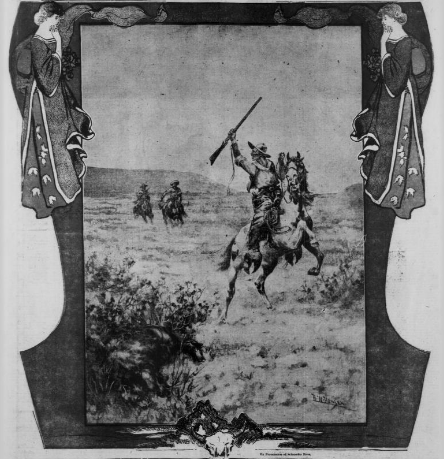
“The picture above portrays a lively bear hunt. Mr. Grizzly had been carrying away young colts, much to the chagrin of the ranchers, so they held an indignation meeting and swore a mighty oath to teach him a lesson for intruding upon their privacy. In twos and threes they rode forth to greet his Majesty, and when he welcomed them with a prolong stare their ire knew no bounds, and shots went whizzing through the air. To the first cowboy belonged the mortal wound, and as he galloped along he waved his pistol in the air and shouted lustily to his companions that the day’s sport was finished.”
—San Francisco Call, June 26, 1904
Carlos Rodriguez Rescues Bear Attack Victim
One of the most thrilling encounters in which Don Carlos figured took place on a mesa in the Santa Ynez mountains. He was herding a big bunch of cattle there, with the help of half a dozen buckayros. One afternoon they located a grizzly, and ran him into a field of chamiso brush which covered the center of the mountain flat.
All of the outfit were well mounted and eager for a bear roping contest, which was their favorite diversion. No amount of yelling would persuade the grizzly to leave cover, and one of the buckayros, a daredevil Mexican, offered to go in and drive him out. He dismounted and entered the brush, while the others gathered around, riatas in hand, ready to rope in the bear the moment he appeared.
The Mexican had not gone twenty yards into the chamiso before his friends heard a tremendous growling and the rush of some heavy body through the brush. The next moment the Mexican shot out from the middle of the patch as though sent from a cannon. He was thrown fully six feet above the top of the thick brush, and in falling back spread himself out in such a way that the boughs supported him.
The grizzly, not understanding the sudden disappearance of his enemy, was rushing about thoroughly angered. It was only a question of a moment or two until his rushing tactics would shake the man to the ground, which would have been the end.
Don Carlos, putting spurs to his horse, dashed into the thicket, hoping to attract to himself the attention of the angry grizzly. His path took him under the bush on which the buckayro was supported, and, reaching up, the don seized him by the legs.
At the same moment the bear made a rush for the horse. With great difficulty Don Carlos retained his hold on the unconscious man, as the horse tore through the brush with the bear in close pursuit. Both men and beast were badly bruised and torn with the brush. The grizzly followed them into the open, where he was quickly entangled in the riatas of the others. On examining the man to whom had come the catapult experience, they found that the bear had all but scalped him with a single blow. For a long time the fellow was not right in his head, but he finally recovered.
 Los Angeles Herald, September 1, 1907
Emedi Ortega: Master of the Riata
Emedi Ortega was a most powerfully built man, more than six feet in height, and of extraordinary strength and courage. For many years his records for distance and accuracy with the riata were equaled by no one.
One day at San Francisco a horseman scoffed at Ortega’s boasted skill with the riata.
“I have a hundred horses in this corral,” he said. “I’ll bet you can’t catch fifty out of the hundred when we drive them through the gate one at a time.”
“I’ll catch ninety out of the one hundred, or give you $100,” declared Ortega.
“And I’ll give you the bunch if you can do it,” offered the horseman.
Ortega took up his stand near the gate of the corral, and one at a time the wild horses were cut out of the bunch and made a frantic dash for supposed freedom. With hardly any effort he tossed his riata and caught each horse by the forelegs. When he had caught sixty-seven, missing only one, the horseman called a halt.
“Take the bunch,” he said. “I know when I’m beaten.”
It was the skill with the riata that made Ortega’s reputation as a grizzly hunter. He did not hesitate to tackle the largest grizzly singlehanded, and generally managed to strangle it to death. Sometimes he did it with a single riata, but more often he managed two ropes from the same saddle. It was necessary to keep the bear from settling back on his haunches. If the grizzly once gained that position it would seize the rope and draw the strongest horse toward it, making it necessary to cut the riata and begin the battle over again.
They tell of one monster grizzly in the Ojai Valley which once drew three horses toward its embrace, holding out against their united struggles for several minutes. The strain was too great, however, for him to keep his footing long. When the Californians pulled him off his haunches he was at their mercy.
Most horses have a wholesome fear of grizzlies, but Don Carlos once owned a great bay animal who knew no fear, and entered into the hunt with as much zest as his master. El Capitan, for so the don called him, has as keen a scent for grizzly as any bear hound, and could be depended on to give notice if a bear was anywhere near the trail. Even when a roped bear was savagely drawing in the riata attached to his saddle El Capitan knew no fear, and was ready to follow the slightest suggestion the bridle conveyed.
Some of the old-time grizzlies were possessed of remarkable speed, and it took a good horse to keep out of their reach in a short distance race. Ortega was overtaken once by a maddened grizzly, which stopped his horse by seizing its tail. The beast was reaching for the man when a buckayro rode up and struck him over the head with a riata. The bear turned to pursue the new enemy and overtook him in turn. Ortega was on hand to prevent a tragedy, and after a most exciting game of cross tag they succeeded in roping the beast.

The San Francisco Call, March 26, 1910
Escape from a Grizzly
The record for a long distance race for life from a grizzly is held by the wife of a Mexican rancher near Santa Ynez. One Sunday in the early 40’s she set out from the ranch to attend services at the Franciscan mission in Santa Barbara. Riding behind her on the same horse was he twelve-year-old daughter.
The way was long and so dusty that she could not wear her fine clothes, but carried them in neat bundles tied to the saddle. Her best hat, covered with flowers, and a basket of food added to the burden.
They had come a considerable distance and the horse was already tired when they aroused a monster she bear which was playing with her yearling cubs at the side of the trail. The bear started after them, covering the ground with great leaps and bounds and growling savagely. The horse was frightened into its best speed and for a time held its own. Then the bear began to gain.
The basket of food was sacrificed first, and the bear stopped long enough to toss the basket about and sniff at the food. She soon made up what the horse had gained, and the daughter’s cries of alarm broke our afresh. It was not without a struggle that the mother cut loose her best hat, but the hoarse breathing of the beast just behind moved her to it.
Again the grizzly stopped to toss the flowered finery about and paw it into the dust. The horse was laboring heavily by now, and sooner than before they were overtaken. Piece by piece the frightened woman paid out her best clothes and prayed all the while to the saint of the mountains to save them.
Every bundle had been sacrificed, and she had all but given up hope when a bend in the trail brought them in sight of the camp of some Mexican cowmen, who went to the rescue. The bear had covered four miles in the pursuit, but was fresh enough to take to the brush and elude the cowmen.

Bull and Bear Fights
It was not more than thirty-five years ago that bulls fought bears in Santa Barbara for the amusement of the countryside. Every old Mexican remembers some particular contest in all its details, and delights in telling about it. “The best fight I remember,” said one, whose adobe is in the shelter of Ortega Hill, near the City of Salinas, “was in the early 40’s in honor of the visit of a great Mexican general to Santa Barbara. The Indians brought in a monster grizzly, the largest I have ever seen, and the commandant provided a wild bull, a great red fellow with fine horns and the temper of a fiend. This bull was the idol of the people. He had amused them for a long time, never failing to kill the bears he was pitted against. He knew his business, this red bull. If one death thrust did not reach home, he had a new one for the next rush.
“When they brought him up to the old Franciscan mission the morning of this gala day, every one shouted for the bull. He would surely win, and the bear, who was growling and spitting and making desperate efforts to loosen the ropes that bound him, was as good as dead already. Only the Indian, who had lassoed the bear and with considerable assistance brought him to town, was willing to bet on the bear. He had nothing but a cayuse and his saddle, and he could have bet that a thousand times over.
“We made a great ring in front of the mission, where there was a level place, a great ring of men, women and children, and here and there a padre. They brought in the bull with one rope tied to his foreleg. The bear was loosened, all but one rope fastened to one of his hind paws. This was to keep him from running away when the red bull began to gore him.
“As the bull charged with a mighty bellow, we held our breath and waited. The grizzly was waiting, too, reared up on his haunches, looking as big as an adobe hut.
“They came together, but the bull’s horns did not even ruffle the fur on the bear’s chest. Too quickly had the bear seized the massive head and held it to the ground. For a moment they swayed there, neither giving nor gaining an inch. As the peons ran up to the separate them, the bear struck out quickly with one of his huge paws and tore a gash in the bull’s neck.
“The red fellow, with a growing anger that was terrible, drew back for a second charge. It was as useless as the first. The bear seized and stopped him, holding his head to the ground. Again the peons pulled them apart.
“It was as a prizefight with regular rounds, this fight in honor of the great general. On the fourth or fifth charge the bull gored the bear but the wound did not seem to disable him greatly. In the seventh—suppose we call it round—the bear dodged the charge and tore the bull’s shoulder terribly. That bear knew his business, too.
“So the fight went until the bull had charged fifteen, twenty, twenty-one times. Then the commandant put an end to it. It was plain that the bear was going to get the better of the fight, that he would kill the red bull, and that the commandant did not care to afford. It was indeed a battle royal, and I, for one, was sorry when they tossed a lasso around the bear’s neck and slowly strangled him to death.

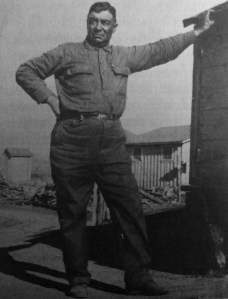 Born in 1871, J.D. Reyes lived most of his life in Ventura County’s upper Cuyama River valley. He spent over 30 years working as a US Forest Service ranger patrolling the Cuyama District of what was then known as the Santa Barbara National Forest.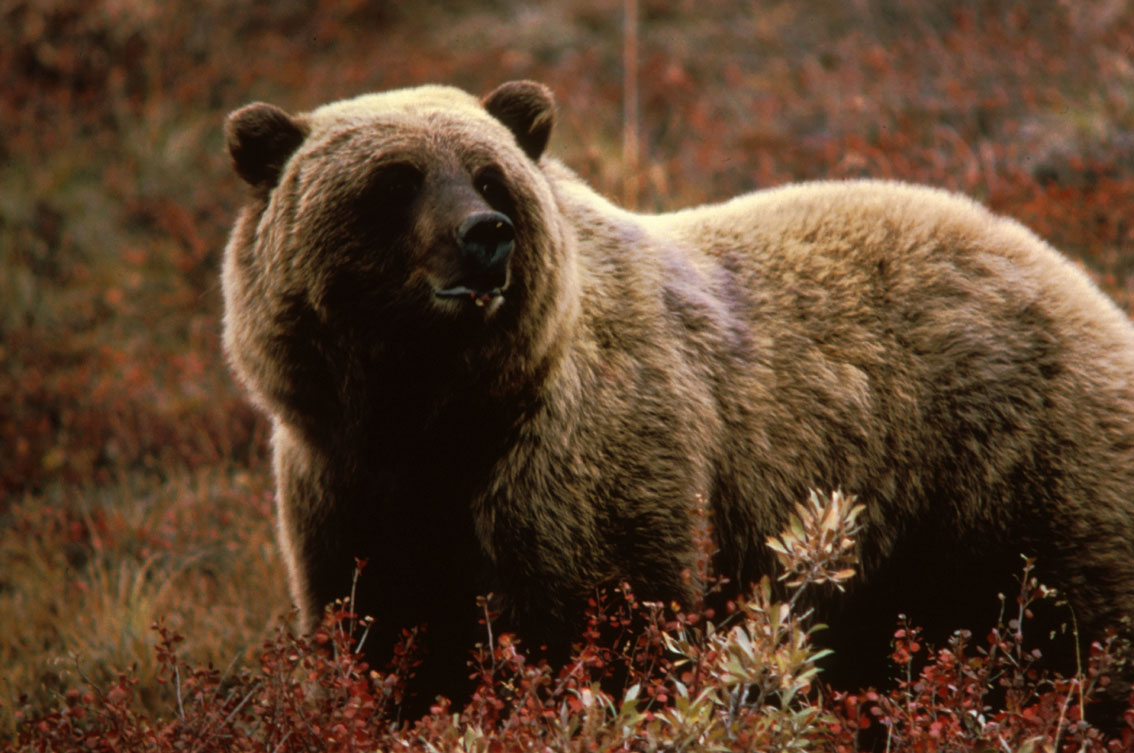











 Jack Elliott's Santa Barbara Adventure