Condor in a Cage

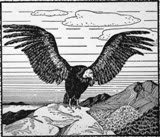
A California condor at the Santa Barbara Zoo.

The California condor species had endured the elements and rigors of life in nature’s arena of competition and thrived for some 11,000 years. By 1982, due to a variety of human caused circumstances, the condor population had been decimated and only 22 birds were known to be alive. Three years later a mere single breeding pair was all that was known to exist in the wild for the entire species. Extinction loomed.

As of 2010, after an aggressive captive breeding program and reintroduction to their native range, there exists 370 California condors 181 of which are flying free in the wild. Yet, though free, those condors in the wild are still very much hemmed in by humanity and continue to face many of the same existential threats that nearly ended their species forever.

Timeline of Tragedy

1890Wild California condor population estimated at 600.
1940Wild population estimate drops to 100. Species disappears in Mexico.
1960No more than 60 California condors estimated to exist in the world.
1967California condor listed as an endangered species under the precursor to today’s Endangered Species Act.
1975To address the species’ decline, the California Condor Recovery Program is established, led by the U.S. Fish and Wildlife Service and the Audubon Society, and also including the U.S. Forest Service, the San Diego and Los Angeles zoos, and the California Department of Fish and Game.
1982Only 22 California condors known to exist. Conservationists begin to take condor chicks from the wild for captive rearing.
1983Conservationists begin to remove eggs from the wild and hatch them in captivity. Chicks born in captivity are raised in boxes that simulate a cave environment and are fed by conservationists using condor hand puppets.
1985Six wild condors disappear, leaving a single breeding pair in existence in the wild for the entire species. At this desperate point, the Fish and Wildlife Service makes the controversial decision to capture all remaining wild condors in an effort to keep them safe and begin a captive breeding program—a last ditch effort to save the species from extinction.
1987The last wild condor is removed from the wild. At this point, the entire species population numbers 27 individuals.

Reference:

Timeline quoted from United States Fish and Wildlife Service

California Department of Fish and Game

Related Posts:

Desperate Fight with Condors: Narrow Escape of Santa Barbara Man (1899)
Dick Smith Calling a Condor, Piru 1970

Posted in Santa Barbara | Tagged , , , | 1 Comment

Rough and Raw at Rincon

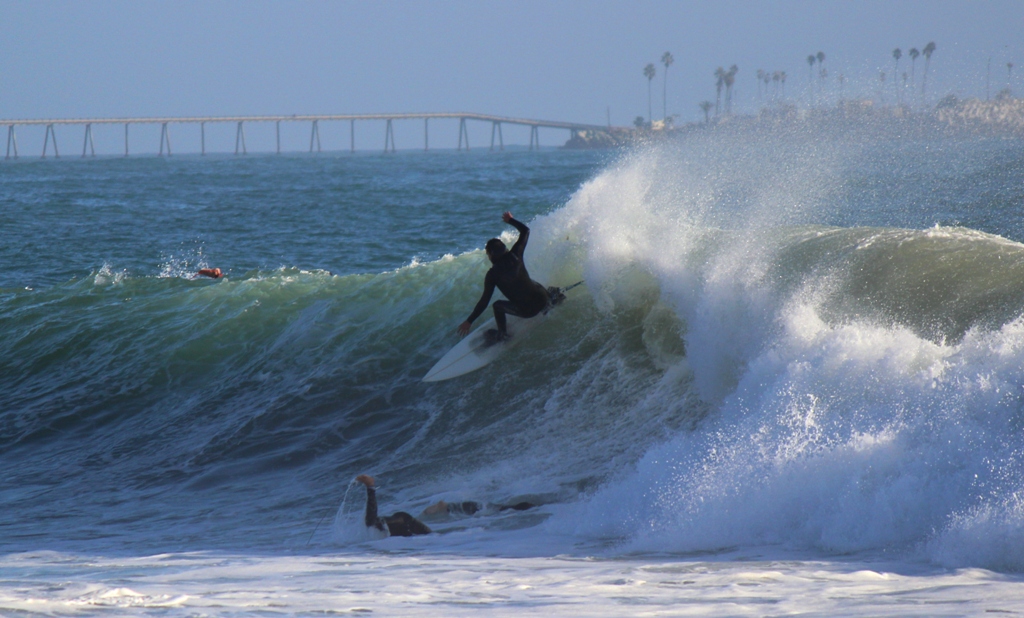
Some of that rough and sloppy west swell that was pulsing through the channel yesterday.

Posted in Santa Barbara County, Ventura County | Tagged , , , , | Leave a comment

The Carrizo Experience: Ten Hours on the Plain I

(First in a Series)

Ruminants on the Range

Toward the eastern end of the Carrizo Plain National Monument a wicked crack parts the flatland’s reddened earth. Looking across the plain from a distance the ditch is invisible, while within its vertical-sided void the rest of earth disappears and only the sky overhead can be seen.

For a region of scant rainfall it seems remarkably deep for an arroyo, but it looks like a dry wash and it leads toward Soda Lake. Yet at the same time it doesn’t look like water has flowed through it anytime recently despite last season’s heavy rainfall in San Luis Obispo County. It very well may not have anything to do with water. It may be tectonic not hydrological. It might be some sort of tear in the earth created by movement along the nearby San Andreas Fault.

Soda Lake Road passes across the head of the ditch and, through the years, every time I have driven by my eyes are magnetically drawn to it. It’s a striking feature of the landscape that has always caught my attention, but despite my curiosity I had never stopped to explore the area. Until this last venture out to the plain when something of particular note provided the impetus.

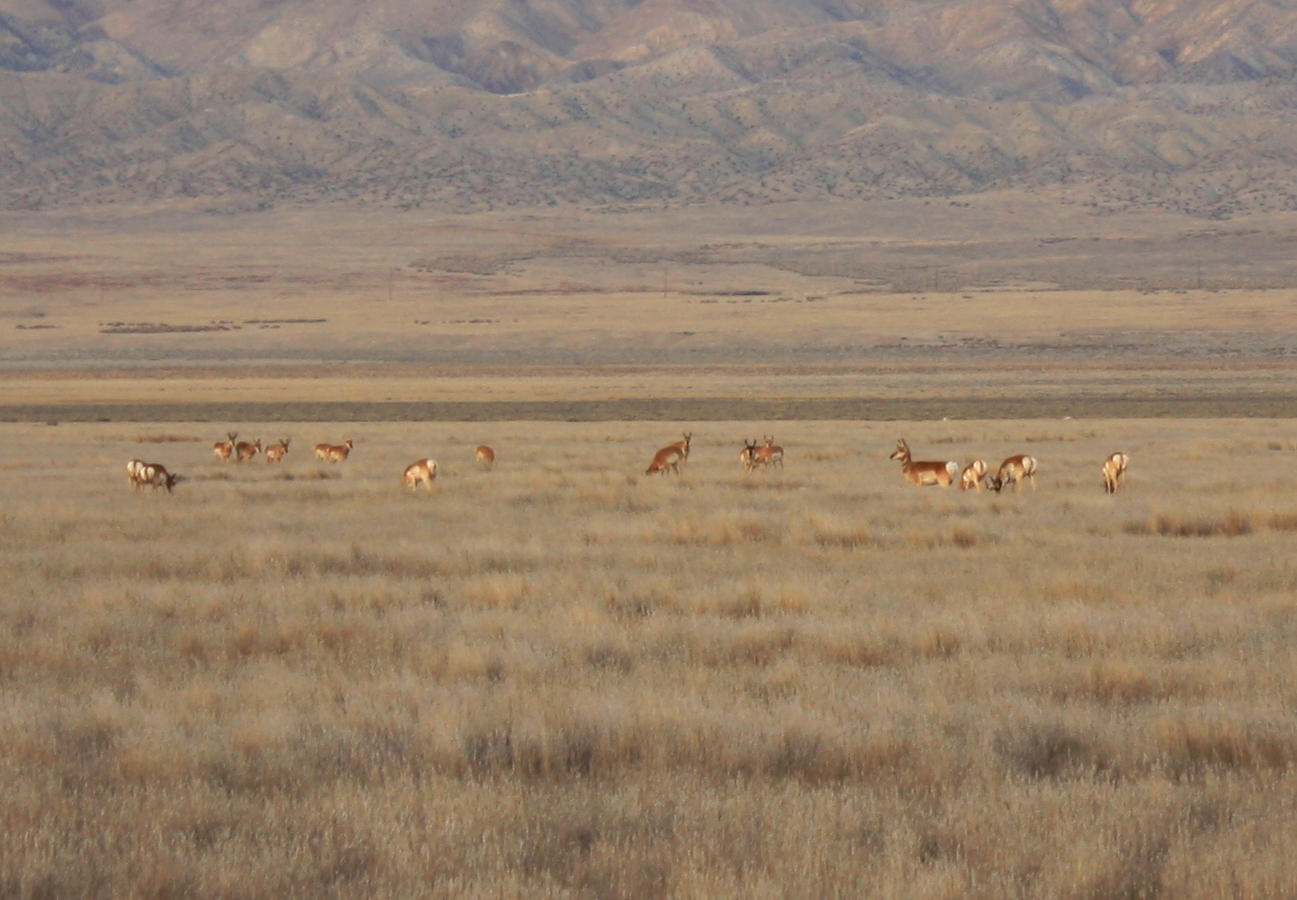
I had driven past the jagged slash in the earth with the usual glance over my shoulder but kept moving. Because of its sunken nature it fades from sight rapidly, but it runs somewhat parallel to the dirt road for about a mile and half. Rolling down the road at 25 miles per hour, and scanning the plain for signs of life, I spied something far off in its grassy midst. I pulled to the side of the road, grabbed my binoculars and slid from the cab for a peek. It was a 20-head strong herd of pronghorn antelope.

Pronghorn are the world’s second fastest land animal. They have been clocked at speeds up to 53 miles per hour and are slower only than the cheetah. Yet, due to their exceptionally large lung capacity, and the mechanics of their bodies which are built to outrun predators, they can maintain top speed for longer distances. They are the world’s fastest sustained runners.
I leaped into my truck and turned around heading back toward the arroyo, which, it occurred to me, would provide perfect cover. The furrow would serve as a natural blind that would allow me to approach unseen, unheard and unsmelled. With a pack strapped to my back I charged into the void hoping to sneak up closer to pronghorn than I had ever been.

Owls in a sandstone cave on the Carrizo Plain.

Birds are drawn to the ditch and white splotches of poop stain the vertical walls here and there all along its course where they roost. Its walls are also dotted with the burrows of raptors and piles of sun-bleached rodent skulls litter the ground beneath each hole. Thin animal trails run through the grasses and low bushes.

As I walked the channel I climbed its walls occasionally to get a bearing on the herd. I’d slowly raise my eyes above the soil line and low plant cover more stealthily the closer I got, just enough to see my target. They remained there cropping grass and chewing cud and completely unaware of their pursuer. I managed to close in on the herd just enough to make it worth taking a few photos with my puny little lens.

I watched the pronghorns for awhile before trying to creep closer. They have excellent eye sight. For each step I took they took a few, too, and it wasn’t long before the herd was drifting away from me and deeper into the prairie making my effort futile. I called off the hunt and headed back down the arroyo retracing my steps to my truck.

When I finally popped my head clear of the ditch after walking back, and the sweeping plain sprang into view once again, the sudden sight of such vast openness rippled through me. The instant transition from the narrow confines of the arroyo to the mile and half wide plain, from shortsighted tunnel vision to an infinite 360 degree view, seemed to strike me physically. Sort of like the unbalancing debilitation that the fear of heights can bring on, a physical reaction to a visual experience.

I don’t imagine I’ll ever get much closer to the pronghorn, they’re sharp eyed and skittish. Driving on down the desolate road toward Soda Lake, the herd was lost in the beige boundlessness of the Carrizo Plain. I was left pondering how a hunter might get close enough to take a pronghorn using a bow and arrow, as I headed toward the fading traces long ago left behind by a people that had known the answer.

Bibliograpy:

University of Michigan Museum of Zoology

Related Posts:

Cave’s Eye View on the Carrizo Summertime Soda Lake Selby Rocks Carrizo Plain Wildflowers Wallace Creek Offset, San Andreas Fault Soda Lake Winter Reflections Elkhorn Plain  Dragon’s Back Ridge, San Andreas Fault

Posted in San Luis Obispo County | Tagged , , , , , , , , , | 4 Comments

Riding the Queen. . .and She was Good

I love her voluptuous curves and curling lips. She’s always wet and tastes salty and she feels good to ride. The glide of my stick across her silky smoothness, a sensation that always keeps me coming back for more. And she was good today.

K. A. in front feeling the single fin soul, behind him ten time world surfing champion, Kelly Slater, looking to bury a rail and annihilate a lip.

Slater ejecting a share of the Pacific into the atmosphere above and making mince meat of some of the smaller waves below.

Posted in Santa Barbara County, Ventura County | Tagged , , , , , | 2 Comments

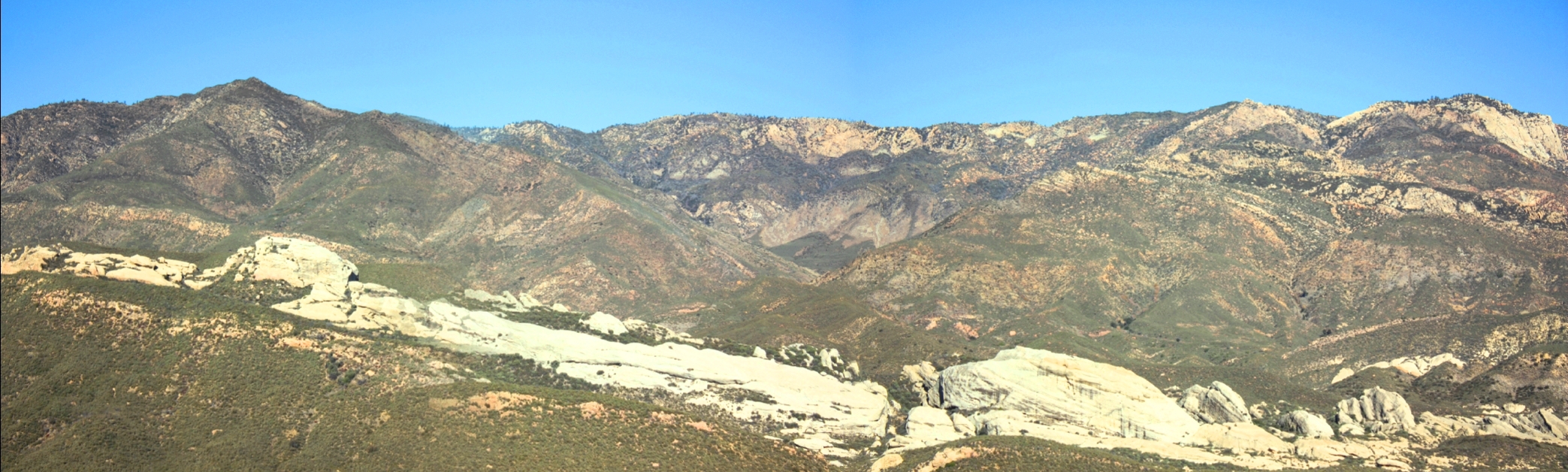
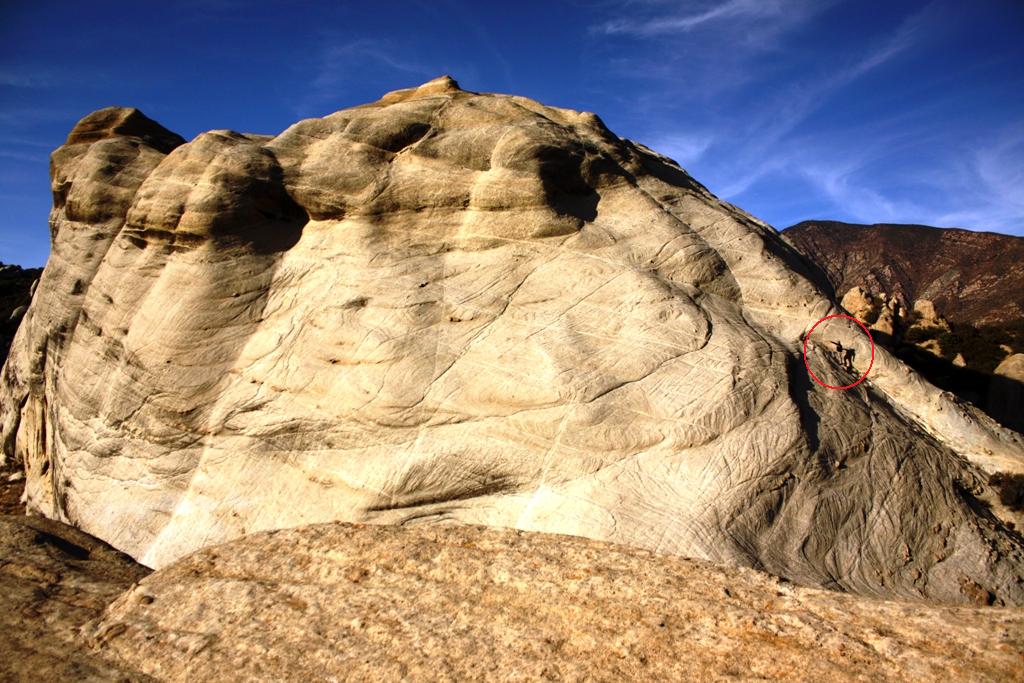
Piedra Blanca

Piedra Blanca sandstone formation.

Pops came to visit for Thanksgiving. Last time he came to stay I dragged him along on a five mile hike through intermittent driving rain showers out in the hinterlands of San Luis Obispo County. This time we took it easy and spent an afternoon up at Piedra Blanca.

Clint Elliott monkeying around:

Related Posts:

Canoe Campin’ and Fishin’ in Minnesota

Clint Sliding Down Mono Dam

Clint Cliff Diving Montezuma Falls in Costa Rica

Posted in Ventura County | Tagged , , , , , | 9 Comments