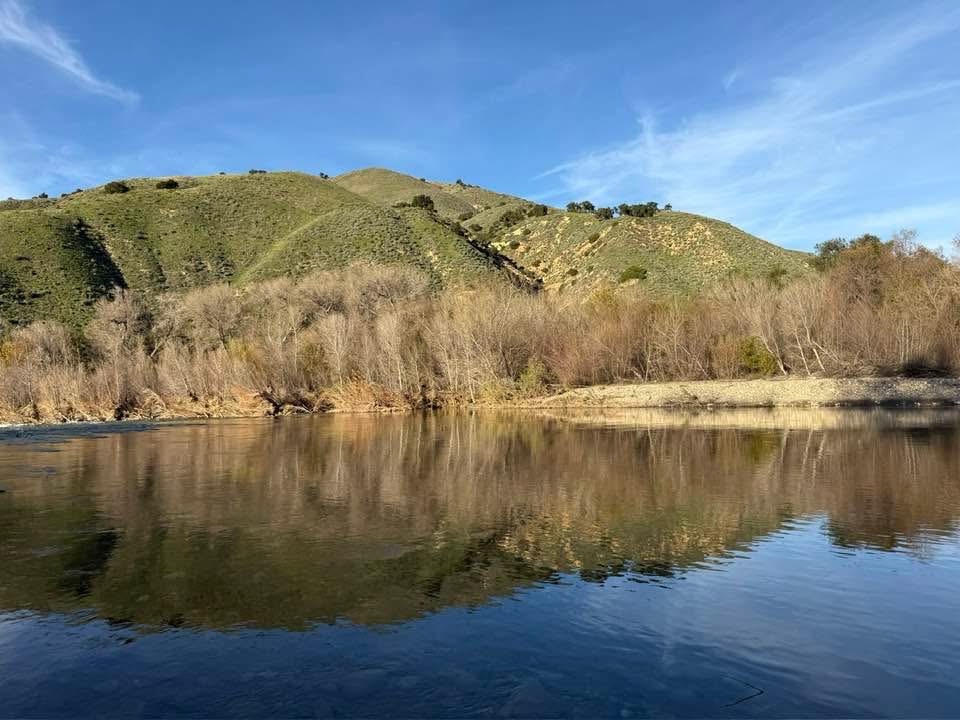
 Santa Ynez River once hosted the largest steelhead run in California south of San Francisco.
“National Mall site approved for memorial to fallen journalists
The site, which has a direct view of the Capitol, was chosen to evoke journalists’ role as government watchdogs.”
—Justin Jouvenal, Washington Post (2023)
“The moral duty of the free writer is to begin his work at home: to be a critic of his own community, his own country, his own government, his own culture. The more freedom the writer possesses the greater the moral obligation to play the role of critic.”
—Edward Abbey, A Writer’s Credo, One Life at a Time, Please (1988)
Recap
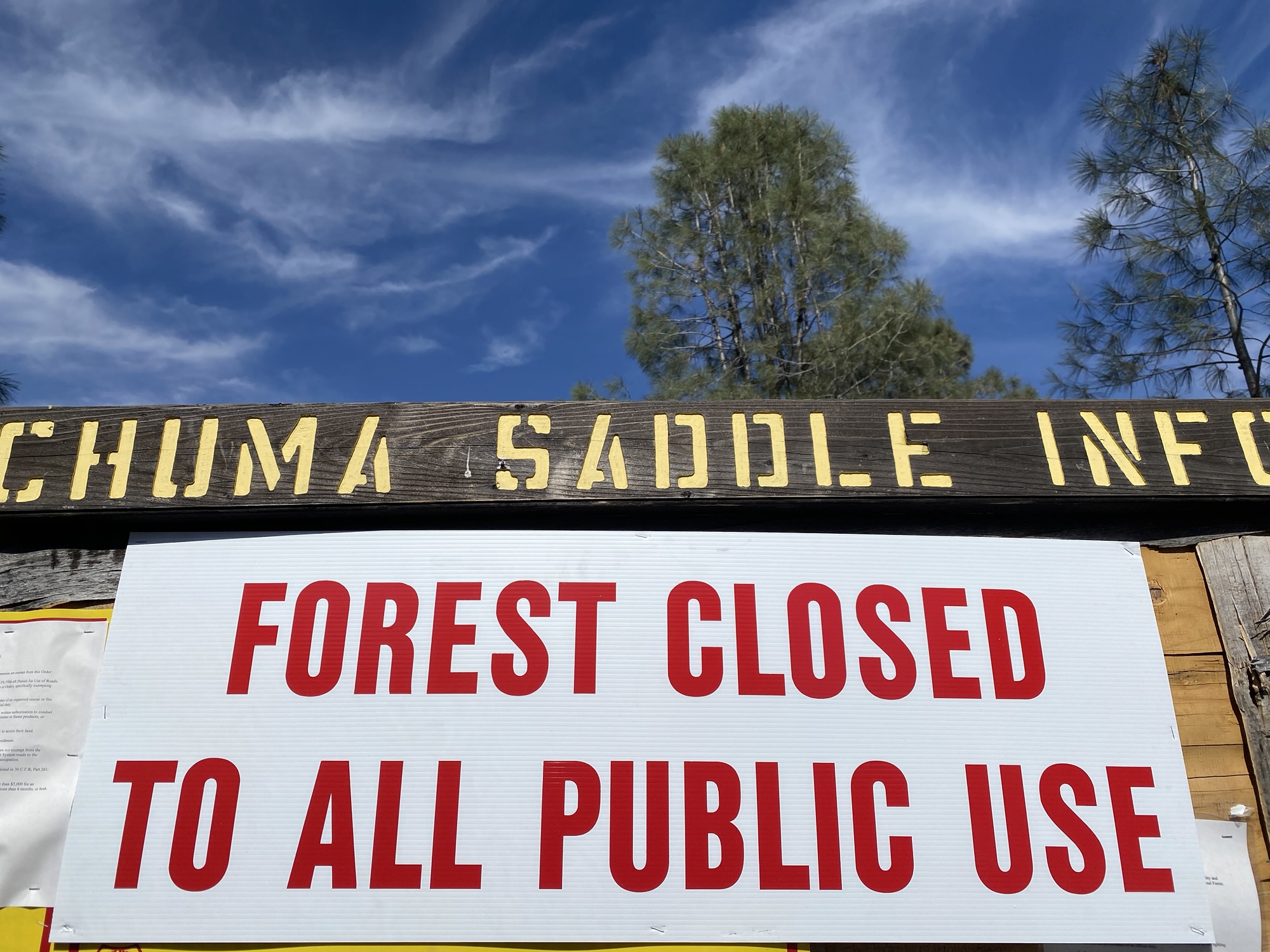
In 2023, after a series of torrential atmospheric rivers dumped historic rainfall, Forest Supervisor, Christopher J. Stubbs, issued a diktat closing Los Padres National Forest.
The closure prohibited entry into 30% of Santa Barbara County.
Mr. Stubbs threatened the common walker of public lands like sexual predators, with jail terms and fines no less severe than those meted out to rapists in Santa Barbara County, if we entered to forest.
The Forest Service backed the order with armed agents leading dogs trained for domestic urban combat.
As veteran long-time local hillwalker Dan McCaslin at Noozhawk observed at the time, a rare voice of measured opposition questioning the closure:
“Federal law enforcement officers and their K-9 partners are actively patrolling.”
Iron-fisted prohibition with a threat of government gun violence.
Done with a smile and a pat on the back, for our safety.
The rigid politics of paternalism.
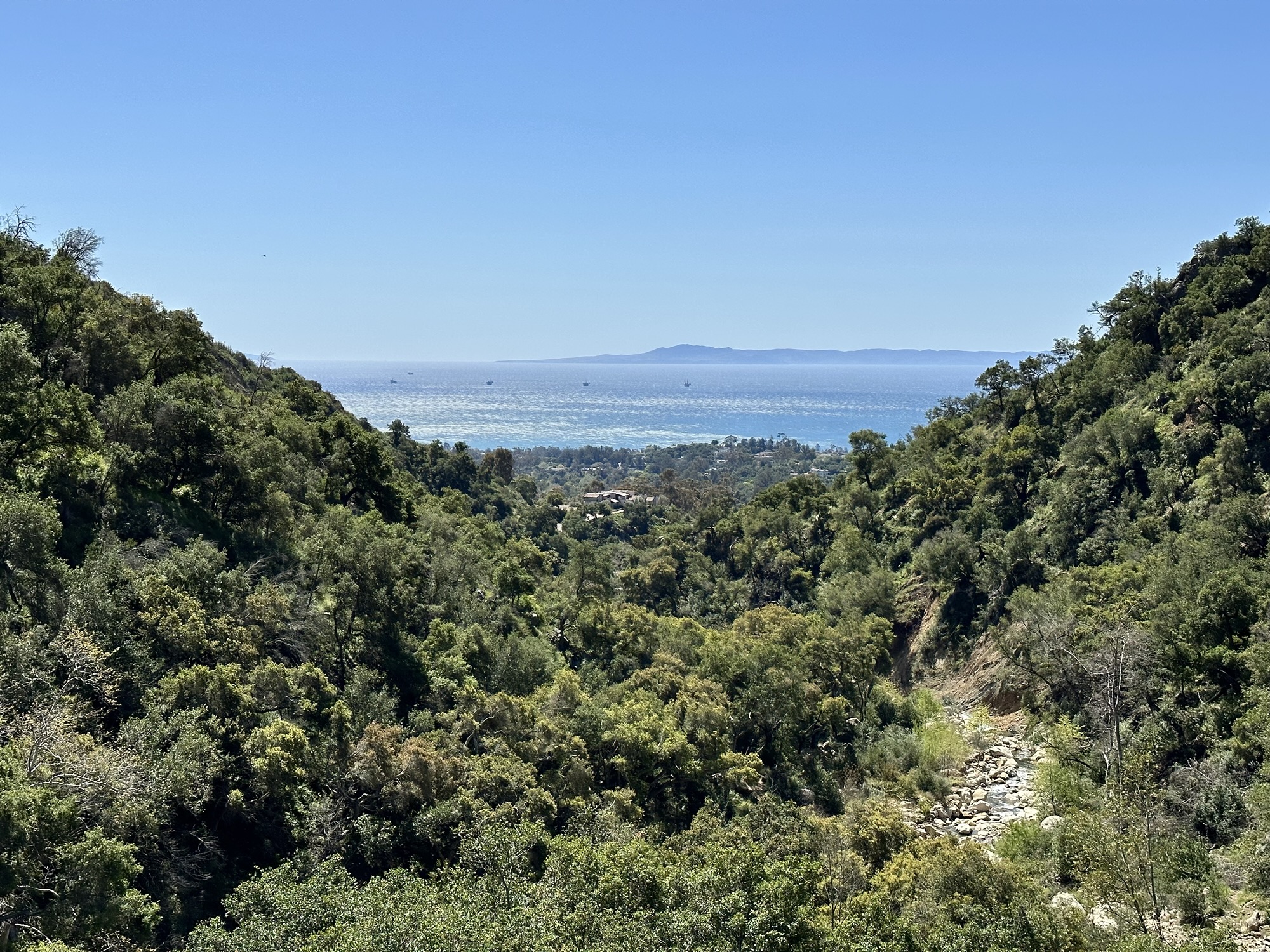 Santa Ynez Mountains, Channel Islands National Park on the horizon.
The story’s told
With facts and lies
You own the world
So never mind
Mr. Stubbs justified the closure of Los Padres National Forest based on an assertion that rainfall had damaged the forest.
And because the forest was damaged, it was supposedly a threat to public health.
Both claims were obviously preposterous.
He never explained what exactly was so threatening to the nation that 340+ million Americans should be collectively stripped of their ancient right to free movement by his signature alone.
The circumstances were extraordinary and so required extraordinary action.
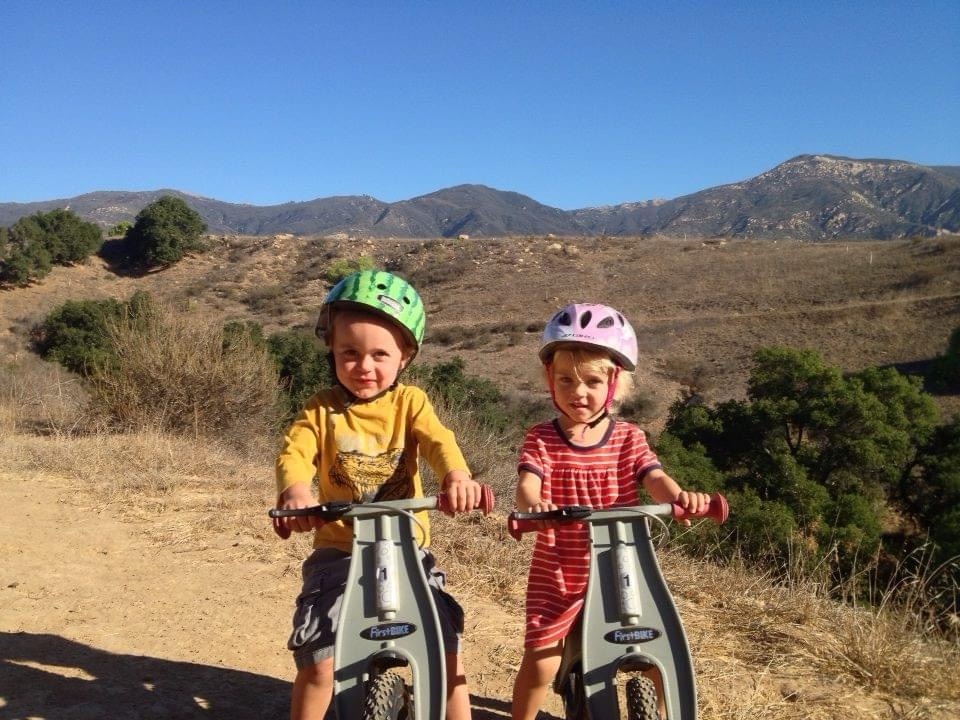 “Ponch and Jean” on patrol, future citizen scientists, someday activists.
“The writer’s duty to speak the truth—especially unpopular truth. Especially truth that offends the powerful, the rich, the well-established, the traditional, the mythic, the sentimental. To attack, when the time makes it necessary, the sacred cows of his society. And I mean all sacred cows.”
—Edward Abbey, “A Writer’s Credo”
Chris Stubbs admitted up front to acting in ignorance, unaware what had happened throughout the ~1,100 square miles of wildlands in Santa Barbara County he had closed.
That was another reason why the forest must be closed, he told us, because he didn’t know.
The same land that by its very nature the people desire and expect and demand to be left untrammeled, rough and potentially dangerous, even deadly.
The Forest Service recognizes this obvious fact:
“Los Padres National Forest spans some of the most ruggedly beautiful landscapes to be found anywhere in California.”
Resorting to semantics in defense of truth and common sense, Merriam-Webster defines the word rugged as:
1 : having a rough uneven surface : jagged
rugged mountains
3 a : presenting a severe test of ability, stamina, or resolution
a rugged climb
“Find your next adventure,” the Forest Service says, but they don’t appear to truly mean it.
Actions speak louder than words.
Mr. Stubbs holds a post-graduate degree Master of Science in Forestry, yet nevertheless presented an argument divorced from scientific reality.
His academic field of concentration within that discipline is “Outdoor Recreation Planning.”
Yet, his order appeared knee-jerk and reactionary; a blind, blanket closure that was far out of line with American outdoor tradition and common behavior.
In unleashing the police state and threatening to let slip dogs of war, Mr. Stubbs brazenly violated the people’s civil rights.
Free movement is a right traced back to the Old World and long recognized and upheld by various American courts at all levels, including the Supreme Court.
Mr. Stubbs manipulated language in service to these ends.
And journalists like Ray Ford, another local veteran hillwalker writing for Noozhawk, aided and abetted Mr. Stubbs in this assault on a fundamental American right.
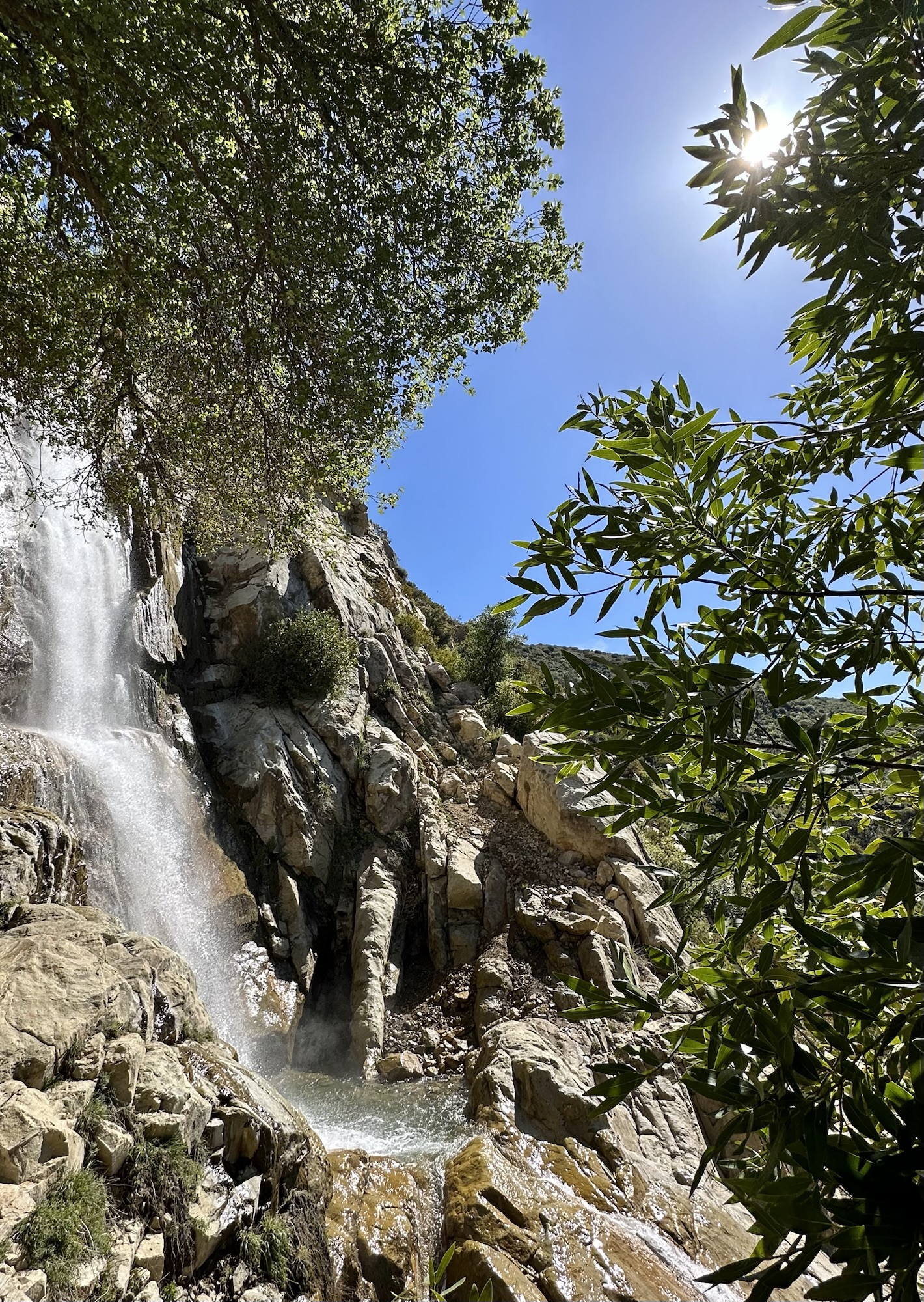 Santa Ynez Mountains
This was your heart
This swarm of flies
This was once your mouth
This bowl of lies
You serve them well
I’m not surprised
You’re of their kin
You’re of their kind—Leonard Cohen, Nevermind
Case In Point
Local reporters served as meek lapdogs rather than fierce watchdogs, and repeated and amplified the bogus narrative of closure.
These reporters behaved not as skeptical and inquisitive journalists, speaking truth to power and asking pointed questions of the ruling class on behalf of common folk, but instead as unquestioning stenographers.
“Over the last month, Los Padres received more than 100 percent of its annual rainfall along with extremely damaging wind events.”
“Over the last month, Los Padres received more than 100 percent of its annual rainfall along with extremely damaging wind events.”
Other writers also misrepresented the matter, echoing Mr. Stubbs.
They presented their stories in terms that conflated and confused the forest and the government agency charged with managing it.
And they based these stories on a false premise, framed by anthropocentric, fickle cultural notions of human aesthetics and perceived beauty.
Through this warped lens they projected a distorted view, as they told us rain had damaged the forest.
Everyone is familiar with the old saying, beauty is in the eye of the beholder.
The editor-in-chief of Backpacker Magazine, Adam Roy, repeated the bogus narrative in an article titled, “Storm Damage Closes California’s Los Padres National Forest for Two Months.”
Mr. Roy wrote that rainfall “resulted in substantial damage to both the forest and the forest’s infrastructure.”
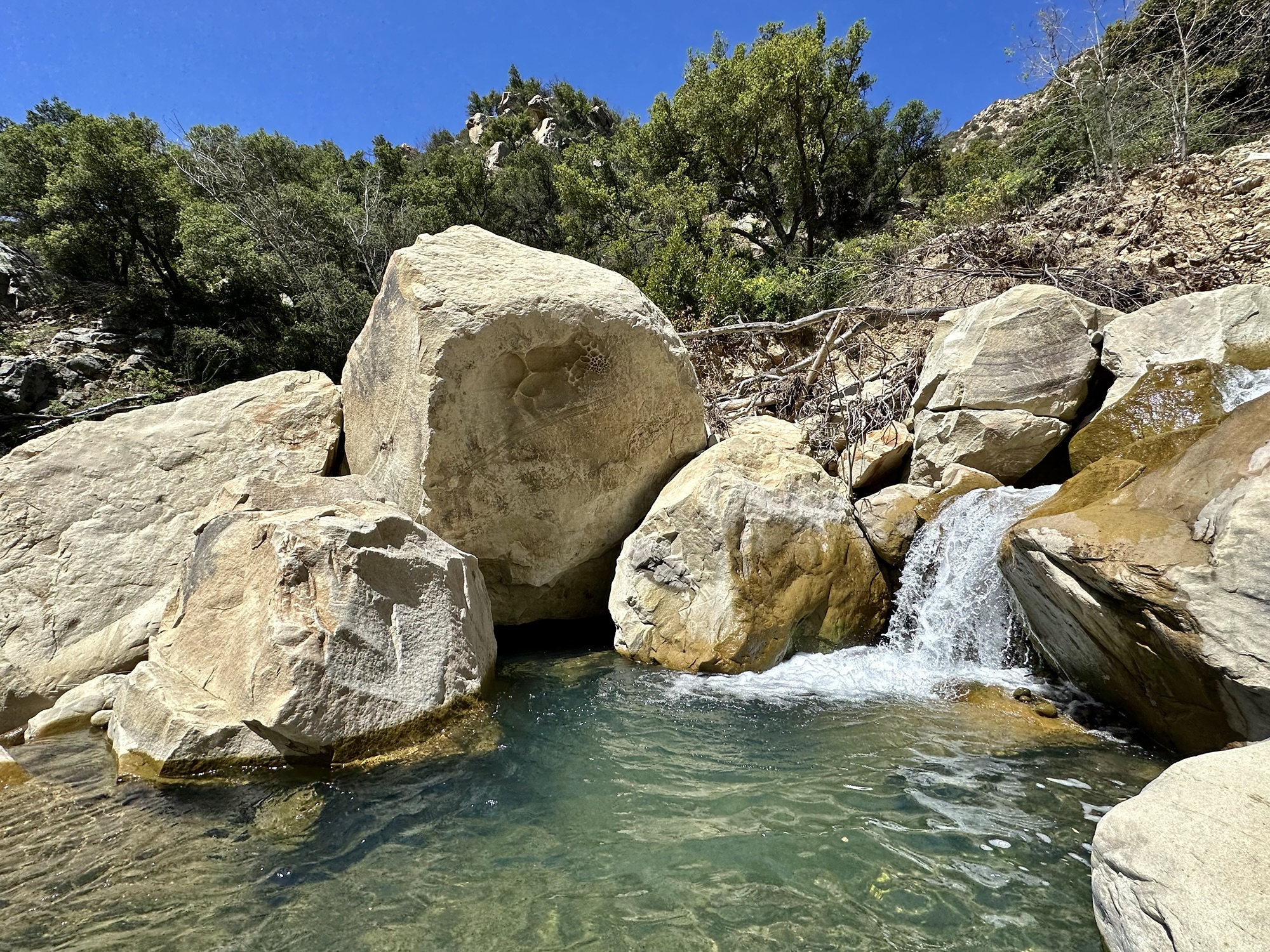 Santa Ynez Mountains
On Culture, Damage and Beauty
In traditional Japanese culture, people have a phrase describing appreciation of imperfection and transience in the world, which is often applied to nature: wabi-sabi.
In this Japanese aesthetic philosophy, sabi translates into English as rust or tarnish, while wabi conveys a sense of the calm acceptance and embrace of life’s imperfections.
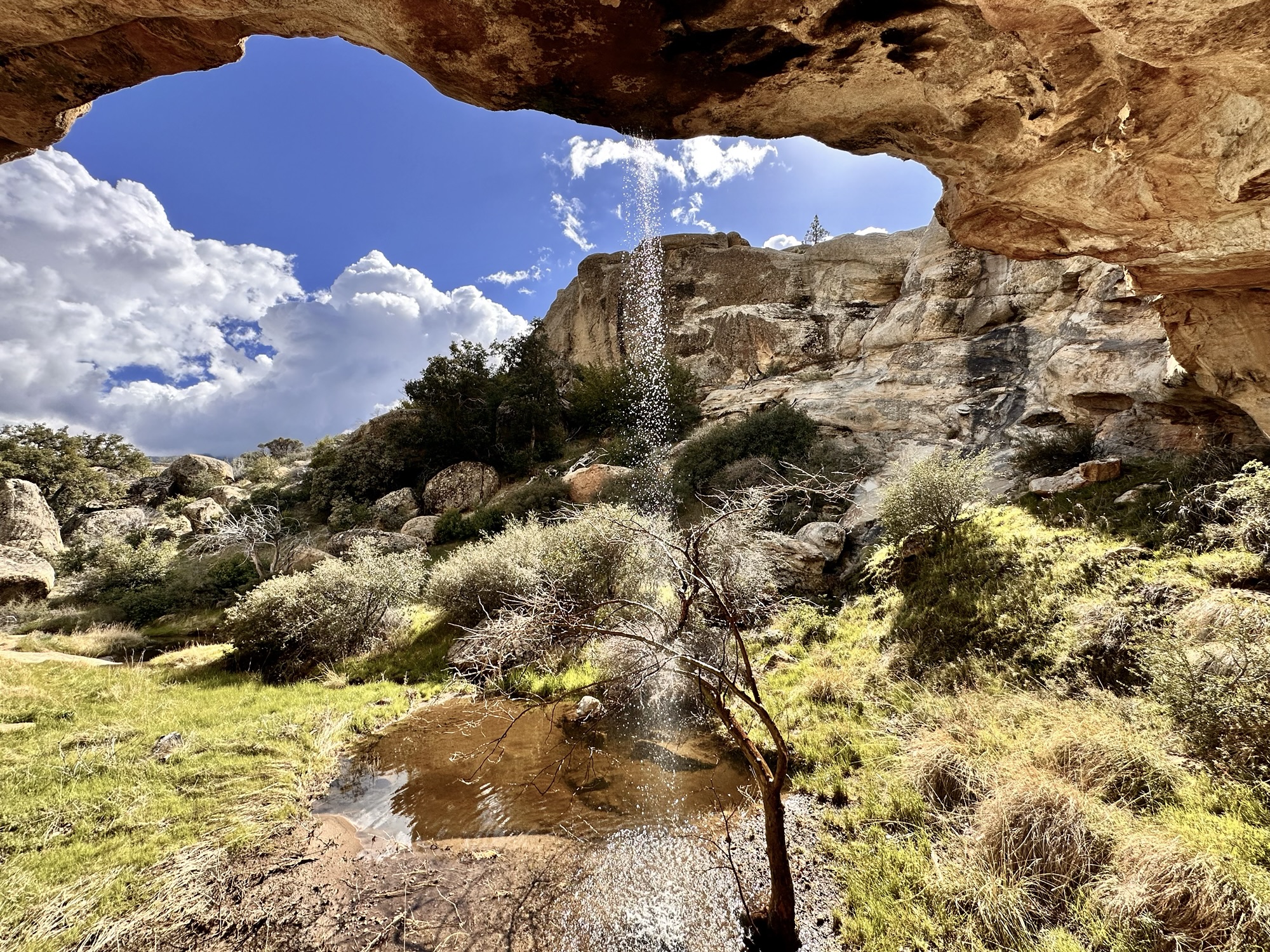 Santa Barbara Backcountry
Ray Ford at Noozhawk leveraged his platform in a disservice to innocent hikers.
He went out of his way to author an apologia mansplaining to us proles the intent of the Forest Service in defense of the agency’s raw exercise of federal power.
He acknowledged the closure was rooted in ignorance, that the heart of the matter had yet to be assessed, thus echoing what Mr. Stubbs had already confessed from the get-go to justify his diktat.
“60-day Los Padres National Forest closure is designed to keep the public safe and provide time for damage assessments.”
—Ray Ford, Noozhawk
And then came the distortion of reality through manipulation of language in service to political ends.
The Forest Service claimed that nature had damaged nature, and in turn Mr. Ford and others toed the line, gaslighting the public.
In a breathless story bearing an overwrought title, Mr. Ford wrote:
“Recent Storms Wreak Havoc on Santa Barbara Backcountry”
“. . .recent storm events…may have caused more damage in the Santa Barbara backcountry and other rural areas than anyone realizes.
“…the type of damage they’ve never seen in their careers on the forest.”
In an amusing passage, Mr. Ford saw fit to quote Andrew Madsen, Los Padres National National Forest spokesman, speaking pure gibberish:
“We simply don’t even know what we don’t know at this point.”
—Andrew Madsen
We’d like to point out to the mealymouthed Mr. Madsen that we never know what we don’t know, and that ignorance is not a sound basis from which to craft national policy. (We recall watching the news conference of Secretary of Defense, Donald Rumsfeld, 24 years ago.)
That was the flimsy, asinine basis upon which they threw us out of our own public lands.
For our own health, they told us with a smile.
Los Padres Forest Association, whose ostensible purpose is providing access to the forest, turned on a dime at the drop of Stubbs’ hat and backed the prohibition, calling it “wise.”
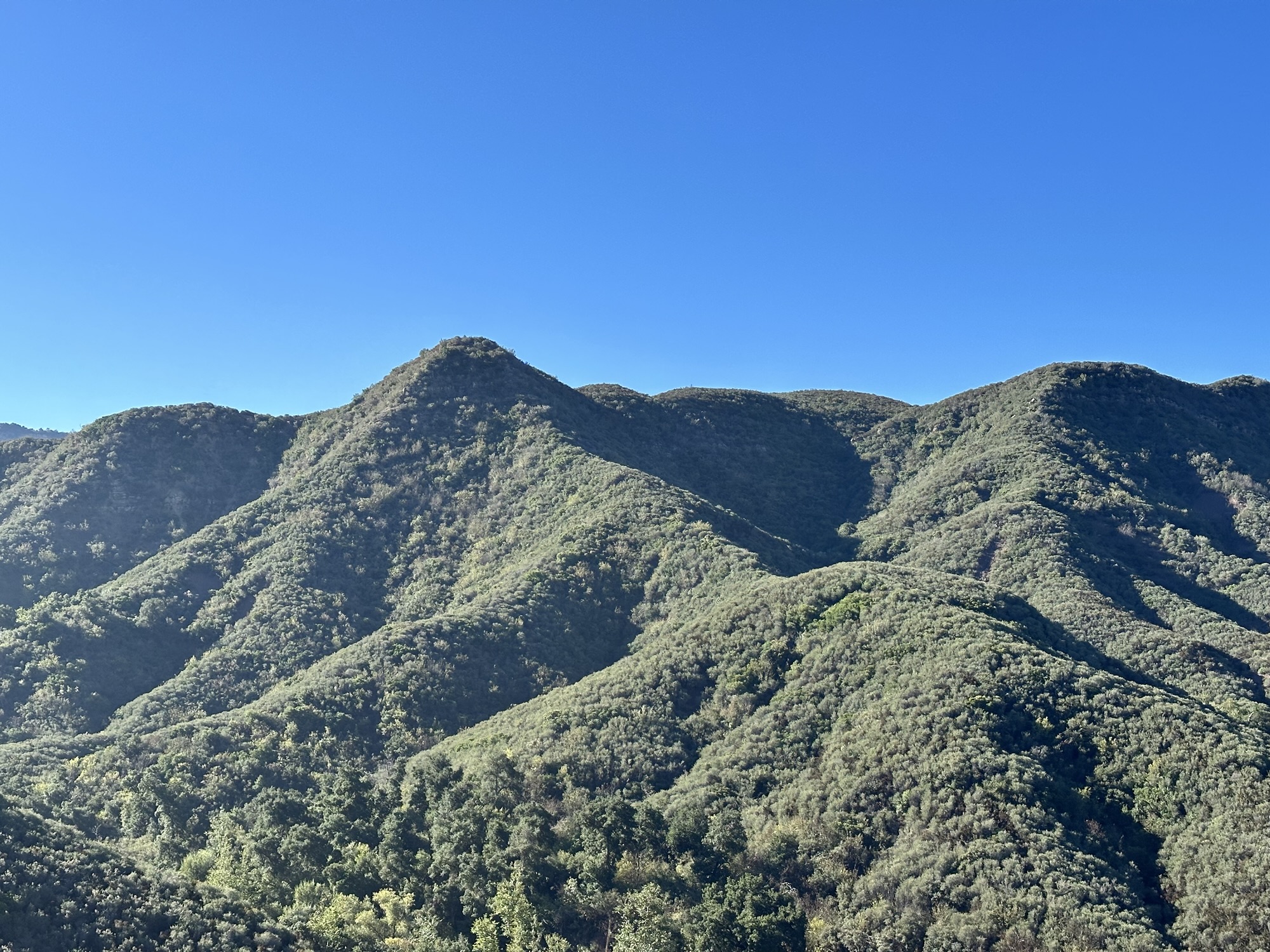 San Rafael Mountains, Santa Barbara County
“That’s all I ask of the author. To be a hero, appoint himself a moral leader, wanted or not.
I believe words count, that writing matters, that poems , essays, novels – in the long run – make a difference.
If they do not, then in the words of my exemplar Aleksander Solzhenitsyn, the writer’s work is of no more importance than the barking village dogs of the night.
The hack writer, the temporizer, the toady, and the sycophant, the journalistic courtier (and what is a courtier but a male courtesan?), all of those in the word trade who simply go with the flow, who never oppose the rich and powerful, are no better in my view than Solzhenitsyn’s village dogs.
The dogs bark; the caravan moves on.”
—Edward Abbey, A Writer’s Credo
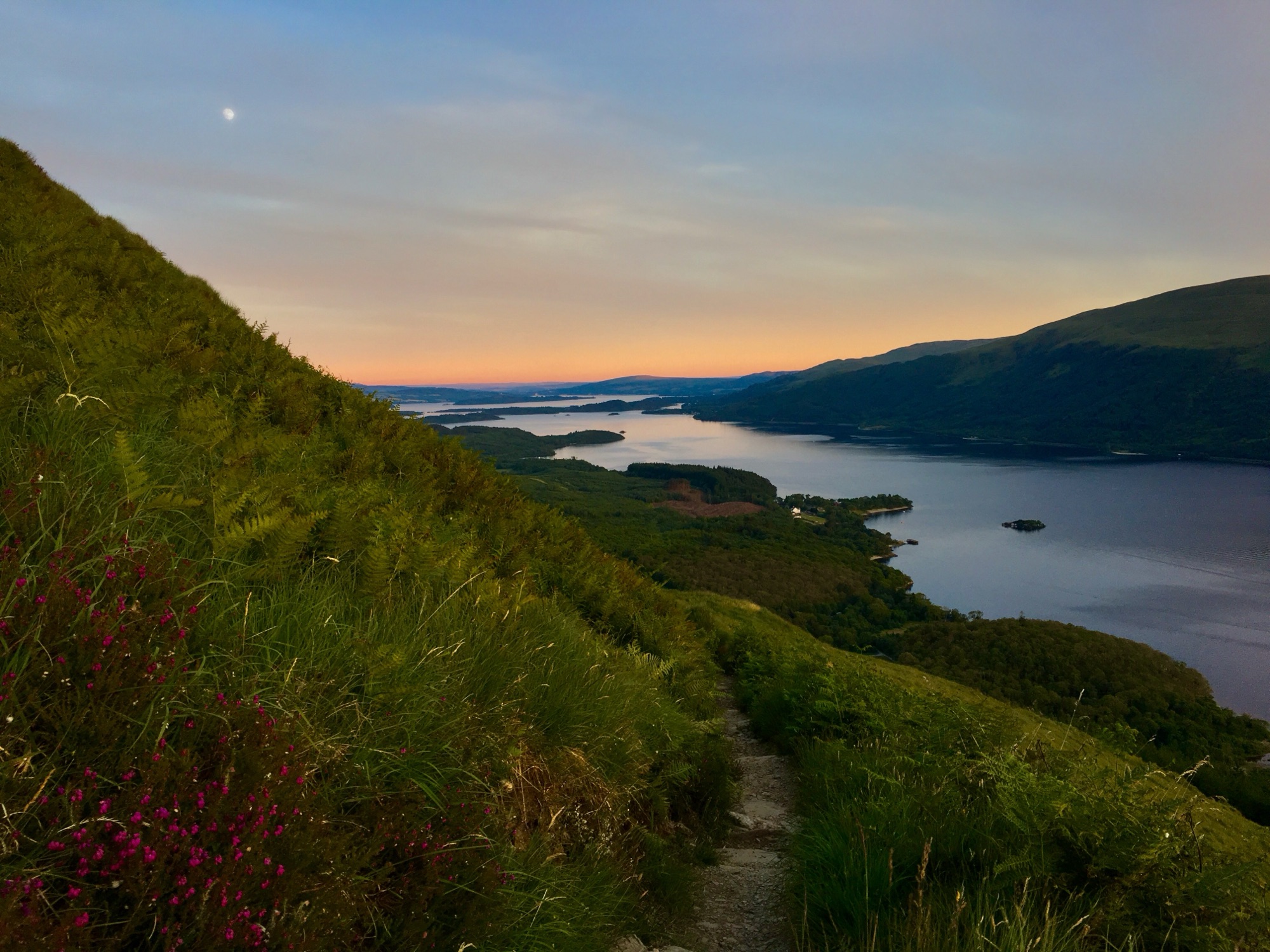 On the trail to Ben Lomond summit in Trossachs National Park, Scotland, sunsetting at ten o’clock at night, looking toward Jura, an island in the Inner Hebrides where George Orwell wrote 1984.
Orwell On Language
A defining feature of Orwell’s 1984 is an exploration of the manipulation of language in service to political ends and the massaging of public thought through speech.
What he called Newspeak was the advent of a new language created by the regime to advance its agenda.
Some of the vocabulary he created in 1949 appears prescient in describing the actions of people in 2023.
The Newspeak word bellyfeel describes the uncritical, unquestioning acceptance of party dogma by subservient followers whom toed the line:
“Only a person thoroughly grounded in Ingsoc could appreciate the full force of the word bellyfeel, which implied a blind, enthusiastic, and casual acceptance difficult to imagine today.”
Blackwhite describes the turning of language on its head by true believers:
“Applied to a Party member, it means a loyal willingness to say that black is white when Party discipline demands this.”
Duckspeak describes the thoughtless expression and promotion of party line, ducks quacking like the village dogs barking:
“Ultimately it was hoped to make articulate speech issue from the larynx without involving the higher brain centres at all.”
The character Syme, a Newspeak linguist, explains the purpose of the language to the protagonist of the novel, Winston, whom works at the Ministry of Truth:
Don’t you see that the whole aim of Newspeak is to narrow the range of thought?
. . .
Every concept that can ever be needed will be expressed by exactly one word, with its meaning rigidly defined and all its subsidiary meanings rubbed out and forgotten. . .
The process will still be continuing long after you and I are dead.
Every year fewer and fewer words, and the range of consciousness always a little smaller.”
Threads of Similarity
Analogies are imperfect, and while it’s often said that history repeats, it’s more accurate to say that it rhymes.
This is about considering possible degrees of likeness, not perfect comparisons.
Orwell’s thinking was informed and influenced by the horror of the twentieth century’s worst monsters in Stalin and Hitler.
Our point here is certainly not to suggest Mr. Stubbs or the Forest Service at large or the happy-go-lucky stenographers are evil or malicious.
The point to consider is the thread of similarity running through space and time, connecting Orwell’s novel in 1949 to the Stubbs Diktat of 2023, and how the forest closure was reported through media outlets by certain writers.
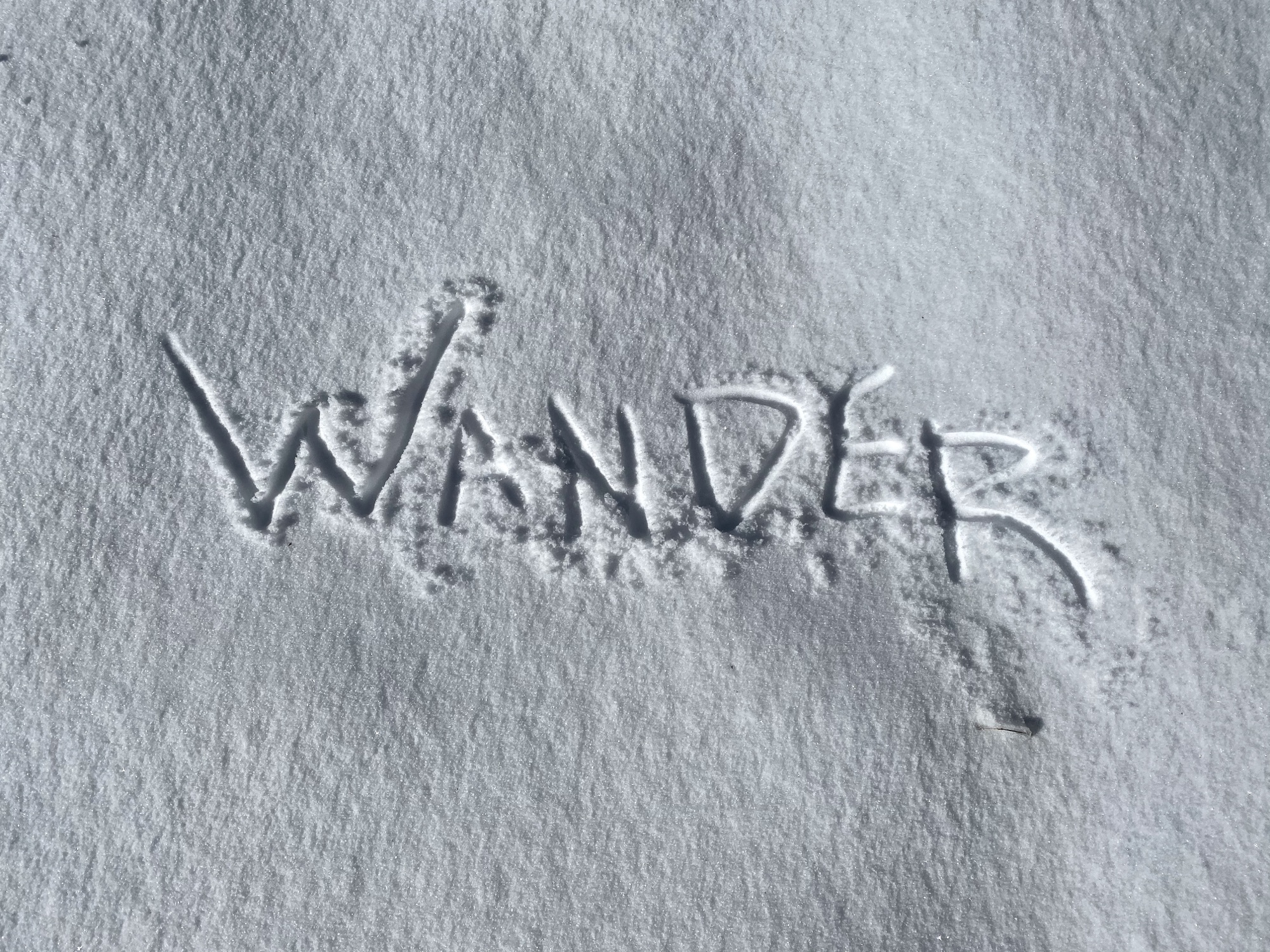 Figueroa Mountain snow (2019).
Parlance of Our Times
They said rain damaged the forest; that nature damaged nature.
The Forest Service spoke of “punishing rain and wind across the Forest,” as if nature was some malevolent punitive force out there manhandling itself.
But damage is largely an anthropocentric notion.
In the Anthropocene epoch it is not surprising that humans would define the natural world in such hubristic self-centered parlance.
But it’s a distortion.
And a dereliction of duty by journalists, whom served the most powerful and entrenched forces in society, to the detriment of the smallest and least influential.
Reality
That something happened in the mountains during a storm that they have never in their wee short lives seen or they think is ugly or they do not like having to physically deal with or that upset them emotionally, does not mean such natural change is damage.
The Forest Service and the stenographers and apologists cannot honestly or accurately reference damage in the forest as a reasonable justification to criminalize entry.
Nature did not damage nature.
Rainfall and wind are natural phenomenon that cause natural change.
Nature, and the universe at large, are indifferent to humanity’s myopic and self-centered notions of damage.
An oak tree ripped apart by wind; runoff from precipitation furrowing the earth; rocks tumbling; mountainsides sliding; high stream and river flows jumping existing temporal banks to form new watercourses; such natural phenomena formed Earth as we know it and love it.
The boulder field found in Rocky Nook Park in Santa Barbara, from which the park took its name, is an example of such natural change resulting from an ancient debris flow.
“These boulders are composed of sandstone from the Santa Ynez Mountains and we believe they record a catastrophic debris flow that occurred sometime in the recent geologic past.”
—Edward A. Keller, professor of geological sciences and environmental studies, University of California, Santa Barbara
These forces of natural change form new habitat and precipitate the birth of new life and serve to redistribute and recycle natural components, from the top of the highest mountain to the deepest sea.
The sea floor is then raised to the mountain top and the process continues.
A mountain or a glacier is said to calve off in the same vein that a cow giving birth to new life is said to be calving.
Natural events of consequential change, cataclysmic alterations of the land, cannot properly be described as damage.
These are part and parcel of the whole, and organic.
Travesty
Rain damaged artificial, human-made developments within Los Padres National Forest.
The Forest Service did actually acknowledge this fact in their press release, which mentioned “serious impacts to administrative and recreation facilities.“
Things like roads and trails and BBQ picnic areas and campgrounds.
However, that infrastructure was degraded or destroyed altogether only limits use and makes access more difficult.
It does not threaten public health at large by any reasonable metric.
Reasonable, as defined relative to everyday common practice across the nation by recreationists.
Thus, pointing to infrastructure that is not serviceable and suggesting the entire forest is damaged, and therefore dangerous and so unusable, is a misrepresentation of reality.
It’s an assault on truth and our intelligence.
It portrays a false image and advances the bogus premise that we can’t use the forest without having all roads and all trails useable, which is obvious nonsense.
It is not illegal to walk national forest or wilderness lands without a road or trail.
Yet, Ray Ford at Noozhawk would have us believe otherwise.
In a thoughtless, sloppy passage in utter servility, Mr. Ford wrote:
“Damage along Sunset Valley Road makes access to the wilderness trailheads impossible.”
One of many remarkable things during the forest closure of 2023 was the blunted, dim reportage from local media outlets.
The obsequious reports published by many journalists were poor imitations of real, honest journalism.
On more than one occasion we’ve personally crossed paths on foot with hikers far beyond seasonally locked gates, around Figueroa Mountain and Sunset Valley, accessing public lands by hoofing it, the old fashioned way, like Native Americans and American pioneers of old.
Men and women alike.
Good people of no particular exceptional fitness or ability.
Decent common folks, carrying on healthy, decent common lives by ordinary, common means and harming nobody.
Feet and legs and heart.
“What does accessibility mean?
Is there any spot on earth that men have not proved accessible by the simplest means—feet and legs and heart? …
A venturesome minority will always be eager to set off on their own, and no obstacles should be placed in their path; let them take risks, for Godsake, let them get lost, sunburnt, stranded, drowned, eaten by bears, buried alive under avalanches—that is the right and privilege of any free American.”
—Edward Abbey, Desert Solitaire (1968)
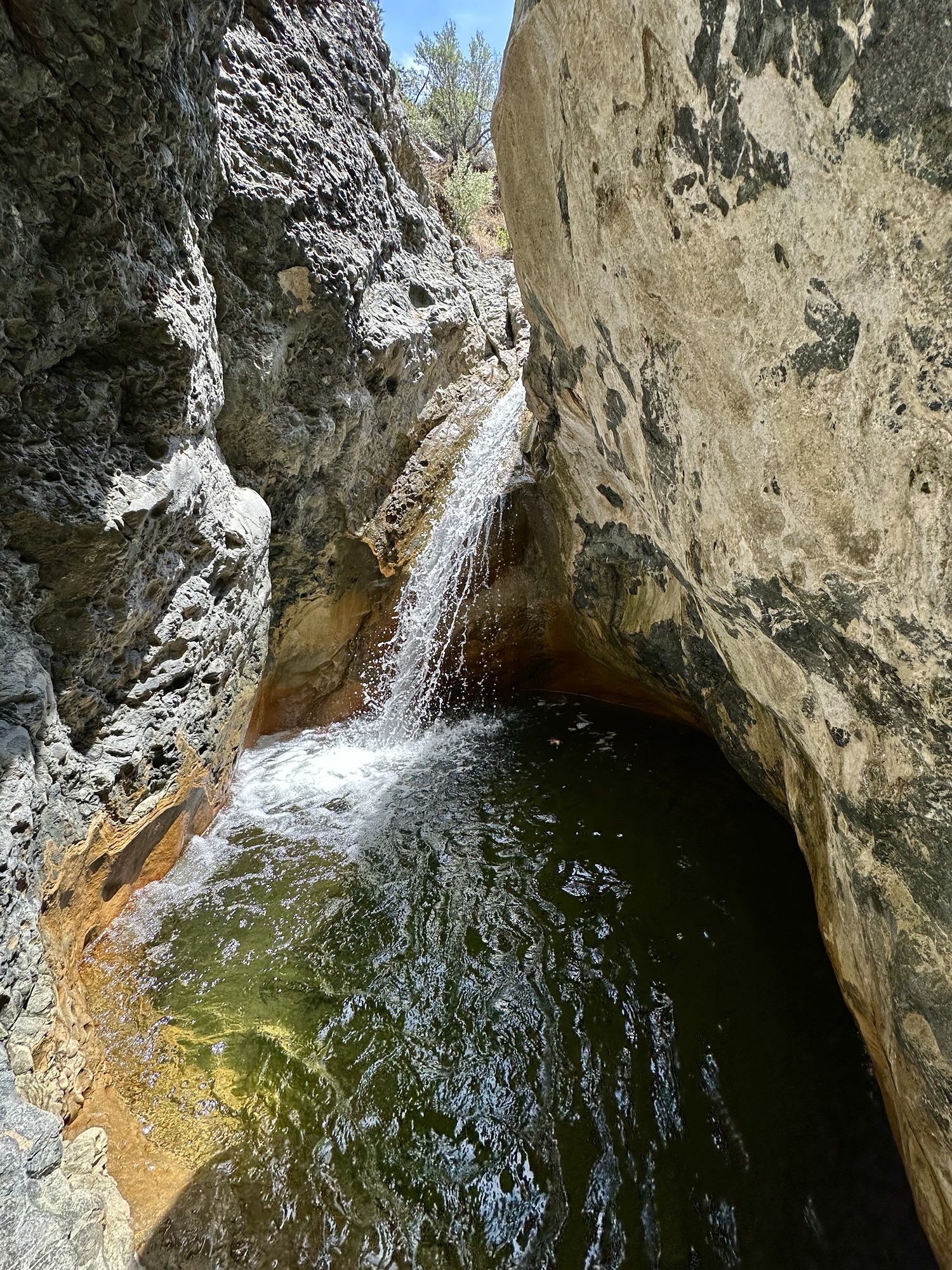 An emerald gem in the Santa Barbara backcountry.
Simple Questions
Is it too much to ask that our beneficent overlords in government exercise critical thought and sober restraint when formulating federal, state and local policy?
That knee-jerk power grabs stripping us of civil rights, while flying in the face of common practice by outdoor recreationists nation-wide, be avoided?
That journalists act like journalists and question authorities, rather than serve as force multipliers with bullhorns regurgitating the party line?
They are our bodies. It’s our choice.
Or are the people mere play things whose lives can be toyed with at will by those in power, like pawns on a board?
“You never want a serious crisis to go to waste.
And what I mean by that; it’s an opportunity to do things that you think you could not do before.”
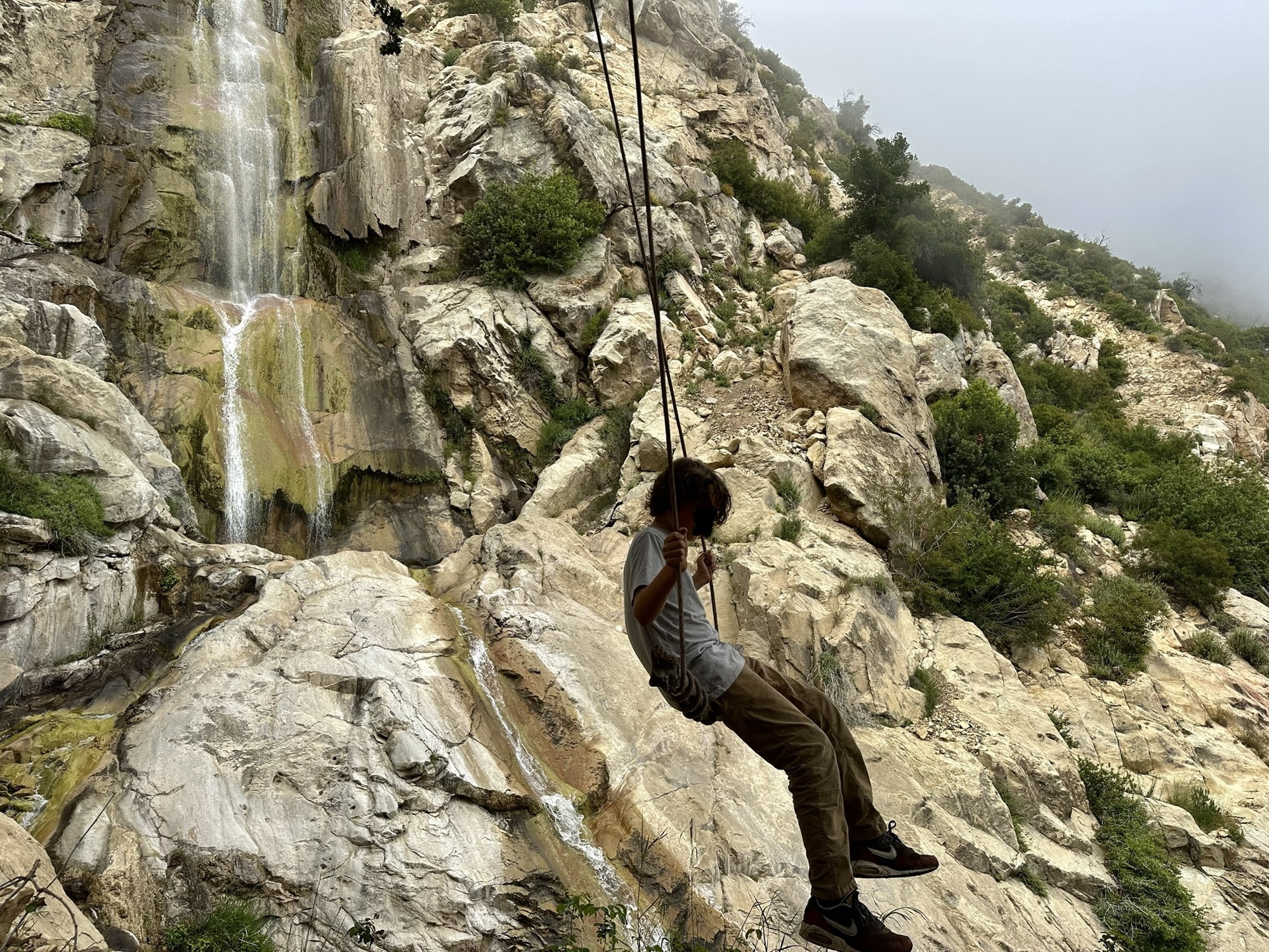 A criminal in the Santa Ynez Mountains.
“Against the grain
That’s where I’ll stay
Swimming upstream
I maintain against the grainHere labeled as a lunatic sequestered and content
There ignored and defeated by the government
There’s an oriented public who’s magnetic force does pull
But away from the potential of the individual—Bad Religion, Against the Grain (1990)
Precedent
The American legal system is built upon precedent, not reason and logic.
One unjust law advanced by misguided legislators, one unjust regulation issued by ham-handed bureaucrats, one unjust judgment handed down by a corrupt black robed jurist, can precipitate another, and yet more, all pointing to the first to justify the latest.
Brick by brick the people can be surrounded while not even realizing it, common liberties whittled away, the sphere of permissible activities narrowed and reduced.
If when they come for one we do not stand up and speak out, then they will find it easier to come for others.
It’s inconspicuous, because it’s done with a smile and good intentions, and so insidious.
If we are not vigilant and do not demand due process, then we may be stripped of rights under the guise of promoting the common good.
Liberty is a chain only as strong as its weakest link.
Each generation is a link connecting one with the next.
One weak link and the chain may break.
Once it breaks it can be difficult to repair, if repair is even possible at that point.
This may be one of the most critical lessons of history.
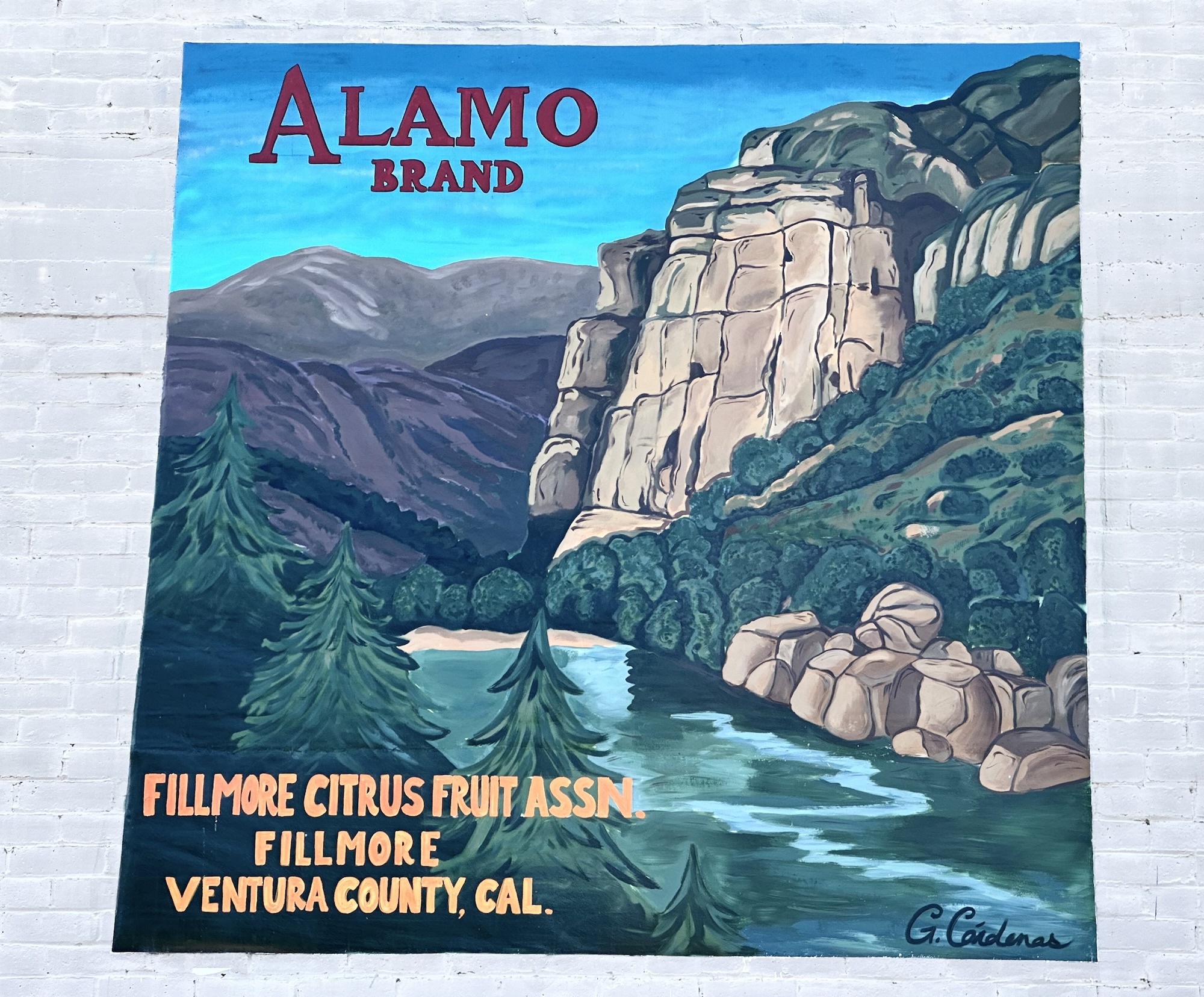 Sespe River mural, Fillmore, Ventura County.
Defining Danger Down
“Fascism, like many species of authoritarianism, relies on panic, and on the related belief that extraordinary measures must be deployed in extraordinary times, that emergencies must be met with unity and — most important — with submission and conformity.…The principle at work here is defining danger down.…The rules and laws, and the political assumptions supporting them, are all based on some notion of safety.…Defining danger down consists mainly in elevating the importance of hypothetical evils over real evils.…In order to prevent these hypothetical evils, we are instructed that we must accept real and immediate evils, …”…—Kevin D. Williamson, The Smallest Minority: Independent Thinking in the Age of Mob Politics (2019)…
The Forest Service and its employees are not fascists.
They aren’t malicious agents either.
However, the Stubbs Diktat was an authoritarian act, no doubt, by definition.
The Forest Service defined danger down when closing Los Padres National Forest.
We were told that it was for public safety, to protect our health, in response to extraordinary events of exceptional danger.
Christopher J. Stubbs used the hypothetical threat of harm from broken trails and washed out roads to justify the immediate real harm of suspending a fundamental civil right.
Free movement is a right repeatedly recognized throughout American history as the essence of civil liberty.
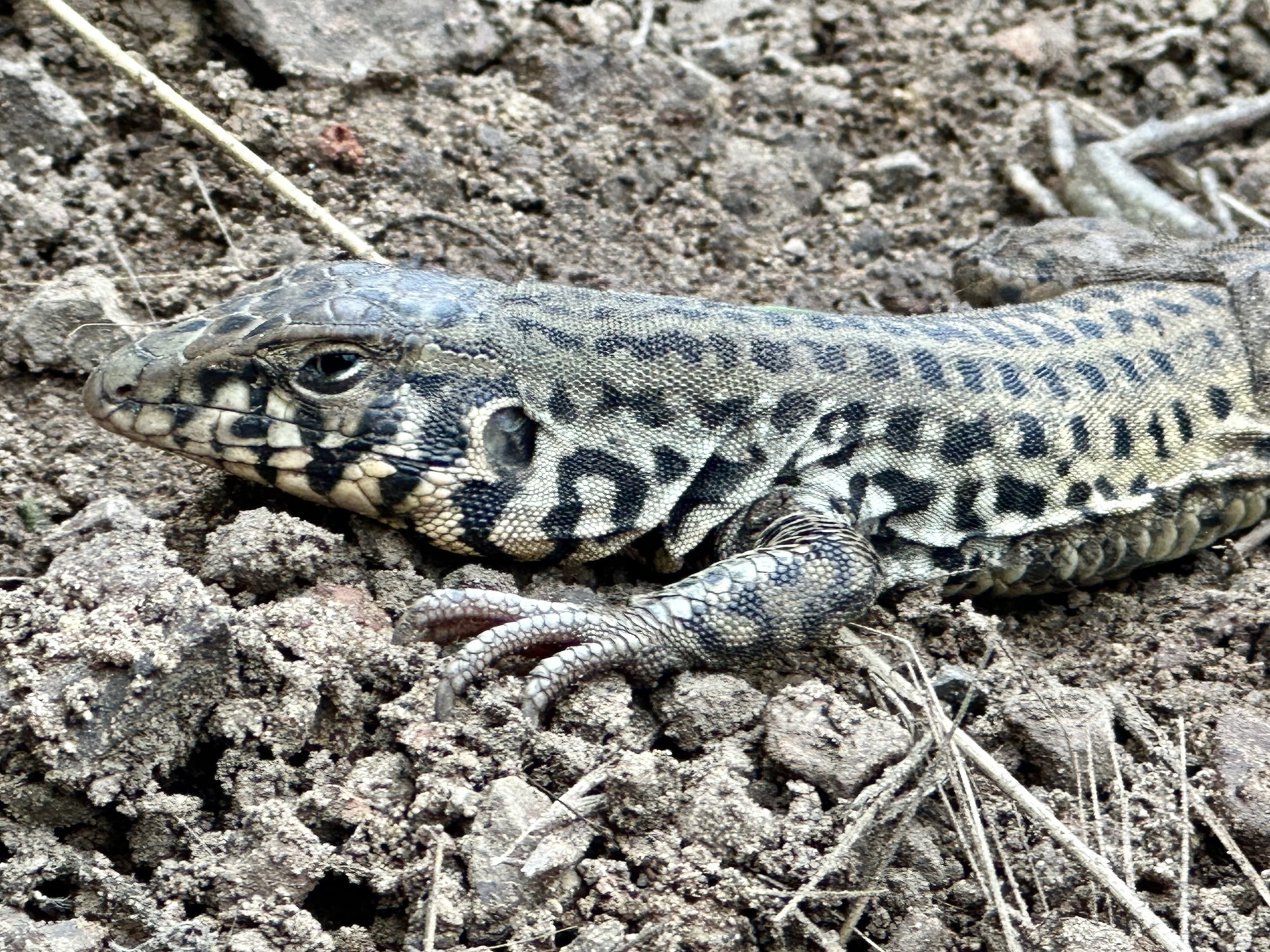 Whiptail lizard.
Trampling Our Ancient Civil Right to Free Movement
“There is a powerful fundamental right hiding in plain sight: the fundamental right to free movement.
This right goes beyond the consistently acknowledged — though infrequently applied — fundamental right to interstate travel.
The true scope of the Constitution’s protection of movement through substantive due process safeguards local, interstate, and international travel.
Though overlooked today, the fundamental right to free movement has deep roots in history and tradition, and in the decisions of numerous state and federal courts, including the Supreme Court.
This Article is the first to examine freedom of movement using the history and tradition test for unenumerated fundamental rights.
This Article begins by tracing the right to free movement from the Magna Carta, through Blackstone’s Commentaries, colonial America, early state constitutions, and the ratification of the Fourteenth Amendment.
As this analysis shows, repressive governments have routinely sought to limit movement across and within boundaries.
But the English and U.S. legal traditions are marked by repeated affirmations of the right — there is strong and persistent historical support for a fundamental right to free movement.
. . .
Given its firm foundation and expansive reach, this is a right that should be applied regularly — to anti-gender-affirming care or anti-abortion laws targeting travel, to quarantine restrictions locking down a community, and to any of the wide variety of other restrictions limiting free movement.— The Forgotten Fundamental Right to Free Movement, Noah Smith-Drelich, Northwestern University Law Review (2025)
Shouldn’t the suspension of this civil right if ever justified, in pursuit of our healthful happiness in body and mind, but not in violation of the rights of others, necessarily require the law be narrowly tailored and specific?
Should the federal government be allowed to suspend this long-standing right based on a vague, undefined claim of a threat to public health which it cannot identify?
In the context of American jurisprudence the idea that we can be stripped of this liberty because a road or a trail washed out is patently absurd.
This is America, dammit!
Land of the free and home of the brave.
Related Posts:
Hiking is Not a Crime, Let Forest Be Thy Medicine
Hiking is Not a Crime; Bull Moose and Titmouse
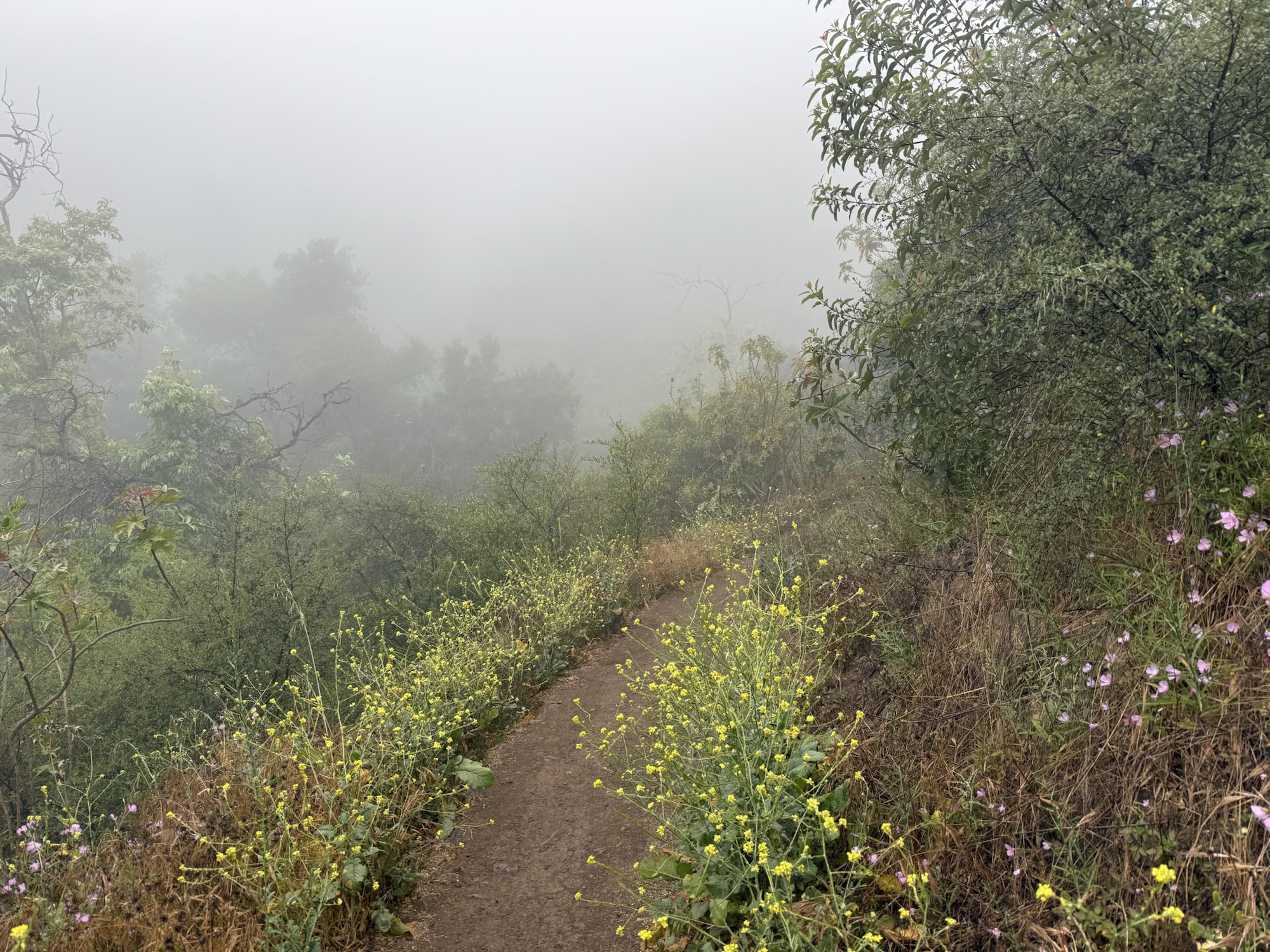 Mustard blooming trailside in Los Padres National Forest, growing where we’ve never seen it before.
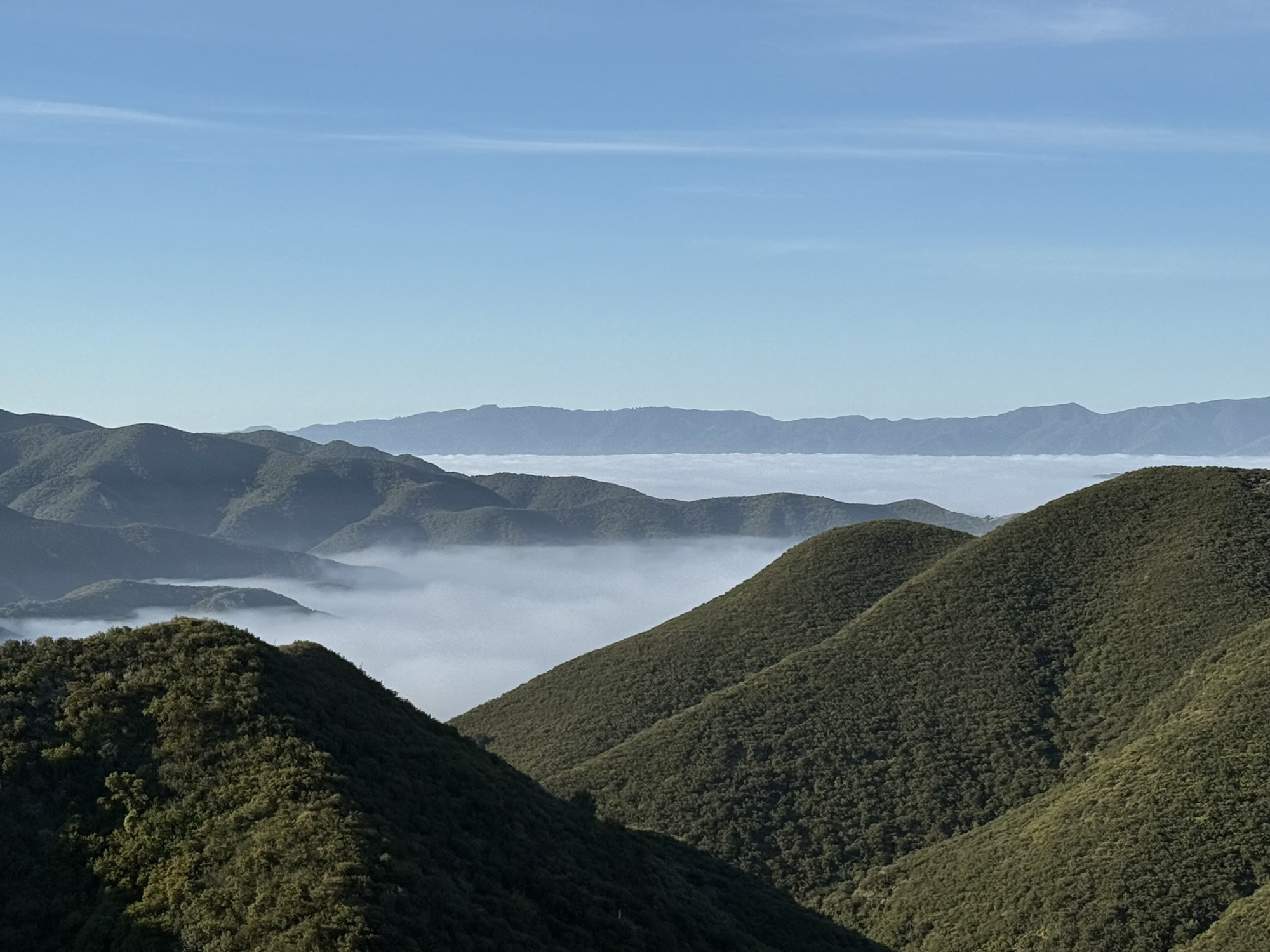 Pacific sea fog filling Santa Ynez Valley amid the San Rafael and Santa Ynez Mountains basking in a Mediterranean Climate.
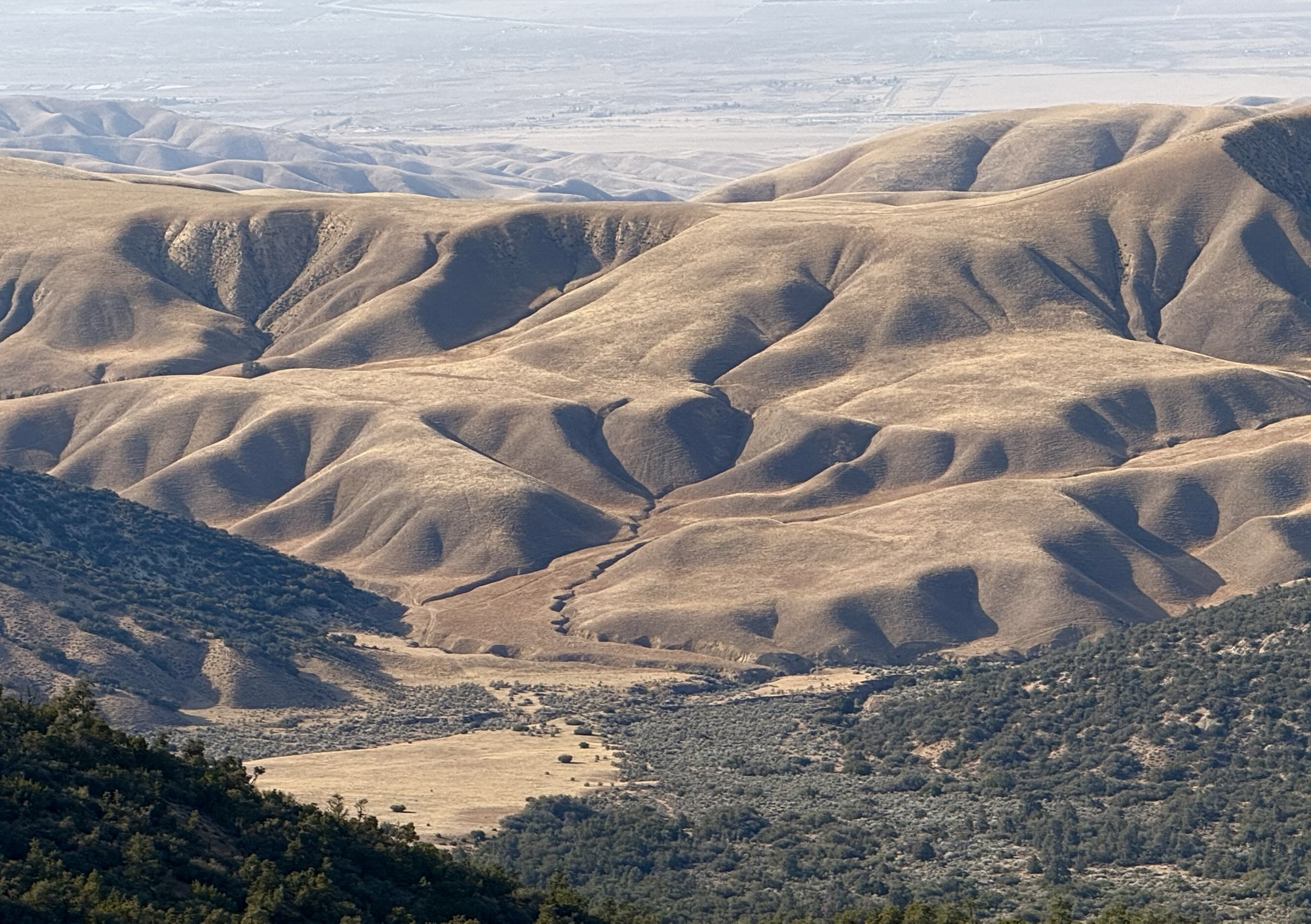 Curvaceous beauty seen from Bitter Creek National Wildlife Refuge, Kern County.
 Baby blue eyes (Nemophila menziesii), Figueroa Mountain
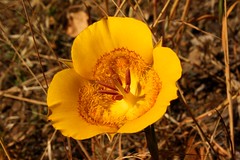
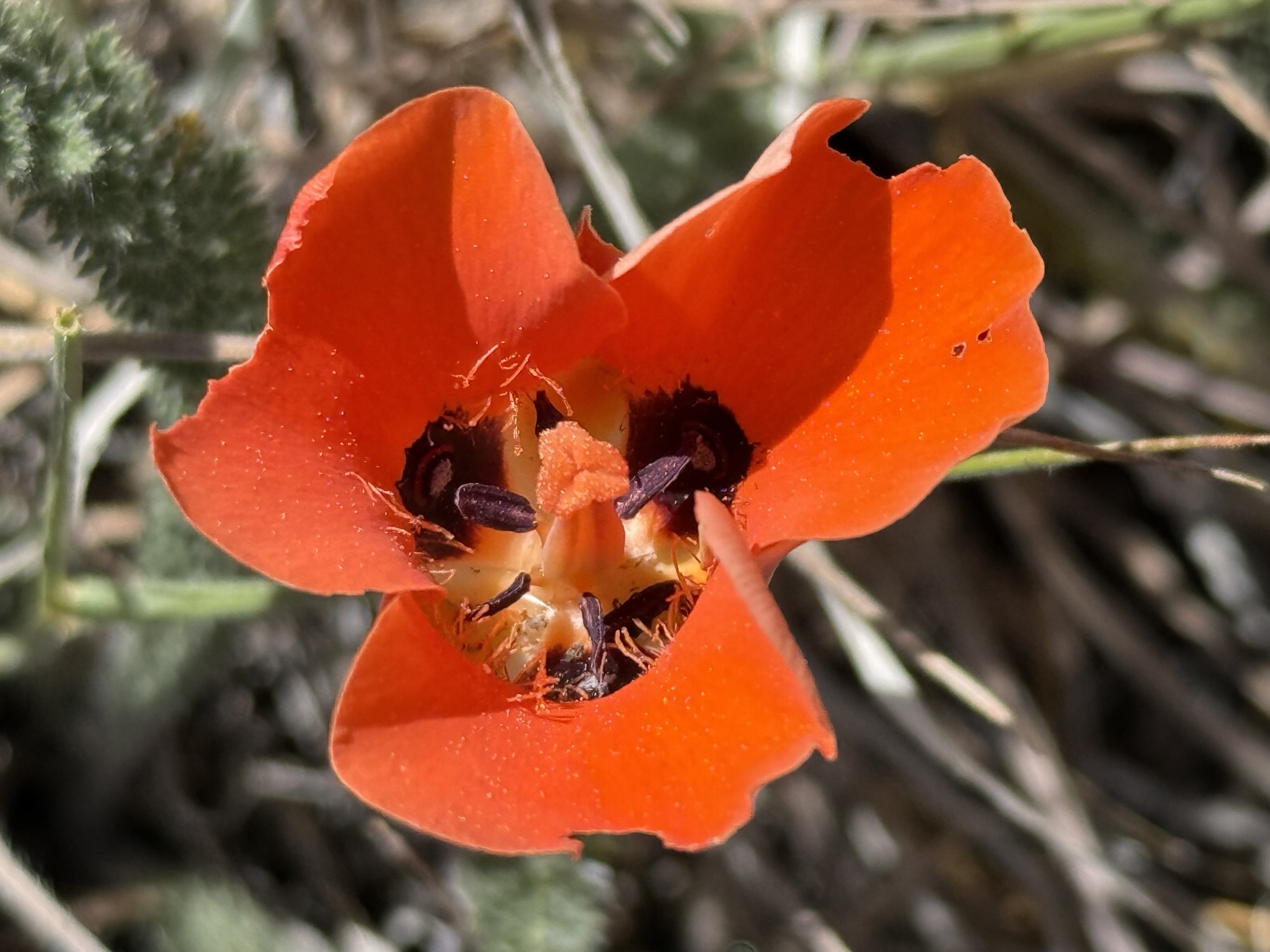 An insect-eaten calochortus kennedyi at elevation in Chumash Wilderness, representative of the traditional Japanese aesthetic, wabi-sabi (侘び寂び), where beauty is found in natural imperfection.
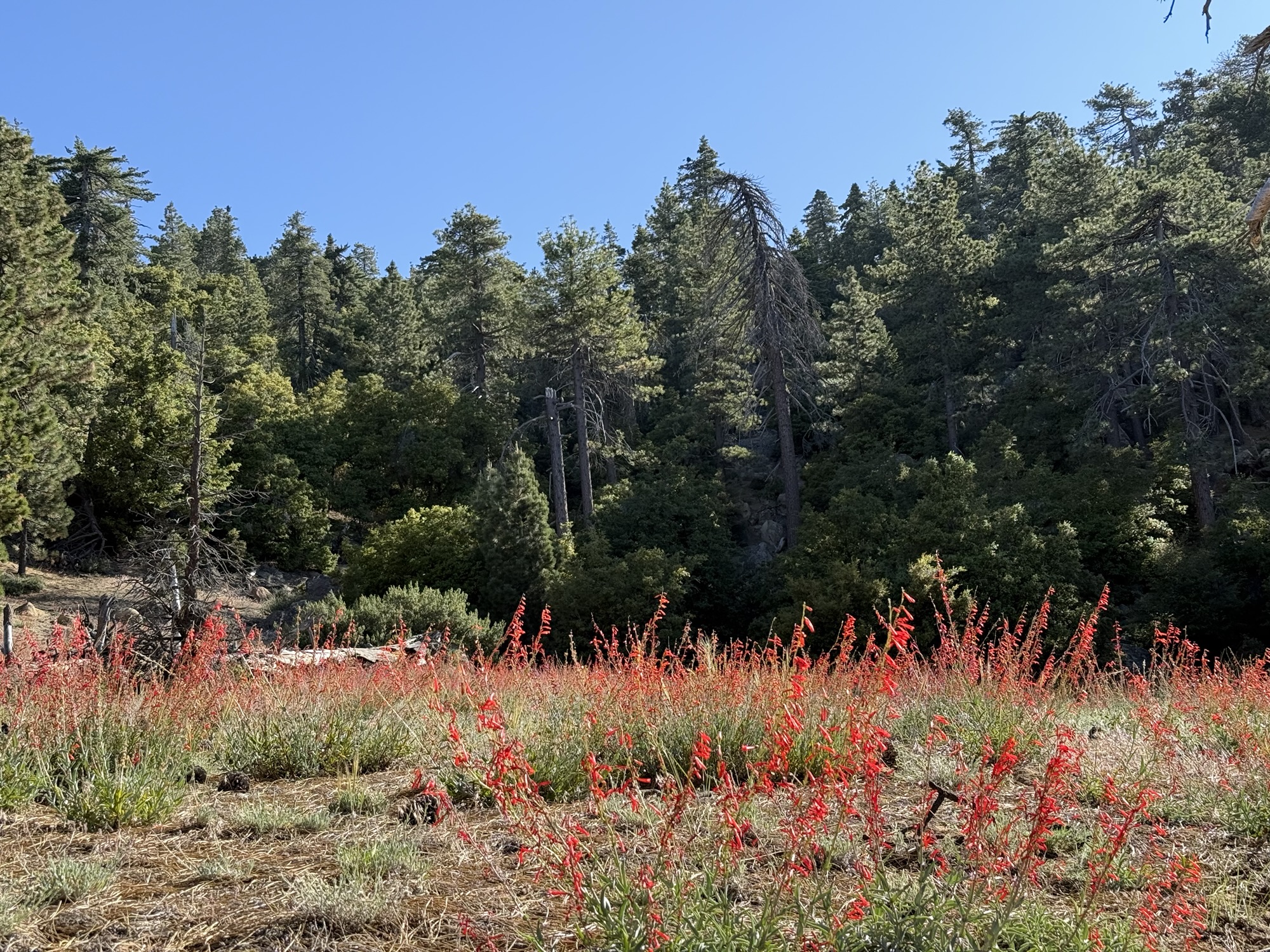 Red penstemon, Pine Mountain
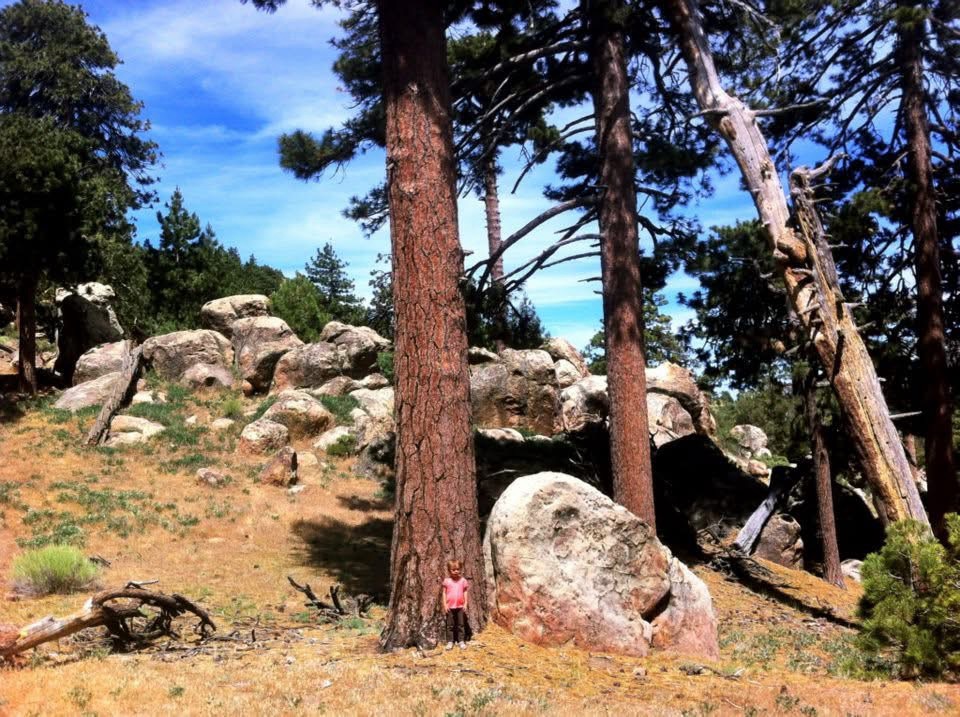 Little Miss E on Pine Mountain, Ventura County.
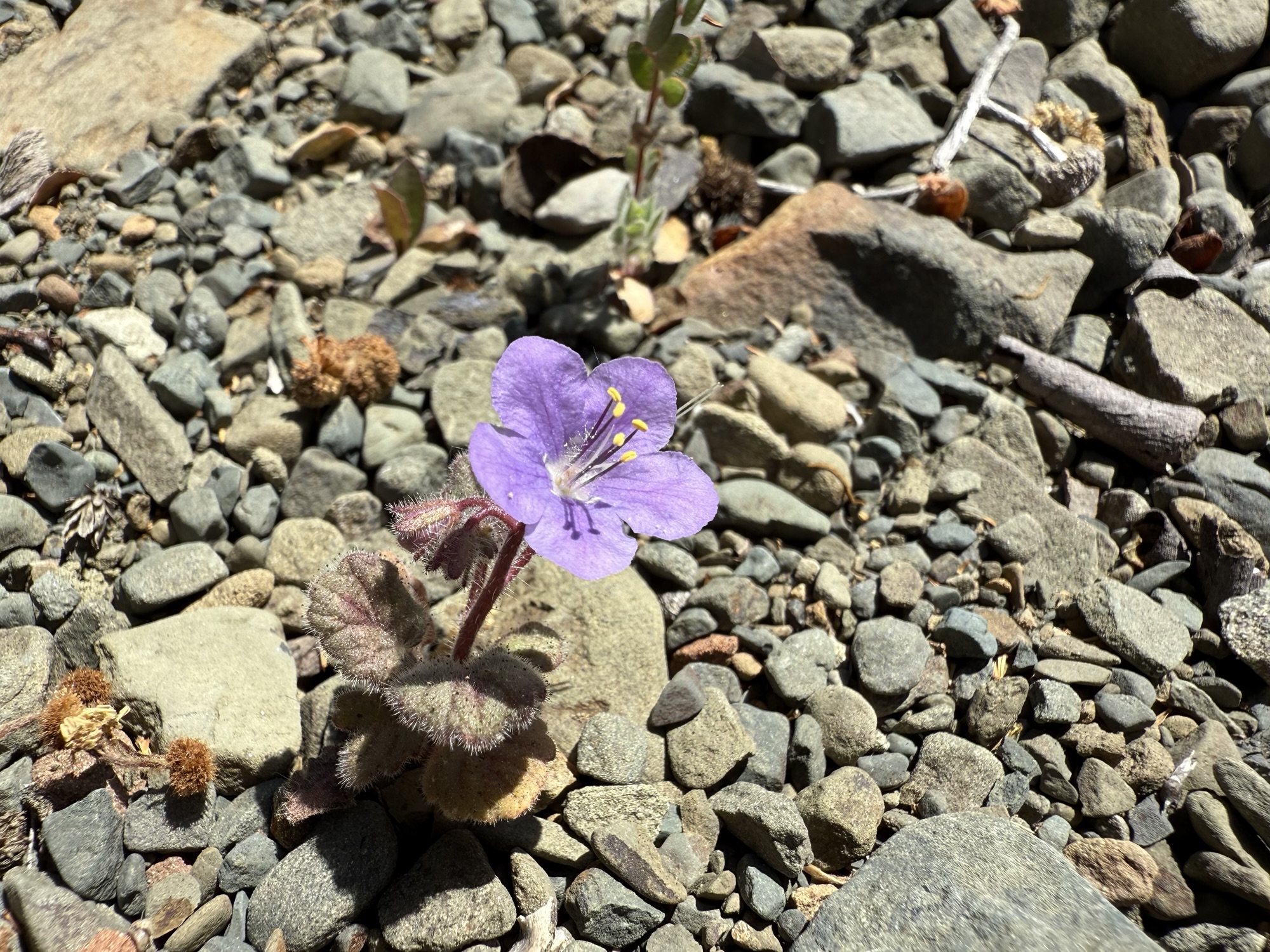 Phacelia crenulata, Santa Ynez Riverbed
 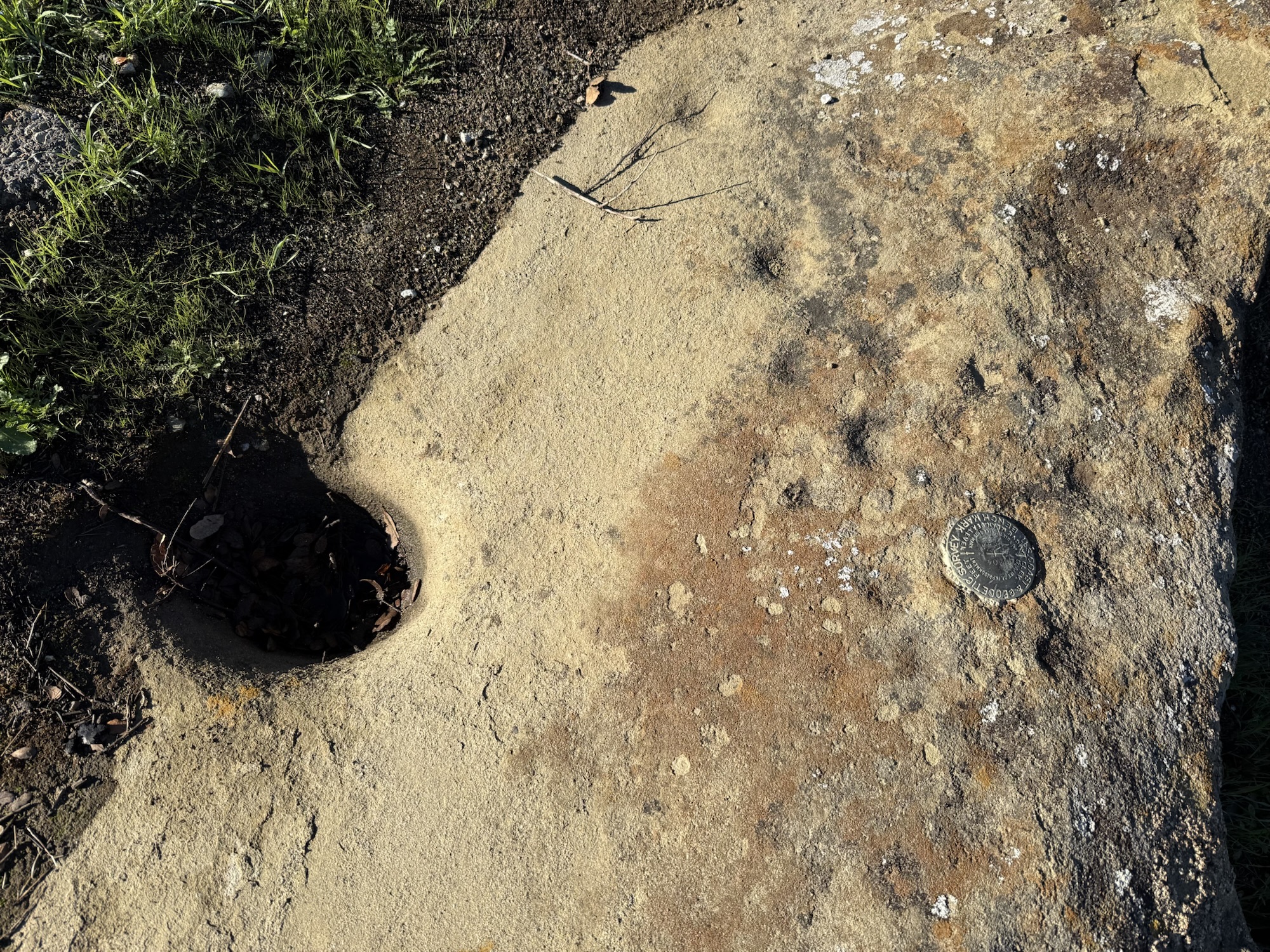 Mortar, benchmark, cupules.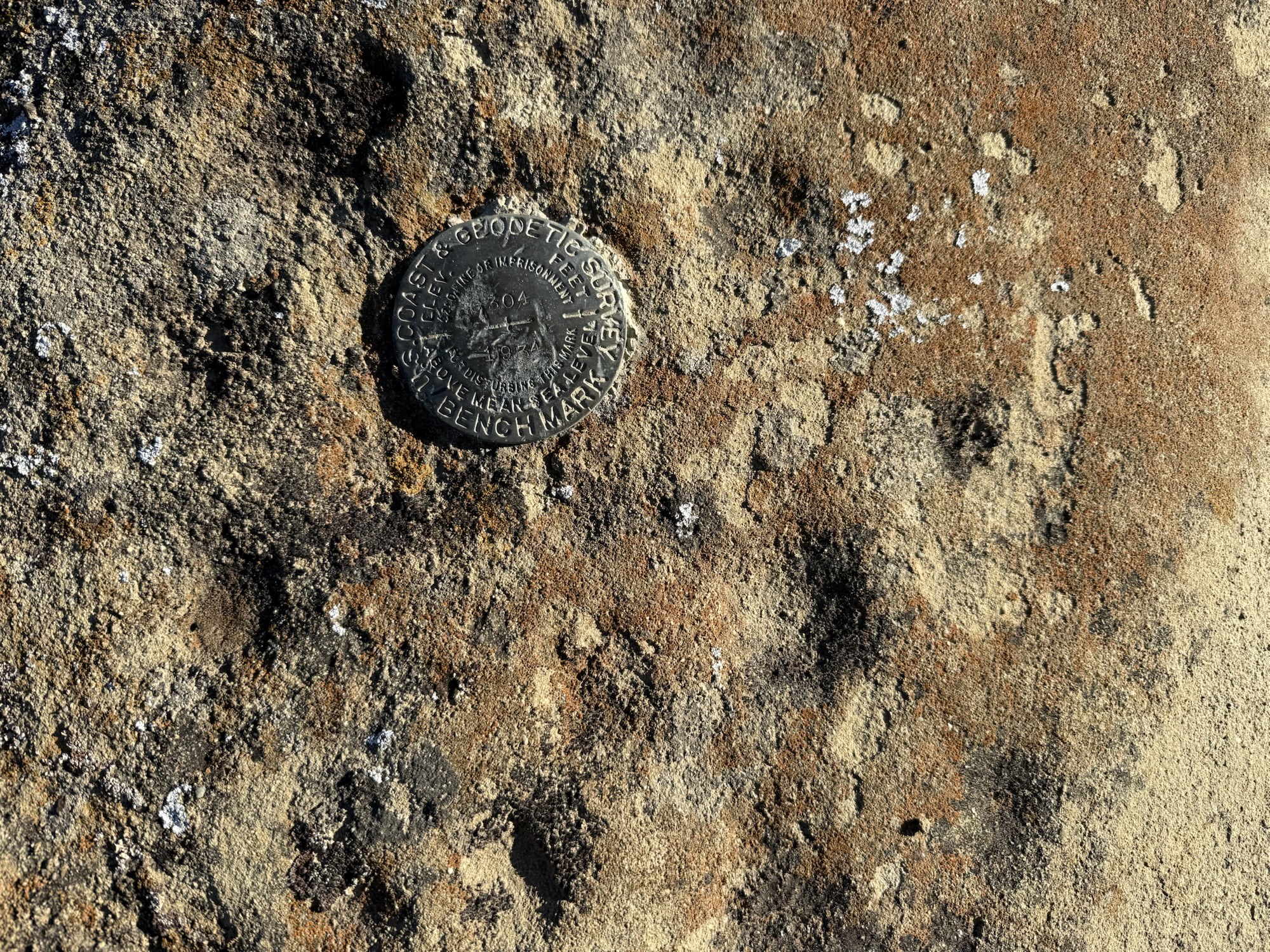
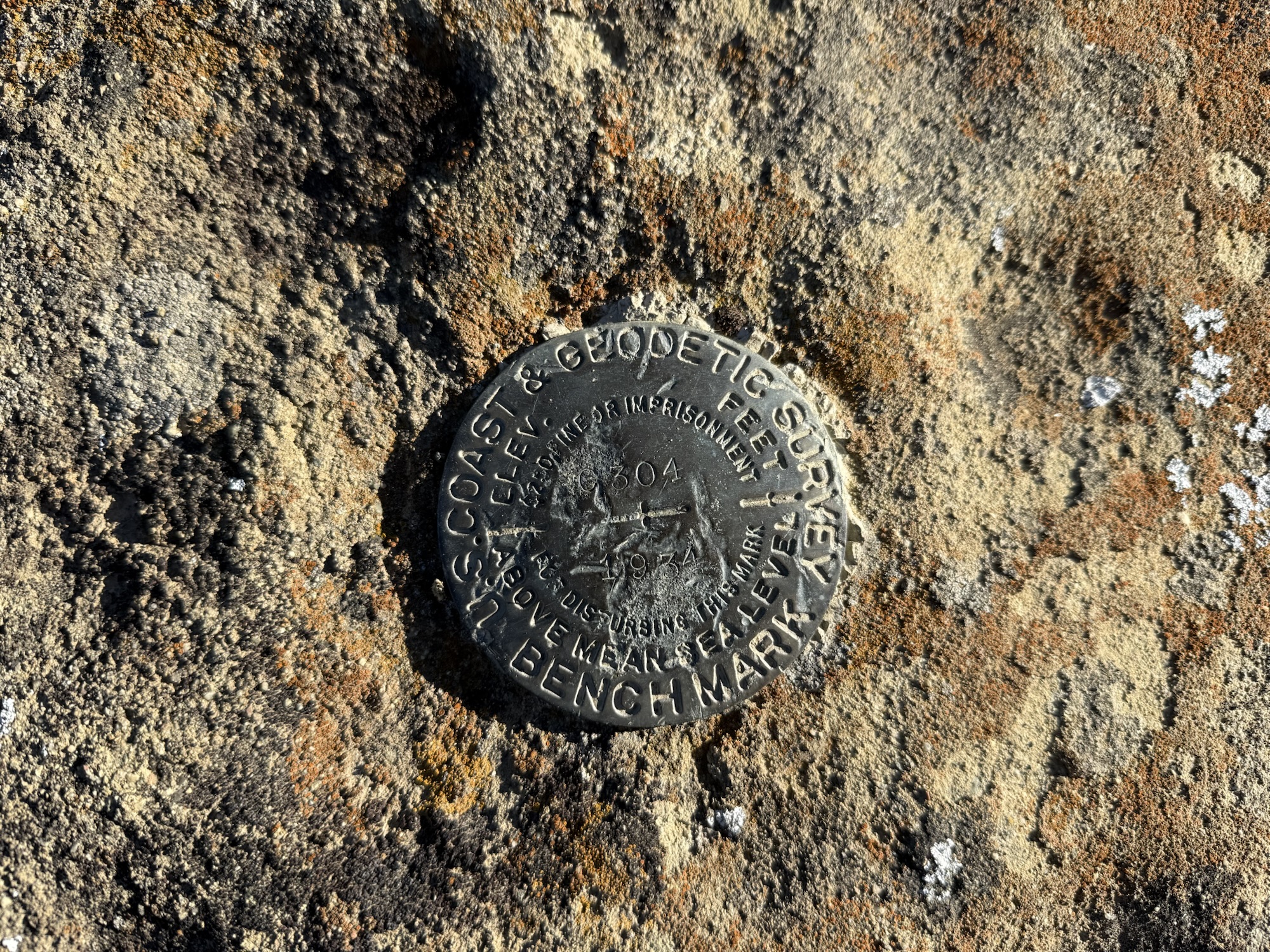 USGS benchmark dated 1934, Cuyama Valley.
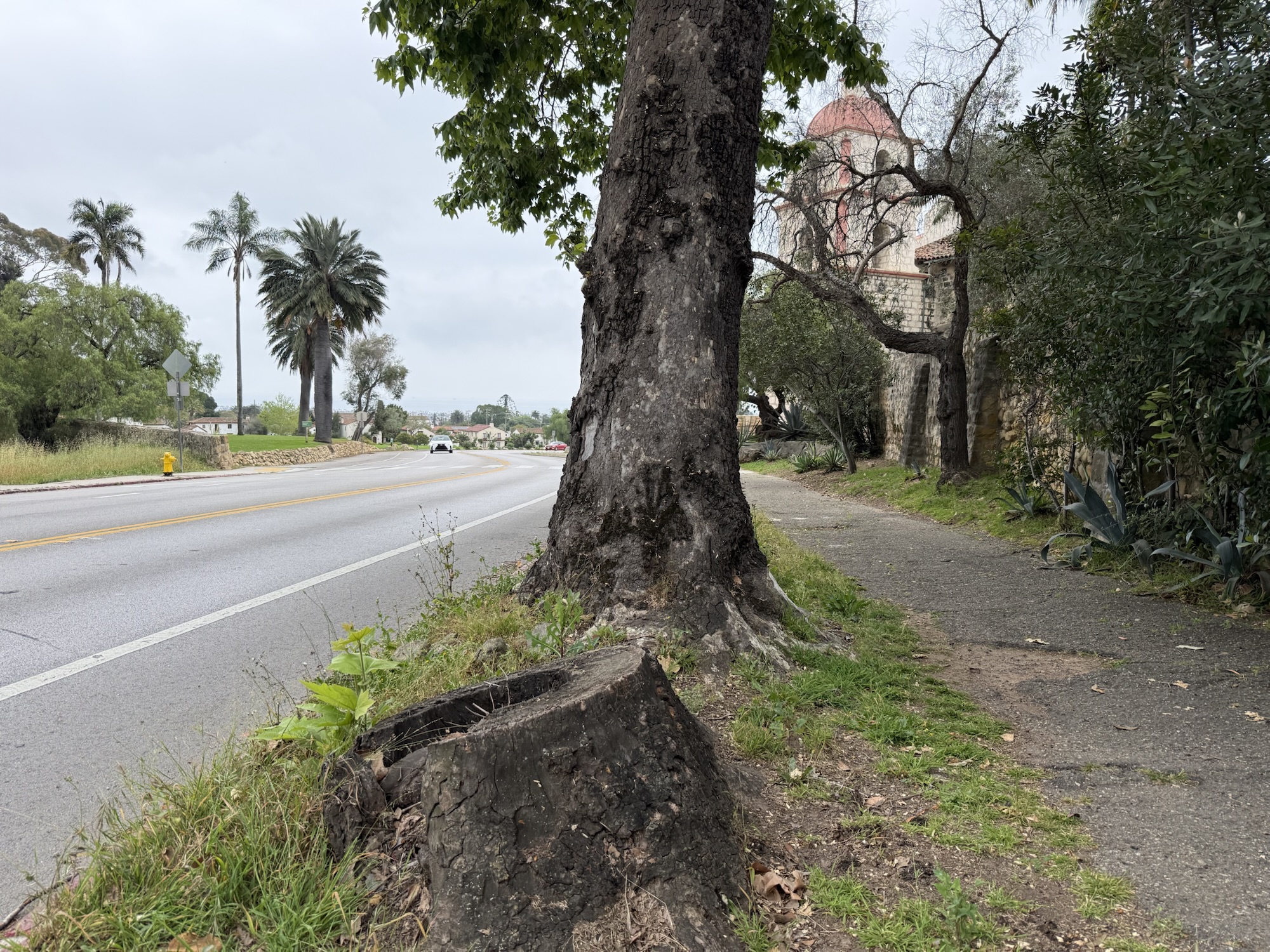 The sycamore sprout on the tree that refuses to give up.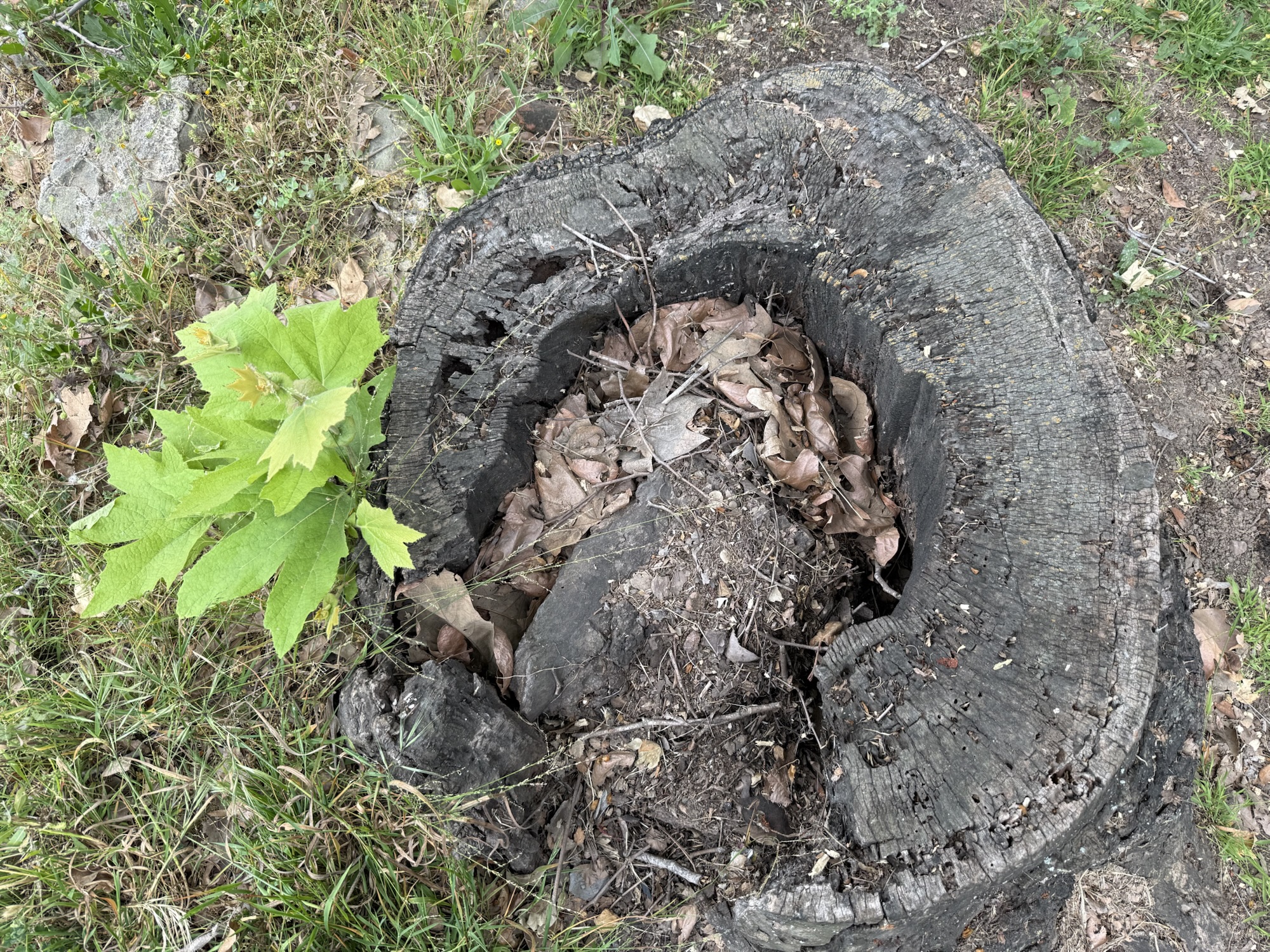
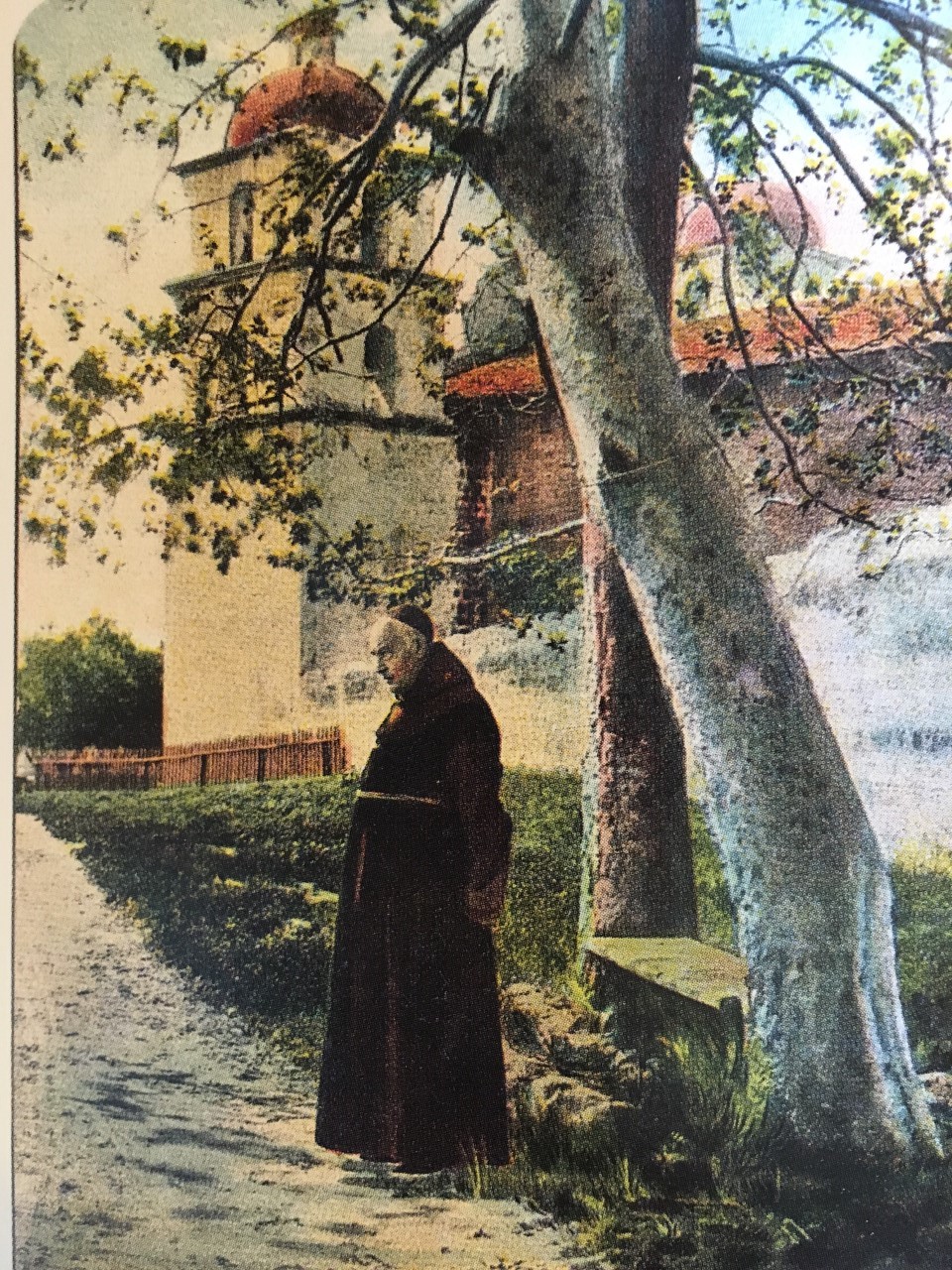 Postcard showing the Old Mission Sycamores (1893).
 Yellow lupine on Pine Mountain, Los Padres National Forest, Ventura County (May 2025)
 A view of pinyon pine forest in Chumash Wilderness, Pine Mountain in the distance defining the skyline. (June 2025)