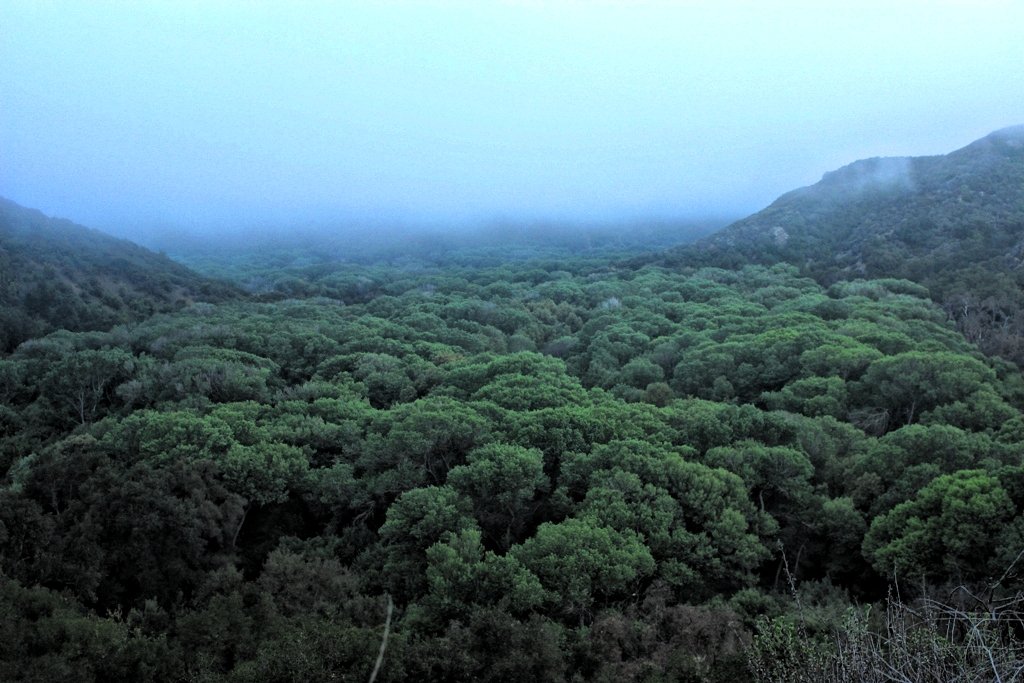
 Mono Jungle under early morning fog.
I walked so much I wore down my feet—
Do you know how weird that feels?—Shel Silverstein, “Foot Repair”
A dense marine layer clings to the Santa Ynez Mountains as I putter up the road straining to see in the gloomy predawn darkness. I’m Freddy piloting the Mystery Machine through some fog-filled Scooby Doo mountain scene. I’m surprised to emerge into clear skies midway up the mountain, but when driving along the crest of the range a bit later, I see a thick river of fog flowing up the Santa Ynez Valley thousands of feet below. A finger of it is poking up into Mono Creek, where I’m heading. Some 45 minutes later, while standing at the unmarked trailhead, I watch a chilly blast of condensation flowing farther up the canyon. So much for escaping the coastal fog bank and getting some backcountry sun.
 Mono Creek
At six-thirty a.m. I’m stomping down the trail rhythmically pounding poles into the earth like some bipedal insect with spindly elongated arms. With over eighteen miles to cover for the day I’m eager to put distance behind me. Storming up the weedy trail, a machine on autopilot, I’m daydreaming about what the day may bring rather than focusing on the trail or its surroundings.
Yet, what begins as a fair trail through chaparral and riparian and oak woodland soon peters out and fades from sight. My rapid pace slams to an abrupt halt. Mere minutes from the trailhead and I’m standing around wondering where the footpath went I was so easily following just seconds before.
 Trail through the trees along the creek.
 Cutting a bench along the creek.
The lowermost section of the Mono-Alamar Trail is a fair sampling of classic southern Los Padres less traveled tread. Even when the trail is there, it’s still sorta not. I’m on it, but am I really? Yes, I am, definitely. Wait, am I? Well I was. I’m searching for it then realize I’m on it. I think I’m on it just before having to search for it. Walking it one second and wandering after it the next.
It’s early morning and I’m a bit dazed and spacey. I’ve been ripped from the carefree abstract realm of a daydream by a sudden concerning present reality: where’s the trail? I’m somewhat startled. It’s more thinking than I care to muster at the moment. I didn’t expect to start this game so soon.
I was hoping to quickly cover some distance rather than slowly fight my way through the brush. I don’t feel like dealing with the chore of route finding—do I go right? left? straight? back? into the creek? along the bank? A few incorrect choices strung together and I’ll be way off course wasting time and energy.
A bad feeling ripples through me.
 A mostly dry section of Mono Creek.
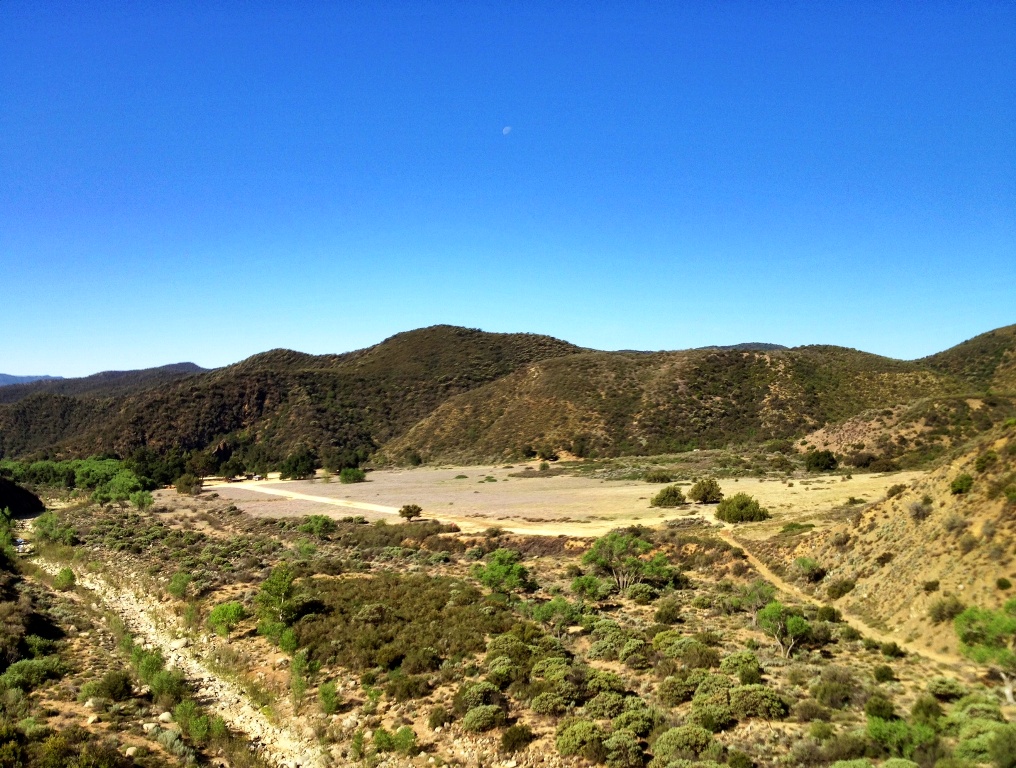 The Ogilvy Ranch property,which was once the site of the Chumash Indian village “Sigvaya.”
 Looking down the winding green belt of Mono Creek. The marine layer being sucked over the backside of the Santa Ynez Mountains in the distance.
I wander through sparse undergrowth beneath a canopy of oak, crunching through deep leaf mulch, scanning the landscape for signs of the trail, but resolved to push farther up canyon without it if necessary. Coming to Mono Creek I spend a minute searching for a way across without getting wet. It’s no more than several inches deep but I’m hesitant to get my feet wet so soon. I finally relent for sake of time and walk through. It’s a bad decision. Hiking with wet feet has never troubled me, but today will be different.
Despite weaving on and off the inconspicuous trail for miles on end I’m able to maintain a decent pace. Several times, when seemingly having lost the trail, I have the good fortune of looking up to see a faded length of ribbon flagging the route (Hat tip BC). My luck spotting these markers in key places is uncanny. I’m amazed. I’ll be marching along and suddenly feel a need to stop to reassess my route, and when I glance around, there’s a flag or the tell tale signs of the trail leading through the brush.
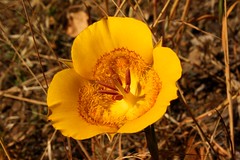
 Marisposa lily (Calochortus clavatus)
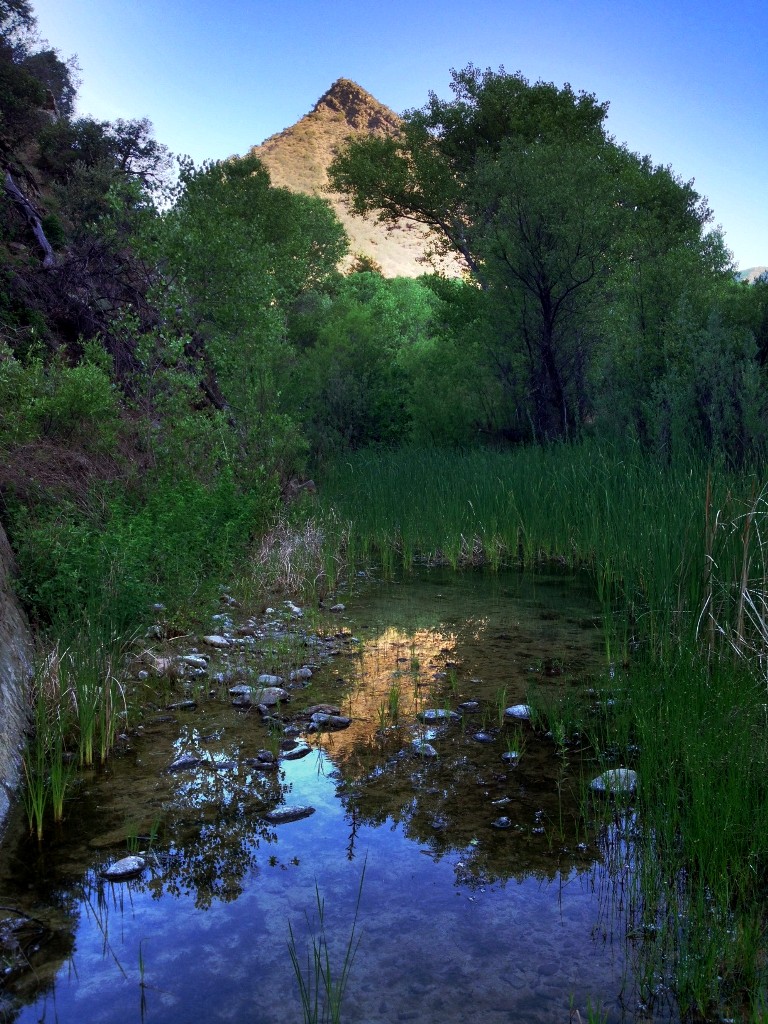
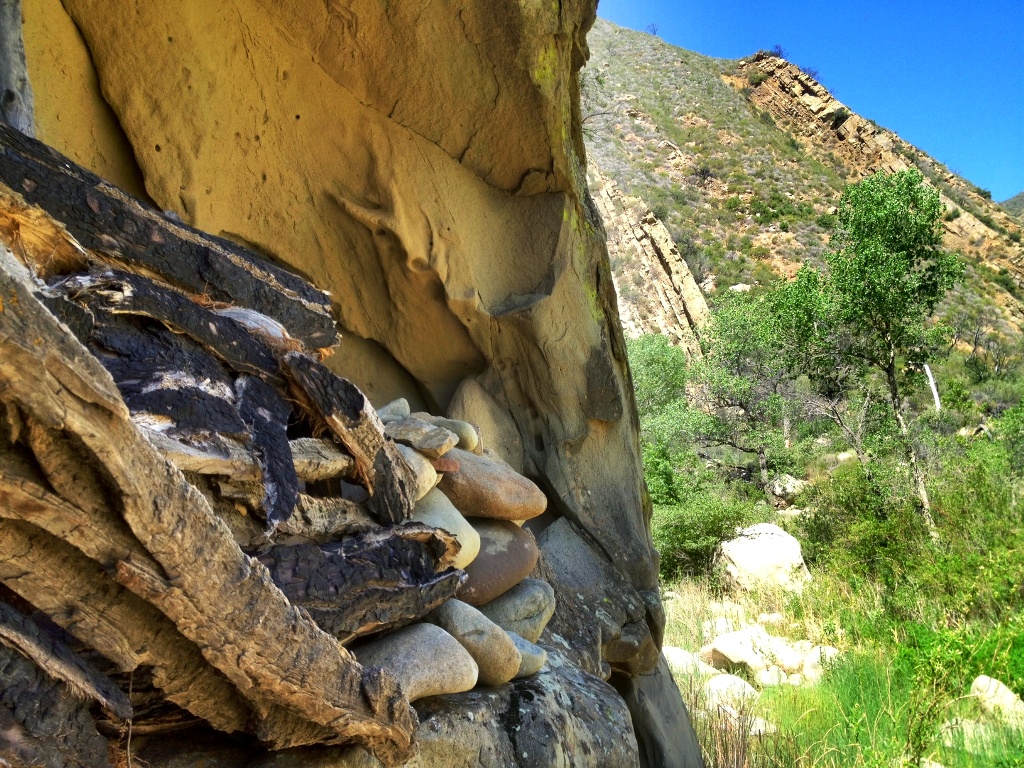 A streamside cave several feet off the ground made into a prime survival shelter. Somebody put in a small stacked stone fire pit at one end and partially closed off the cave using long planks of cottonwood bark.
 Somewhere around the seventh mile, about two miles before reaching Mono Narrows Camp, a building discomfort in my feet intensifies into a deep tissued tenderness. Stomping up the canyon across shifting sections of uneven soils and over cobblestones and gravel and through brush and down and up crumbling streamside slopes—hiking without a trail, that is—has left my wet feet battered and sore.
I sit for a brief rest and consider turning around and heading back, how easy it would be, but I continue on determined to make it up into the narrows.
The discomfort had been ignorable, but it’s grown into an increasingly irritating pain. It’s now frequently determining my foot placement and slowing me down as I try to lessen the impact of each footfall. Every step sends a weird sensation pulsing through my feet that feels as though the bottoms are peeling off like the delaminated sole of a cheap well-worn shoe. I stubbornly press on. I have to at least reach the campsite.
 Mono Narrows Camp center frame under the oak tree.
I sit at Mono Narrows Camp debating whether or not to continue up to the narrows itself. I hate the thought of not proceeding, but the nine mile hike has exacted a surprisingly severe toll on my feet. Boulder hopping farther up the rugged creek would inflict more harm and make my return trip slower and more painful.
I don’t have enough time to have a good look around the narrows and make it back to the trailhead before sunset. I’d only get a passing glance. It’s not worth it. I don’t want to be limping around with shredded feet, possibly fumbling my way down canyon through the dark by headlamp, fighting my way through the bushes and searching for a substandard trail, which took effort enough to find in broad daylight.
I capitulate, though, and leave my pack at camp and take off up the creek. I feel compelled to at least make an effort. I scamper up the drainage for a short distance before slowing my pace and eventually stopping. I can’t trust my aching feet to carry me through the narrows and back to the trailhead by sunset. I’m done. I stand looking longingly up the canyon. Then, begrudgingly, turn back.
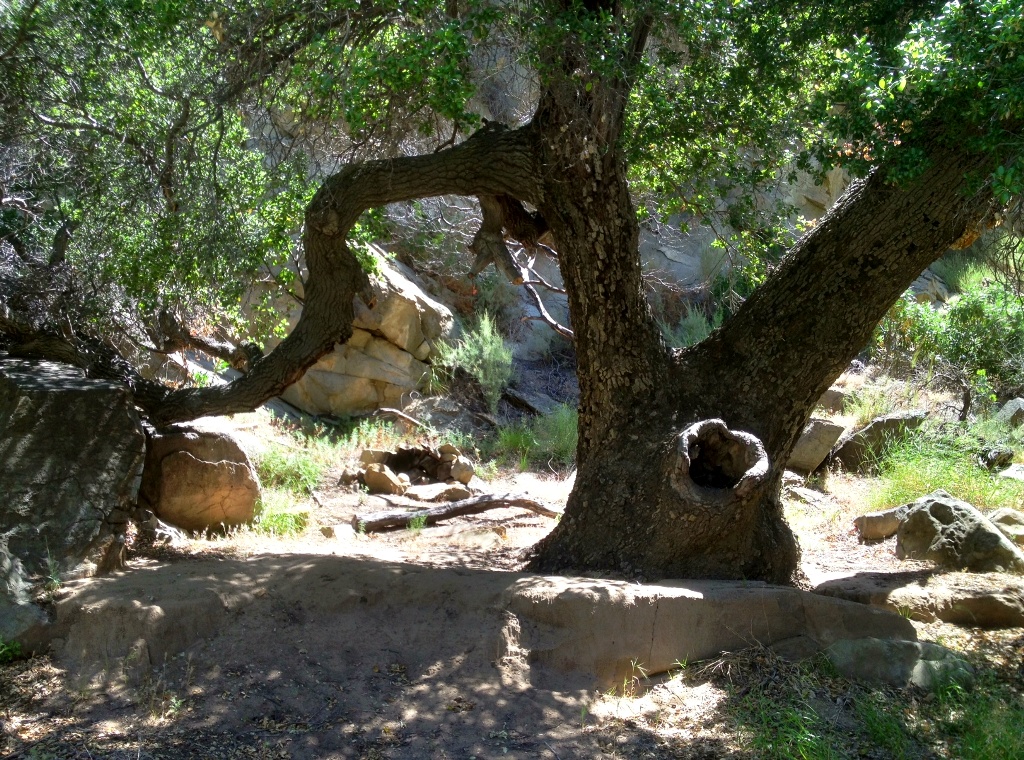 Mono Narrows Camp
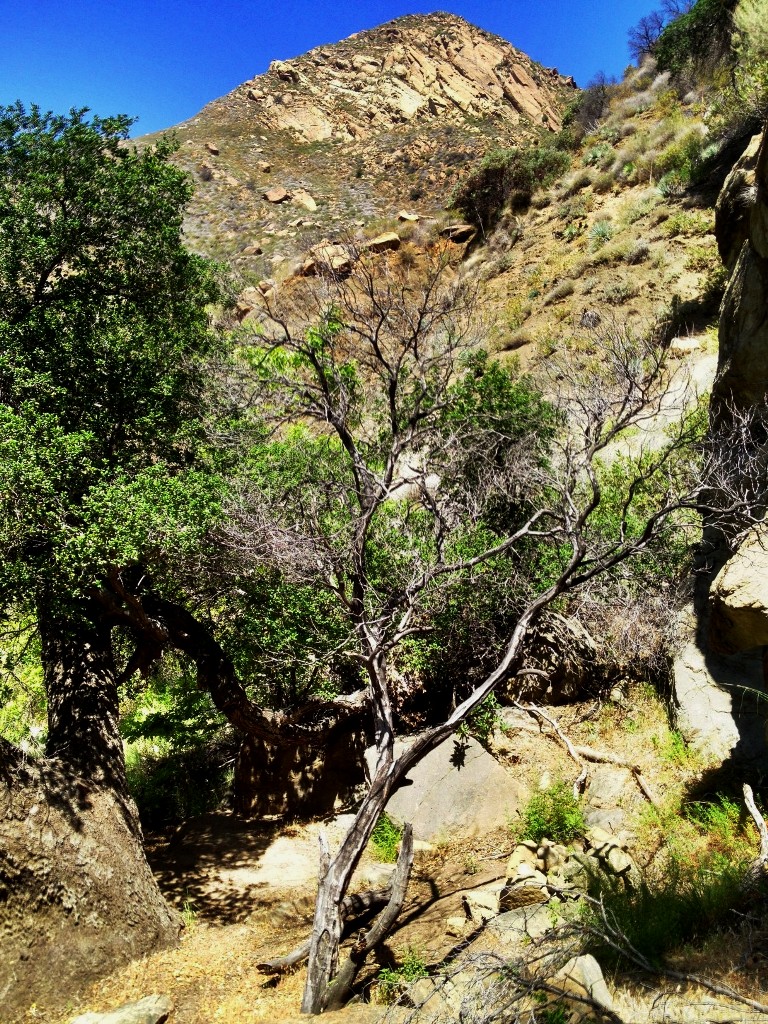 Another view of the camp.
Despite my weakened condition I manage a fairly normal pace back down the canyon and reach the trailhead well before sunset, some twelve hours after having left. With ample light remaining in the day I regret having turned around before the narrows.
Later, back at home, after finally pulling off a wet boot, the sock peels from the bottom of my foot like the rind of an orange. I’m shocked to see how white and puffy my wrinkled foot looks, as if it’s been dipped in bleach.
Several large irregularly shaped blisters look more like patches of flesh that have separated from the underlying tissue than liquid filled bubbles. The blisters look and feel totally bizarre to the touch. Not only did it feel like delamination when hiking it looks like it too.
Wrinkles in the sole of my foot have turned to deep aching creases and I wonder if the skin has in fact split to expose thin slits of raw flesh. The next day I’m awkwardly hobbling around the house on fat swollen feet that barely fit into my flip-flops. Good thing I turned back early.
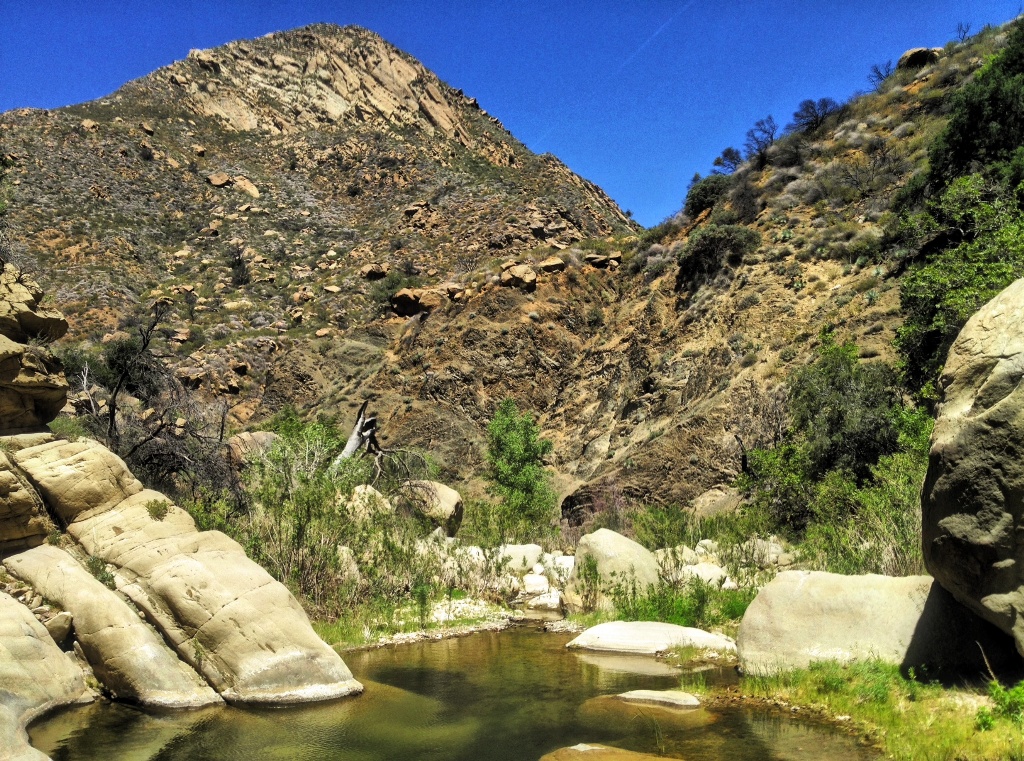 Looking downstream past Mono Narrows Camp on the right.
 Looking up stream from camp.
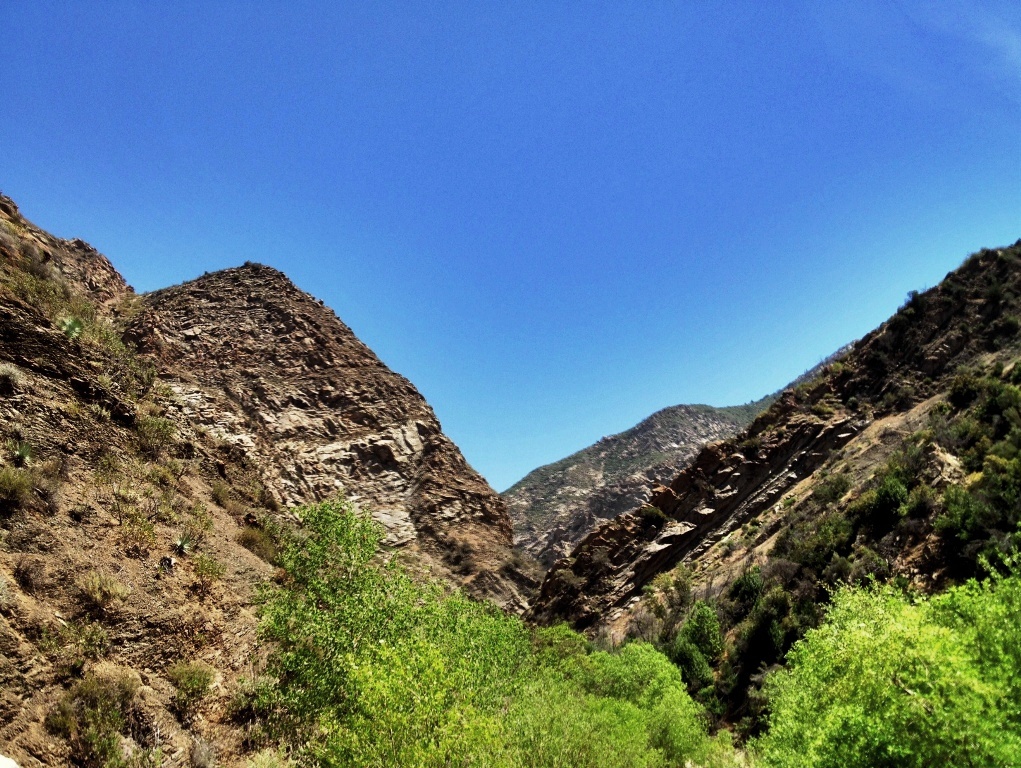 Looking into Mono Narrows.

 Prickly phlox (Leptodactylon californicum) was abloom.
  The view up Indian Canyon as seen from Meadow Camp.
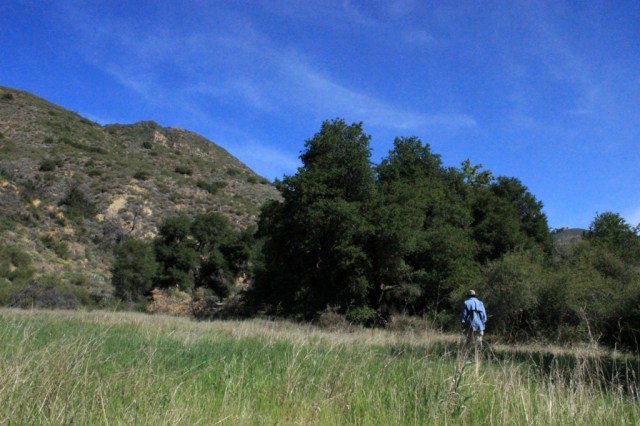 Indian Canyon Camp lies under the oaks in a grassy field above the creek. From there the trail ends and it’s into the creek upstream any which way you want.
 Stillman
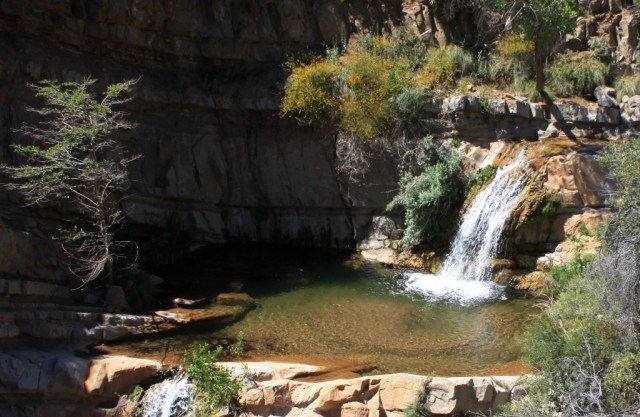 The upper pool of the lower falls, as seen in June 2010.
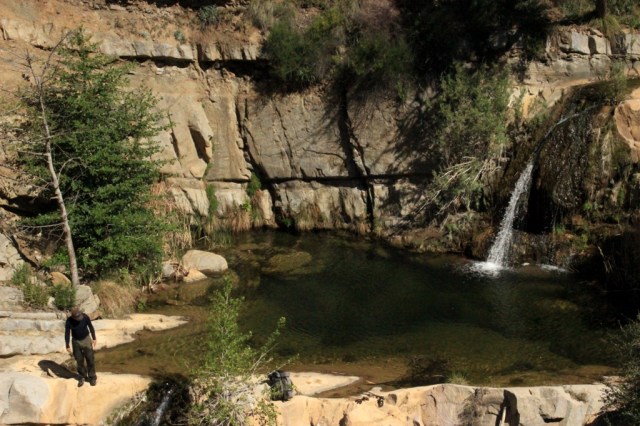 Same pool as seen in April 2013. Note the absence of sediment, the difference in water volume over the falls in this drier year, as well as the tall green tree behind Stillman, which in the photo from 2010 is no more than a small sprout barely visible in the shadows.
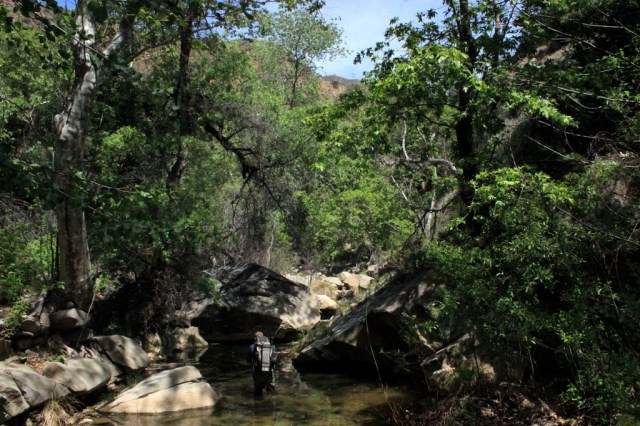

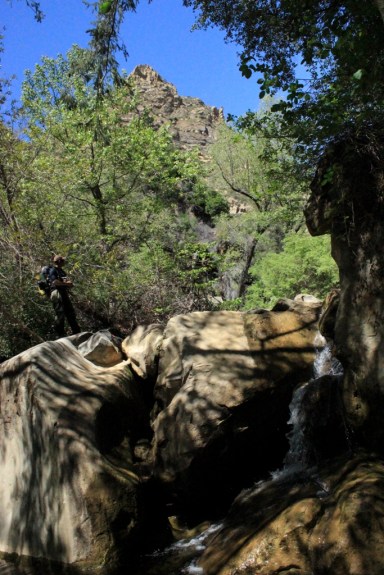
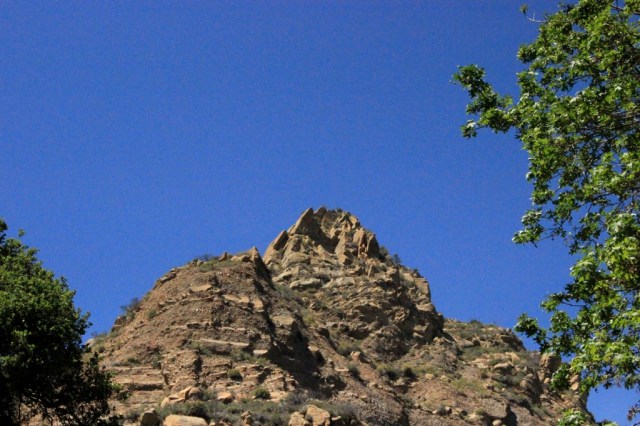

 Stillman taking a gander at a narrow spot in the canyon.
 The Perfect 10
 Looking downstream through the narrows of Indian Creek.
 Looking upstream at the narrows.
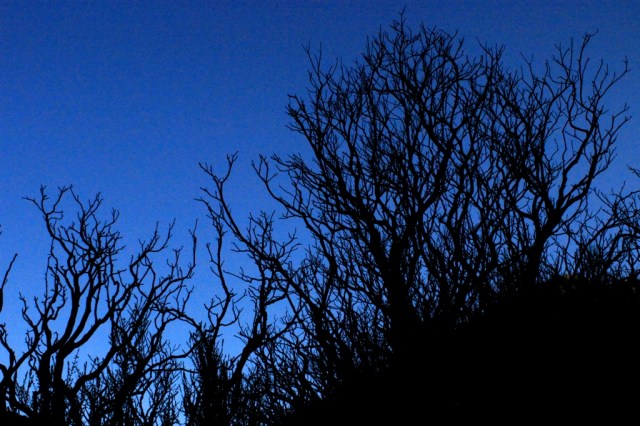 The ubiquitous fire scorched skeletons of chaparral.



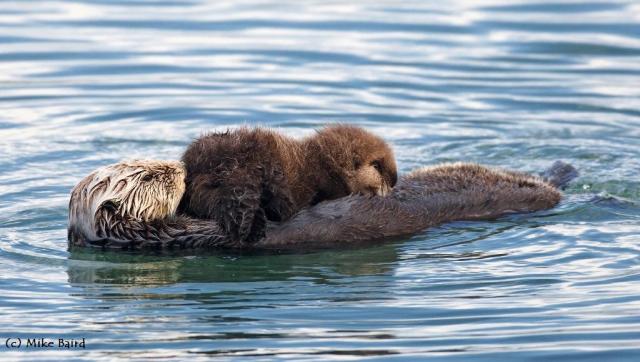 Southern sea otter and nursing pup.